
- History
- Overview
- Info & Inclusions
- Itinerary
- Map & Hotels
- Photos
- Dates & Prices
- Tour Duration: 19 Days
- Max Group Size 18
- Seven countries in 19 days — Serbia, Kosovo, North Macedonia, Albania, Montenegro, Croatia & Bosnia-Herzegovina
- Stately Belgrade, Serbia's historic capital on the Danube
- Stunning Lake Ohrid, a UNESCO World Heritage jewel
- Rugged, rarely visited Albania off the beaten Balkan path
- Pretty Dubrovnik and the sparkling Adriatic coast
- Fascinating Bosnia-Herzegovina, where East meets West in Sarajevo and Mostar
- Singles friendly (view options for single travellers)
We cross borders where medieval Orthodox monasteries stand among Muslim majorities, walk fortified Adriatic towns that prospered as small republics while empires rose and fell, and visit Mostar's reconstructed bridge—destroyed in war, rebuilt as a choice to reconnect. In Ohrid we drift on an ancient lake where borders feel less important. In Tirana we descend into Cold War bunkers that turned isolation into imprisonment. At Sarajevo's Latin Bridge we mark where a single gunshot ignited a century of conflict.
This isn't a tour of "hidden gems" or "undiscovered Europe." It's a journey through a region that keeps testing whether crossroads can be more than battlefields—and discovering that the answer, however fragile, is sometimes yes.
- MealsSavour authentic flavours with included daily breakfasts and dinners at handpicked local restaurants—immersing you in local cuisine without worrying about reservations or budgets.
- Transport & Logistics
Private air-conditioned coaches and included internal ferries and flights—ensuring hassle-free travel so you can focus entirely on the discoveries ahead.
"Adventures Abroad tour leader's management and guest services managed the tour with great skill and dedication. The tour leader was on top of every move and transfer. We have not experienced any issues with logistics and had a great time."
~ JULIA O"The tour leader did an excellent job coordinating some difficult travel logistics, power outage issues and resolving problems and dealing with guests who had unrealistic expectations."
~ CYNTHIA COLLINS - Expert Guidance
Unlock insider secrets at every landmark with your full-time Tour Leader and expert local guides , all gratuities covered—no hidden tipping surprises—so you immerse fully in your destination's stories, worry-free. (Except for the tips to your tour leader at the end of your tour.)
"Amazing tour guide. Our tour guide was very well organized, Her passion, knowledge, and enthusiasm completely transformed the travel experience into something truly unforgettable..."
~ MELANIE LEMAIRE"Highly recommend every trip with Adventures Abroad. It's a well organized and well thought out adventure. The tour leaders are friendly, knowledgeable and experienced professionals. Highly recommend this company."
~ SUSAN WALL - Sightseeing & EntrancesAll entrance fees for sites visited as per the itinerary—no hidden costs—so you can explore ancient ruins and excursions with complete peace of mind.
- AccommodationsUnwind in clean, well-located 3 to 4-star hotels with private en suite facilities—handpicked for comfort and convenience after each day's discoveries—so you can rest easy knowing your stay supports the real adventure, not steals the spotlight.
- Small Group
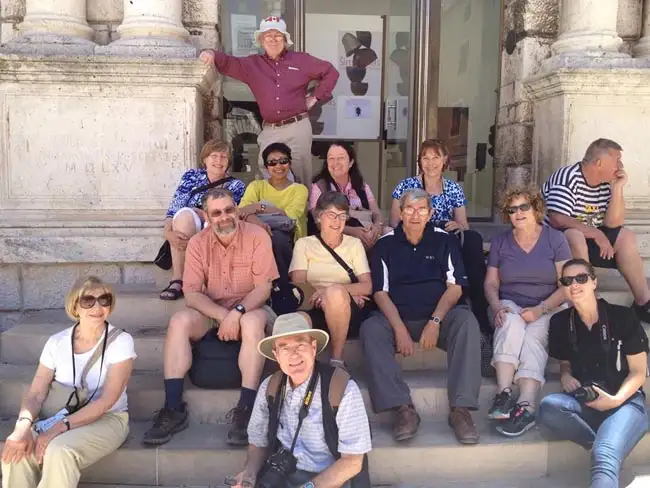
Discover the world in small groups of up to 18 travellers plus your expert Tour Leader—unlocking spontaneity, off-the-beaten-path adventures, and genuine connections at a relaxed pace, free from crowds.
"Looking Forward to My Next Adventure The best feature of the Adventures tour was the small size that allowed the group to quickly load up, let everyone get acquainted within the first 24 hours, capitalize on unplanned surprises along..."
~ PHILIP BLENSKI"Good value for a great time I have traveled with Adventures Abroad for over 20 years now. Well thought out, interesting itineraries and the other travelers congenial and friendly. The price always seems fair and overall a..."
~ Trusted Customer - Airport Transfers For Land & Air CustomersWe handle hassle-free airport transfers for all our land and air tour customers—plus early arrivals or late departures when you book extra hotel nights directly with us for added peace of mind.
- International airfare to/from the tour.
- Lunches, Tour Leader gratuities, drinks, personal items, air taxes (if applicable), and excursions referenced as 'optional'.
- Airport transfers for Land Only customers.
- Seasonality and Weather:
This tour is offered in spring (April) and fall (September) when the Balkans are at their most comfortable and accessible.
Spring departures bring green hillsides, wildflowers in the mountain valleys, and mild temperatures ideal for walking tours through cobblestone old towns. Markets are lively, outdoor cafes open for the season, and the Adriatic coast awakens without summer crowds.
Fall departures offer warm, settled weather that extends well into October. The light becomes golden across Dubrovnik's walls and Mostar's river valley, while the Adriatic remains swimmable for those inclined. Harvest season fills markets with local produce, and the pace feels unhurried as summer tourists depart and locals reclaim their towns.
Both seasons avoid the peak heat and crowds of July-August, allowing a more authentic encounter with the region's rhythms. - Transport and Travel Conditions:
This tour covers significant ground across seven countries—from Serbia's river plains to Albania's mountain roads to the Adriatic coast. Road travel involves full days with frequent stops for sightseeing and breaks, all against a backdrop of dramatic and varied scenery. Roads are generally in good condition, though Albania's mountain routes can be winding and slower-paced.
This trip follows the pattern of our European cultural tours: ambitious itineraries with full days of travel and sightseeing. While we include no strenuous hiking, you will walk extensively—through old town centres, along fortification walls, up to hilltop citadels, and across cobblestone squares. The Balkans is mountainous and historically built for defense, not accessibility, which means uneven surfaces, slopes, and stairs are common. Walking tours of towns and cities are leisurely in pace but substantial in duration—expect to be on your feet for several hours at a stretch.
If you're accustomed to coach tours that rely heavily on vehicular transport for all sightseeing, be aware this tour is considerably more active. You should be comfortable with your luggage and able to manage it independently, though porter service is usually available at hotels.
Am I suitable for this tour? Please refer to our self-assessment form - Activity Level: 2
These are particularly busy tours that feature a lot of moving around, sometimes by train and short journeys on local transport. Walking tours of towns and cities are leisurely but you should be prepared to be on your feet for several hours. Some of our cultural trips that occur at high altitude and/or require greater independence with baggage handling (at hotels, airports, train stations) also fall into this category.
To learn more about the Activity levels, please visit our tour styles page. - Accommodation:
Well-located, air-conditioned, mid-range hotels (3 & 4-star). Some hotels are smaller properties (3-4 story) that may not have elevators. Some Albanian hotels are of a simpler standard. All hotels have en suite bath, though some may have shower only. Porter service is usually available (see 'inclusions') though you should be independent with your luggage.
Single rooms are limited in number and likely smaller than twins. - Staff and Support:
Tour Leader throughout, driver(s), local step-on guides in various locales. - Group Size:
Maximum 18 plus Tour Leader
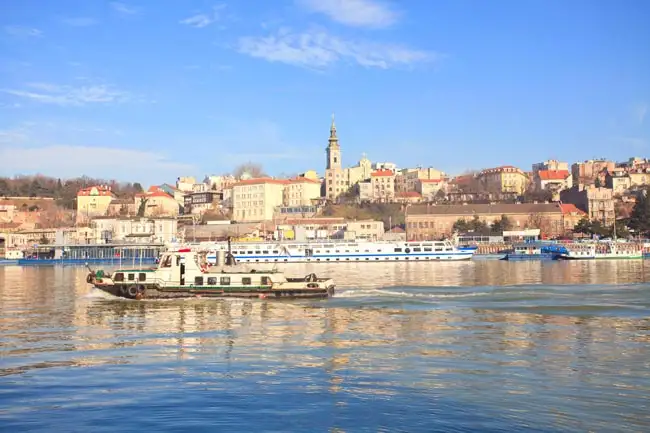
- Day 1:Arrive in BelgradeWelcome to the Balkans. Today we arrive in Belgrade, Serbia's capital since 1403. This historic city occupies a strategic position at the confluence of the Sava and Danube rivers, a location that has made it a coveted prize for empires throughout history—from Rome to Byzantium, from the Ottomans to the Austro-Hungarians. Over the next 19 days, we'll trace how those empires shaped seven countries that share borders but not always beliefs, architecture that blends traditions but preserves distinctions, and a landscape where crossroads became battlegrounds and, eventually, communities.
This evening we gather with fellow travellers for our first meal together.
Overnight in Belgrade.
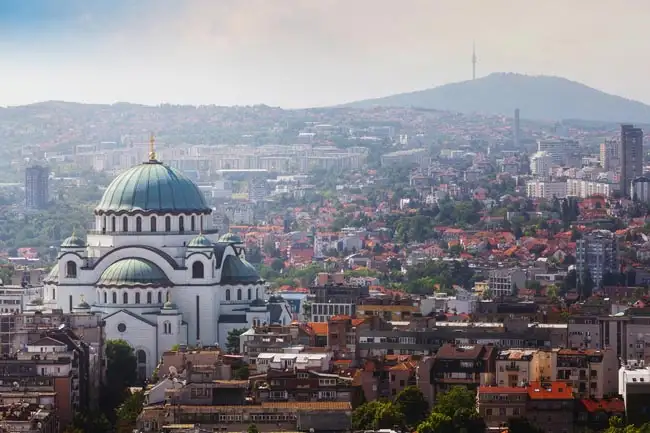
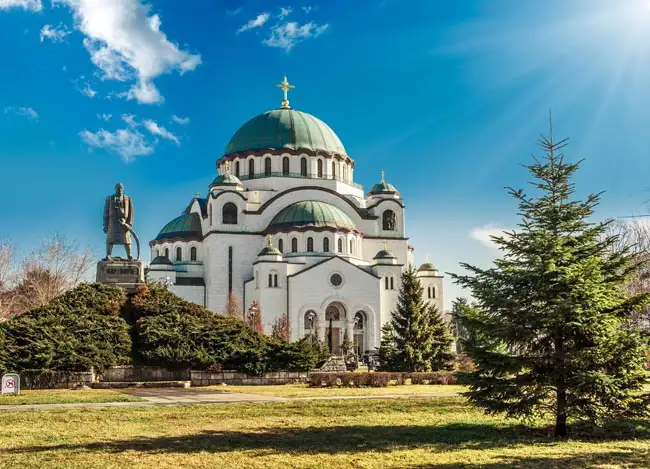
Included Meal(s): Dinner - Day 2:Belgrade: City TourThis morning we begin with a panoramic drive through Belgrade. We see St. Sava Church, one of the world's largest Orthodox churches, and the Royal Palace complex on Dedinje Hill. Returning to the city centre, we continue on foot from Republic Square, where the National Theatre and National Museum face the main gathering point for locals.
Nearby, Skadarlija Street climbs steeply through what was once the Gypsy Quarter. This bohemian district became Belgrade's artistic heart where writers and musicians gathered in traditional kafanas. We walk along Knez Mihailova, the main pedestrian promenade lined with 19th-century buildings, many housing shops and cafes today.
We visit Princess Ljubica's Residence, a 19th-century mansion displaying period furniture and aristocratic life. The nearby Kosancicev Venac Street preserves old Belgrade's atmosphere with traditional architecture and intimate scale.
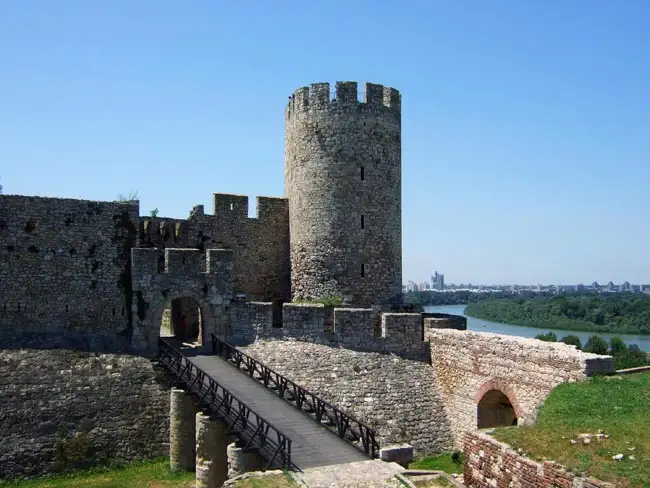
Our tour concludes at Kalemegdan Park and Belgrade Fortress, positioned where the Sava meets the Danube. Romans first fortified this height in the 2nd century. The current walls and towers date mainly from the 18th century, though earlier fortifications remain visible. From the ramparts we look across the rivers and the Pannonian Plain beyond—the terrain that made this confluence a crossroads and a target. Every empire moving between Central Europe and the East needed to control this point. We'll see what they built when they did.
Overnight in Belgrade.
Included Meal(s): Breakfast and Dinner - Day 3:Belgrade - Novi PazarWe travel south from Belgrade through Serbia's varied terrain—fertile plains giving way to limestone ranges and ancient hills. Our route follows the Ibar Valley into the Raska region, where a significant Muslim population distinguishes this area from the rest of Serbia. Unlike neighbouring Kosovo's Albanian Muslims, Raska's Muslims are ethnic Slavs. Minarets begin appearing on the skyline as we travel deeper into the valley, marking a shift we'll encounter repeatedly: different faiths sharing Slavic roots.
This afternoon we visit Studenica Monastery, a UNESCO World Heritage site and the richest of Serbia's Orthodox monasteries. Founded between 1183 and 1196, the monastery's two principal churches contain exceptional 13th and 14th-century Byzantine frescoes. The white marble facades represent the pinnacle of medieval Serbian ecclesiastical building—a tradition we'll see challenged and layered over as we move south into Ottoman and Catholic territory.
We continue to Sopocani Monastery, also UNESCO-protected and dating to the 13th century. The interior frescoes rank among the finest examples of Byzantine painting, their colours remarkably preserved.
We proceed to the Kopaonik region for the night. Novi Pazar, the area's largest town, takes its name from the Turkish "new market"—a tradition that continues in the large open-air market north of the Raska River. The 16th-century Altum Alem Mosque still stands in the old bazaar area south of the river.
Overnight in Kopaonik.
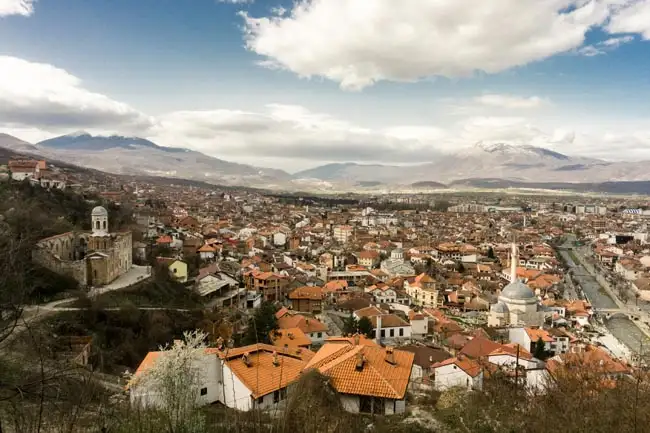
Included Meal(s): Breakfast and Dinner - Day 4:Novi Pazar, Serbia - Pristina, KosovoThis morning we cross from Serbia into Kosovo, passing Kosovska Mitrovica—a city that remains divided along ethnic lines—before reaching Pristina, Kosovo's capital.
Kosovo declared independence from Serbia in February 2008. The United States and many European nations recognized this independence, while Serbia and its allies, notably Russia, rejected it. The region's history reflects centuries of cultural collision and coexistence. Ottoman forces defeated a joint Serbian-Albanian army here in 1389, yet between periods of conflict, diverse communities lived peacefully together. Today's population is predominantly Muslim Albanian, with Orthodox Christian Serbs forming the second-largest group. Where yesterday's monasteries spoke for Serbian Orthodoxy at its medieval height, today we see how that heritage endures—contested but present—among a Muslim majority.
Our afternoon walking tour takes us through Pristina's lively bazaar. We see the 19th-century Ottoman clock tower and the Fatih Mosque, built in 1461 under Sultan Mehmet II. The Carshia Mosque, constructed in the 15th century, stands as Pristina's oldest building. We visit the Ethnographic Museum, housed in an 18th-century traditional house—one of few original structures remaining in the old bazaar.
Time permitting, we drive to Gracanica to see the monastery church, completed in 1321 by Serbian King Milutin Nemanjic. The building represents the height of Serbian Byzantine architecture, with frescoes that rank among Kosovo's finest medieval art.
Overnight in Pristina.
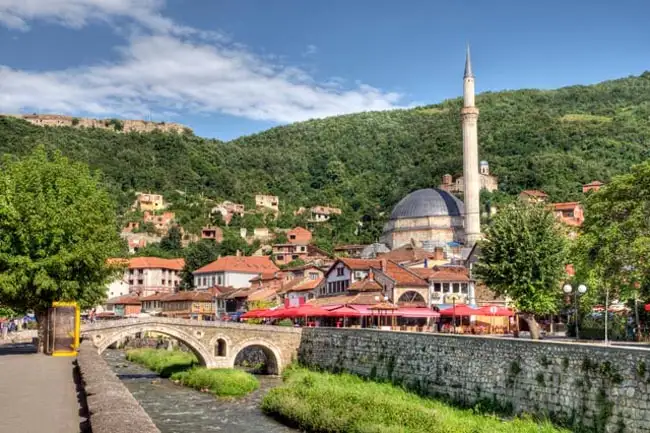
Included Meal(s): Breakfast and Dinner - Day 5:Pristina - Prizren, Kosovo - Skopje, North MacedoniaThis morning we travel south to Prizren, considered one of Kosovo's most beautiful towns. Positioned on the slopes of the Sharr Mountains where the Bistrica River flows through the valley, Prizren preserves exceptional architectural heritage. Traditional Ottoman houses with wooden balconies overlook gardens and narrow lanes wind up the hillside—the first intact Ottoman townscape we've encountered, where Belgrade's fragments and Pristina's scattered buildings become a complete urban picture.
The 16th-century Sinan Pasha Mosque dominates the small centre. The cobbled Shadervan Square contains several cafes, while upstream an arched stone bridge from the 15th century spans the river. Above the mosque, the road climbs past the 14th-century St. Saviour Church to the 11th-century Kaljaja Fortress, which commands views across the town and valley.
We visit the 12th-century Orthodox Cathedral Church of the Virgin of Levisa, listed on UNESCO's endangered heritage register. The interior frescoes date from the medieval period. The Albanian League of Prizren Museum displays national costumes and historical artifacts.
By afternoon we cross into North Macedonia and continue to Skopje, the capital. This landlocked, mountainous country declared independence from Yugoslavia in 1991. The landscape contains numerous valleys and lakes, with architectural heritage from both Byzantine and Ottoman periods evident in churches and mosques throughout the region.
Overnight in Skopje.
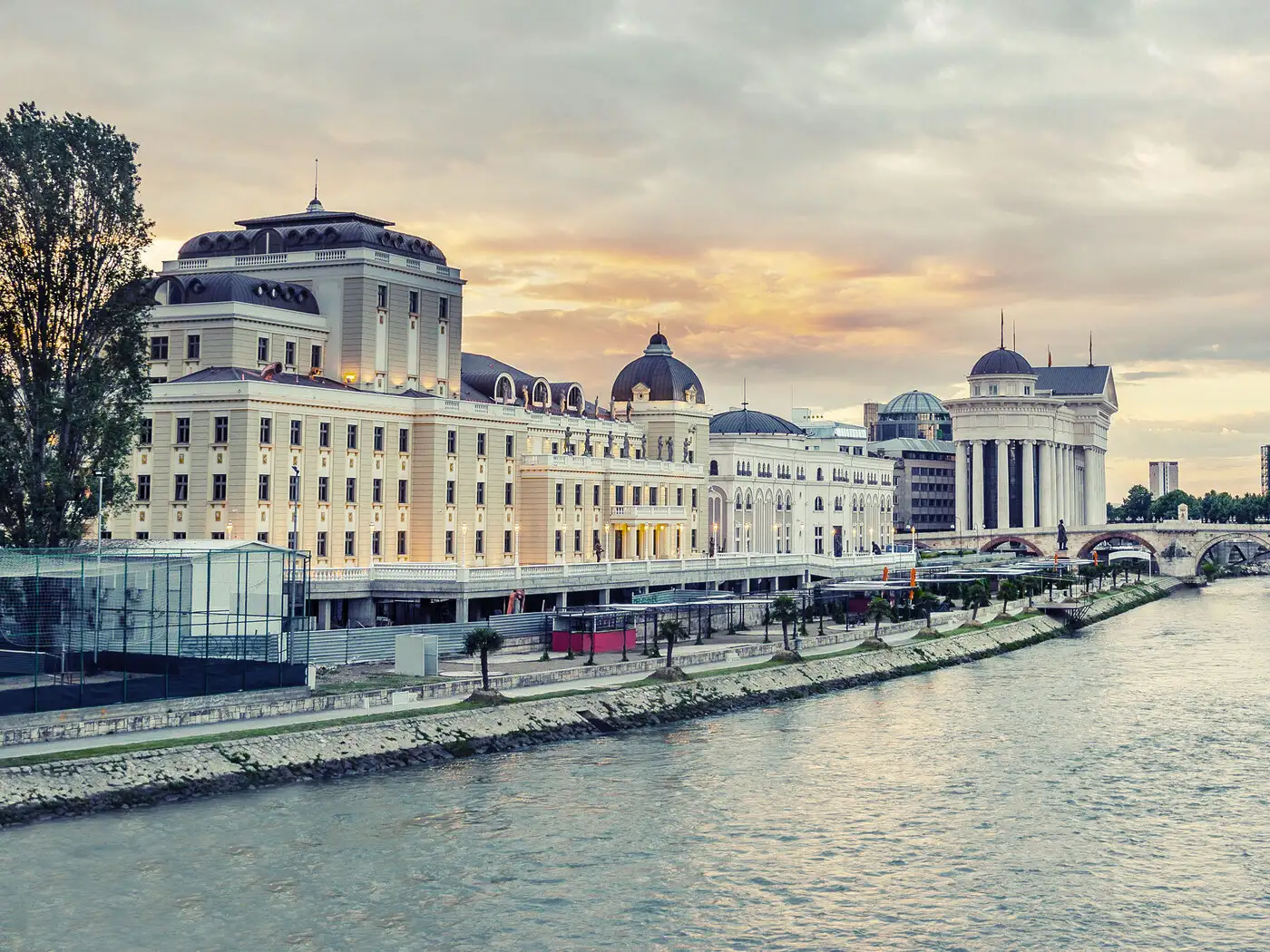
Included Meal(s): Breakfast and Dinner - Day 6:Skopje: City TourSkopje's name derives from its Byzantine-era role as a frontier observation post—the word means "watch-tower." The city occupies both banks of the Vardar River, its history stretching back over 2,000 years to when Romans knew it as Skupi. Byzantium, the First Bulgarian Empire, and the Ottoman Turks all ruled here at various periods.
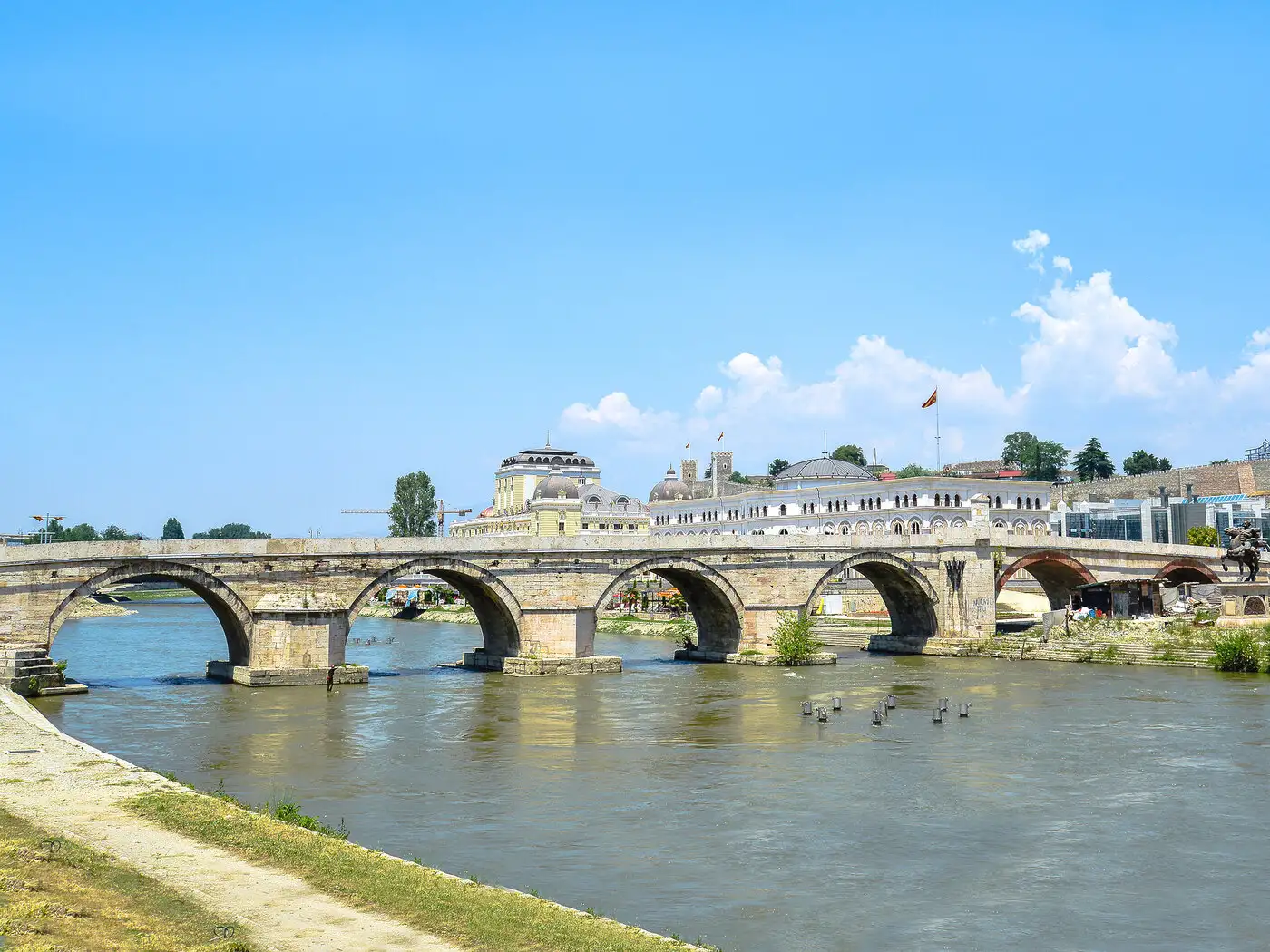
The Old Bazaar developed between the Stone Bridge and Kale fortress during medieval times, reaching its zenith in the 16th and 17th centuries as one of the Balkans' largest oriental markets. Today the area retains significant historic monuments. We visit the Archaeological Museum during our walk through the old quarter.
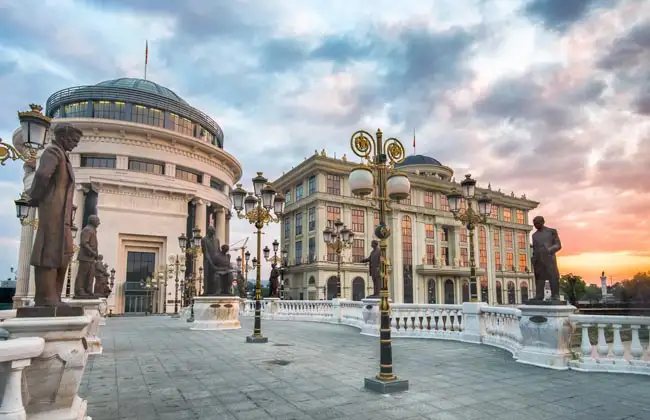
The Stone Bridge, built by Turks in the 15th century, connects the bazaar to the modern town and remains a city symbol. Kale Fortress occupies the site where settlement began—Emperor Justinian founded the town of Justiniana Prima here in the 6th century. Ottoman forces later used the fortress as barracks from the 14th through 20th centuries.
We see the Mustafa Pasha Mosque, an Ottoman architectural achievement rising above the bazaar, and the Daut Pasha Hamam, a 15th-century bathhouse considered a masterpiece of Islamic civil architecture. Where Prizren preserved an Ottoman townscape almost by accident, Skopje's bazaar was built to project power—the empire's commercial and administrative centre for the region, designed to impress and endure.
Overnight in Skopje.
Included Meal(s): Breakfast and Dinner - Day 7:Skopje - Tetovo - Lake OhridLeaving Skopje, we drive southwest toward the Albanian border, pausing first in Tetovo for a visit to the Painted Mosque of 1459. One of the most ornate Ottoman structures in the Balkans, its exterior is covered in an intricate system of floral and geometric frescoes — a vivid contrast to the plain stone façades more commonly associated with mosque architecture. The interior is equally detailed, every surface a canvas for patterns that have been restored and repainted across six centuries.
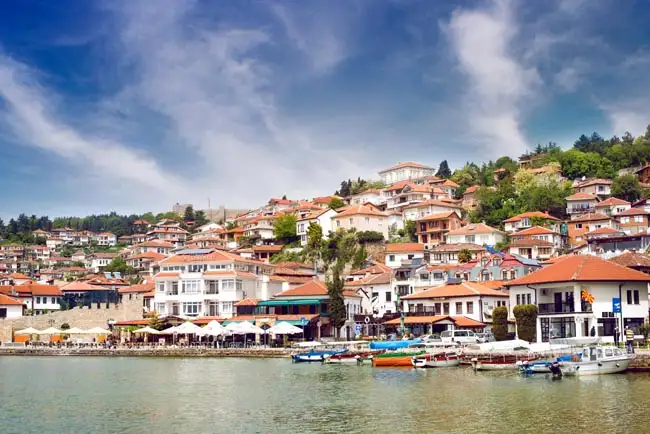
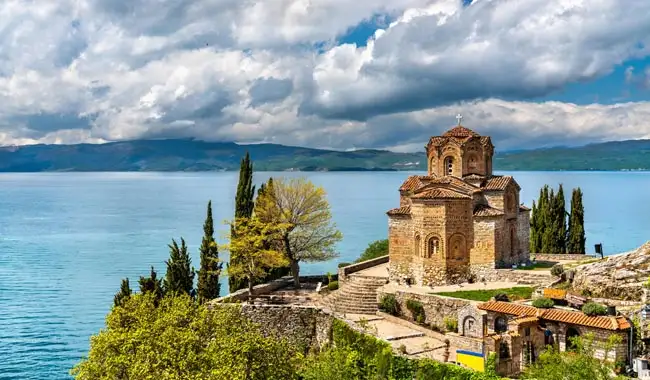
From Tetovo we continue through Mavrovo National Park, a vast highland reserve of beech forests and glacial lakes before the land opens toward the Albanian border. Our destination is Ohrid, one of Europe's oldest continuously inhabited settlements, founded as Lychnidos in 353 BCE. The town sits above the lake of the same name — a body of water so ancient and so isolated that it hosts species found nowhere else on earth. Both the town and lake carry UNESCO World Heritage status, and the distinction feels earned: Ohrid's old quarter is a compressed layering of Hellenistic, Byzantine, and Ottoman history stacked above shores that have been drawing travellers for over two millennia.
Overnight in Ohrid.
Included Meal(s): Breakfast and Dinner - Day 8:Ohrid: Area TourThis morning we explore Ohrid's old town on foot. The ancient Greeks called this place Lychnidos, "City of Light." When Slavs arrived in the 10th century they renamed it Arida, and it became a major cultural centre. The Cyrillic alphabet originated here through the work of Saints Cyril and Methodius, establishing Ohrid as the cradle of Slavic written language.
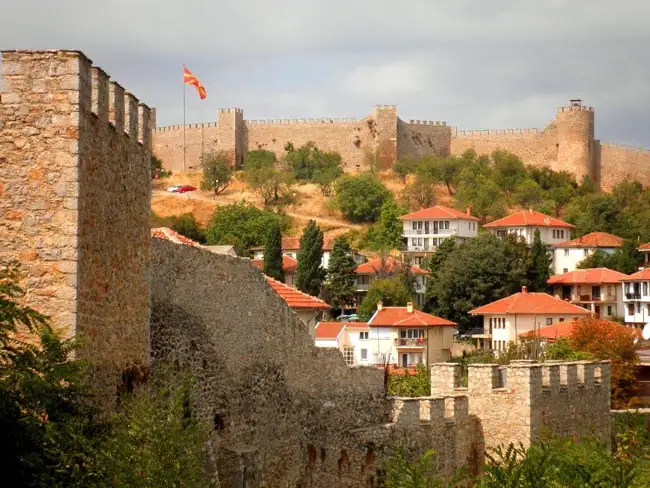
Ohrid earned its nickname "City of 365 Churches" through centuries of religious construction. We visit St. Panteleimon Monastery, dating to the 9th century and recognized as the world's oldest Slav monastery. The town contains numerous archaeological sites, including a Roman amphitheatre and fortress ruins. We walk through the local bazaar where traditional crafts continue.
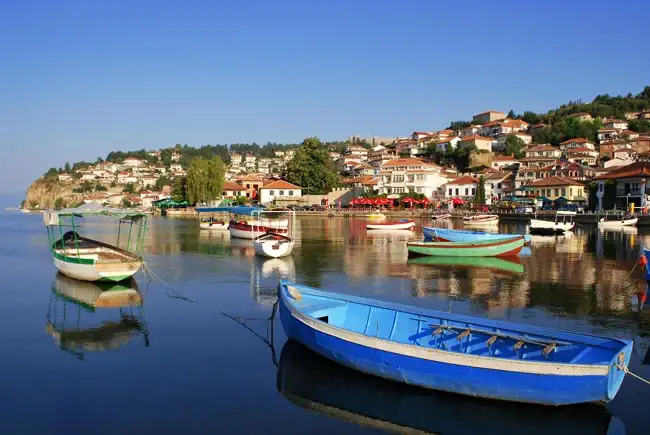
As the day draws to a close, we board a boat for a panoramic sunset cruise on Lake Ohrid. One of Europe's oldest and deepest lakes, Ohrid supports unique endemic species found nowhere else. From the water, we watch the sun descend behind the mountains, casting golden light across the ancient town's churches and fortress walls.
We've spent a week crossing borders, navigating spaces between empires and faiths. Here on this lake, as the light shifts from gold to blue, the borders feel less important. Ohrid has outlasted every empire that claimed it by refusing to be claimed—by remaining, simply, itself. Tomorrow we cross into Albania, a country that tried isolation and is only now rejoining the conversation.
Overnight in Ohrid.
Included Meal(s): Breakfast and Dinner - Day 9:Ohrid, North Macedonia - Berat, AlbaniaWe travel around Lake Ohrid and cross into Albania. This small country between the Adriatic and Ionian Seas remained isolated for decades under communist rule. Today Albania transitions toward an open-market economy while preserving its rich archaeological heritage—traces of Illyrian, Greek, Roman, Byzantine, and Ottoman civilizations appear throughout the landscape.
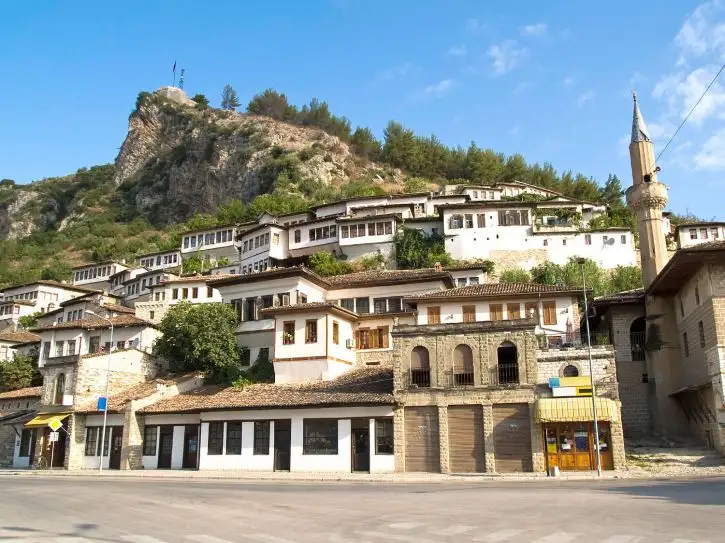
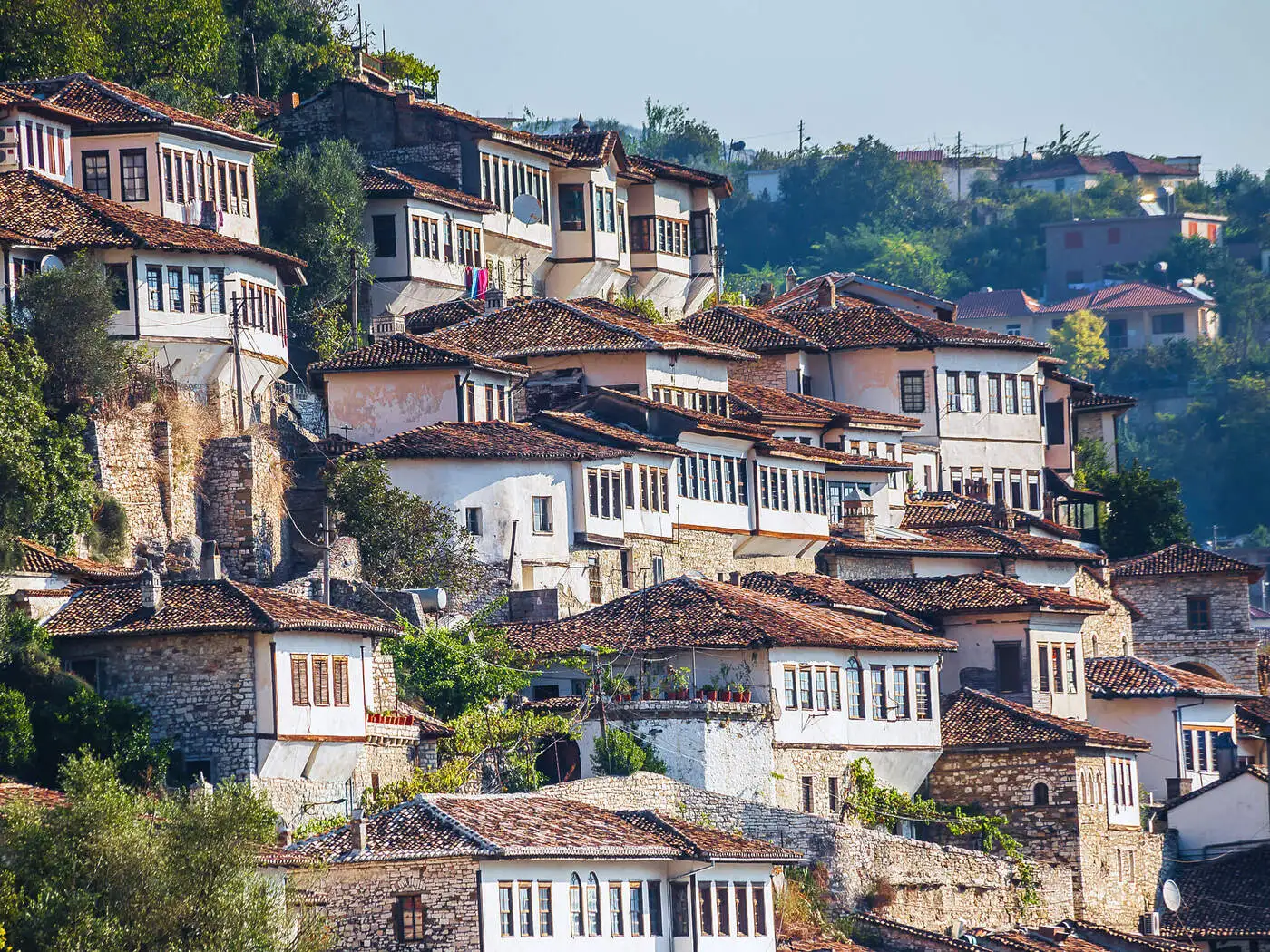
Our destination is Berat, known as the "city of one thousand windows" for its distinctive Ottoman architecture. UNESCO protects Berat as a museum city, and it ranks among Albania's most beautiful towns. Founded as Antipatrea, Berat climbs the slopes of Mount Tomorr, with a medieval castle commanding the heights.
We spend the afternoon touring the old town, one of the Balkans' best-preserved Ottoman urban centres. The inhabited citadel crowns the hill, its walls enclosing ruined mosques and several medieval Orthodox churches with restored frescoes. The Onufri Museum, housed in a church, displays Albania's finest icon collection—the work of 16th-century master painter Onufri and his son Nikolla.
In the lower town we see the Lead Mosque, named for its roof covering, along with the Bachelor's Mosque and Sultan's Mosque. The Ottoman han (inn) provides a glimpse of the city's commercial past when traders gathered here on routes between the interior and coast.
Overnight in Berat.
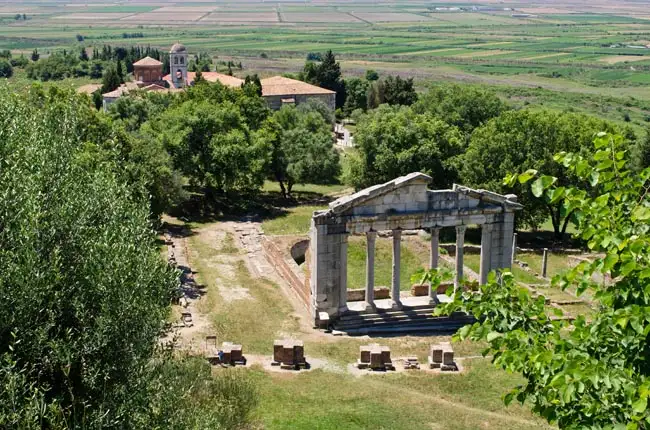
Included Meal(s): Breakfast and Dinner - Day 10:Berat - Apollonia - Durres - TiranaWe travel from Berat to Apollonia, Albania's largest archaeological site. Founded as a Greek colony in the 6th century BCE, Apollonia flourished during Hellenistic and Roman periods as an important city on the Via Egnatia. The ruins spread across a hillside, with a collection of artifacts displayed in a beautiful Orthodox monastery built before the 12th century.
We continue to Durres, Albania's second-largest city and one of its oldest settlements. According to legend, Illyrian King Epidamnos founded the city and named the port after his grandson Dyrrah. For centuries Durres served as the Adriatic's largest port. In 1939, Italian troops invaded here, and those killed defending the city are remembered as the first martyrs of Albania's War of National Liberation.
We visit Durres' Roman amphitheatre, the Balkans' largest, built in the 1st century and under consideration for UNESCO protection. Behind the Aleksander Moisiu Theatre on the central square, we see ruins of the Roman Baths.
By late afternoon we reach Tirana, Albania's capital. We've been tracing empires across seven countries—Rome, Byzantium, the Ottomans, the Austro-Hungarians—but Albania added a fifth: isolation. For half a century, this country chose withdrawal over engagement. What that isolation preserved, and what it cost, we'll discover tomorrow.
Overnight in Tirana.
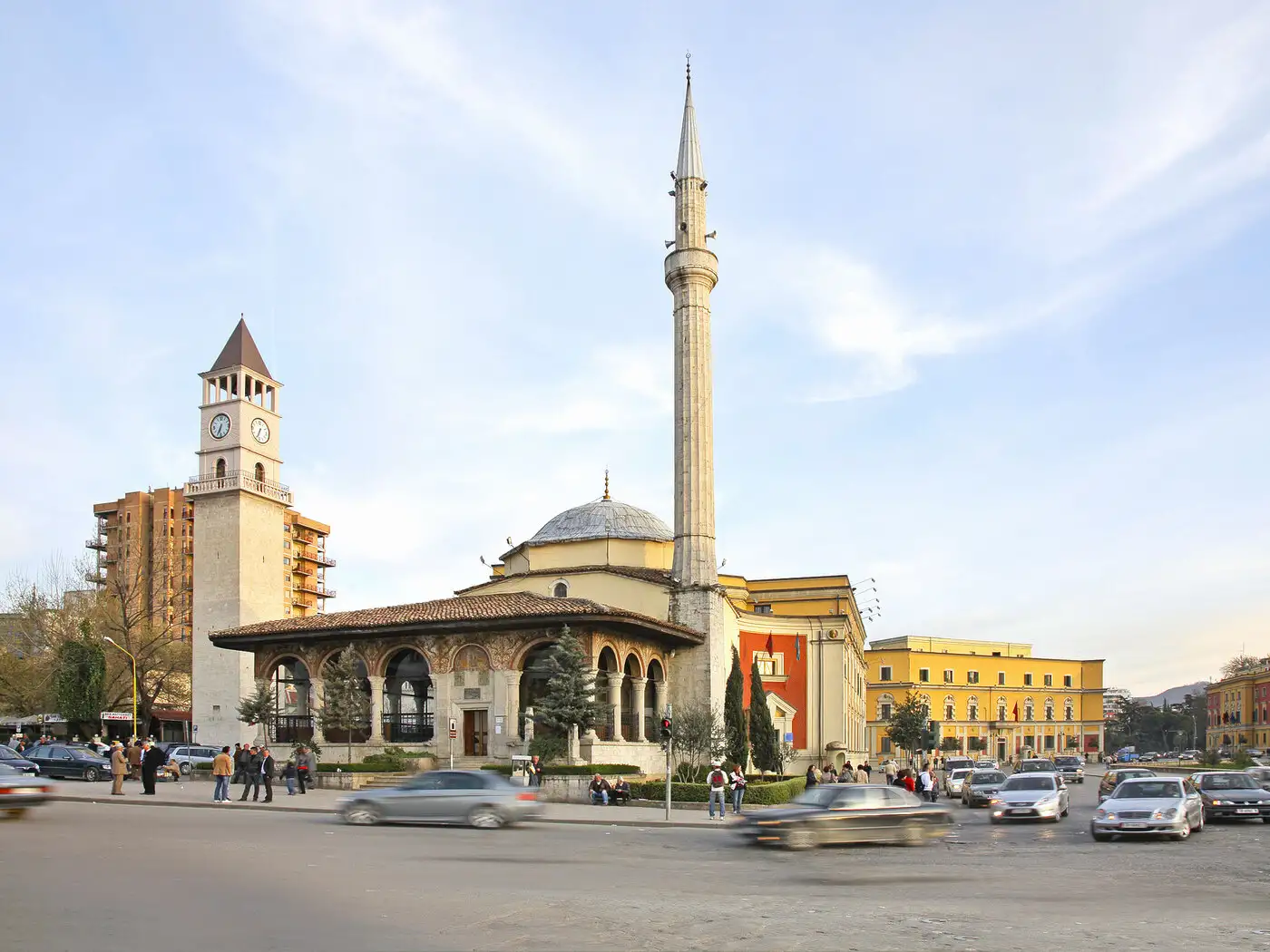
Included Meal(s): Breakfast and Dinner - Day 11:Tirana: City Tour & Free AfternoonThe Albanian capital rewards those willing to look past its turbulent 20th century and find the city underneath. We begin with a drive along the Boulevard of Martyrs to Skanderbeg Square, the civic heart of Tirana, where the Et'hem Bey Mosque of 1794 stands alongside the Ottoman Clock Tower — both survivors of Enver Hoxha's campaign to erase religion from public life when Albania became the world's first constitutionally atheist state in 1967.
Our most arresting stop is BunkArt, a vast Cold War nuclear bunker built in secrecy beneath the city in the 1970s and capable of sheltering the entire communist leadership in the event of attack. Converted now into a museum of 20th-century Albanian history, it offers an unflinching account of the isolation and paranoia that defined five decades of Hoxha's rule. Few experiences on this tour illuminate the weight of recent history as directly.
The afternoon is yours — time to revisit a gallery, find a table at one of the café-lined boulevards, or simply decompress after the pace of the past several days. This evening, those who wish may join an optional Albanian Night of traditional music and folk dance — an exuberant introduction to a culture that long kept the world firmly at arm's length.
Overnight in Tirana.
Included Meal(s): Breakfast and Dinner - Day 12:Tirana - Kruja - Shkodra, Albania - Podgorica, Montenegro - BudvaWe begin the morning with a cable car ascent of Mount Dajti, rising above the capital to a ridge that looks west over Tirana's rooftops to the Adriatic glinting on the horizon, and east into the mountains that sealed Albania off from the world for so long. It is a perspective worth having before we head north.
Our first stop is Kruja, the hilltop town where Gjergj Kastrioti — Skanderbeg — held off successive Ottoman campaigns for more than two decades in the mid-15th century. His castle commands the ridge above the modern town, and the Ethnographic Museum below it documents Albanian domestic life across the centuries with unusual intimacy. For Albanians, Skanderbeg is not simply a medieval hero but the defining expression of national identity — an argument the castle and its exhibits make quietly but persistently.
We continue north to Shkodra, ancient Scodra of the Illyrians, where the medieval Rozafa Castle rises above the confluence of three rivers. A border crossing into Montenegro brings us alongside the vast, still expanse of Lake Skadar before the landscape opens to the Adriatic. We arrive in Budva as the light softens — the old town's medieval walls facing the sea, the evening ahead to explore its harbour and lanes at your own pace.
Overnight in Budva.
Included Meal(s): Breakfast and Dinner - Day 13:Budva - Kotor, Montenegro - Dubrovnik, CroatiaYou'll have some time this morning to spend in Budva as you wish — the compact old town is best explored on foot, its Venetian-influenced lanes, harbour church, and seafront walls rewarding an unhurried wander before we depart.
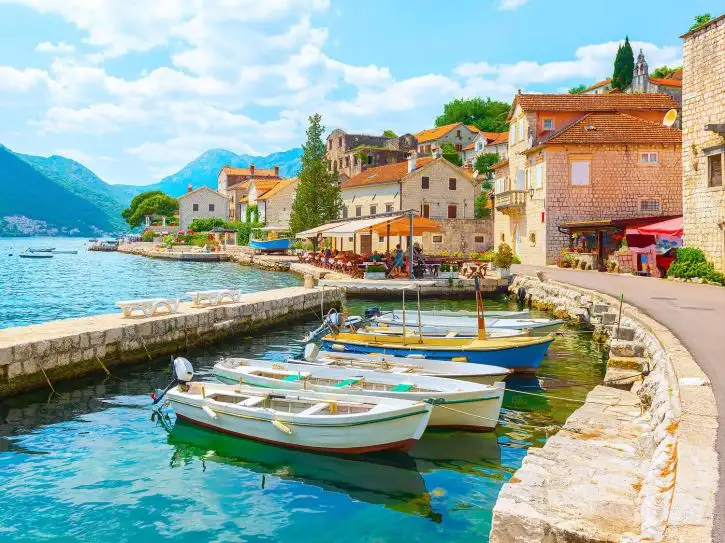
Our drive follows the Bay of Kotor inland, the water narrowing between limestone mountains in one of the Mediterranean's most dramatic coastal approaches. Kotor itself is one of the Adriatic's finest medieval towns — its Venetian walls climb the sheer face of Mount Lovćen behind the city, and the old quarter within is a sequence of palaces, squares, and churches accumulated across centuries of maritime wealth. Our local guide leads us through the Cathedral of St. Tryphon, whose Romanesque façade and treasury of Byzantine reliquaries speak to Kotor's centuries as a prosperous Venetian outpost.
From nearby Perast, a short boat ride carries us to Our Lady of the Rocks — a small island chapel that exists entirely through an act of collective faith. For centuries, sailors who passed safely through the bay returned to drop stones into the water, gradually building the artificial island the chapel now stands on. The interior is lined with hundreds of votive paintings, each a personal account of rescue or gratitude. It is one of the more quietly extraordinary places on this journey.
We cross into Croatia and make our way along the Dalmatian coast to Dubrovnik.
Overnight in Dubrovnik.
Included Meal(s): Breakfast and Dinner - Day 14:Dubrovnik: City TourThis morning we explore Dubrovnik's Old Town on foot. A UNESCO World Heritage site since 1979, Dubrovnik earned epithets like "Pearl of the Adriatic" for its beauty and sophisticated history. The 1667 earthquake destroyed much of the medieval city, and bombardment in 1991-92 caused severe damage. Extensive restoration has returned the city to its former glory—red-tiled roofs, towering fortifications, and limestone-paved streets.
We enter through Pile Gate, as motor vehicles cannot access the walled city. Stradun runs from Pile Gate to Ploce Gate, connecting the Old Town's two main entrances. The uniform Baroque buildings lining this limestone-paved street date from post-earthquake reconstruction.
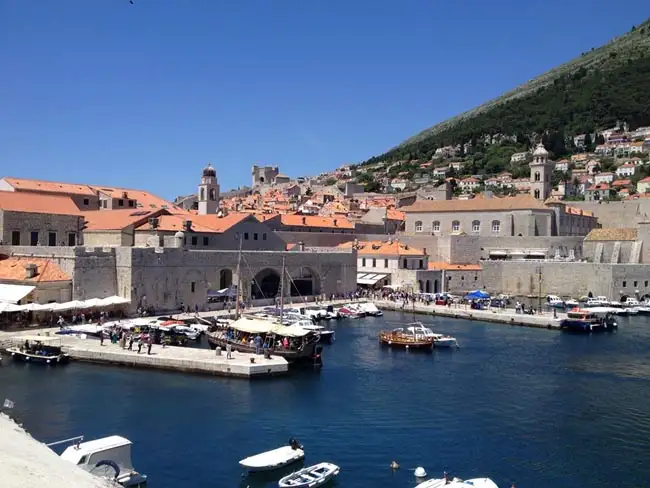
We visit the Franciscan Monastery, notable for Europe's oldest functioning pharmacy (operating since 1317). The Rector's Palace exemplifies Renaissance architecture. The Cathedral's dome dominates the skyline. We see Onofrio's Fountain, the Clock Tower, Orlando's Column, and Gundulic Square. We walk to the old harbour, essential to Dubrovnik's prosperity as a maritime republic.
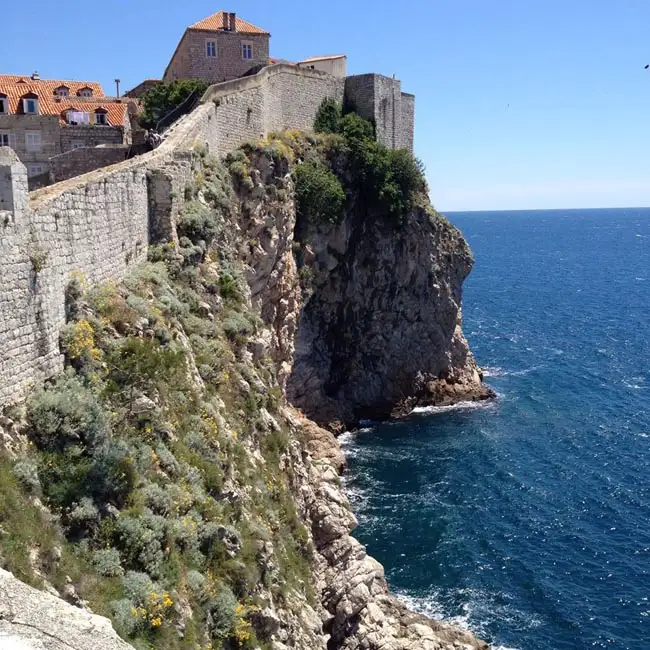
We also walk sections of the city walls, nearly 2 kilometres in circuit. Built mainly in the 15th century, the walls and bastions provide elevated views across the old town, harbour, and Adriatic beyond. Where Kotor's walls protected merchants, Dubrovnik's walls made a statement: a small republic could prosper through trade and diplomacy, maintaining independence while empires rose and fell around it. Tomorrow we leave the coast and travel inland to Bosnia, where walls told different stories and bridges mattered more.
Overnight in Dubrovnik.
Included Meal(s): Breakfast and Dinner - Day 15:Dubrovnik , Croatia - Pocitelj - Kravica Waterfall - Mostar, Bosnia & HerzegovinaToday we travel inland into the mountains, crossing into Bosnia and Herzegovina. This region's history extends to medieval times, with layers of Ottoman and Austro-Hungarian influence shaping the landscape.
We stop at Pocitelj, a hillside town where Ottoman architecture climbs toward the Sahat Kula, a watchtower that once guarded the Neretva Valley below. UNESCO protects this settlement for its oriental character—the same heritage we first encountered in Belgrade and traced through Kosovo, Macedonia, and Albania.
We visit Domano Winery on the Dubrava Plateau for Bosnia's sparkling wine, then see Kravica Waterfall cascade 25 metres down a limestone cliff—the Neretva's power made visible.
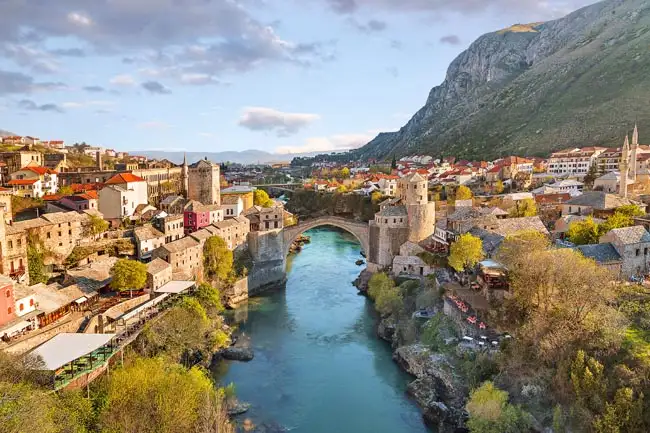
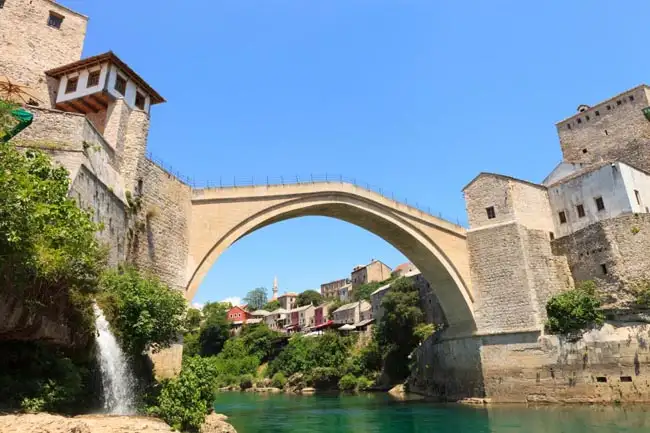
That same river made Mostar possible. The town's name means "bridge keeper," and for over four centuries, a stone arch connected the two banks—Muslim east and Christian west, the Adriatic coast and Herzegovinian interior, the two halves of a city that needed each other. The bridge we saw in Skopje connected a bazaar to a modern town. Prizren's bridge crossed a creek. But Mostar's bridge, built in 1566, connected worlds.
When artillery destroyed it in November 1993, residents on both banks wept for more than stone. The bridge had survived 427 years but it fell in a day. Its 2004 reconstruction used traditional methods and stones recovered from the riverbed—some still bearing chisel marks from 16th-century masons. In a region where division often feels inevitable, Mostar chose connection.
Overnight in Mostar.
Included Meal(s): Breakfast and Dinner - Day 16:Mostar: Walking Tour & BlagajThis morning we cross the bridge. Not just as tourists, but as part of a centuries-long procession of travellers, traders, and pilgrims who have crossed here since 1566. Mostar developed as a multi-ethnic settlement precisely because the bridge made cooperation necessary—Muslim east and Christian west, plains and mountains, the portable and the rooted, all dependent on this crossing.
The Old Bridge (Stari Most) became the physical embodiment of that cooperation. UNESCO inscribed the restored bridge in 2005, recognizing it as a symbol of reconciliation and coexistence—not just a monument to what was lost, but a commitment to what could be rebuilt.
We visit Koski Mehmed Pasha Mosque (1618) and walk the Kujundziluk bazaar, where craft shops cluster as they have for centuries. The Kriva Cuprija (Crooked Bridge) over Rabobolja creek resembles a miniature Stari Most. We see Karadzozbe Mosque (1577) and the 1635 Turkish House (Biscevica House), layers of Ottoman domestic life preserved.
This afternoon we visit Blagaj village. The Buna Spring flows from a 200-metre cliff face, creating the Buna River at a single dramatic point. The Ottoman-era Tekija, a Dervish monastery built into the cliff beside the spring in the 16th century, remains one of Bosnia's most atmospheric sites. We walk through Blagaj's old town, seeing the 17th-century Velagic House and old flourmills powered by the Buna's strong current.
Overnight in Mostar.
Included Meal(s): Breakfast and Dinner - Day 17:Mostar - Sarajevo: City TourThe road north follows the Neretva River through some of Bosnia's most dramatic scenery — a deep canyon landscape of limestone cliffs and fast green water that makes the valley's WWII history feel simultaneously remote and immediate. We stop at Jablanica, where the twisted wreckage of a railway bridge still hangs above the river — a deliberate act of destruction by Tito's Partisan forces in 1943 to halt a German advance. The Battle of the Neretva it precipitated became one of the war's most celebrated Yugoslav episodes, later mythologised in film.
In Konjic we descend into Tito's Bunker — a vast nuclear shelter built in absolute secrecy over two decades beneath the town, capable of housing the entire Yugoslav leadership for six months. Completed in 1979, it was never used and remained classified until 1992. The scale of the installation, and the paranoia required to build it, says as much about the Cold War in the Balkans as any museum exhibit.
The approach to Sarajevo brings the mountains closer, the city appearing in its bowl of hills with the minarets and church towers that signal the confluences ahead. We settle in before dinner, the city's complex and layered story waiting for tomorrow.
Overnight in Sarajevo.
Included Meal(s): Breakfast and Dinner - Day 18:Sarajevo: City TourSarajevo spent over 300 years under Ottoman governance before Austro-Hungarian rule arrived in the late 19th century. The empire collapsed in 1914 when Archduke Franz Ferdinand was assassinated here, precipitating World War I. In 1984 Sarajevo hosted the Winter Olympics. A decade later, the city endured a prolonged siege.
Our tour explores the old town where Sarajevo's medieval origins remain visible. Bascarsija, the heart of Ottoman Sarajevo, began construction in 1462. The quarter's streets still bear names of the 80+ trades that once operated here. Each empire that ruled the Balkans left architectural marks. But only in Sarajevo do all those layers converge in a single square: the 16th-century Ghazi Husref-Bey Mosque, the Orthodox Old Church, the Catholic Cathedral, and the Ashkenazi Synagogue all stand within walking distance. Not as symbols of tolerance—Sarajevo's history is too complicated for that—but as evidence that coexistence, however fragile, is possible.
We visit Svrzo House, built in the 18th century and representing authentic Ottoman-era Bosnian architecture. At the Latin Bridge, dating to 1798, we mark the spot where Archduke Ferdinand's assassination occurred on June 28, 1914—the event that triggered World War I. We see the City Hall (Vijecnica), completed in 1896, and the Old Orthodox Church from the 16th century.
We've come full circle. We began at Belgrade's confluence where empires collided for control. We end in Sarajevo's old quarter where empires, faiths, and centuries sit beside each other—not always peacefully, but persistently.
Overnight in Sarajevo.
Included Meal(s): Breakfast and Dinner - Day 19:DepartOur journey through the Balkans concludes as we depart from Sarajevo.
From Belgrade's fortress where the Sava meets the Danube, we crossed borders where medieval monasteries persist among Muslim majorities, drifted on Ohrid's ancient lake as divisions felt less important, descended from Albania's isolation to the Adriatic's openness, and walked the walls where small republics prospered while empires rose and fell.
In Mostar we crossed a bridge rebuilt after war. In Sarajevo we walked through a tunnel dug during siege. We stood at the Latin Bridge where a gunshot ignited a century of conflict.
The Balkans keeps testing the same question: can a crossroads be more than a battlefield? Sometimes yes—when people choose to rebuild bridges. Sometimes no—when fear builds bunkers instead. Often both—Sarajevo's mosques and churches close enough to hear each other's calls to prayer, far enough to remember why distance once felt necessary.
What we've traced isn't reconciliation complete, but reconciliation attempted repeatedly, despite centuries of evidence that division is easier.
Bon voyage. Srećan put.
Included Meal(s): Breakfast
Countries Visited: Albania, Bosnia and Herzegovina, Croatia, Kosovo, North Macedonia, Montenegro and Serbia
*The red tour trail on the map does not represent the actual travel path.
Book This Tour
- Final payment: Due 90 days prior to departure.
- Deposit: A non-refundable $1000 CAD Deposit is required at booking.
- Optional Single Supplement: $1950 CAD (number of singles limited).
(View options forsingle travellers) - Transfering Tour or Date: Transferring to another tour or tour date is only permissible outside of 120 days prior to departure and is subject to a $100 CAD change fee.
(Read our cancellation policy)
Prices below are per person, twin-sharing costs in Canadian Dollars (CAD). Pricing does not include airfare to/from the tour and any applicable taxes.
Frequently Asked Questions
- What is the maximum number of participants on a trip?Most of our tours carry a maximum of 18 participants; some tours (ie hiking tours) top out at 16. In the event that we do not achieve our minimum complement by our 90-day deadline, we may offer group members the option of paying a "small-group surcharge" as an alternative to cancellation. If all group members agree, we will confirm the trip at existing numbers; this surcharge is refundable in the event that we ultimately achieve our regular minimum. If the small group surcharge is not accepted, we will offer a refund of your deposit or a different trip of your choice.
- Can I extend my tour either at the beginning or end? What about stopovers?Yes, you can extend your tour either at the beginning or the end and we can book accommodation in our tour hotel. Stopovers are often permitted, depending on air routing. Stopovers usually carry a "stopover" fee levied by the airline.
- How do I make a reservation? How and when do I pay?The easiest way to make a reservation is via our website; during office hours, you are also more than welcome to contact us by telephone.
A non-refundable deposit is payable at the time of booking; if a reservation is made within 90 days, full payment is required. Some trips require a larger deposit. If international airline bookings require a non-refundable payment in order to secure space or the lowest available fare, we will require an increase in deposit equal to the cost of the ticket(s).
Early enrolment is always encouraged as group size is limited and some trips require greater preparation time.
Once we have received your deposit, we will confirm your space and send you a confirmation package containing your trip itinerary, any visa/travel permit related documents, invoice, clothing and equipment recommendations, general information on your destination(s), and forms for you to complete, sign and return to us. Your air e-tickets (if applicable), final hotel list, final trip itinerary, and instructions on how to join your tour, will be sent approximately 2-3 weeks prior to departure. - What about cancellations, refunds, and transfers?Please review our cancellation policy page for details.
- I am a single who prefers my own room. What is a single supplement?All of our tours have a single supplement for those who want to be guaranteed their own room at each location.
This supplement is a reflection of the fact that most hotels around the world do not discount the regular twin-share rate for a room by 50% for only one person occupying a room. Most hotels will give a break on the price, but usually in the range of 25-30% of the twin-share rate. This difference, multiplied by each night, amounts to the single supplement.
The conventional amount can also vary from country to country and some destinations are more expensive than others for single occupancy. In order to be "single friendly," the supplements we apply are not a profit centre for us and we do our best to keep them as reasonable as possible.
On most tours we limit the number of singles available, not to be punitive, but rather because many hotels allow for only a limited number of singles; some smaller hotels at remote locations also have a limited number of single rooms available.
Please note that most single rooms around the world are smaller than twin-share rooms and will likely have only one bed. - Do you have a shared accommodation program?Yes! If you are single traveller and are willing to share, we will do our best to pair you with a same-gender roommate. Please note that should we fail to pair you, we will absorb the single supplement fee and you will default to a single room at no extra charge.