Tourcode: PM1
- History
- Overview
- Info & Inclusions
- Itinerary
- Map & Hotels
- Photos
- Dates & Prices
- Tour Duration: 40 Days
- Max Group Size 18
- Granada & the Alhambra
- 'Imperial cities', Meknes, Fes, Marrakech
- Madrid: City tour & Prado
- Comprehensive Barcelona city tour
- Santiago de Compostela: Place of Pilgrimage
- Relaxed seaside town of Essaouira.
- Singles friendly (view options for single travellers)
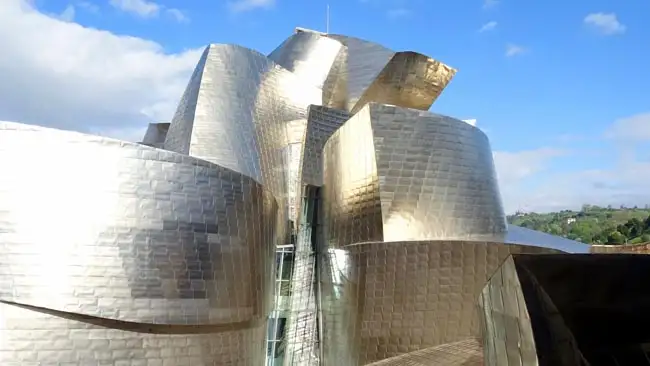
As we travel through Spain, we'll visit the revered pilgrimage site of Santiago de Compostela, marvel at the iconic Guggenheim Museum in Bilbao, and take a comprehensive tour of Barcelona's rich cultural heritage. In Madrid, we'll explore the city's vibrant streets and visit the world-renowned Prado Museum, while in Granada, we'll discover the breathtaking beauty of the Alhambra.
Our journey will also take us to Morocco, where we'll visit the imperial cities of Meknes, Fes, and Marrakech, each with its own unique character and history. Finally, we'll unwind in the relaxed seaside town of Essaouira, with its gentle ocean views and laid-back atmosphere, providing a perfect conclusion to our adventure.
- MealsSavour authentic flavours with included daily breakfasts and dinners at hotels or handpicked local restaurants—immersing you in local cuisine without worrying about reservations or budgets.
- Transport & Logistics
Private air-conditioned coaches and included internal ferries and flights—ensuring hassle-free travel so you can focus entirely on the discoveries ahead.
"Adventures Abroad tour leader's management and guest services managed the tour with great skill and dedication. The tour leader was on top of every move and transfer. We have not experienced any issues with logistics and had a great time."
~ JULIA O"The tour leader did an excellent job coordinating some difficult travel logistics, power outage issues and resolving problems and dealing with guests who had unrealistic expectations."
~ CYNTHIA COLLINS - Expert Guidance
Unlock insider secrets at every landmark with your full-time Tour Leader and expert local guides , all gratuities covered—no hidden tipping surprises—so you immerse fully in your destination's stories, worry-free. (Except for the tips to your tour leader at the end of your tour.)
"Amazing tour guide. Our tour guide was very well organized, Her passion, knowledge, and enthusiasm completely transformed the travel experience into something truly unforgettable..."
~ MELANIE LEMAIRE"Highly recommend every trip with Adventures Abroad. It's a well organized and well thought out adventure. The tour leaders are friendly, knowledgeable and experienced professionals. Highly recommend this company."
~ SUSAN WALL - Sightseeing & EntrancesAll entrance fees for sites visited as per the itinerary—no hidden costs—so you can explore ancient ruins and excursions with complete peace of mind.
- AccommodationsUnwind in clean, well-located 3 to 4-star hotels with private en suite facilities—handpicked for comfort and convenience after each day's discoveries—so you can rest easy knowing your stay supports the real adventure, not steals the spotlight.
- Small Group
Discover the world in small groups of up to 18 travellers plus your expert Tour Leader—unlocking spontaneity, off-the-beaten-path adventures, and genuine connections at a relaxed pace, free from crowds.
"Looking Forward to My Next Adventure The best feature of the Adventures tour was the small size that allowed the group to quickly load up, let everyone get acquainted within the first 24 hours, capitalize on unplanned surprises along..."
~ PHILIP BLENSKI"Good value for a great time I have traveled with Adventures Abroad for over 20 years now. Well thought out, interesting itineraries and the other travelers congenial and friendly. The price always seems fair and overall a..."
~ Trusted Customer - Airport Transfers For Land & Air CustomersWe handle hassle-free airport transfers for all our land and air tour customers—plus early arrivals or late departures when you book extra hotel nights directly with us for added peace of mind.
- International airfare to/from the tour
- Tour Leader gratuities, lunches, drinks, personal items (phone, laundry, etc), international air taxes (if applicable), excursions referenced as 'optional'
- Airport transfers for Land Only customers
- Optional travel insurance
- Seasonality and Weather:
From mid-April, Portugal, Spain, and Morocco enjoy a delightful spring experience, with mild temperatures and pleasant weather. The landscapes are vibrant with blooming flowers and lush greenery, making it an ideal time to explore the historic cities, countryside, and coastlines. In Portugal, the spring blooms are in full swing, while in Spain, the warm sunshine and gentle breezes make it perfect for visiting cities like Barcelona, Madrid, and Granada. In Morocco, we'll experience comfortable temperatures and fewer crowds. Overall, April/May is a great time to visit these regions, with pleasant weather and manageable crowds.
As summer gives way to autumn, the heat of summer has dissipated, making way for comfortable temperatures and golden light. The landscapes take on a rich, autumnal hue, and the atmosphere is relaxed, with fewer crowds than the summer months. In Portugal, the Douro Valley and Lisbon are pleasant to visit, while in Spain, the cities and countryside are bathed in a warm, golden light. In Morocco, the imperial cities and coastal towns like Essaouira are perfect to explore, with comfortable temperatures and a relaxed atmosphere. - Transport and Travel Conditions:
Land transport throughout by private air-conditioned motor coach, 24-36 seats depending on ultimate group size (see 'group size'). Though we will have some full bus daysthere are plenty of stops of interest. Spanish train journeys are comfortable (2nd class). YOU MUST BE ABLE TO MANAGE YOUR OWN BAGS ON/OFF TRAINS AND IN TRAIN STATIONS. Please note that, due to the narrow and winding nature of the streets and the size of our vehicle, we may need to park some distance away from our hotels in Granada, Córdoba, and Ronda and walk our luggage a short distance.
Much of our sightseeing is conducted on foot, with walking tours of towns & cities, medinas, archaeological sites, and museums. You must be prepared to be on your feet for several hours at a time, walking at a leisurely pace. We will also have short walks to dinner. Though our hotels all have elevators, you will also encounter stairs quite frequently during our sightseeing visits.
Please note that our Morocco program features several full days combining extensive travel and sightseeing. This is essential to experience Morocco's incredible diversity across this geographically vast country. Morocco's most spectacular destinations cannot be reached by train or domestic flights. Our comfortable, air-conditioned coach is the ideal way to witness dramatic landscape changes while maximizing time at each destination.
Am I suitable for this tour? Please refer to our self-assessment form - Activity Level: 2
These are particularly busy tours that feature a lot of moving around, sometimes by train and short journeys on local transport. Walking tours of towns and cities are leisurely but you should be prepared to be on your feet for several hours. Some of our cultural trips that occur at high altitude and/or require greater independence with baggage handling (at hotels, airports, train stations) also fall into this category.
To learn more about the Activity levels, please visit our tour styles page. - Accommodation:
Well-located, air-conditioned, mid-range hotels (3-4 star) throughout. All hotels have en suite bath, though some may have shower only. Porter service is usually available is Morocco (see 'inclusions'), not so likely in Spain -- you should be independent with your luggage. Single rooms are limited in number and likely smaller than twins.
See "Map & Hotels" tab for more information. - Staff and Support:
Tour Leader throughout, driver, local step-on guides in various locales. - Group Size:
Maximum 18 plus Tour Leader
- Day 1:Arrival in LisbonWelcome to Lisbon, where Atlantic breezes carry whispers of maritime empires across cobblestone squares.
Portugal's legendary capital has beckoned explorers for over eight centuries, and today we join that grand tradition of discovery.
Since wresting control from the Moors in 1147, Lisbon has woven itself into the fabric of world history as Europe's first truly global city. From these very hills, Vasco da Gama charted routes to India, while Magellan dreamed of circumnavigating the globe. The colonial elegance that still graces the city's architecture speaks to an era when Portuguese caravels connected continents from Brazil to Macau.
This evening, we gather fellow travellers for our first dinner together, sharing anticipation for the journey ahead through Iberia's most captivating landscapes and storied cities.
Overnight in Lisbon. 
Included Meal(s): Dinner, if required - Day 2:Lisbon: City TourLisbon unfolds before us like a living museum of maritime ambition, where Europe's second-oldest capital reveals its secrets through winding neighbourhoods and panoramic viewpoints.
We begin our exploration in the bohemian quarters of Bairro Alto and Chiado, where 16th-century working-class districts have evolved into artistic havens. Writers and painters have found inspiration here for generations, their legacy echoing through narrow streets lined with traditional Portuguese tiles.
Next, we navigate the medieval labyrinth of Alfama, Lisbon's Moorish heart, where laundry-draped balconies overlook ancient alleyways climbing toward São Jorge Castle. The fortress crowning this district offers commanding views over terracotta rooftops stretching to the Tagus River.
We then descend to Baixa, the methodically planned "lower town" rebuilt after the devastating 1755 earthquake. This geometric grid of streets and grand squares represents Enlightenment urban planning at its finest, creating Lisbon's commercial heartbeat.
This afternoon brings free time for personal discoveries. While we don't include Belém and Jerónimos Monastery in our formal programme due to overwhelming crowds, your Tour Leader can advise on optimal visiting strategies should you wish to explore this UNESCO site independently.
Overnight in Lisbon. 
Included Meal(s): Breakfast and Dinner - Day 3:Lisbon - Obidos - Nazare - Fatima - LeiriaWe venture northward through Portugal's heartland, where medieval fortifications and fishing traditions create an authentic tapestry of Portuguese culture.
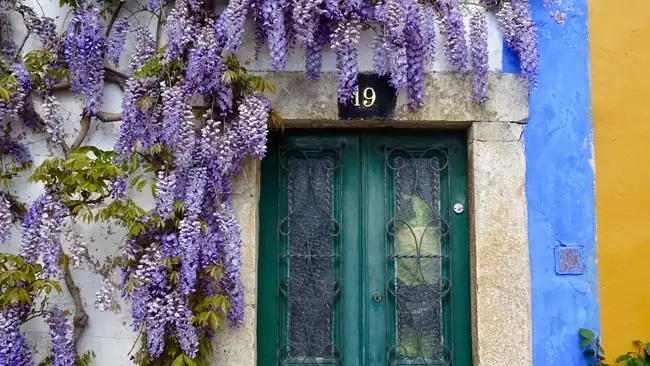
Our first discovery awaits in Óbidos, a perfectly preserved medieval town encircled by 14th-century walls. We pass through the remarkable 18th-century gatehouse adorned with traditional azulejo tiles, entering a world where narrow cobblestone streets wind between brilliant white houses trimmed in cheerful blue. Gothic and Renaissance churches, particularly the beautiful Igreja de Santa Maria, remind us of Óbidos's historical significance as a royal wedding gift from King Dinis to Queen Isabel.
We then proceed to Nazaré, Portugal's most celebrated fishing village, where Atlantic waves have shaped both landscape and livelihood for centuries. En route, we pause at Batalha for photographs of its magnificent monastery before witnessing Nazaré's iconic scene: brightly painted boats drawn up on sandy beaches. From the clifftop neighbourhood of Sítio, panoramic views reveal why this location became legendary among Portugal's fishing communities. Traditional seven-skirted costumes still grace local women near the Nossa Senhora de Nazaré Basilica, an important pilgrimage destination.
Our final stop brings us to Fátima, the renowned Catholic shrine where three shepherd children experienced visions in 1917. We visit the Basilica and Chapel of Apparitions marking this sacred site before continuing to charming Leiria.
Overnight in Leiria. 
Included Meal(s): Breakfast and Dinner - Day 4:Leiria - Coimbra - Bussaco - ViseuPortugal's intellectual heritage beckons as we journey to Coimbra, where university spires have crowned hillsides since medieval times. Coimbra served as Portugal's capital for over a century, and its steeply terraced historic centre, dating to Moorish occupation, retains wonderfully atmospheric cobbled lanes overlooked by the monumental cathedral. This UNESCO World Heritage city houses continental Europe's oldest university, founded in 1290, making it older than Cambridge or the Sorbonne.
We explore the magnificent 12th-century Sé Velha Cathedral, its Romanesque solidity contrasting with the ornate Manueline doorways of the 13th-century university. The baroque library, with its gilt shelving and frescoed ceiling, represents one of Europe's most beautiful academic repositories. We also visit the Alameda Gate and Santa Cruz Church, plus the Machado de Castro Museum to witness the remarkable Roman tunnels upon which the building stands.
After a break for lunch and free time, we continue to Buçaco, renowned for its extraordinary botanical collection of over 400 native species plus 300 varieties brought by Portuguese explorers from Mexico, Japan, and Africa. The royal family cherished this forest retreat so deeply they constructed a summer palace and hunting lodge, now an elegant hotel. Here, in 1810, Wellington's forces defeated Napoleon's troops at the Battle of Buçaco, marking the turning point in the French invasion attempt.
Overnight in Viseu. 
Included Meal(s): Breakfast and Dinner - Day 5:Viseu - the Douro Valley - PortoViseu's ancient streets reveal why Romans chose this elevated position, its name deriving from "viso," meaning "good view." We stroll through the historical centre, discovering the Cathedral, Misericórdia Church, and remarkable Synagogue that speak to centuries of cultural diversity.
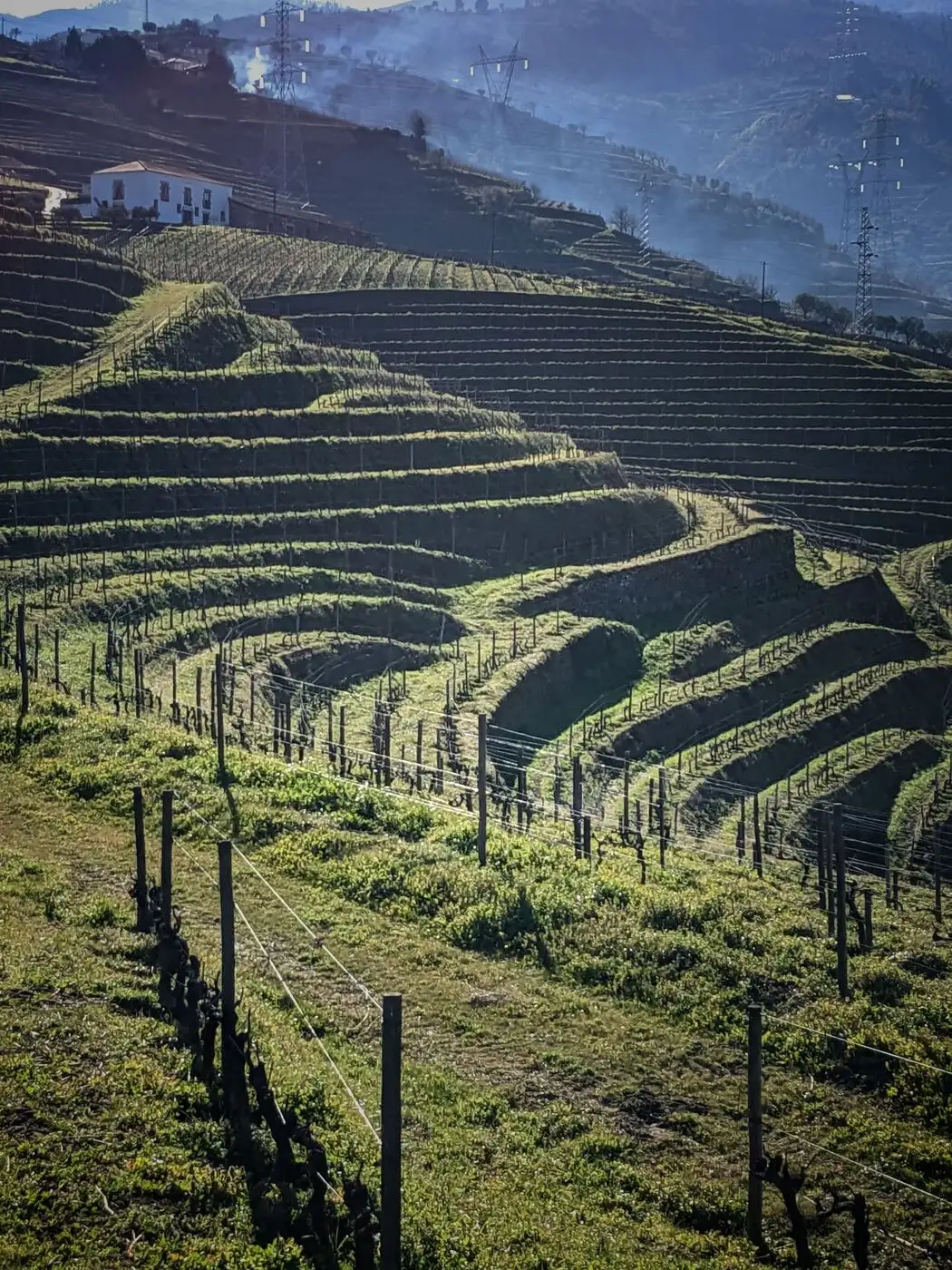
We then embark on a picturesque drive through landscapes dotted with traditional granite houses adorned with wooden balconies, entering the legendary Douro Valley. This UNESCO World Heritage site represents the world's first demarcated wine region, established in 1756 when Portuguese authorities recognised the unique terroir producing exceptional port wine.
Steep terraced hillsides, carved by generations of vintners, create amphitheatres of vines stretching along the meandering river. Famous company names—Cockburn's, Taylor's, Sandeman—announce their presence on weathered placards, testament to centuries of Anglo-Portuguese wine trade.
En route, we stop for a cellar tour, tasting, and included lunch at a traditional quinta, learning how schist soil and microclimate combine to create port's distinctive character. We also visit Amarante's bustling market, where local specialties reflect the region's agricultural abundance.
Arriving in Porto this evening, dinner remains at your leisure, allowing flexibility to explore this atmospheric riverside city independently.
Overnight in Porto. 
Included Meal(s): Breakfast and Lunch - Day 6:Porto: City TourPorto reveals itself as a masterpiece of urban evolution, where 2,000 years of continuous habitation have created one of Europe's most atmospheric cities.
The Romans established Portus Cale at this strategic river mouth, giving Portugal its name. During Roman times, the settlement gained prominence facilitating trade between Lisbon and Braga, eventually becoming the launching point for Portugal's Age of Discovery.
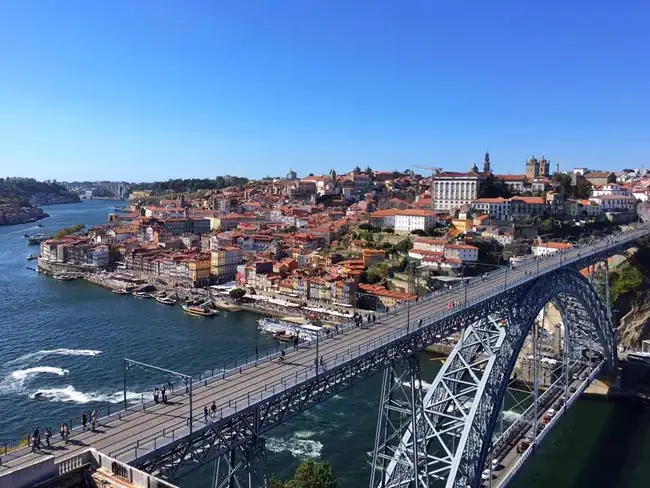
Built along hillsides overlooking the Douro's mouth, Porto displays an outstanding urban landscape reflecting centuries of prosperity linked to Atlantic commerce. The UNESCO World Heritage historic centre preserves treasures spanning Romanesque, Gothic, Baroque, and Neo-classical periods, creating Portugal's most architecturally rich cityscape after Lisbon.
Our walking tour includes the opulent Stock Exchange Palace with its lavish neoclassical interiors, the Cathedral commanding views over terracotta rooftops, and São Bento Station famous for its spectacular azulejo tile panels depicting Portuguese history. The medieval Ribeira district enchants with its labyrinthine streets and riverside Praça da Ribeira, where we visit the 13th-century Igreja de São Francisco. Unfortunately, the exquisitely gilded Igreja de Santa Clara remains closed for restoration, viewable only from outside.
This afternoon, we leisurely cruise the Douro River, witnessing Porto's remarkable skyline from the water.
Overnight in Porto. 
Included Meal(s): Breakfast and Dinner - Day 7:Porto: Braga & GuimaraesBraga beckons with its extraordinary concentration of religious architecture—over 300 churches earning it recognition as Portugal's spiritual capital and Christendom's highest church-per-capita ratio.
Founded by Goidelic Celts called the Bracari several millennia ago, Braga's strategic location attracted successive occupations. Romans arrived in 250 BC, making it the hub of five major roads leading to Rome. Suevians conquered it in 409 AD, replaced by Visigoths in 485, who yielded to Moorish armies in 711. For three centuries, Christians and Muslims contested control until the 11th century Christian reconquest.
Our exploration centres on Santuário do Bom Jesus do Monte, a UNESCO World Heritage Site featuring a spectacularly situated church built in 1784. Carlos Amarante's Italian-inspired neoclassical design integrates harmoniously with northern Portugal's landscape. The remarkable stairway contains 17 landings adorned with symbolic fountains and allegorical statues in full Baroque splendour.
We ascend via the funicular—the first built on the Iberian Peninsula and the world's oldest water-counterbalanced system. From the summit, panoramic views encompass the ornate granite fountains cascading down the hillside and the gleaming white church crowning this pilgrimage site.
In Braga's medieval quarter, Renaissance and Manueline palaces neighbour baroque churches along narrow streets that have witnessed centuries of faith and commerce.
After a break for lunch, we proceed to Guimarães, birthplace of Portugal's first king and 2012 European Capital of Culture. In this UNESCO-listed medieval quarter, we begin at Largo da Oliveira, admiring varied architectural styles. Window boxes burst with colourful flowers as we pass workshops, bakeries, and stores operating unchanged by time's passage.
Overnight in Porto. 
Included Meal(s): Breakfast and Dinner - Day 8:Porto, Portugal - Santiago de Compostela, SpainCrossing into Spain, we discover Santiago de Compostela, where golden granite creates one of Iberia's most beautiful cities.
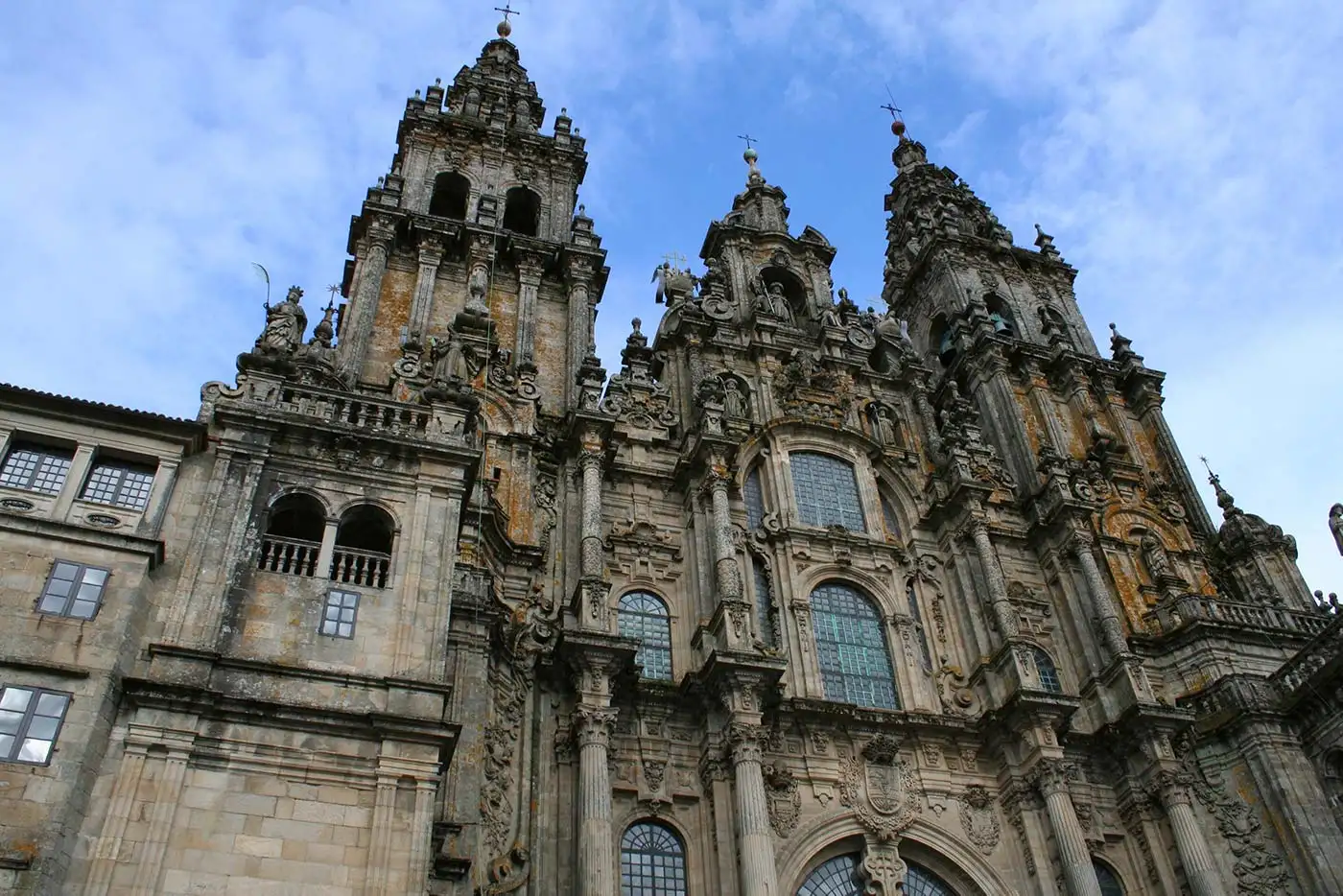
Built entirely from local golden stone, Santiago appears almost magical in certain lights, its medieval streets declared a national monument in their entirety. The city remains remarkably integrated, enhanced by comprehensive pedestrianisation that preserves its contemplative atmosphere. Buildings, squares, arcades, and statues hewn from identical granite blocks blend imperceptibly, often making ground level indistinguishable from raised terraces.
En route, we pause in Baiona, among Galicia's most important coastal towns due to its harbour and fishing fleet. This port gained eternal fame when Columbus's caravel Pinta landed here first in Europe after the "discovery" of America. Time allows for coffee, Spanish tapas, and local shopping while absorbing this historic moment's significance.
Depending on our arrival time, we may begin Santiago's exploration after checking into our hotel, setting the stage for tomorrow's comprehensive discoveries.
Santiago's granite streets have welcomed pilgrims for over a millennium, and tonight we join that tradition, resting in preparation for encountering one of Christianity's most sacred destinations.
Overnight in Santiago de Compostela. 
Included Meal(s): Breakfast and Dinner - Day 9:Santiago de Compostela: City TourSantiago has drawn pilgrims for over a thousand years, and we begin where their walk ends, in Obradoiro Square, named for the stonemasons' workshops that built the cathedral. The Archbishop's residence preserves 12th-century chambers, the neoclassical Town Hall (formerly Raxoy Palace) faces the cathedral, and San Jeronimo College, a 17th-century building, is entered through a Romanesque portal from an earlier site.
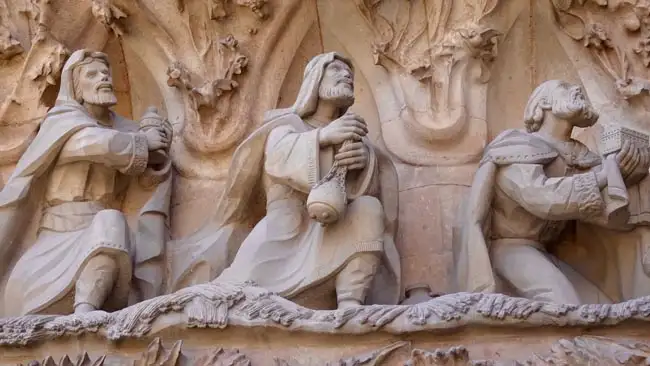
Statues of St James throughout the cathedral show him as a pilgrim, with staff, broad-brimmed hat and scallop shell, symbols recognized across Christian Europe. We tour the Cathedral Museum and Cloister, where sacred art unfolds over the centuries, then stop at the Platerias Gate, the cathedral's only surviving Romanesque facade, whose sculptures narrate biblical stories in stone.
The highlight is a guided walk across the cathedral roofs. We enter through Gelmirez Palace beside the cathedral, climb past the gallery above the Gloria doorway and step out onto the rooftops. From there the historic centre spreads below us, and the care that went into planning the city becomes easy to see.
Overnight in Santiago de Compostela. 
Included Meal(s): Breakfast and Dinner - Day 10:Santiago de Compostela - LeonWe travel by road to Leon, where Roman foundations support Gothic magnificence. The city began as a Roman military camp and became the capital of a medieval Christian kingdom, and we start at San Isidoro Collegiate Church, a Romanesque masterpiece and the final resting place of 23 kings and queens.
The 13th-century cathedral is Gothic in the French manner, its walls opened to more than 100 stained-glass panels that fill the interior with jewel-toned light.
Walking on through the old quarter, we pass stretches of medieval wall and remnants of the original Roman fortifications, then reach Casa de Botines, a neo-Gothic building by Antoni Gaudi that shows his imagination at work beyond Barcelona. Leon's place on the pilgrim routes to Santiago brought the prosperity behind these monuments.
Overnight in Leon. 
Included Meal(s): Breakfast and Dinner - Day 11:Leon - Cave of Altamira - BilbaoWe leave Leon and drive north to Altamira, where painters were at work well over 14,000 years ago. Discovered in the 1870s, the cave's nearly perfect paintings of wild animals and human handprints stand among the finest Paleolithic art known, made when ice still covered much of Europe.
The original cave is closed to preserve the paintings, so we visit the museum and its precise replica. Up close, the bison, horses and boar show how the artists used natural pigments and the cave's own contours to give their animals volume.
Continuing into Basque country, we reach Bilbao, tucked among the green coastal mountains of Euskadi. Locals call it Bilbo in Basque and affectionately botxo, the hole, for the valleys that shelter it. Fishing hamlets huddled here for protection from Norman raiders and Atlantic pirates, and the industrial port that grew from them has reinvented itself as a cultural destination without losing its fierce Basque independence.
Overnight in Bilbao. 
Included Meal(s): Breakfast and Dinner - Day 12:Bilbao: The GuggenheimMedieval Bilbao opens the morning, its cobbled Old Town streets and intimate squares tracing the city's path from fishing village to industrial powerhouse to cultural destination.
Then comes the Guggenheim. Frank Gehry's titanium-clad museum covers 31,329 sq m/349,000 sq ft, and its curves and angles shift with every viewpoint, so the building reads as sculpture before we step inside. Its atrium rises 50 m/165 ft, and the galleries hold 20th-century American and European art by artists such as Kandinsky, Mondrian, Picasso, Pollock and Serra, in rotating exhibitions.
The museum gave its name to the Bilbao Effect, the idea that a single building can revive a city's economy and civic pride.
The afternoon is ours to shape. We can stay on at the Guggenheim, visit the Basque Museum or the Fine Arts Museum, take a guided boat tour along the Nervion estuary to see the city's industrial heritage, or join the bus excursion to San Sebastian, about 1 hr 20 min each way. Our Tour Leader helps us plan.
Overnight in Bilbao. 
Included Meal(s): Breakfast and Dinner - Day 13:Bilbao - Fly to Barcelona: City TourWe fly from Bilbao to Barcelona and meet our local guide for a panoramic introduction to the city, where Catalan culture and architectural invention meet. We pass Plaza Espana, ringed by grand buildings and fountains, and the 1992 Olympic sites, a moment when Barcelona showed itself to the world and set off the renewal still under way.
From the Montjuic viewpoint the skyline, the Mediterranean and Gaudi's Sagrada Familia, rising like a stone forest above the city grid, lie spread out before us. We continue along Gran Via, one of the city's busiest thoroughfares, lined with shops, restaurants and historic buildings.
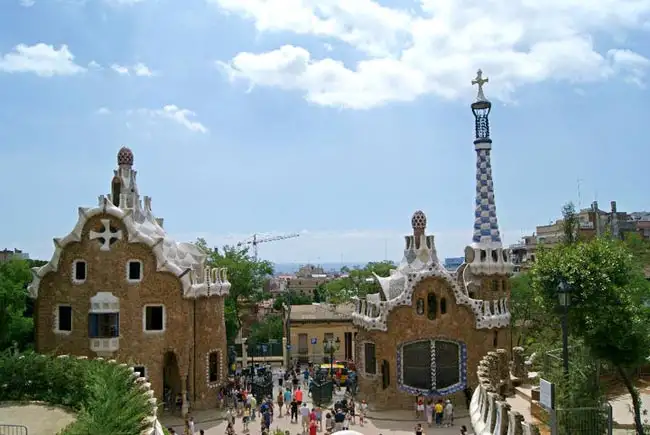
The tour ends at Park Guell, Gaudi's UNESCO World Heritage site, where mosaic pathways, undulating benches and the famous ceramic lizard turn public space into something between garden and fantasy. It is a first look at a city where medieval foundations carry modernist invention.
Overnight in Barcelona. 
Included Meal(s): Breakfast and Dinner - Day 14:Barcelona: City TourWe begin in the Barrio Gotico, where Roman foundations carry one of Europe's best-preserved medieval quarters. Narrow, winding streets lead to Barcelona Cathedral and the Royal Palace, and the weathered stone and shadowed alleys keep the Middle Ages close.
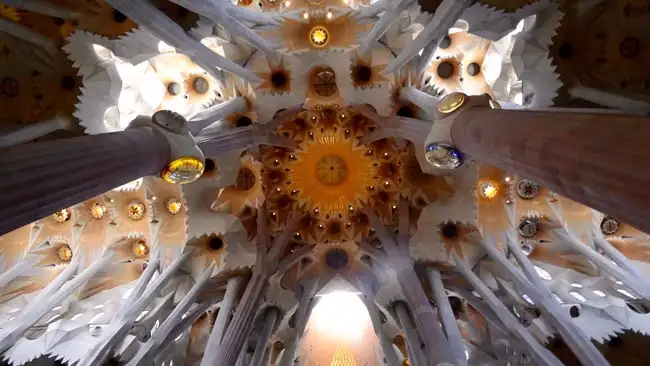
We then transfer to the Sagrada Familia, Gaudi's masterpiece and Barcelona's best-known landmark, for a guided tour. Its spires twist upward like living growth, and stained glass casts rainbow patterns across forest-like columns inspired by the geometry of nature. Begun in 1882, the basilica is still being completed by contemporary craftspeople committed to Gaudi's vision. The Museu Picasso adds another artistic dimension, with the formative works of Spain's most celebrated modern artist.
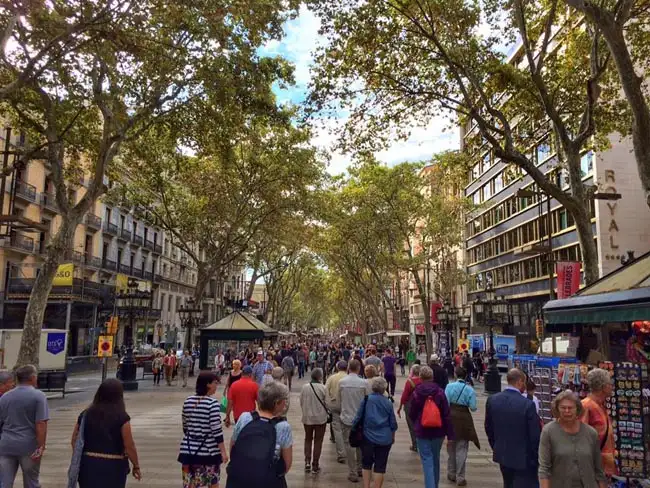
The afternoon is free. We might visit the National Art Museum of Catalonia for Catalan art from medieval to contemporary, the Joan Miro Foundation or Parc de la Ciutadella, or simply stroll La Rambla with its shops, cafes and street performers.
Overnight in Barcelona. 
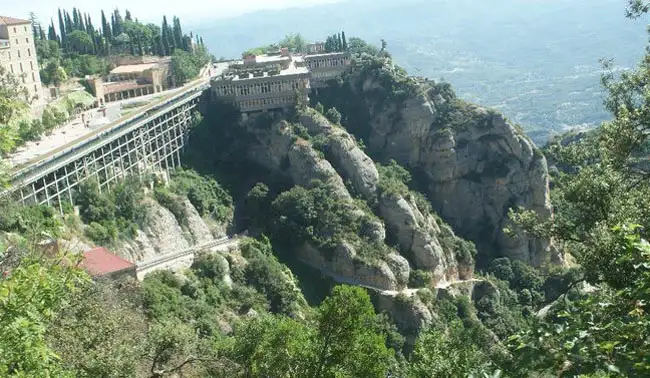
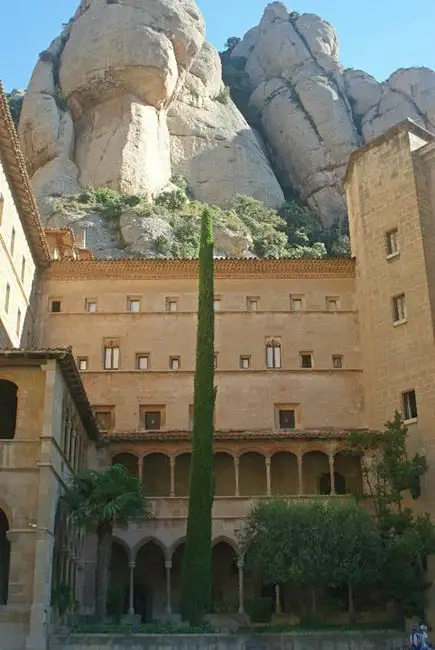
Included Meal(s): Breakfast and Dinner - Day 15:Barcelona: Montserrat & Leisure TimeMontserrat rises from Catalonia's horizon, its jagged silhouette explaining the name, "serrated mountain". Pilgrims have climbed among its stairs, caves, chapels and hermitages for over a thousand years. We drive through Montserrat Natural Park to the Sanctuary, 725 m/2,380 ft above sea level, where on clear days the Pyrenees form the backdrop.
In the Royal Basilica we visit the Chapel of Our Lady of Montserrat, home of La Moreneta, the Black Virgin. This 12th-century Romanesque wooden statue is Catalonia's patron saint and draws devotees from across the Catholic world. An audiovisual exhibition, Montserrat Portes Endins (Montserrat from Within), sets the sanctuary in its history.
We also taste four locally produced liqueurs, a flavour of Benedictine monastery craftsmanship. Back in Barcelona the rest of the day is ours for museums, neighbourhood strolls or Mediterranean cafe life.
Overnight in Barcelona. 
Included Meal(s): Breakfast and Dinner - Day 16:Barcelona - Train to Madrid: Royal PalaceSpain's high-speed rail carries us from Barcelona to Madrid in about three hours. This afternoon we tour the Royal Palace, the sovereign's official residence, now used only for state ceremonies.
The palace arose over the 18th and 19th centuries after fire destroyed the medieval Alcazar in 1734. We see the principal staircase, throne room, gala dining room, silver museum and principal courtyard -- all decorated to Charles III's lavish tastes. The rooms hold royal collections built up over centuries: tapestries, paintings, furniture and decorative arts.
With more than 3,400 rooms across 135,000 sq m, this is among Europe's largest royal residences, a scale that reflects the imperial ambitions of the Habsburg and Bourbon dynasties and the wealth that flowed in from the Americas. Beyond its walls, Madrid's broad boulevards and grand squares give way to a street life that runs well into the evening, in the Spanish way.
NOTE: The palace is sometimes closed without notice for official functions. If so, we apologize that the visit cannot go ahead.
Overnight in Madrid. 
Included Meal(s): Breakfast and Dinner - Day 17:Madrid & The PradoMadrid reveals its imperial grandeur on a panoramic tour that ends at the Prado. On the way we pass Plaza Espana and the Cervantes Monument, honouring the author of Don Quixote, whose tale of impossible dreams pursued with noble determination has come to stand for the Spanish spirit.
The Prado opened in 1819 and holds the finest works collected by Spanish royalty, alongside Spanish paintings gathered from many sources over two centuries. Its Italian masterpieces reflect Spain's long ties to the Italian peninsula, but we concentrate on the Spanish masters who define the national artistic identity.
Velazquez's court portraits reveal the complexity of imperial Spain. Goya moves from royal commissions to haunting scenes of war, Ribera works in dramatic chiaroscuro, El Greco elongates his mystical figures and Zurbaran keeps his religious scenes contemplative.
After our guided tour we stroll up Gran Via into the old quarter and the capital's street life. The rest of the day is free for lunch and independent exploration, and our Tour Leader has recommendations for shopping, historic sites and galleries. The nearby Reina Sofia holds important modern art, including Picasso's Guernica, and the Museo Naval documents Spanish maritime history from the Armada onward.
Overnight in Madrid. 
Included Meal(s): Breakfast and Dinner - Day 18:Madrid: Toledo Day TripToledo sits on a rocky promontory almost encircled by the Tagus, and the geography explains the history. Romans fortified the rock, Visigothic kings made it their capital, Muslim rulers held it for nearly four centuries and Alfonso VI took it for Castile in 1085. Each era left buildings behind and none was fully erased by the next, so a synagogue, a cathedral and a masterpiece stand within a few streets of one another.
We begin at the Cathedral, started in 1226, a Gothic statement of Castilian ambition in soaring vaults and carved stonework. A short walk away, the Santa Maria la Blanca Synagogue was built by Toledo craftsmen in an Almohad-influenced Moorish style, its horseshoe arches a reminder that Jewish, Muslim and Christian builders drew on a shared repertoire.
The Church of Santo Tome holds El Greco's Burial of the Count of Orgaz, painted in the 1580s for this very church. The artist was born on Crete and trained in Venice and Rome before settling in Toledo, and the canvas carries that range: a sober Spanish funeral below, and above it elongated saints and angels that recall Byzantine icons.
The afternoon is ours after lunch. Toledo's lanes are steep and cobbled, so we take them slowly, with time for the shops, markets and hidden corners of the old town before we return to Madrid.
Overnight in Madrid. 
Included Meal(s): Breakfast and Dinner - Day 19:Madrid - Train to Cordoba: City TourSpain's rail network carries us south across the Despenaperros Mountains, the dramatic pass between Castile and Andalusia, as the landscape shifts from central plateau to southern valleys. In Cordoba, a UNESCO World Heritage city, Roman, Visigothic, Islamic and Christian layers stand on the same ground.
We begin at the Roman Bridge and the Calahorra Tower, a fortified Islamic-era gatehouse that has guarded the Guadalquivir crossing for centuries. The centrepiece is the Mezquita-Catedral, the Great Mosque of Cordoba, among the oldest surviving buildings of Islamic Al-Andalus.
A Visigothic church stood here first. Then Abd al-Rahman I, an Umayyad prince who fled the overthrow of his dynasty in Damascus in 750, made Cordoba his western capital and began the mosque in the 780s. Its horseshoe arches in alternating red and white stone influenced Islamic architecture around the Mediterranean, and after the Christian conquest a cathedral was built inside it.
We visit the Alcazar built by Alfonso XI, with its mosaics and Roman sarcophagi, then stroll through the Jewish Quarter to its synagogue, one of the few surviving from medieval Iberia.
NOTE: Our meal plan includes breakfast and dinner, but depending on hotel location your Tour Leader may substitute lunch for dinner today, with advance notice.
Overnight in Cordoba. 
Included Meal(s): Breakfast and Dinner - Day 20:Cordoba - GranadaWe travel from Cordoba to Granada, set in the heart of Andalusia beneath the Sierra Nevada, whose snowcapped peaks make it Spain's most romantically placed city. Under the Nasrid dynasty Granada grew wealthy and refined and became the last Muslim stronghold in Iberia, until Ferdinand and Isabella took it in 1492 and completed the Reconquista. Its cobbled streets and plazas witnessed the end of Al-Andalus, and the city marked the 500th anniversary in 1992.
On arrival we visit the Royal Chapel, where the Tuscan sculptor Domenico Fancelli carved the marble tomb of Ferdinand and Isabella. Neither monarch lived to see the chapel finished, so both were first buried in the Friary of San Francisco within the Alhambra and moved here later, alongside Philip and Juana. They had hoped all their successors would lie here too, but El Escorial became the royal burial place instead.
Mountain backdrop, Moorish heritage and the flamenco traditions of its Roma community give Granada an atmosphere all its own.
Overnight in Granada. 
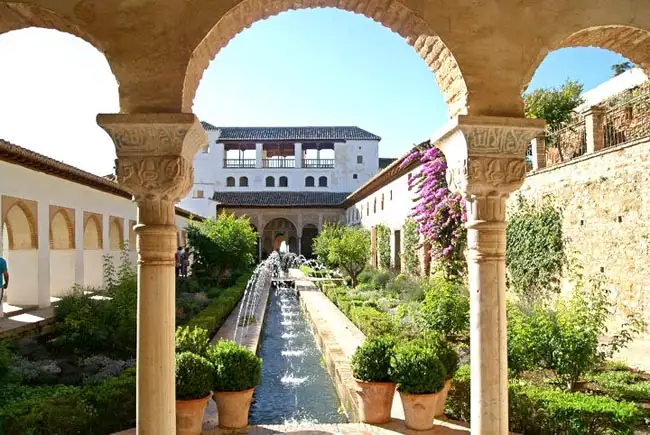
Included Meal(s): Breakfast and Dinner - Day 21:Granada: The AlhambraThe Alhambra is Granada's supreme sight, a mighty fortress that shelters an astonishingly delicate palace begun in the 13th century by the Nasrid sultans of Spain's last Muslim kingdom. This "lace in stone", set among arabesque gardens and fountains, looks across the Old Quarter to Sacromonte, the hill of Roma cave dwellings whose flamenco echoes through Granada's evenings.
In the Court of Lions, the Hall of Ambassadors and the palace's other chambers, geometric patterns, muqarnas ceilings and Arabic calligraphy turn structure into meditation and blur the line between earthly and divine. The Alhambra expresses a Moorish idea of life itself: something glorious, ennobled by learning and enlivened by every earthly pleasure.
The adjoining Generalife Gardens show the Nasrids' skill with water. Channels, fountains and reflecting pools cool the air in Andalusia's summer heat, and these pleasure gardens gave the rulers a paradise on earth.
We finish with a stroll through the Albaicin, the old Moorish quarter, where narrow streets climb past traditional white houses. The rest of the day is free to explore.
Overnight in Granada. 
Included Meal(s): Breakfast and Dinner - Day 22:Granada - Reserva Tauro - Ronda: Town TourOur route winds through the mountains of Malaga Province to Ronda, perched on a high plateau above gorges cut over millions of years.
On the way we visit Reserva Tauro, a 200 ha/500-acre breeding farm for bulls and horses, for an introduction to the Andalusian traditions that surround bulls. We learn the culture and history behind bullfighting, a controversial practice that remains part of Spanish heritage in certain regions, without attending a bullfight.
In Ronda's old town, Romans, Arabs and Christians each left their mark. Our walking tour includes the Casa Museo Don Bosco, devoted to Saint John Bosco, the 19th-century Italian priest known for his work in the education and welfare of young people.
Ronda's drama lies in its escarpments. The deep El Tajo gorge carries the Rio Guadalevin through the middle of town, and we suggest walking to the Puente Nuevo, the 18th-century bridge that spans the 100 m/328 ft chasm. From it the views run across the Serrania de Ronda mountains.
Overnight in Ronda. 
Included Meal(s): Breakfast and Dinner - Day 23:Ronda - Pileta Caves - Olive Oil Tour - SevillaWe leave Ronda for Sevilla by way of the Pileta Caves, where people painted the walls of these dark chambers over many thousands of years. The paintings run from the Paleolithic into the Neolithic, the oldest some 25,000 years old, in black, ochre and red. Most are abstract lines and patterns, alongside recognizable horses, goats and cattle and a rare giant fish. The chambers are natural, so we move through them slowly.
NOTE: The cave floor is wet stone with no handrails. Please consult your Tour Leader if you have any concern about footing.
We then follow the Route of the White Villages through the Sierra de Grazalema Natural Park, whitewashed towns with flower pots at every window, mountain views behind them and traces of Islamic and Christian heritage in their streets.
Our stop is an olive oil producer near Zahara de la Sierra. The groves grow on steep slopes that must be tended and harvested by hand, and the area's heavy rainfall helps give an oil that is fruity, sweet and gentle. We learn traditional production methods and taste both the oil and locally made wine, then sit down to a regional lunch of tapas, local cheeses, fruits and sweets. Vegetarians are well accommodated.
NOTE: Today's included lunch replaces dinner.
Overnight in Sevilla. 
Included Meal(s): Breakfast and Lunch - Day 24:Sevilla: City TourSevilla, Spain's fourth-largest city, is the cultural heart of Andalusia, its streets lined with restored Moorish architecture, orange trees and flower-filled patios, and the rhythm of castanets recalling its flamenco heritage.
We begin at the Cathedral, the world's largest Gothic cathedral, with its stained-glass windows, magnificent choir and many chapels. It rose where the city's great mosque once stood, and its bell tower, the Giralda, began as that mosque's Almohad minaret. Time permitting, we climb the Giralda for panoramic views across the city.
Next comes the Alcazar, a UNESCO World Heritage site and among Europe's oldest continuously used royal residences. Almohad, Mudejar and Renaissance builders each added to it, and its halls and gardens show Christian and Islamic artistic traditions joined so closely that the seams are hard to find.
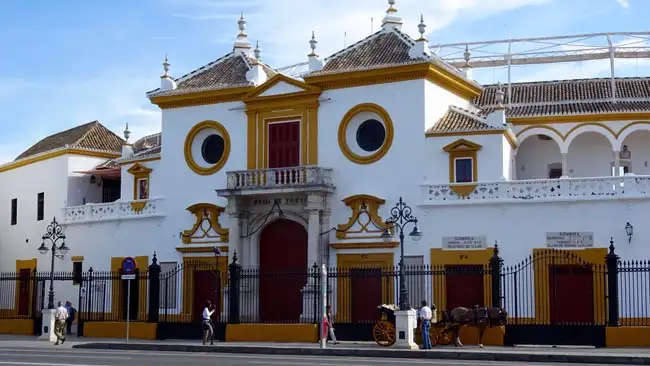
Along the Guadalquivir we see the Maestranza Bullring, a symbol of Sevilla's bullfighting tradition, and the Torre del Oro, a 13th-century watchtower that once guarded the river approaches. For a contemporary note, we admire Eduardo Chillida's Monument to Tolerance, a sculpture of peace and understanding.
Overnight in Sevilla. 
Included Meal(s): Breakfast and Dinner - Day 25:Sevilla - Tarifa, Spain - Ferry to Tangier, MoroccoAs we leave Spain behind, we make our way to the port city of Tarifa, where we'll board a ferry to cross the Strait of Gibraltar into Africa. The narrow strait, just 14 kilometres wide at its narrowest point, has played a significant role in shaping the history of both Europe and North Africa. For centuries, this waterway has connected the Mediterranean Sea to the Atlantic Ocean, facilitating the exchange of cultures, goods, and ideas between civilizations.
As we sail across, the landscape shifts, and the Moroccan city of Tangier comes into view. With its rich history and strategic location, Tangier has been influenced by various cultures, including North African, Spanish, Portuguese, and French. We'll explore this vibrant city, taking in its colourful streets, historic landmarks, and beautiful vistas. From the medina's narrow alleys to the city's stunning beaches, Tangier's unique blend of cultures and traditions is on full display.
* In the event that we have only a small group continuing to Morocco, it may be more expedient for us to fly from Sevilla to Morocco instead. Depending on ever-changing air schedules, it is also possible that our stay in Sevilla could be extended by a day with a flight direct to Casablanca the following day. This potential situation will become clearer closer to departure.
Overnight in Tangier. 
Included Meal(s): Breakfast and Dinner - Day 26:Tangier - CasablancaToday we travel by road to Casablanca with a stop for lunch en route.
Our road trip along the scenic Atlantic coast unfolds before us, with the rugged Rif Mountains giving way to rolling hills and picturesque villages. We'll traverse the fertile plains of the Gharb region, known for its lush agriculture and charming towns.
Casablanca boasts a rich history dating back to the Phoenicians and Berbers. The city's strategic location made it a prized possession for various conquerors, including the Almohads, who developed it as a thriving port in the 12th century. The Portuguese later established a settlement, but their presence was marked by destruction and rebirth. Today it's a bustling city that serves as Morocco's economic hub. We'll get a glimpse of the city's modern landscape before heading to our next destination tomorrow.
Please note: Depending on departure date and regional logistics, the Morocco portion of our itinerary is occasionally operated in reverse order. All destinations, experiences, and inclusions remain identical.
Overnight in Casablanca. 
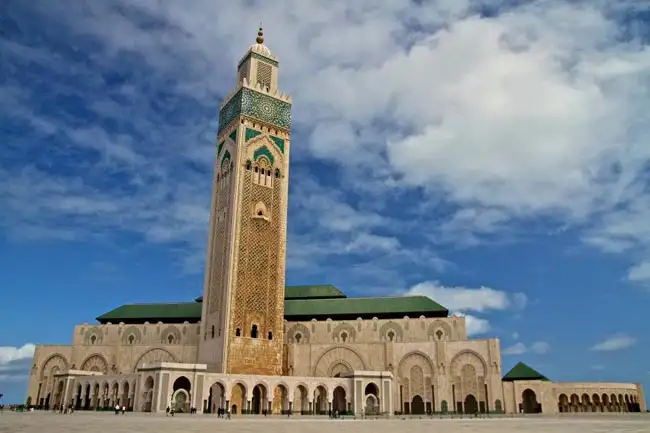
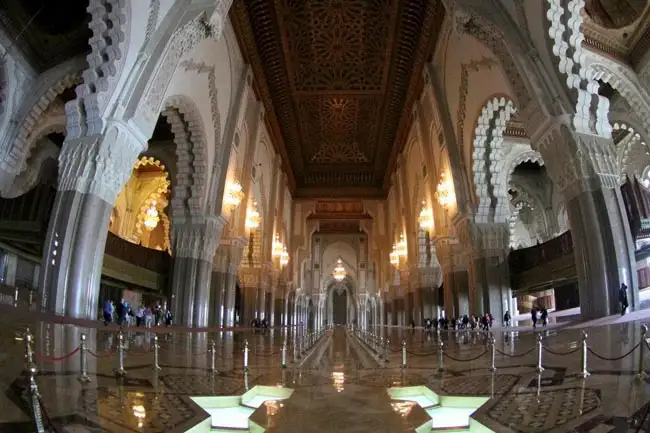
Included Meal(s): Breakfast and Dinner - Day 27:Casablanca - Rabat - ChefchaouenBefore leaving Casablanca, we’ll visit the Hassan II Mosque, a glorious structure believed to be only second in size to Islam's most important site, Mecca in Saudi Arabia. The mosque was inaugurated in August 1993, the culmination of five years of intensive labour by over 30,000 workers and craftsmen. Non-Muslims may enter as part of a guided tour.
From Casablanca we travel to Rabat, Morocco's third oldest Imperial City and modern capital. Among the sites in Rabat that we will visit are the Hassan Tower and the Mohammed V Mausoleum. After a break for lunch, we continue to Chefchaouen, arriving in time for dinner.
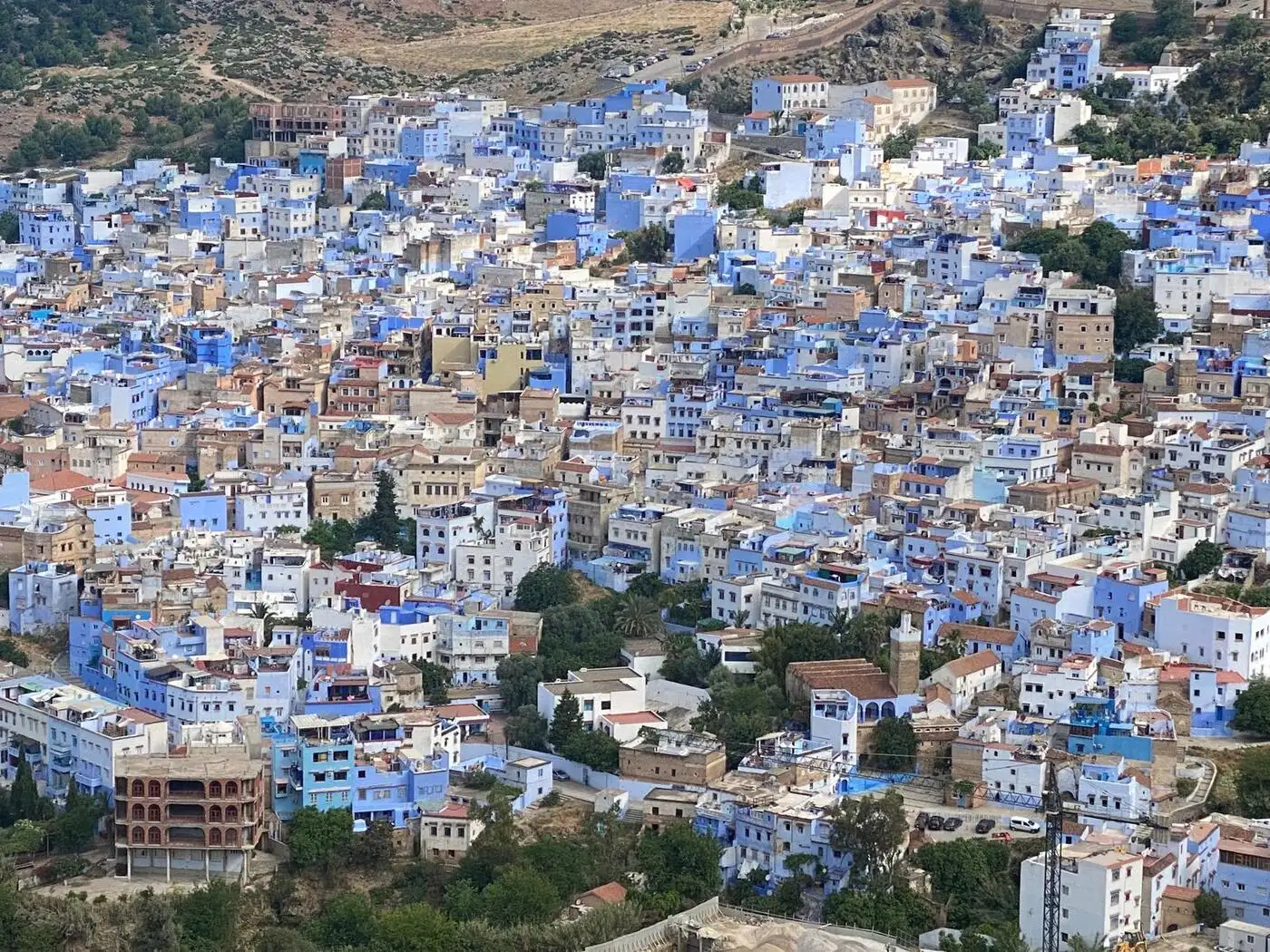
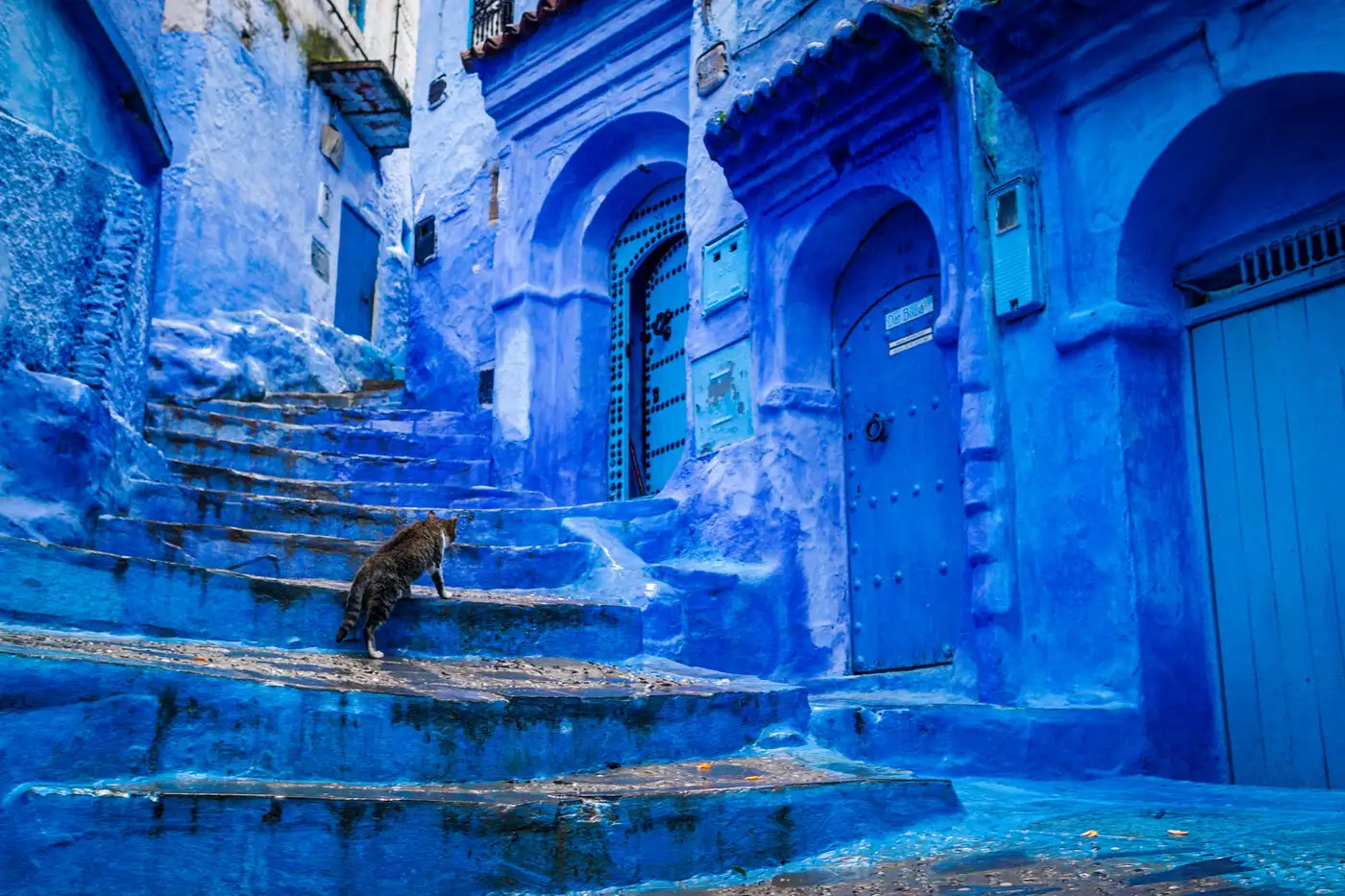
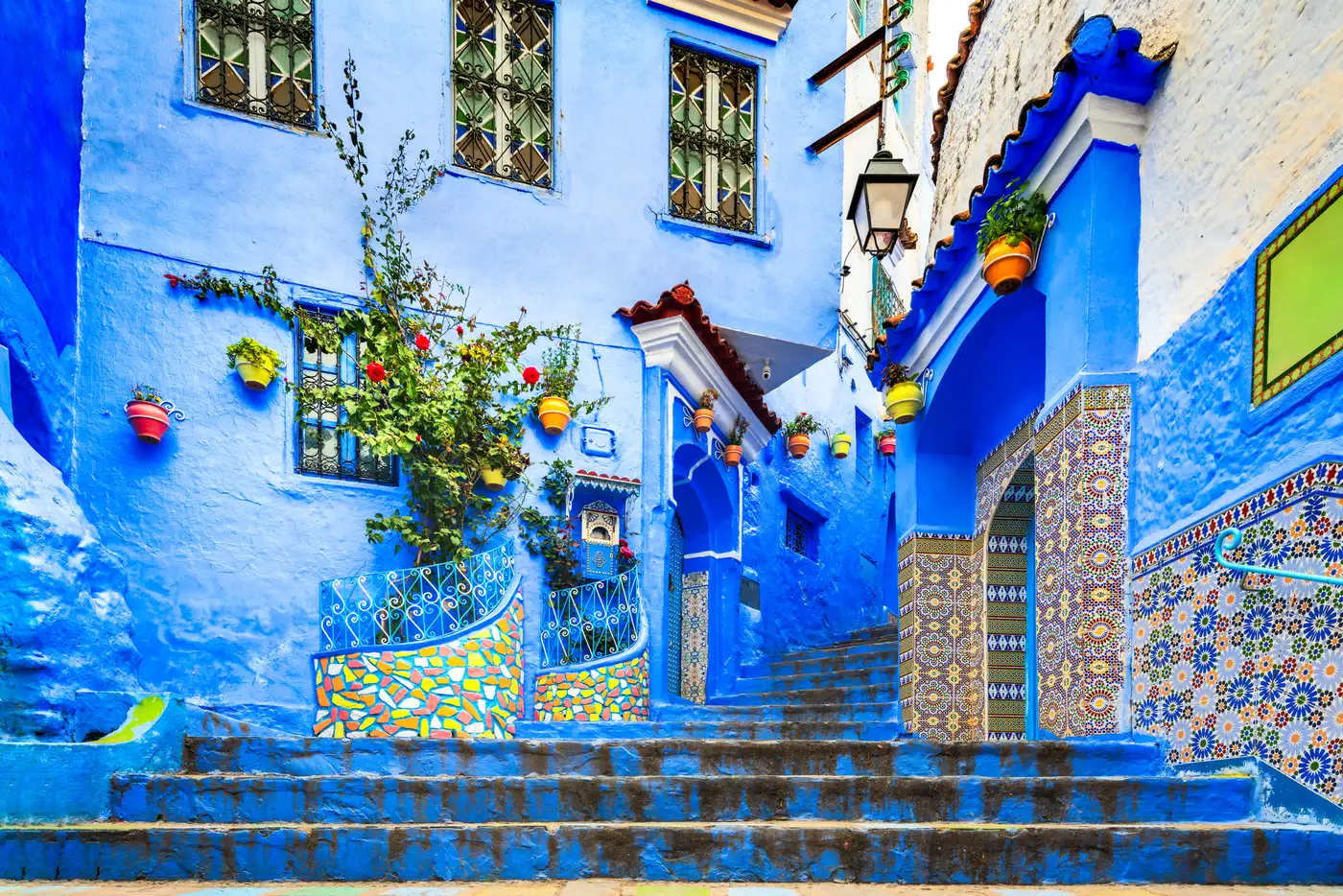
Chefchaouen is renowned globally for its captivating medina, a labyrinth of shady alleyways where whitewashed houses adorned with striking blue turquoise doors and wrought iron windows create a visually stunning scene. Colourful tile-covered roofs add to the charm, while busy squares offer glimpses of local life connected by the town's characteristic steep alleyways.
Overnight in Chefchaouen. 
Included Meal(s): Breakfast and Dinner - Day 28:Chefchaouen TouringToday belongs entirely to one of Morocco's most photogenic — and most genuinely enchanting — destinations. Chefchaouen, founded in 1471 as a refuge for Andalusian Muslims and Jews expelled from Spain, has grown from a remote mountain stronghold into a town that rewards slow, unhurried exploration. Its famous blue-washed medina — the shade varying from pale powder to deep indigo depending on the quarter and the hour — reflects a living tradition, with locals still re-blueing their walls each spring.
Our orientation walk threads through the medina's steep, irregular lanes, passing through the central Plaza Uta el-Hammam, anchored by the Tarik Ben Ziad mosque and the kasbah's ramparts. Inside, an Andalusian garden and ethnographic museum hold collections of local embroidery, ceremonial dress, and the iconic djellaba, a garment with its origins in this very region. We'll also visit a traditional oil mill — a glimpse into an industry that sustains the Rif valleys to this day, with more than 1,500 operating in the surrounding region.
The afternoon is yours. The souks carry genuine local character — wool blankets, leather goods, hand-crafted ceramics — in a refreshingly unhurried atmosphere. Those with energy for a short climb will find the Spanish mosque above the medina rewards the effort with panoramic views of the blue rooftops below, especially lovely in late afternoon light. At the base of the old walls, the Ras el-Maa waterfall offers a quieter pleasure, locals still washing laundry in the stream as they always have. Sooner or later, a café terrace and mint tea will claim you — as well it should.
Overnight in Chefchaouen. 
Included Meal(s): Breakfast and Dinner - Day 29:Chefchaouen - Ouazzane - FesThis morning, we bid farewell to Chefchaouen and set off towards the imperial city of Fes. Our full-day journey will initially wind through the scenic Rif Mountains with vistas of rolling green hills, rugged terrain, and panoramic views, making this leg of our journey a visual treat.
Our first significant stop will be in Ouazzane, a town of considerable spiritual importance in Morocco. Often referred to as "Little Paris" for its serene atmosphere and perhaps a certain understated charm, Ouazzane has historically been a center for Sufism and a place of pilgrimage for both Muslims and Jewish visitors, who come to venerate the tomb of Rabbi Amram ben Diwan. We'll take some time here to explore its tranquil streets and perhaps get some lunch, soaking in the unique ambiance of this "House of Safety," a town that historically stood unwalled, offering refuge.
After our stop in Ouazzane, the landscape will begin to transition. As we leave the mountainous region behind and approach the plains surrounding Fes, you'll notice a shift towards more fertile agricultural landscapes. Olive groves and cultivated fields will become more prominent, signaling our approach to the Sais Plain and the bustling city that awaits. We'll arrive in Fes in the late afternoon.
Overnight in Fes. 
Included Meal(s): Breakfast and Dinner - Day 30:From Fes: Exploring Volubilis & MeknesToday we embark on a full-day excursion from Fes to delve into Morocco's rich history, visiting the ancient Roman city of Volubilis and the imperial city of Meknes.
Our journey begins with a drive to Volubilis, a UNESCO World Heritage site that stands as the best-preserved Roman ruins in Morocco. Situated on a fertile plain, this once-thriving outpost of the Roman Empire offers a fascinating glimpse into life here centuries ago. As we explore the site, you'll marvel at the remarkably intact mosaics, depicting scenes from mythology and daily life, the towering Basilica, and the impressive Triumphal Arch. Our local guide will bring the history of this distant Roman province to life, painting a picture of its former glory. You'll have ample time to wander and photograph this evocative location.
We also see the sacred town of Moulay Idriss (photo stop only). Moulay Idriss is a dramatic sight, houses and mosques piled up around two rock outcrops, with the 'zaouia,' or sanctuary, in between.
A short drive takes us to Meknes, an imperial city that reached its zenith under the rule of Sultan Moulay Ismail in the 17th century. Here we'll discover the grandeur of its past, starting with the monumental Bab Mansour, a magnificent gate considered one of the most beautiful in Morocco. We'll also visit the Mausoleum of Moulay Ismail, a place of serene beauty and historical significance. Prepare to be impressed by the sheer scale of the Heri es-Souani, the vast royal granaries and stables, which hint at the power and ambition of the Alaouite dynasty. We'll have time for lunch in Meknes and to absorb the atmosphere of this less-crowded imperial city before returning to Fes in the late afternoon.
Overnight in Fes. 
Included Meal(s): Breakfast and Dinner - Day 31:Fes: City TourToday we will have a full-day guided walking tour of Fes El Bali, the extraordinary medieval walled city (we’ll have several breaks for a quick rest/refreshment and a longer one for lunch). Once inside the gates of this great spectacle, you will see an entirely different view of life in Morocco. In contrast to the well-planned Ville Nouvelle, the old city is a labyrinth of alleys and lanes lined with shops, mosques, homes and schools. In 1980 UNESCO designated the medina a World Heritage Site.
Our on-foot exploration of Fes begins with a breathtaking panoramic view of the entire city from its northern vantage point. This offers a fantastic orientation, allowing you to appreciate the sprawling Medina and its surrounding hills. We then delve into the craftsmanship of the Potters' Quarter, where you can witness traditional ceramic making techniques passed down through generations. Following this, we'll see the impressive gates of the Royal Palace (exterior view) and explore the Mellah, the historic Jewish quarter, with its distinct architecture and atmosphere.
Also along our route, we'll visit the exquisite Medersa Bou Inania, a stunning example of Marinid architecture. We'll also view the exterior of the revered Kairouine Mosque, one of the oldest universities in the world (non-Muslims cannot enter).
Our walk continues to the sacred Tomb of Moulay Idriss II, the founder of Fes (exterior view), the ornately tiled Nejjarine Fountain, the bustling Blacksmiths' squares, and the intricate Weaving Quarter. Our sensory journey culminates at the famous Dyers' souk and the traditional tanneries, where you can witness the age-old methods of dyeing leather, a truly unique spectacle.
Finally, as our tour concludes, we'll take in another panoramic view of Fes, this time from the south side of the city, offering a different perspective on this captivating place.
Overnight in Fes. 
Included Meal(s): Breakfast and Dinner - Day 32:Fes - Ifrane - ErfoudToday we embark on another scenic full-day journey through the diverse landscapes of Morocco, heading towards the gateway to the Sahara. Our route takes us through the Middle Atlas Mountains, where we'll experience its unique character.
Our first stop will be Ifrane, a charming town with an unexpected alpine feel, often likened to a Swiss resort. Here, you'll have some time to explore its neat streets, perhaps see the iconic stone lion, and enjoy the refreshing atmosphere.
Continuing our ascent into the Middle Atlas, we'll enter the Cedar Forest, home to the playful Barbary macaques. We'll make a stop here for a chance to observe these fascinating creatures in their natural habitat amidst the ancient cedar trees.
Our journey then takes us towards Midelt, travelling through apple-growing regions and offering opportunities for scenic photo stops, including the panoramic Col de Ziad. As we approach Midelt, the imposing Djebel Ayachi of the High Atlas will come into view. We'll pause in Midelt for lunch. In the afternoon, we'll continue our drive towards Erfoud, crossing the Tizi N Talrhemt pass and noting the dramatic Ziz Gorge. As we near Erfoud, you'll begin to see the landscapes transitioning towards the pre-Saharan environment, with views of the Ziz Valley oases and traditional adobe-style constructions (ksour).
Late afternoon arrival in Erfoud, the threshold to the Sahara. This evening you should prepare an overnight bag with essentials for tomorrow's desert excursion to Merzouga. We'll be transferring to 4x4 vehicles tomorrow, leaving our main luggage behind on the bus before heading to Merzouga for the night. We'll rejoin the bus the following morning when we return to Erfoud.
Overnight in Erfoud. 
Included Meal(s): Breakfast and Dinner - Day 33:Rissani & Merzouga DunesThis morning we'll explore the region around Erfoud and Rissani, delving into the history and local culture. We'll begin with a visit to Rissani, the historical capital of the Tafilalt region and the origin of Morocco's current ruling dynasty. Here we'll see the peaceful Alaouite Mausoleum and wander through the vibrant local market (souk), a colourful hub of daily life offering everything from produce to handicrafts. We'll also explore a traditional Ksar, an ancient fortified village, to appreciate its unique architecture.
Depending on local opportunities, we might also visit a fossil workshop near Erfoud, this area being known for its unique black marble embedded with fossils. You'll learn about this fascinating aspect of the region's geology.
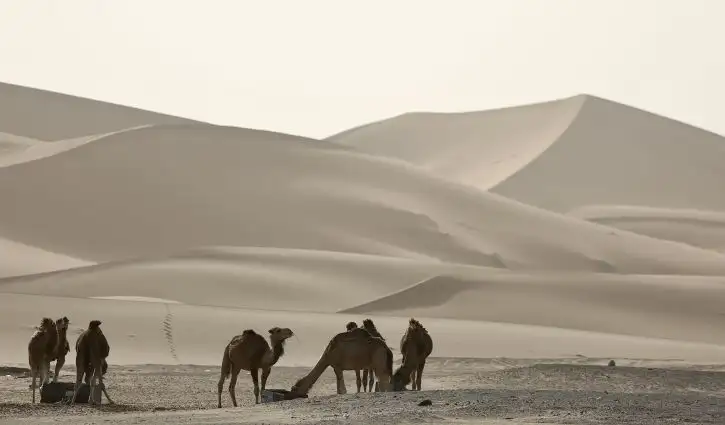
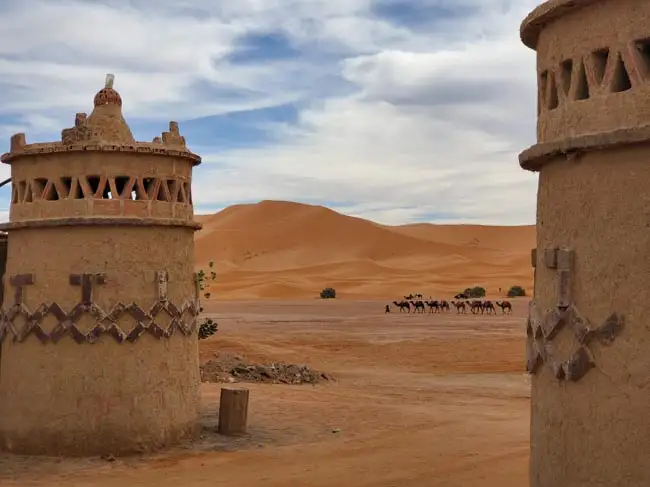
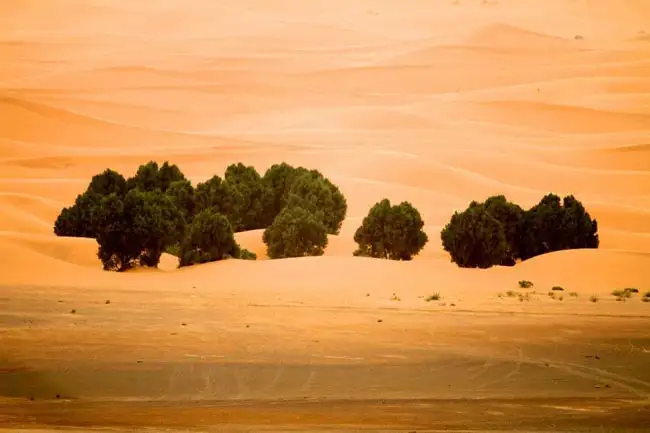
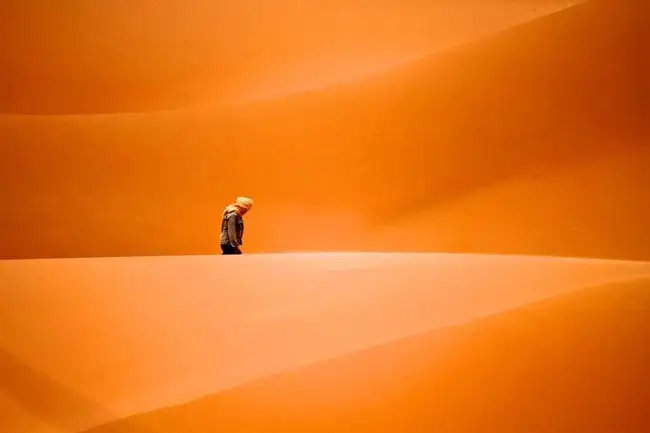
After a break for lunch, we'll transfer to 4x4 vehicles for an exhilarating journey into the Sahara towards the majestic Erg Chebbi dunes of Merzouga. This adventure takes us partly off-road across the desert landscape, offering fantastic views of the changing terrain. If possible, we'll pause for a traditional tea break in a nomad encampment under a tent and make a stop for panoramic photos of the towering sand dunes—the Erg Chebbi is the largest and highest dune system in the Moroccan Sahara.
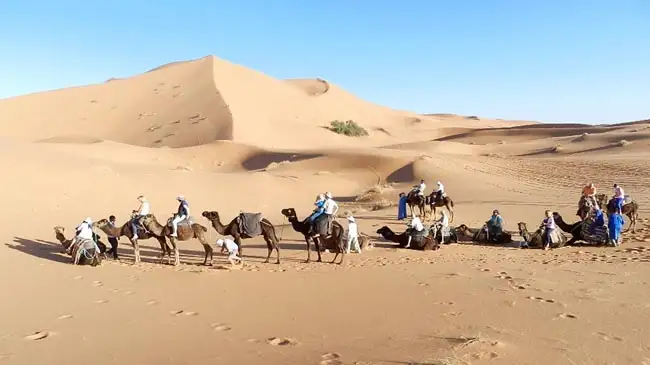
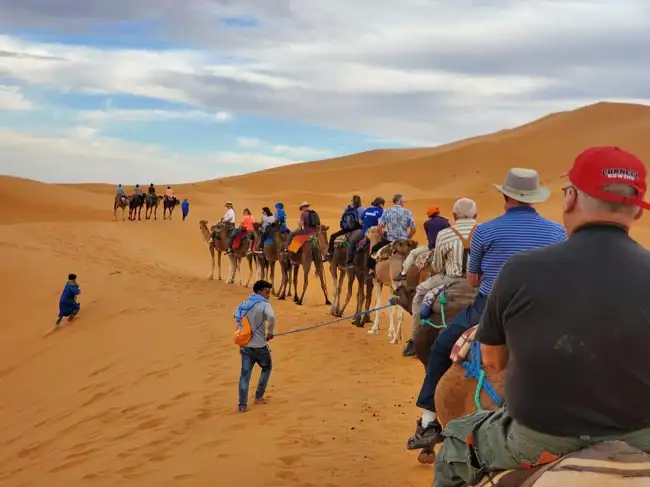
We'll arrive at our desert-edge accommodation in Merzouga, where an unforgettable camel excursion awaits. In the late afternoon, we'll embark on a roughly 20-minute camel ride into the heart of the dunes to witness a spectacular Saharan sunset. As the sun sinks below the golden sands, you'll experience the profound silence and otherworldly beauty of the desert. Following this magical moment, it will be another 20-minute ride back to our auberge.
Tonight we'll stay at our comfortable lodging on the edge of the Erg Chebbi, with dinner scheduled to allow time for those returning from the camel trek to freshen up and relax. You can enjoy the desert evening under vast starlit skies, sharing stories of the day's adventure.
Overnight at Merzouga desert auberge. 
Included Meal(s): Breakfast and Dinner - Day 34:Merzouga - Todra Gorge - OuarzazateThis morning we'll embark on an exciting full-day journey from Merzouga to Ouarzazate, exploring the stunning landscapes and cultural heritage of the Moroccan desert. Our adventure begins with a scenic 4WD drive from Merzouga back to Erfoud, where we'll transfer to our bus (and be reunited with our main luggage) and take a moment to freshen up.
From Erfoud, we'll head to the ancient Khattara irrigation system, a remarkable feat of engineering that showcases the ingenuity of our ancestors. We'll have a photo stop at Tirnehir and then visit the breathtaking Todra Gorges, where towering cliffs rise above the river.
After a lunch break in Tirnehir, we'll continue our journey along the Dades River Valley, passing through picturesque villages and oases. We'll make photo stops at Boulmane du Dades and Kelaa Mgouna, where we can learn about the local rose water production.
Our final stop will be at the stunning Kasbah Skoura, a 17th-century fortress that offers breathtaking views of the surrounding landscape. We'll take a guided walk around the kasbah and explore the nearby village.
As we arrive in Ouarzazate, we'll check into our hotel after a day filled with spectacular scenery and cultural insights.
Overnight in Ouarzazate. 
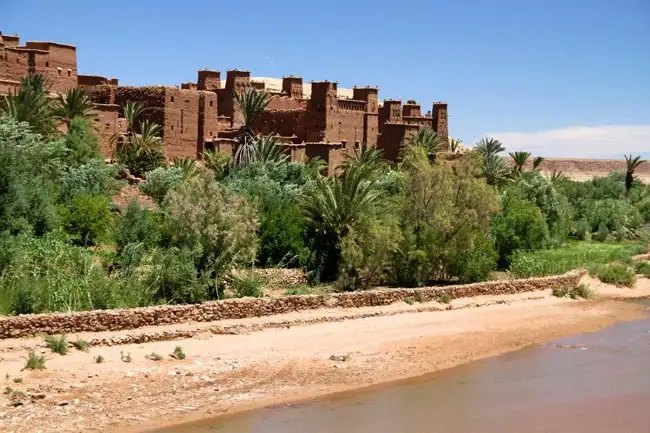
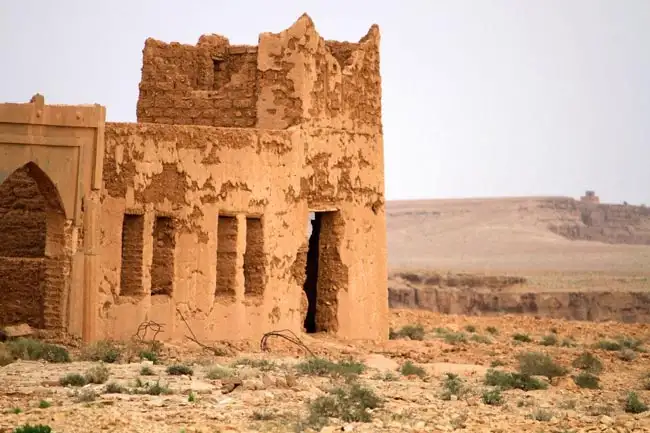
Included Meal(s): Breakfast and Dinner - Day 35:Ouarzazate - Ait Benhaddou - MarrakechThis morning we travel to the ancient grandeur of the Kasbah of Ait Benhaddou, a UNESCO World Heritage site that truly embodies the timeless beauty of Morocco. This remarkably preserved ksar, with its towering mud-brick walls and traditional architecture, seems to rise organically from the hillside. As we explore its winding alleyways and learn about its history, you'll understand why it has served as a breathtaking backdrop for countless films and continues to captivate visitors with its authentic charm.
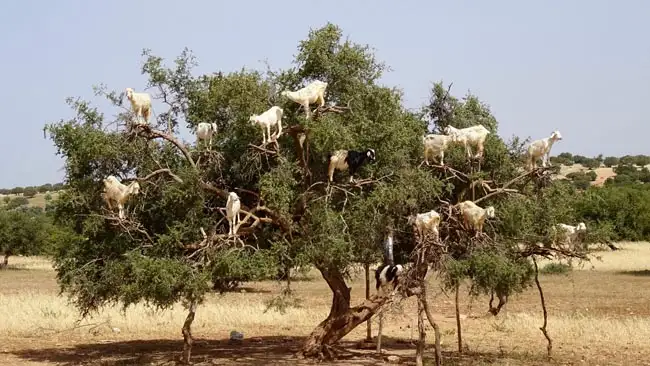
Our journey then continues towards Marrakech; this route allows us to appreciate the changing scenery as we leave the desert landscapes behind and head towards the plains surrounding Marrakech. If time permits, we may be able to make a stop at a local argan oil producer, where we can learn about the production of this precious oil. As we approach Marrakech, the scenery becomes flatter and greener, as the city is the centre of a large palmerie oasis. You will notice an abundance of the pink mud-brick buildings amid this tree-filled city. With it's unique character and charm, Marrakech lures visitors with a hospitable climate and superb location.
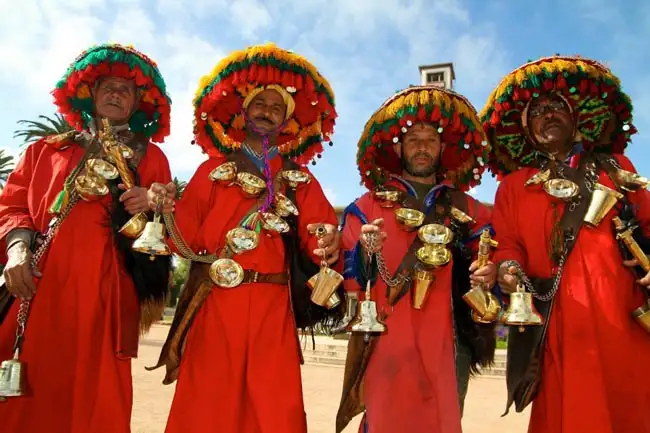
This evening we visit the famous Djemma el-Fna, a place like nowhere else in North Africa. This "Assembly of the Dead," offers a spectacle that is a must-see when visiting Morocco. In the busy square you will witness a carnival of musicians, snake charmers, acrobats, story-tellers, witch doctors, dentists, clowns, monkey's and the like. The enduring smells of the Djemma's food stalls, piled high with platters of specialty cuisine, are well worth a visit just for the experience.
Overnight in Marrakech. 
Included Meal(s): Breakfast and Dinner - Day 36:Marrakech: City TourMarrakech is one of the world's most enchanting cities. The city is situated on a lush palmerie and its history dates to the Almoravid Dynasty circa 1070. Founded by Youssef ibn Tachfin, the city became the dominant centre of Morocco and served as the capital of this powerful medieval empire that stretched across North Africa and into Spain.
Our exploration of Marrakech begins at the iconic Koutoubia Mosque (which you may have already glimpsed), its impressive minaret a landmark of the city. This 12th-century masterpiece, built during the Almohad period, stands as a testament to Morocco's rich Islamic architectural heritage. From here, we'll delve into the Mellah, the historic Jewish quarter, with its distinct atmosphere and architecture that tells the story of Morocco's diverse cultural heritage.
Our cultural immersion continues with a visit to the Museum of Moroccan Arts, Dar Si Said. Housed in a beautiful former palace dating from the late 19th century, this museum showcases the rich artistry and craftsmanship of Morocco, with exhibits featuring intricate woodwork, ceramics, textiles, and jewelry that span centuries of Moroccan creative tradition.
Next we'll explore the opulent Palais Bahia, a stunning 19th-century palace built during the Alaouite Dynasty and intended to be the greatest palace of its time. Wander through its intricate courtyards, admire the detailed tilework, and imagine the lives of the grand viziers and their families who once resided within its walls during Morocco's more recent royal history.
To conclude our guided exploration, we'll step into the serenity of the Majorelle Gardens. This tranquil oasis, with its striking blue architecture, exotic plants, and the fascinating Berber Museum, offers a peaceful escape from the city bustle. Created by French painter Jacques Majorelle in the 1920s and later restored by Yves Saint Laurent, you'll have time to wander through its calming pathways and admire its unique beauty.
The afternoon is then free for you to explore Marrakech further at your own pace. You might choose to revisit the vibrant souks for shopping, explore other gardens, visit a traditional hammam, or relax at a rooftop café and soak in the city's atmosphere while watching the Atlas Mountains in the distance.
Overnight in Marrakech. 
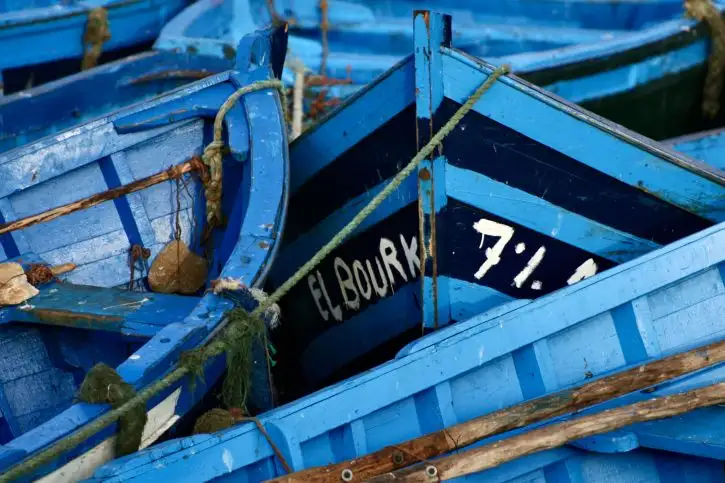
Included Meal(s): Breakfast and Dinner - Day 37:Marrakech - EssaouiraToday we travel from the bustling inland city of Marrakech to the charming coastal town of Essaouira, making a stop in the small coastal town of Taghazout, a traditional fishing village where blue boats line the beach. Each morning the fishermen make their way out to the ocean to catch fish that is sold fresh later that day; the colour scheme of blue and white boats is echoed by the houses in the village. Taghazout is a popular place for surfers and, despite extensive resort development, still has a laid-back vibe.
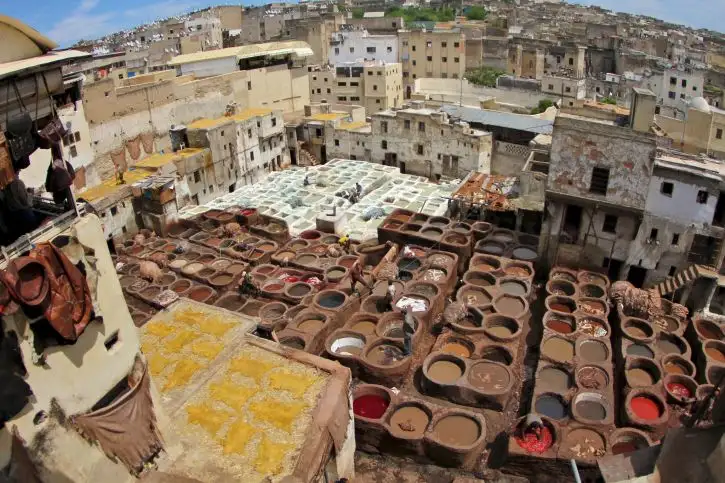
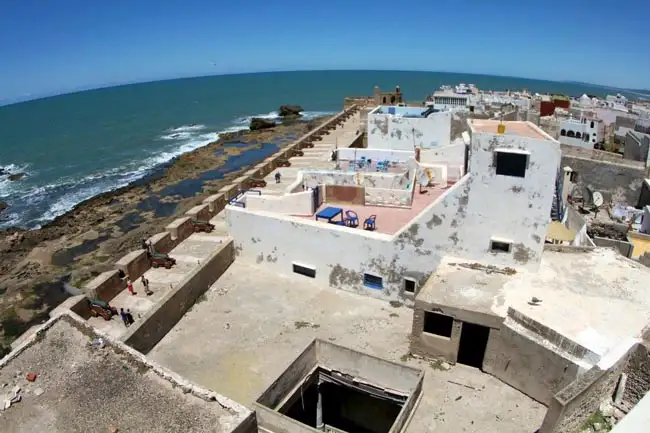
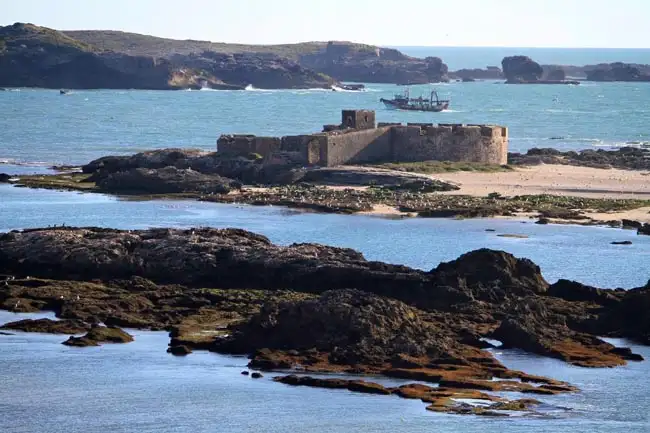
From here we travel northward to the fortified, whitewashed fishing village of Essaouira. Once a pirate community, the town is located on a rock promontory overlooking the sometimes raging Atlantic Ocean. There was a small Phonenician settlement at Essaouira, previously called Magdoura or Mogador, a corruption of the Berber word 'Amegdul,' meaning ‘well-protected'. The Romans were interested in the purple dye produced from shellfish which they used to colour the robes of the rich.
Orson Welles stayed here for some time, filming part of Othello at the Skala. In the 1960s Essaouira had a brief reputation as a 'happening place', which attracted hippies, notably the rock star, Jimi Hendrix. Before dinner you may want to stroll along the beach and/or visit the colourful fish market.
Overnight in Essaouira. 
Included Meal(s): Breakfast and Dinner - Day 38:Essaouira: Walking TourEssaouira is one of Morocco's most charming towns. Old Mogador was occupied in the 15th century by the Portuguese who built the fortifications around the harbour; these impressive ramparts still give the city a fortified look.
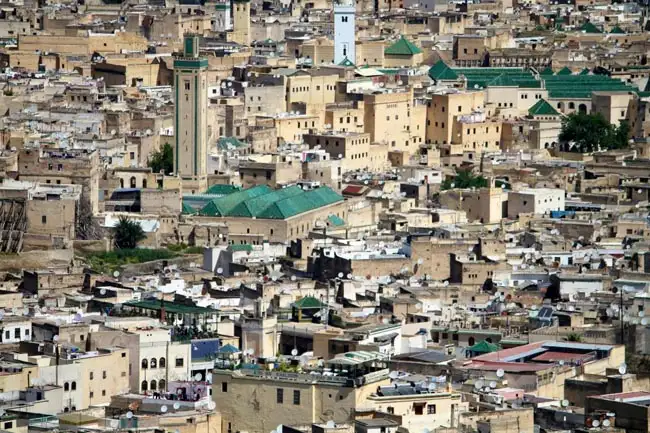
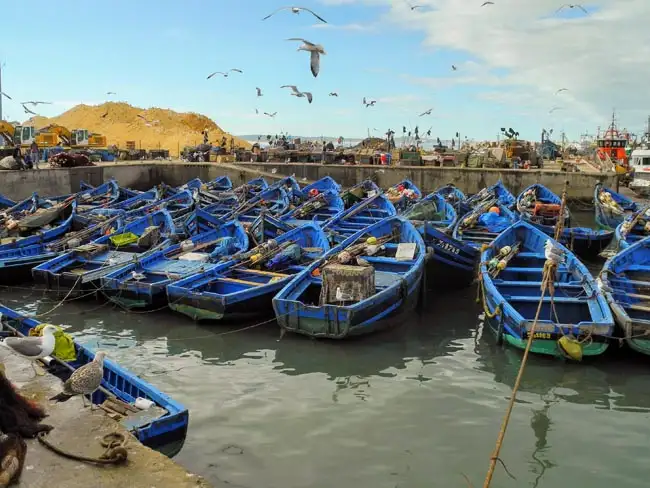
We begin our exploration of Essaouira with a visit to its bustling fishing harbour. The scene is a vibrant tapestry of activity, with an incredible array of fresh fish and seafood being auctioned, loaded, and delivered amidst the lively atmosphere of vendors, onlookers, and the ever-present seagulls. Don't miss a glimpse of the traditional shipyard.
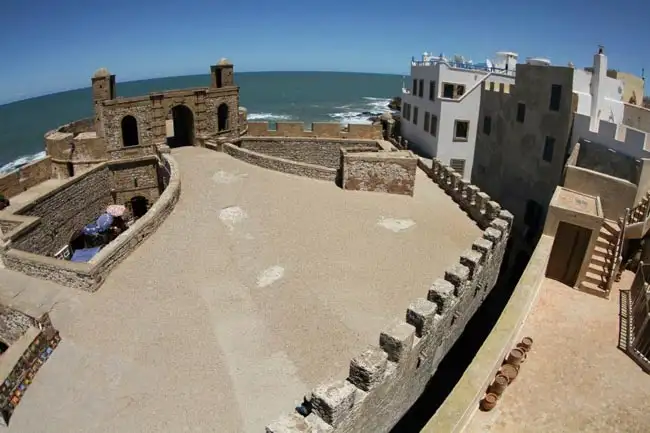
Next, we'll wander through the narrow back streets along the ramparts to the Skala de la Ville (the city bastion). Perched along the northern cliffs, this offers magnificent panoramic views across the sea, the Medina, the Kasbah, and the old Jewish quarter (Mellah).
Continuing our exploration of the Medina, a UNESCO World Heritage site, we'll make our way towards the Grand Mosque and then to the vibrant Jewellers' Souk, and the aromatic Fish and Spice Souks. We'll also stroll through the historic Mellah, perhaps passing by the Lalla Mira Hammam, which has a cinematic connection. For those interested, a visit to the Haim Pinto Synagogue offers a glimpse into the town's Jewish heritage.
The afternoon is free for you to explore Essaouira at your own pace. You might choose to get further immersed in the Medina for exploring and shopping, or perhaps attend the daily Port Fish Auction for a second look.
Overnight in Essaouira. 
Included Meal(s): Breakfast and Dinner - Day 39:Essaouira - CasablancaAfter relatively leisurely morning, we'll leave behind the coastal ambiance of Essaouira and journey northwards along the scenic Atlantic coastline toward Casablanca. Along the way, we'll be treated to expansive views of the rugged cliffs meeting the ocean, perhaps glimpses of sandy beaches, and the ever-present Atlantic breeze.
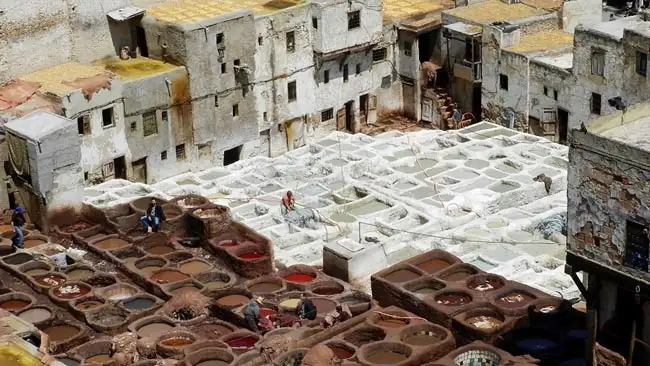
Around the midpoint of our journey, we’ll make a stop in Safi for a break and chance to get some lunch. Safi itself is a picturesque place known for its pottery.
As we travel onwards, the landscape will gradually transition from the windswept feel of the coast to increasing urban activity as we arrive back in Morocco's largest city in time for a bit of a break before our last evening meal together.
Overnight in Casablanca. 
Included Meal(s): Breakfast and Dinner - Day 40:DepartureDeparture from Casablanca.
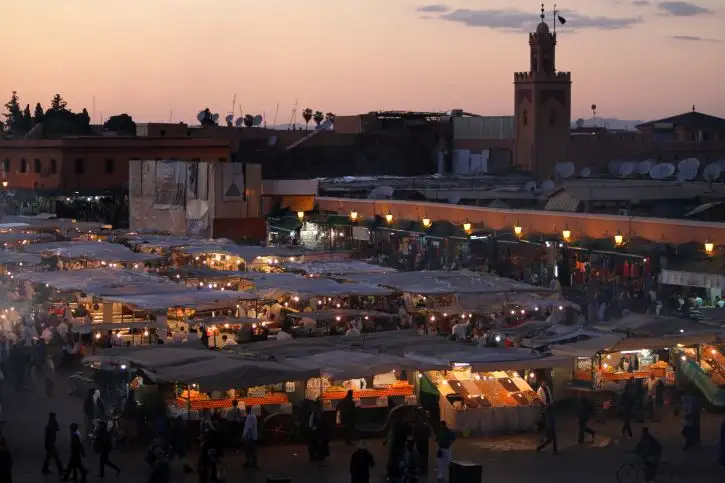
BON VOYAGE! 
Included Meal(s): Breakfast
Countries Visited: Morocco, Portugal and Spain
*The red tour trail on the map does not represent the actual travel path.
Book This Tour
- Final payment: Due 90 days prior to departure.
- Deposit: A non-refundable $500 CAD Deposit is required at booking.
- Optional Single Supplement: $4450 CAD (number of singles limited).
(View options forsingle travellers) - Transfering Tour or Date: Transferring to another tour or tour date is only permissible outside of 120 days prior to departure and is subject to a $100 CAD change fee.
(Read our cancellation policy)
Prices below are per person, twin-sharing costs in Canadian Dollars (CAD). Pricing does not include airfare to/from the tour and any applicable taxes.
Tourcode: PM1
Frequently Asked Questions
- What is the maximum number of participants on a trip?Most of our tours carry a maximum of 18 participants; some tours (ie hiking tours) top out at 16. In the event that we do not achieve our minimum complement by our 90-day deadline, we may offer group members the option of paying a "small-group surcharge" as an alternative to cancellation. If all group members agree, we will confirm the trip at existing numbers; this surcharge is refundable in the event that we ultimately achieve our regular minimum. If the small group surcharge is not accepted, we will offer a refund of your deposit or a different trip of your choice.
- Can I extend my tour either at the beginning or end? What about stopovers?Yes, you can extend your tour either at the beginning or the end and we can book accommodation in our tour hotel. Stopovers are often permitted, depending on air routing. Stopovers usually carry a "stopover" fee levied by the airline.
- How do I make a reservation? How and when do I pay?The easiest way to make a reservation is via our website; during office hours, you are also more than welcome to contact us by telephone.
A non-refundable deposit is payable at the time of booking; if a reservation is made within 90 days, full payment is required. Some trips require a larger deposit. If international airline bookings require a non-refundable payment in order to secure space or the lowest available fare, we will require an increase in deposit equal to the cost of the ticket(s).
Early enrolment is always encouraged as group size is limited and some trips require greater preparation time.
Once we have received your deposit, we will confirm your space and send you a confirmation package containing your trip itinerary, any visa/travel permit related documents, invoice, clothing and equipment recommendations, general information on your destination(s), and forms for you to complete, sign and return to us. Your air e-tickets (if applicable), final hotel list, final trip itinerary, and instructions on how to join your tour, will be sent approximately 2-3 weeks prior to departure. - What about cancellations, refunds, and transfers?Please review our cancellation policy page for details.
- I am a single who prefers my own room. What is a single supplement?All of our tours have a single supplement for those who want to be guaranteed their own room at each location.
This supplement is a reflection of the fact that most hotels around the world do not discount the regular twin-share rate for a room by 50% for only one person occupying a room. Most hotels will give a break on the price, but usually in the range of 25-30% of the twin-share rate. This difference, multiplied by each night, amounts to the single supplement.
The conventional amount can also vary from country to country and some destinations are more expensive than others for single occupancy. In order to be "single friendly," the supplements we apply are not a profit centre for us and we do our best to keep them as reasonable as possible.
On most tours we limit the number of singles available, not to be punitive, but rather because many hotels allow for only a limited number of singles; some smaller hotels at remote locations also have a limited number of single rooms available.
Please note that most single rooms around the world are smaller than twin-share rooms and will likely have only one bed. - Do you have a shared accommodation program?Yes! If you are single traveller and are willing to share, we will do our best to pair you with a same-gender roommate. Please note that should we fail to pair you, we will absorb the single supplement fee and you will default to a single room at no extra charge.