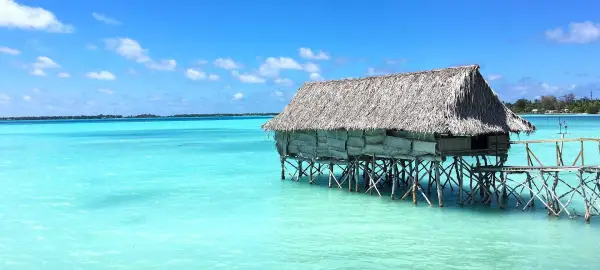
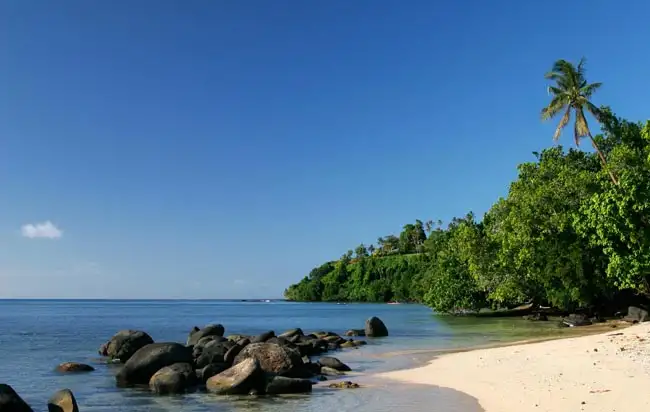
This morning we fly from Fiji to the Polynesian nation of Tuvalu, one of the smallest and most remote countries in the world.
Extremely inaccessible and far off the travellers path, this tiny nation is one of the least visited countries in the world. Situated midway between Hawaii and Australia, only a few thousand visitors make it here each year (and just a small percentage of those are true 'tourists'). It has often been said that if you want to disappear for a while, head to Tuvalu! Due to the country's remoteness, tourism here is not significant. With only around 10,600 people in its entire population, Tuvalu is the least populous state in the world after Vatican City.
Many believe time is running out for Tuvalu due to rising sea levels threatening its low-lying atolls. The urgency of this threat has led to an unprecedented response: Australia has created a special climate migration treaty allowing up to 280 Tuvaluans to relocate permanently to Australia each year. It is widely described as the world's first treaty of its kind, offering a path of climate mobility to an entire nation. The first ballot in 2025 drew more than 8,700 registrations for those 280 places, highlighting the very real fear that their homeland may soon become uninhabitable.
Funafuti is Tuvalu's capital and the location of its international airport. Approximately 6,600 people, well over half the national population, live here, and life is ‘easy going’ and laid back. Only some small manufacturing facilities remind visitors of the modern world lingering beyond the horizon. Although Tuvalu literally means ‘cluster of eight’, there are 9 islands in the nation (six true atolls and three reef islands).
Upon arrival we will head to the local Community Hall (Falekaupule), which is located just nearby the airport. The traditional island meeting hall is where most important matters are discussed, and is often used for wedding celebrations and community activities. Here we are welcomed with a traditional dance, and we can enjoy a light snack before heading to our hotel.
After checking in and taking some time to refresh we will head out for a short afternoon tour of the island.
Overnight in Tuvalu.
Included Meal(s): Breakfast and Dinner