- History
- Hiking
- Overview
- Info & Inclusions
- Itinerary
- Map & Hotels
- Photos
- Dates & Prices
- Tour Duration: 15 Days
- Max Group Size 16
- Gehry's Guggenheim Bilbao and hands-on Basque cooking class
- Roncesvalles pilgrim blessing and beech forest walk
- Roman road sections through Navarre and medieval Estella
- Cruz de Ferro stone ceremony in the mountains above Astorga
- Final approach into Santiago's Plaza del Obradoiro on foot
- Celtic Galicia — Roman walls of Lugo and O Cebreiro highlands
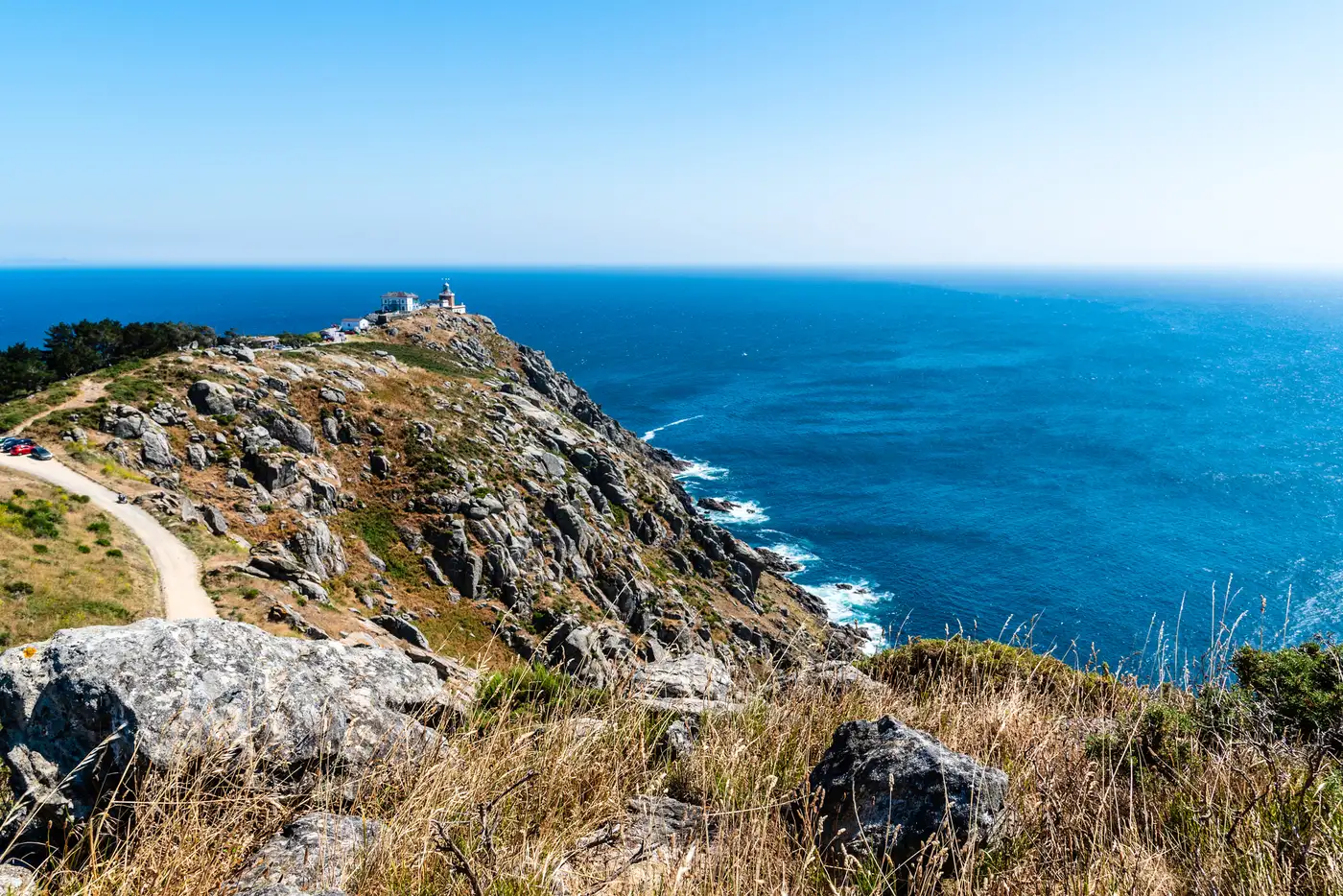
- Finisterre lighthouse — the Atlantic edge where the medieval world ended
- Singles friendly (view options for single travellers)
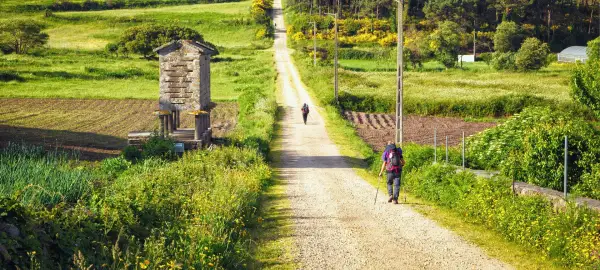
This fifteen-day journey traces the Camino's most compelling sections on foot — Roncesvalles' cathedral beech forests, Roman roads through Navarre, the vast Meseta plains, the Cruz de Ferro's ancient stone ceremony, and the final approach into Santiago's Plaza del Obradoiro — without requiring the months of continuous walking the full pilgrimage demands. Vehicle support connects the stages, allowing us to experience the Camino's essential character while covering ground that would take weeks on foot.
The route passes through the full complexity of northern Spain: Basque Country's gastronomic culture and Gehry's titanium Guggenheim in Bilbao, Rioja's vineyard country, Burgos' Gothic cathedral housing El Cid's tomb, León's ethereal stained glass, and finally Galicia's Celtic-green hills where ancient palloza houses and pre-Roman traditions persist beneath a Christian veneer. The journey concludes at Finisterre's lighthouse — the literal edge of the known world — where the Atlantic stretches westward without interruption.
Whatever draws you to the Camino, the path will meet you there.
- MealsSavour authentic flavours with included daily breakfasts, some lunches, and most dinners at handpicked local restaurants—immersing you in local cuisine without worrying about reservations or budgets.
- Transport & Logistics
Private air-conditioned coaches and included internal ferries and flights—ensuring hassle-free travel so you can focus entirely on the discoveries ahead.
"Adventures Abroad tour leader's management and guest services managed the tour with great skill and dedication. The tour leader was on top of every move and transfer. We have not experienced any issues with logistics and had a great time."
~ JULIA O"The tour leader did an excellent job coordinating some difficult travel logistics, power outage issues and resolving problems and dealing with guests who had unrealistic expectations."
~ CYNTHIA COLLINS - Expert Guidance
Unlock insider secrets at every landmark with your full-time Tour Leader and expert local guides , all gratuities covered—no hidden tipping surprises—so you immerse fully in your destination's stories, worry-free. (Except for the tips to your tour leader at the end of your tour.)
"Amazing tour guide. Our tour guide was very well organized, Her passion, knowledge, and enthusiasm completely transformed the travel experience into something truly unforgettable..."
~ MELANIE LEMAIRE"Highly recommend every trip with Adventures Abroad. It's a well organized and well thought out adventure. The tour leaders are friendly, knowledgeable and experienced professionals. Highly recommend this company."
~ SUSAN WALL - Sightseeing & EntrancesAll entrance fees for sites visited as per the itinerary—no hidden costs—so you can explore ancient ruins and excursions with complete peace of mind.
- AccommodationsUnwind in clean, well-located 3 to 4-star hotels with private en suite facilities—handpicked for comfort and convenience after each day's discoveries—so you can rest easy knowing your stay supports the real adventure, not steals the spotlight.
- Small Group
Discover the world in small groups of up to 16 travellers plus your expert Tour Leader—unlocking spontaneity, off-the-beaten-path adventures, and genuine connections at a relaxed pace, free from crowds.
"Looking Forward to My Next Adventure The best feature of the Adventures tour was the small size that allowed the group to quickly load up, let everyone get acquainted within the first 24 hours, capitalize on unplanned surprises along..."
~ PHILIP BLENSKI"Good value for a great time I have traveled with Adventures Abroad for over 20 years now. Well thought out, interesting itineraries and the other travelers congenial and friendly. The price always seems fair and overall a..."
~ Trusted Customer - Airport Transfers For Land & Air CustomersWe handle hassle-free airport transfers for all our land and air tour customers—plus early arrivals or late departures when you book extra hotel nights directly with us for added peace of mind.
- International airfare to/from the tour.
- Tour Leader gratuities, lunches, drinks, personal items (phone, laundry, etc), international air taxes (if applicable), excursions referenced as 'optional'.
- Airport transfers for Land Only customers.
- Optional trip cancellation insurance.
- Seasonality and Weather:
September and May each offer a different version of the same journey — and both are worth considering carefully.
September's Camino carries the particular quality of a path winding down. Summer's crowds have thinned, the light falls at lower angles across the Meseta, and Rioja's harvest season charges the vineyards with activity and urgency. Temperatures settle into the ideal range for walking — warm enough to enjoy, cool enough to sustain pace across the longer stages. The Cruz de Ferro stone ceremony in mountain air, the final approach into Santiago, and the Atlantic cliffs at Finisterre all carry extra weight in autumn's clarity.
May brings the Camino at its most quietly hopeful. Oak forests are at peak green, wildflowers appear on the Celtic plateaus above O Cebreiro, and the longer daylight hours extend each walking day generously. The path carries fewer pilgrims than midsummer, creating space for the kind of reflection the Camino invites. There is something appropriate about walking toward Santiago in spring — the season has been drawing pilgrims to this route for precisely that reason for a thousand years. - Transport and Travel Conditions:
Most transport is by private air-conditioned vehicle, +/- 24 seats depending on ultimate group size (see 'group size'). Due to the winding roads and lack of accessibility on narrow streets in small towns and villages, we will avoid the large motor-coaches more typical of large group touring. One of the delights of exploring this compact region is the lack of long road journeys, allowing us to maximize our time doing, seeing, smelling, tasting, experiencing, and soaking it all in.
While El Camino has, of course, for centuries been a sacred pilgrimage route, in the 21st Century the reasons why one might want to experience this fascinating part of Europe can vary greatly among visitors, and many of our past participants had interests that went well beyond matters spiritual -- history, art, politics, architecture, nature, gastronomy, and recreation. While the religious theme will permeate much of what we so and do, our intention is to deliver a broadly-based experience that will highlight all the many special attributes that makes this part of the world so inviting.
OUR WALKS
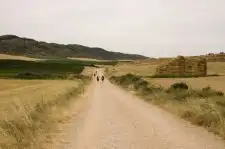
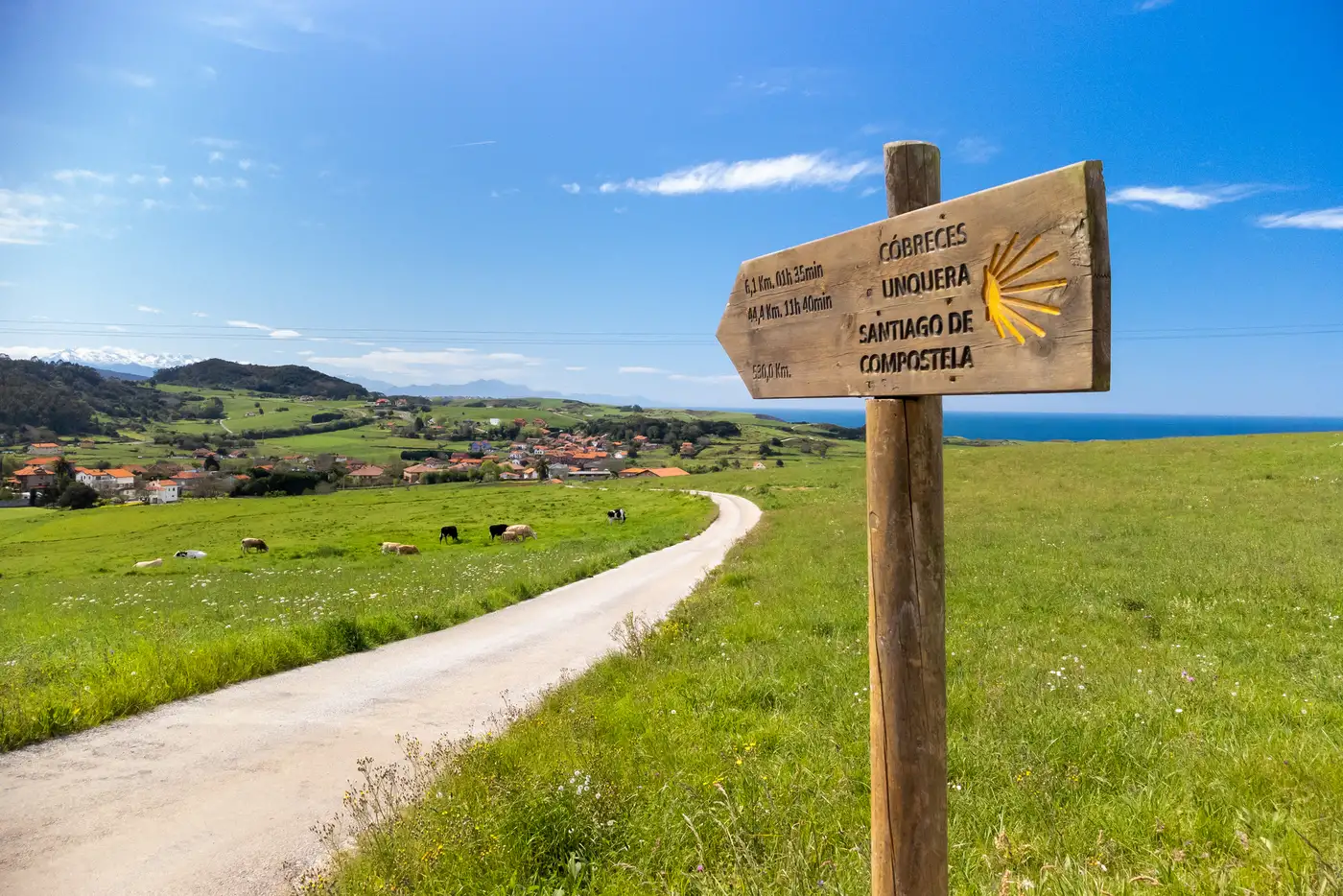
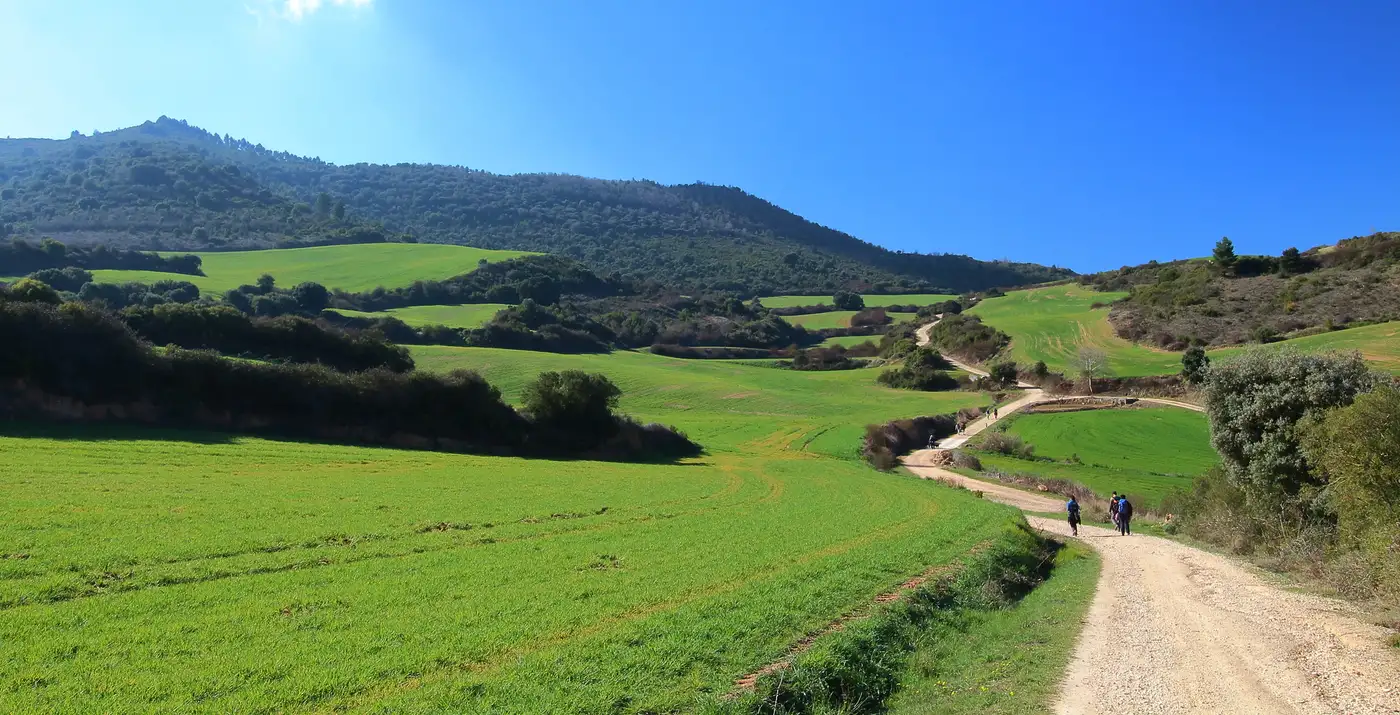
Our difficulty rating "Level 3" refers to our walks/hikes that go beyond town/city walking tours on pavement or cobblestones, to hiking on "natural" surfaces (ie gravel) and pathways that feature some elevation gain/loss as opposed to reasonably flat terrain. This activity does not occur every day, but as per our tour itinerary, even when not on a "hike," we will be on foot quite a lot, with town walking tours and plenty of places with uneven surfaces and stairs.
Because some hikes can/may be adjusted at the discretion of your Tour Leader depending on things like weather and group interest, the final distances/durations of our hikes as indicated in our itinerary should be taken as guidance only.
Am I suitable for this tour? Please refer to our self-assessment form - Activity Level: 3
These tours are considerably more strenuous than our Level 1 & 2 "cultural" tours and feature walks/hikes on undulating and uneven pathways for 3-7 hours at a leisurely pace. We don't hike every day, but participants should be fit and active and accustomed to trail walking, possibly in remote locations, and be prepared to engage in a conditioning regimen prior to the trip. Altitude may also be a factor on some tours, though none of our hiking tours currently occur above 3000m/10,000 ft. These are hotel-based tours with no camping, and you are required to only carry what you need for the day.
To learn more about the Activity levels, please visit our tour styles page. - Accommodation:
Well-located, air-conditioned, and often charming/historic 3-4 star hotels throughout. Porter service is sometimes available though you should be independent with your luggage. Single rooms are limited in number and likely smaller than twins. - Staff and Support:
Tour Leader throughout, driver, local guides. - Group Size:
Maximum 16 plus Tour Leader
- Day 1:Arrive in Bilbao, SpainWe arrive in Bilbao, the Basque city that serves as our gateway to the Camino — though it earns its place on this journey in its own right, not merely as a starting point. This is one of Europe's most culturally distinctive cities, where a language older than any other on the continent is still spoken daily, where cuisine has been elevated to something approaching philosophy, and where a single titanium building transformed a post-industrial waterfront into an international destination overnight.
We gather this evening for a first meal together — a fitting introduction to Basque hospitality that will set the tone for the table experiences ahead.
Overnight in Bilbao.
Included Meal(s): Dinner - Day 2:Bilbao: The Guggenheim & Cooking ExperienceBilbao rewards exploration on foot, and this morning we begin in the Casco Viejo — the Seven Streets that formed the original medieval settlement in 1300, where the Gothic Cathedral of Santiago stands as our first reminder of where this journey is headed. Narrow lanes open unexpectedly into plazas, and the particular Basque genius for street-level food culture announces itself at every corner.
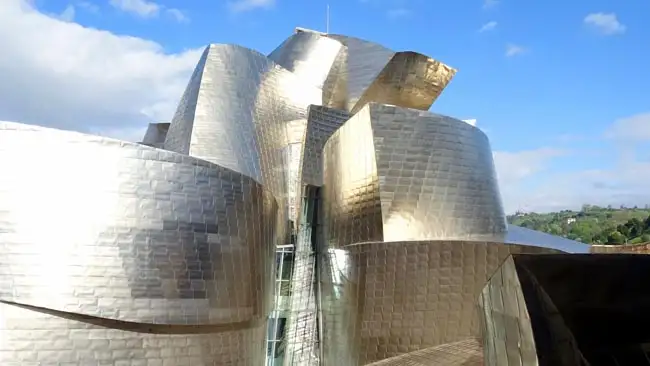
We then cross the Nervión River to Frank Gehry's Guggenheim Museum, whose titanium curves have become as recognisable as any medieval landmark in Spain. Opened in 1997, it did something architecture rarely manages — it changed the economic and cultural trajectory of an entire city. The collection inside spans modern and contemporary masters, but the building itself remains the centrepiece: a structure that seems to move as you walk around it.
This afternoon we join a hands-on Basque cooking class, learning the techniques behind pintxos — the sophisticated small plates that distinguish Basque food culture from anything else in Spain. These are not mere appetisers but an entire social architecture, where the ritual of moving between bars and grazing from counter displays creates the fabric of daily life. We prepare both traditional and contemporary versions before sitting down to eat what we've made.
Walk Summary: 2-3 hours, 4-5 km/2.5-3.1 mi, cobblestone streets and riverside promenade, minimal elevation change.
Overnight in Bilbao.
Included Meal(s): Breakfast and Dinner - Day 3:Bilbao - San Sebastian - PamplonaWe drive east this morning to San Sebastián, where the Bay of Biscay curves into one of Europe's most elegant urban waterfronts. The city's reputation rests on food — more Michelin stars per capita than almost anywhere on earth — but the Parte Vieja's narrow streets reveal a culture where gastronomy and identity are inseparable. We explore the pintxos bars of the old quarter, understanding how this tradition evolved from simple tavern food into an expression of Basque distinctiveness that no outside influence has managed to dilute.
After lunch we continue south and east to Pamplona, where Ernest Hemingway's shadow falls long across the Plaza del Castillo and the city's more complex identity — medieval capital of Navarre, fortress town, pilgrimage waypoint — competes for attention with its famous July bulls. We arrive in time for a brief orientation through the old quarter, where the Gothic cathedral and well-preserved city walls establish Pamplona as something considerably richer than its running-of-the-bulls reputation suggests.
Pamplona sits at the foot of the Pyrenees, and tomorrow the Camino begins in earnest.
Overnight in Pamplona.
Included Meal(s): Breakfast and Dinner - Day 4:Pamplona: Roncesvalles Forest WalkThe Camino de Santiago has had a western starting point for as long as it has existed, but for pilgrims crossing from France, Roncesvalles has always been the true beginning — the Pyrenean pass where the mountains release you into Spain and the long westward walk properly starts. In 778 CE, Charlemagne's rearguard was ambushed here in a battle that became the seed of the great medieval epic, the Song of Roland. Twelve centuries of pilgrims have crossed this same threshold since.
We begin at the Collegiate Church of Roncesvalles, where the traditional pilgrim blessing ceremony has welcomed travellers since the 12th century. Receiving our pilgrim credentials here is not mere ritual — it connects us to the physical and spiritual continuum that the Camino has maintained across a thousand years of European history, through plague, war, reformation, and revolution.
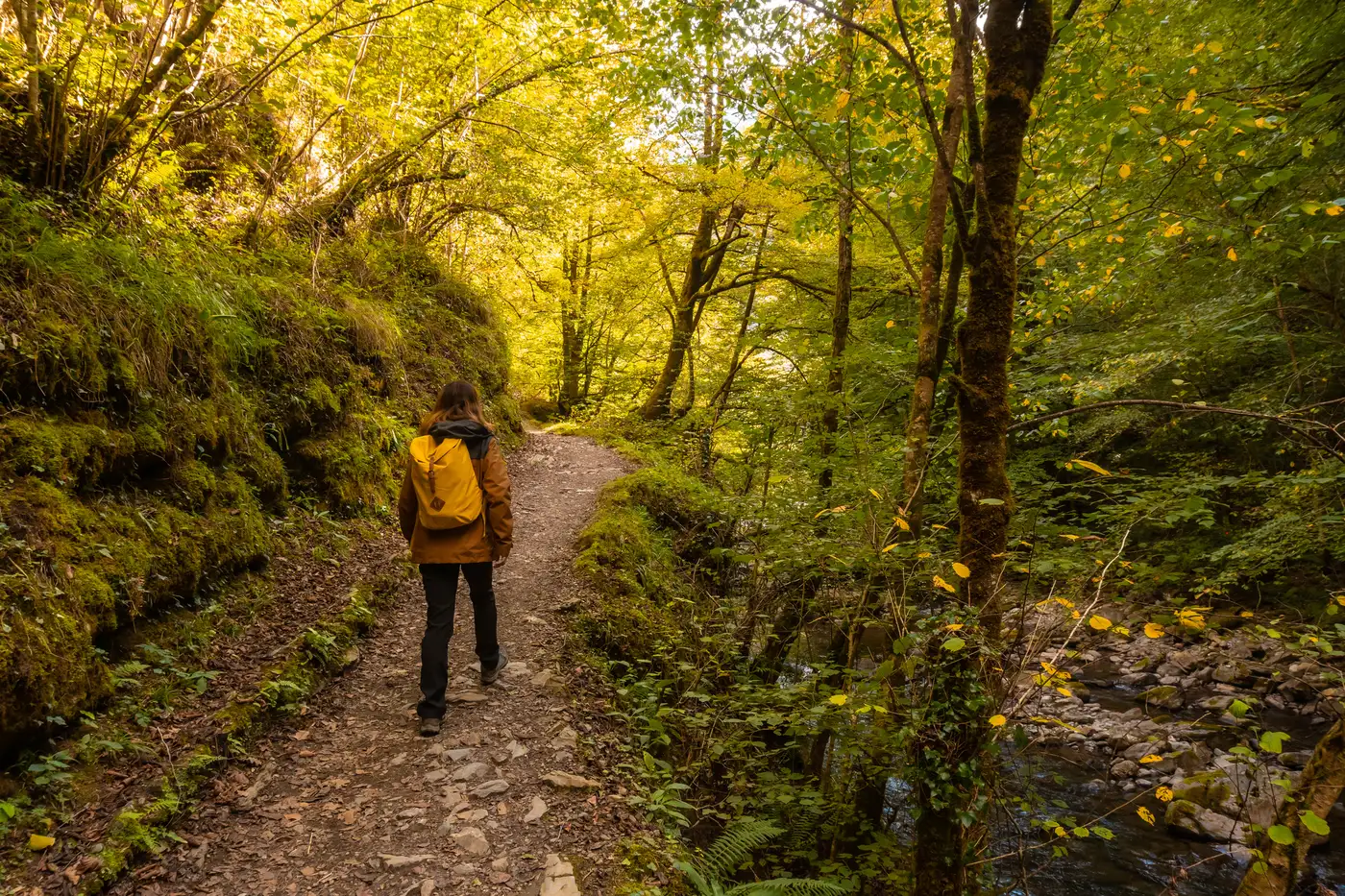
Our forest walk follows 6-8 km of beech and oak woodland, the ancient canopy creating a quality of light and silence that urban life rarely offers. These are the same forests that sheltered medieval pilgrims uncertain of what lay ahead and the same paths that have absorbed every kind of human intention — faith, grief, adventure, curiosity — without distinguishing between them. The westward impulse that will carry us to the Atlantic edge begins here, under these trees.
Walk Summary: 2-3 hours, 6-8 km/3.7-5 mi, forest paths, 200 m/656 ft elevation change.
Overnight in Pamplona (dinner on your own this evening).
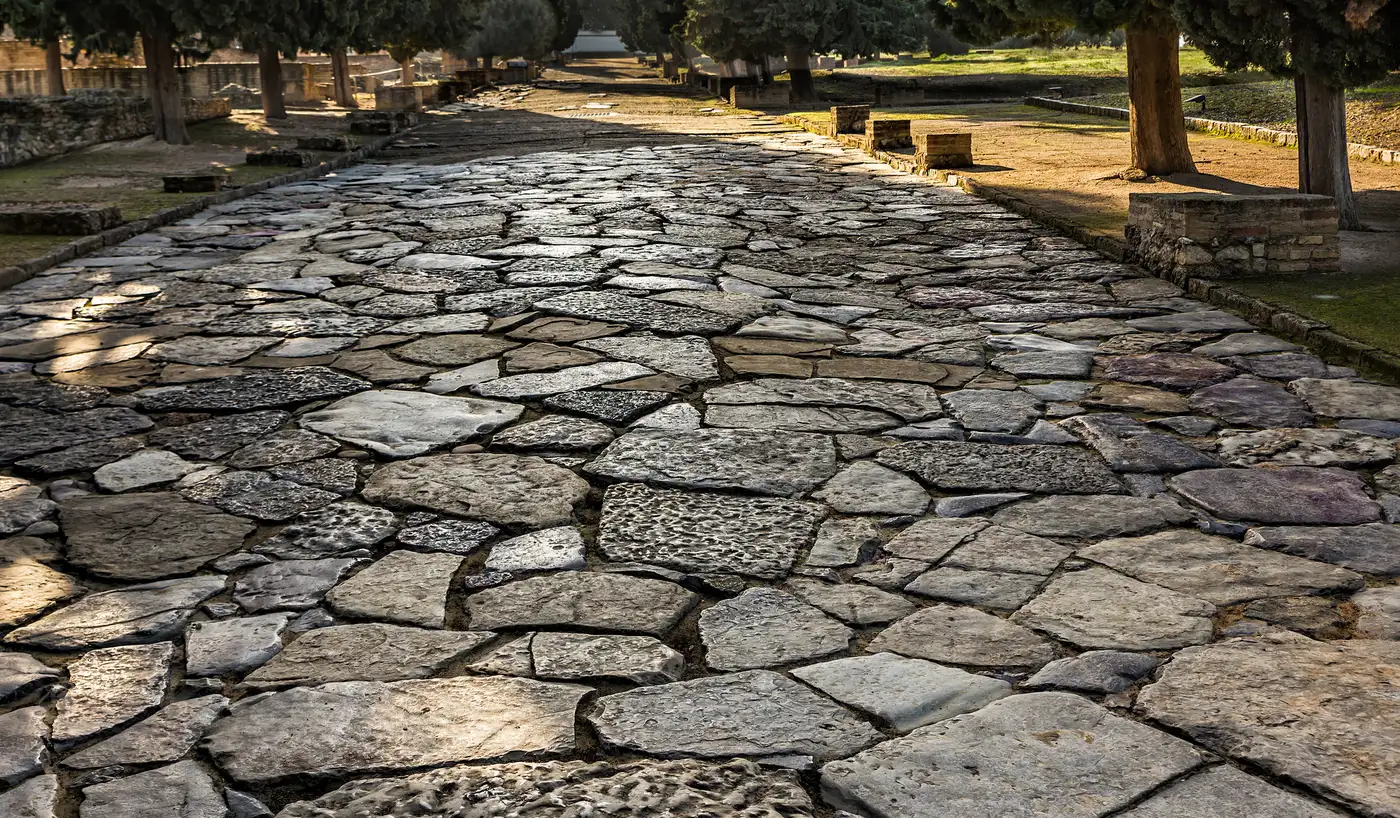
Included Meal(s): Breakfast and Lunch - Day 5:Pamplona: Ancient Roman RoadsRome built roads the way it built everything — with the intention of permanence. The Via Trajana that crosses Navarre toward Santiago was laid two millennia ago, and sections of the original stone paving survive beneath modern feet with the particular solidity of things made to outlast their makers. This morning we walk one of the Camino's most historically layered sections, from the octagonal enigma of Santa María de Eunate to the medieval hill town of Cirauqui.
Santa María de Eunate stands alone in open countryside, its 12th-century Romanesque geometry drawing scholars and pilgrims in equal measure. The unusual octagonal design connects to Templar traditions and Holy Land influences brought back by Crusaders — a building that poses questions it refuses to answer, which may be why it has fascinated travellers for nine centuries.
Our walk follows original Roman stone paving where it survives, the careful engineering of empire still functional after two thousand years. In Estella this afternoon — a medieval town that grew wealthy from Camino commerce and earned the nickname "little Toledo" for its cultural diversity — Romanesque civil architecture and a palace built for the Kings of Navarre speak to a prosperity that the pilgrimage route made possible.
Walk Summary: 3-4 hours, 8-10 km/5-6.2 mi, Roman stone roads and medieval village paths, 150 m/492 ft elevation change.
Overnight in Pamplona.
Included Meal(s): Breakfast and Dinner - Day 6:Pamplona - Wine Experience & Santo Domingo de la Calzada - BurgosThe Camino passes through Rioja almost incidentally, but the region's agricultural rhythms have shaped the pilgrimage experience for centuries — travellers have been stopping at these estates since Roman times, when the first vines were planted in soils that have never been given over to anything else. This morning we spend extended time at a family winery, understanding how Atlantic and Mediterranean climate influences converge in these particular valleys to produce wines of unusual complexity. Barrel tastings and a traditional lunch with the winemaking family provide the kind of access that the region's growing wine tourism rarely delivers.
Our afternoon brings us to Santo Domingo de la Calzada, a town with an unlikely founder — an 11th-century hermit-engineer named Domingo who devoted his life to building bridges, hospitals, and roads to ease the pilgrim journey. The cathedral he inspired houses the Camino's most peculiar tradition: live roosters kept in a Gothic cage, commemorating a miracle involving a wrongly accused pilgrim whose roasted chicken reportedly returned to life to prove his innocence. The story is absurd and the tradition is genuine, which captures something essential about Camino culture.
We arrive in Burgos by evening.
Overnight in Burgos.
Included Meal(s): Breakfast and Lunch - Day 7:Burgos: Medieval Village CircuitBurgos Cathedral is one of Gothic architecture's great achievements — a UNESCO World Heritage structure that took three centuries to complete and houses El Cid's tomb in a space of soaring stone vaulting. Our enhanced visit includes the atmospheric crypt and chapter house, where the accumulated artistic ambition of medieval Castile reveals itself in carved choir stalls and tapestries. That the cathedral was funded substantially by Camino commerce is worth remembering: this pilgrimage route didn't just move people westward, it moved wealth, ideas, and artistic influence in every direction simultaneously.
This afternoon we walk a selected section connecting medieval villages through the Castrojeriz area toward Frómista, where Castile's essential character asserts itself — vast horizons, golden grain fields, the occasional church tower marking a village that has occupied the same ground since Roman times. The landscape feels genuinely ancient because it is.
At Frómista, the Church of San Martín — built in 1066, considered the purest Romanesque structure on the entire Camino — rewards close attention. Every carved capital tells a distinct story, from biblical narrative to fantastical creatures that populated medieval imagination. This is not decoration but theology made visible, designed for an illiterate congregation that read stone the way we read text.
Walk Summary: 3-4 hours, 8-10 km/5-6.2 mi, rural tracks and village paths, 100 m/328 ft elevation change.
Overnight in Burgos.
Included Meal(s): Breakfast and Dinner - Day 8:Burgos - LeónThe drive to León follows the Camino's central spine across the Meseta, the vast Castilian plateau that has tested pilgrims' resolve for centuries. The landscape's austerity is not emptiness — it is a different kind of fullness, where the absence of distraction creates conditions for the kind of interior travel that exterior journey sometimes enables. Medieval pilgrims called this section the most spiritually demanding of the entire route, not because of physical difficulty but because the Meseta offers nowhere to hide from your own thoughts.
León's cathedral earns its nickname — the House of Light — through 1,800 square metres of medieval stained glass that transforms interior stone into something luminous and weightless. Our visit includes roof access, where the engineering logic behind those soaring walls becomes visible: every structural decision was made in service of creating more window, more light, more dissolution of solid matter into colour.
This evening, the Gregorian chant sung at the cathedral's evening service provides a sonic counterpoint to the visual splendour — the same chants that have filled this space since the 13th century, unchanged.
Non-walking day
Overnight in León.
Included Meal(s): Breakfast and Dinner - Day 9:Meseta Plains - AstorgaThe Meseta walking experience reveals what medieval pilgrims understood and modern travellers often resist: that vast, simple landscape is not boring but clarifying. Our 8-10 km walk from Hospital de Órbigo captures the plateau's essential quality — enormous sky, minimal interruption, the rhythm of walking becoming something close to meditation.
Hospital de Órbigo's medieval bridge carries more history than its modest appearance suggests. In 1434, the knight Suero de Quiñones held a month-long tournament here, challenging 300 knights in honour of his beloved — a piece of medieval theatre so extravagant it became legendary across Europe. The bridge has been here since before that, and will outlast the story.
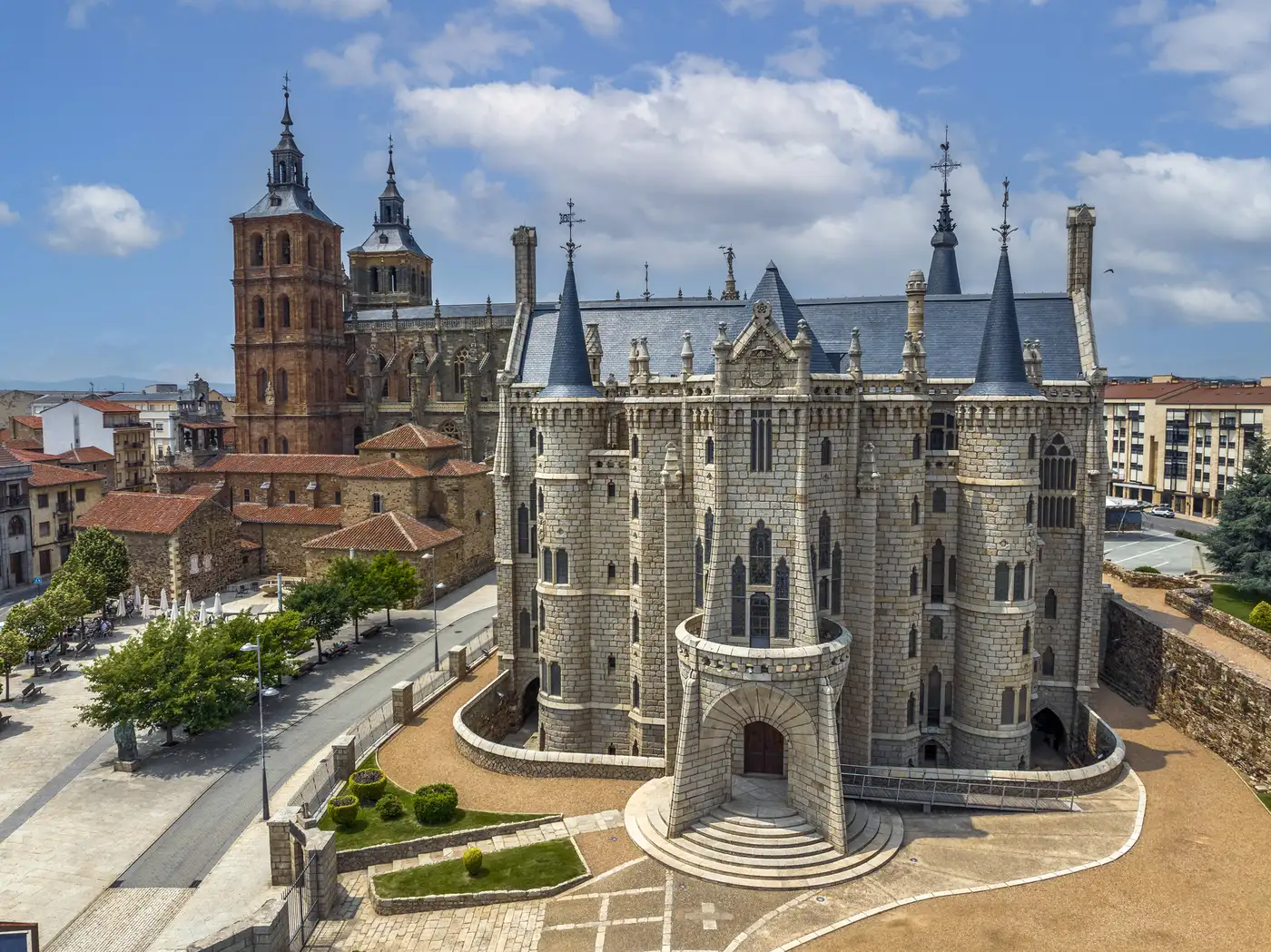
Astorga rises from the plain as a Roman city that became a crucial Camino crossroads, where multiple pilgrimage routes converge and where the ancient logic of roads meeting becomes visible in the urban structure. The Gothic and Baroque cathedral rewards a visit, but the day's architectural surprise is Antonio Gaudí's Episcopal Palace — a fantastical neo-Gothic confection commissioned in 1889 that demonstrates how the creative restlessness animating the Camino's great builders never entirely disappeared.
Walk Summary: 3-4 hours, 8-10 km/5-6.2 mi, packed earth Camino paths, 50 m/164 ft elevation change.
Overnight in Astorga.
Included Meal(s): Breakfast and Dinner - Day 10:Cruz de Ferro Mountain Section & Transfer to LugoThe Cruz de Ferro is a simple thing — an iron cross on a wooden pole, standing at 1504 m/4,934 ft above sea level in the mountains west of Astorga. The cairn of stones beneath it has been accumulating for over a millennium, each stone carried from home by a pilgrim and deposited here as a symbolic release of whatever weight they were carrying. The ritual predates Christianity on this site, absorbed into the pilgrimage tradition the way the Camino absorbed everything it encountered — without erasing what came before.
Our forest approach walks 8-10 km through oak and chestnut woodland to reach the Cruz, the gradual ascent through pristine mountain terrain providing time to understand what the ceremony means before it arrives. The cultural presentation on Celtic-Christian fusion that begins our morning establishes the context: Galicia's spiritual traditions were never simply Christian, but a layering of pre-Roman Celtic belief beneath Christian symbolism, producing something unique to this corner of Europe.
At the Cruz de Ferro, we participate in the stone ceremony — carrying a stone from home if you've thought to bring one, or finding one on the mountain if you haven't. The cairn receives both equally.
We transfer to Lugo this afternoon through Galicia's green hills.
Walk Summary: 3-4 hours, 8-10 km/5-6.2 mi, forest paths and mountain trails, 400 m/1312 ft elevation gain.
Overnight in Lugo.
Included Meal(s): Breakfast and Dinner - Day 11:Lugo & Celtic GaliciaLugo's Roman walls are the best preserved in the world — 2 km of 3rd-century fortification that still completely encircle a living city, their 85 towers and multiple gates as structurally sound as the day they were completed. Our morning walk along the ramparts covers the full circuit, the views inward over the old city and outward across the Galician countryside equally rewarding. That Romans chose to build here with this permanence speaks to how seriously they took the western frontier — this was the edge of empire, and they intended it to hold.
The Cathedral of Santa María reveals the architectural layering that characterises Galician religious spaces — Romanesque foundations overlaid with Gothic additions and Baroque embellishment, each century leaving its mark without erasing what came before. The same principle applies to the culture: beneath the Christian surface, Celtic traditions persist in music, folk practice, and a relationship with landscape that predates Rome.
Our afternoon walk explores the O Cebreiro highlands, where rounded hills scattered with ancient palloza houses — circular stone dwellings with thatched roofs unchanged since pre-Roman times — preserve a way of inhabiting the land that the Camino passed through without transforming. The 9th-century church here houses treasures of medieval legend, including relics connected to the Holy Grail tradition.
Walk Summary: 2-3 hours, 6-8 km/3.7-5 mi, Roman wall circuit and Celtic highland paths, 150 m/492 ft elevation change.
Overnight in Lugo.
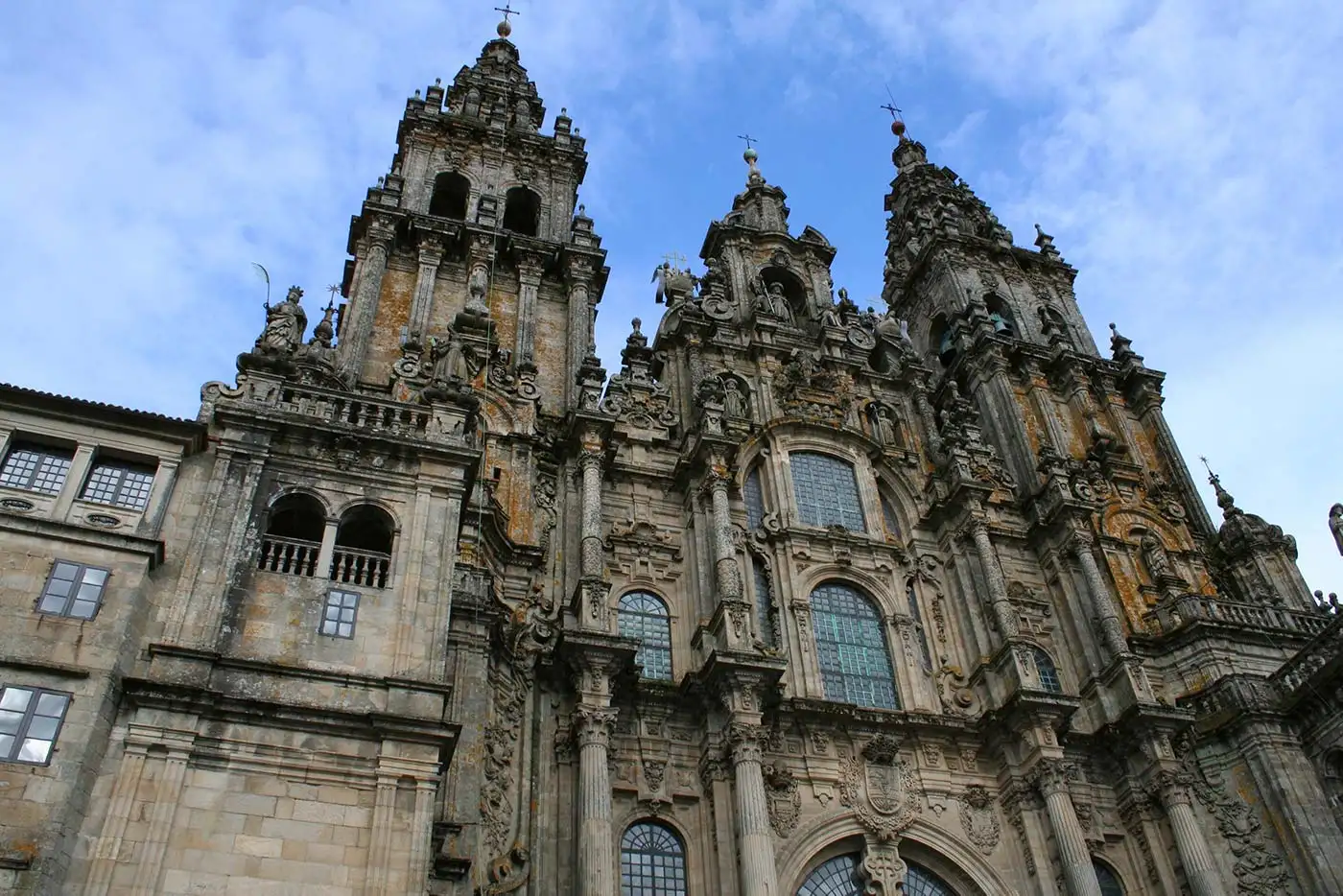
Included Meal(s): Breakfast and Dinner - Day 12:Lugo - Santiago Final ApproachEverything the past eleven days have built toward arrives this morning. The credential stamps collected since Roncesvalles, the stones carried up mountain paths, the Roman roads walked and the medieval towns passed through — all of it points to the same place, the same plaza, the same twin towers rising above the Galician rooftops as they have risen for nine centuries of arriving pilgrims.
We follow the traditional final 8 km approach from Monte do Gozo — the Mount of Joy, named for the emotional reaction medieval pilgrims reported upon seeing Santiago's cathedral towers for the first time after months of walking. The descent toward the city follows the same path those pilgrims walked, the towers growing larger with each kilometre in exactly the way they always have.
Our arrival in Plaza del Obradoiro completes the westward journey that began at Roncesvalles' beech forests. The Baroque cathedral facade, the elegant Hostal dos Reis Católicos opposite — originally built as a pilgrim hospital by the Catholic Monarchs — and the sound of the cathedral bells create a arrival that rewards everything that preceded it. The westward impulse that has carried us across northern Spain finds its first completion here.
This evening we gather for a celebratory Galician feast, concluding with a traditional queimada ceremony — flaming aguardiente mixed with coffee beans, lemon peel, and sugar, a ritual that is simultaneously ancient and theatrical.
Walk Summary: 2-3 hours, 8 km/5 mi, traditional Camino paths and urban walkways, 100 m/328 ft elevation loss.
Overnight in Santiago de Compostela.
Included Meal(s): Breakfast and Dinner - Day 13:Santiago de Compostela ExplorationSantiago Cathedral has been receiving pilgrims since the 9th century, and the accumulated weight of that reception is visible everywhere — in the Portico de la Gloria's carved figures polished smooth by millions of touching hands, in the incense smoke that has blackened stone vaulting over centuries, in the sheer scale of a building whose ambition was proportional to its importance as one of medieval Christendom's three great pilgrimage destinations.
Our comprehensive visit includes the museum and roof access, where the engineering solutions medieval builders developed to support massive stone vaulting become visible from above, and Santiago's urban development spreads below in a pattern shaped entirely by the needs of arriving pilgrims. Master Mateo's 12th-century Portico de la Gloria represents medieval sculpture at its most sophisticated — complex theological narratives rendered in stone with a vitality that no amount of familiarity diminishes.
The afternoon is yours — for the old quarter's streets and markets, for the Gelmirez Palace's Romanesque architecture, for sitting in the plaza watching other pilgrims arrive, or simply for the particular satisfaction of being somewhere you walked to.
Overnight in Santiago de Compostela.
Included Meal(s): Breakfast and Dinner - Day 14:FinisterreSantiago was never quite the end. Medieval pilgrims who had walked for months from France or Portugal or further looked at the cathedral, completed their devotions, and then kept walking — another 90 km west to the rocky Atlantic headland where the known world ran out of land. Finisterre, the End of the World, was the geographic conclusion that the spiritual one somehow required. We cover that distance by vehicle, arriving at the conclusion the Camino has been pointing toward since Bilbao.
We begin at Muxía, a fishing village on Galicia's wild coast where a coastal walk of 3-4 km around the sanctuary reveals how Christian tradition settled onto pre-Roman sacred sites without displacing them — the same rocks, the same ocean, the same human need to stand at the edge of things and look outward.
The drive to Finisterre follows coastline of increasing drama to the lighthouse that marks continental Europe's westernmost point. Our clifftop walk covers 2-3 km above Atlantic waters that medieval Europeans believed extended without limit to the world's edge. Standing here, looking west at an ocean that has no land between this cliff and America, the westward impulse that began at Roncesvalles finds its true completion — not in a cathedral, magnificent as that arrival was, but at the literal end of the ground.
A seafood lunch overlooking the Atlantic closes the journey appropriately.
Walk Summary: Morning coastal walk 1-2 hours, 3-4 km/1.9-2.5 mi. Afternoon clifftop walk 1-2 hours, 2-3 km/1.2-1.9 mi. Undulating coastal terrain, 100 m/328 ft elevation change.
Overnight in Santiago de Compostela.
Included Meal(s): Breakfast, Lunch and Dinner - Day 15:DepartureOur Camino journey concludes with departure from Santiago de Compostela, carrying memories of landscapes that have inspired travellers for over a millennium. We leave having experienced not just Spain's most famous pilgrimage route, but a cultural journey that revealed how historical currents shaped European civilization through centuries of international exchange.
Buen Camino! Bon Voyage!
Included Meal(s): Breakfast
Countries Visited: Spain
*The red tour trail on the map does not represent the actual travel path.
Book This Tour
- Final payment: Due 90 days prior to departure.
- Deposit: A non-refundable $500 CAD Deposit is required at booking.
- Optional Single Supplement: $1970 CAD (number of singles limited).
(View options forsingle travellers) - Transfering Tour or Date: Transferring to another tour or tour date is only permissible outside of 120 days prior to departure and is subject to a $100 CAD change fee.
(Read our cancellation policy)
Prices below are per person, twin-sharing costs in Canadian Dollars (CAD). Pricing does not include airfare to/from the tour and any applicable taxes.
Frequently Asked Questions
- What is the maximum number of participants on a trip?Most of our tours carry a maximum of 18 participants; some tours (ie hiking tours) top out at 16. In the event that we do not achieve our minimum complement by our 90-day deadline, we may offer group members the option of paying a "small-group surcharge" as an alternative to cancellation. If all group members agree, we will confirm the trip at existing numbers; this surcharge is refundable in the event that we ultimately achieve our regular minimum. If the small group surcharge is not accepted, we will offer a refund of your deposit or a different trip of your choice.
- Can I extend my tour either at the beginning or end? What about stopovers?Yes, you can extend your tour either at the beginning or the end and we can book accommodation in our tour hotel. Stopovers are often permitted, depending on air routing. Stopovers usually carry a "stopover" fee levied by the airline.
- How do I make a reservation? How and when do I pay?The easiest way to make a reservation is via our website; during office hours, you are also more than welcome to contact us by telephone.
A non-refundable deposit is payable at the time of booking; if a reservation is made within 90 days, full payment is required. Some trips require a larger deposit. If international airline bookings require a non-refundable payment in order to secure space or the lowest available fare, we will require an increase in deposit equal to the cost of the ticket(s).
Early enrolment is always encouraged as group size is limited and some trips require greater preparation time.
Once we have received your deposit, we will confirm your space and send you a confirmation package containing your trip itinerary, any visa/travel permit related documents, invoice, clothing and equipment recommendations, general information on your destination(s), and forms for you to complete, sign and return to us. Your air e-tickets (if applicable), final hotel list, final trip itinerary, and instructions on how to join your tour, will be sent approximately 2-3 weeks prior to departure. - What about cancellations, refunds, and transfers?Please review our cancellation policy page for details.
- I am a single who prefers my own room. What is a single supplement?All of our tours have a single supplement for those who want to be guaranteed their own room at each location.
This supplement is a reflection of the fact that most hotels around the world do not discount the regular twin-share rate for a room by 50% for only one person occupying a room. Most hotels will give a break on the price, but usually in the range of 25-30% of the twin-share rate. This difference, multiplied by each night, amounts to the single supplement.
The conventional amount can also vary from country to country and some destinations are more expensive than others for single occupancy. In order to be "single friendly," the supplements we apply are not a profit centre for us and we do our best to keep them as reasonable as possible.
On most tours we limit the number of singles available, not to be punitive, but rather because many hotels allow for only a limited number of singles; some smaller hotels at remote locations also have a limited number of single rooms available.
Please note that most single rooms around the world are smaller than twin-share rooms and will likely have only one bed. - Do you have a shared accommodation program?Yes! If you are single traveller and are willing to share, we will do our best to pair you with a same-gender roommate. Please note that should we fail to pair you, we will absorb the single supplement fee and you will default to a single room at no extra charge.