PLEASE NOTE: We will CLOSED on Monday 07 September for the Labour Day holiday, and will be back to full operation from 9:00 am PT from Tuesday the 8th. Wishing you all a safe and enjoyable weekend!


Book 24/7 via this website; contact sales@adventures-abroad.com to reach out and we'll reply the next business day.

ANNOUNCEMENT
Small Group Experiential Travel
27 Day Taiwan, Japan & Kyushu Tour

27 Day Taiwan, Japan & Kyushu Tour

Island Temples, Cherry Blossoms & the Volcanic South
Tour Code
TJ2
When To Go
Mar
Start
Taipei (TPE)
End
Fukuoka (FUK)
Countries Visited (2)
Japan, Taiwan...More >
Overnight In (13)
Tokyo, Kyoto, ...More >
Activity Level
2 - ModerateDetails >
Tour Type
CulturalDetails >
  • Overview
  • Info & Inclusions
  • Itinerary
  • Map & Hotels
  • Photos
  • Dates & Prices
Highlights
  • Tour Duration: 27 Days
  • Max Group Size 18
  • Sun Moon Lake by boat and ropeway, then Tainan's temples and the Dutch-built Fort Zeelandia
  • A Tokyo fish market and sushi class, then Lake Ashi beneath Mt Fuji and a kaiseki night at a Hakone ryokan
  • Kyoto's Golden Pavilion, Ryoan-ji rock garden and the Philosopher's Path at cherry blossom peak
  • Hiroshima's Peace Memorial Park and Itsukushima Shrine standing in the sea at Miyajima
  • Sakurajima volcano by boat, Chiran's samurai lane and a volcanic sand bath at Ibusuki
  • Across the Ariake Sea to Unzen's steaming hells
  • Singles friendly
    (view options for single travellers)


Description
Taiwan and Japan share a spring, and this tour gives each island its own story before adding a third: Kyushu, the volcanic south where Japan first met the outside world. Taiwan's runs south with the settlers who shaped it, from Taipei's National Palace Museum to Lukang's red-brick lanes, a cruise on Sun Moon Lake and Tainan, where the Dutch raised Fort Zeelandia in the 1620s.

Japan's is a story of craft and ceremony, told from the window of a bullet train: a Tokyo sushi class, a kaiseki dinner at a Hakone ryokan beneath Mt Fuji, the woodworkers' town of Takayama, Kyoto and Nara at cherry blossom peak, then Hiroshima's Peace Park and the shrine that stands in the sea at Miyajima. Kyushu turns up the heat: Sakurajima smoking over Kagoshima, a volcanic sand bath at Ibusuki, the ferry to Unzen's steaming hells, Nagasaki, where Dejima kept Japan's one window on the world open for two centuries, and Arita, where Korean potters taught Japan porcelain. It ends in Fukuoka, over a bowl of Hakata ramen.
Price Includes
  • Daily breakfasts and most dinners, plus lunch on the Tokyo sushi class day
  • Clean, well-located 3 to 4 star hotels with private en suite facilities
  • All transport including the Taipei to Tokyo flight, the Taiwan high-speed rail, Shinkansen and local trains in Japan, private air-conditioned coaches where used, and the Sun Moon Lakes
  • Luggage forwarding from Tokyo to Takayama
  • All sightseeing, entrance fees and activities as listed in the itinerary
  • Full-time Adventures Abroad Tour Leader and expert local guides
  • Gratuities for local guides, drivers, porters and restaurant staff
  • Airport transfers for Land & Air customers


Exclusions
  • International airfare to and from the tour
  • Tour Leader gratuities
  • Most lunches and any other meals not listed as included
  • Alcoholic and bottled drinks
  • Personal items (phone, laundry, etc)
  • Internal air taxes where applicable
  • Airport transfers for Land Only customers
  • Optional trip cancellation insurance


Trip Info
  • Seasonality and Weather:
    This tour is timed for the turn of the seasons in both countries. Taiwan is subtropical, and mid to late March sits comfortably between the cool, damp winter and the heat and typhoon risk of summer. Taipei in the north can still be cloudy with passing showers, while the central lake country and the south around Taichung and Tainan are generally warmer, brighter and drier. March and early April is cherry blossom season, and the itinerary follows the blossom front as it moves through the country, though the exact peak shifts a little each year. Kyushu, in the second week of April, is the mildest leg of the trip: spring is well established, the blossoms on the southern coast will largely have given way to fresh green and early azaleas.
  • Transport and Travel Conditions:

    In Taiwan we travel by private coach, returning from Tainan to Taipei on the island's high-speed rail then fly from Taipei to Tokyo. From there we rely on the country's superb rail system, including the Shinkansen bullet train, with metro and local trains within the cities, and private coach for the Hakone, Hida Valley and Kyoto touring days. Baggage forwarding is included on one occasion (while we overnight at Hakone with a small bag).

    Activity Level 2 (Moderate): these are busy tours with a lot of moving around by train and local transport. Walking tours are leisurely, but expect to be on your feet for several hours and to manage steps and uneven surfaces. There is no significant altitude anywhere on the route.

    Food is an essential part of the journey, with most dinners planned in advance as set courses; seafood, cooked and raw, features prominently in Japan, and set menus limit our ability to adjust individual dishes on the spot.


    Am I suitable for this tour? Please refer to our self-assessment form
  • Activity Level: 2
    These are particularly busy tours that feature a lot of moving around, sometimes by train and short journeys on local transport. Walking tours of towns and cities are leisurely but you should be prepared to be on your feet for several hours. Some of our cultural trips that occur at high altitude and/or require greater independence with baggage handling (at hotels, airports, train stations) also fall into this category.

    To learn more about the Activity levels, please visit our tour styles page.
  • Accommodation:
    All hotels are centrally-located, air-conditioned, 3 to 4 star standard with private bath facilities. In Hakone we stay one night at a ryokan-style hotel with a kaiseki dinner; rooms there are Western-style with raised beds. Rooms in Japanese city hotels are typically compact by North American standards but clean, efficient and well-equipped. Single rooms are limited in number and possibly smaller than twins.
  • Staff and Support:
    A full-time Adventures Abroad Tour Leader accompanies the group; in Taiwan we are joined by a licensed national guide throughout, and in Japan by expert local guides.
  • Group Size:
    Maximum 18 participants plus Tour Leader.
View / Print Itinerary

  • Day 1: 
    Arrive in Taipei
    Arrival in Taipei -- welcome to Taiwan!

    Lying off the south-eastern coast of mainland Asia, and across the Taiwan Strait from China, Taiwan is an island truly on the edge of the Pacific. One of the most densely-populated places on earth, this is also a natural wonderland with steep mountains, magnificent forests and an array of scenic attractions. Being situated on the western edge of the Pacific "ring of fire", continuous tectonic movements have created majestic peaks, rolling hills and plains, spectacular coastlines, and other natural wonders. 8 national parks and 13 national scenic areas preserve Taiwan's best natural ecological environment and cultural sites.

    Overnight in Taipei.


    Included Meal(s): Dinner, if required
  • Day 2: 
    Taipei: City Tour
    Taipei is a city where Taoist temples sit beside shopping malls, and the whole of imperial China's art collection sits on a hillside in the suburbs.

    We begin at the National Palace Museum. When Chiang Kai-shek's government withdrew from the mainland in 1949 it brought the emperors' collection with it: jade, bronze, porcelain, calligraphy and scroll paintings gathered over a thousand years. Only a fraction of the 700,000 pieces is on show at any one time, and it is still more than a morning can hold. Next door, the Shung Ye Museum of Formosan Aborigines introduces the island's first peoples, Austronesians whose languages are related to those of Hawaii, New Zealand and Madagascar, and whose weaving, carving and pottery are shown here alongside the history of what happened to them.

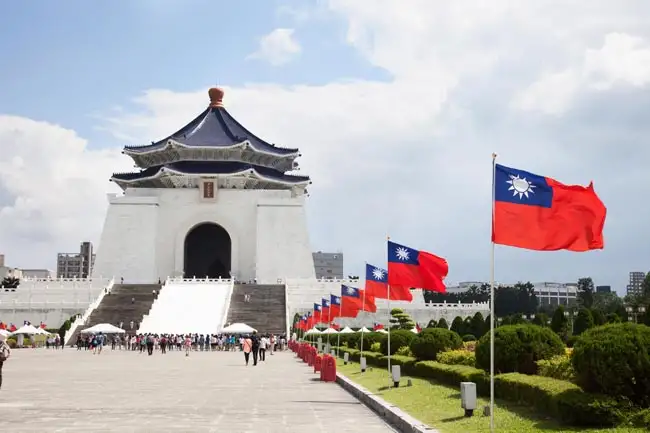
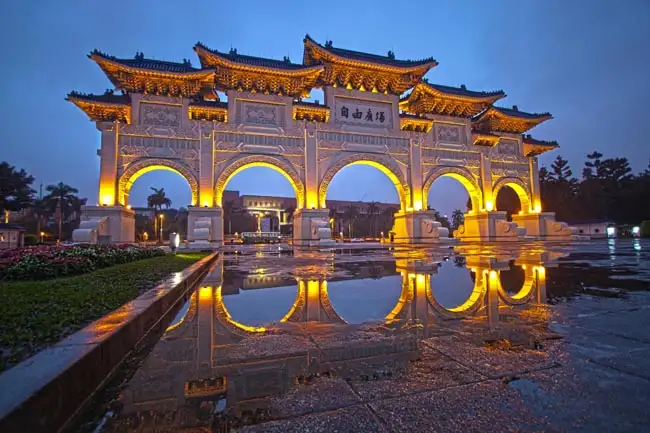
    After lunch we visit the Chiang Kai-shek Memorial Hall, the white-marble monument to the president who ruled Taiwan for 26 years, set in a square large enough for the changing of the guard. We pass the Presidential Office, built by the Japanese in 1919 as the governor-general's headquarters and used by the Republic ever since.

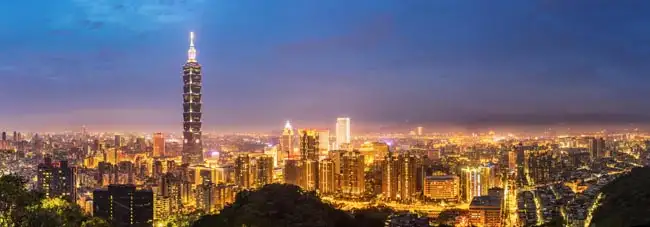
    We finish at Taipei 101, the world's tallest building from 2004 to 2010, whose observation deck gives the view over the basin that holds the capital, the Tamsui river and the hills beyond.

    Overnight in Taipei.


    Included Meal(s): Breakfast and Dinner
  • Day 3: 
    Taipei - Lukang - Sun Moon Lake
    We drive south to Lukang, the port that made central Taiwan rich in the 18th century. The old saying ranked the island's cities "first Tainan, second Lukang, third Mengjia", and while the harbour silted up long ago, the town kept what the money built.

    Lukang has more historic buildings than anywhere in Taiwan except Tainan. We walk the old street, red brick underfoot and overhead, past Longshan Temple. Rebuilt in its present form in 1786, it still keeps some of the finest Qing woodwork on the island in its beams and caisson ceiling. The merchant houses along the lane have deep shopfronts that run back to hidden courtyards. The lanes are famous for their food, and we stop where the oyster omelettes and taro cakes are.

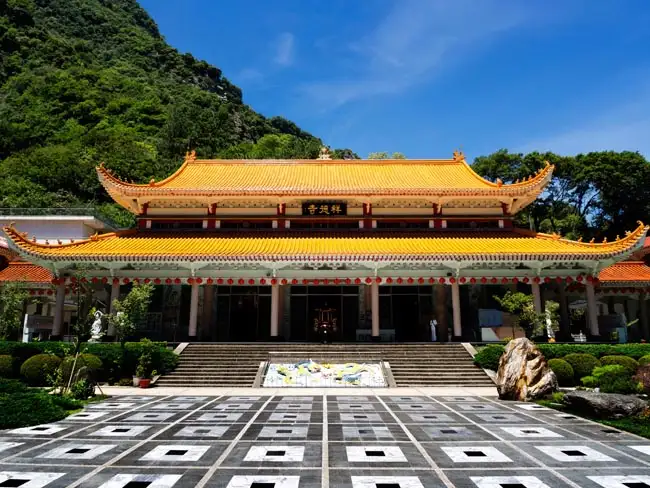
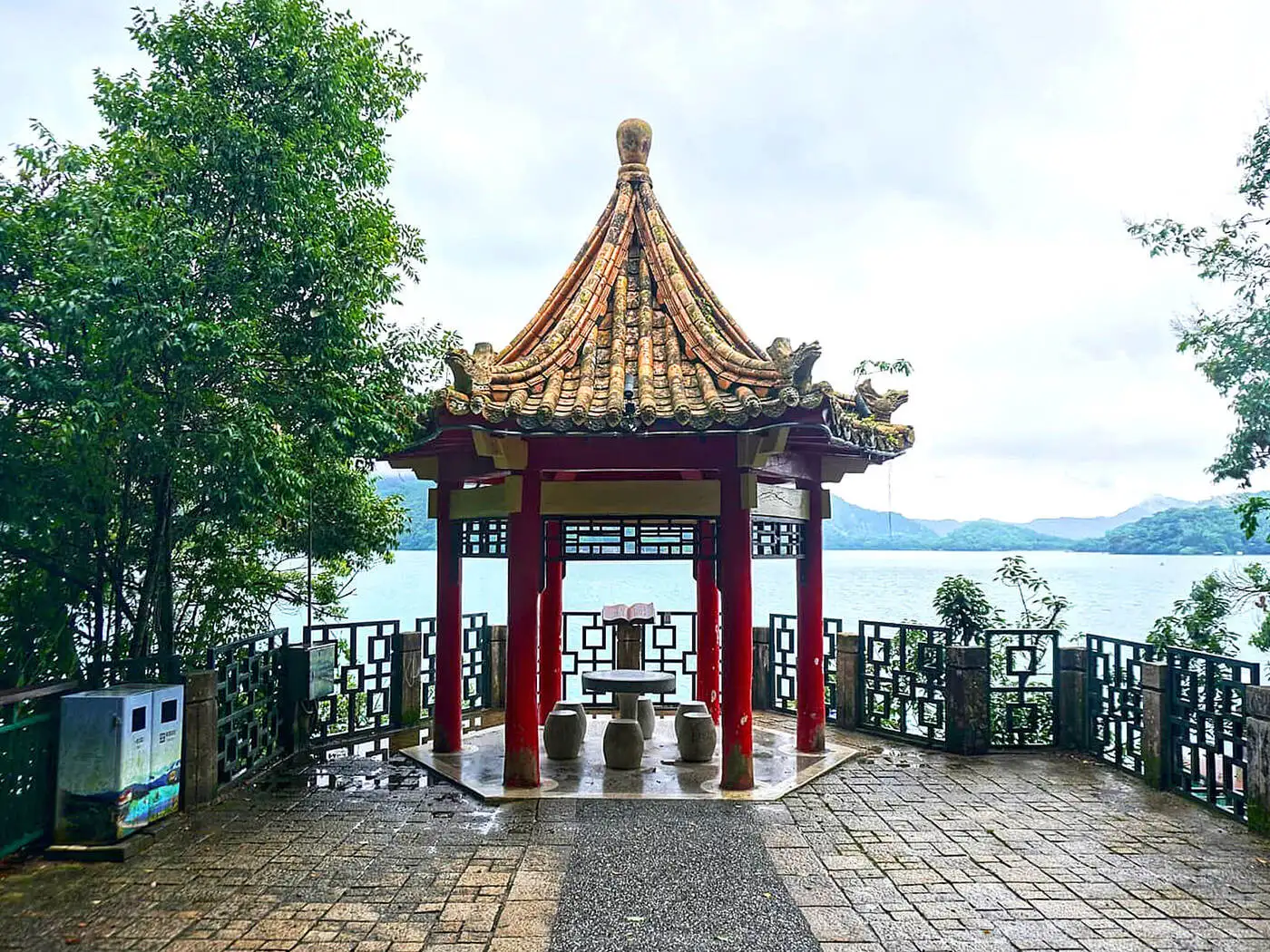
    After lunch we continue into the central mountains to Sun Moon Lake, Taiwan's largest lake, 750 m/2,460 ft up and named for the shape of its two halves. The lake was enlarged under Japanese rule, when a 1930s dam raised the water level to power the island's first major hydroelectric station. It remains the ancestral home of the Thao, the smallest of Taiwan's recognised indigenous peoples. A cruise takes us across the water to Xuanguang Temple and the view of the surrounding peaks. The ropeway then lifts us above the lake to see the whole of it.

    Overnight at Sun Moon Lake.


    Included Meal(s): Breakfast and Dinner
  • Day 4: 
    Sun Moon Lake - Taichung
    This morning we drive to Taichung and the Wufeng Lin Family Mansion, the 18th-century home of Lin Wencha, a Qing general who fought the Taiping rebels on the mainland. Its layered courtyards, opera stage and ancestral hall show how Taiwan's leading families lived under the last dynasty. The mansion was badly damaged in the same 1999 earthquake we learn about next door, and was not fully restored until the 2010s.

    The 921 Earthquake Museum is a different kind of preservation. At 1:47 in the morning on 21 September 1999 a magnitude 7.3 earthquake struck central Taiwan. It killed more than 2,400 people and destroyed 50,000 homes, still the island's deadliest disaster in decades. Rather than clear the site, the museum kept a collapsed junior high school exactly as the quake left it. Its running track, buckled by the fault, anchors the exhibition around the wreckage.

    After a break for lunch, two of Taichung's stranger pleasures. Rainbow Village is the work of Huang Yung-fu, a veteran who faced the demolition of his military dependants' village. He painted every wall in reach with animals, faces and folk figures. The paint saved the village and made him famous in his nineties, turning a site slated for demolition into one of the city's most visited corners. The Miyahara Building, a 1927 Japanese-era eye clinic built in a Baroque Revival style, is now an ice cream and confectionery shop fitted out like a library. The building itself is the reason to go in.

    Overnight in Taichung.


    Included Meal(s): Breakfast and Dinner
  • Day 5: 
    Taichung - Tainan
    We continue south to Tainan, stopping at the Jingzaijiao tile-paved salt fields at Beimen, the oldest of their kind in Taiwan. Salt was made here from 1818 by drying seawater in shallow ponds, and workers laid broken pottery across the crystallising beds so the salt would not bond with the soil. Commercial production continued until 2002, when cheaper imports finally ended an industry nearly two centuries old, and in the right light the old ponds still read as a mosaic.

    Tainan is Taiwan's oldest city and was its capital for more than two centuries. The Han migrants who sailed from Fujian in the 17th century made landfall on this coast, and the city has never let go of them. It is often compared to Kyoto for its temples, old streets and living ritual. It is the place on the island where tradition is least performed and most simply lived.

    We arrive with time to begin. The Confucius Temple of 1665 is thought to be the island's oldest and was its first school. Its red walls and banyan-shaded courtyard have hosted Confucian scholarship ever since. The Great South Gate is the best surviving piece of the Qing city wall. We end at Hayashi, a 1932 Japanese-era department store: five floors of restored timber and terrazzo now given over to local designers and makers. It is one of the city's best-loved spaces.

    Overnight in Tainan.


    Included Meal(s): Breakfast and Dinner
  • Day 6: 
    Tainan Sightseeing
    Today we see Tainan's full depth, and its temple processions are not staged for visitors; they are daily life.

    We begin at Chihkan Tower, on the site of Fort Provintia, which the Dutch built in 1653 to govern their colony. Ming loyalists, Qing officials and Japanese administrators each ran the island from this ground afterward. Each left something standing: the Dutch foundations, Qing pavilions, a row of stone turtles carrying imperial stelae. The lanes around it are dense with temples, and the incense never quite clears.

    At Anping we reach the beginning. Fort Zeelandia was the Dutch East India Company's first foothold in Taiwan, begun in 1624 on a sand spit chosen for its shipping lane to Batavia. It was finished ten years later. In 1662 the Ming general Koxinga besieged it for nine months, took it, and made Taiwan a refuge for a dynasty that had already fallen on the mainland. The brick walls the Dutch fired here are still standing, and Koxinga himself is still worshipped as a deity in temples across the island. Beside the fort, Yanping Street is the oldest merchant street in Taiwan, still narrow, still selling food. Nearby, the Anping Tree House, a 19th-century salt warehouse, has been left to the roots of the banyan that consumed it rather than fought.

    The layers we saw stacked in the Palace Museum four days ago sit side by side on the ground here. Dutch, Ming, Qing, Japanese: each built on the last, none quite erased.

    Overnight in Tainan.


    Included Meal(s): Breakfast and Dinner
  • Day 7: 
    Tainan - High-speed train to Taipei - Taipei Sightseeing
    The high-speed train returns us to Taipei in about 90 minutes, at up to 300 km/h, along the western plain where most of the island's 23 million people live.

    This afternoon we complete the capital. Lungshan Temple was founded in 1738 by settlers from Fujian and rebuilt after earthquake, typhoon and an American bomb in 1945. It is dedicated to Kuanyin, the goddess of mercy. Like most Taiwanese temples it houses Buddhist, Taoist and folk deities under one roof: Matsu the sea goddess, the god of literature, and Yue Lao, the matchmaker god. His altar draws young Taiwanese hoping for luck in love. It is the city's busiest place of worship and the best place to watch how the island prays.

    Dihua Street is old Taipei's market, laid out in the 1850s beside the river docks. Its shops still sell dried mushrooms and scallops, medicinal herbs, tea and bolts of cloth, from arcaded buildings that mix Fujianese, Baroque and Japanese fronts along one street. In the weeks before Lunar New Year the lane becomes the city's busiest market for gifts and dried goods.

    We finish at the Martyrs' Shrine, built in 1969 on the model of the Hall of Supreme Harmony in Beijing's Forbidden City. It is dedicated to the soldiers who died fighting Japan and, later, the Communists. The changing of the guard, precise and slow-motion, is often compared to Buckingham Palace's.

    Overnight in Taipei.


    Included Meal(s): Breakfast and Dinner
  • Day 8: 
    Taipei, Taiwan - Fly to Tokyo, Japan
    Today we fly to Tokyo.

    Until 1868 the city was Edo, a castle town that Tokugawa Ieyasu made the seat of his shogunate in 1603 and that within a century had become one of the largest cities on earth. The emperor stayed in Kyoto with the title. Edo had the power, and when the emperor finally moved here he took the city's new name, Tokyo, the eastern capital.

    We arrive with the rest of the day to settle in, and gather this evening for dinner.

    Overnight in Tokyo.


    Included Meal(s): Breakfast and Dinner
  • Day 9: 
    Tokyo: City Touring
    Tokyo rewards a first day that moves in layers: a forest planted from nothing, a shogun's ruined castle, and the country's finest collection of its own art.

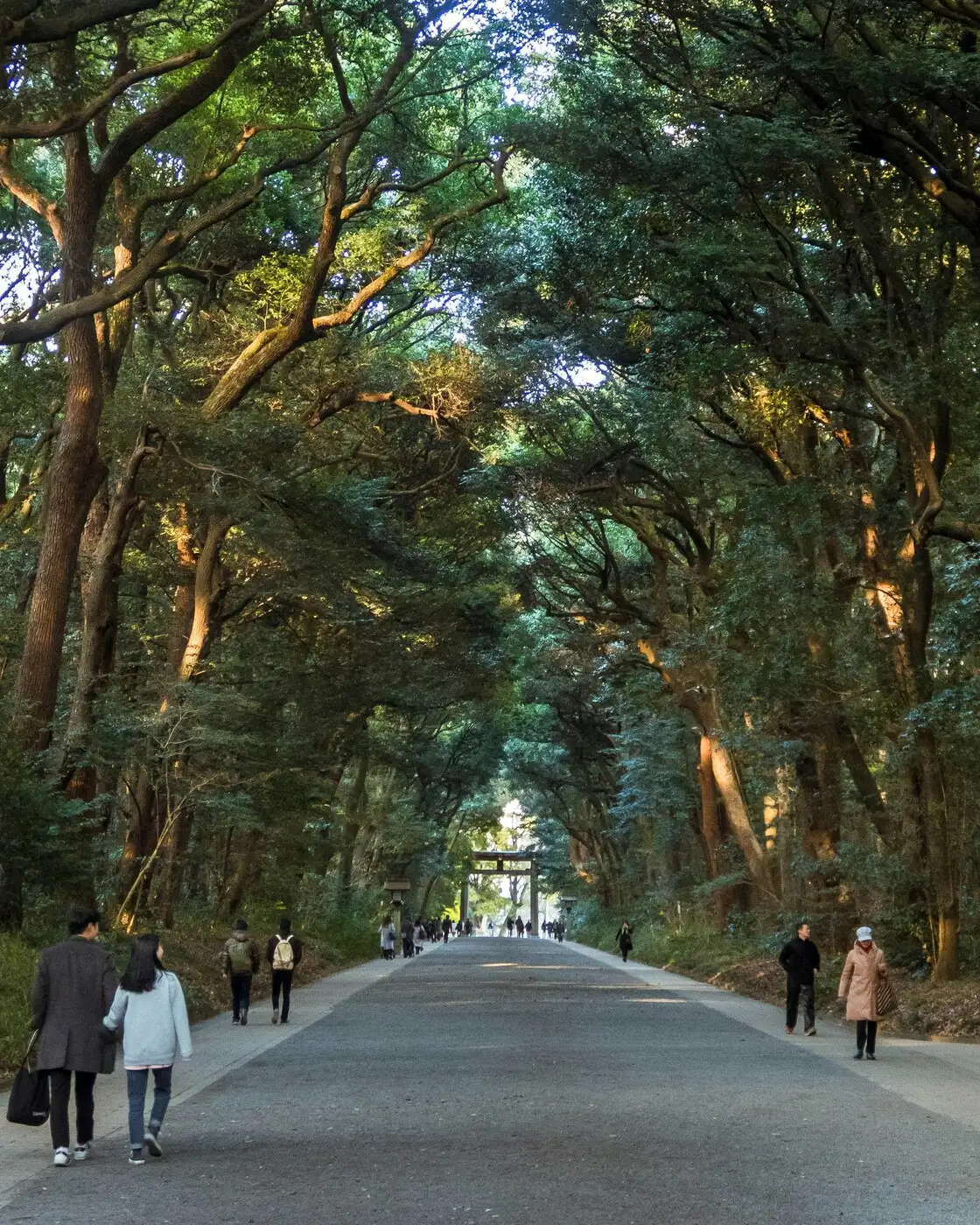
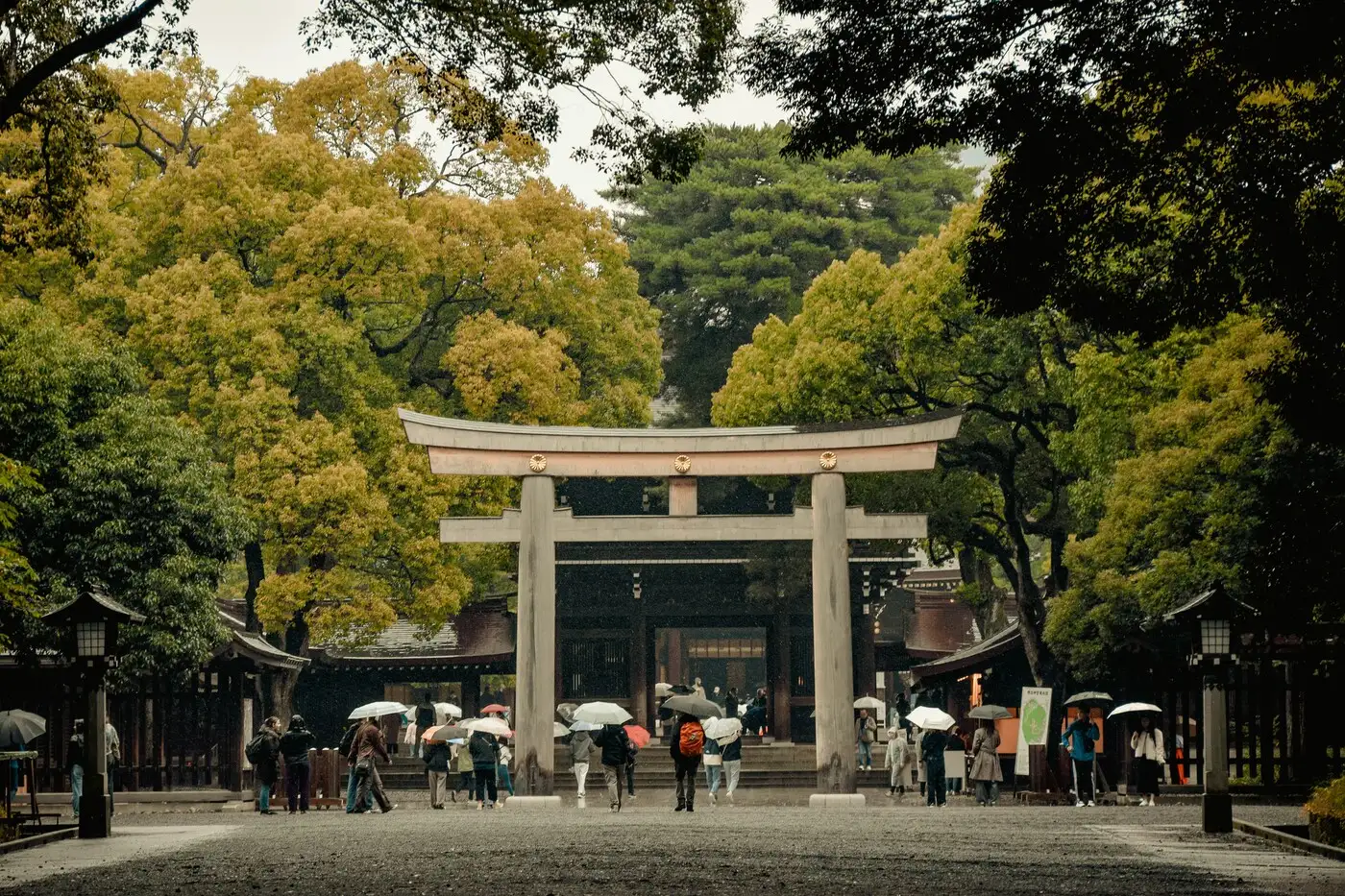
    We start at Meiji Shrine, reached through a cypress torii gate more than 12 m/39 ft tall. The forest around it, 70 hectares/173 acres deep, did not exist before 1920. It was planted from 100,000 trees donated by every prefecture in Japan to honour Emperor Meiji. His reign ended two and a half centuries of shogun rule and reopened the country to the world. Within a few steps the city noise falls away entirely, and on most mornings a Shinto wedding procession crosses the gravel courtyard in white silk.

    From there we walk the East Gardens of the Imperial Palace, the surviving inner grounds of Edo Castle, seat of the Tokugawa shoguns for 265 years. The keep that once crowned it burned in 1657 and was never rebuilt. Its stone foundations, moats and old guardhouses remain, and we picnic among them where samurai once stood watch.

    Lunch behind us, we visit the food hall of one of Tokyo's department stores, descended from Edo-period kimono shops. The art of gift-wrapping is taken seriously enough here that a single melon, boxed and ribboned, can cost more than dinner. We close the day at the Tokyo National Museum in Ueno Park, walking past scroll paintings, samurai armour and Buddhist bronzes that trace the country's own history of itself.

    Overnight in Tokyo.


    Included Meal(s): Breakfast and Dinner
  • Day 10: 
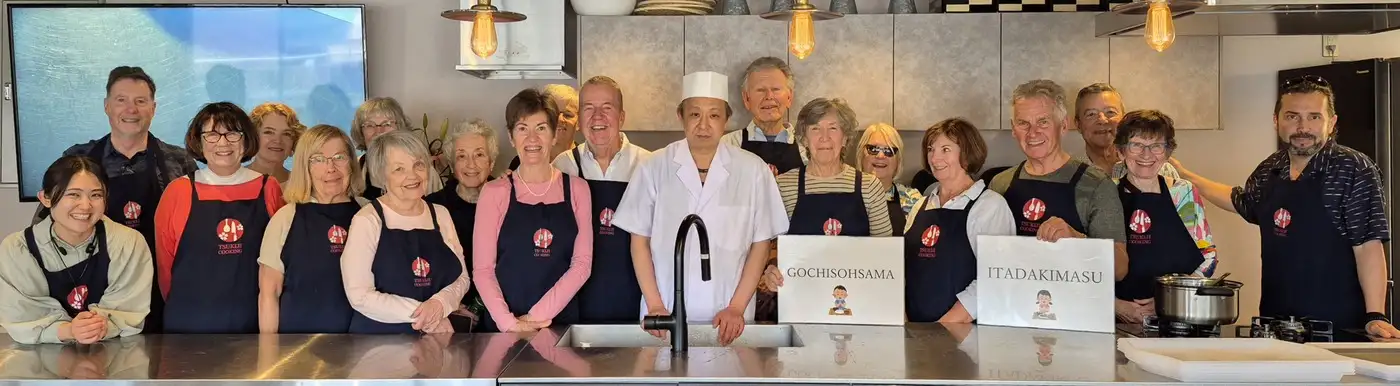
    Tokyo: Sushi Making Class
    We begin the day at a fish market before the crowds thicken. Its aisles are stacked with everything the sea provides: tuna the length of a person, sea urchin in open crates, octopus still faintly moving. Whole tuna are broken down with blades as long as swords, and our guide explains the skill as we watch.

    From the market we cross to the studio of one of Asia's largest cooking schools, its kitchens fitted for exactly this kind of morning. Under an instructor's hands-on guidance we learn washoku, the everyday home cooking of Japan that UNESCO has listed as cultural heritage. We season sushi rice to the right sourness, learn to hold a knife properly, and shape nigiri so the fish sits just so on the rice. Miso soup and four kinds of sushi come out of our own hands by the end of the morning, and we sit down to eat what we made.

    The afternoon is free, deliberately so after a lunch this large. Dinner is on your own account tonight. Some guests head up the Skytree for the view, others find a baseball game or an izakaya. Your Tour Leader can help plan a last Tokyo evening of your own choosing.

    NOTE: tomorrow our main luggage is forwarded to Takayama, so please pack a small overnight bag tonight for one night in Hakone.

    Overnight in Tokyo.


    Included Meal(s): Breakfast and Lunch
  • Day 11: 
    Tokyo - Lake Ashi - Hakone
    We take the bullet train to Odawara, where a private coach meets us, and stop briefly at Odawara Castle before climbing into the Hakone hills.

    Hakone was the shogunate's most important checkpoint. Every traveller on the Tokaido road between Kyoto and Edo was inspected here, women and guns most closely. The scrutiny of women guarded against daimyo wives, held hostage in Edo under the shogunate's sankin kotai system, slipping home without permission. The mountains made sure there was no other way through. Hakone has been a hot-spring resort since the 1590s, when Toyotomi Hideyoshi soaked here after taking Odawara, and Tokyo still comes up at weekends to do the same.

    Lake Ashi is a crater lake 723 m/2,372 ft above the sea, formed some 3,000 years ago by Mount Hakone's last major eruption. A cruise gives us the mountains and, weather permitting, Mount Fuji over the western rim. We then visit the Hakone Open-Air Museum, opened in 1969 as Japan's first museum of its kind. It is a hillside park of sculpture by Rodin, Moore, Miro and Picasso, with a pavilion of 300 Picasso works and a hot-spring footbath for the walk back.

    Tonight we stay in a ryokan-style hotel, with Western beds. Dinner is kaiseki, a course-by-course meal that began as an accompaniment to the tea ceremony and is arranged to be looked at before it is eaten. Guests are welcome to wear the hotel's yukata to dinner, as Japanese guests do.

    Overnight in Hakone.


    Included Meal(s): Breakfast and Dinner
  • Day 12: 
    Hakone - Train to Takayama
    Today we travel by train to Takayama, about four hours, the last stretch up the Hida river valley where the line runs between the gorge and the mountains.

    The peaks that enclose Hida left it with little farmland and a tax bill it could not pay in rice. It paid in carpenters instead. From the 8th century the court took ten Takayama craftsmen a year in lieu of tax, and the Hida no takumi built temples and palaces across the capital. The forests supplied the finest cypress in Japan, and the town learned to work it into everything from festival floats to sake barrels.

    We arrive in the late afternoon with time to walk Sanmachi, the old merchant quarter, where the dark wooden shopfronts and the sake breweries, marked by cedar balls hung over the door, have stood since the Edo period.

    Our forwarded luggage is waiting at the hotel.

    Overnight in Takayama.


    Included Meal(s): Breakfast and Dinner
  • Day 13: 
    Takayama: City Tour
    Takayama's morning market has run along the Miyagawa river for three centuries. We start there, among farmers selling pickles, apples and the carved wooden charms the town is known for.

    We then drive to Hida Folk Village, an open-air museum of more than 30 farmhouses moved here from valleys flooded for dams between the 1960s and 1980s. Their steep thatched gassho-zukuri roofs, named for hands joined in prayer, were built to shed metres of snow. Inside we see how mountain families lived through it: the hearth, the silkworm lofts, the tools of a hundred winters. Craftspeople demonstrate weaving and woodwork in several of the houses.

    Back in town, the Yatai Kaikan houses several of the festival floats paraded through Takayama each April and October in what is counted among Japan's three most beautiful festivals. Some stand more than 8 m/26 ft tall, carved, lacquered and gilded, and a few carry mechanical puppets, karakuri, that perform on cue during the real festival. Each float is the work of generations from a single neighbourhood, maintained and rebuilt as needed for centuries.

    The afternoon is free. Takayama is small, flat and easily walked, with several sake breweries open for tastings and craft shops along the old streets selling lacquerware and the local sarubobo dolls.

    Overnight in Takayama.


    Included Meal(s): Breakfast and Dinner
  • Day 14: 
    Takayama - Nagoya - Train to Kyoto
    We drive back down the Hida valley to Nagoya and take the bullet train to Kyoto, about an hour.

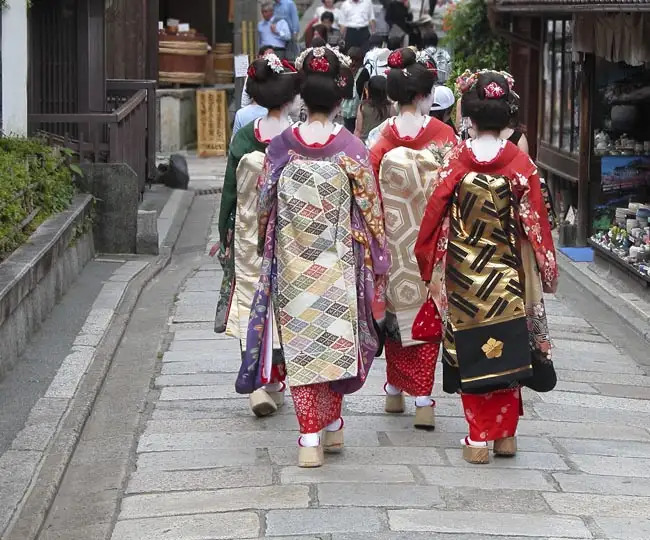
    Kyoto was the emperor's capital for more than a thousand years, from 794 until the court moved to Tokyo in 1868. The shoguns held the power; Kyoto held the culture. Its home workshops still turn out lacquer, textiles, pottery and fans by hand, its geisha districts still train apprentices, and it retains some 1,600 temples and 200 shrines. The city was spared bombing in 1945 after American scholars argued that it was too important to destroy.

    We arrive mid-afternoon. This evening we walk Pontocho, the narrow lane of teahouses and restaurants along the Kamo river that, with neighbouring Gion, remains one of the city's geisha quarters, and where a maiko on her way to an engagement is a common sight after dark.

    Overnight in Kyoto.


    Included Meal(s): Breakfast and Dinner
  • Day 15: 
    Kyoto: City Tour
    A full day among Kyoto's temples, gardens and the two pavilions.

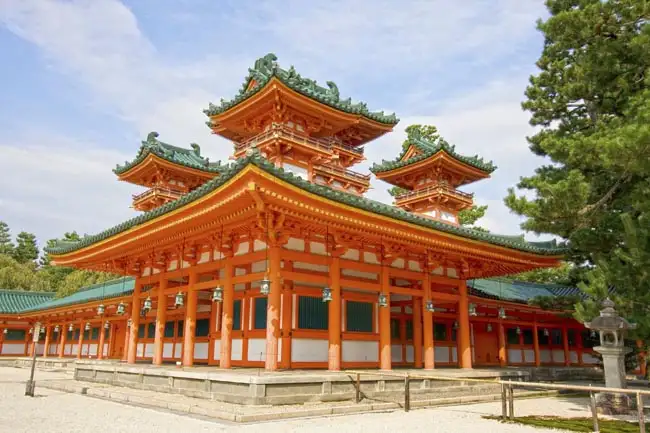
    We start at Nishi Honganji, the head temple of the Jodo Shin sect of Buddhism, granted its site by Toyotomi Hideyoshi in 1591. Its two great halls are among the largest wooden buildings in the country, and the sect's ten thousand affiliated temples make this the most popular form of Buddhism in Japan. Heian Shrine follows, built in 1895 for the city's 1,100th anniversary as a five-eighths scale replica of the original imperial palace, painted vermilion and green, with a stroll garden known for its weeping cherries, irises and stepping stones across the pond.

    We pick up picnic lunch and walk part of the Philosopher's Path, the canal-side lane through the eastern hills named for a Kyoto professor who walked it daily.

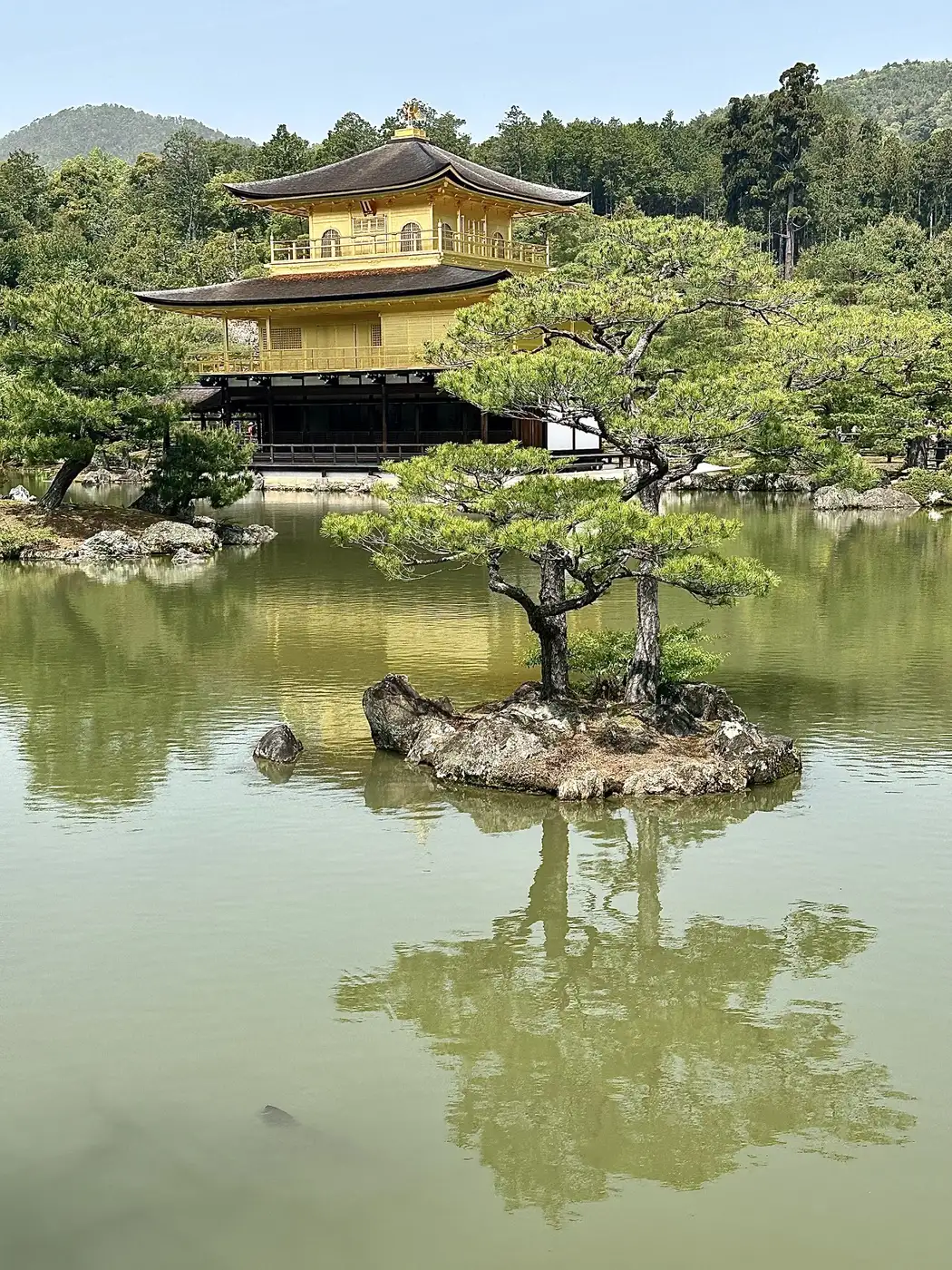
    The afternoon is the pavilions. Ginkakuji, the Silver Pavilion, was never silvered; its shogun builder ran out of money in the 1480s, and the restraint became its point, with a garden of raked sand and moss that set the taste of the country. Kinkakuji, the Golden Pavilion, is the opposite, gold leaf to the waterline and doubled in its pond. Between them in spirit is Ryoanji, where fifteen rocks sit in raked gravel and no vantage point shows all fifteen at once.

    We break before dinner at a local restaurant.

    NOTE: The order of sites may change on the day at the discretion of your Tour Leader and local guide.

    Overnight in Kyoto.


    Included Meal(s): Breakfast and Dinner
  • Day 16: 
    Kyoto & Nara
    We take the local train to Nara, Japan's first permanent capital, where much of what makes the country recognisably itself first took shape.

    The court settled here in 710, and within a few decades Nara had a Chinese-style grid, the nation's first written histories, and Buddhism established as state religion. The temples grew powerful enough to rival the throne, one reason the capital moved on to Kyoto in 784. Because the city was abandoned rather than rebuilt over, much of what was built here still stands, and the eastern half of Nara is now a World Heritage site.

    Todai-ji houses the Great Buddha, a bronze figure 15 m/49 ft tall, cast in the 740s. The undertaking used most of the bronze then available in Japan and nearly bankrupted the state. Fire destroyed the original hall twice. The one standing today, rebuilt in 1709 at two-thirds its original width, is still among the largest wooden buildings in the world.

    We walk on through Nara Park, where more than a thousand deer wander freely and bow for crackers. Legend holds they carried a guardian deity into the city on their backs in the 8th century, and they have been protected as sacred messengers ever since. The path leads to Kasuga Taisha, founded in 768 for the Fujiwara clan and approached through 3,000 stone and bronze lanterns, lit only twice a year, in February and mid-August.

    NOTE: Nara is a full day of trains and walking; guests who prefer a free day in Kyoto should speak with your Tour Leader.

    Overnight in Kyoto.


    Included Meal(s): Breakfast and Dinner
  • Day 17: 
    Kyoto: Nijo Castle & Leisure time
    This morning we visit Nijo Castle, which Tokugawa Ieyasu built in 1603 as his Kyoto residence, the shogun's house in the emperor's city and a reminder to the court of who held the army. Its Ninomaru Palace is the finest surviving example of feudal palace architecture in Japan, with painted screens by the Kano school, gold-leaf tigers and pines, and "nightingale" floors that squeak underfoot to give away intruders. In 1867 the last shogun gathered his lords in this palace and handed power back to the emperor, ending the order that began at Edo Castle, where we stood a week ago.

    The rest of the day is yours. The small Shoseien garden east of Higashi Honganji is a good place to start, Nishiki Market is a good place to eat, and your Tour Leader can help you plan.

    Overnight in Kyoto.


    Included Meal(s): Breakfast and Dinner
  • Day 18: 
    Kyoto - Train to Hiroshima
    The bullet train carries us past Osaka and Kobe to Hiroshima in under two hours.

    At 8:15 on the morning of 6 August 1945 the first atomic bomb used in war exploded 600 metres above the city centre. Around 70,000 buildings were destroyed in a few seconds. By the end of the year some 140,000 people were dead. The city sits on the delta of the Ota river, ringed by hills, and the blast filled the bowl.

    Scientists at the time doubted anything would grow here for decades. Today Hiroshima is a city of 1.2 million, the streetcars that were running again within days of the bombing still run, and we arrive by the fastest train in the country.

    Our visit is the Peace Memorial Park, laid out on the ground beneath the explosion. The Cenotaph holds the names of the dead beneath the inscription "Rest in peace, for the error shall not be repeated". The Peace Flame will burn until the last nuclear weapon is gone. The Children's Peace Monument is hung with paper cranes sent from around the world for Sadako Sasaki, who died of leukaemia at twelve. We visit the Peace Memorial Museum, whose collection of belongings is harder than any photograph, and walk to the Atomic Bomb Dome, the one building left standing near the hypocentre and kept as it was.

    The rest of the afternoon is unscheduled.

    Overnight in Hiroshima.


    Included Meal(s): Breakfast and Dinner
  • Day 19: 
    Hiroshima & Miyajima
    By train and ferry we cross to Miyajima for the day.

    The island has been counted among Japan's three finest views for four centuries, and it was sacred long before that. For most of its history no one was permitted to be born or die here, and the forest on Mount Misen has never been cut. Deer, considered messengers of the island's gods, meet the ferry and wander the streets freely.

    Our walking tour centres on Itsukushima Shrine, a UNESCO World Heritage site built over the water on stilts so that pilgrims could approach without setting foot on holy ground. At high tide the great torii gate, 16 m/53 ft tall and built of camphor trunks too heavy to be anchored, stands on its own weight in the sea. At low tide we can walk out to it across the exposed sand. A renovation completed in 2022, the first in nearly a century, replaced the gate's copper roofing and treated its wood against rot. The shrine took its present form in 1168 under Taira no Kiyomori, the warlord who briefly ran Japan before the first shogunate. His clan's rise, and its catastrophic fall in the Genpei War a generation later, drowned at sea with the child emperor they carried, became the subject of Japan's best-known epic.

    There is free time on the island before we return to Hiroshima. Options include the ropeway up Misen for the view over the Inland Sea, the five-storey pagoda beside the shrine, or the street of grilled oysters and maple-leaf cakes below it.

    Overnight in Hiroshima.


    Included Meal(s): Breakfast and Dinner
  • Day 20: 
    Hiroshima (Honshu Island) - Train to Kagoshima (Kyushu Island) & Sakurajima Island
    The bullet train takes us under the strait and the length of Kyushu to Kagoshima, about two and a half hours.

    Kyushu is where the outside world got in. The first Portuguese ship reached Tanegashima, off this coast, in 1543 and brought the gun. Francis Xavier landed in Kagoshima in 1549, founded Japan's first Christian mission, and was expelled two years later. When the shogunate closed the country a century after that, the Satsuma domain here kept trading anyway, through the Ryukyu islands. In 1865 it smuggled nineteen students to Britain to learn how the West worked. They came home to help run the Meiji government and build the navy. Satsuma's own samurai later rose against that same government in 1877, in a rebellion crushed just outside the city.

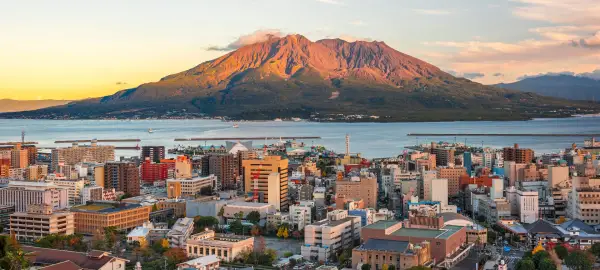
    Kagoshima faces its volcano across the bay. Sakurajima rises 1117 m/3,665 ft, smokes constantly and erupts in a small way most days; the city issues an ash forecast with the weather. Its largest eruption in a century came in 1914 and poured out enough lava to join the island to the peninsula, burying a shrine gate to its lintel. We cross by ferry, tour the lava fields and the visitor centre, and see the buried gate, its torii now standing barely above the hardened rock.

    Overnight in Kagoshima.


    Included Meal(s): Breakfast and Dinner
  • Day 21: 
    Kagoshima & Ibusuki
    A full day on the Satsuma Peninsula south of Kagoshima.

    Chiran keeps a samurai district of seven houses and gardens, laid out about 250 years ago along a single 700-metre street of stone walls and clipped hedges. There are no wires or parked cars to spoil it. These were goju, lower-ranking samurai posted to guard the domain's borders rather than live at the lord's court, and their gardens are small, dry and borrowed from the hills behind. Each family still lives in its house.

    Chiran was also an air base. Its Peace Museum for Kamikaze Pilots holds the letters, photographs and last belongings of the 1,036 young men who flew from here in the spring of 1945. Most flew during the Battle of Okinawa, and most were in their teens and early twenties. It is a sober place, and some visitors find its tone a contested one.

    We visit a shochu distillery, where the region's spirit is distilled from sweet potato rather than rice, and taste it. At Ibusuki, the hot-spring resort on the peninsula's tip, there is the option to be buried to the neck in volcanic sand heated by the springs beneath the beach. The cure is said to date back some 300 years and to take about ten minutes.

    Overnight in Kagoshima.


    Included Meal(s): Breakfast and Dinner
  • Day 22: 
    Kagoshima: Ko-en Gardens - Train to Kumamoto
    We begin at Sengan-en, the Shimadzu lords' garden villa at Iso, laid out in 1658 with the bay as its pond and Sakurajima as its borrowed mountain. The house is open, and up the hill sits a shrine to the family's cats. They were brought on campaign in Korea in the 1590s because their dilating pupils could be read like a clock. The view from the garden is the one the lords built it for. Beside it, the Shoko Shuseikan was Japan's first Western-style factory complex. The Satsuma domain built it in the 1850s to make cannon, glass and steamships, before anyone in Edo had decided whether the West was even allowed. It has been part of a UNESCO World Heritage industrial site since 2015. It is now a museum.

    In the afternoon we take the train north to Kumamoto and visit its castle, one of the three great castles of Japan. Built in 1607 by Kato Kiyomasa, its curved stone walls are known as musha-gaeshi for the way they steepen as they rise to defeat any climbing attacker. They were badly damaged in the 2016 earthquake. The main keep has been rebuilt, restoration of the rest continues, and the walkway built to view the work is part of what there is to see.

    Overnight in Kumamoto.


    Included Meal(s): Breakfast and Dinner
  • Day 23: 
    Kumamoto - Nagasaki
    From Kumamoto port we take the ferry across the Ariake Sea to Shimabara, about an hour, crossing water that once carried salt, silk and, eventually, missionaries between the two coasts.

    Mount Unzen erupted here between 1990 and 1995, killing 43 people including two well-known French volcanologists, as a series of pyroclastic flows and mudflows buried parts of the town. Eleven houses were left as they were, roofs at ground level, and we see them at the memorial park. The town's castle keep and its samurai street, where carp swim in the roadside channels, survived.

    We then drive up Unzen to the Jigoku, the "hells", where steam and boiling water vent through the hillside, sulphur staining the rock yellow and the ground too hot to touch. The name is older than the tourism. This region rose against the shogunate in the Shimabara Rebellion of 1637, led by Christian peasants crushed after a months-long siege. In the persecutions that followed, some were tortured in these same springs. A memorial marks the place.

    Descending to the coast we reach Nagasaki, the one port the shogunate left open after that rebellion. It remains the city where Japan's Western, Chinese and Christian strands are most visible, and tomorrow's touring stays with that story.

    Overnight in Nagasaki.


    Included Meal(s): Breakfast and Dinner
  • Day 24: 
    Nagasaki: City Tour
    Nagasaki was Japan's window on the world for two centuries, and this morning is that story.

    We begin at Glover Garden, the hillside where Thomas Glover, a Scottish trader, built his house in 1863. He sold arms to the Choshu and Satsuma clans that overthrew the shogunate, and smuggled out the students who later helped build the Meiji government. He also founded the brewery that became Kirin. His marriage to a Japanese woman is one source of the city's enduring claim on the Madama Butterfly story. Several Meiji-era Western houses have been gathered on the slope around his own, along with a museum of the dragon floats used in the city's Kunchi festival.

    By streetcar we reach Dejima, the fan-shaped artificial island built in 1636 to hold Portuguese and then Dutch traders. Just 1.5 hectares/3.7 acres, it let foreigners trade without touching Japan itself. For more than 200 years, until the country reopened in the 1850s, everything Japan learned about the West came through this one narrow gate: anatomy, astronomy, clockwork. The Japanese called this body of study rangaku, Dutch learning. The restored warehouses and the chief factor's house show how small the gate really was.

    The afternoon is free. Chinatown and the Confucius Temple are close by. On 9 August 1945 the second atomic bomb used in war exploded over the Urakami valley on the city's north side. An estimated 74,000 people were dead by the end of that year. The Atomic Bomb Museum stands there now; guests who visited Hiroshima's park six days ago will find this one smaller, quieter and no easier.

    Overnight in Nagasaki.


    Included Meal(s): Breakfast and Dinner
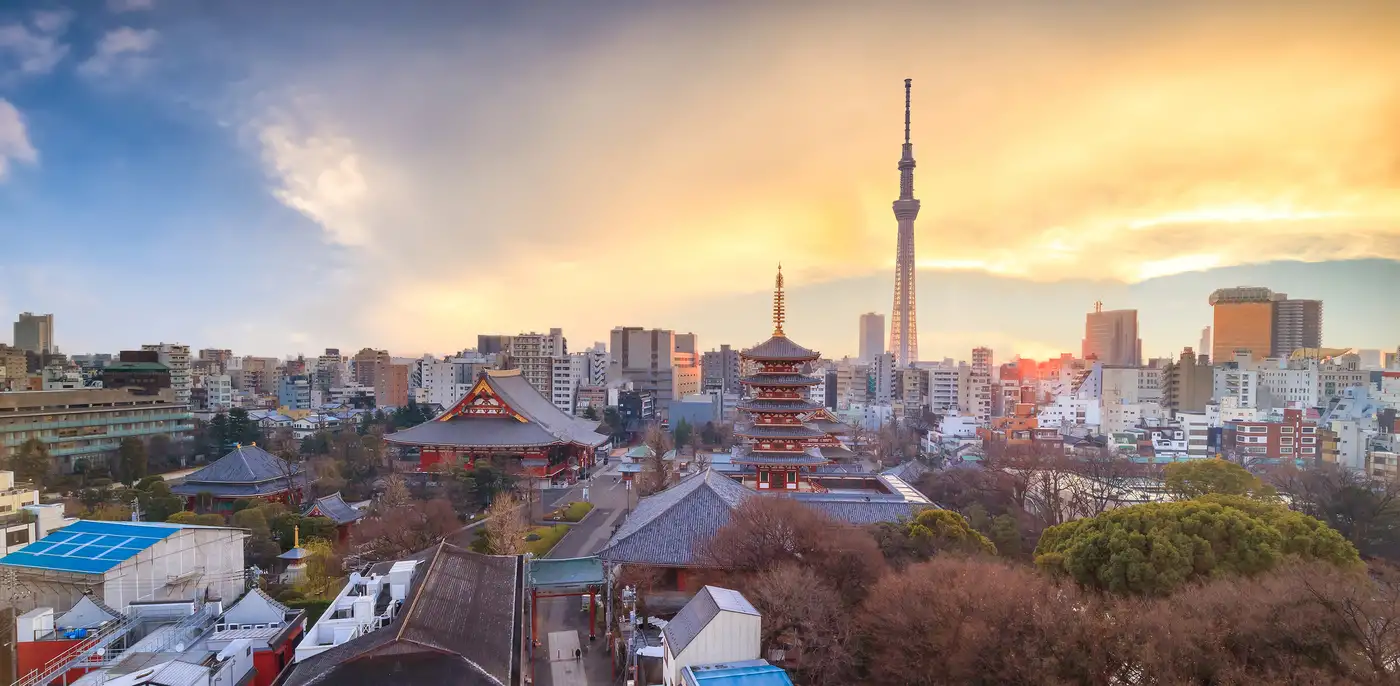
  • Day 25: 
    Nagasaki - Saga Prefecture - Fukuoka
    We drive north through Saga, the home of Japanese porcelain.

    The craft arrived as spoils of war. Potters brought back from Korea after Hideyoshi's invasions of the 1590s found kaolin at Arita in 1616 and built Japan's first porcelain kiln. Blue-and-white came first, then the red-enamelled aka-e style of the 1640s, and both were shipped from the port of Imari to a Europe that had never seen anything like them and spent a century trying to copy them. We visit the Arita Ceramic Museum, whose Shibata collection traces four centuries of the ware.

    At Okawachiyama, the "village of secret kilns", the Nabeshima lords moved their potters into a guarded valley in 1675 so that no one could copy the work they made for the shogun. The kilns still fire, the chimneys still stand over the lane, and the bridges are tiled.

    We continue to Karatsu, pass its castle on the headland, and stop at the Nijino Matsubara pine forest, a million trees planted along the beach as a windbreak in the 1600s, for coffee and a walk on the sand. Our destination is Fukuoka, the largest city on Kyushu. Closer to Seoul than to Tokyo, it was where the Mongols landed in 1274 and 1281, and where the typhoon they called the divine wind, kamikaze, sank them.

    Overnight in Fukuoka.


    Included Meal(s): Breakfast and Dinner
  • Day 26: 
    Fukuoka: City Tour
    Our last touring day goes back to the beginning of Japan's contact with the mainland.

    In AD 57 a Chinese emperor sent a gold seal to the "King of Na", a chiefdom on this bay. It turned up in a farmer's field on Shikanoshima in 1784. It is the earliest written record of Japan, and it was found here, on the coast the country has always faced Asia from.

    We drive to Dazaifu, the government's outpost for dealing with Korea and China for 500 years, and visit Tenmangu Shrine, built over the grave of the scholar-official Sugawara no Michizane. Exiled here on false charges in 901, he died two years later. When plague and lightning struck the capital soon after, frightened courtiers declared him a vengeful spirit and deified him as the god of scholarship to appease him. Students still come by the thousand to pray for exam results. Nearby, Komyoji has a Zen garden of moss and stone. The Kyushu National Museum, opened in 2005 as the country's fourth national museum, presents Japanese culture from an Asian point of view.

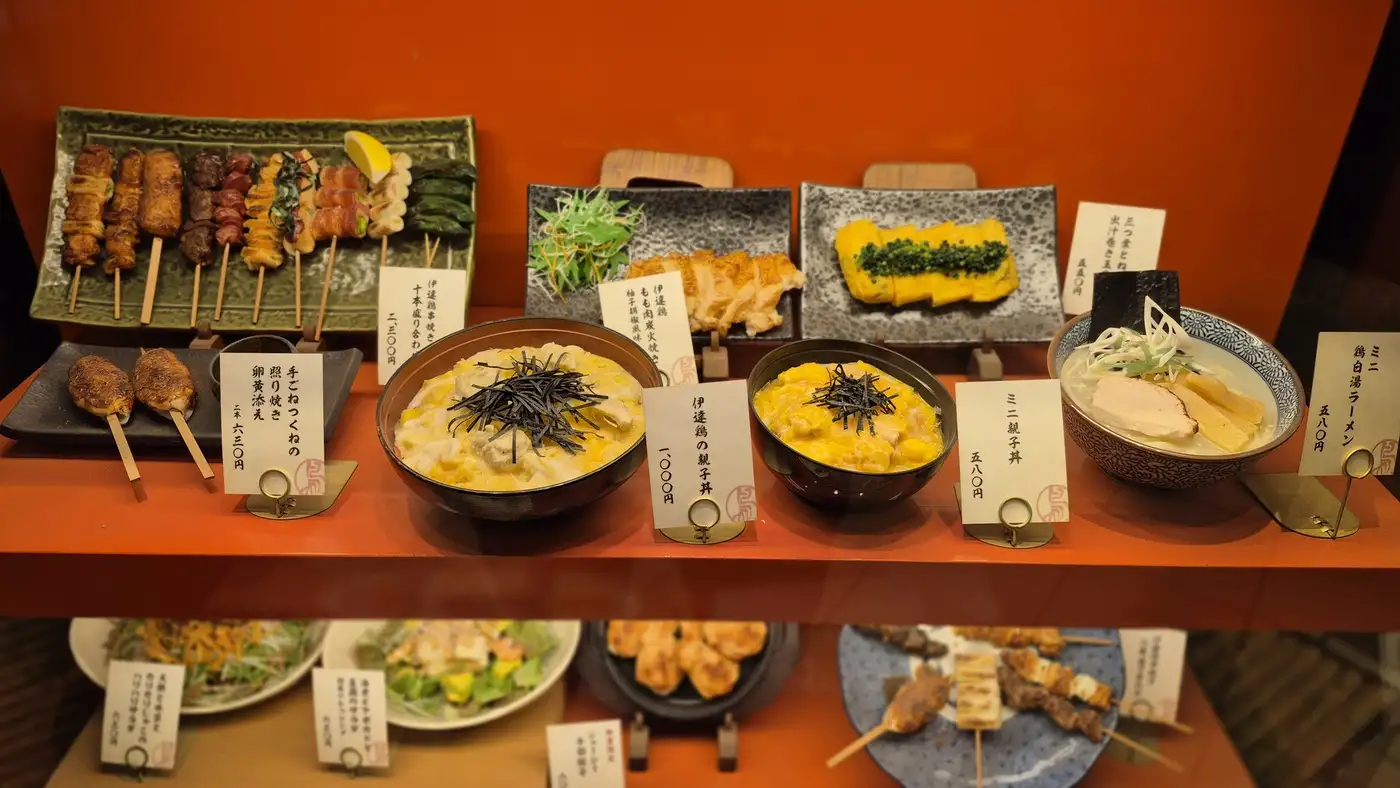
    We return to the city for a free afternoon. Hakata ramen, the pork-bone broth the city invented, is the lunch to have. The Kushida Shrine displays one of the ten-metre floats raced by teams of men through the streets at dawn each July.

    Overnight in Fukuoka.


    Included Meal(s): Breakfast and Dinner
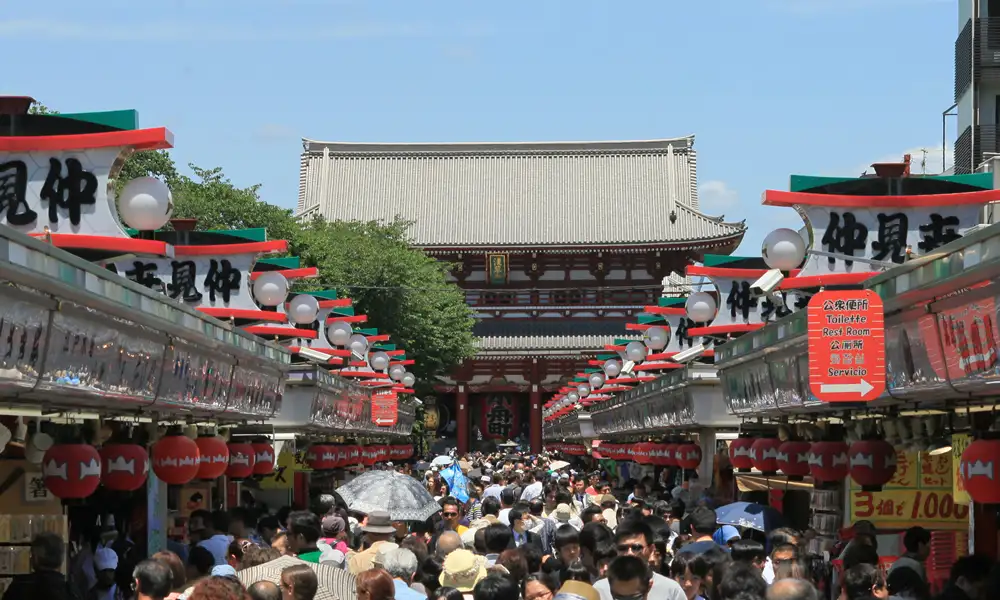
  • Day 27: 
    Departure
    Departure from Fukuoka.*

    * LAND ONLY PASSENGERS: If you are booking your own flights and are tempted to purchase a ticket in/out of Tokyo only, it is, in theory, possible to travel by train from Fukuoka back to Tokyo, but this is a rather long journey (8 hours) and can involve multiple train changes which, in Japan, can be daunting. Accordingly, if you need to return to Tokyo to fly from there, we recommend that you build in a flight from Fukuoka to Tokyo in order to make this connection.

    ITTE IRASSHAI!!


    Included Meal(s): Breakfast
Regions Visited: Far East
Countries Visited: Japan and Taiwan


*The red tour trail on the map does not represent the actual travel path.

Excellent
Overall Rating
4.7
Extend Your Trip
This tour is part of a series that can be upgraded to make for a longer trip.
Book Your Tour Here
Fast and easy

Book This Tour

Book your unforgettable adventure today! For any questions or advice, don't hesitate to contact us.

Have questions?

1-800-665-3998
  • Final payment: Due 90 days prior to departure.
  • Deposit: A non-refundable $500 CAD Deposit is required at booking.
  • Internal Flight Taxes: An extra $95 CAD applies for taxes and fees on tour flights. The internal airfares are included, but taxes are listed separately as they may change. Exceptions are noted in Red.
  • Optional Single Supplement: $3040 CAD (number of singles limited).
    (View options for
    single travellers
    )
  • Transfering Tour or Date: Transferring to another tour or tour date is only permissible outside of 120 days prior to departure and is subject to a $100 CAD change fee.
    (Read our cancellation policy)
Choose your departure date:

Prices below are per person, twin-sharing costs in Canadian Dollars (CAD). Pricing does not include airfare to/from the tour and any applicable taxes.


2027
  • 01: 
    Can Adventures Abroad book my flights?
    Yes! We have full-service in-house air department with years of experience booking our passengers to far-flung places around the world from any place that has an airport. Travelling from Los Angeles to Rome? No problem. Travelling from Deer Lake, Newfoundland to Antananarivo? Also not a problem!


    • 01: 
      Can Adventures Abroad get better deals than I can online?
      Here’s the clear answer: Usually, no.


      Booking your flights with us is super convenient—it’s like one-stop shopping! Plus, we’ll take care of you if something goes wrong, like a canceled flight or missed connection. We include airport transfers at your destination when you book flights through us. Some routes to less common destinations can be hard to find on your own or through online search engines. Which usually only show popular routes. Let us make it easy for you!
    • 02: 
      Why should I book my flights with Adventures Abroad?
      • Included airport transfers: Enjoy a smoother trip with airport transfers provided when you book flights with us.
      • Peace of mind: Feel confident knowing we’ve got you covered during your trip.
      • Help with disruptions: If your travel plans change, we assist with rebooking flights and updating our partners and staff at your destination.
      • Avoid stress and confusion: Booking with us means you won’t have to deal directly with airlines or ticket sellers if issues arise.
  • 02: 
    Does the group fly together on a set route and airline?
    Unlike with some companies, you are not obliged to fly with a particular airline on "bulk" group flights. Because our travellers are coming from (usually) across North America, everyone who flies with us receives a custom air quotation that best serves their situation and preferences—we do not have "set" routings on only a limited number of airlines.


    While fare and convenience are always at the top of the list of criteria, we can work with you to find the option that suits you best.
  • 03: 
    When should my flights be quoted / booked?
    Everyone wants to know their flight details early. To get the best fares and routes, book your tour and pay your deposit as soon as possible. This helps us confirm the tour early. Booking 8-12 months ahead takes some trust, but it’s the best way to plan with so many factors involved. We can’t always provide exact flight costs more than 6 months out or before the tour is confirmed. But we almost always find a solution that works for our travellers.

If you are booking more than one person with different addresses and separate billing, please book each person individually.

7 or more travellers - Please contact us to book.
Single Travellers -
(View options)
Deposit Due Today: $500 CAD
Reserve Your Spot
Japan Tours
From the bustling metropolis of Tokyo to the serene temples of Kyoto, our tours reveal Japan's rich history, diverse landscapes, and captivating modernity. With guided tours through iconic sites such as Mount Fuji, the Hiroshima Peace Memorial Park, and the ancient city of Nara, we delve deep into the country's heritage while gaining insight into its contemporary society.
Exciting Videos of
Tourcode: TJ2
Japan Tours
From the bustling metropolis of Tokyo to...
Visit Kyushu
From Kagoshima’s shores to Nagasaki’s port, our...
<01>

Frequently Asked Questions

  •  
    What is the maximum number of participants on a trip?
    Most of our tours carry a maximum of 18 participants; some tours (ie hiking tours) top out at 16. In the event that we do not achieve our minimum complement by our 90-day deadline, we may offer group members the option of paying a "small-group surcharge" as an alternative to cancellation. If all group members agree, we will confirm the trip at existing numbers; this surcharge is refundable in the event that we ultimately achieve our regular minimum. If the small group surcharge is not accepted, we will offer a refund of your deposit or a different trip of your choice.
  •  
    Can I extend my tour either at the beginning or end? What about stopovers?
    Yes, you can extend your tour either at the beginning or the end and we can book accommodation in our tour hotel. Stopovers are often permitted, depending on air routing. Stopovers usually carry a "stopover" fee levied by the airline.
  •  
    How do I make a reservation? How and when do I pay?
    The easiest way to make a reservation is via our website; during office hours, you are also more than welcome to contact us by telephone.

    A non-refundable deposit is payable at the time of booking; if a reservation is made within 90 days, full payment is required. Some trips require a larger deposit. If international airline bookings require a non-refundable payment in order to secure space or the lowest available fare, we will require an increase in deposit equal to the cost of the ticket(s).

    Early enrolment is always encouraged as group size is limited and some trips require greater preparation time.

    Once we have received your deposit, we will confirm your space and send you a confirmation package containing your trip itinerary, any visa/travel permit related documents, invoice, clothing and equipment recommendations, general information on your destination(s), and forms for you to complete, sign and return to us. Your air e-tickets (if applicable), final hotel list, final trip itinerary, and instructions on how to join your tour, will be sent approximately 2-3 weeks prior to departure.
  •  
    What about cancellations, refunds, and transfers?
    Please review our cancellation policy page for details.
  •  
    I am a single who prefers my own room. What is a single supplement?
    All of our tours have a single supplement for those who want to be guaranteed their own room at each location.

    This supplement is a reflection of the fact that most hotels around the world do not discount the regular twin-share rate for a room by 50% for only one person occupying a room. Most hotels will give a break on the price, but usually in the range of 25-30% of the twin-share rate. This difference, multiplied by each night, amounts to the single supplement.

    The conventional amount can also vary from country to country and some destinations are more expensive than others for single occupancy. In order to be "single friendly," the supplements we apply are not a profit centre for us and we do our best to keep them as reasonable as possible.

    On most tours we limit the number of singles available, not to be punitive, but rather because many hotels allow for only a limited number of singles; some smaller hotels at remote locations also have a limited number of single rooms available.

    Please note that most single rooms around the world are smaller than twin-share rooms and will likely have only one bed.
  •  
    Do you have a shared accommodation program?
    Yes! If you are single traveller and are willing to share, we will do our best to pair you with a same-gender roommate. Please note that should we fail to pair you, we will absorb the single supplement fee and you will default to a single room at no extra charge.

Share:
 DATES & PRICES
This website uses cookies to ensure you get the best experience on our website.
Additional Cookie Details.


Got it