Tourcode: TJ2
- Overview
- Info & Inclusions
- Itinerary
- Map & Hotels
- Photos
- Dates & Prices
- Tour Duration: 27 Days
- Max Group Size 18
- Sun Moon Lake by boat and ropeway, then Tainan's temples and the Dutch-built Fort Zeelandia
- A Tokyo fish market and sushi class, then Lake Ashi beneath Mt Fuji and a kaiseki night at a Hakone ryokan
- Kyoto's Golden Pavilion, Ryoan-ji rock garden and the Philosopher's Path at cherry blossom peak
- Hiroshima's Peace Memorial Park and Itsukushima Shrine standing in the sea at Miyajima
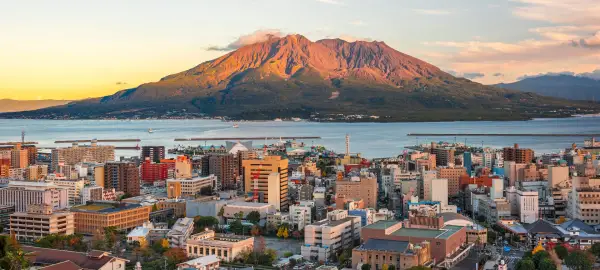
- Sakurajima volcano by boat, Chiran's samurai lane and a volcanic sand bath at Ibusuki
- Across the Ariake Sea to Unzen's steaming hells
- Singles friendly (view options for single travellers)
Japan's is a story of craft and ceremony, told from the window of a bullet train: a Tokyo sushi class, a kaiseki dinner at a Hakone ryokan beneath Mt Fuji, the woodworkers' town of Takayama, Kyoto and Nara at cherry blossom peak, then Hiroshima's Peace Park and the shrine that stands in the sea at Miyajima. Kyushu turns up the heat: Sakurajima smoking over Kagoshima, a volcanic sand bath at Ibusuki, the ferry to Unzen's steaming hells, Nagasaki, where Dejima kept Japan's one window on the world open for two centuries, and Arita, where Korean potters taught Japan porcelain. It ends in Fukuoka, over a bowl of Hakata ramen.
- Daily breakfasts and most dinners, plus lunch on the Tokyo sushi class day
- Clean, well-located 3 to 4 star hotels with private en suite facilities
- All transport including the Taipei to Tokyo flight, the Taiwan high-speed rail, Shinkansen and local trains in Japan, private air-conditioned coaches where used, and the Sun Moon Lakes
- Luggage forwarding from Tokyo to Takayama
- All sightseeing, entrance fees and activities as listed in the itinerary
- Full-time Adventures Abroad Tour Leader and expert local guides
- Gratuities for local guides, drivers, porters and restaurant staff
- Airport transfers for Land & Air customers
- International airfare to and from the tour
- Tour Leader gratuities
- Most lunches and any other meals not listed as included
- Alcoholic and bottled drinks
- Personal items (phone, laundry, etc)
- Internal air taxes where applicable
- Airport transfers for Land Only customers
- Optional trip cancellation insurance
- Seasonality and Weather:
This tour is timed for the turn of the seasons in both countries. Taiwan is subtropical, and mid to late March sits comfortably between the cool, damp winter and the heat and typhoon risk of summer. Taipei in the north can still be cloudy with passing showers, while the central lake country and the south around Taichung and Tainan are generally warmer, brighter and drier. March and early April is cherry blossom season, and the itinerary follows the blossom front as it moves through the country, though the exact peak shifts a little each year. Kyushu, in the second week of April, is the mildest leg of the trip: spring is well established, the blossoms on the southern coast will largely have given way to fresh green and early azaleas. - Transport and Travel Conditions:
In Taiwan we travel by private coach, returning from Tainan to Taipei on the island's high-speed rail then fly from Taipei to Tokyo. From there we rely on the country's superb rail system, including the Shinkansen bullet train, with metro and local trains within the cities, and private coach for the Hakone, Hida Valley and Kyoto touring days. Baggage forwarding is included on one occasion (while we overnight at Hakone with a small bag).
Activity Level 2 (Moderate): these are busy tours with a lot of moving around by train and local transport. Walking tours are leisurely, but expect to be on your feet for several hours and to manage steps and uneven surfaces. There is no significant altitude anywhere on the route.
Food is an essential part of the journey, with most dinners planned in advance as set courses; seafood, cooked and raw, features prominently in Japan, and set menus limit our ability to adjust individual dishes on the spot.
Am I suitable for this tour? Please refer to our self-assessment form - Activity Level: 2
These are particularly busy tours that feature a lot of moving around, sometimes by train and short journeys on local transport. Walking tours of towns and cities are leisurely but you should be prepared to be on your feet for several hours. Some of our cultural trips that occur at high altitude and/or require greater independence with baggage handling (at hotels, airports, train stations) also fall into this category.
To learn more about the Activity levels, please visit our tour styles page. - Accommodation:
All hotels are centrally-located, air-conditioned, 3 to 4 star standard with private bath facilities. In Hakone we stay one night at a ryokan-style hotel with a kaiseki dinner; rooms there are Western-style with raised beds. Rooms in Japanese city hotels are typically compact by North American standards but clean, efficient and well-equipped. Single rooms are limited in number and possibly smaller than twins. - Staff and Support:
A full-time Adventures Abroad Tour Leader accompanies the group; in Taiwan we are joined by a licensed national guide throughout, and in Japan by expert local guides. - Group Size:
Maximum 18 participants plus Tour Leader.
- Day 1:Arrive in TaipeiArrival in Taipei -- welcome to Taiwan!
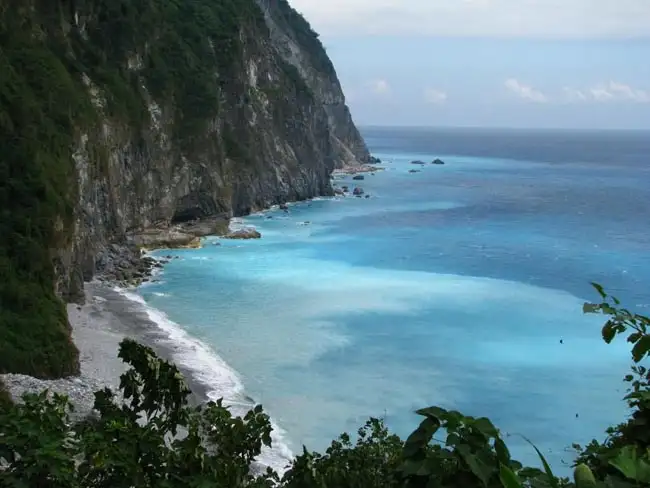
Lying off the south-eastern coast of mainland Asia, and across the Taiwan Strait from China, Taiwan is an island truly on the edge of the Pacific. One of the most densely-populated places on earth, this is also a natural wonderland with steep mountains, magnificent forests and an array of scenic attractions. Being situated on the western edge of the Pacific "ring of fire", continuous tectonic movements have created majestic peaks, rolling hills and plains, spectacular coastlines, and other natural wonders. 8 national parks and 13 national scenic areas preserve Taiwan's best natural ecological environment and cultural sites.
Overnight in Taipei. 
Included Meal(s): Dinner, if required - Day 2:Taipei: City TourWe will spend today exploring vibrant Taipei, modern and old, where Taoist temples sit alongside shopping malls. Many have rated Taipei as one of the region's most dynamic, comfortable and liveable cities. Situated at the northern tip of the island, the capital is located on the Tamsui River, about 25 km southwest of the Pacific Ocean. This is the political, economic, and cultural center of Taiwan. Originally founded in the early 18th century, Taiwan quickly became an important center for overseas trade in the 19th century. Today this truly is one of Asia's most dynamic and fascinating cities. Taipei is the thriving heart of Taiwan and the bustling centre of commerce, government and culture.
Our sightseeing will first take us to the world-famous National Palace Museum, the world's largest collection of Chinese artifacts. Here we will see porcelain, paintings, jade, bronze, tapestries and other art objects that once belonged to the emperors of China. This truly is a breathtaking selection of Chinese Imperial Art. In 1949, the collection was brought to Taiwan by Chiang Kai Shek's armies. Nearby is the wonderful Shung Ye Museum of Formosan Aborigines. This museum houses exhibits relating to the cultures and histories of the Taiwanese aborigines. These Austronesian peoples are related through blood or linguistic ties to people across precolonial Oceania, as far away as Madagascar. The tribes developed pottery, basketry, woodcarvings, musical instruments and colourful costumes. We will view some fine examples of Taiwanese aboriginal handicrafts and learn about the history of these people.
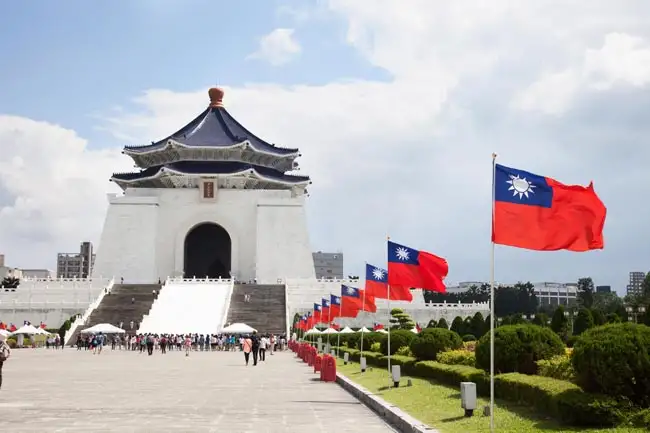
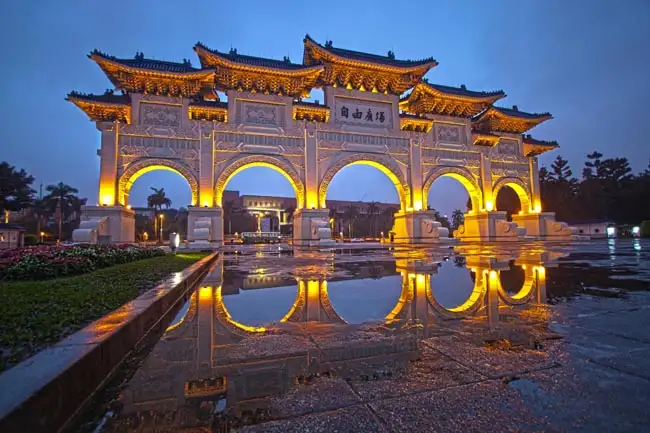
After a break for lunch we will continue with our tour of the city. A must is a visit to the National Chiang Kai-shek Memorial Hall, located in the heart of the city. This Memorial Hall (C.K.S. Memorial Hall) was constructed in memory of the former president of R.O.C. During our touring of the city we will pass by the Presidential Buildings Presidential Square. Originally built by the Japanese, it originally served as the governor's mansion.
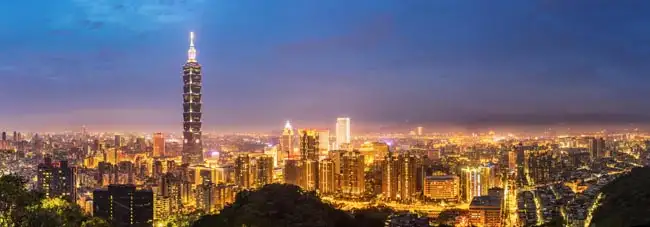
A must during the tour will of course be a visit to Taipei 101, with its outstanding views over the city. Taipei 101 is a 101-floor landmark skyscraper that claimed the title of world's tallest building when it opened in 2004.
Overnight in Taipei. 
Included Meal(s): Breakfast and Dinner - Day 3:Taipei - Lukang - Sun Moon LakeOn our journey to Sun Moon Lake we will make a stop in Lukang, the economic and transport hub of central Taiwan in earlier times. The saying "first Tainan, second Lukang and third Mengjia (today Wanhua District in Taipei)," illustrates the high position of the town in its glory days.
Lukang is a historic old town renowned for its well-preserved cultural and historical heritage. Once a bustling port in the 17th and 18th centuries, it served as the center where Taiwan's most affluent families amassed their wealth and power, capitalizing on the thriving commerce of the era. Despite the port losing its functionality due to sedimentation, Lukang has retained its enduring charm, serving as a timeless reminder of its glamorous past.
We visit Lukang Old Street, a leisurely stroll through the town adorned with red brick walls and floors, where historic relics await your discovery, each with an intriguing story to tell. During the Dutch and Qing eras of Taiwan, it was the most populous city and most important trading port in central Taiwan. There are more historical buildings here than anywhere in Taiwan except Tainan. Now the area is a lively shopping district, famous for traditional crafts and foods such as oyster omelets, shrimp balls, taro cakes, and meat buns.
After a break for lunch, we continue to the Sun Moon Lake area. In this idyllic environment we will see the deep blue waters of the lake and the mountainous surroundings from different perspectives. We will begin by enjoying a cruise across the lake, where we will benefit from fantastic views of the neighbouring mountains. We will then take in the lake from above as we experience the Sun Moon Lake Ropeway.
Overnight at Sun Moon Lake. 
Included Meal(s): Breakfast and Dinner - Day 4:Sun Moon Lake - TaichungThis morning we travel to Taichung, a city that wears its history and creativity in equal measure. Our first stop is Wufeng Lin's Mansion, the beautifully preserved 18th-century residence of Lin Wencha, a celebrated Qing Dynasty military commander. The mansion's layered courtyards and ornate detailing offer a rare window into the lives of Taiwan's most influential families during the Qing era.
We then visit the 921 Earthquake Museum, one of the most sobering and powerful museums in Taiwan. On September 21, 1999, a 7.3-magnitude earthquake devastated central Taiwan. Rather than clearing the wreckage, the museum preserved it — collapsed school buildings, ruptured fault lines, and buckled riverbanks remain exactly as the earthquake left them, a testament to both the scale of the disaster and the remarkable resilience of the Taiwanese people.
After lunch we explore two of Taichung's more unexpected pleasures. Rainbow Village is the life's work of Huang Yung-fu, a veteran soldier who — facing the demolition of his military dependents' village — began painting every surface in sight with vivid murals of animals, figures and folk imagery. His one-man act of defiance saved the village and turned it into one of Taichung's most beloved landmarks. We also stop at the Miyahara Building, a beautifully restored 1927 Japanese-era ophthalmology clinic that has been reimagined as an atmospheric ice cream and confectionery emporium — the architecture alone is worth the visit.
Overnight in Taichung. 
Included Meal(s): Breakfast and Dinner - Day 5:Taichung - TainanThis morning our journey continues south to Tainan, with a stop en route at the Jingzaijiao Tile-paved Salt Fields in Beimen. These are the oldest surviving tile-paved salt fields in Taiwan, with roots in the Qing Dynasty and their present form dating to 1818. To prevent salt crystals from bonding with the soil, workers laid broken pottery shards across the crystallizing ponds — a technique that produced purer, cleaner salt and, under the right light, turns the fields into a shimmering mosaic that is as visually striking as it is historically significant.
We continue to Tainan, Taiwan's oldest city and its capital for more than two centuries. Most of the Han migrants who sailed for Taiwan in the 17th and early 18th centuries made landfall along this southwestern coastline, and the city they shaped has never entirely let go of that heritage. Often compared to Kyoto for its density of temples, historic streets and living tradition, Tainan is essential Taiwan for anyone drawn to history, religion and the texture of traditional life.
We arrive with time to begin our exploration. The Confucius Temple — built in 1665 and believed to be the oldest in Taiwan — and the well-preserved Great South Gate offer an unhurried introduction to the old city. We also visit the Tainan Art Museum, whose bold contemporary architecture makes as strong an impression as the collection within, before ending the day at Hayashi — a beautifully restored 1932 Japanese-era department store, now home to local artisans and designers, and one of the city's most atmospheric spaces.
Overnight in Tainan. 
Included Meal(s): Breakfast and Dinner - Day 6:Tainan SightseeingTainan retains a living grip on traditional Taiwanese culture — Buddhist parades and temple ceremonies are not heritage performances here but the fabric of daily life. Today we give ourselves fully to the city's extraordinary historical depth.
We begin in the Chihkan Cultural Zone, the heart of the old city, where Chihkan Tower marks the site of Fort Provintia, built by the Dutch in the 1650s. The Dutch word for "eternity" gives the tower its name, and something of that permanence has proved apt — the site has served as an administrative and cultural landmark through successive periods of Ming, Qing and Japanese rule, each leaving its mark on the structures that remain. The surrounding zone is dense with temples, their incense and ceremony a constant backdrop.
From here we make our way to Anping, considered the cradle of Han Chinese civilization in Taiwan and the island's first European settlement. Fort Zeelandia — Anping Old Fort — took the Dutch nearly a decade to complete. Positioned on what was then a sandy coastal peninsula chosen for its direct supply lines to Batavia, it remains one of the most evocative colonial monuments in Asia. Nearby, Yanping Street — Taiwan's oldest merchant thoroughfare, also known simply as Taiwan's First Street — winds through a neighbourhood of narrow lanes, small shops and food stalls whose character has changed little over the centuries.
Overnight in Tainan. 
Included Meal(s): Breakfast and Dinner - Day 7:Tainan - High-speed train to Taipei - Taipei SightseeingToday we will leave Tainan and travel back to Taipei by high-speed train. This high-speed line opened for service in 2007, using trains with a top speed of 300 km/h (186 mph). The journey time from Tainan to Taipei will take just over 90 minutes!
This afternoon we will complete our sightseeing of Taipei. A visit to the Taoist Lungshan Temple provides some insight into the local culture. Dedicated to Kuanyin, the Goddess of Mercy, this is one of the city’s most popular and busiest temples. Like most temples in Taiwan, the Temple worships a mixture of Buddhist, Taoist, and folk deities such as Matsu.
We will walk through the Dihua Street Area, where one can get a true feel for the city’s past. The old-town market has dozens of shops selling a variety of traditional goods such as Chinese medicines and herbs, temple icons and incense, spices and dried food, colourful bolts of cloth, and bamboo and wooden crafts. This is a fascinating patch of the past.
Built on a green hillside in 1969, the impressive Taipei Martyrs Shrine was architecturally inspired by the Hall of Supreme Harmony in Beijing's Forbidden City. The shrine is dedicated to the 390,000 soldiers killed in the service of their country during the War of Resistance against Japan and the civil war between the Chinese Republican and communist forces.
Overnight in Taipei. 
Included Meal(s): Breakfast and Dinner - Day 8:Taipei, Taiwan - Fly to Tokyo, JapanToday we fly to Tokyo.
Tokyo is Japan's capital and the country's largest city. Prior to 1868, Tokyo was known as Edo. A small castle town in the 16th century, Edo became Japan's political center in 1603 when Tokugawa Ieyasu established his feudal government there. A few decades later, Edo had grown into one of the world's most populous cities.
Overnight in Tokyo. 
Included Meal(s): Breakfast and Dinner - Day 9:Tokyo: City TouringMorning breaks over a city of 14 million souls, and we begin exploring Tokyo's remarkable layers—from sacred forests to imperial gardens, from traditional department store rituals to the world's finest collection of Japanese art.
Our first sanctuary is Meiji Shrine, where passage through the massive torii gate transports us from urban chaos into tranquil forest. The 100,000 trees surrounding this sacred space were donated from across Japan during the shrine's construction—a living symbol of national unity. Here, the city's roar gives way to whispered prayers and the rustle of ancient leaves.
We continue to the East Gardens of the Imperial Palace, built upon the foundations of Edo-jo Castle. For 265 years, this impregnable fortress housed the Tokugawa Shogunate behind walls thick enough for six samurai to walk abreast. Though Allied bombing destroyed the original structures, the site retains its regal dignity. We'll enjoy our picnic lunch surrounded by meticulously maintained gardens that once witnessed the rise and fall of shoguns.
At one of Tokyo's venerable department stores—evolved from Edo-period kimono shops—we witness Japan's sophisticated gift-giving culture. These rituals trace back to pilgrimages when fortunate travellers brought omiyage (souvenirs) home to their villages. Today's elaborate presentations reflect social hierarchies where the ceremony matters more than the gift itself.
Our day culminates at the National Museum in Ueno Park, housing Japan's finest artistic treasures—scroll paintings, samurai armour, and delicate ceramics that whisper stories of emperors and artisans across millennia.
Overnight in Tokyo. 
Included Meal(s): Breakfast and Dinner - Day 10:Tokyo: Sushi Making ClassThis morning we take a fascinating dive into Japanese seafood cuisine during a 3-hour tour of a local fish market.
We meet up with our guide in the hotel lobby and then make our way to the market, a temple to all things seafood for an in-depth shopping session including plenty of time for photography and exploration. As you wander the aisles of this colourful and chaotic market, you’ll observe everything from giant tuna to sea urchins to octopus arranged for sale.
We'll then proceed with our guide to the gourmet cooking studio of one of Asia's largest culinary schools, boasting more than 150 studios throughout the region. Following the instruction of an experienced cooking teacher, we'll learn to prepare two 'washoku' recipes, a style of Japanese cuisine emphasizing traditional and homemade techniques. This typically includes miso soup and four kinds of sushi, plus side dishes. This will be an excellent and fun introduction to Japanese cuisine, definitely a highlight of any trip to Japan.
We finish our session by digging into our tasty creations for lunch. We'll leave with full stomachs and a new-found appreciation for the wondrous world of Japanese cuisine and its top-notch ingredients.
Because of our late/filling lunch and full day tomorrow, and because you may be planning an evening activity before we leave Tokyo, we will leave dinner on your own account tonight. Your Tour Leader can help you plan.
Tomorrow our large luggage is transported to Takayama for us -- please pack an OVERNIGHT BAG for ONE NIGHT. Your larger bags (one per person) will be shipped ahead, and you will need to pack an overnight bag to carry with you for the the one overnight in Hakone. Your Tour Leader will advise in advance re recommended items to have with you for the next two days.
Overnight in Tokyo. 
Included Meal(s): Breakfast and Lunch - Day 11:Tokyo - Lake Ashi - HakoneThis morning we take a short metro (train) ride* to Tokyo Station, then transfer to Odawara Station by bullet train where we connect with our private coach towards Lake Ashi near Hakone. Shortly after we leave the station, we'll make a brief stop to see Odawara Castle (exterior visit only).
Wedged between Mt Fuji and the Izu Peninsula, Hakone is a large region encircled by several forested mountains with a beauty accented by deep glens and ravines. In the feudal era, Hakone was a very important checkpoint that safeguarded the security of Edo (now Tokyo) as the seat of the Shogunate. This onsen (hotspring) area has been popular since the 1500s, when Hideyoshi Toyotomi came here to relax in an open-air bath after the hard fought Battle of Odawara.
From the castle town of Odawara we board a bus that takes us into the National Park. We then board a lake cruiser on Lake Ashi for scenic views of the surrounding mountains. Weather permitting, we can enjoy views of Mt Fuji. One of the highlights today will be our visit to the Hakone Outdoor Museum, or Chokoku-no-mori, a beautiful park filled with sculptures by renowned Japanese and international artists such as Rodin, Bourdelle, Moore, Zadkine, and Picasso.
Tonight we will enjoy a Keiseki-type meal at our ryokan-style hotel (our rooms with be "Western style" with raised beds). Originally Keiseki dining was to accompany tea ceremony and is a feast for both the eyes and the taste buds. You can feel free to wear your "yukata" (bathrobe - provided by the hotel) to the dining room as many of the Japanese do when they stay in ryokan, a perfectly wonderful place to relax after leaving busy Tokyo behind.
* OUR LUGGAGE will be sent ahead to Takayama for us -- please pack an overight bag for today/this evening/tomorrow (the cost of this is included in your tour). Our luggage will be waiting for us tomorrow afternoon. Please note that this service is also available elsewhere; your Tour Leader can advise/assist and payment can be made directly.
Overnight in Hakone. 
Included Meal(s): Breakfast and Dinner - Day 12:Hakone - Train to TakayamaToday we travel by Shinkansen (Bullet Train) to Takayama (+/- 4 hours).
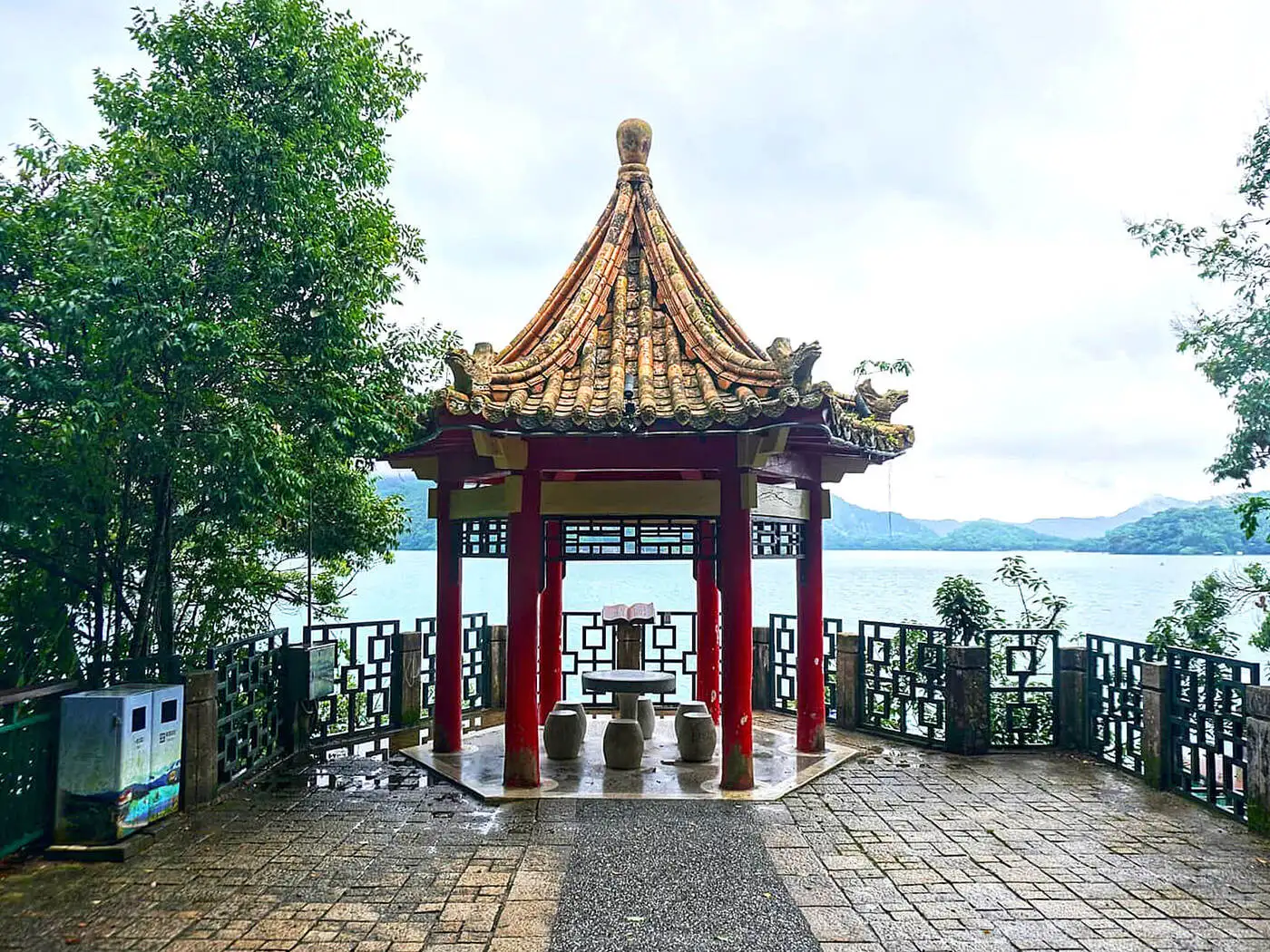
The region known as Hida, which surrounds Takayama, was cut off from the rest of Japan by almost impregnable encircling mountains. Hida lacked good farmland, which made taxpaying from an agricultural livelihood an impossible burden upon the people. Necessity caused them to diversify, so the craftsmen of Takayama honed their tools to a sharpness matched by their skills and became known as the finest woodworkers in the land. The mountains yielded the most coveted lumber in the empire, which Takayama's artisans fashioned into magnificent works worthy to adorn Japan's finest temples, shrines and palaces. During the Nara period, the central government, in lieu of taxes, required ten Takayama craftsmen to relocate to the capital, where their considerable talents were employed. During the Tokugawa era, the ancestral daimyo of Takayama was reassigned to the far north. Our train journey today takes us through the scenic Hida River Valley.
We arrive in the late afternoon and will have time to wander through the lovely town of Takayama and the merchant quarter of San-machi with its historic wooden structures.
Overnight in Takayama. 
Included Meal(s): Breakfast and Dinner - Day 13:Takayama: City TourWe start our day in Takayama by immersing ourselve in the vibrant atmosphere of the early morning market. Wander through the colourful stalls, sampling local delicacies and admiring traditional crafts.
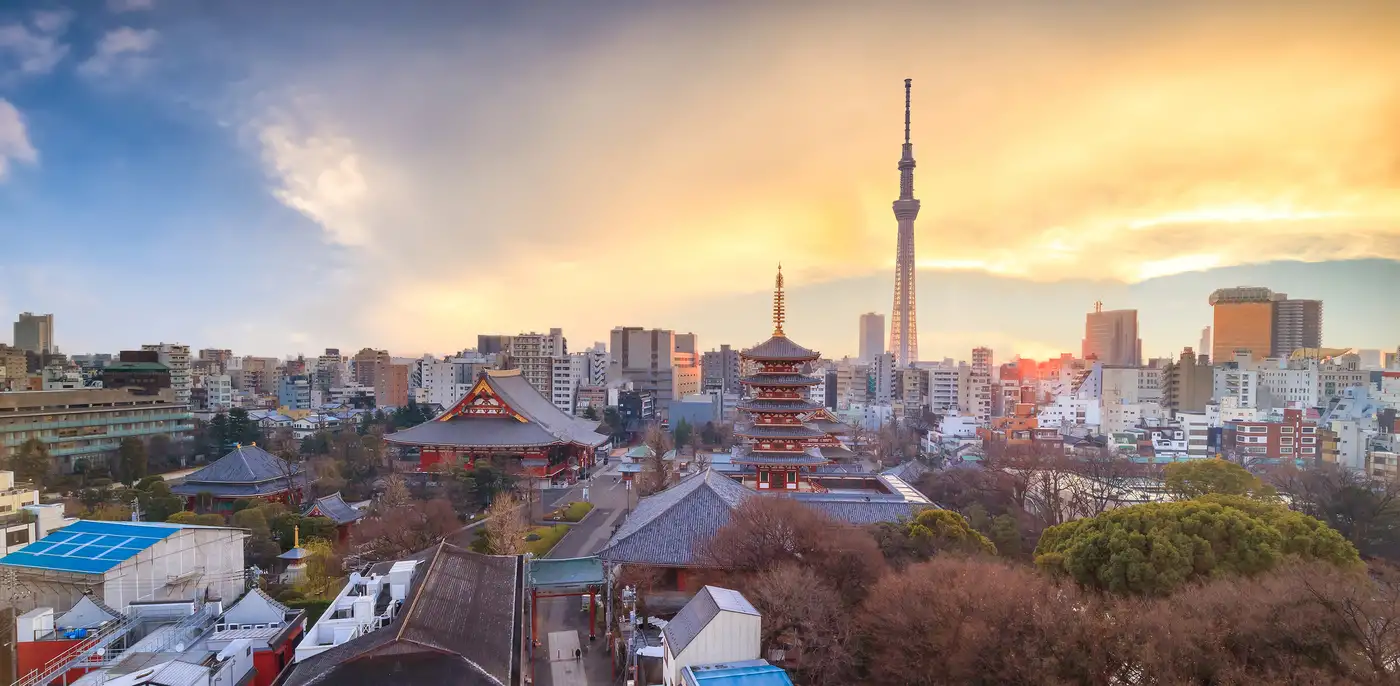
Afterward, we travel by road to the Hida Folk Village, an open-air museum showcasing over 30 traditional houses. Here we can admire the unique gassho-zukuri architecture, with its steep, thatched roofs designed to withstand heavy snowfall, and explore the interiors to gain insights into the daily lives of past generations.
We then visit the Yatai Kaikan, a fascinating museum dedicated to the magnificent festival floats used in Takayama's annual festivals. These floats feature intricate carvings, vibrant colours, and fascinating historical significance.
Your afternoon is at leisure. Takayama is a small, interesting and manageable place for those who enjoy easy-going, on-foot exploration.
Overnight in Takayama. 
Included Meal(s): Breakfast and Dinner - Day 14:Takayama - Nagoya - Train to KyotoOur (road) journey continues back through the Hida Valley to Nagoya from where we take the Shinkansen to Kyoto (+/- one hour).
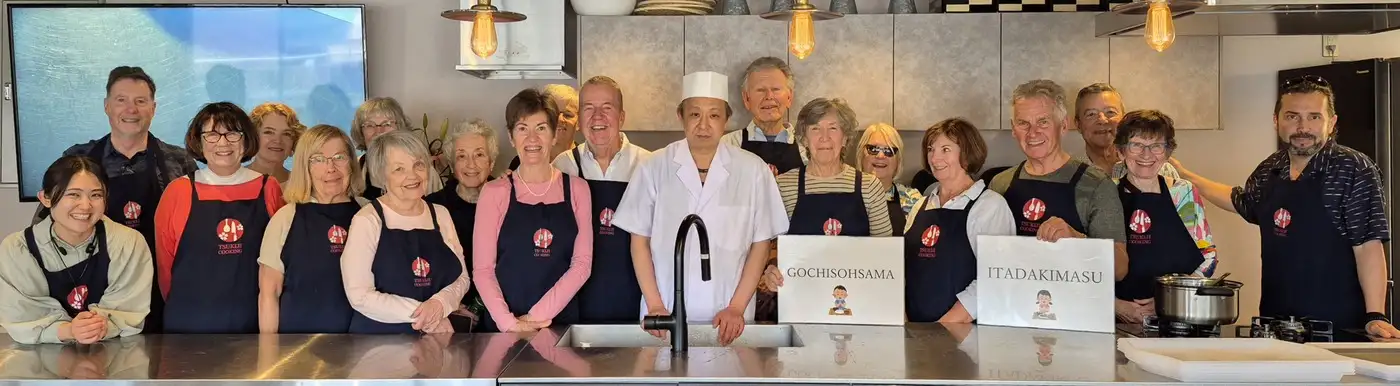
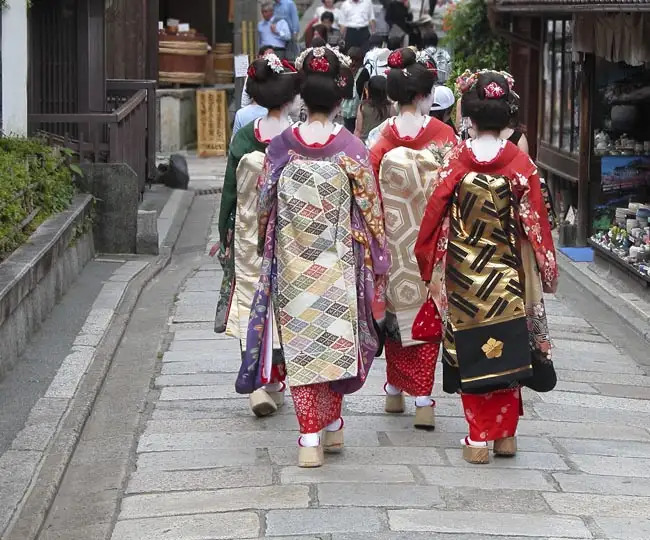
Kyoto vibrates with creative energy. For 1,000 years, skilled craftsmen, wise masters, and the nation's most promising fine artists have been lured here. The deep impress of culture and the refinement is indelible; it's in the soul of the city. A long line of Japanese emperors was enthroned here, and the city retains this regal bearing through myriad festivals and commemorative customs preserved from feudal times. In diminutive home workshops along cobblestone alleyways no wider than a footpath, lacquerware, cloisonne, damascene, kimono fabrics, pottery, porcelain, fans, dolls, embroideries, and bamboo ware are still expertly turned out by hand. Kyoto attracts a sophisticated crowd to its vibrant Noh and Kabuki theatres, while the last geisha finishing schools are found in the lantern-lit side streets of the Pontocho and Gion sections of the city.
Thankfully, Kyoto's treasures were spared from bombing during WW II, when American scholars persuaded the military to leave this masterpiece of a city alone. Though Kyoto is now a thoroughly modern city, much of its spirit is intact, with over 200 Shinto shrines; 1,600 temples, 30 of which administer to the major sects of Buddhism throughout Japan; three Imperial palaces, nine major museums, and countless classic gardens.
We arrive in this fascinating city mid-afternoon. Tonight we will venture to the Pontocho District, one of the traditional geisha quarters of Kyoto and next door to its rival, Gion. Wandering down the narrow lanes with the Kama River flowing alongside gives a sense to what this city was like long ago.
Overnight in Kyoto. 
Included Meal(s): Breakfast and Dinner - Day 15:Kyoto: City TourToday we have a highlight-packed full day of sightseeing in this spectacular city. Please note that the actual order of sites visited may vary from what is listed below, depending on how your Tour Leader and local guide for the day determine what is the best way to deliver the program.
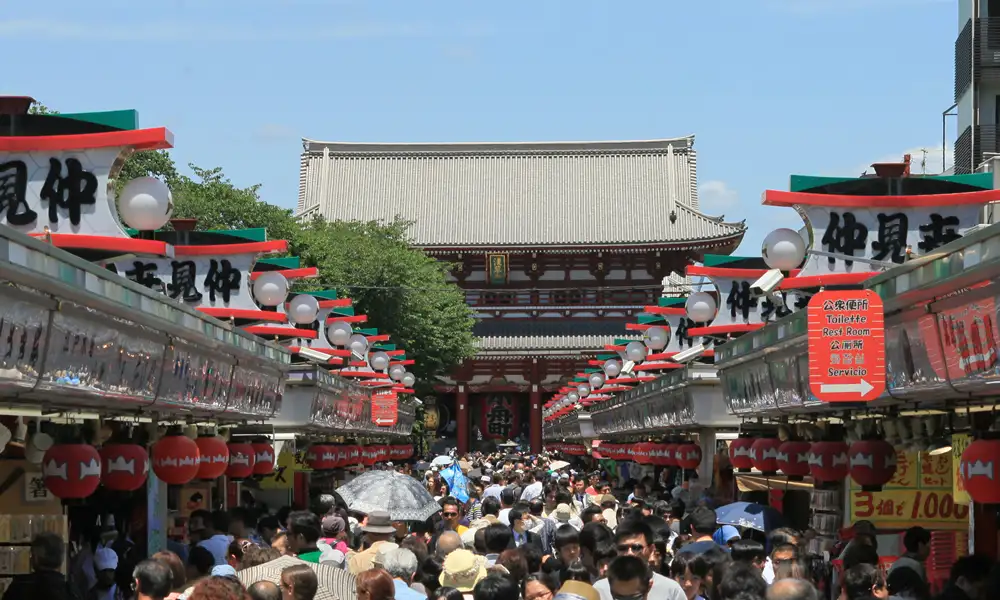
We start with a quick stop at Nishi Honganji (West Honganji), a designated UNESCO world heritage site, built in 1591 by Toyotomi Hideyoshi. Nishi Honganji is the head temple of the Honganji faction of the Jodo-Shin sect with over 10,000 sub-temples across the country and 200 temples overseas. The two largest structures are the Goeido Hall, dedicated to Shinran, the sect's founder, and the Amidado Hall dedicated to the Amida Buddha, the most important Buddha in Jodo-Shin Buddhism.
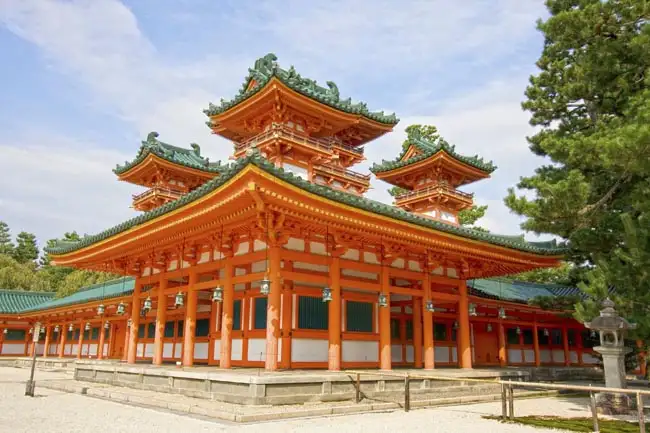
We then visit Heian Shrine, built in 1895 to commemorate the 1,100th anniversary of the founding of the capital. It is a replica to three-fifths of the size of the first imperial palace in the ancient capital Heiankyo. We also visit the beautiful "go-round" style garden with a total area of 30,000 sq metres, which is well-known for the beauty of its weeping cherry trees, Japanese iris, and waterlilies.
At some point we will make a stop to acquire some picnic lunch items followed by a break, possibly combined with a walk on Philosopher's Path (Tetsugaku no michi), a pleasant route through the northern part of Kyoto's Higashiyama district. The path follows a canal which is lined by hundreds of cherry trees.
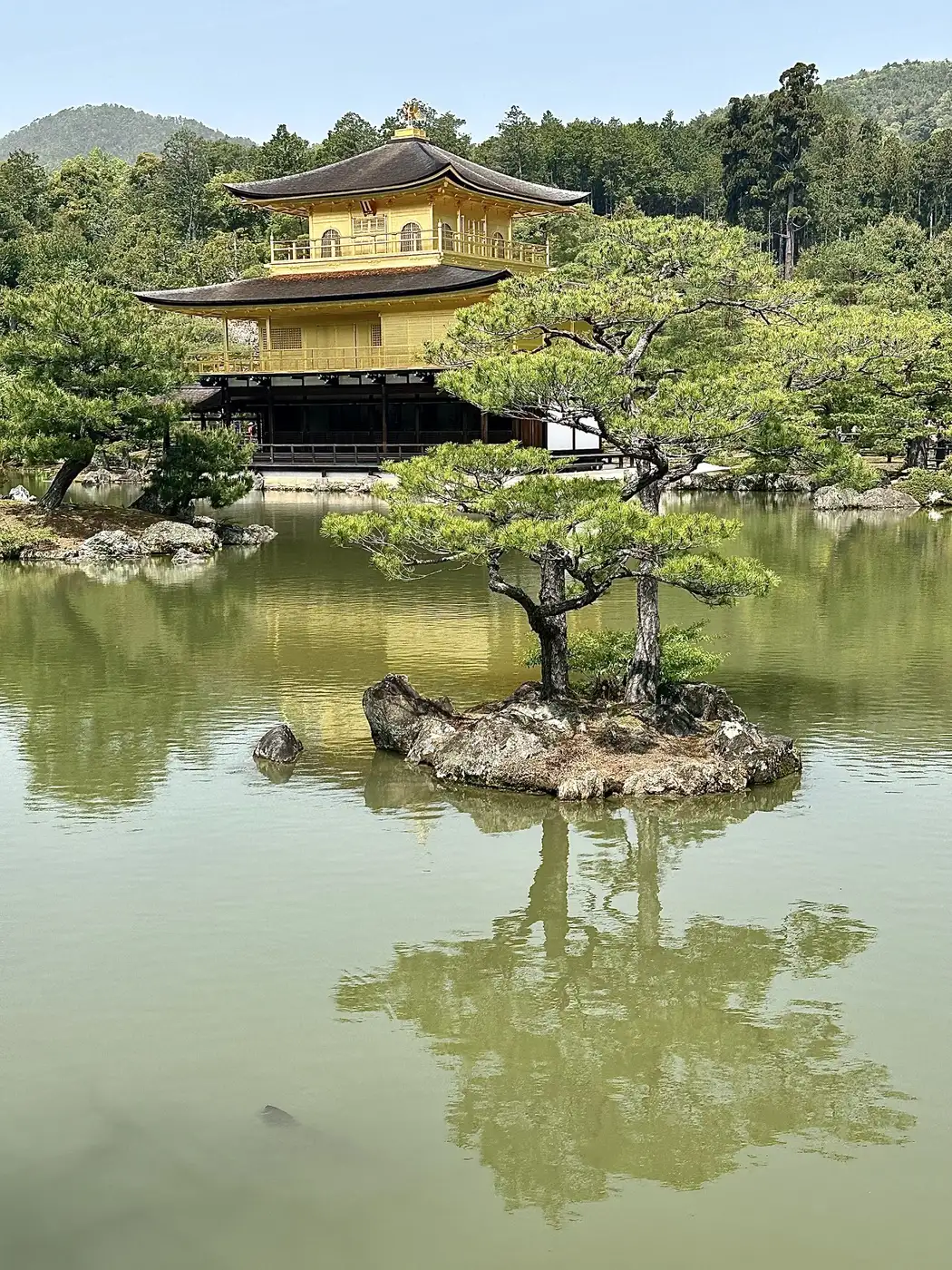
We continue to Ginkakuji, the Silver Pavillion, and then proceed to Kinkakuji, the Golden Pavilion, one of Japan's most famous architectural and historical icons. We also visit Ryoan-ji, the famous raked gravel Zen Garden, for which the Zen Buddhists are renowned. The essential dichotomy and harmony of the universe, which lies at the heart of this belief system, is symbolized in these tranquil gardens.
After a busy day, we’ll have a break before reconvening for our evening meal at a local restaurant.
Overnight in Kyoto. 
Included Meal(s): Breakfast and Dinner - Day 16:Kyoto & NaraToday we travel by local train to Nara.*
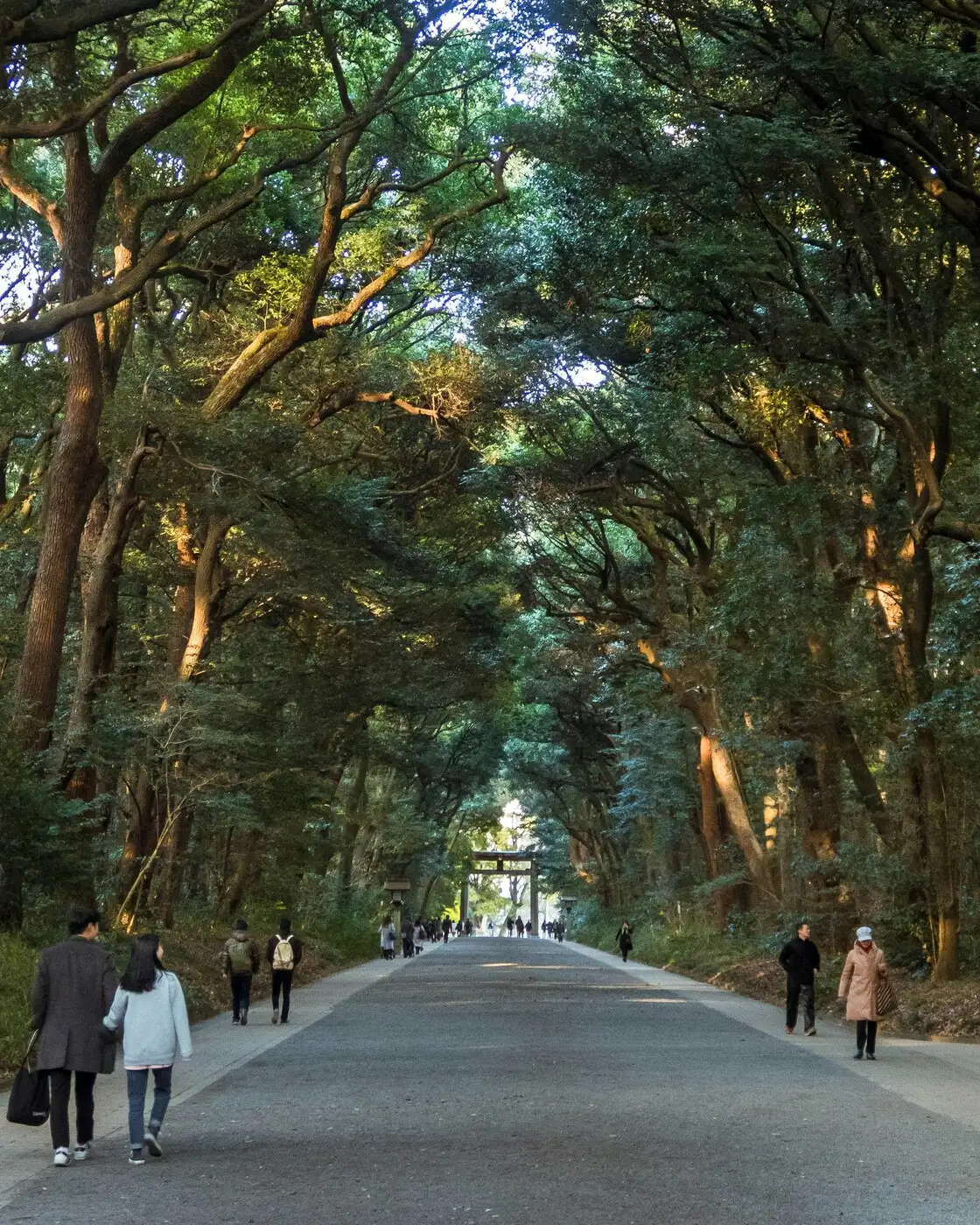
The crest of every mountain, the slope of every hill, the mute testimony of every rock, the waterfall, rivulet, and the valley of Nara are infused with the intangible spiritual energy that accompanied the birth of the Japanese civilization. Nara, meaning "level land," occupies the great basin of what was Yamoto, or the Land of Great Peace. Here was the centre of the half-real, half mythical kingdom of Japan before it became a nation. Jimmu Tenno, the first emperor of Japan, was purportedly buried at Nara, the Imperial Japan, the oldest existing dynasty in the world, established its first permanent court within the city in 710. Arts, culture, and literature also bloomed in this fertile valley. The earliest histories of the nation were compiled in Nara by noble court ladies in colloquial Japanese, and from the ancient city Buddhism spread throughout the land.
In its glory days, Nara covered an expansive area linked by palaces, temples, shrines, public buildings, and nobles' villas. The temples were massive and extremely powerful, almost like independent city-states. Numerous fires, the ravages of time, war, and pestilence have reduced many of the ancient structures, but plenty remain in their original states, especially in the eastern sections of the city. Part of this legacy is the Great Buddha of Todai-ji Otera, the largest bronze statue in the world, tipping the scales at over 500 tonnes.
Nara Koen, at over 500 ha (1235 acres), is Japan's largest park and is home to the sacred deer of nearby Kasuga Taisha. This shrine, moss-covered and illuminated by over 3000 stone lanterns, was first erected in 768 and is second in importance only to the Grand shrines of Ise. As we walk through this park dotted with temples and deer wandering about, you will be struck at how the sublime cultural richness of the quiet past lingers on.
* PLEASE NOTE that some past travellers have indicated that future participants might consider using this as a free day to do their own thing in and around Kyoto, which has much to offer even outside of our busy program. While Nara is always worthwhile and often considered a "must" while in the area, the logistics of getting to/from and the overall busy-ness of the sites visited, means that it takes an entire day to visit this one place. Those who might consider striking out on their own should consult with your Tour Leader for a complete picture of what the above described excursion entails.
Overnight in Kyoto. 
Included Meal(s): Breakfast and Dinner - Day 17:Kyoto: Nijo Castle & Leisure timeThis morning we visit Nijo Castle, built in 1603 as the Kyoto residence of Tokugawa Ieyasu, the first shogun of the Edo Period (1603-1867). His grandson Iemitsu completed the castle's palace buildings 23 years later and further expanded the castle by adding a five story castle keep. After the Tokugawa Shogunate fell in 1867, Nijo Castle was used as an imperial palace for a while before being donated to the city and opened up to the public as a historic site. Its palace buildings are arguably the best surviving examples of castle palace architecture of Japan's feudal era, and the castle was designated a UNESCO world heritage site in 1994.
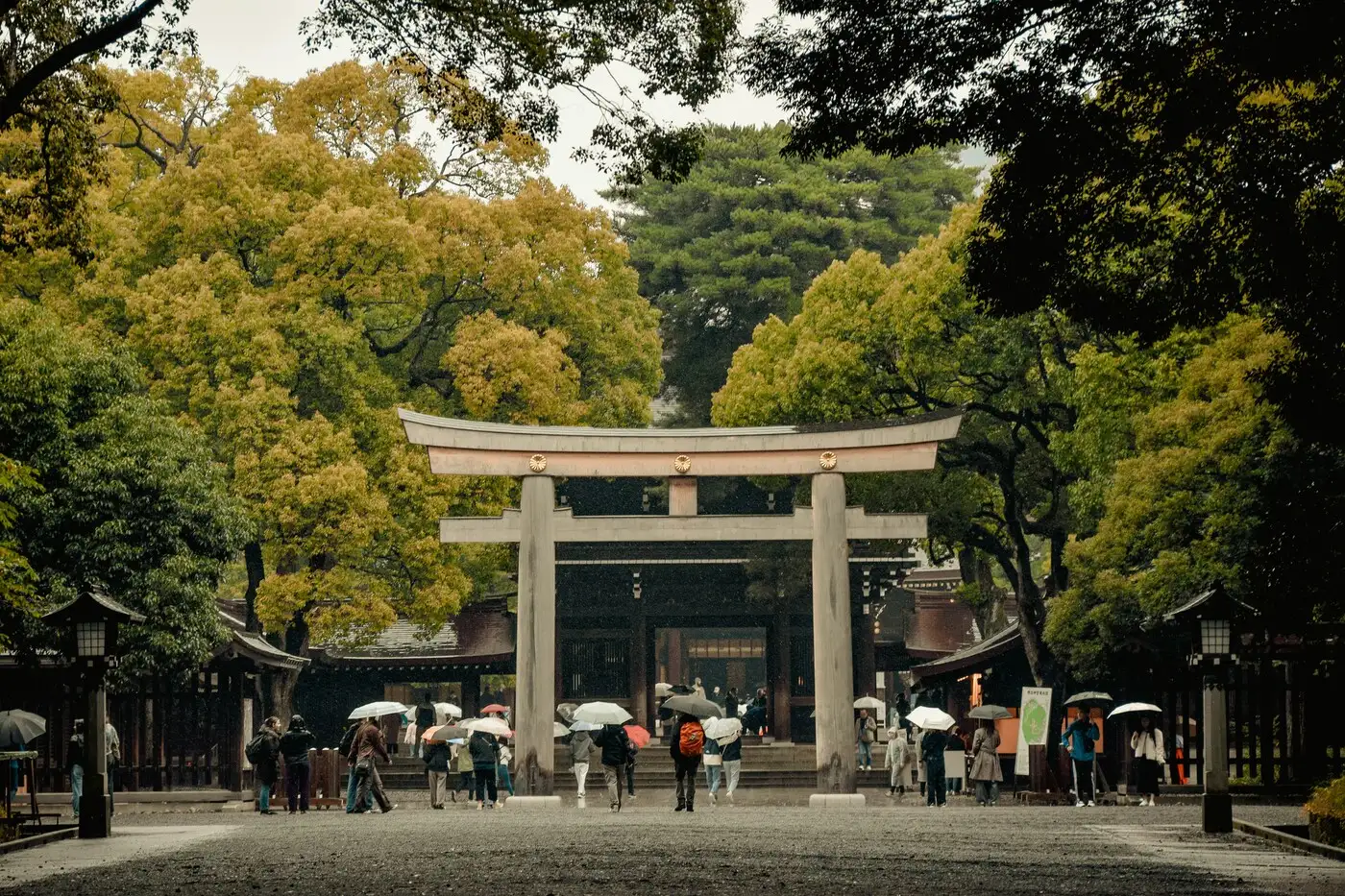
The balance of the day is yours to explore Kyoto on your own. A good place to start may be the small Japanese garden named Shoseien, located another few street blocks east of Higashi Honganji. Your Tour Leader can help you plan your afternoon.
Overnight in Kyoto. 
Included Meal(s): Breakfast and Dinner - Day 18:Kyoto - Train to HiroshimaToday we take the Shinkansen train to Hiroshima (+/- 3 hours). Passing through Osaka and Kobe, just minutes from Kyoto on this fast train, we will arrive at our destination in just a couple of hours.
Modern Hiroshima rose like a phoenix from its own ashes. Since its obliteration, it is once again the most vital city of San-Yo with a population of about one million and growing. Hiroshima is referred to as the "River City." In its confines, the Ota-gawa River fans out into six delta tributaries that flow into the immense and very busy bay. In the years just following the A-bomb blast, scientists doubted if Hiroshima could ever live again. Today the streets hum with activity, trees and flowers grow, and birds sing. Nature may not forget, but it does forgive!
On the morning of August 6, 1945, the people of war-torn Japan hurried to begin the day. Then suddenly buildings melted, people evaporated, and humankind lost the first battle of the atomic age. Seventy thousand buildings were flattened and 200,000 people perished, the lucky ones quickly; the unlucky lingered. Hiroshima, fringed by mountains forming a natural amphitheatre, seethed and fumed.
Our visit takes us to the Peace Memorial Park (Heiwa Kinen Koen). Here the Cenotaph, shaped like an ancient tomb, holds the names of the dead. The prayer, the hope, the Japanese reads "Repose ye in peace, for the error shall not be repeated." The skeleton of the Atomic Bomb Dome (Genbaku Domu) turns green with age against a blue sky. Until all nuclear arms are banned and destroyed, the Eternal Flame will flicker. We will visit the Peace Memorial Museum and walk to the A-Bomb Dome, passing the many monuments, memorials, and statues.
Overnight Hiroshima. 
Included Meal(s): Breakfast and Dinner - Day 19:Hiroshima & MiyajimaToday we travel by train and ferry to Miyajima where we spend the day.
Since ancient times, Miyajima has been regarded as one of the "Three Most Beautiful Spots" of Japan and, as part of the Seto Inland Sea National Park, it has received several distinctions, such as a place of extraordinary scenic beauty, exceptional history, and a natural monument. The virgin forests neighbouring Mt. Misen are representative of the lush greenery and abundance of nature which still covers the entire island even now. A surprisingly large number of southwestern Japan native botanical specimens can still be found on Miyajima. The island is like a miniature model of Japan, showing the harmonious ecology of all living things from the ocean depth to the top of mountains.
Our walking tour of the island will include a visit to the famous Itsukushima Shrine, which together with its large wooden tori, stands in the ocean during high tide. You will also have some free time to admire this World Heritage Site before returning to Hiroshima.
Overnight in Hiroshima. 
Included Meal(s): Breakfast and Dinner - Day 20:Hiroshima (Honshu Island) - Train to Kagoshima (Kyushu Island) & Sakurajima IslandToday we say sayonara to Honshu Island as we cross the short distance to Kyushu Island via Shinkansen train (+/- 2.5 hours). Our journey takes us along the eastern coast of Kyushu to Kagoshima.
Kagoshima City is the capital of Kagoshima prefecture. The city originally prospered as the castle town of Lord Shimadzu, and was the first city to introduce western civilisation to Japan. Today, it is the largest City in Southern Kyushu with about 540,000 people. Kagoshima City nestled on the west shore of beautiful Kinko Bay with majestic Mt. Sakurajima (the symbol of Kagoshima) is referred to as the Naples of the Orient.
One of Kagoshima's greatest contributions to modern Japan is it's role over the centuries as a gateway for trade and exchange between Japan and the world. Japan has traditionally been a closed culture and only recently pursued international ties. Kagoshima is the catalyst city credited for "opening Japan to the World".
In 1543, a Portuguese vessel landed on Tanegashima one of the southern islands, bringing the first firearms to Japan. In 1549 The Spanish missionary Francisco Xavier landed in Kagoshima and introduced Christianity to Japan. During the 17th century, the shogunate had an "isolation policy" which prohibited contact with other nations; however, Satsuma (now Kagoshima) continued to trade with China, and sent students to England to study Western culture.
Upon arrival we have an excursion by boat and bus to Sakurajima, one of Japan's most active volcanoes and the symbol of Kagoshima. The volcano smokes constantly, and minor eruptions often take place multiple times per day. Located in the middle of Kagoshima Bay, Sakurajima is the area's most prominent geographic feature, having an elevation of 1117 meters and a circumference of about 50 kilometers.
Before a powerful eruption in 1914, Sakurajima used to be an island in the bay, but the massive lava flow from that eruption created the volcano's current land connection to the Osumi Peninsula in the east. We'll visit the Sakurjima Visitors' Centre, which has models, pictures, videos and information boards about Sakurajima.
Overnight in Kagoshima. 
Included Meal(s): Breakfast and Dinner - Day 21:Kagoshima & IbusukiToday we have a full-day tour of the Ibusuki region near Kagoshima.
Ibusuki is located on the southeast tip of the Satsuma Peninsula and is a famous resort area. Blessed with great weather, hibiscus flowers blossom all throughout the area, yet Ibusuki is best known for its steam and baths, heated by natural subterranean geysers.
We visit Chiran, a small town in the middle of the Satsuma Peninsula. Within the town there is a preserved samurai district with houses and gardens that date back about 250 years. Chiran's isolated location at the southern end of Kyushu has allowed the district to keep much of its historical character intact.
The preserved Samurai District consists of a 700 meter long street within downtown Chiran that runs parallel to the main thoroughfare. The street itself is very attractive, with the rock walls and hedges of residences and the forested hillsides in the distance. Unlike some other samurai districts, it is also free of telephone poles and parked cars that would detract from the historic atmosphere.
We stop at the Chiran Peace Museum For Kamikaze Pilots. This is a thought-provoking, and to many, a controversial museum dedicated to the lives and deaths of 1,036 suicide pilots or kamikaze (more commonly known as tokkoh-tai-in Japanese), who sacrificed themselves in the name of the Japanese Emperor in the latter stages of World War II.
At some point in our day, we will also visit a Shochu distillery. Shochu is a Japanese traditional hard liquor, distilled spirits made from grains and vegetables. The most common base ingredients are sweet potato, barley, rice, buckwheat and sugar cane. We'll like have a factory tour which includes an opportunity to taste and purchase this unique spirit for which this region is famous.
You'll also have a chance to experience a unique activity for which this region is renown. Blue-robed visitors come and lay in warm sand pits and are gradually covered with volcanic sand up to their necks. The weight and heat of the sand assists in the body's blood circulation and, after about 10 minutes, the whole body begins to perspire. It is a relaxing sensation both young and old alike enjoy.
Overnight in Kagoshima. 
Included Meal(s): Breakfast and Dinner - Day 22:Kagoshima: Ko-en Gardens - Train to KumamotoOur Kagoshima stay continues with a visit to the enchanting Iso Ko-en Gardens, a place where nature and artistry blend seamlessly. Imagine strolling through meticulously crafted landscapes, with the imposing Mount Sakurajima serving as a breathtaking, living backdrop. The volcanic soil, rich with minerals, has nourished this garden and the surrounding farmlands, creating a vibrant tapestry of greenery against the stark mountain.
Later in the day, we embark on a scenic train journey to Kumamoto, a city steeped in history. Upon arrival, we'll delve into the heart of Kumamoto's heritage with a visit to the magnificent Kumamoto Castle. While the castle has undergone restoration, its grandeur remains, offering a glimpse into the region's feudal past. We'll explore its impressive stone walls and learn about its strategic importance.
Overnight in Kumamoto. 
Included Meal(s): Breakfast and Dinner - Day 23:Kumamoto - NagasakiThis morning, we embark on a fascinating journey to the southern region of Kyushu. Our adventure begins at Kumamoto Port from where we'll board a ferry and sail across the scenic Ariake Sea to Shimabara.
Shimabara is a town steeped in history, marked by the dramatic eruption of Mount Unzen in the early 1990s. We'll witness the aftermath of this powerful natural event, with landscapes still scarred by volcanic activity. Half-buried homes and other remnants of the eruption serve as a poignant reminder of nature's destructive force.
Our journey continues as we ascend Mount Unzen, a volcanic mountain with a fascinating geological history. We'll visit the Jigoku, a collection of bubbling mud pools and steam vents, offering a glimpse into the Earth's fiery core. Walking through this otherworldly landscape, we'll gain a firsthand appreciation for the power of volcanic activity.
Descending the mountain, we'll make our way to Nagasaki, a city with a complex history and a unique blend of Japanese and Western cultures. This historic port city played a significant role in Japan's modernization and has a poignant connection to the atomic bombing of 1945.
Overnight in Nagasaki. 
Included Meal(s): Breakfast and Dinner - Day 24:Nagasaki: City TourNagasaki's attractions are as varied as they are plentiful: feudal castles, samurai houses, Meiji-era Western villas, smoking volcanoes, mineral-rich hot-spring baths, architecturally pleasing resorts, rugged islands, beautiful beaches, and a hospitable and friendly people are just a few of the rewards awaiting the traveller to this diverse and dynamic prefecture.
This morning we will start with a trip to Glover Garden, named after Thomas Glover. This is a collection of European style houses which have been collected in to this park which cascades down the side of a hill. In addition to the houses which you can go through is the Museum of Traditional Performing Arts which contains beautifully decorated floats from the Kunchi Festivals. We will then ride the streetcar to the Nagasaki Dejima Museum. Dejima was an artificial island built in 1636 in Nagasaki Bay for foreign traders, as foreigners were banned from the country. This was a vital portal through which culture, money, goods, and ideas flowed in and out of Japan.
The afternoon is yours to explore Nagasaki at your own pace. You might choose to visit the Chinese Confucian Temple, a serene oasis amidst the bustling city, or immerse yourself in the vibrant atmosphere of Chinatown. For a poignant reminder of the city's tragic past, the Nagasaki Atomic Bomb Museum offers a sobering look at the devastating impact of nuclear warfare.
Overnight in Nagasaki. 
Included Meal(s): Breakfast and Dinner - Day 25:Nagasaki - Saga Prefecture - FukuokaToday we travel by bus through Saga Prefecture, Japan's most important area for the production of traditional porcelain and pottery. Many of the kilns were established by potters who were taken to Japan from Korea after the war between Japan and Korea in the 1590s.
Arita ware originated in the beginning of the 17th century when layers of kaolin, the main component of porcelain, was discovered and the first porcelain kiln was built in present day Arita town. Arita porcelains of the early days were typically made in the Chinese style of the period, with deep blue patterns on a white background, called "sometsuke." In the 1640s, a new style called "aka-e," characterised by bright colours and bold patterns principally in red, was invented. These two styles, sometsuke and aka-e, dominated Arita-Imari ware. These beautiful pieces of white earthenware from the Orient won tremendous acclaim in Europe and influenced the European porcelain industry.
We’ll visit the Arita Ceramic Museum, which features a fascinating Shibata collection donated by a Japanese couple's personal collection in hopes that they will be preserved. Rooms are separated by age from modern to the 16th century; most signs and descriptions are also in English. Maps in exhibition room #4 show the flow of porcelain through Asia over the years.
We continue toward Karatsu with a stop in Okawachiyama, known as the "Village of Secret Kilns." From 1675 to 1871, it was the official kiln of the Nabeshima family of the Saga Domain, and was a representative production centre of porcelain, producing high quality pottery for the Imperial Court, the shogunate and various lords. The Nabeshima clan of the Saga Domain moved their kiln from Arita to the steep terrain of Okawachiyama to preserve their secretive techniques, setting up a guard post at the entrance to strictly control the kiln. Even those who are not particularly interested in ceramics will find it a truly fascinating and quaint village set deep in the hills.
Arriving at Karastu City, we’ll see the and the famous Karatsu Street (Alpino) and (time-permitting) see a local festival display of floats. Departing Karatsu, we’ll pass by Karatsu Castle (rebuilt in 1960s) before stopping at Nijino Matsubara Pine Tree Forest for a coffee break and walk to the beach.
Our final destination is Fukuoka, Kyushu's largest and one of Japan's ten most populated cities. Because of its closeness to the Asian mainland (closer to Seoul than to Tokyo), Fukuoka has been an important harbour city for many centuries and was chosen by the Mongol invasion forces as their landing point in the 13th century. Today's Fukuoka is the product of the fusion of two cities in the year 1889, when the port city of Hakata and the former castle town of Fukuoka were merged into one city.
Overnight in Fukuoka. 
Included Meal(s): Breakfast and Dinner - Day 26:Fukuoka: City TourFukuoka is a city blessed with a beautiful climate and a seaside location. Since ancient times the city has flourished as a crossroads of international exchange.
It is said that the earliest Japanese state mentioned in historical records, Nakoku, was located in the area where the city is now located. Foreign culture first entered Japan through Fukuoka. The Gold Seal discovered across the bay from Fukuoka City on Shikanoshima Island symbolises the long history of the area. This seal, inscribed "King of the State of Na of Wa, or Japan, and Vassal of the Han Dynasty", dates back to AD 57.
Today we embark on a half-day tour of Fukuoka, including Kanzeon-ji and Kaikan-in temples, where we will also visit the Dazaifu Tenmangu Shrine and Komyoji Temple, with its magnificent Zen gardens. This is the perfect place to pause and enjoy some silence, reflecting on the beauty of the surroundings and your time in Japan.
Next we make our way to the Kyushu National Museum, only the fourth national museum in the country. The museum recognizes its host city's history by basing its exhibits on the concept of "Understanding Japanese culture from an Asian point of view". The museum has an impressive collection of artifacts that are presented in both a creative and informative fashion.
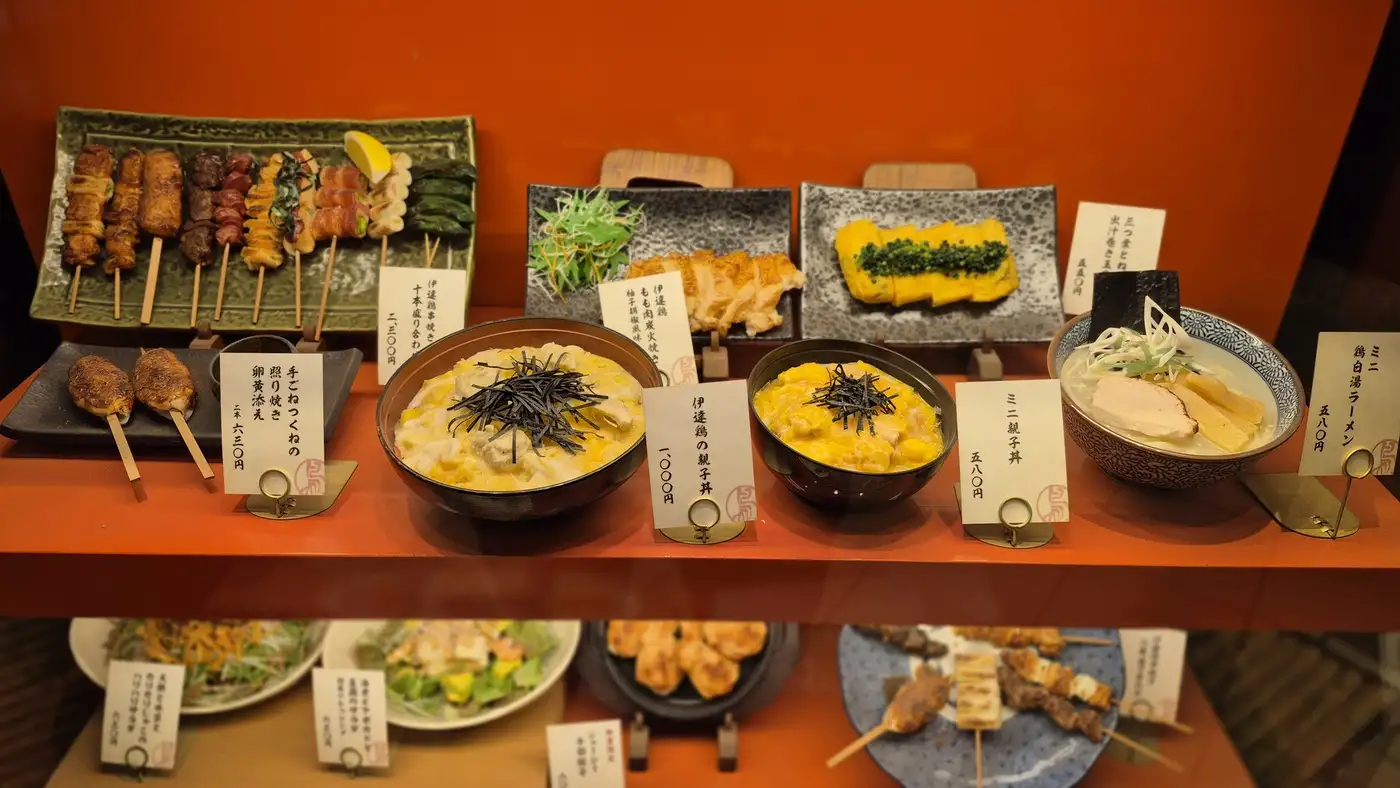
We return to the city for some leisure time and independent exploration. Free time options include the Kabuki theatre, the Museum of Asian Art, Hakata Shonin (Folk Museum), and/or the nearby useum, Gion Shrine and its Float Exhibition. There are also many spa treatments available in and around the hotel – perfect preparation for your long journey home. If you have a break for lunch in mind, Hakata ramen is by far the most famous dish to come from Fukuoka. It's a soup noodle dish made with thin egg noodles and a rich, pork bone broth called tonkotsu. There are many different types of tonkotsu ramen, but Hakata ramen is possibly the most well-known.
Overnight in Fukuoka. 
Included Meal(s): Breakfast and Dinner - Day 27:DepartureDeparture from Fukuoka.*
* LAND ONLY PASSENGERS: If you are booking your own flights and are tempted to purchase a ticket in/out of Tokyo only, it is, in theory, possible to travel by train from Fukuoka back to Tokyo, but this is a rather long journey (8 hours) and can involve multiple train changes which, in Japan, can be daunting. Accordingly, if you need to return to Tokyo to fly from there, we recommend that you build in a flight from Fukuoka to Tokyo in order to make this connection.
ITTE IRASSHAI!! 
Included Meal(s): Breakfast
Countries Visited: Japan and Taiwan
*The red tour trail on the map does not represent the actual travel path.
Book This Tour
- Final payment: Due 90 days prior to departure.
- Deposit: A non-refundable $500 USD Deposit is required at booking.
- Internal Flight Taxes: An extra $70 USD applies for taxes and fees on tour flights. The internal airfares are included, but taxes are listed separately as they may change. Exceptions are noted in Red.
- Optional Single Supplement: $2230 USD (number of singles limited).
(View options forsingle travellers) - Transfering Tour or Date: Transferring to another tour or tour date is only permissible outside of 120 days prior to departure and is subject to a $100 USD change fee.
(Read our cancellation policy)
Prices below are per person, twin-sharing costs in US Dollars (USD). Pricing does not include airfare to/from the tour and any applicable taxes.
Tourcode: TJ2
Frequently Asked Questions
- What is the maximum number of participants on a trip?Most of our tours carry a maximum of 18 participants; some tours (ie hiking tours) top out at 16. In the event that we do not achieve our minimum complement by our 90-day deadline, we may offer group members the option of paying a "small-group surcharge" as an alternative to cancellation. If all group members agree, we will confirm the trip at existing numbers; this surcharge is refundable in the event that we ultimately achieve our regular minimum. If the small group surcharge is not accepted, we will offer a refund of your deposit or a different trip of your choice.
- Can I extend my tour either at the beginning or end? What about stopovers?Yes, you can extend your tour either at the beginning or the end and we can book accommodation in our tour hotel. Stopovers are often permitted, depending on air routing. Stopovers usually carry a "stopover" fee levied by the airline.
- How do I make a reservation? How and when do I pay?The easiest way to make a reservation is via our website; during office hours, you are also more than welcome to contact us by telephone.
A non-refundable deposit is payable at the time of booking; if a reservation is made within 90 days, full payment is required. Some trips require a larger deposit. If international airline bookings require a non-refundable payment in order to secure space or the lowest available fare, we will require an increase in deposit equal to the cost of the ticket(s).
Early enrolment is always encouraged as group size is limited and some trips require greater preparation time.
Once we have received your deposit, we will confirm your space and send you a confirmation package containing your trip itinerary, any visa/travel permit related documents, invoice, clothing and equipment recommendations, general information on your destination(s), and forms for you to complete, sign and return to us. Your air e-tickets (if applicable), final hotel list, final trip itinerary, and instructions on how to join your tour, will be sent approximately 2-3 weeks prior to departure. - What about cancellations, refunds, and transfers?Please review our cancellation policy page for details.
- I am a single who prefers my own room. What is a single supplement?All of our tours have a single supplement for those who want to be guaranteed their own room at each location.
This supplement is a reflection of the fact that most hotels around the world do not discount the regular twin-share rate for a room by 50% for only one person occupying a room. Most hotels will give a break on the price, but usually in the range of 25-30% of the twin-share rate. This difference, multiplied by each night, amounts to the single supplement.
The conventional amount can also vary from country to country and some destinations are more expensive than others for single occupancy. In order to be "single friendly," the supplements we apply are not a profit centre for us and we do our best to keep them as reasonable as possible.
On most tours we limit the number of singles available, not to be punitive, but rather because many hotels allow for only a limited number of singles; some smaller hotels at remote locations also have a limited number of single rooms available.
Please note that most single rooms around the world are smaller than twin-share rooms and will likely have only one bed. - Do you have a shared accommodation program?Yes! If you are single traveller and are willing to share, we will do our best to pair you with a same-gender roommate. Please note that should we fail to pair you, we will absorb the single supplement fee and you will default to a single room at no extra charge.
