- History
- Hiking
- Overview
- Info & Inclusions
- Itinerary
- Map & Hotels
- Photos
- Dates & Prices
- Tour Duration: 15 Days
- Max Group Size 16
- Plitvice Lakes — 16 terraced emerald lakes and cascading waterfalls
- Hermitage of Blaca — cliff-clinging monastery reached by coastal boat on Brac
- Hvar summit hike to cave monastery above Adriatic island vineyards
- Napoleon's Road — stone-walled vineyard paths across Korcula's interior
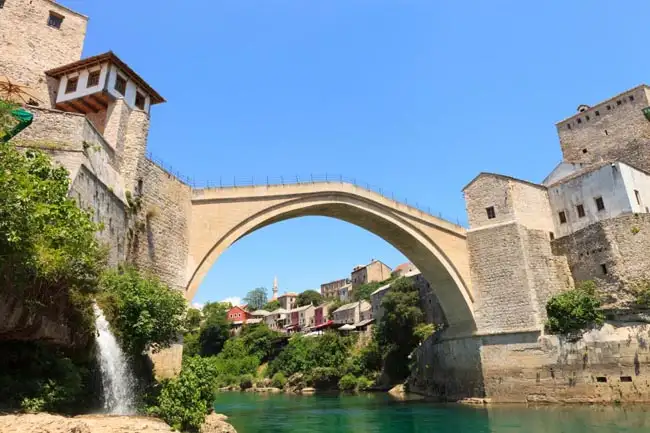
- Mostar's reconstructed Ottoman bridge and Museum of War and Genocide Victims
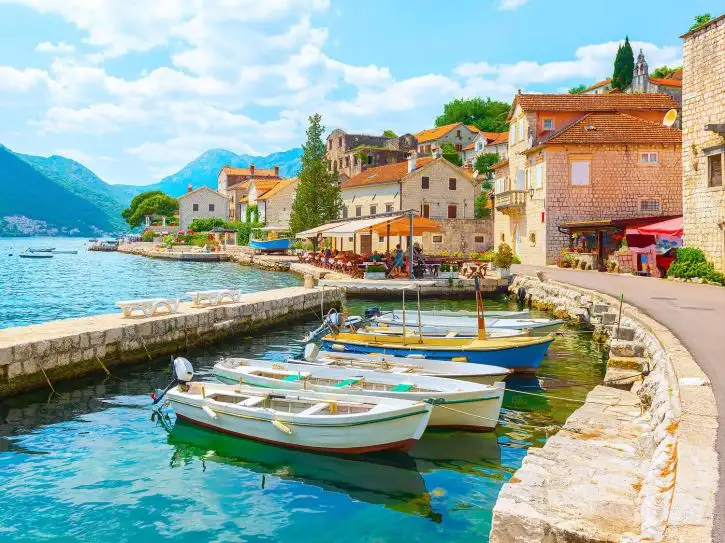
- Kotor's medieval walls above the Mediterranean's only fjord
- Singles friendly (view options for single travellers)
We hike Plitvice's cascading emerald lakes, climb to a cliff-clinging hermitage above Brac's coastline, walk Napoleon's stone-walled vineyard paths on Korcula, and ascend to fortress ruins above Mostar's reconstructed Ottoman bridge. Montenegro adds the Bay of Kotor — the Mediterranean's only fjord, rimmed by mountains and medieval walls — before Dubrovnik closes the journey at one of Europe's most dramatically preserved medieval cities.
Three countries, nine overnight locations, and fifteen days of coastline, islands, and mountain interior — all on foot where the landscape demands it.
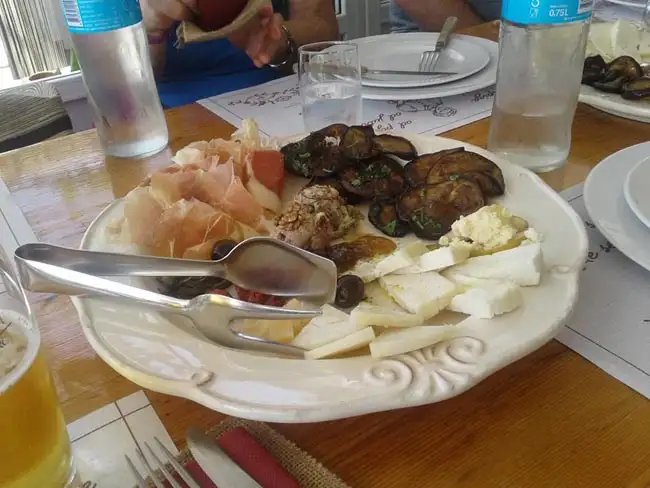
- MealsSavour authentic flavours with included daily breakfasts and dinners at handpicked local restaurants—immersing you in local cuisine without worrying about reservations or budgets.
- Transport & Logistics
Private air-conditioned coaches and included internal ferries and flights—ensuring hassle-free travel so you can focus entirely on the discoveries ahead.
"Adventures Abroad tour leader's management and guest services managed the tour with great skill and dedication. The tour leader was on top of every move and transfer. We have not experienced any issues with logistics and had a great time."
~ JULIA O"The tour leader did an excellent job coordinating some difficult travel logistics, power outage issues and resolving problems and dealing with guests who had unrealistic expectations."
~ CYNTHIA COLLINS - Expert Guidance
Unlock insider secrets at every landmark with your full-time Tour Leader and expert local guides , all gratuities covered—no hidden tipping surprises—so you immerse fully in your destination's stories, worry-free. (Except for the tips to your tour leader at the end of your tour.)
"Amazing tour guide. Our tour guide was very well organized, Her passion, knowledge, and enthusiasm completely transformed the travel experience into something truly unforgettable..."
~ MELANIE LEMAIRE"Highly recommend every trip with Adventures Abroad. It's a well organized and well thought out adventure. The tour leaders are friendly, knowledgeable and experienced professionals. Highly recommend this company."
~ SUSAN WALL - Sightseeing & EntrancesAll entrance fees for sites visited as per the itinerary—no hidden costs—so you can explore ancient ruins and excursions with complete peace of mind.
- AccommodationsUnwind in clean, well-located 3 to 4-star hotels with private en suite facilities—handpicked for comfort and convenience after each day's discoveries—so you can rest easy knowing your stay supports the real adventure, not steals the spotlight.
- Small Group
Discover the world in small groups of up to 16 travellers plus your expert Tour Leader—unlocking spontaneity, off-the-beaten-path adventures, and genuine connections at a relaxed pace, free from crowds.
"Looking Forward to My Next Adventure The best feature of the Adventures tour was the small size that allowed the group to quickly load up, let everyone get acquainted within the first 24 hours, capitalize on unplanned surprises along..."
~ PHILIP BLENSKI"Good value for a great time I have traveled with Adventures Abroad for over 20 years now. Well thought out, interesting itineraries and the other travelers congenial and friendly. The price always seems fair and overall a..."
~ Trusted Customer - Airport Transfers For Land & Air CustomersWe handle hassle-free airport transfers for all our land and air tour customers—plus early arrivals or late departures when you book extra hotel nights directly with us for added peace of mind.
- International airfare to/from the tour.
- Lunches, Tour Leader Gratuities, drinks, personal items (phone, laundry, etc), international air taxes (if applicable) and any excursions referenced as 'optional'.
- Airport transfers for Land Only customers.
- Optional travel insurance.
- Seasonality and Weather:
The Adriatic in midsummer is extraordinary and exhausting in equal measure — cruise ships disgorge thousands of passengers daily into Dubrovnik's marble lanes, Hvar's harbour fills wall to wall, and the limestone reflects heat that makes serious hiking inadvisable. Our May and September departures are specifically timed to avoid all of that.
May brings the coast at its most verdant — wildflowers on the Hvar hillsides, fresh green on Korcula's vineyards, Plitvice's waterfalls running at full volume from spring snowmelt. The islands are quiet, the light is sharp, and the water is warming toward swimmable. Hiking conditions are close to ideal.
September delivers the same uncrowded coastline with the addition of harvest season — grape picking underway in the Dalmatian vineyards, figs ripening on island walls, the sea still warm from summer. The light softens toward golden and the limestone towns glow in a way that July's harsh midday sun doesn't allow.
Both seasons share the thing that matters most: the Adriatic without the crowds. - Transport and Travel Conditions:
Most land transport is by private air-conditioned motor coach, the size of which will depend on ultimate group size (see 'group size'). Some shorter journeys via public bus or taxi.
OUR HIKES
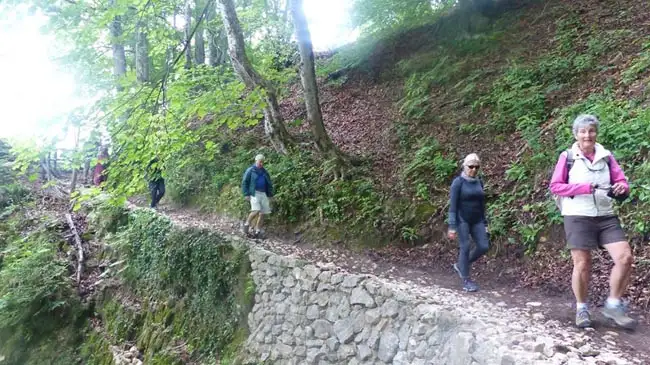
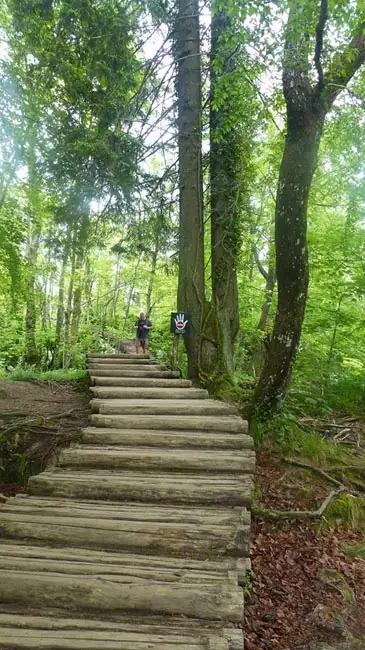
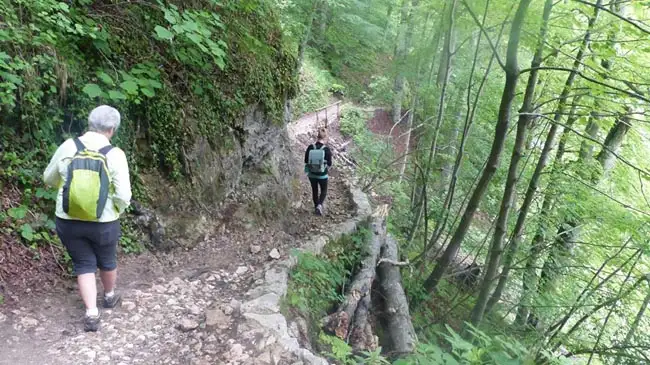
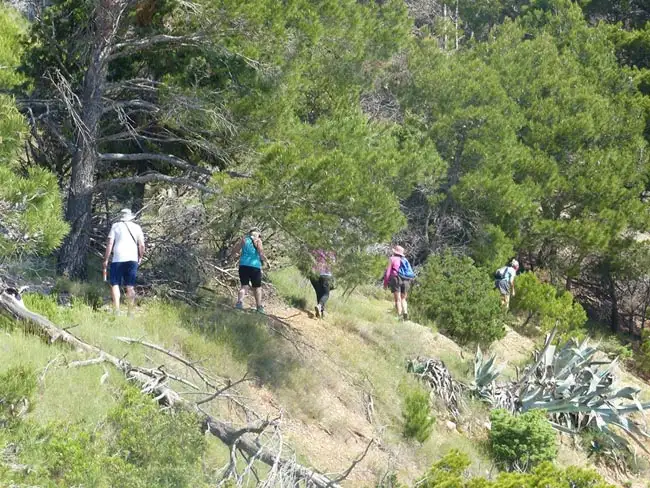
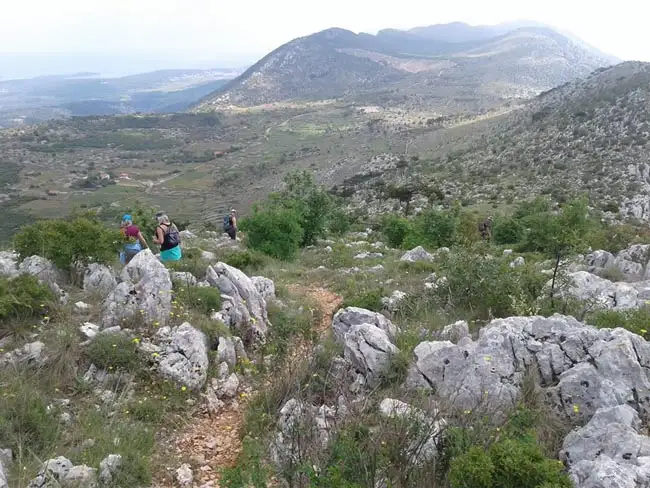
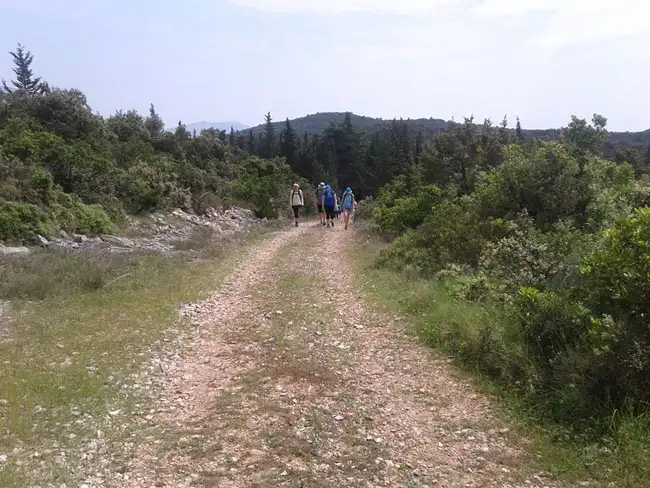
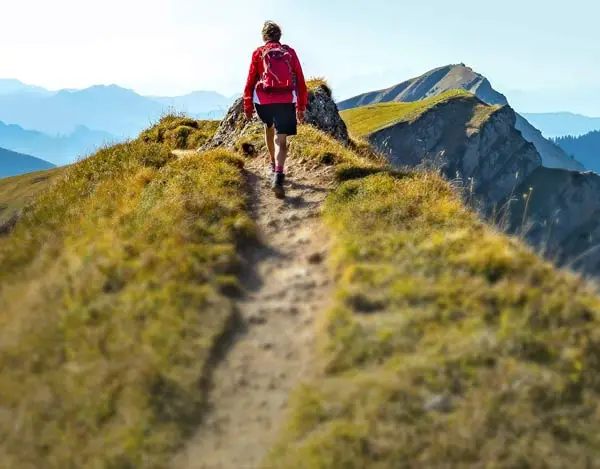
Because some hikes can/may be adjusted at the discretion of your Tour Leader depending on things like weather and group interest, the final distances/durations of our hikes as indicated in our itinerary should be taken as guidance only. In the meantime, however, we can advise that, generally-speaking, our walks are leisurely on well-trodden pathways over undulating terrain (some walks are downhill), 2-5 hours in overall duration with plenty of breaks for refreshment, photos, and taking it all in. Please note that some surfaces feature loose material (ie stones, gravel, sand etc) which can be slippery. Good footwear/tread and walking poles will help to steady you and support your knees.
Our difficulty rating "Level 3" refers to our walks/hikes that go beyond town/city walking tours on pavement or cobblestones, to hiking on "natural" surfaces (ie gravel) and pathways that feature some elevation gain/loss as opposed to reasonably flat terrain. Such hikes are leisurely with plenty of stops along the way. Though our walks/hikes do not occur every day, even when not on a "hike" we will be on foot quite a lot with town walking tours, site visits, and plenty of places with uneven surfaces and stairs. Participants should be fit and active and accustomed to trail walking, possibly in some remote locations, and be prepared to engage in a conditioning regimen prior to the trip.
This is a hotel-based tour with no camping, and you are required to only carry what you need for the day.
For daily summaries of our hiking activities, please refer to the tour itinerary.
Am I suitable for this tour? Please refer to our self-assessment form - Activity Level: 3
These tours are considerably more strenuous than our Level 1 & 2 "cultural" tours and feature walks/hikes on undulating and uneven pathways for 3-7 hours at a leisurely pace. We don't hike every day, but participants should be fit and active and accustomed to trail walking, possibly in remote locations, and be prepared to engage in a conditioning regimen prior to the trip. Altitude may also be a factor on some tours, though none of our hiking tours currently occur above 3000m/10,000 ft. These are hotel-based tours with no camping, and you are required to only carry what you need for the day.
To learn more about the Activity levels, please visit our tour styles page. - Accommodation:
Well-located, air-conditioned, mid-range hotels and inns (3&4-star) used throughout. All hotels have en suite bath. Porter service is sometimes available (see 'inclusions') though you should be independent with your luggage. Single rooms are limited in number and likely smaller than twins (typical of Europe).
For more information, please click on the "Map & Hotels" tab - Staff and Support:
Tour Leader throughout, driver(s), local step-on guides in various locales. - Group Size:
Maximum 16 plus Tour Leader
- Day 1:Arrival in ZagrebToday we arrive in Zagreb, capital of Croatia, and the natural place to start a journey built around a single idea: this coastline's beauty and its history are the same fact, seen from two angles.
The Dinaric Alps run parallel to the Adriatic for six hundred kilometres, and when the last ice age ended and the sea rose, it drowned the lower ridgelines and left the higher ones standing as islands — which is why Croatia has over a thousand of them. That same fractured terrain made the region almost impossible to hold in one piece: Rome took the coast and struggled with the interior, Byzantium held on by its fingernails, Venice took the ports and left the mountains alone, and the Ottomans stalled at roughly the line that still separates Croatia from Bosnia today. Even the language split along the same old fault lines — Croatian, Bosnian, Serbian, and Montenegrin, four official names for what was largely one shared language a generation ago.
Zagreb carries a gentler version of the same layering — Austro-Hungarian boulevards beside socialist blocks, a coffee culture owing something to Italian, Turkish, and Habsburg habits alike. Over the next fifteen days you'll cross three countries and a coastline that took an ice age to carve into shape.
Overnight in Zagreb.
Included Meal(s): Dinner, if required - Day 2:Zagreb City TouringZagreb began as two rival settlements on adjacent hills — fortified Gradec to the west and ecclesiastical Kaptol to the east, separated by a stream and centuries of mutual suspicion. Officially merged in 1850, they retain distinct characters that a morning on foot reveals with satisfying clarity.
We begin at Ban Jelacic Square, where the equestrian statue of 19th-century governor Josip Jelacic marks the boundary between Zagreb's medieval upper town and its elegant lower boulevards. Dolac Market operates just above the square, its red umbrellas sheltering vendors selling mountain cheeses, cured meats, and seasonal produce since 1930.
Ascending to Gradec, we pass through the Stone Gate — sole survivor of the town's four medieval entrances, home to a painting of the Virgin Mary that emerged unscathed when fire destroyed the gateway in 1731. St. Mark's Church crowns the hill, its tiled roof displaying medieval coats of arms above the square where Parliament and the baroque Ban's Palace face each other. We descend to Kaptol and Zagreb Cathedral, whose neo-Gothic twin spires have anchored the skyline since the medieval settlement's earliest days, rebuilt repeatedly after Mongol invasion, earthquake, and war.
Our tour concludes at the Croatian Natural History Museum, reopened in 2024 after extensive post-earthquake renovation. The historic Amadeo Palace now houses 39 interactive halls including the famous Krapina Neanderthal collection — among the most significant Neanderthal remains ever discovered, found just 50 km from Zagreb in 1899 and still reshaping understanding of Neanderthal behaviour — and an atrium Rock Map constructed from Croatia's own geological materials.
The afternoon is yours. Zagreb's cafe culture rewards unhurried sitting.
Overnight in Zagreb.
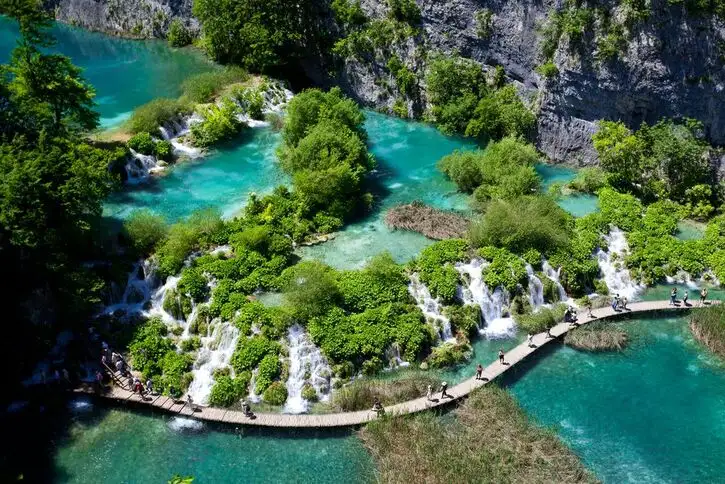
Included Meal(s): Breakfast and Dinner - Day 3:Zagreb - Plitvice National Park HikeNot every day on this journey belongs to empire. Plitvice is the exception — a UNESCO World Heritage landscape shaped entirely by water, gravity, limestone, and time, with no interest in human history whatsoever. It is also one of the most visually arresting places in Europe, and no amount of advance knowledge quite prepares you for the first view of sixteen terraced lakes cascading through forested karst terrain in colours that seem implausible until you're standing above them.
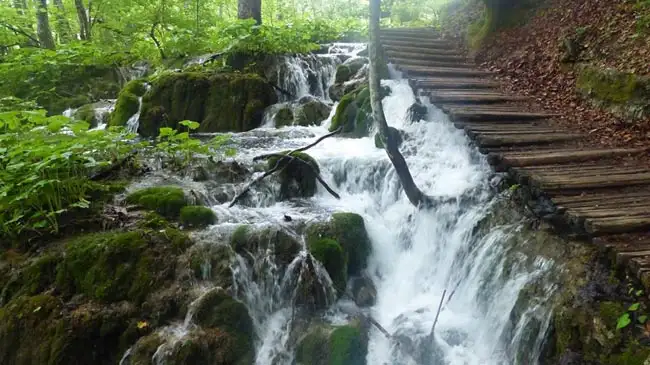
The lakes run turquoise, emerald, and deep blue depending on depth, mineral content, and the angle of light — all a consequence of the calcium carbonate that dissolves from the limestone and resettles as travertine barriers, continuously reforming the landscape in slow motion over 10,000 years. The barriers grow, shift, and occasionally collapse, rearranging waterfalls and lake boundaries without consulting anyone. Wooden walkways carry us through the lower and upper lakes, sometimes directly over cascades, sometimes at the forest edge above them, the sound of falling water constant throughout.
A short boat crossing on the largest lake completes the circuit. The park supports deer, wolves, wildcats, wild boar, and over 160 bird species — worth watching for as we walk. The lakes and local menus are both full of trout, which tells you something about the water quality.
This is the tour's one day of pure nature before the coastal layers of empire begin tomorrow at Paklenica and Split. It earns its place in the itinerary precisely because it offers no historical context whatsoever — just the unambiguous argument that this part of the world is worth visiting for its landscape alone.
Walk Summary: 4 hours, approximately 12 km/7.5 mi, flat wooden walkways and forest paths, minimal elevation change.
Overnight in Plitvice.
Included Meal(s): Breakfast and Dinner - Day 4:Plitvice - Paklenica National Park Hike - SplitPaklenica earns its reputation the moment you step past the entrance: a limestone canyon carved deep enough that its walls block the sun for half the day, with cliffs climbers travel across Europe to attempt. We take the Pjeskarica trail, an educational path that follows the old mill stream rather than the steep switchback route toward the mountain lodge, staying close to the canyon floor as it winds through shaded forest toward the Paklaric viewpoint. Interpretive signs along the way cover the karst geology that shaped the gorge - the same drowned, fractured Dinaric limestone underlying this entire coast - and the black pine forest that's colonized it since.
The path climbs gently to the Paklaric viewpoint, a modest fortress ruin with a clear sightline down the length of the gorge, before looping back along the stream to the entrance - no sustained ascent, no scrambling, just canyon walls rising higher the deeper you walk. Anica Kuk, the sheer 300-metre face that gives Paklenica its climbing-world reputation, is visible from several points along the route, usually with at least one small figure inching up it.
From here the drive continues south to Split - ancient Spalato - where the tour's Roman thread reasserts itself dramatically. Emperor Diocletian built his retirement palace here around 300 CE, so massive that an entire medieval city grew up inside its walls and never left. Split's historic centre isn't adjacent to a Roman palace - it IS one, corridors now streets, cellars now restaurants, its mausoleum converted into a cathedral by early Christians repurposing a pagan emperor's tomb. We arrive in time to absorb that before dinner, with a brief orientation walk through the palace walls.
Walk Summary: 1-1.5 hours, approximately 3.9 km/2.4 mi loop, canyon floor and streamside path, gentle grade, some uneven rock underfoot.
Overnight in Split.
Included Meal(s): Breakfast and Dinner - Day 5:Split Touring - Ferry to Brac Island & Hermitage of Blaca HikeA morning walking tour of Split's historic centre earns its time. Diocletian's palace is not a ruin to be viewed from a respectful distance but a living urban fabric — medieval houses built into Roman walls, restaurants occupying imperial cellars, a cathedral in the mausoleum Diocletian built for himself, which early Christians converted with considerable satisfaction. The peristyle courtyard at the palace's heart still functions as a public square, its Roman columns framing a space that has been in continuous use for seventeen centuries.
We ferry to Brac, the highest and third largest island in the Adriatic, for today's most distinctive excursion. A coastal boat ride past Croatia's famous Golden Horn beach — Zlatni Rat, whose distinctive spit shifts direction with the current — continues to a remote bay where a trail climbs 45 minutes to the Hermitage of Blaca. Stone structures cling to a cliff above a dry ravine, established in the 16th century by monks fleeing Ottoman expansion on the mainland. What began as a cave refuge became, over three centuries, a complex containing a church, school, astronomical observatory, and library. The last monk to inhabit Blaca, Niko Milicevic, left behind a collection of ancient books, clocks, and astronomical instruments that now constitute one of the Adriatic's more unlikely museums — reached only by boat and foot, exactly as it always was.
The return boat passes Zlatni Rat again. Free time in Bol before dinner.
Walk Summary: 2 hours, 3 km/1.9 mi, coastal trail with steady ascent, 250 m/820 ft elevation gain/loss.
Overnight on Brac.
Included Meal(s): Breakfast and Dinner - Day 6:Brac Island - Ferry to Hvar Island: Walking TourWe ferry to Hvar — the Dalmatian island that receives more sunshine hours annually than anywhere else in Croatia, a fact the lavender fields, vineyards, and bleached limestone make immediately credible. The Greeks arrived in the 4th century BCE, establishing a settlement at what is now Stari Grad. Venice followed in the 13th century and ruled for three and a half centuries, long enough to leave a cathedral, an arsenal, a fortress, and the particular urban confidence of a place that knew it mattered to the republic's Adriatic strategy.
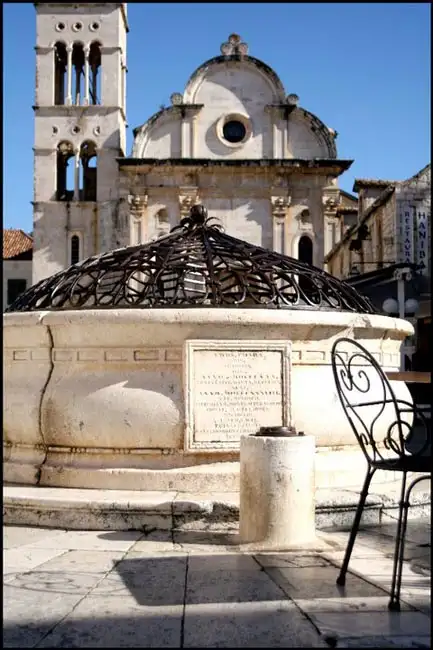
Our walking tour moves through narrow lanes to the 15th-century Franciscan Monastery, whose Renaissance cloister houses a collection of lace, manuscripts, and paintings accumulated across five centuries of island life. The monks have been here through Venetian rule, Ottoman raids, Napoleonic occupation, Habsburg administration, Yugoslav federation, and Croatian independence — an institutional continuity that the cloister's quiet makes tangible. St. Stephen's Cathedral anchors the main piazza, and the Venetian Arsenal overlooks the waterfront with the practical elegance Venice brought to everything it built for military purpose.
We climb to the Venetian fortress above the town, where the full strategic logic of Hvar's position becomes visible — the harbour below, the channels between islands spread to the horizon, the open Adriatic beyond. Venice built here because this view told you everything you needed to know about what was moving through your waters and when.
Walk Summary: 2-3 hours, 4-5 km/2.5-3.1 mi, town lanes and fortress ascent, 150 m/492 ft elevation gain.
Overnight on Hvar.
Included Meal(s): Breakfast and Dinner - Day 7:Hvar & Sveta Nedelja HikeHvar's interior rewards the effort of leaving the harbour - the same drowned ridgeline that shaped every island on this journey, its karst landscape bare and demanding above the coastal villages, dry-stone walls marking vineyard boundaries worked since Greek colonisation in the 4th century BCE.
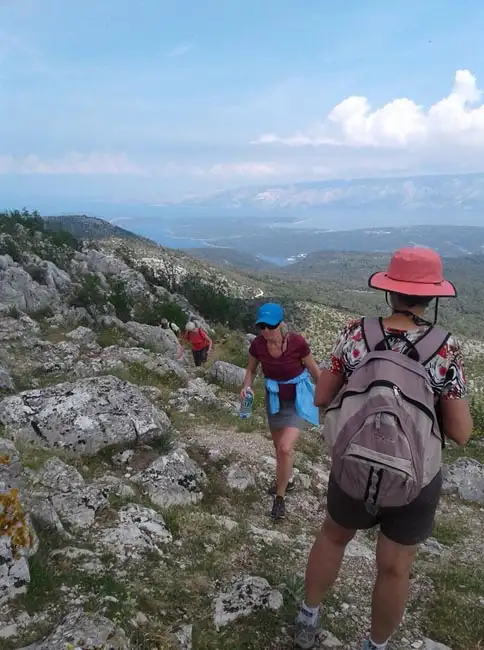
Today's excursion takes one of two forms, decided on the day by your Tour Leader, who by this point in the trip has a good read on the group's fitness, appetite for a challenge, and the morning's weather. The primary option drives to Sveta Nedelja and climbs on foot to the island's highest terrain, where a cave monastery occupies a position of improbable drama above the Adriatic's crumbling limestone underfoot, viewpoints taking in the full sweep of the Dalmatian channel, islands layered against islands toward Italy.
The alternative is a gentler coastal walk directly from Hvar town, tracing the shoreline past small coves and konobas with sea views throughout and only modest elevation change.
Both options return to Hvar town by early afternoon, leaving the harbour, the town lanes, or simply an unhurried afternoon free either way.
NOTE: Please treat today's activity as tentative until confirmed on site. Your Tour Leader will decide between the two based on group interest, ability, and conditions that morning.
Walk Summary: Option A (Sveta Nedelja): 3 hours, 6 km/3.7 mi, rocky limestone ascent, 550 m/1804 ft elevation gain. Option B (coastal walk): 1.5-2 hours, 4-5 km/2.5-3.1 mi, coastal path with modest elevation change.
Overnight on Hvar.
Included Meal(s): Breakfast and Dinner - Day 8:Hvar - Ferry to Korcula IslandWe ferry to Korcula — Black Corfu, the Greeks called it, for the dark density of its forests when they arrived in the 4th century BCE. The forests are largely gone now, replaced by olive groves and vineyards that have been cultivated on this island since antiquity, but the medieval town the Venetians built on the northeastern tip remains one of the Adriatic's most intact urban achievements — and one of its most intelligently designed.
The street plan is a piece of deliberate medieval engineering: a fishbone pattern where north-south streets allowed defenders to reach the walls and towers quickly, while east-west lanes channelled the cool maestral winds and deflected the force of the cold bora. Venice left its mark in the Cathedral of St. Mark, squeezed with characteristic Venetian confidence into a small square, and in the town walls and towers that kept Ottoman raiding parties at bay for three centuries. A narrow lane nearby contains the modest house where Marco Polo was reportedly born — plausible given that Korcula was Venetian when he lived, though the Genoese who captured him might dispute the claim with some feeling.
We tour the Treasury and Town Museum, whose exhibitions trace the island from prehistoric settlement through Illyrian, Greek, Roman, and Venetian occupation to the present — the full imperial sequence of this coastline compressed into a single collection. Lunch together this afternoon, then the rest of the day is yours.
Walk Summary: 1-2 hours, 2-3 km/1.2-1.9 mi, town lanes and harbour front, minimal elevation change.
Overnight on Korcula.
Included Meal(s): Breakfast and Lunch - Day 9:Korcula: Walking 'Napoleon's Road'Napoleon held this coastline briefly — from 1806 to 1813, long enough to widen existing paths across the Dalmatian islands into supply routes for his Illyrian Provinces. On Korcula, one such route became Napoleon's Road, though the path it follows predates him by centuries and the stone walls, prehistoric cave, and dry-stone huts it passes have nothing to do with French imperial ambition. Napoleon is simply the most recent of many hands that have touched this ground — and the one whose name stuck to a path he merely improved.
Our walk follows the route inland toward Pupnat, a village of around 500 people in Korcula's eastern interior whose name derives from the Latin for vine leaves — an etymology that tells you everything about what this landscape has been used for since the Illyrians settled here. The Illyrian presence is literal: graves have been found at Mocila near the village, and the settlement's inland position — invisible from the sea — was deliberate, chosen to avoid the pirates who worked these waters before Venice brought its particular brand of maritime order to the Adriatic.
Stone kucice — traditional dry-stone huts built for sheltering livestock — dot the fields between vineyard walls, their construction techniques unchanged since medieval times. The prehistoric cave at Jakasova Spila marks a human presence on this island that predates every empire on this journey by millennia. Small churches punctuate the route through Zrnovo, each one a marker of the dense rural community this interior once sustained.
We return to Korcula by vehicle, afternoon free.
Walk Summary: 4 hours, 8-10 km/5-6.2 mi, stone-paved rural paths and vineyard tracks, 100 m/328 ft elevation change.
Overnight on Korcula.
Included Meal(s): Breakfast and Dinner - Day 10:Korcula - Ferry to Mainland - Drive to Mostar, Bosnia and Herzegovina via PoticeljWe ferry to the mainland and drive inland, crossing into Bosnia-Herzegovina and a different imperial layer entirely. The Ottoman Empire held this territory for over four centuries — longer than Venice held the Dalmatian coast — and the evidence is immediate and unmistakeable: minarets above river valleys, oriental bazaar lanes, the particular geometry of a culture that organised urban space around the mosque and the caravanserai rather than the cathedral and the palace.
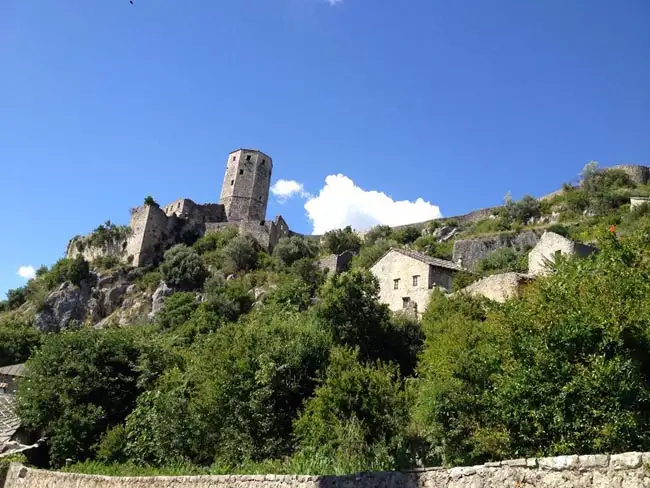
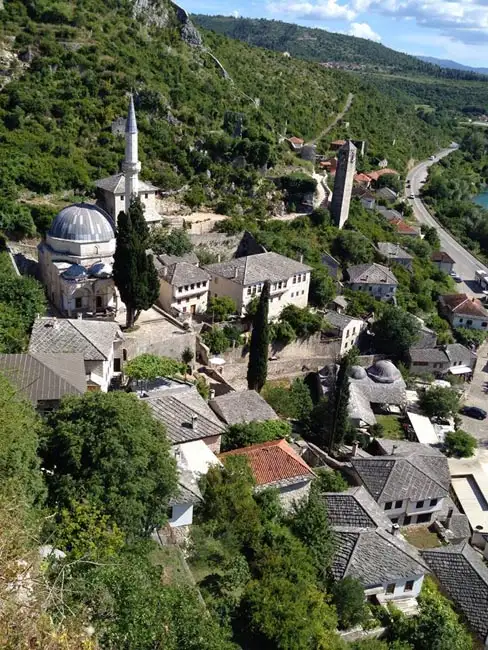
We pause at Pocitelj, a UNESCO-listed town whose Ottoman architecture and silo-shaped Sahat Kula fortress cling dramatically to a hillside above the Neretva River. The longest-running art colony in southeast Europe operates here, in buildings that survived the 1990s war intact when much around them did not — a resilience that feels appropriate in a town that has been inhabited continuously since the 15th century.
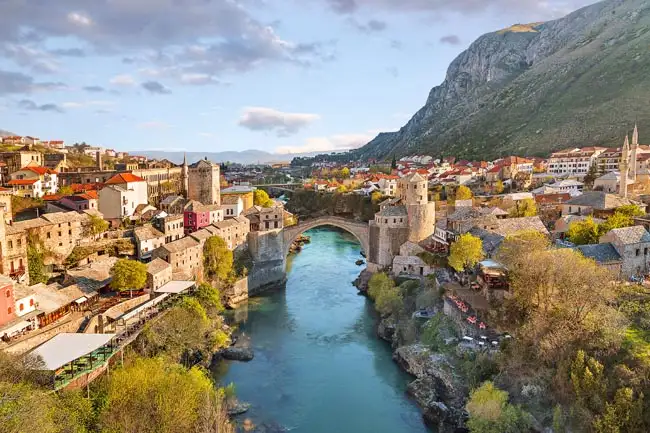
Mostar's Old Bridge — Stari Most — was built by the Ottomans in 1566, destroyed by artillery fire in November 1993, and reconstructed from original limestone blocks recovered from the river in 2004. The bridge is a symbol of reconciliation not because anyone decided it should be, but because its destruction was so deliberate and its rebuilding so determined. Our walking tour includes the Ottoman old town, whose cobblestone lanes and copper workshop fronts constitute one of the most evocative bazaar environments outside Turkiye, and the Museum of War and Genocide Victims — a poignant and necessary memorial to the 1992-1995 Bosnian War that this city lived through at devastatingly close range.
Walk Summary: 2-3 hours, 3-4 km/1.9-2.5 mi, cobblestone old town lanes, minimal elevation change.
Overnight in Mostar.
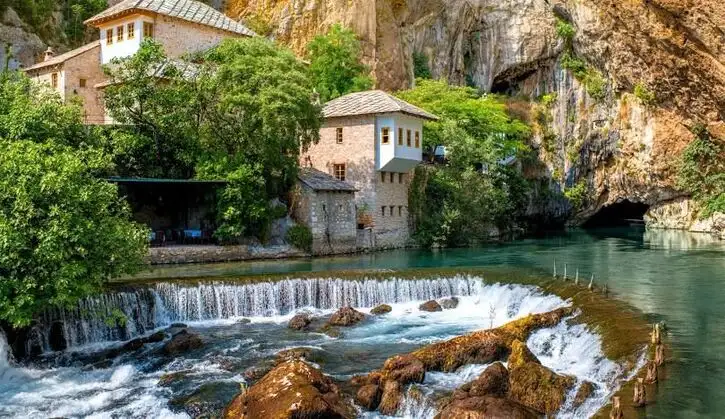
Included Meal(s): Breakfast and Dinner - Day 11:Mostar - Blagaj - Trebinje, Herzegovina - Kotor, MontrenegroThe Buna Spring emerges from a 200 m cliff face at a rate and temperature that remain essentially constant year-round, as if the mountain is indifferent to seasons. The volume of water -- tens of thousands of litres per second -- comes from an underground river system whose source was only mapped in the 20th century. The Ottomans recognised something extraordinary in this place, and Sultan Suleiman ordered a Dervish tekija built directly beside the spring in the 16th century. The resulting structure, half-suspended over the river where it emerges from the cliff, is one of Bosnia's most quietly extraordinary places -- simultaneously a working religious building and a geographic phenomenon.
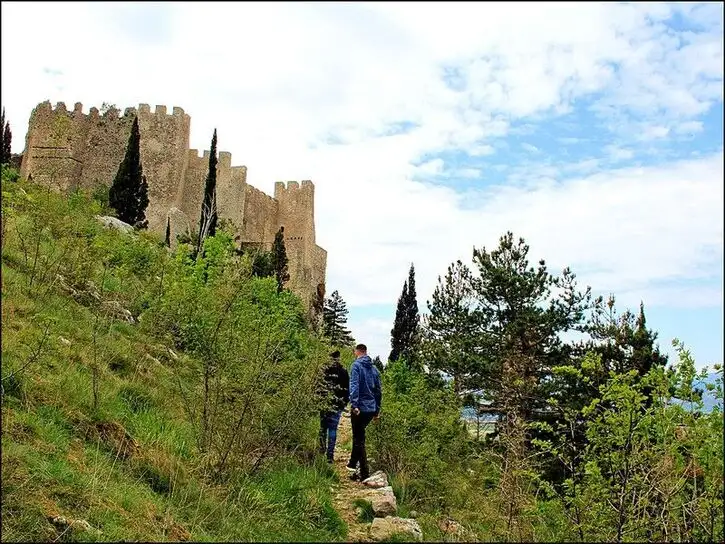
Above the tekija, Stjepan Grad fortress clings to the cliff face, its ruined walls explaining at a glance why every culture that passed through this valley built something defensive here. We take it in from below, over coffee or a cold drink at one of the riverside konobas, rather than the goat path that climbs to it -- steep, narrow, and time-consuming enough that reaching Kotor at a reasonable hour wouldn't allow for both.
We continue south through Herzegovina to Trebinje, where the Tvrdos Monastery has been producing wine since ancient times. The native Zilavka and Vranac grapes grow in conditions warm and dry enough to have attracted viticulture since the Greeks -- an old epic folk poem mentions the monastery cellars filled with wine. We taste before crossing the border into Montenegro.
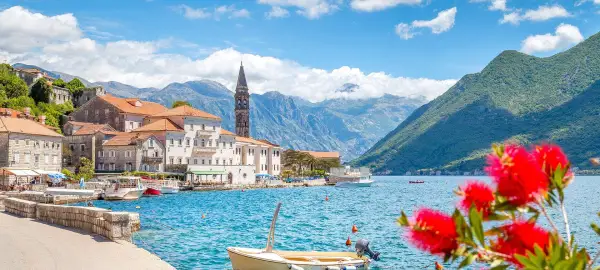
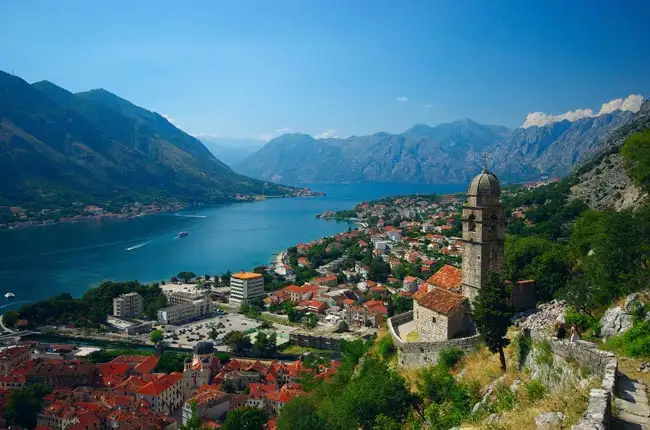
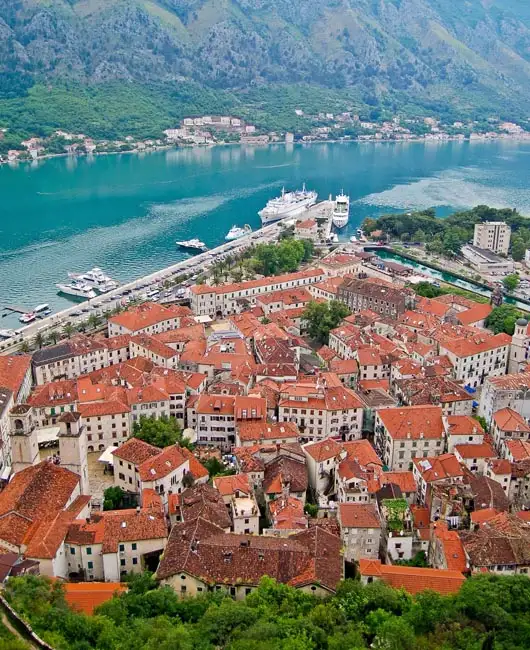
The final hours of driving parallel the Bay of Kotor, the Mediterranean's only fjord -- 32 km/20 mi of water cut deep into the Orjen and Lovcen mountains, the scale arriving gradually as bay opens into inner bay and Kotor's medieval walls appear at the far end.
Overnight in Kotor.
Included Meal(s): Breakfast and Dinner - Day 12:Kotor: Walking TourKotor's medieval walls climb from the harbour to the Fortress of St. Ivan at 280 m/919 ft above the bay — 1,350 steps of ascent through towers, chapels, and crumbling ramparts that the Venetians built to defend what they rightly considered one of the Adriatic's most valuable possessions. The Roman layer is here too: Kotor was Illyrian before it was Roman, Byzantine before it was Venetian, briefly French and Austrian before becoming Yugoslav, and eventually Montenegrin. The walls absorbed all of it without particular comment.
Our morning walking tour covers the Cathedral of St. Tryphon, whose treasury of gold and silver reliquaries, 14th-century frescoes, and Romanesque-Gothic facade represents the accumulated devotion of a city continuously inhabited since the 3rd century BCE. The most representative works of Kotor's medieval craftsmen are gathered here — the collection is genuinely unusual for a city of this size, reflecting centuries of maritime wealth flowing through a protected harbour that every empire wanted.
The afternoon offers the optional wall climb — steep, uneven, and entirely worthwhile. From the fortress, the inner bay spreads in every direction, mountains dropping sheer to the water, the town's red rooftops immediately below. The only other creatures up here with any regularity are goats, and they have no opinion on the views. The scramble among the crumbling upper ruins offers a freedom rarely found in more litigious countries — explore at your own pace and risk.
Walk Summary: Morning town tour 1-2 hours, 2 km/1.2 mi. Optional wall climb: 3 hours, 530 m/1738 ft elevation gain/loss.
Overnight in Kotor.
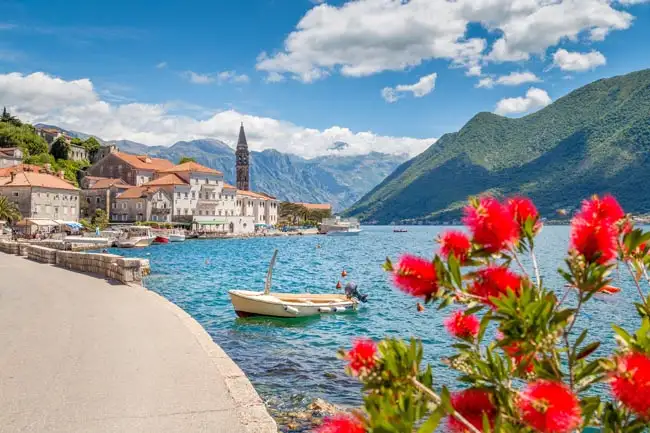
Included Meal(s): Breakfast and Dinner - Day 13:Kotor - Perast, Montenegro - Dubrovnik, CroatiaPerast is a small Venetian town on the inner bay — baroque palaces facing the water, bell towers rising above them with the particular confidence of a settlement that prospered from its position on the Adriatic trade routes. Just offshore sits Our Lady of the Rock: a chapel built on the only artificially constructed island in the Adriatic. The island was created stone by stone after two sailors reportedly found a painting of the Virgin Mary on a submerged rock in 1452, each passing ship thereafter obligated to throw a stone into the water until the accumulation broke the surface. We reach it by small boat, the chapel interior covered floor to ceiling in votive tablets left by sailors who survived storms they had no right to survive — a room full of gratitude expressed in silver.
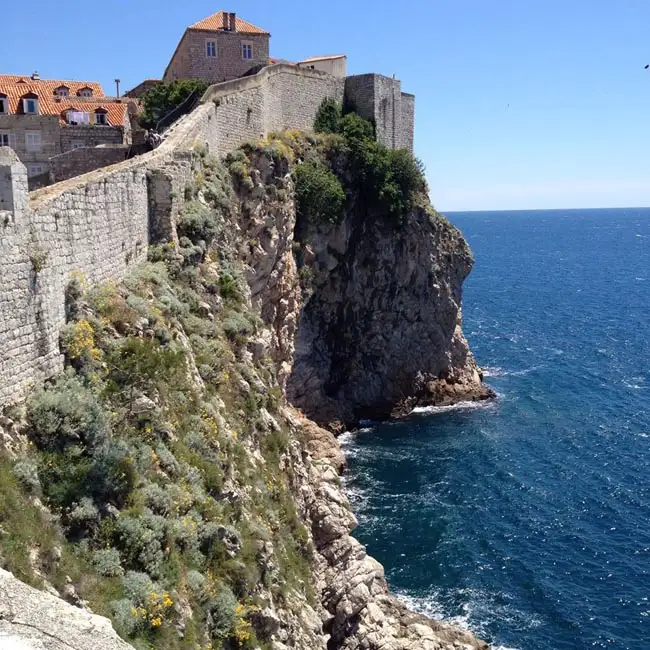
We cross back into Croatia and drive south along the coast toward Dubrovnik — ancient Ragusa — whose walls appear on the clifftops above the sea with the particular authority of a city that knew exactly what it was. The Venetian republic dominated this coastline for centuries. Ragusa simply declined to be dominated, maintaining its independence as a republic from 1358 until Napoleon ended it in 1806, trading with everyone, offending no one, and building walls thick enough to make conquest more trouble than it was worth.
On arrival we walk the city walls — nearly 2 km/1.25 mi of circuit above the marble streets, the Minceta and Revelin towers, and the Adriatic beyond. The walls are the introduction. Tomorrow the city itself.
Walk Summary: 2 hours, 2 km/1.2 mi wall circuit, moderate ascent and descent throughout.
Overnight in Dubrovnik.
Included Meal(s): Breakfast and Dinner - Day 14:Dubrovnik: City TourThe empires that built this coastline — Roman, Byzantine, Venetian, Ottoman, Austro-Hungarian — each held what they could for as long as they could and eventually lost their grip. Ragusa never did. For nearly five centuries this small republic navigated between Venice and the Ottomans, between competing great powers and shifting trade alliances, through plague, through the catastrophic earthquake of 1667 that destroyed much of the city, and through the 1991-92 bombardment that rained over 2,000 shells onto its rooftops. Each time, Ragusa rebuilt. The marble streets and limestone walls you walk today are a testament to a city that understood its own value and refused, repeatedly, to accept that it was finished.
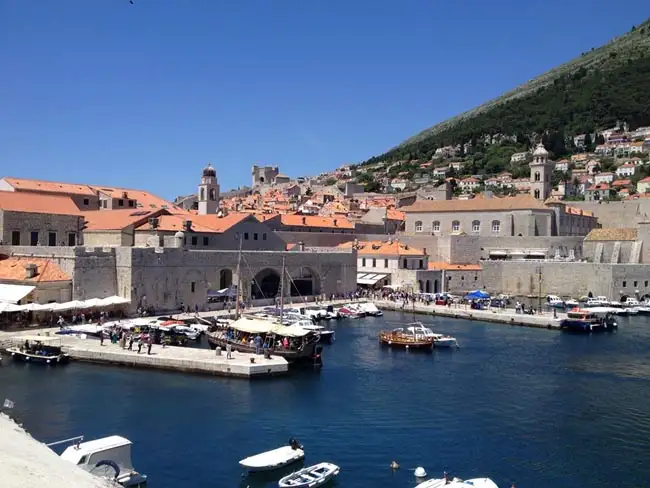
Our walking tour of the historic centre covers the Stradun — the marble-paved main street rebuilt after the 1667 earthquake — and the network of lanes, palaces, churches, and monasteries that constitute one of Europe's most complete medieval urban environments. The Rector's Palace housed Ragusa's rotating one-month governors, a deliberate system designed to prevent the accumulation of personal power. The Sponza Palace served as customs house, bank, and mint. The Franciscan Monastery pharmacy has been operating since 1317, making it one of the oldest in Europe and still dispensing today.
The afternoon is yours — for the old town's quieter lanes away from the Stradun, the harbour, the cable car to Mount Srd above the city, or simply for sitting somewhere that two thousand years of history have conspired to make extraordinarily beautiful.
Overnight in Dubrovnik.
Included Meal(s): Breakfast and Dinner - Day 15:DepartureWe depart Dubrovnik, leaving a coastline where the landscape and the history turned out to be the same story all along - every wall telling you who held it, when, and what it cost them.
Sretan put. Bon voyage.
Included Meal(s): Breakfast
Countries Visited: Bosnia and Herzegovina, Croatia and Montenegro
*The red tour trail on the map does not represent the actual travel path.
Book This Tour
- Final payment: Due 90 days prior to departure.
- Deposit: A non-refundable $500 CAD Deposit is required at booking.
- Optional Single Supplement: $1940 CAD (number of singles limited).
(View options forsingle travellers) - Transfering Tour or Date: Transferring to another tour or tour date is only permissible outside of 120 days prior to departure and is subject to a $100 CAD change fee.
(Read our cancellation policy)
Prices below are per person, twin-sharing costs in Canadian Dollars (CAD). Pricing does not include airfare to/from the tour and any applicable taxes.
Frequently Asked Questions
- What is the maximum number of participants on a trip?Most of our tours carry a maximum of 18 participants; some tours (ie hiking tours) top out at 16. In the event that we do not achieve our minimum complement by our 90-day deadline, we may offer group members the option of paying a "small-group surcharge" as an alternative to cancellation. If all group members agree, we will confirm the trip at existing numbers; this surcharge is refundable in the event that we ultimately achieve our regular minimum. If the small group surcharge is not accepted, we will offer a refund of your deposit or a different trip of your choice.
- Can I extend my tour either at the beginning or end? What about stopovers?Yes, you can extend your tour either at the beginning or the end and we can book accommodation in our tour hotel. Stopovers are often permitted, depending on air routing. Stopovers usually carry a "stopover" fee levied by the airline.
- How do I make a reservation? How and when do I pay?The easiest way to make a reservation is via our website; during office hours, you are also more than welcome to contact us by telephone.
A non-refundable deposit is payable at the time of booking; if a reservation is made within 90 days, full payment is required. Some trips require a larger deposit. If international airline bookings require a non-refundable payment in order to secure space or the lowest available fare, we will require an increase in deposit equal to the cost of the ticket(s).
Early enrolment is always encouraged as group size is limited and some trips require greater preparation time.
Once we have received your deposit, we will confirm your space and send you a confirmation package containing your trip itinerary, any visa/travel permit related documents, invoice, clothing and equipment recommendations, general information on your destination(s), and forms for you to complete, sign and return to us. Your air e-tickets (if applicable), final hotel list, final trip itinerary, and instructions on how to join your tour, will be sent approximately 2-3 weeks prior to departure. - What about cancellations, refunds, and transfers?Please review our cancellation policy page for details.
- I am a single who prefers my own room. What is a single supplement?All of our tours have a single supplement for those who want to be guaranteed their own room at each location.
This supplement is a reflection of the fact that most hotels around the world do not discount the regular twin-share rate for a room by 50% for only one person occupying a room. Most hotels will give a break on the price, but usually in the range of 25-30% of the twin-share rate. This difference, multiplied by each night, amounts to the single supplement.
The conventional amount can also vary from country to country and some destinations are more expensive than others for single occupancy. In order to be "single friendly," the supplements we apply are not a profit centre for us and we do our best to keep them as reasonable as possible.
On most tours we limit the number of singles available, not to be punitive, but rather because many hotels allow for only a limited number of singles; some smaller hotels at remote locations also have a limited number of single rooms available.
Please note that most single rooms around the world are smaller than twin-share rooms and will likely have only one bed. - Do you have a shared accommodation program?Yes! If you are single traveller and are willing to share, we will do our best to pair you with a same-gender roommate. Please note that should we fail to pair you, we will absorb the single supplement fee and you will default to a single room at no extra charge.