Tourcode: JP10
- History
- Off The Beaten Path
- Rail
- Overview
- Info & Inclusions
- Itinerary
- Map & Hotels
- Photos
- Dates & Prices
- 14 Days
- Max Group Size 18
- Sapporo city touring including the Sapporo Beer Museum
- Ainu cultural experiences at Kawamura Kaneto Ainu Museum
- Scenic countryside touring in Furano and Biei
- Riding the Asahidake Ropeway into Daisetsuzan National Park
- Glass-bottom boat on Lake Shikotsu
- Exploring Jigokudani's geothermal wonders
- Hakodate's historic waterfront, Motomachi district and evening ropeway view
- Riding the Shinkansen bullet train
- Oirase Gorge walk and Lake Towada boat ride
- The Edo-Tokyo Museum and Asakusa's Senso-ji temple
- Singles friendly (view options for single travellers)
Explore vibrant Sapporo before venturing into Hokkaido's volcanic interior — the Blue Pond at Biei, the Asahidake Ropeway into Daisetsuzan National Park, the geothermal drama of Jigokudani, and the clarity of Lake Shikotsu seen from a glass-bottom boat. Learn the history and traditions of the Ainu people, rejuvenate at an onsen resort, and discover Hakodate's extraordinary layered history from its star-shaped fortress to its evening ropeway view over the harbour.
The Shinkansen carries us beneath the Tsugaru Strait to Honshu, where the ancient Jomon settlement at Sannai-Maruyama and the spectacular Nebuta Museum anchor our time in Aomori. A walk through the autumn forest of Oirase Gorge and a boat ride on the caldera waters of Lake Towada complete Tohoku before we board the bullet train for Tokyo.
This journey reveals a Japan that is authentic, unhurried, and full of character — ideal for travellers seeking something well beyond the well-worn path.
- MealsSavour authentic flavours with included daily breakfasts and dinners at handpicked local restaurants—immersing you in local cuisine without worrying about reservations or budgets.
- Transport & Logistics
Private air-conditioned coaches and included internal ferries and flights—ensuring hassle-free travel so you can focus entirely on the discoveries ahead.
"Adventures Abroad tour leader's management and guest services managed the tour with great skill and dedication. The tour leader was on top of every move and transfer. We have not experienced any issues with logistics and had a great time."
~ JULIA O"The tour leader did an excellent job coordinating some difficult travel logistics, power outage issues and resolving problems and dealing with guests who had unrealistic expectations."
~ CYNTHIA COLLINS - Expert Guidance
Unlock insider secrets at every landmark with your full-time Tour Leader and expert local guides , all gratuities covered—no hidden tipping surprises—so you immerse fully in your destination's stories, worry-free. (Except for the tips to your tour leader at the end of your tour.)
"Amazing tour guide. Our tour guide was very well organized, Her passion, knowledge, and enthusiasm completely transformed the travel experience into something truly unforgettable..."
~ MELANIE LEMAIRE"Highly recommend every trip with Adventures Abroad. It's a well organized and well thought out adventure. The tour leaders are friendly, knowledgeable and experienced professionals. Highly recommend this company."
~ SUSAN WALL - Sightseeing & EntrancesAll entrance fees for sites visited as per the itinerary—no hidden costs—so you can explore ancient ruins and excursions with complete peace of mind.
- AccommodationsUnwind in clean, well-located 3 to 4-star hotels with private en suite facilities—handpicked for comfort and convenience after each day's discoveries—so you can rest easy knowing your stay supports the real adventure, not steals the spotlight.
- Small Group
Discover the world in small groups of up to 18 travellers plus your expert Tour Leader—unlocking spontaneity, off-the-beaten-path adventures, and genuine connections at a relaxed pace, free from crowds.
"Looking Forward to My Next Adventure The best feature of the Adventures tour was the small size that allowed the group to quickly load up, let everyone get acquainted within the first 24 hours, capitalize on unplanned surprises along..."
~ PHILIP BLENSKI"Good value for a great time I have traveled with Adventures Abroad for over 20 years now. Well thought out, interesting itineraries and the other travelers congenial and friendly. The price always seems fair and overall a..."
~ Trusted Customer - Airport Transfers For Land & Air CustomersWe handle hassle-free airport transfers for all our land and air tour customers—plus early arrivals or late departures when you book extra hotel nights directly with us for added peace of mind.
- International airfare to/from the tour
- Tour Leader gratuities, lunches, drinks, personal items (phone, laundry, etc), and any excursions referenced as 'optional'
- Optional trip cancellation insurance (please refer to "Resources" tab for more info).
- Seasonality and Weather:
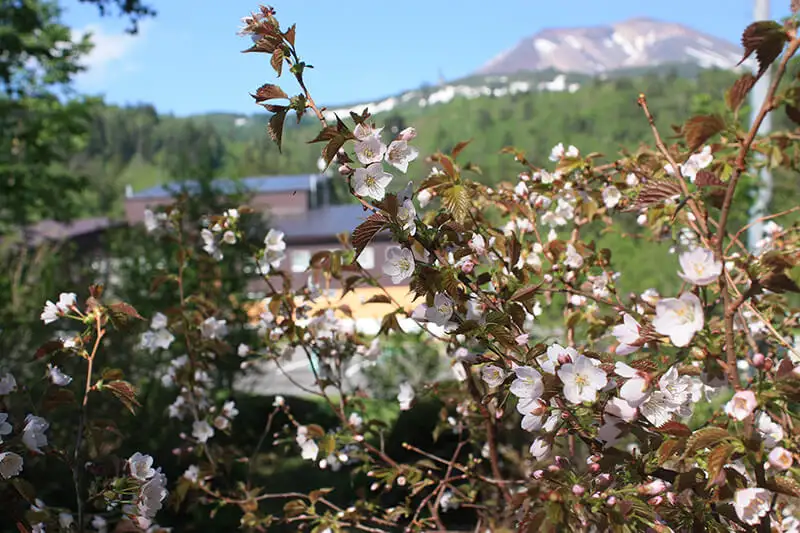
Spring departures in early May catch Hokkaido at a quietly beautiful moment — the landscape emerging from winter, fresh greens appearing across the farms and hillsides, and cherry blossoms that linger later here than anywhere else in Japan. Timing varies year to year, but there is every reason to be hopeful. The air is crisp and the crowds are well ahead of the summer peak.
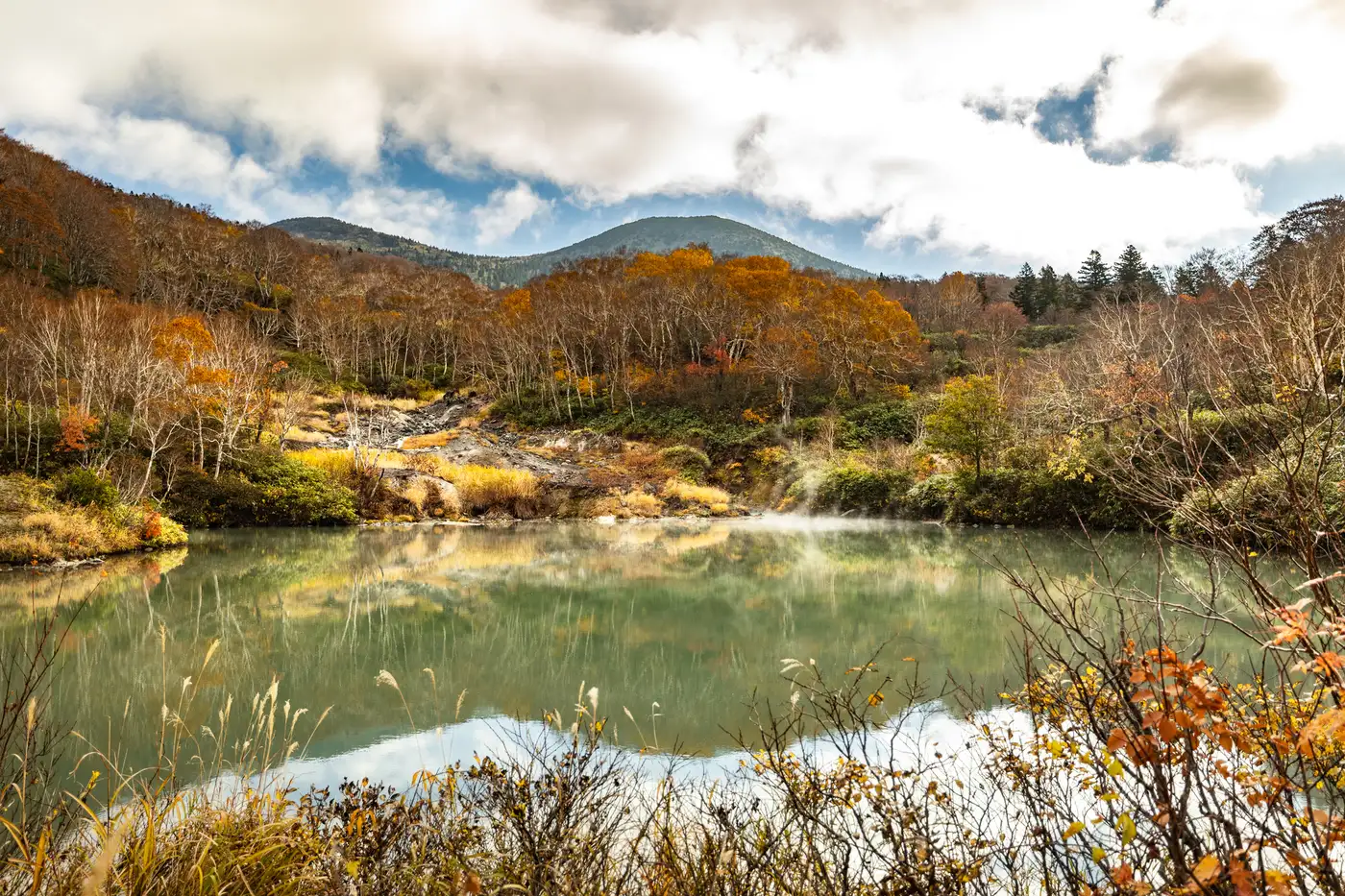
Autumn departures in October arrive into one of the finest colour seasons in Asia. Hokkaido's maples, birches, and larches turn early and dramatically, cascading down from the alpine zones through the valleys over the course of the month. By the time we reach Tohoku the colour is deepening further, and the Oirase Gorge in mid-October can be genuinely breathtaking. The days are cool and clear, the light is low and golden, and the pace of travel feels perfectly suited to the landscape. - Transport and Travel Conditions:
As our only "Level 1" Japan tour, this program is designed to be easy-going and reasonably accessible, with a focus on cultural immersion and scenic exploration. Most of the tour is supported by a bus, so you won't need to worry about walking long distances or strenuous travel. You'll enjoy short walks at sites, farms, and towns/cities, with plenty of opportunities to take in the local atmosphere. You'll need to be steady on your feet and be prepared to spend several hours a day standing and walking at a leisurely pace. Our program is busy with lots of moving around and some full days of travel and sightseeing. Please note that smaller hotels may not have porters, but they all have elevators.
Evenings often feature dinners at local restaurants, which are typically within a short walk from our accommodations (or located in-house).
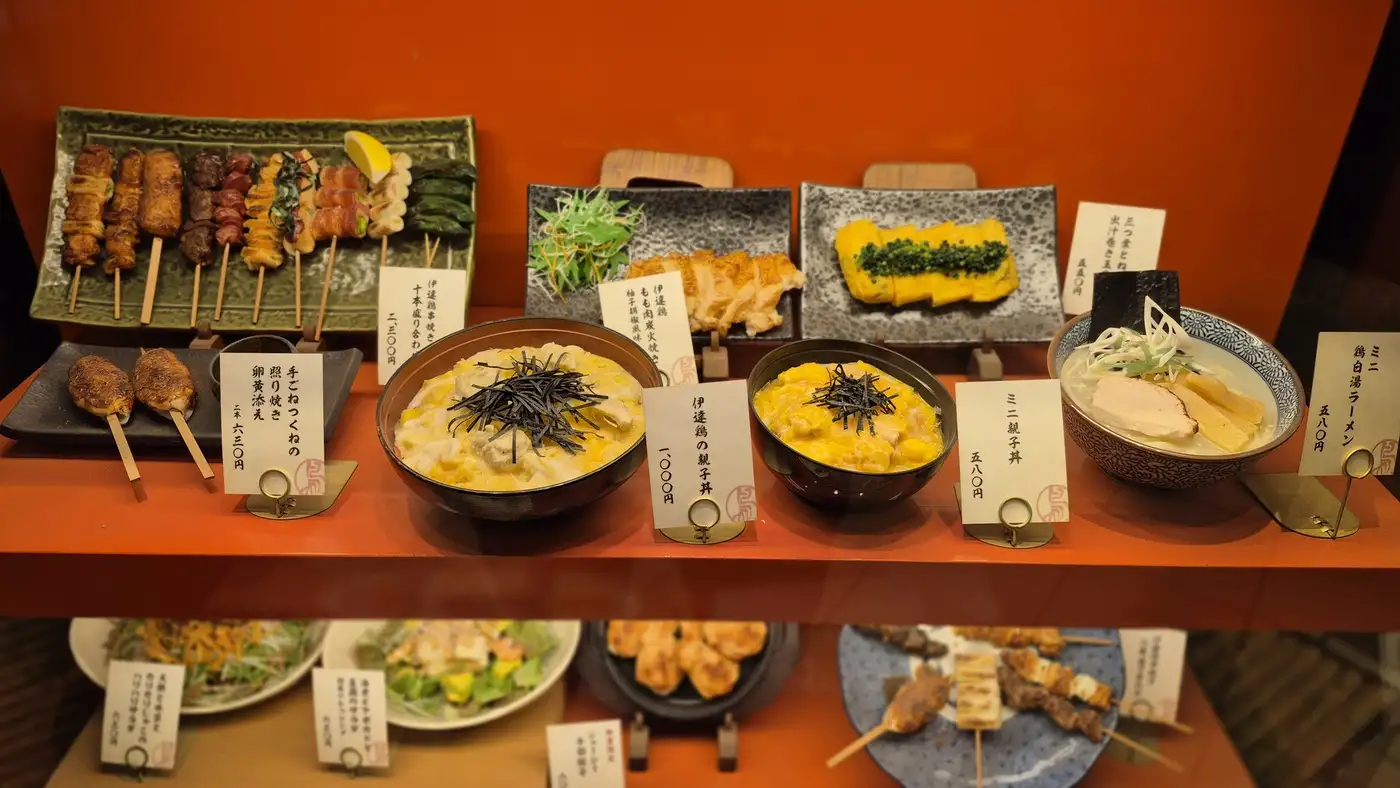
For our two train journey, we will arrange to have your main piece of luggage forwarded to our next destination; all you will need is a day bag while getting on/off trains (stations are well-equipped with escalators/elevators).A Note on Dining in Japan: Experiencing Japanese cuisine is an essential part of our journey, with most dinners planned in advance to showcase regional specialties and local culinary traditions. Seafood — cooked and raw — is central to Japanese food culture and features prominently throughout.
Our dinners are typically served as set courses prepared fresh from advance reservations, which limits the ability to adjust individual dishes on the spot. Substitutions are not always possible, and avoiding seafood entirely can significantly restrict dining options, particularly in traditional or remote settings.
If you have specific medical or religious dietary restrictions, please let us know well in advance so we can explore what's possible.
Am I suitable for this tour? Please refer to our self-assessment form - Activity Level: 1
No particular physical activity is involved other than town/city walks and short walks to dinners and sites of interest, some of which are large.
To learn more about the Activity levels, please visit our tour styles page. - Accommodation:
All hotels are centrally/pleasantly-located, air-conditioned, 4-star standard with private bath facilities. Our onsen resort experience combines the hospitality Japan is famous for, in a setting designed for comfort and ease. Single rooms are limited in number and likely smaller than twins.
Porters are generally available (see 'Inclusions')
Note: Japanese hotel classifications may differ from international star ratings, as rating systems vary by country and use different criteria to assess accommodations. A property's star rating can vary across booking platforms depending on their specific evaluation standards.
For more information, click on the "Map & Hotels" tab - Staff and Support:
Full-time Adventures Abroad Tour Leader plus local guide support. - Group Size:
Maximum 18 plus Tour Leader
- Day 1:Arrival in SapporoToday we arrive in Sapporo, the largest city on the northern Japanese island of Hokkaido — a place shaped by vast wilderness, volcanic landscapes, fertile farmland, and a cultural heritage unlike anywhere else in Japan. Hokkaido was the last of Japan's main islands to be settled in the modern era, and that relative youth gives Sapporo an energy that is open, confident, and refreshingly unhurried.
The city is a vibrant metropolis with a practical elegance — broad avenues laid out on a grid, parks at its centre, mountains visible on the horizon. As the host of the 1972 Winter Olympics, Sapporo has long drawn visitors for its snow and outdoor life, but it rewards those who look deeper: a rich food culture rooted in dairy, seafood, and ramen; a craft brewing tradition dating to the Meiji era; and a warmth of welcome that sets the tone for the days ahead.
We settle in this evening and prepare for two weeks of discovery through Japan's remarkable north.
Overnight in Sapporo. 
Included Meal(s): Dinner, if required - Day 2:Sapporo City TouringThis morning we explore the heart of Sapporo at a comfortable pace, beginning at Odori Park — the long green spine that divides the city centre. The park's elms and ginkgos offer colour in both spring and autumn, and those joining us in early May may find cherry blossoms still lingering along its length. The Sapporo TV Tower frames the view to the east.
We then visit Hokkaido University, whose broad tree-lined avenues are among the finest in the city. The famous poplar boulevard is a particular pleasure in autumn colour, and the campus carries a quiet intellectual energy that speaks to Hokkaido's history as a place of deliberate reinvention.
After a break for lunch, our afternoon brings us to the Sapporo Beer Museum, the oldest brewery in Japan, housed in a landmark red-brick building from the Meiji era. We explore the story of Hokkaido's most celebrated export before a well-earned post-tour tasting.
We then make our way to Moerenuma Park — the remarkable landscape artwork conceived in its entirety by Japanese-American sculptor Isamu Noguchi, with glass pyramids, sculpted hills, and open spaces that reward unhurried exploration. It is one of Sapporo's finest and least-expected pleasures.
Overnight in Sapporo. 
Included Meal(s): Breakfast and Dinner - Day 3:Sapporo - FuranoToday we leave the city behind and head south into the Furano Valley, one of Hokkaido's most celebrated agricultural landscapes.* Rolling hills backed by the Tokachi Mountain Range frame a patchwork of farms and fields that has made this region Japan's larder — a place where volcanic soil, cold winters, and long summer days produce ingredients of extraordinary quality.
Our first stop is Farm Tomita, the most famous farm in Hokkaido and the property that put Furano on the map. Established in 1903 and still family-run, the farm's 29 hectares encompass fourteen distinct garden areas whose character shifts beautifully with the seasons — flowers, colour, and fragrance in different combinations depending on when you visit, always framed by the snowcapped Tokachi Mountains. The farm's dried flower hall, distillery, and heritage buildings are open year-round and tell the story of how this one family kept Hokkaido's agricultural traditions alive through the decades.
From the farm we continue to the Furano Winery, Japan's northernmost and operated directly by the municipal government — a distinctly Hokkaido arrangement. October is harvest season, and the hillside vineyard is at its most atmospheric. We tour the production facility, explore the cellars and bottling line, and taste wines made exclusively from grapes grown in this cool northern climate, including varieties available nowhere else.
* Please note: guests travelling with us in spring may find that this day looks a little different as seasonal conditions shape what the land has to offer. Our Tour Leader will ensure the day is suitably rewarding.
Overnight in Furano. 
Included Meal(s): Breakfast and Dinner - Day 4:Furano to Asahikawa via BieiThis morning we head north through the Biei plateau, a landscape of gently curved hills and farmland that has become one of Hokkaido's most photographed regions — and in October, one of its most spectacular. Our first stop is Shirogane Falls, a powerful cascade tumbling from the volcanic highlands above Biei, framed by autumn foliage and fed by the same mineral-rich waters that give the Blue Pond its legendary colour.
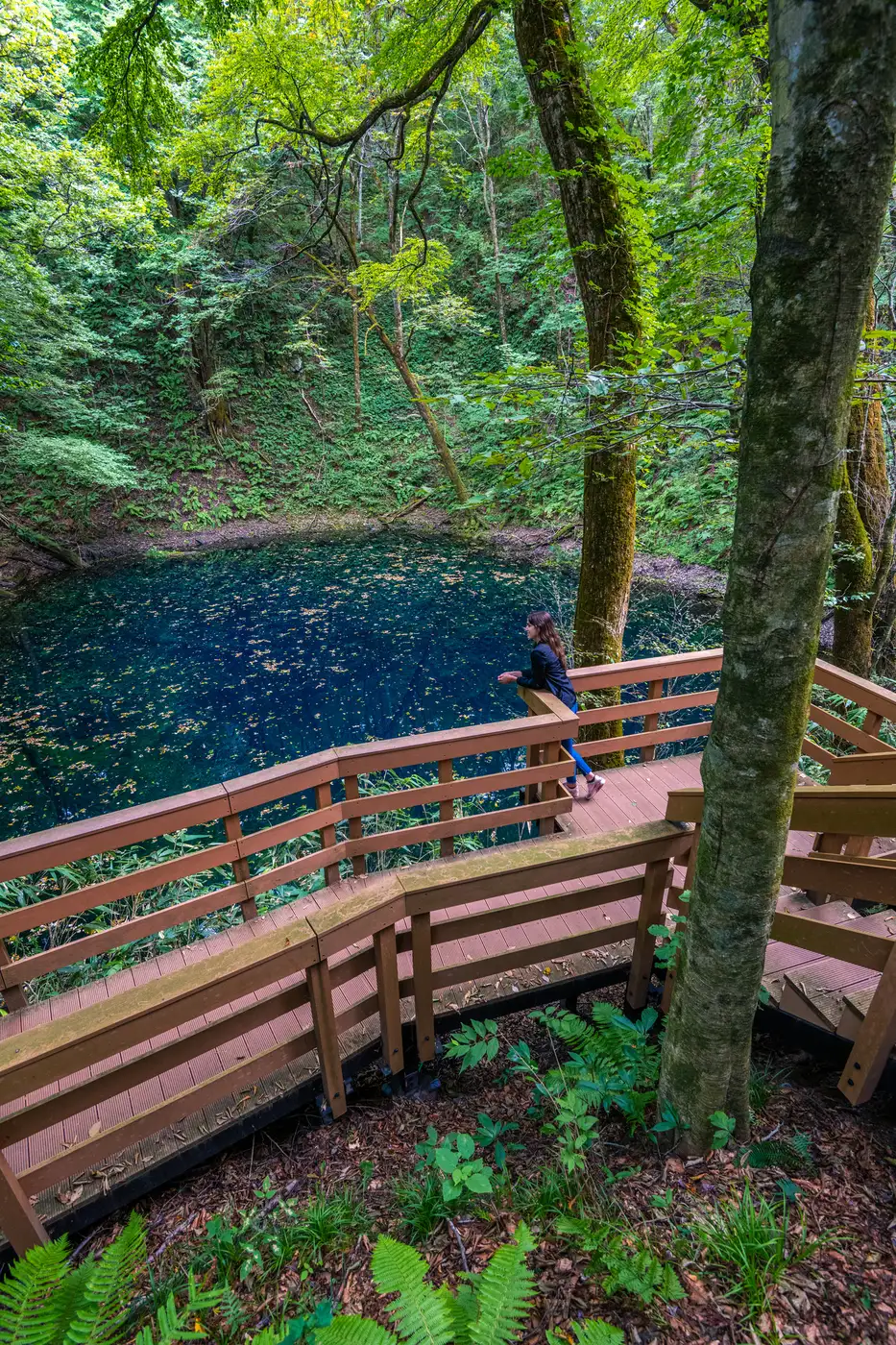
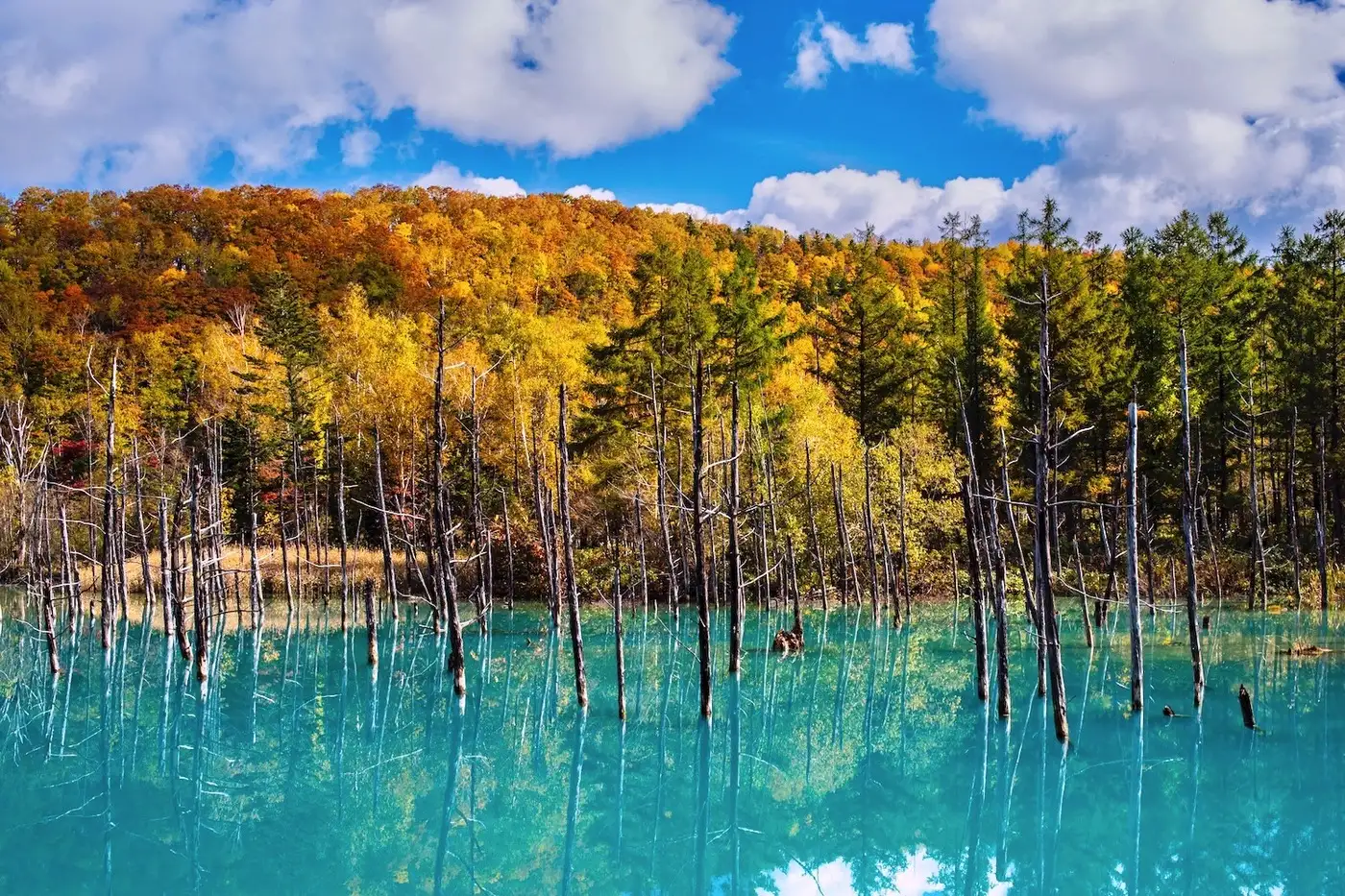
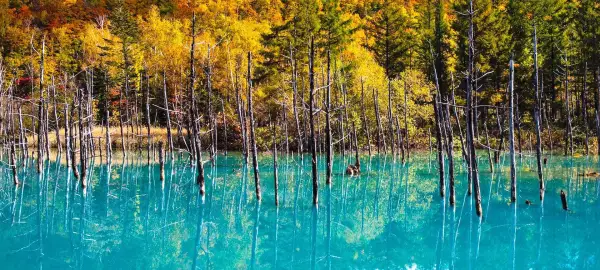
From the falls we continue a short distance to the Blue Pond — one of those rare natural phenomena that exceeds its reputation. The vivid turquoise water, the result of aluminium hydroxide suspended in the outflow from a hot spring barrier, shifts in tone with the light and the season. In October, bare silver birches and larches stand reflected in the still surface, adding a contemplative quality quite different from the summer experience.
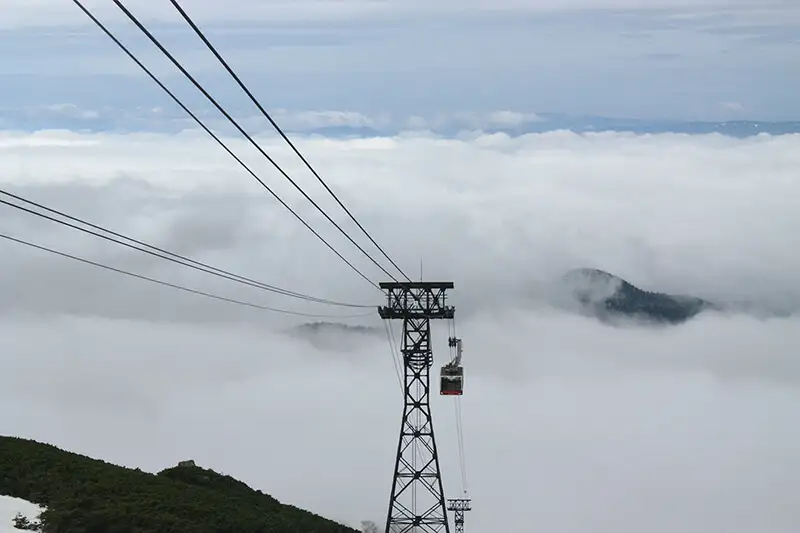
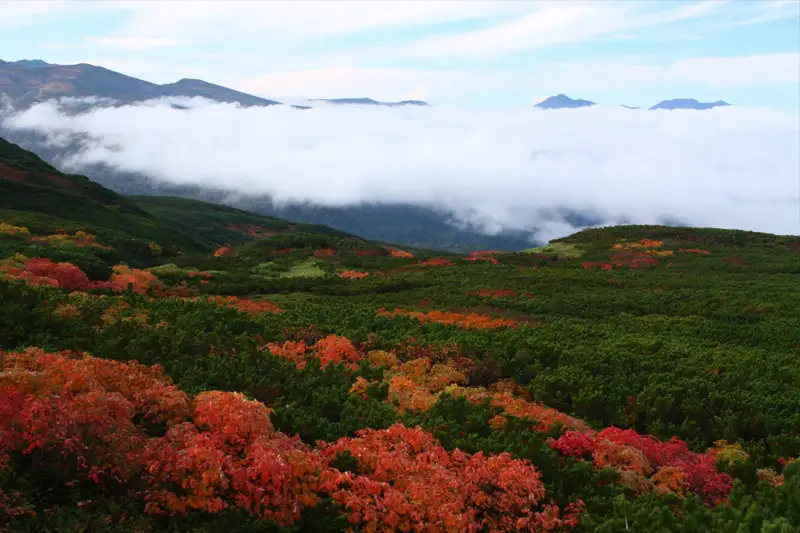
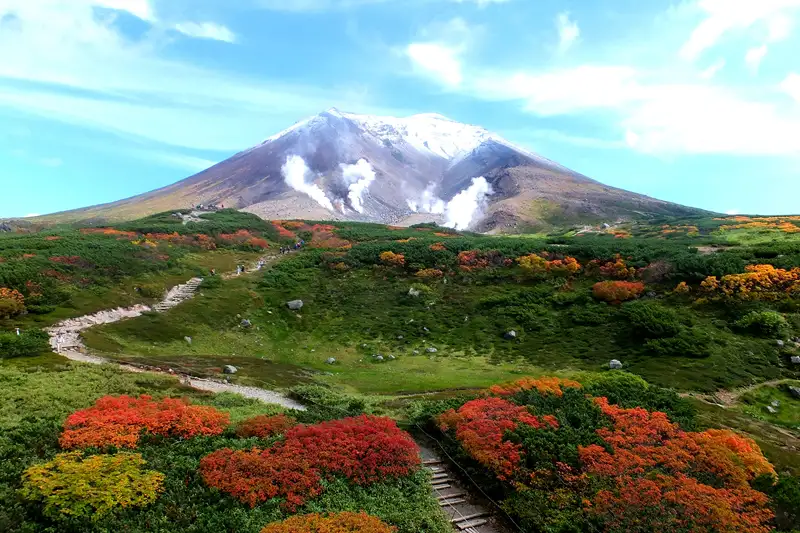
Above Biei, we board the Asahidake Ropeway for our ascent into Daisetsuzan National Park, Hokkaido's volcanic heart and the largest national park in Japan. The cable car lifts us above the treeline into a high alpine world of steaming vents and open ridgelines. In mid-October the upper mountain is at its most dramatic — early snow is possible at the summit, and the contrast with the coloured valleys below is striking.
Please note: spring departures may find the upper mountain affected by late-season snow. Should conditions limit our ropeway visit, we will adjust the day's programme accordingly.
After the ropeway we visit the Tokachi Volcano Interpretive Centre, which tells the geological story of the Daisetsuzan volcanic system with unexpected depth and clarity — one of those quiet finds that generates more conversation than many headline attractions.
We complete the day at the Otokoyama Sake Brewing Museum in Asahikawa, where sake's thousand-year role in Japanese culture and ceremony is explored alongside the regional craft of its production. Tastings are available for those who wish.
Overnight in Asahikawa. 
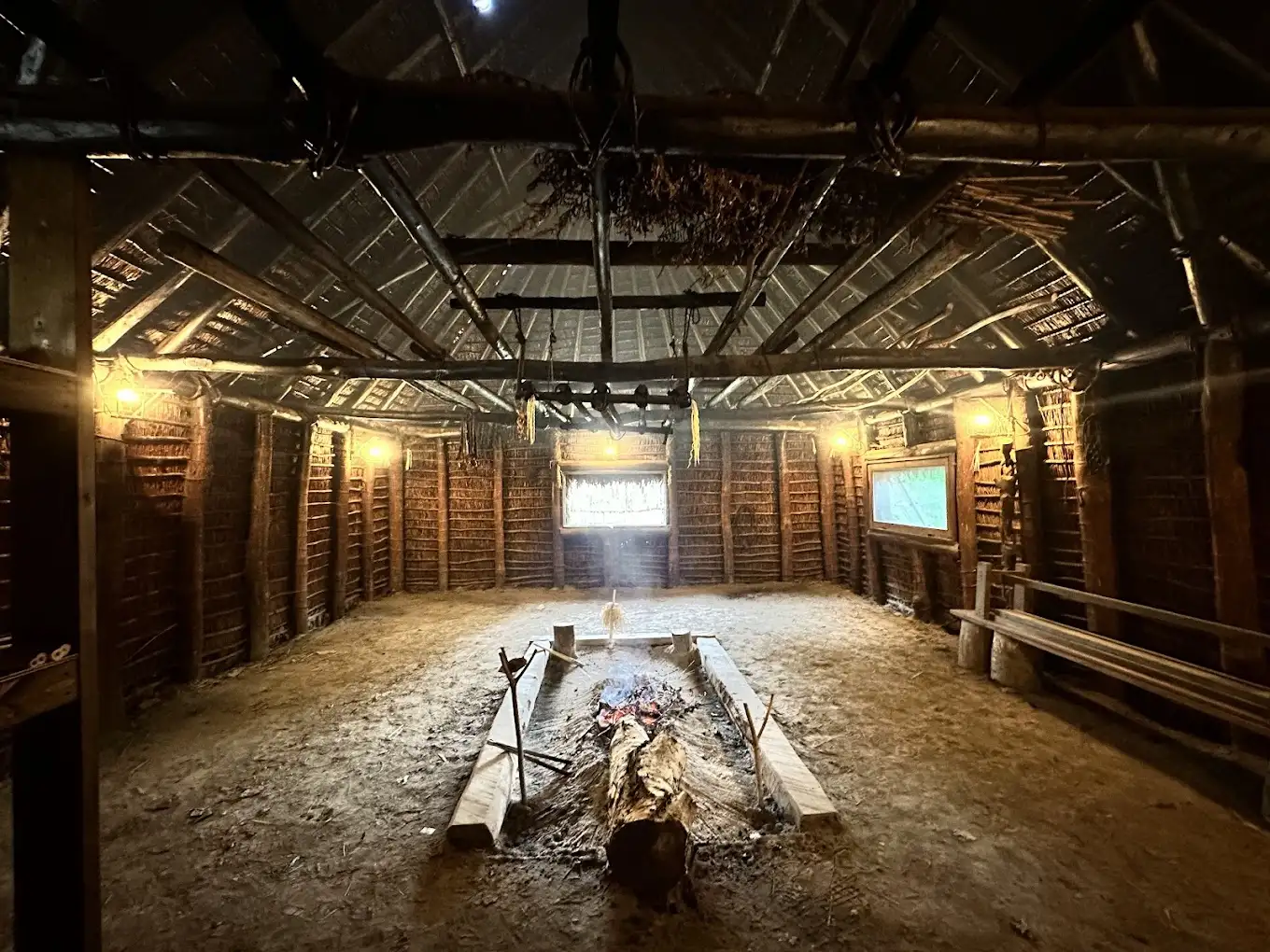
Included Meal(s): Breakfast and Dinner - Day 5:Asahikawa: Ainu Culture and Asahiyama Zoological ParkThis morning we spend time with one of Japan's most important and least-known stories — the culture of the Ainu, Hokkaido's indigenous people. The Kawamura Kaneto Ainu Museum is a small, deeply personal institution founded by a man who devoted his life to preserving what colonisation and assimilation had nearly erased. The collection of artifacts, tools, and ceremonial objects is remarkable, and the context it provides — of a people whose animist traditions, language, and relationship with the natural world survived against considerable odds — gives the rest of our time in Hokkaido a richer frame.
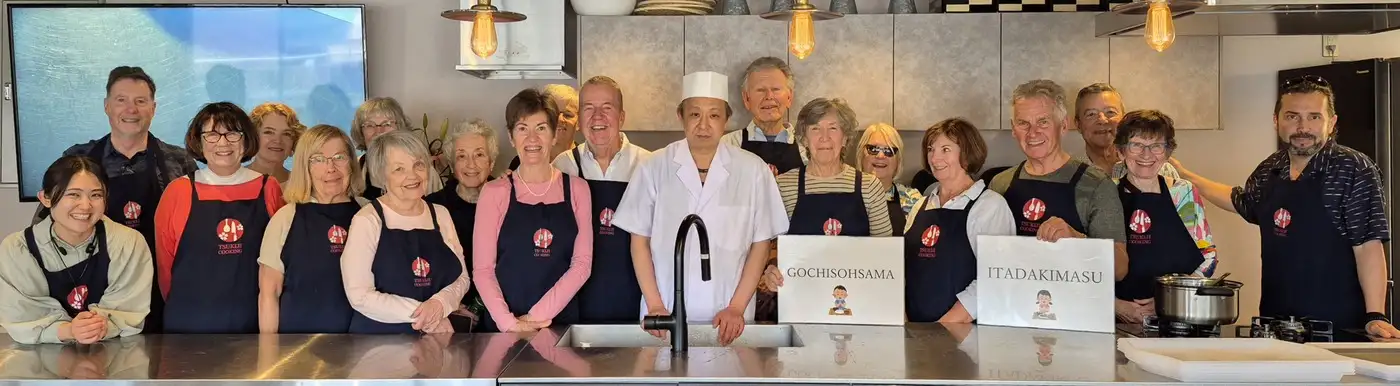
As part of our visit we participate in a cooking demonstration of cimeda, traditional Ainu dumplings, learning something of the ingredients and techniques that sustained these communities through Hokkaido's long winters, before sampling the results ourselves.
This afternoon we visit Asahiyama Zoo — though zoo is perhaps the wrong word for what this place has become. A provincial institution that was very nearly closed in the 1990s, it reinvented itself through a single radical idea: design every enclosure around natural animal behaviour rather than human convenience. The result transformed Asahiyama into one of Japan's most visited and most imitated attractions, and its influence on zoo design worldwide has been considerable. The penguin walkway, the polar bear pool experienced from below the waterline, and the orangutan sky walk are not gimmicks — they are the expression of a philosophy, and they work. It is a more thought-provoking afternoon than the word zoo might suggest.
Overnight in Asahikawa. 
Included Meal(s): Breakfast, Lunch and Dinner - Day 6:Asahikawa to Lake ShikotsuAfter breakfast we begin our journey south toward Shikotsu-Toya National Park, one of Hokkaido's finest protected landscapes. The drive takes us through the broad agricultural plains of central Hokkaido — a working landscape of farms and quiet roads that offers its own pleasures at a pace the coach makes easy.
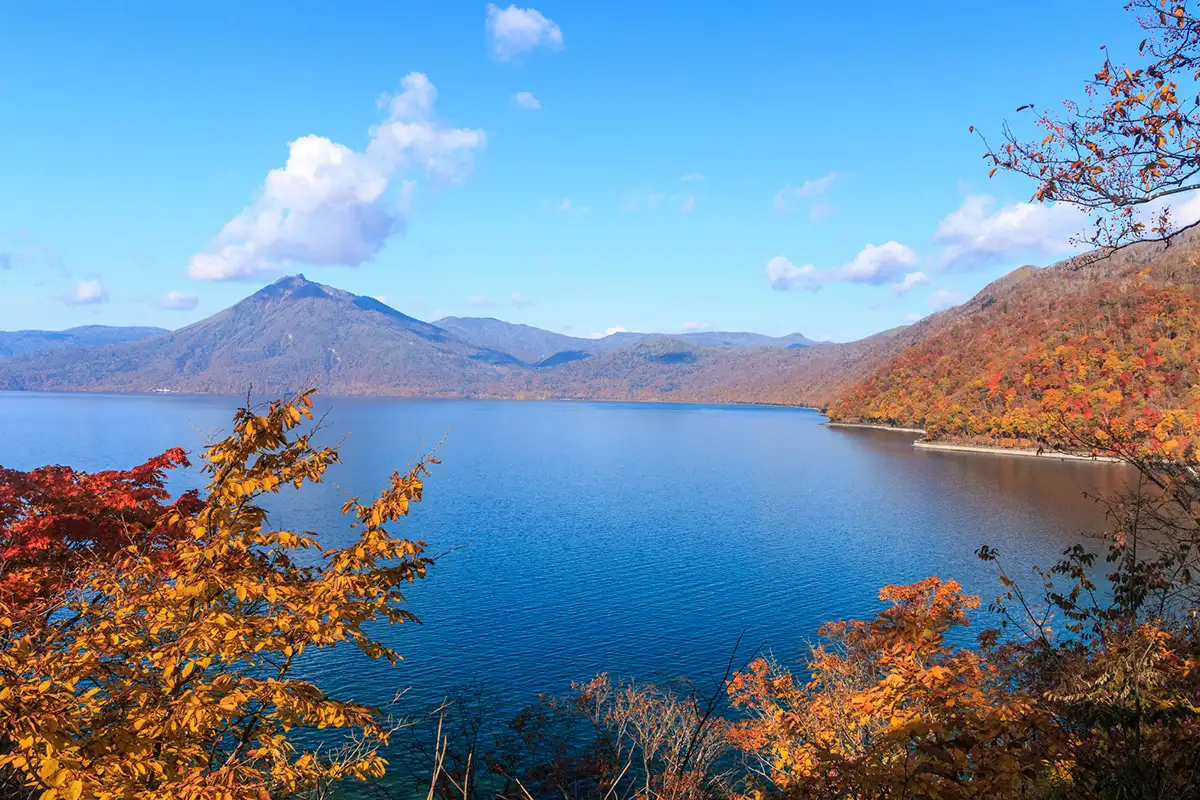
On arrival at Lake Shikotsu we board a glass-bottom boat for a crossing of one of Japan's deepest and clearest lakes. The caldera waters here are among the most transparent in the country, and the boat reveals the lake floor and its submerged volcanic formations with striking clarity — a perspective on Hokkaido's geological character that rewards the short time on the water.
The afternoon is unhurried. We check in to our onsen resort on the lake shore, with time to settle in, take the air, and explore the surroundings at our own pace before dinner. Hokkaido's onsen resorts have a character distinct from the traditional ryokan of southern Japan — built for accessibility and comfort, with communal baths fed by natural hot springs and a hospitality that is warm without being formal. It is an authentically Japanese experience, and a welcome one after several days of active touring.
Overnight at Lake Shikotsu. 
Included Meal(s): Breakfast and Dinner - Day 7:Lake Shikotsu to Noboribetsu via Lake KuttaraAfter breakfast we depart the lake shore and head south toward Noboribetsu, with a stop en route at Lake Kuttara — one of Hokkaido's most pristine and least-visited caldera lakes. With no rivers flowing in or out, the water here achieves a transparency and stillness that is almost surreal, and the surrounding forest, largely untouched, adds to the sense of a landscape held apart from the ordinary world.
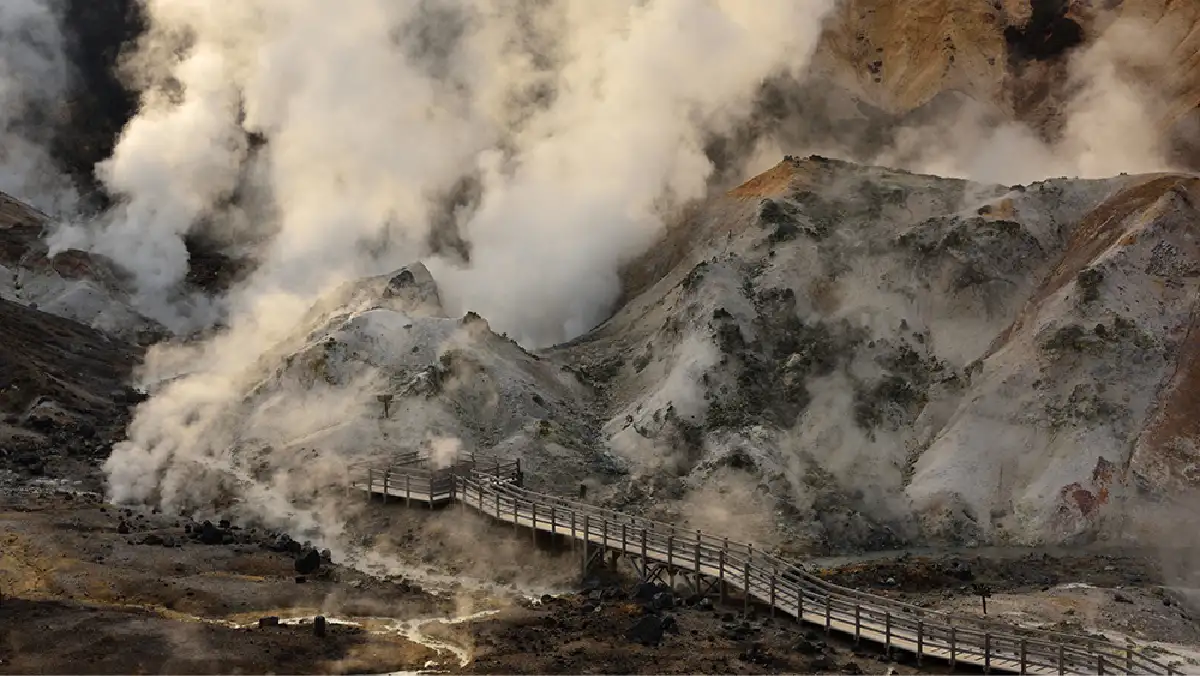
From Kuttara we continue to Noboribetsu and Jigokudani — Hell Valley — one of the most viscerally impressive geothermal landscapes in Japan. Steam rises from cracked earth, sulphurous pools bubble at the surface, and the colours of the mineral-stained rock shift from ochre to rust to pale grey. Japan sits on the Pacific Ring of Fire, and Jigokudani makes that fact immediate and undeniable. A boardwalk system allows us to move through the valley safely, with the heat and smell of the earth a constant companion.
We check in to our hotel in Noboribetsu, a town that has built its identity around its extraordinary thermal resources — and delivers on that promise.
Overnight in Noboribetsu. 
Included Meal(s): Breakfast and Dinner - Day 8:Noboribetsu to HakodateAfter breakfast we board our coach for the drive southwest to Hakodate, a journey of around three hours through southern Hokkaido's quieter landscapes. Hakodate occupies a narrow peninsula between two bays and has a history unlike any other city in Japan — one of the first ports opened to foreign trade in 1854, it absorbed Western influences early and kept them, giving its historic districts an architectural character found nowhere else on the island. On arrival we take an orientation walk through the city centre before a lunch break in the harbour area.
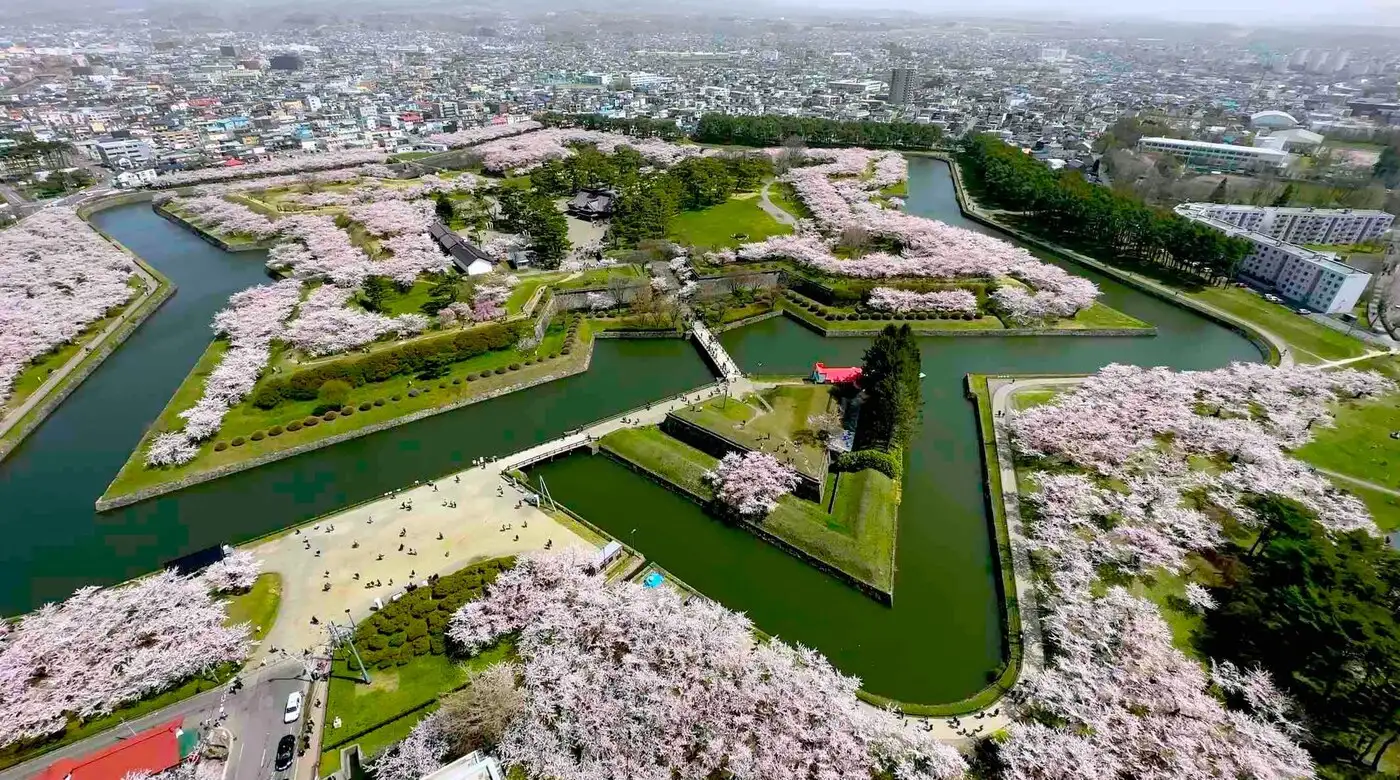
The afternoon brings us to Goryokaku, the remarkable star-shaped fortress built in 1864 — Japan's first Western-style fort, designed along European principles of defensive geometry. We ascend the Goryokaku Tower for the aerial view that reveals the pentagonal plan in full — and for spring travellers, this view is something else entirely, as the fortress's cherry trees are among the most celebrated in Hokkaido, ringing the moat in pink at peak blossom. We descend to walk the grounds and visit the beautifully restored Hakodate Magistrate's Office within the walls.
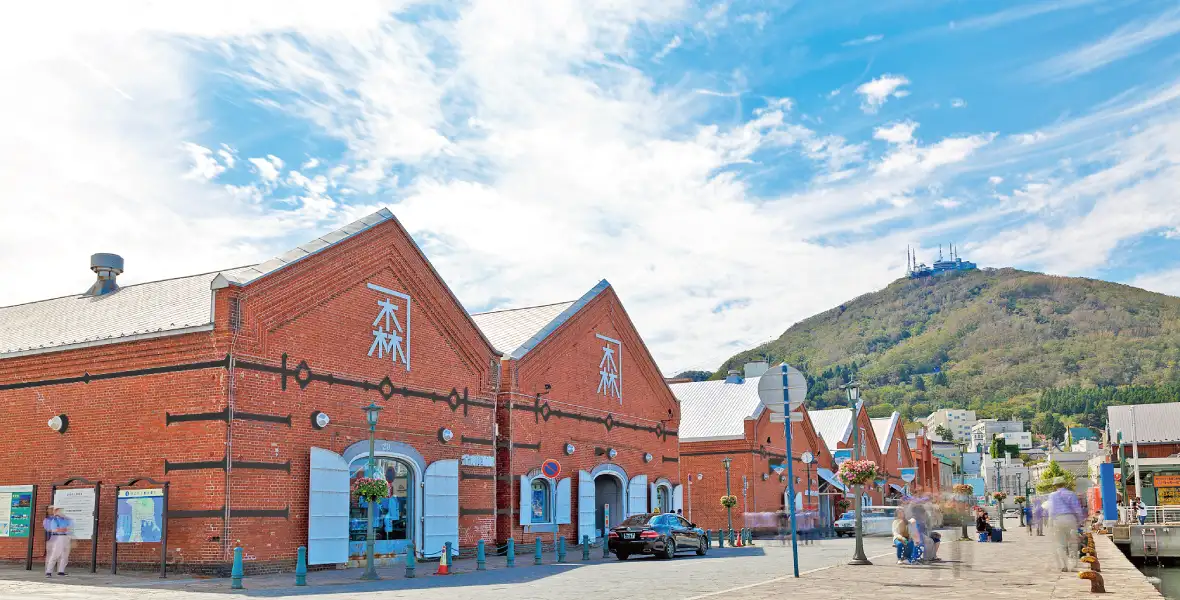
As the day winds down we stroll through the Kanemori Red Brick Warehouses district on the waterfront — a cluster of late 19th-century trading houses whose red brick facades have softened gracefully into the harbour setting. It is a good introduction to the layered history of this city, which we will explore further tomorrow.
Overnight in Hakodate. 
Included Meal(s): Breakfast and Dinner - Day 9:Hakodate: History, Coast and the City from AboveThe morning begins at leisure, with time to explore the Hakodate Morning Market on your own — a sprawling network of stalls and small restaurants within walking distance of our hotel, selling the catch of the day alongside Hokkaido produce. With around 250 vendors operating from early morning, it is best experienced without a schedule.
After regrouping, we make our way to Cape Tachimachi, the dramatic headland on the southern tip of the Hakodate peninsula where the Pacific Ocean and the Tsugaru Strait meet. The cape's basalt cliffs and open sea views have a raw, elemental quality, and the walking here is easy but genuinely rewarding.
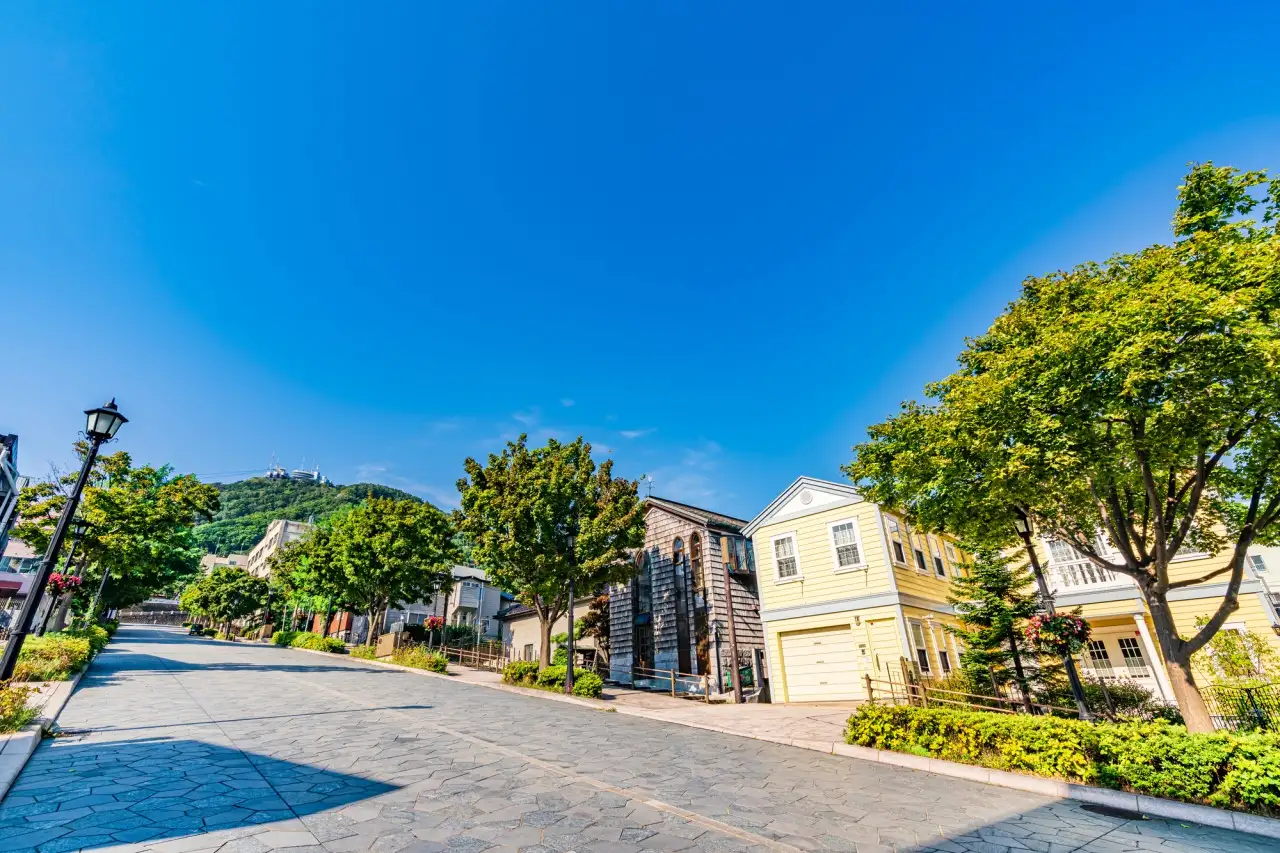
We then spend time in the Motomachi district, Hakodate's most atmospheric neighbourhood, where the city's 19th-century foreign settlement left a permanent mark on the streetscape. Western-style consulates, a Russian Orthodox church, a Chinese memorial hall, and Japanese merchant houses occupy the same hillside — an unlikely but genuine cosmopolitan legacy. The Former Soma Family Home, one of the finest surviving merchant residences in Hokkaido, offers a glimpse into how Hakodate's trading families lived at the height of the port's prosperity.
As the afternoon light begins to soften, we make our way to the Mt Hakodate Ropeway for the ascent to the 334-metre summit. The city's distinctive shape, pinched between its two bays, emerges below in silhouette as the harbour lights begin to come on, revealing one of Japan's most celebrated views in the making. It is a moment that earns its reputation.
Please note: for tomorrow's train journey, luggage will be forwarded to our Aomori hotel. You will need a day bag for the train.
Overnight in Hakodate. 
Included Meal(s): Breakfast, Lunch and Dinner - Day 10:Hakodate, Hokkaido - Bullet Train to Aomori, HonshuAfter an early breakfast we transfer to Hakodate station and board the Shinkansen for the crossing to Honshu. The journey to Shin-Aomori takes approximately two hours, passing beneath the Tsugaru Strait through the Seikan Tunnel — the longest railway tunnel in the world, connecting two islands beneath an ocean strait. It is a remarkable piece of engineering, and the transition from Hokkaido to Honshu has a satisfying sense of arrival in a new chapter.
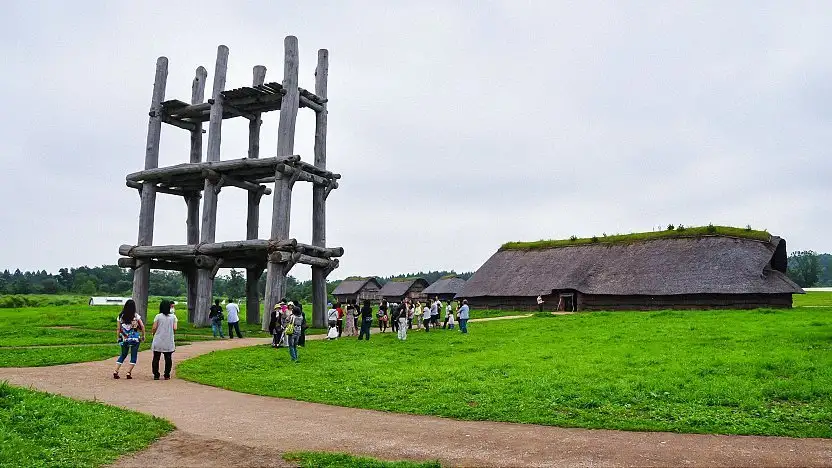
On arrival in Aomori we break for lunch before visiting the Sannai-Maruyama Archaeological Site, one of the largest and best-preserved Jomon period settlements in Japan. The Jomon people lived here for roughly 1,500 years, from around 3,900 to 2,200 BCE, and the scale of what has been excavated — longhouses, storage pits, a monumental six-pillar structure whose purpose remains debated — speaks to a sophistication that overturns easy assumptions about prehistoric Japan.
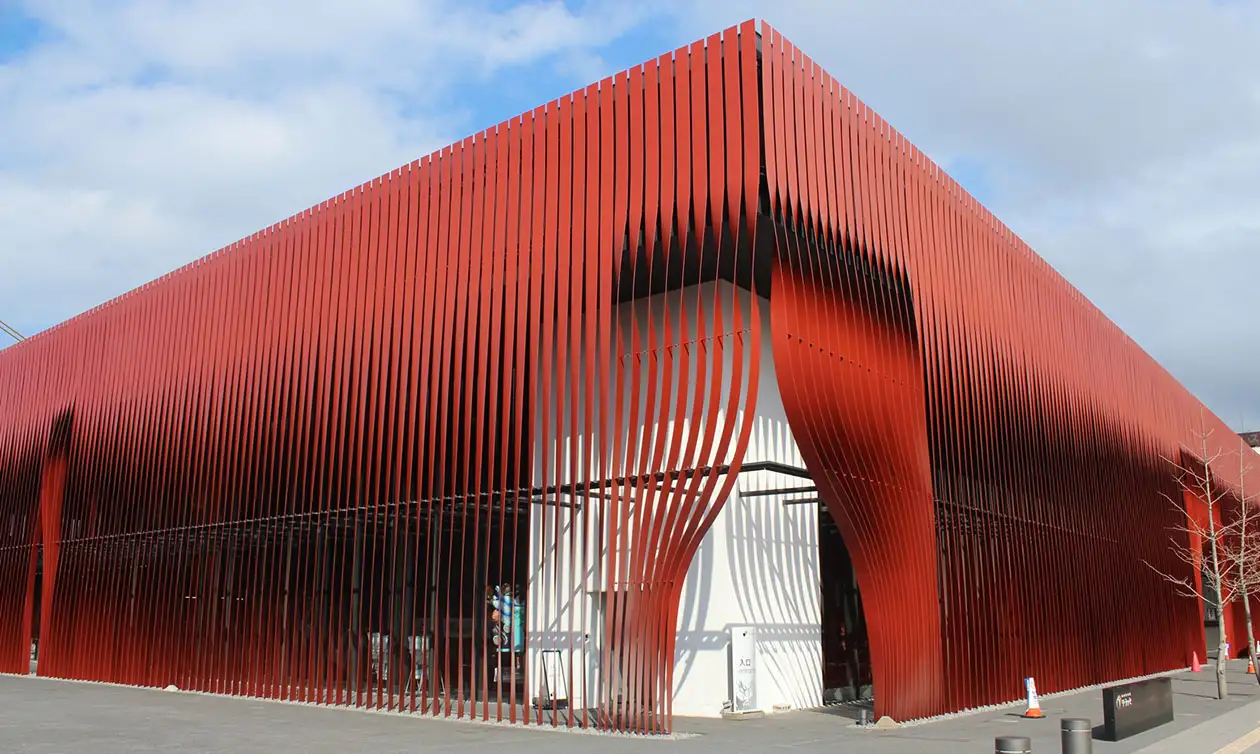
The afternoon brings us to the Nebuta Museum WA RASSE, home to a permanent collection of the spectacular illuminated floats central to Aomori's Nebuta Festival, one of Japan's great summer celebrations. The floats — enormous, hand-painted figures of warriors and mythological creatures built on wire frames and lit from within — are extraordinary objects even outside of festival time, and the museum does full justice to the craft, history, and communal effort behind them.
Overnight in Aomori. 
Included Meal(s): Breakfast and Dinner - Day 11:Oirase Gorge & Lake TowadaToday we travel into the Towada-Hachimantai National Park for one of Tohoku's most celebrated natural experiences. The Oirase Gorge follows the course of the Oirase River for fourteen kilometres through a primeval beech and maple forest, with a walking trail running alongside the water the entire way. In mid-October this is among the finest autumn colour walks in Japan — the canopy closes overhead in shades of amber, scarlet, and gold, the river tumbles over a series of falls and rapids beside the path, and the scale of the forest muffles the world outside completely.
We walk a selected section of the gorge at a comfortable pace, with the coach available for those who prefer shorter stretches. The trail is largely flat and well-maintained throughout.
At the head of the gorge lies Lake Towada, a double-caldera lake sitting 400 metres above sea level, its surface a deep and still blue ringed by forested ridges. We take a boat ride on the lake, reading the landscape from the water and appreciating the scale of the caldera that contains it. The sculptor Kotaro Takamura's bronze Maiden of the Lake stands on the shore near the boat landing — one of Japan's most reproduced public sculptures, and considerably more affecting in its actual setting than any photograph suggests.
We return to Aomori in the late afternoon.
PLEASE NOTE: For tomorrow's train journey, your main piece of luggage will be forwarded to our hotel in Tokyo. You will need a day bag, which you can keep on the bus that meets us in Tokyo prior to being reunited with our luggage at hotel check-in after tomorrow's Tokyo touring.
Overnight in Aomori. 
Included Meal(s): Breakfast and Dinner - Day 12:Aomori - Shinkansen to Tokyo - City TouringAfter breakfast we transfer to the station and board the Shinkansen for Tokyo, a journey of approximately three hours south through the Tohoku region. The bullet train is fast and supremely comfortable, and the passing landscape — rice fields, river valleys, and occasional distant peaks — offers its own quiet pleasures as Japan's north gives way to its centre.
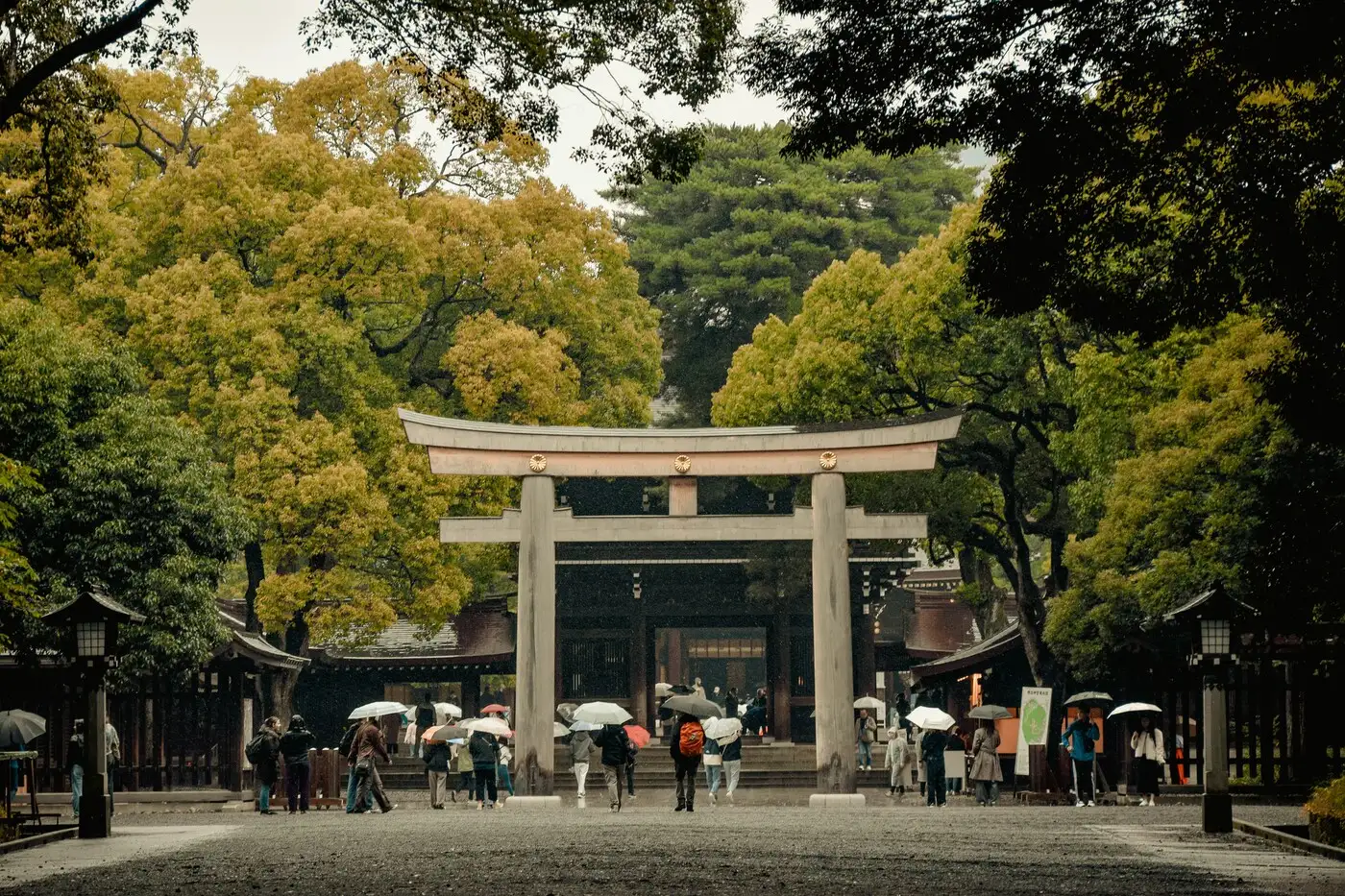
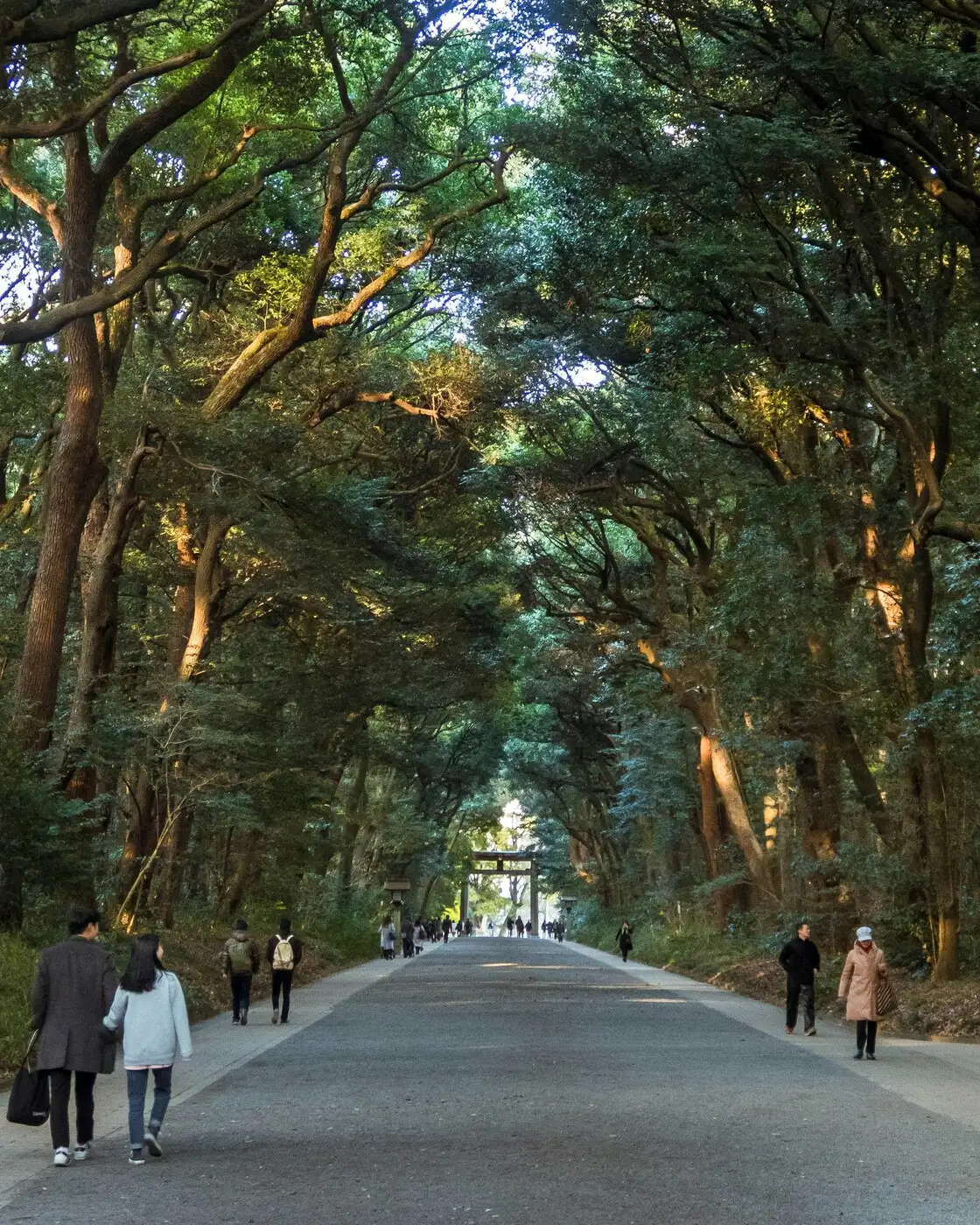
On arrival in Tokyo we are met by our coach and make our way to Meiji Shrine, the forested Shinto sanctuary dedicated to Emperor Meiji and Empress Shoken, whose reign from 1868 to 1912 transformed Japan from feudal isolation to modern nation. The shrine is reached through one of Tokyo's largest stands of urban forest — a deliberate enclosure of calm within one of the world's most densely populated cities, and a striking first encounter with the capital.
We then stroll through the adjacent Meiji Jingu Gaien, the outer garden whose famous ginkgo avenue in late October is beginning its turn toward gold — a gentle and entirely apt way to end an arrival day in a city that rewards those who move through it slowly.
Overnight in Tokyo. 
Included Meal(s): Breakfast and Dinner - Day 13:Tokyo: Edo to the PresentWe begin the morning at the Edo-Tokyo Museum in Ryogoku, which reopened in 2026 following an extensive renovation and now stands as one of the finest history museums in Japan. The building itself is a landmark — its elevated form modelled on the traditional rice storehouses of the Edo period, rising to the same height as Edo Castle itself. Inside, four centuries of Tokyo's history unfold through reconstructed streetscapes, full-scale replicas, detailed dioramas, and a collection that moves from the shogunal city of the 17th century through the Meiji transformation, the devastation of the 1923 earthquake, the firebombing of the Second World War, and the extraordinary reconstruction that followed. For anyone who has been paying attention over the past two weeks, this museum provides the frame that makes sense of everything.
After the museum we remain in Ryogoku for lunch — a neighbourhood that rewards a slow wander. The Edo Noren complex, housed in the historic station building and centred on a full-sized replica sumo ring, gathers some of Tokyo's most distinctive local foods in an atmosphere that evokes the district's long identity as the home of sumo. Oversized wrestlers in traditional yukata are a genuine feature of the streets here; the training stables are woven into the neighbourhood fabric, and the great Kokugikan arena anchors the whole.
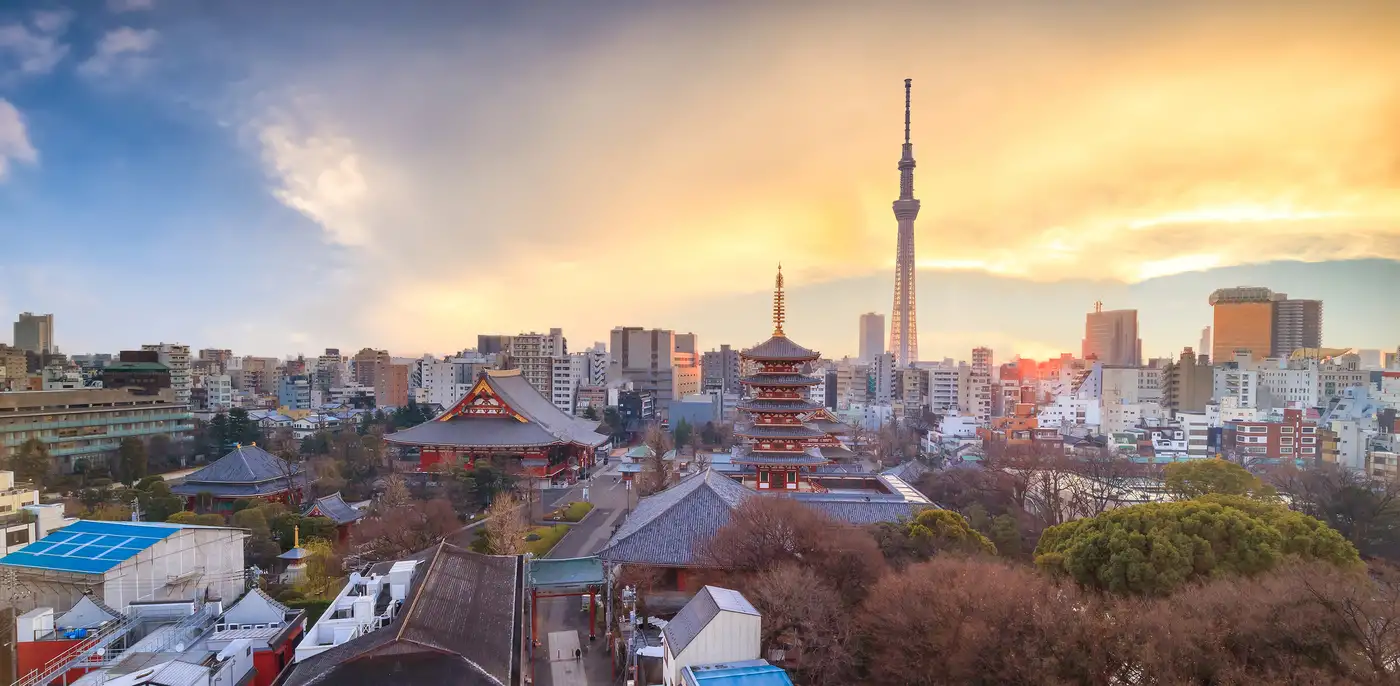
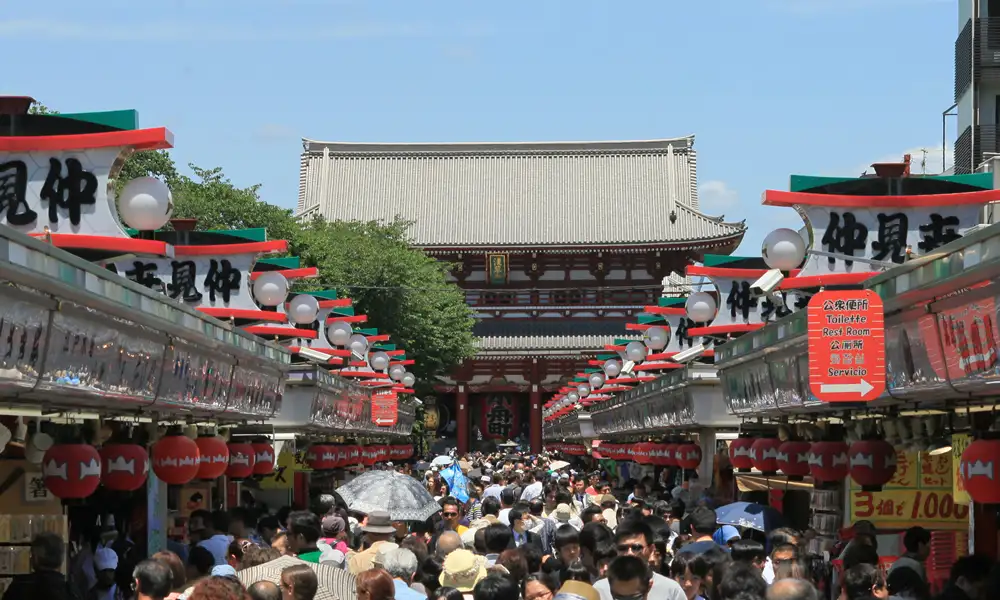
Our afternoon takes us across the city to Asakusa, Tokyo's oldest district and the site of Senso-ji — the capital's most ancient temple, founded in 645 CE. The approach through the Kaminarimon gate and along Nakamise-dori is busy in the way that Asakusa has always been: a place of popular pilgrimage, street food, craft vendors, and theatrical energy going back to the Edo period. Beyond the main precinct, the backstreets of Asakusa open into a quieter world of independent shops and traditional craft vendors that have changed relatively little in decades.
For those with energy and curiosity for one final contrast, Shibuya — a short train ride away — offers exactly that. The famous scramble crossing and the layered spectacle of one of the world's great urban intersections makes for a vivid last impression of a city that contains multitudes. Your Tour Leader can advise on the easiest connection.
We gather this evening for our farewell dinner — a final shared table to mark two weeks in a part of Japan that most visitors never reach.
Overnight in Tokyo. 
Included Meal(s): Breakfast and Dinner - Day 14:DepartureDeparture from Tokyo.
ITTE RASSHAI/BON VOYAGE! 
Included Meal(s): Breakfast
Countries Visited: Japan
*The red tour trail on the map does not represent the actual travel path.
Book This Tour
- Final payment: Due 90 days prior to departure.
- Deposit: A non-refundable $1000 CAD Deposit is required at booking.
- Optional Single Supplement: $1380 CAD (number of singles limited).
(View options forsingle travellers) - Transfering Tour or Date: Transferring to another tour or tour date is only permissible outside of 120 days prior to departure and is subject to a $100 CAD change fee.
(Read our cancellation policy)
Prices below are per person, twin-sharing costs in Canadian Dollars (CAD). Pricing does not include airfare to/from the tour and any applicable taxes.
Tourcode: JP10
Frequently Asked Questions
- What is the maximum number of participants on a trip?Most of our tours carry a maximum of 18 participants; some tours (ie hiking tours) top out at 16. In the event that we do not achieve our minimum complement by our 90-day deadline, we may offer group members the option of paying a "small-group surcharge" as an alternative to cancellation. If all group members agree, we will confirm the trip at existing numbers; this surcharge is refundable in the event that we ultimately achieve our regular minimum. If the small group surcharge is not accepted, we will offer a refund of your deposit or a different trip of your choice.
- Can I extend my tour either at the beginning or end? What about stopovers?Yes, you can extend your tour either at the beginning or the end and we can book accommodation in our tour hotel. Stopovers are often permitted, depending on air routing. Stopovers usually carry a "stopover" fee levied by the airline.
- How do I make a reservation? How and when do I pay?The easiest way to make a reservation is via our website; during office hours, you are also more than welcome to contact us by telephone.
A non-refundable deposit is payable at the time of booking; if a reservation is made within 90 days, full payment is required. Some trips require a larger deposit. If international airline bookings require a non-refundable payment in order to secure space or the lowest available fare, we will require an increase in deposit equal to the cost of the ticket(s).
Early enrolment is always encouraged as group size is limited and some trips require greater preparation time.
Once we have received your deposit, we will confirm your space and send you a confirmation package containing your trip itinerary, any visa/travel permit related documents, invoice, clothing and equipment recommendations, general information on your destination(s), and forms for you to complete, sign and return to us. Your air e-tickets (if applicable), final hotel list, final trip itinerary, and instructions on how to join your tour, will be sent approximately 2-3 weeks prior to departure. - What about cancellations, refunds, and transfers?Please review our cancellation policy page for details.
- I am a single who prefers my own room. What is a single supplement?All of our tours have a single supplement for those who want to be guaranteed their own room at each location.
This supplement is a reflection of the fact that most hotels around the world do not discount the regular twin-share rate for a room by 50% for only one person occupying a room. Most hotels will give a break on the price, but usually in the range of 25-30% of the twin-share rate. This difference, multiplied by each night, amounts to the single supplement.
The conventional amount can also vary from country to country and some destinations are more expensive than others for single occupancy. In order to be "single friendly," the supplements we apply are not a profit centre for us and we do our best to keep them as reasonable as possible.
On most tours we limit the number of singles available, not to be punitive, but rather because many hotels allow for only a limited number of singles; some smaller hotels at remote locations also have a limited number of single rooms available.
Please note that most single rooms around the world are smaller than twin-share rooms and will likely have only one bed. - Do you have a shared accommodation program?Yes! If you are single traveller and are willing to share, we will do our best to pair you with a same-gender roommate. Please note that should we fail to pair you, we will absorb the single supplement fee and you will default to a single room at no extra charge.