PLEASE NOTE: We will CLOSED on Monday 07 September for the Labour Day holiday, and will be back to full operation from 9:00 am PT from Tuesday the 8th. Wishing you all a safe and enjoyable weekend!


Book 24/7 via this website; contact sales@adventures-abroad.com to reach out and we'll reply the next business day.

ANNOUNCEMENT
Small Group Experiential Travel
Essential Japan Tour

Essential Japan Tour

Tokyo to Kyoto via the Japanese Alps
Tour Code
JP1
When To Go
Mar, Apr, Oct
Start
Tokyo (TYO)
End
Hiroshima (HIJ)
Countries Visited (1)
Japan
Overnight In (5)
Tokyo, Kyoto, ...More >
Activity Level
2 - ModerateDetails >
Tour Type
CulturalDetails >
Tour Type
  • History
  • Classic
  • Rail
  • Overview
  • Info & Inclusions
  • Itinerary
  • Map & Hotels
  • Photos
  • Dates & Prices
Highlights
  • Tour Duration: 13 Days
  • Max Group Size 18
  • 'Experiential' Tokyo sightseeing
  • Bullet Train to Hakone
  • Hakone Outdoor Museum
  • Historic Takayama
  • Kyoto: Temples & shrines
  • Hiroshima: Peace Memorial Park
  • Singles friendly
    (view options for single travellers)


Description
This essential Japan journey showcases the foundational arc of Japanese civilization, from Edo-period origins to modern resurrection. Beginning in Tokyo's imperial districts and extending west to Hiroshima's Peace Memorial, this tour leads through volcanic highlands, feudal castle towns, and cultural landscapes where Buddhism shaped architectural and spiritual traditions for over a millennium.

A major highlight is Kyoto, Japan's cultural and imperial heartland for a thousand years—featuring Kinkaku-ji's gold-leafed pavilion reflected in mirror-like waters, Fushimi Inari's vermillion tunnel of ten thousand torii gates ascending sacred Mount Inari, and the remarkable collection of 1,001 life-sized Kannon statues at Sanjusangendo Temple.

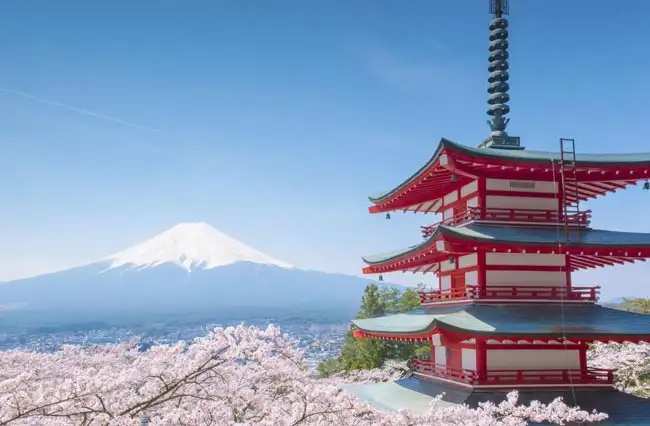
We explore Takayama's remarkably preserved Edo-period merchant quarter nestled in the Japanese Alps and traverse Hakone's volcanic highlands where cable cars reveal Mount Fuji's snow-crowned perfection rising above forested ridges. In ancient Nara, we encounter sacred deer wandering freely among temple grounds where Buddhism first flourished in Japan, while the Open-Air Museum displays contemporary sculpture against mountain vistas.

The tour concludes with Hiroshima's sobering peace monuments and resilient urban energy, alongside Miyajima's floating torii gate at Itsukushima Shrine, offering a deeply moving and culturally comprehensive Japanese experience.
Price Includes
  • Services of a full-time Tour Leader with local guide support at several locations.
  • Hotel breakfast and most dinners (mostly at local restaurants) are included daily.
  • All transport, accommodation, sightseeing and entrance fees for sites noted as 'visited' in the detailed itinerary.
  • We include luggage forwarding services on one train journey (as per the tour itinerary)
  • This service may be available elsewhere with your Tour Leader's assistance (payment can be made locally).
  • Gratuities for restaurant staff, porters (when available), drivers, local guides.


Exclusions
  • International airfare to/from the tour.
  • Tour Leader gratuities, lunches, drinks, international (if applicable) air taxes, and any excursions referenced as 'optional'. Items of a personal nature.
  • Optional trip cancellation insurance (please refer to "Resources" tab for more info).
  • PLEASE NOTE that at variance with our common policy on airport transfers for most tour arrival points, we do NOT include or pre-book arrival airport transfers in Tokyo, regardless of whether or not you book your air with us. We provide detailed information on your various options as part of your pre-trip information package. We will, however, include departure transfers for "Land & Air" customers at the end of the tour (your Tour Leader will assist).


Trip Info
  • Seasonality and Weather:
    Our spring departures are set to coincide with Japan's celebrated cherry blossom season, though exact bloom timing varies by location and weather patterns. This period offers comfortable traveling conditions before summer's heat and humidity arrive, with particularly spectacular displays possible throughout Kyoto's temple grounds and in Tokyo's parks and gardens.

    Our autumn departures hope to capture capture Japan's famous fall foliage season, with vibrant colours illuminating temple gardens and mountain landscapes from the Japanese Alps through Kyoto. This season also features chrysanthemum displays and cultural festivals, with cooler, drier conditions ideal for extensive walking and outdoor sightseeing. The likelihood of rain showers decreases as autumn progresses.
  • Transport and Travel Conditions:

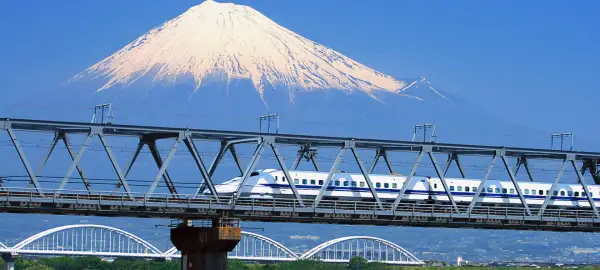
    Our primary means of transportation throughout Japan is via the very efficient rail system, including the famous Shinkansen, or Bullet Train. Distances are not great and most journeys are only a few hours duration. A combination of buses and taxis will be used elsewhere as part of our local sightseeing program.

    TRAIN TRAVEL: The tour is physical in that it is busy and because we rely heavily on train travel. We include baggage forwarding for the group on one occasion (Tokyo to Takayama) as it makes the most sense logistically. After this point, there is usually the option to have your bags sent ahead again, to be reunited with your bag toward the end of the following day (you will need to carry an overnight bag). As many travellers prefer to manage with their own bags, we leave the cost of forwarding to the individual, which is usually in the range of $20-25 per bag depending on bag dimensions (not by weight). Should you choose to use this service elsewhere while on tour, please confer with your Tour Leader who will make the arrangements for which you can pay locally.

    If you prefer to manage with your own bags, please note that Japanese stations can be large and crowded, but usually have escalators or elevators. It's important that you pack lightly, preferably in wheeled soft-sided baggage, plus a day-bag that you can fit into the overhead luggage compartments on the trains.

    You must also be steady on your feet and be able to endure some long days. We have numerous walking tours and visit several sites that are LARGE with steps and uneven surfaces.

    A Note on Dining in Japan: Experiencing Japanese cuisine is an essential part of our journey, with most dinners planned in advance to showcase regional specialties and local culinary traditions. Seafood — cooked and raw — is central to Japanese food culture and features prominently throughout. Our dinners are typically served as set courses prepared fresh from advance reservations, which limits the ability to adjust individual dishes on the spot. Substitutions are not always possible, and avoiding seafood entirely can significantly restrict dining options, particularly in traditional or remote settings.


    Am I suitable for this tour? Please refer to our self-assessment form
  • Activity Level: 2
    These are particularly busy tours that feature a lot of moving around, sometimes by train and short journeys on local transport. Walking tours of towns and cities are leisurely but you should be prepared to be on your feet for several hours. Some of our cultural trips that occur at high altitude and/or require greater independence with baggage handling (at hotels, airports, train stations) also fall into this category.

    To learn more about the Activity levels, please visit our tour styles page.
  • Accommodation:
    All hotels are centrally-located, air-conditioned, 3-4 star standard with private bath facilities. We spend one night at a traditional Ryokan (in Hakone), with raised beds.Single rooms are limited in number and possibly smaller than twins. Porters are generally available (see 'Inclusions').
  • Staff and Support:
    Tour Leader throughout, local guides at various locations.
  • Group Size:
    Maximum 18 plus Tour Leader
View / Print Itinerary

  • Day 1: 
    Arrival in Tokyo
    Today we arrive in Tokyo and transfer to our hotel.

    Tokyo is Japan's capital and the country's largest city. Prior to 1868, Tokyo was known as Edo. A small castle town in the 16th century, Edo became Japan's political center in 1603 when Tokugawa Ieyasu established his feudal government there. A few decades later, Edo had grown into one of the world's most populous cities.

    Overnight in Tokyo.


    Included Meal(s): Dinner, if required
  • Day 2: 
    Tokyo: City Touring
    Tokyo rewards a first day that moves in layers: a forest planted from nothing, a shogun's ruined castle, and the country's finest collection of its own art.

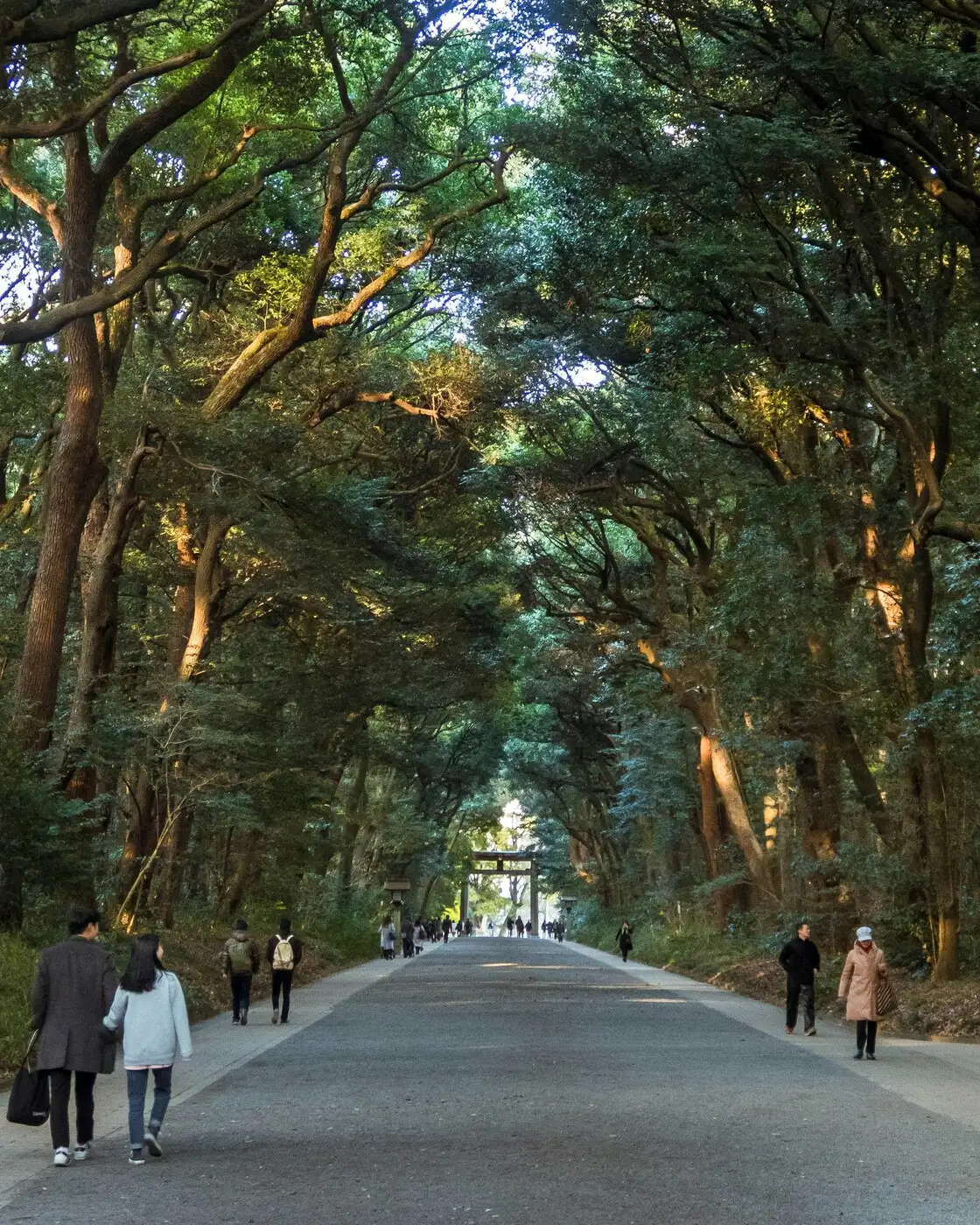
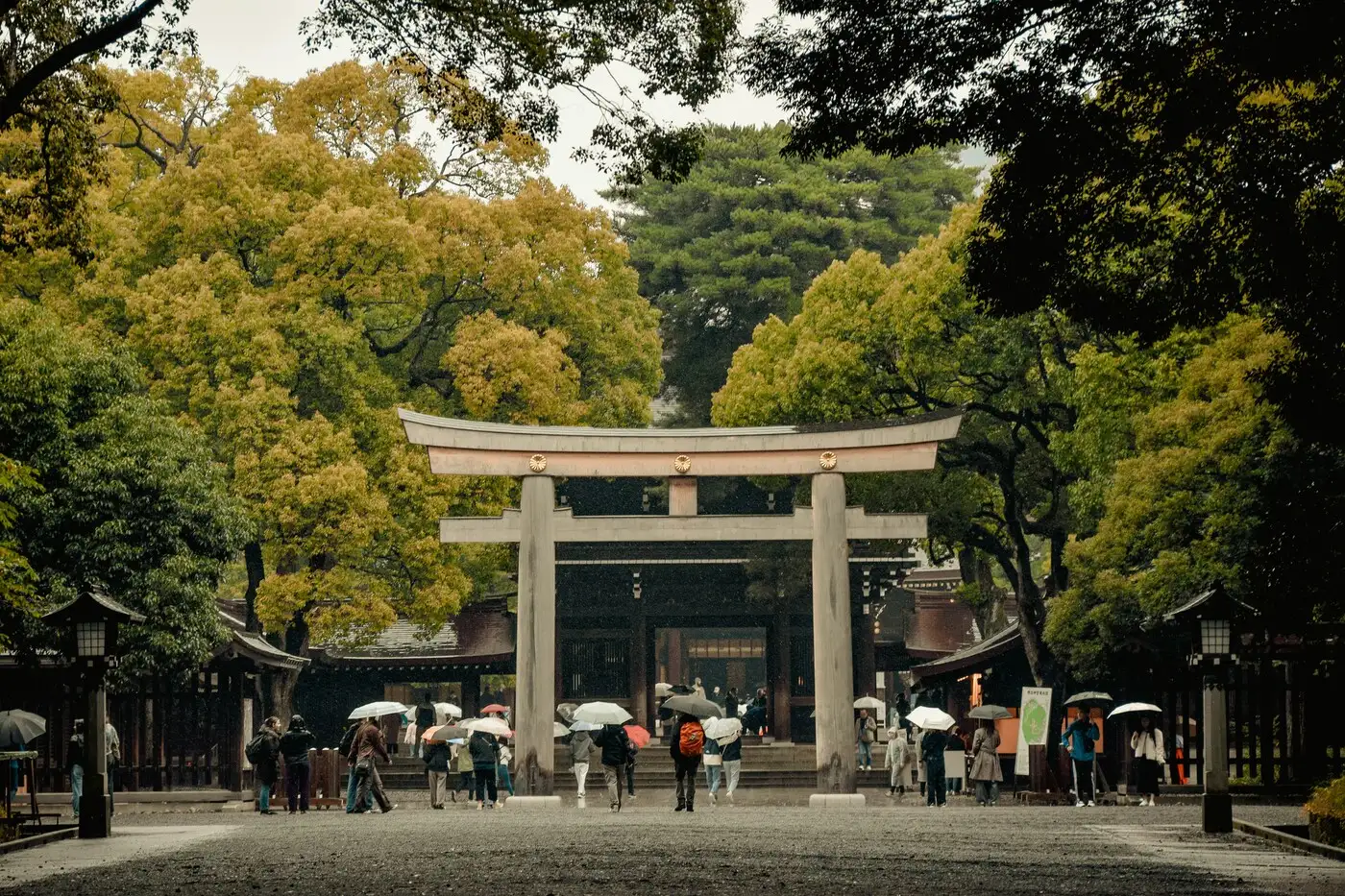
    We start at Meiji Shrine, reached through a cypress torii gate more than 12 m/39 ft tall. The forest around it, 70 hectares/173 acres deep, did not exist before 1920. It was planted from 100,000 trees donated by every prefecture in Japan to honour Emperor Meiji. His reign ended two and a half centuries of shogun rule and reopened the country to the world. Within a few steps the city noise falls away entirely, and on most mornings a Shinto wedding procession crosses the gravel courtyard in white silk.

    From there we walk the East Gardens of the Imperial Palace, the surviving inner grounds of Edo Castle, seat of the Tokugawa shoguns for 265 years. The keep that once crowned it burned in 1657 and was never rebuilt. Its stone foundations, moats and old guardhouses remain, and we picnic among them where samurai once stood watch.

    Lunch behind us, we visit the food hall of one of Tokyo's department stores, descended from Edo-period kimono shops. The art of gift-wrapping is taken seriously enough here that a single melon, boxed and ribboned, can cost more than dinner. We close the day at the Tokyo National Museum in Ueno Park, walking past scroll paintings, samurai armour and Buddhist bronzes that trace the country's own history of itself.

    Overnight in Tokyo.


    Included Meal(s): Breakfast and Dinner
  • Day 3: 
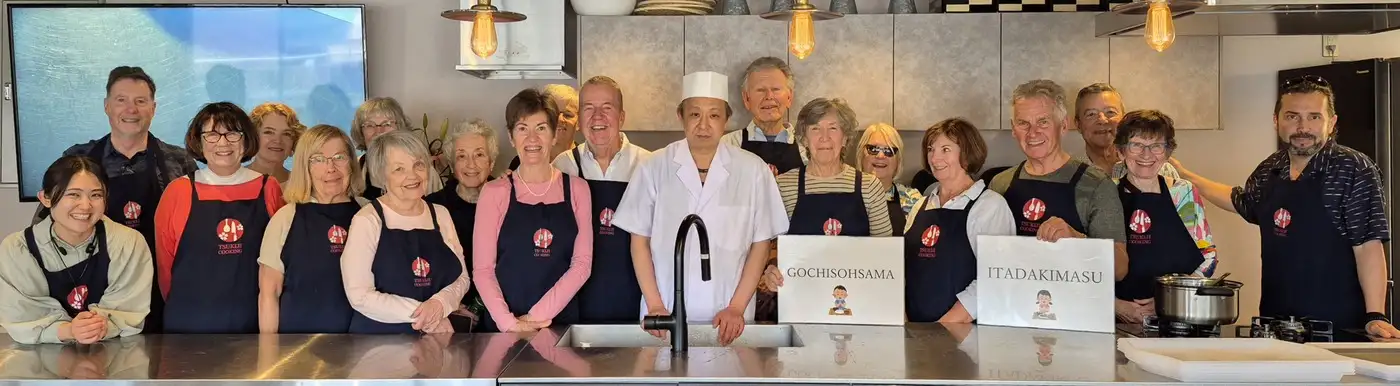
    Tokyo: Sushi Making Class
    We begin the day at a fish market before the crowds thicken. Its aisles are stacked with everything the sea provides: tuna the length of a person, sea urchin in open crates, octopus still faintly moving. Whole tuna are broken down with blades as long as swords, and our guide explains the skill as we watch.

    From the market we cross to the studio of one of Asia's largest cooking schools, its kitchens fitted for exactly this kind of morning. Under an instructor's hands-on guidance we learn washoku, the everyday home cooking of Japan that UNESCO has listed as cultural heritage. We season sushi rice to the right sourness, learn to hold a knife properly, and shape nigiri so the fish sits just so on the rice. Miso soup and four kinds of sushi come out of our own hands by the end of the morning, and we sit down to eat what we made.

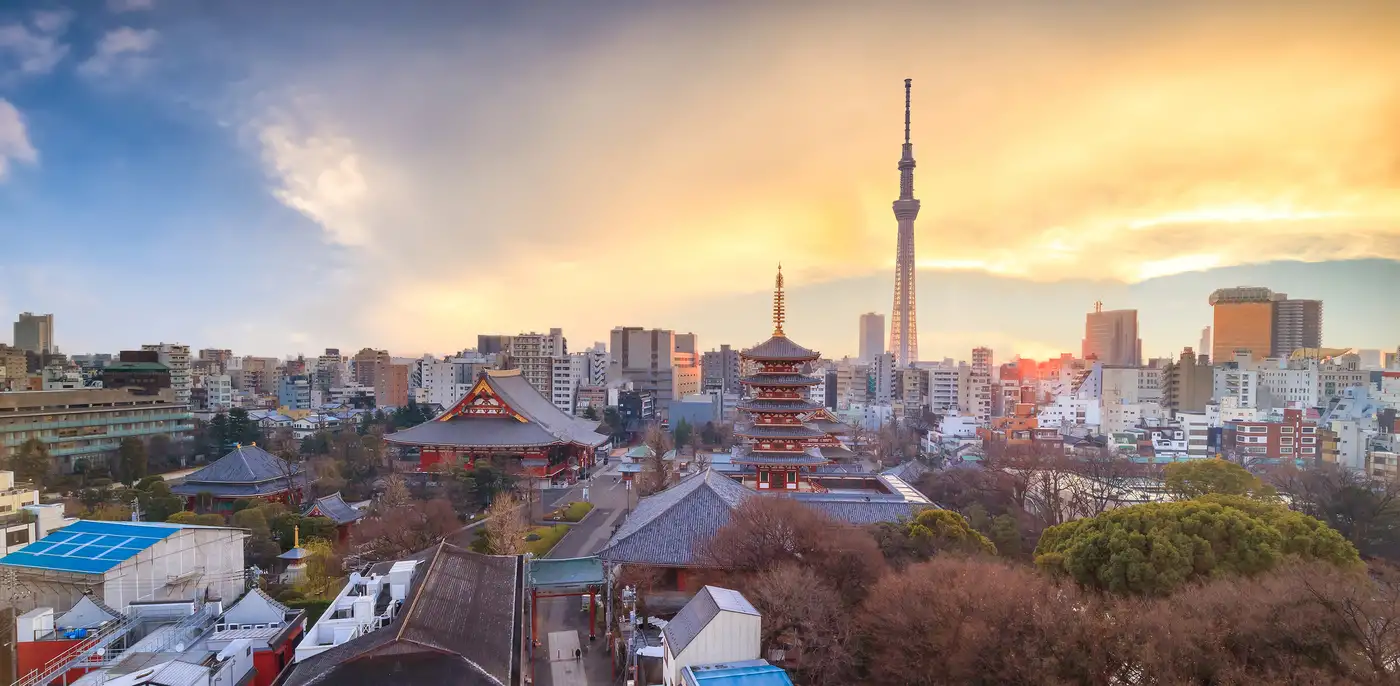
    The afternoon is free, deliberately so after a lunch this large. Dinner is on your own account tonight. Some guests head up the Skytree for the view, others find a baseball game or an izakaya. Your Tour Leader can help plan a last Tokyo evening of your own choosing.

    NOTE: tomorrow our main luggage is forwarded to Takayama, so please pack a small overnight bag tonight for one night in Hakone.

    Overnight in Tokyo.


    Included Meal(s): Breakfast and Lunch
  • Day 4: 
    Tokyo - Lake Ashi - Hakone
    We take the bullet train to Odawara, where a private coach meets us, and stop briefly at Odawara Castle before climbing into the Hakone hills.

    Hakone was the shogunate's most important checkpoint. Every traveller on the Tokaido road between Kyoto and Edo was inspected here, women and guns most closely. The scrutiny of women guarded against daimyo wives, held hostage in Edo under the shogunate's sankin kotai system, slipping home without permission. The mountains made sure there was no other way through. Hakone has been a hot-spring resort since the 1590s, when Toyotomi Hideyoshi soaked here after taking Odawara, and Tokyo still comes up at weekends to do the same.

    Lake Ashi is a crater lake 723 m/2,372 ft above the sea, formed some 3,000 years ago by Mount Hakone's last major eruption. A cruise gives us the mountains and, weather permitting, Mount Fuji over the western rim. We then visit the Hakone Open-Air Museum, opened in 1969 as Japan's first museum of its kind. It is a hillside park of sculpture by Rodin, Moore, Miro and Picasso, with a pavilion of 300 Picasso works and a hot-spring footbath for the walk back.

    Tonight we stay in a ryokan-style hotel, with Western beds. Dinner is kaiseki, a course-by-course meal that began as an accompaniment to the tea ceremony and is arranged to be looked at before it is eaten. Guests are welcome to wear the hotel's yukata to dinner, as Japanese guests do.

    Overnight in Hakone.


    Included Meal(s): Breakfast and Dinner
  • Day 5: 
    Hakone - Train to Takayama
    Today we travel by train to Takayama, about four hours, the last stretch up the Hida river valley where the line runs between the gorge and the mountains.

    The peaks that enclose Hida left it with little farmland and a tax bill it could not pay in rice. It paid in carpenters instead. From the 8th century the court took ten Takayama craftsmen a year in lieu of tax, and the Hida no takumi built temples and palaces across the capital. The forests supplied the finest cypress in Japan, and the town learned to work it into everything from festival floats to sake barrels.

    We arrive in the late afternoon with time to walk Sanmachi, the old merchant quarter, where the dark wooden shopfronts and the sake breweries, marked by cedar balls hung over the door, have stood since the Edo period.

    Our forwarded luggage is waiting at the hotel.

    Overnight in Takayama.


    Included Meal(s): Breakfast and Dinner
  • Day 6: 
    Takayama: City Tour
    Takayama's morning market has run along the Miyagawa river for three centuries. We start there, among farmers selling pickles, apples and the carved wooden charms the town is known for.

    We then drive to Hida Folk Village, an open-air museum of more than 30 farmhouses moved here from valleys flooded for dams between the 1960s and 1980s. Their steep thatched gassho-zukuri roofs, named for hands joined in prayer, were built to shed metres of snow. Inside we see how mountain families lived through it: the hearth, the silkworm lofts, the tools of a hundred winters. Craftspeople demonstrate weaving and woodwork in several of the houses.

    Back in town, the Yatai Kaikan houses several of the festival floats paraded through Takayama each April and October in what is counted among Japan's three most beautiful festivals. Some stand more than 8 m/26 ft tall, carved, lacquered and gilded, and a few carry mechanical puppets, karakuri, that perform on cue during the real festival. Each float is the work of generations from a single neighbourhood, maintained and rebuilt as needed for centuries.

    The afternoon is free. Takayama is small, flat and easily walked, with several sake breweries open for tastings and craft shops along the old streets selling lacquerware and the local sarubobo dolls.

    Overnight in Takayama.


    Included Meal(s): Breakfast and Dinner
  • Day 7: 
    Takayama - Nagoya - Train to Kyoto
    We drive back down the Hida valley to Nagoya and take the bullet train to Kyoto, about an hour.

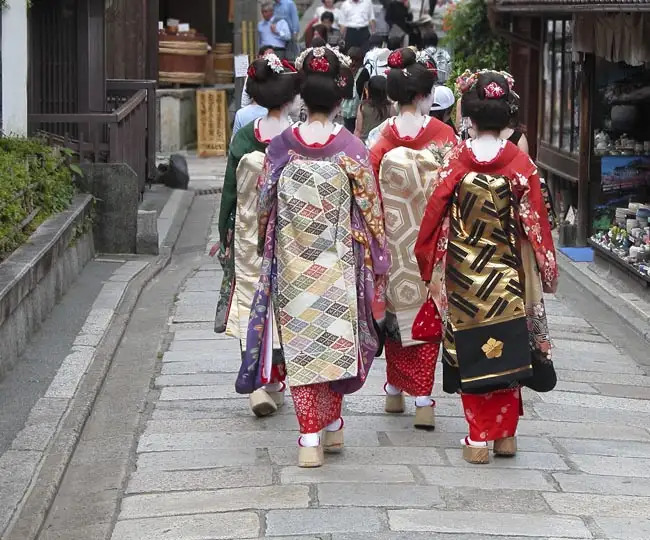
    Kyoto was the emperor's capital for more than a thousand years, from 794 until the court moved to Tokyo in 1868. The shoguns held the power; Kyoto held the culture. Its home workshops still turn out lacquer, textiles, pottery and fans by hand, its geisha districts still train apprentices, and it retains some 1,600 temples and 200 shrines. The city was spared bombing in 1945 after American scholars argued that it was too important to destroy.

    We arrive mid-afternoon. This evening we walk Pontocho, the narrow lane of teahouses and restaurants along the Kamo river that, with neighbouring Gion, remains one of the city's geisha quarters, and where a maiko on her way to an engagement is a common sight after dark.

    Overnight in Kyoto.


    Included Meal(s): Breakfast and Dinner
  • Day 8: 
    Kyoto: City Tour
    A full day among Kyoto's temples, gardens and the two pavilions.

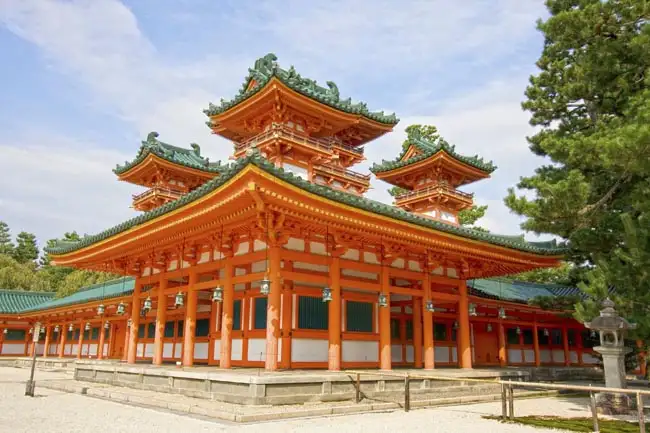
    We start at Nishi Honganji, the head temple of the Jodo Shin sect of Buddhism, granted its site by Toyotomi Hideyoshi in 1591. Its two great halls are among the largest wooden buildings in the country, and the sect's ten thousand affiliated temples make this the most popular form of Buddhism in Japan. Heian Shrine follows, built in 1895 for the city's 1,100th anniversary as a five-eighths scale replica of the original imperial palace, painted vermilion and green, with a stroll garden known for its weeping cherries, irises and stepping stones across the pond.

    We pick up picnic lunch and walk part of the Philosopher's Path, the canal-side lane through the eastern hills named for a Kyoto professor who walked it daily.

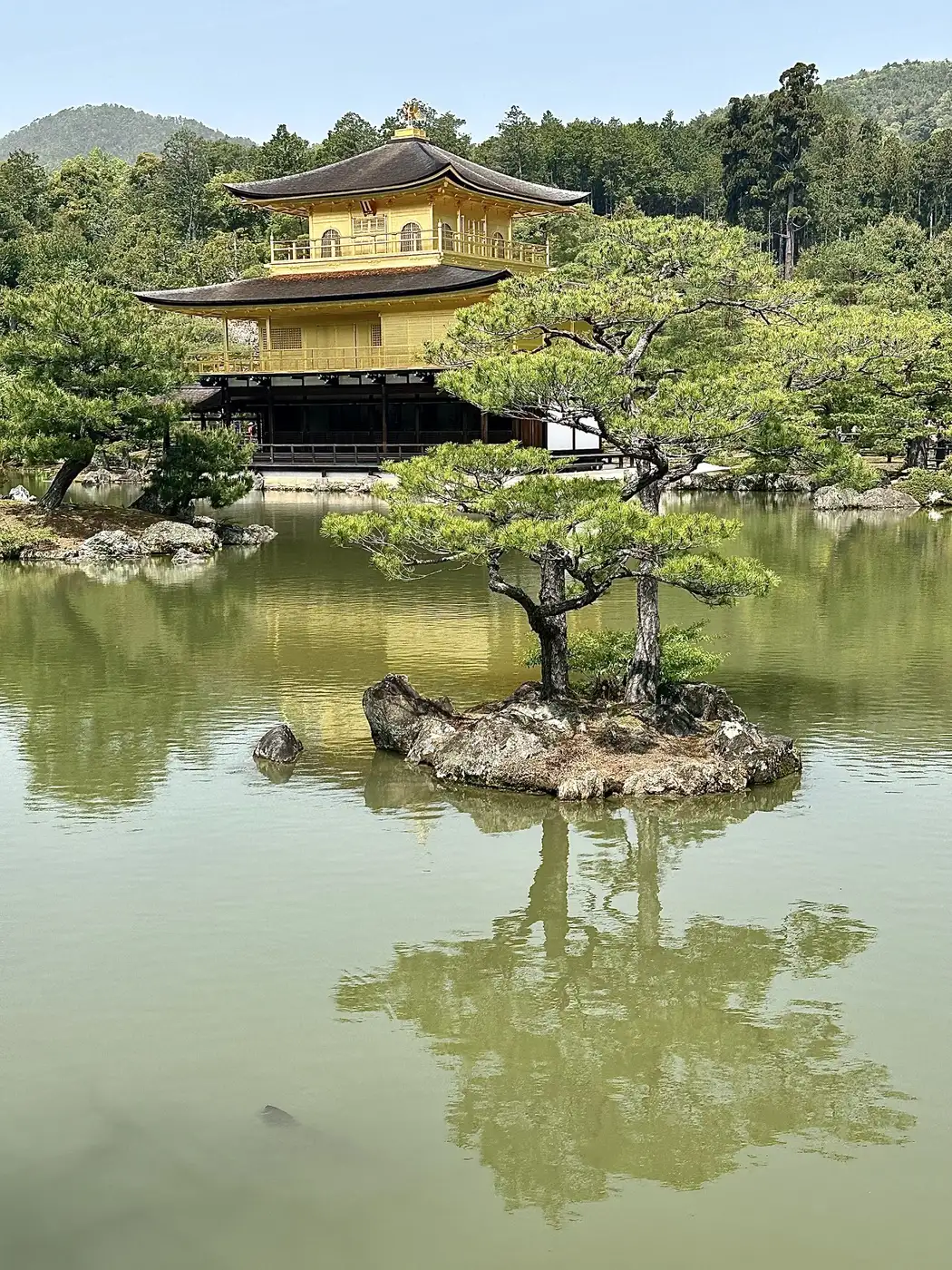
    The afternoon is the pavilions. Ginkakuji, the Silver Pavilion, was never silvered; its shogun builder ran out of money in the 1480s, and the restraint became its point, with a garden of raked sand and moss that set the taste of the country. Kinkakuji, the Golden Pavilion, is the opposite, gold leaf to the waterline and doubled in its pond. Between them in spirit is Ryoanji, where fifteen rocks sit in raked gravel and no vantage point shows all fifteen at once.

    We break before dinner at a local restaurant.

    NOTE: The order of sites may change on the day at the discretion of your Tour Leader and local guide.

    Overnight in Kyoto.


    Included Meal(s): Breakfast and Dinner
  • Day 9: 
    Kyoto & Nara
    We take the local train to Nara, Japan's first permanent capital, where much of what makes the country recognisably itself first took shape.

    The court settled here in 710, and within a few decades Nara had a Chinese-style grid, the nation's first written histories, and Buddhism established as state religion. The temples grew powerful enough to rival the throne, one reason the capital moved on to Kyoto in 784. Because the city was abandoned rather than rebuilt over, much of what was built here still stands, and the eastern half of Nara is now a World Heritage site.

    Todai-ji houses the Great Buddha, a bronze figure 15 m/49 ft tall, cast in the 740s. The undertaking used most of the bronze then available in Japan and nearly bankrupted the state. Fire destroyed the original hall twice. The one standing today, rebuilt in 1709 at two-thirds its original width, is still among the largest wooden buildings in the world.

    We walk on through Nara Park, where more than a thousand deer wander freely and bow for crackers. Legend holds they carried a guardian deity into the city on their backs in the 8th century, and they have been protected as sacred messengers ever since. The path leads to Kasuga Taisha, founded in 768 for the Fujiwara clan and approached through 3,000 stone and bronze lanterns, lit only twice a year, in February and mid-August.

    NOTE: Nara is a full day of trains and walking; guests who prefer a free day in Kyoto should speak with your Tour Leader.

    Overnight in Kyoto.


    Included Meal(s): Breakfast and Dinner
  • Day 10: 
    Kyoto: Nijo Castle & Leisure time
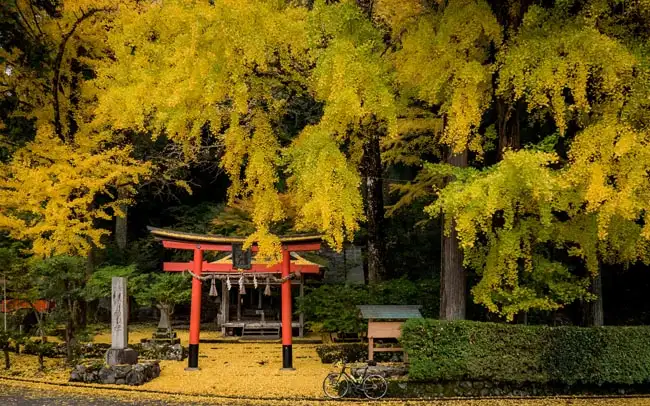
    This morning we visit Nijo Castle, which Tokugawa Ieyasu built in 1603 as his Kyoto residence, the shogun's house in the emperor's city and a reminder to the court of who held the army. Its Ninomaru Palace is the finest surviving example of feudal palace architecture in Japan, with painted screens by the Kano school, gold-leaf tigers and pines, and "nightingale" floors that squeak underfoot to give away intruders. In 1867 the last shogun gathered his lords in this palace and handed power back to the emperor, ending the order that began at Edo Castle, where we stood a week ago.

    The rest of the day is yours. The small Shoseien garden east of Higashi Honganji is a good place to start, Nishiki Market is a good place to eat, and your Tour Leader can help you plan.

    Overnight in Kyoto.


    Included Meal(s): Breakfast and Dinner
  • Day 11: 
    Kyoto - Train to Hiroshima
    The bullet train carries us past Osaka and Kobe to Hiroshima in under two hours.

    At 8:15 on the morning of 6 August 1945 the first atomic bomb used in war exploded 600 metres above the city centre. Around 70,000 buildings were destroyed in a few seconds. By the end of the year some 140,000 people were dead. The city sits on the delta of the Ota river, ringed by hills, and the blast filled the bowl.

    Scientists at the time doubted anything would grow here for decades. Today Hiroshima is a city of 1.2 million, the streetcars that were running again within days of the bombing still run, and we arrive by the fastest train in the country.

    Our visit is the Peace Memorial Park, laid out on the ground beneath the explosion. The Cenotaph holds the names of the dead beneath the inscription "Rest in peace, for the error shall not be repeated". The Peace Flame will burn until the last nuclear weapon is gone. The Children's Peace Monument is hung with paper cranes sent from around the world for Sadako Sasaki, who died of leukaemia at twelve. We visit the Peace Memorial Museum, whose collection of belongings is harder than any photograph, and walk to the Atomic Bomb Dome, the one building left standing near the hypocentre and kept as it was.

    The rest of the afternoon is unscheduled.

    Overnight in Hiroshima.


    Included Meal(s): Breakfast and Dinner
  • Day 12: 
    Hiroshima & Miyajima
    By train and ferry we cross to Miyajima for the day.

    The island has been counted among Japan's three finest views for four centuries, and it was sacred long before that. For most of its history no one was permitted to be born or die here, and the forest on Mount Misen has never been cut. Deer, considered messengers of the island's gods, meet the ferry and wander the streets freely.

    Our walking tour centres on Itsukushima Shrine, a UNESCO World Heritage site built over the water on stilts so that pilgrims could approach without setting foot on holy ground. At high tide the great torii gate, 16 m/53 ft tall and built of camphor trunks too heavy to be anchored, stands on its own weight in the sea. At low tide we can walk out to it across the exposed sand. A renovation completed in 2022, the first in nearly a century, replaced the gate's copper roofing and treated its wood against rot. The shrine took its present form in 1168 under Taira no Kiyomori, the warlord who briefly ran Japan before the first shogunate. His clan's rise, and its catastrophic fall in the Genpei War a generation later, drowned at sea with the child emperor they carried, became the subject of Japan's best-known epic.

    There is free time on the island before we return to Hiroshima. Options include the ropeway up Misen for the view over the Inland Sea, the five-storey pagoda beside the shrine, or the street of grilled oysters and maple-leaf cakes below it.

    Overnight in Hiroshima.


    Included Meal(s): Breakfast and Dinner
  • Day 13: 
    Departure from Hiroshima
    Departure for home.

    Departure from Hiroshima.


    Included Meal(s): Breakfast
Regions Visited: Far East
Countries Visited: Japan


*The red tour trail on the map does not represent the actual travel path.

Excellent
Overall Rating
4.7
Extend Your Trip
This tour is part of a series that can be upgraded to make for a longer trip.
Book Your Tour Here
Fast and easy

Book This Tour

Book your unforgettable adventure today! For any questions or advice, don't hesitate to contact us.

Have questions?

1-800-665-3998
  • Final payment: Due 90 days prior to departure.
  • Deposit: A non-refundable $500 CAD Deposit is required at booking.
  • Optional Single Supplement: $1580 CAD (number of singles limited).
    (View options for
    single travellers
    )
  • Transfering Tour or Date: Transferring to another tour or tour date is only permissible outside of 120 days prior to departure and is subject to a $100 CAD change fee.
    (Read our cancellation policy)
Choose your departure date:

Prices below are per person, twin-sharing costs in Canadian Dollars (CAD). Pricing does not include airfare to/from the tour and any applicable taxes.


2026
2027
  • 01: 
    Can Adventures Abroad book my flights?
    Yes! We have full-service in-house air department with years of experience booking our passengers to far-flung places around the world from any place that has an airport. Travelling from Los Angeles to Rome? No problem. Travelling from Deer Lake, Newfoundland to Antananarivo? Also not a problem!


    • 01: 
      Can Adventures Abroad get better deals than I can online?
      Here’s the clear answer: Usually, no.


      Booking your flights with us is super convenient—it’s like one-stop shopping! Plus, we’ll take care of you if something goes wrong, like a canceled flight or missed connection. We include airport transfers at your destination when you book flights through us. Some routes to less common destinations can be hard to find on your own or through online search engines. Which usually only show popular routes. Let us make it easy for you!
    • 02: 
      Why should I book my flights with Adventures Abroad?
      • Included airport transfers: Enjoy a smoother trip with airport transfers provided when you book flights with us.
      • Peace of mind: Feel confident knowing we’ve got you covered during your trip.
      • Help with disruptions: If your travel plans change, we assist with rebooking flights and updating our partners and staff at your destination.
      • Avoid stress and confusion: Booking with us means you won’t have to deal directly with airlines or ticket sellers if issues arise.
  • 02: 
    Does the group fly together on a set route and airline?
    Unlike with some companies, you are not obliged to fly with a particular airline on "bulk" group flights. Because our travellers are coming from (usually) across North America, everyone who flies with us receives a custom air quotation that best serves their situation and preferences—we do not have "set" routings on only a limited number of airlines.


    While fare and convenience are always at the top of the list of criteria, we can work with you to find the option that suits you best.
  • 03: 
    When should my flights be quoted / booked?
    Everyone wants to know their flight details early. To get the best fares and routes, book your tour and pay your deposit as soon as possible. This helps us confirm the tour early. Booking 8-12 months ahead takes some trust, but it’s the best way to plan with so many factors involved. We can’t always provide exact flight costs more than 6 months out or before the tour is confirmed. But we almost always find a solution that works for our travellers.

If you are booking more than one person with different addresses and separate billing, please book each person individually.

7 or more travellers - Please contact us to book.
Single Travellers -
(View options)
Deposit Due Today: $500 CAD
Reserve Your Spot
Japan Tours
From the bustling metropolis of Tokyo to the serene temples of Kyoto, our tours reveal Japan's rich history, diverse landscapes, and captivating modernity. With guided tours through iconic sites such as Mount Fuji, the Hiroshima Peace Memorial Park, and the ancient city of Nara, we delve deep into the country's heritage while gaining insight into its contemporary society.
Exciting Videos of
Tourcode: JP1
Japan Tours
From the bustling metropolis of Tokyo to...
Visit Kyushu
From Kagoshima’s shores to Nagasaki’s port, our...
<01>

Frequently Asked Questions

  •  
    What is the maximum number of participants on a trip?
    Most of our tours carry a maximum of 18 participants; some tours (ie hiking tours) top out at 16. In the event that we do not achieve our minimum complement by our 90-day deadline, we may offer group members the option of paying a "small-group surcharge" as an alternative to cancellation. If all group members agree, we will confirm the trip at existing numbers; this surcharge is refundable in the event that we ultimately achieve our regular minimum. If the small group surcharge is not accepted, we will offer a refund of your deposit or a different trip of your choice.
  •  
    Can I extend my tour either at the beginning or end? What about stopovers?
    Yes, you can extend your tour either at the beginning or the end and we can book accommodation in our tour hotel. Stopovers are often permitted, depending on air routing. Stopovers usually carry a "stopover" fee levied by the airline.
  •  
    How do I make a reservation? How and when do I pay?
    The easiest way to make a reservation is via our website; during office hours, you are also more than welcome to contact us by telephone.

    A non-refundable deposit is payable at the time of booking; if a reservation is made within 90 days, full payment is required. Some trips require a larger deposit. If international airline bookings require a non-refundable payment in order to secure space or the lowest available fare, we will require an increase in deposit equal to the cost of the ticket(s).

    Early enrolment is always encouraged as group size is limited and some trips require greater preparation time.

    Once we have received your deposit, we will confirm your space and send you a confirmation package containing your trip itinerary, any visa/travel permit related documents, invoice, clothing and equipment recommendations, general information on your destination(s), and forms for you to complete, sign and return to us. Your air e-tickets (if applicable), final hotel list, final trip itinerary, and instructions on how to join your tour, will be sent approximately 2-3 weeks prior to departure.
  •  
    What about cancellations, refunds, and transfers?
    Please review our cancellation policy page for details.
  •  
    I am a single who prefers my own room. What is a single supplement?
    All of our tours have a single supplement for those who want to be guaranteed their own room at each location.

    This supplement is a reflection of the fact that most hotels around the world do not discount the regular twin-share rate for a room by 50% for only one person occupying a room. Most hotels will give a break on the price, but usually in the range of 25-30% of the twin-share rate. This difference, multiplied by each night, amounts to the single supplement.

    The conventional amount can also vary from country to country and some destinations are more expensive than others for single occupancy. In order to be "single friendly," the supplements we apply are not a profit centre for us and we do our best to keep them as reasonable as possible.

    On most tours we limit the number of singles available, not to be punitive, but rather because many hotels allow for only a limited number of singles; some smaller hotels at remote locations also have a limited number of single rooms available.

    Please note that most single rooms around the world are smaller than twin-share rooms and will likely have only one bed.
  •  
    Do you have a shared accommodation program?
    Yes! If you are single traveller and are willing to share, we will do our best to pair you with a same-gender roommate. Please note that should we fail to pair you, we will absorb the single supplement fee and you will default to a single room at no extra charge.

Share:
 DATES & PRICES
This website uses cookies to ensure you get the best experience on our website.
Additional Cookie Details.


Got it