- Off The Beaten Path
- History
- Overview
- Info & Inclusions
- Itinerary
- Map & Hotels
- Photos
- Dates & Prices
- Tour Duration: 23 Days
- Max Group Size 18
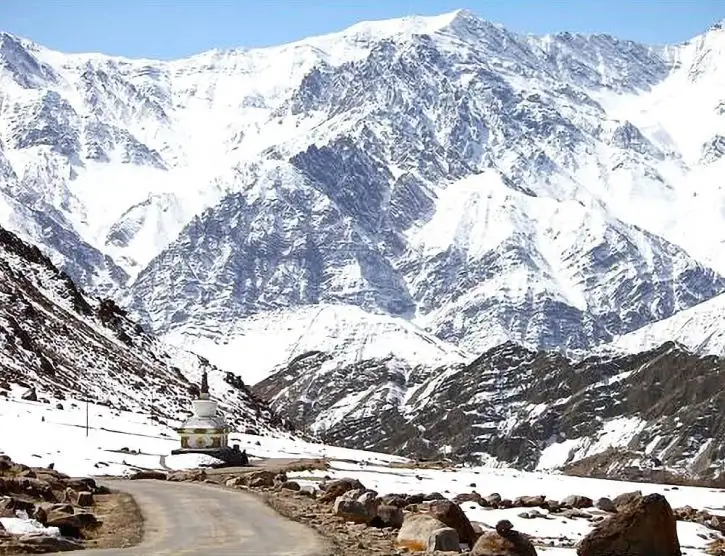
- Ladakh's high desert monasteries at 3,524 meters
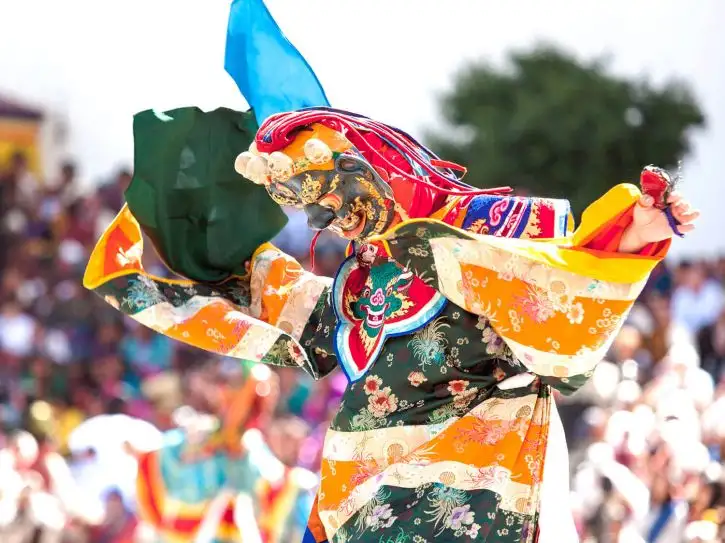
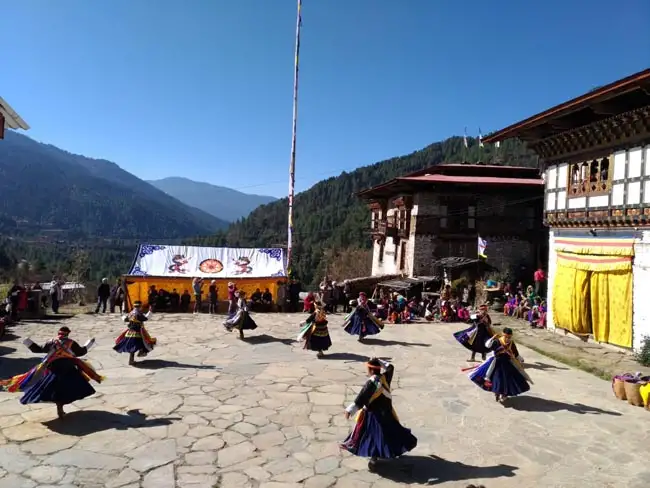
- Bhutan's annual Tsechu festival with masked dances
- Nepal's Kathmandu Valley UNESCO sites
- Trans-Himalayan flight past Everest
- Lhasa's Potala Palace and Jokhang Temple
- Climb to Karo La Pass at 4,794 meters
- Singles friendly (view options for single travellers)
We encounter Tibetan Buddhism expressed differently across four countries: Ladakh's wind-scoured gompas perched on barren ridges, Bhutan's dzongs guarding river confluences, Kathmandu's stupas built by Tibetan traders on ancient trade routes, and — on the extended itinerary — Lhasa's Potala Palace and Jokhang Temple at the tradition's source. Each landscape reveals how devotion adapted to altitude, climate, and geography while preserving shared roots.
This is altitude-intensive travel — roughly half the tour sleeps above 3,500 meters — with two abrupt transitions (Delhi to Leh, Kathmandu to Lhasa) requiring acclimatization days. Road conditions vary from paved highways to mountain switchbacks prone to landslides. The reward: landscapes where thin air meets devotion, where monasteries cling to cliffs 900 meters above valley floors, where the Himalaya's extraordinary ability to humble and inspire reveals itself not through manufactured drama but through the accumulated weight of 23 days climbing toward — and descending from — the roof of the world.
- MealsSavour authentic flavours with included daily breakfasts and dinners at hotels or handpicked local restaurants—immersing you in local cuisine without worrying about reservations or budgets.
- Transport & Logistics
Private air-conditioned coaches and included internal ferries and flights—ensuring hassle-free travel so you can focus entirely on the discoveries ahead.
"Adventures Abroad tour leader's management and guest services managed the tour with great skill and dedication. The tour leader was on top of every move and transfer. We have not experienced any issues with logistics and had a great time."
~ JULIA O"The tour leader did an excellent job coordinating some difficult travel logistics, power outage issues and resolving problems and dealing with guests who had unrealistic expectations."
~ CYNTHIA COLLINS - Expert Guidance
Unlock insider secrets at every landmark with your full-time Tour Leader and expert local guides , all gratuities covered—no hidden tipping surprises—so you immerse fully in your destination's stories, worry-free. (Except for the tips to your tour leader at the end of your tour.)
"Amazing tour guide. Our tour guide was very well organized, Her passion, knowledge, and enthusiasm completely transformed the travel experience into something truly unforgettable..."
~ MELANIE LEMAIRE"Highly recommend every trip with Adventures Abroad. It's a well organized and well thought out adventure. The tour leaders are friendly, knowledgeable and experienced professionals. Highly recommend this company."
~ SUSAN WALL - Sightseeing & EntrancesAll entrance fees for sites visited as per the itinerary—no hidden costs—so you can explore ancient ruins and excursions with complete peace of mind.
- AccommodationsUnwind in clean, well-located 3 to 4-star hotels with private en suite facilities—handpicked for comfort and convenience after each day's discoveries—so you can rest easy knowing your stay supports the real adventure, not steals the spotlight.
- Small Group
Discover the world in small groups of up to 18 travellers plus your expert Tour Leader—unlocking spontaneity, off-the-beaten-path adventures, and genuine connections at a relaxed pace, free from crowds.
"Looking Forward to My Next Adventure The best feature of the Adventures tour was the small size that allowed the group to quickly load up, let everyone get acquainted within the first 24 hours, capitalize on unplanned surprises along..."
~ PHILIP BLENSKI"Good value for a great time I have traveled with Adventures Abroad for over 20 years now. Well thought out, interesting itineraries and the other travelers congenial and friendly. The price always seems fair and overall a..."
~ Trusted Customer - Airport Transfers For Land & Air CustomersWe handle hassle-free airport transfers for all our land and air tour customers—plus early arrivals or late departures when you book extra hotel nights directly with us for added peace of mind.
- International airfare to/from the tour.
- Tour Leader gratuities, lunches in India, Nepal, and Tibet
- Drinks, personal items (phone, laundry, etc), domestic and international (if applicable) air taxes, visa fees, and any excursions referenced as 'optional'.
- Airport transfers for Land Only customers (our start hotel near Delhi Airport likely provide shuttle service).
- Optional trip cancellation insurance.
- Our post-reservation trip notes offer further guidance on shopping, not included meals, visas.
- "Visa Fees" are not included in the tour cost
- We list these separately as they can change without notice (approx US$300). For this tour, these include the cost of your Bhutan pre-clearance and Tibet permit.
- Seasonality and Weather:
Our September-October departures coincide with autumn — the Himalaya's premium travel season. Post-monsoon skies are crystal-clear, weather is stable, and mountain visibility is at its annual peak.
Temperature range: Warm in Delhi and Kathmandu (20-25C / 68-77°F), cool at high elevations in Ladakh and Tibet (10-15°C / 50-59°F days, near-freezing nights). Bhutan's valleys fall comfortably between. Thin air at altitude means intense sun, dramatic swings between sun and shade, and rapid cooling after sunset — pack sunscreen and warm fleece both.
Why this timing: Monsoon rains end by mid-September, leaving valleys green and air clear. October brings reliably dry weather and the year's best Himalayan visibility. Our departures are timed to Bhutan's annual Tsechu festivals — masked dances depicting Buddhist teachings that occur only at specific times each year.
Our departures coincide with a festival in Bhutan (actual festival chosen for our tour can vary from year-to-year). The Tsechu (festival) reflects the deeply rooted religious sentiments of the people. Various types of masked dances are performed. Many depict the story of good triumphing over evil, the day of judgment, matrimonial fidelity etc. - Transport and Travel Conditions:
Land transportation is via private bus or Land Cruiser type vehicle depending on group size and/or conditions. Air-conditioning/heat in vehicles is generally not available in this part of the world. Road conditions are generally quite poor and can be bumpy, and as with all mountain roads the occasional delay can occur due to landslides or adverse weather conditions. The roads are also quite twisty on the mountain sections.
Internal flights via scheduled carriers. Porters are generally available at hotels but you must be able to manage with your baggage at airports.
Though we usually reserve our Difficulty Category 3 rating for our "active" series of tours that include extended hiking/trail walking, our level 3 rating for this tour refers to our moderately strenuous activities and the fact that it is very busy: you must be prepared for some early starts, be steady on your feet, and be able to endure some heat/cold and long travel and sightseeing days at high altitudes. We have numerous walking tours and visit several sites that are LARGE with lots of steps and uneven surfaces.
This tour operates at significant altitude for extended periods. Participants should understand the elevation profile before booking. ALL PASSENGERS are required to complete a simple medical self-assessment questionnaire attesting to your fitness for this journey. Those with pre-existing conditions that could be exacerbated by travel at high altitude or on poor roads, or persons with compromised immune systems and mobility problems, should carefully consider their participation.
The itinerary includes two abrupt altitude transitions — Delhi to Leh on Day 2 (sea level to 3524 m/11,562 ft) and Kathmandu to Lhasa on Day 15 (1310 m/4,297 ft to 3650 m / 11,975 ft) — with rest days built in after each. However, participants should be aware that roughly half the tour is spent sleeping above 3500 m (11,483 ft), where altitude effects are common even among fit travellers.
Am I suitable for this tour? Please refer to our self-assessment form - Activity Level: 3
These tours are considerably more strenuous than our Level 1 & 2 "cultural" tours and feature walks/hikes on undulating and uneven pathways for 3-7 hours at a leisurely pace. We don't hike every day, but participants should be fit and active and accustomed to trail walking, possibly in remote locations, and be prepared to engage in a conditioning regimen prior to the trip. Altitude may also be a factor on some tours, though none of our hiking tours currently occur above 3000m/10,000 ft. These are hotel-based tours with no camping, and you are required to only carry what you need for the day.
To learn more about the Activity levels, please visit our tour styles page. - Accommodation:
We will be staying in hotels with private bathrooms, and there will be hot water, though in more remote areas this may only be available in the morning and evening. Few of the hotels are centrally-heated, although coal fires can sometimes be provided in the bedrooms.
Generally hotels are comfortable and often spectacularly-located, though simple with quirks that can range from charming to frustrating.
Single rooms are limited and possibly smaller than twins. Porters are generally available (see 'Inclusions'). - Staff and Support:
Tour Leader throughout, local drivers, local guides at various locations. - Group Size:
Maximum 18 plus Tour Leader
- Day 1:Arrive in DelhiWelcome to India! Despite its recent transformation into a cosmopolitan hub for global business and technology, Delhi remains surprisingly green, with extensive gardens, parks, and protected woodlands softening the urban sprawl. This vast metropolis serves as both the nation's capital and a living monument to millennia of history, where Mughal fortresses stand beside modern infrastructure and ancient bazaars pulse with contemporary commerce.
This evening we gather with fellow travellers for our first meal together, preparing for an extraordinary journey across the Himalayan kingdoms.
Overnight in Delhi (airport area hotel).
Included Meal(s): Dinner - Day 2:Delhi - Fly to Leh, Ladakh: Arrival & AcclimatisationEarly this morning we fly to Leh at 3524 m/11,562 ft elevation, one of the world's most spectacular commercial flights. The aircraft climbs over the Greater Himalaya before descending into the small mountain-ringed airport serving Ladakh's capital.
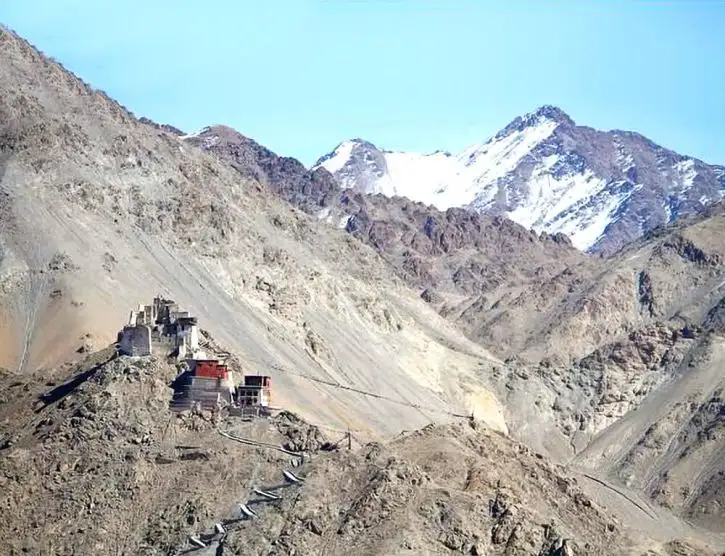
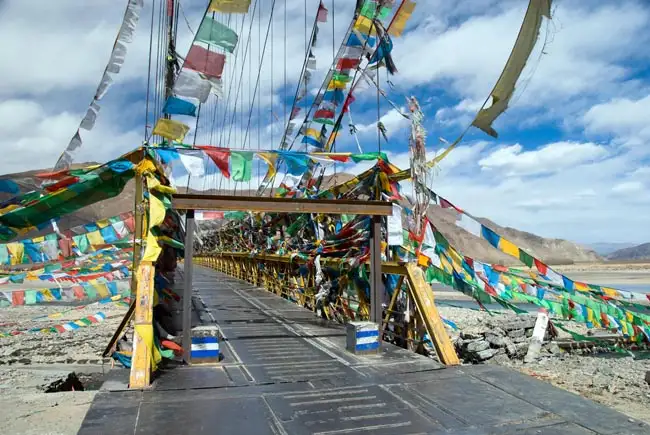
Leh reveals its Tibetan character immediately: residents wear traditional dress including distinctive stove-pipe hats and felt boots with turned-up toes. The Royal Palace dominates the townscape, its tiered structure deliberately echoing Lhasa's Potala Palace. Tibetan Buddhist monasteries, large chortens, prayer flags snapping in the wind, and mud-brick houses with flat roofs create a dramatic cultural contrast to the heat and chaos we left behind in Delhi. The architecture deliberately echoes forms we'll encounter repeatedly as we climb higher into the Himalaya: prayer flags, chortens, gompas clinging to mountainsides.
The remainder of the day allows for essential acclimatisation to the dramatic altitude change. Your Tour Leader will likely suggest an easy orientation walk through Leh's colourful markets and central hub, keeping exertion minimal while bodies adjust to the thin air.
Overnight in Leh.
NOTE: The order of Leh area sightseeing may vary due to weather and logistical considerations. Your Tour Leader will space activities strategically to account for the sudden elevation change.
Included Meal(s): Breakfast and Dinner - Day 3:Leh: Alchi Monastery & Likir GompaToday we drive across Ladakh's arid high plateau to Alchi, one of the region's largest ancient monastic complexes and an important Buddhist centre. Founded in the 11th century by Rinchen Zhangpo, an early Tibetan preacher who spread Lamaistic Buddhism throughout this region, Alchi currently undergoes major restoration work under UN sponsorship. The 1,000-year-old paintings inside the main temple rank among the oldest surviving examples of their kind, distinctly different from murals in later-built gompas.
We return toward Leh via the confluence where the grey Indus River meets the blue waters of the Zanskar River flowing from the remote Greater Himalaya. We also visit Likir Gompa, magnificently set on an isolated ridge overlooking Likir village. Founded in the 14th century, this monastery belongs to the Yellow Hat Sect and holds special significance: the head lama here is the younger brother of the Dalai Lama. Likir Gompa ranks among Ladakh's oldest and best-maintained monasteries.
Overnight in Leh.
Included Meal(s): Breakfast and Dinner - Day 4:Leh: Hemis Gompa & Stok GompaEarly this morning we drive east along the Indus Valley toward Hemis Gompa, dramatically hidden in a mountain cleft approximately 50 km/31 mi from Leh. Situated on the Indus River's west bank, Hemis ranks as Ladakh's wealthiest and largest monastery. The complex houses a gigantic thangka, one of the world's largest and certainly one of Ladakh's most important religious artifacts. Founded approximately 350 years ago by Stagtshang Rinchen, who came to Ladakh at King Singe Namgyal's invitation, the monastery remains an active centre of Buddhist practice.
Returning toward Leh, we stop at Stok Gompa, dating to the 14th century. Hidden behind a screen of trees about 2 km/1.2 mi south of the palace, Stok's small monastery features crumbling old stupas, though its dominant feature rises 200 m/656 ft above: a brand-new gilded Buddha visible from most of the village. Bright frescoes depicting the Guardians of the Four Directions adorn the monastery's veranda. The monastery's library houses a complete set of the Kangyur, the 108 volumes containing Buddha's teachings, making this an important repository of Buddhist scholarship.
Overnight in Leh.
Included Meal(s): Breakfast and Dinner - Day 5:Leh: Khardung La Pass & Leh PalaceThis morning we take a jeep excursion up the hairpin switchbacks leading to Khardung La Pass at 5470 m/17,946 ft, the world's highest vehicular-accessible pass. The climb provides stunning views of the Zanskar Range and Indus Valley, with frequent yak sightings on high pastures below the pass. Built at tremendous human and financial cost by the Indian Army following Chinese incursions after Tibet's occupation in the late 1950s, this road crosses the Ladakh Range and provides access to the Nubra Valley and Karakoram region.
Later we explore Leh Palace, a striking nine-storey structure perched on a hill overlooking the town. Built in the 17th century by King Sengge Namgyal, this palace served as the royal residence until the 1830s. The design blends Tibetan, Indian, and Mughal influences, with upper floors housing the royal family and lower floors used for stables and storage. The exterior combines sun-dried bricks with wooden frames, reflecting traditional Tibetan-style architecture through sloping walls and narrow windows.
Inside, we wander through deserted halls that once buzzed with royal life. Though faded, the murals offer glimpses into the past, depicting religious motifs and scenes from Ladakhi culture. UNESCO currently undertakes restoration work to preserve the palace's historical authenticity. From the upper floors and balconies, we enjoy panoramic views across Leh and surrounding landscapes, appreciating the town's strategic importance in this high mountain valley.
Overnight in Leh.
Included Meal(s): Breakfast and Dinner - Day 6:Leh - Fly to DelhiToday we fly from Leh back to Delhi. If time permits, we enjoy some sightseeing in Delhi this afternoon, making the most of our return to lower elevations before tomorrow's onward journey.
Overnight in Delhi (likely an airport area hotel).
Included Meal(s): Breakfast and Dinner - Day 7:Delhi - Paro, Bhutan - Drive to ThimphuToday we fly to Bhutan, one of the Himalaya's most exclusive destinations. Our descent into Paro ranks among aviation's most thrilling approaches as the aircraft glides into the valley between towering peaks. Red chillies drying on farmhouse roofs come into view as we descend, and crisp mountain air greets us upon landing. Where Ladakh's monasteries stood exposed on barren ridges, Bhutan tucks its dzongs into forested valleys — different landscapes, shared devotion.
We drive approximately one hour to Thimphu at 2320 m/7,612 ft, the nation's capital. En route we see the Iron Bridge Builder Monastery perched on the opposite hillside and cross the Chuzom confluence where stupas in three distinct styles (Bhutanese, Nepalese, and Tibetan) mark the meeting of rivers.
Thimphu presents an engaging mix of traditional and developing: small cafes, bookshops, and handicraft stores line streets where residents wear traditional gho and kira dress. The compact town centre accommodates approximately 100,000 people and lends itself well to exploration on foot. Built along traditional architectural lines and established as capital only in the 1950s, Thimphu serves as Bhutan's administrative centre while maintaining its distinctive character.
Overnight in Thimphu.
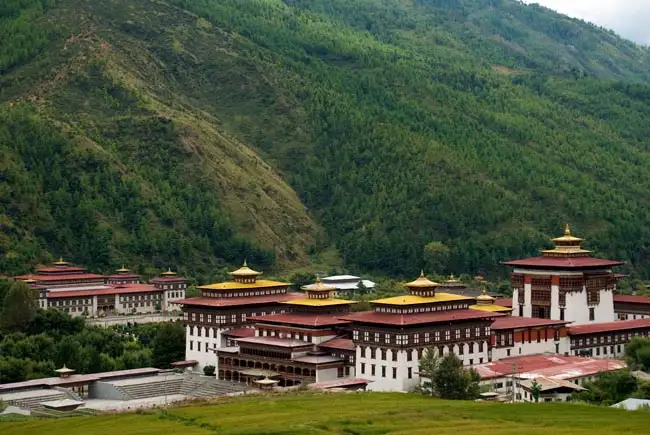
Included Meal(s): Breakfast and Dinner - Day 8:Thimphu: Tashichho Dzong & Thimphu Tsechu FestivalThis morning we visit the impressive Tashichho Dzong, Bhutan's traditional summer capital and current seat of government. The present building, reconstructed on the site of a dzong erected by Ngawang Namgyal in 1641, retains many features of the original fortress-monastery. This imposing structure houses all government departments and ministries, the King's throne room, the National Assembly chambers, and the nation's largest monastery with over 2,000 monks in residence.
Our departure coincides with the Thimphu Tsechu, an annual festival held at Tashichho Dzong. For three days, masked dancers perform elaborate ceremonies reflecting the deeply rooted religious sentiments of the Bhutanese people. Many dances depict stories of good triumphing over evil, the day of judgement, and moral teachings central to Buddhist philosophy. The pageantry, intricate costumes, and spiritual devotion create an unforgettable spectacle unique to Bhutan's living Buddhist culture.
Overnight in Thimphu.
NOTE: Occasionally we include a festival in another location should announced dates prove suboptimal for our itinerary. The overall experience remains consistent as all tsechus operate on similar concepts with comparable ceremonies, costumes, and customs.
Included Meal(s): Breakfast, Lunch and Dinner - Day 9:Thimphu - Dochula Pass - Punakha DzongThis morning we depart Thimphu via the spectacular Dochula Pass at 3031 m/9,944 ft, climbing steeply through forests of pine and cedar with panoramic Himalayan views when weather permits. The drive to Punakha covers 77 km/48 mi and takes approximately three hours.
Today's journey takes us deep into Bhutan's heartland, offering insight into a way of life that has changed remarkably little over centuries. Modern development has brought improved education, healthcare, and electricity to remote areas, yet the small farm-based economy that has sustained local populations for generations remains largely intact. Located at a relatively low 1300 m/4,265 ft elevation in a rain shadow, the Punakha Valley produces most of Bhutan's commercially-grown oranges and fruits. Despite favourable growing conditions, the valley's population remains remarkably sparse. Until recently, Punakha served as Bhutan's winter capital and continues as the winter headquarters of the Je Khenpo (Head Abbot) and his monks.
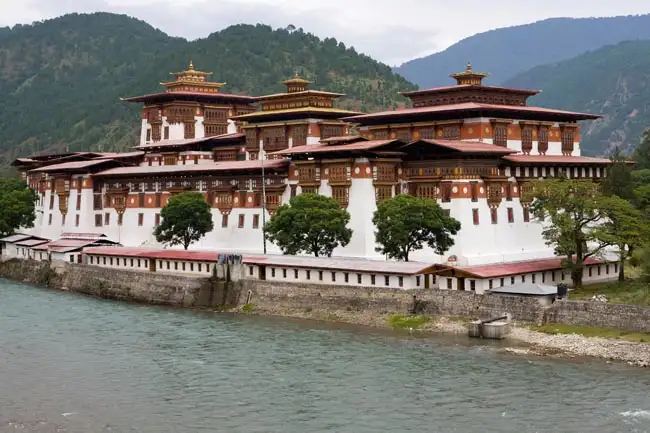
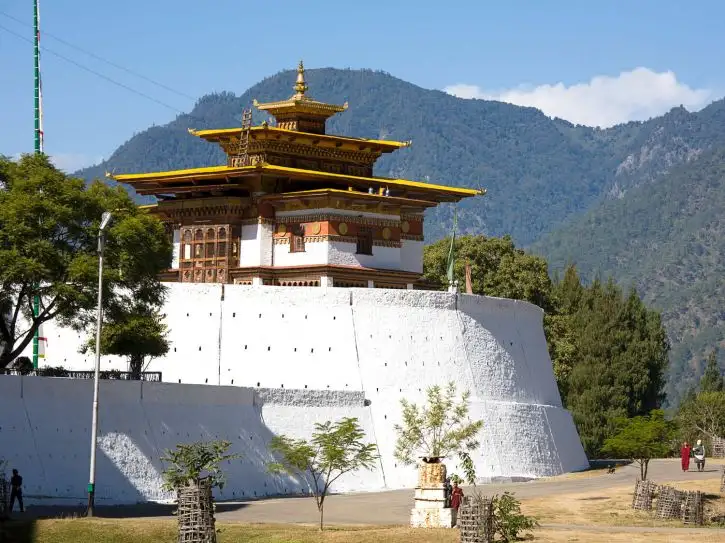
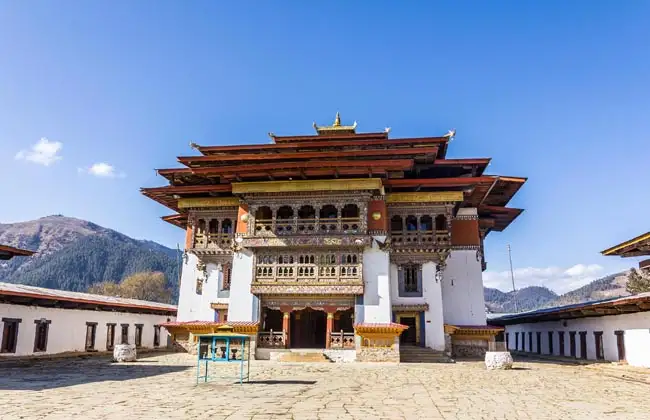
Upon arrival we visit Punakha Dzong, arguably Bhutan's most beautiful fortress-monastery. This magnificent structure straddles an island at the confluence of the Pho Chu and Mo Chu rivers (male and female tributaries). We've seen monasteries guard mountain passes in Ladakh; here in Bhutan, they guard river valleys. The architectural vocabulary changes, but the principle holds: devotion expressed through placement, not just construction. Built as Bhutan's second dzong, it served as the capital and seat of government until the mid-1950s. All of Bhutan's kings have been crowned here, and the dzong remains the winter residence of the monastic body. Recent magnificent restoration befits its status in Bhutanese history.
Overnight in Punakha.
Included Meal(s): Breakfast, Lunch and Dinner - Day 10:Punakha - Paro: Paro Dzong & Valley TouringToday we travel by road to Paro at 2280 m/7,480 ft, set in what many consider the most beautiful of Bhutan's main valleys. Paro Dzong dominates the landscape, perched above the glacial Paro Chu River. This particularly important and historic fortress-monastery has played a central role in Bhutanese history since its initial construction.
Paro thrives as an agricultural valley and hosts some of Bhutan's holiest Buddhist sites. Before roads were built, most of Bhutan's trade flowed through Paro, either from Tibet via Tremo La or from the south via Haa. The valley extends from Jumolhari on the Tibetan border to Chuzom, where the Thimphu and Punakha rivers meet.
The town presents an engaging mix of traditional architecture interspersed with handicraft stores, cafes, and galleries. Situated below the dzong, the town centre is accessible via a traditional cantilever bridge. Chortens (prayer shrines) stand alongside the bridge near Ugyen Pelri Palace. We visit the local monastery at one end of town and, if fortunate, may observe an archery match at the field near Ugyen Pelri Palace, as archery remains Bhutan's national sport and a common community activity.
Overnight in Paro.
Included Meal(s): Breakfast, Lunch and Dinner - Day 11:Paro: Kyichu Lhakhang, National Museum & Tiger's Nest ViewpointThis morning we visit Kyichu Lhakhang, one of Bhutan's oldest and most beautiful temples, situated among paddy fields a short drive from town. This temple is venerated as being as holy as the monastery in Lhasa. Nearby, the small Dumtse Lhakhang was built in Tibetan style, and legend claims it flew here from Tibet.
We visit the Paro National Museum, housed in a 17th-century watchtower above the dzong (currently, exhibits are viewed in an adjoining building while the tower undergoes repairs). Opened in 1968, the museum features a renowned collection of fine arts, paintings, and bronzes. Displays include textiles, jewellery, handicrafts, and a chapel on the top floor containing a "tree" depicting main figures from the four schools of Tibetan Buddhism. Beautiful panoramic views extend across Paro Valley from this elevated position.
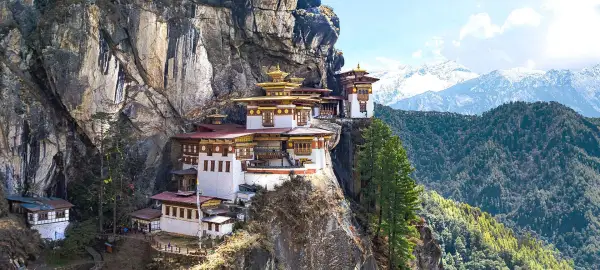
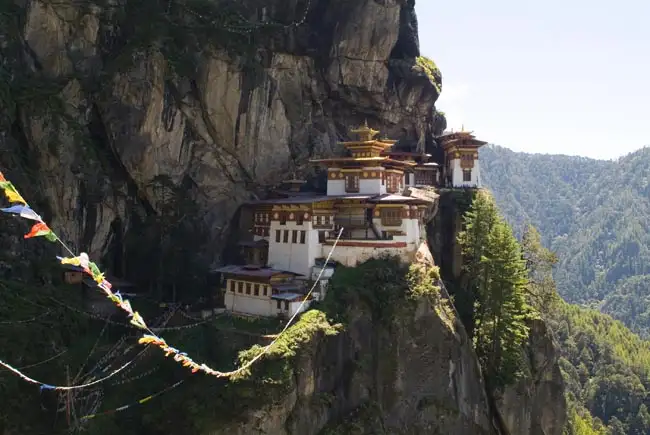
We also visit Rinpung Dzong, which serves as headquarters for both local government and the monastic body. At some point during our Paro visit, we drive up the valley to view the famed Taktsang (Tiger's Nest) monastery from a viewpoint. Originally built in the 8th century and reconstructed after a devastating 1998 fire, this iconic monastery clings impossibly to a sheer cliff face 900 m/2,953 ft above the valley floor. Built where devotion met altitude, Tiger's Nest makes literal what we've felt abstractly since Leh: the Himalaya pulls the sacred upward.
Overnight in Paro.
NOTE: Those interested in hiking to Tiger's Nest monastery should consult with your Tour Leader upon arrival. The excursion requires a bus ride followed by a 6-7 hour hike over steep terrain at approximately 2700 m/8,858 ft elevation. Your Tour Leader can provide details and assist with arrangements, including the required special permit.
Included Meal(s): Breakfast, Lunch and Dinner - Day 12:Paro, Bhutan - Kathmandu, Nepal: Durbar Square & SwayambhunathToday we fly from Paro to Kathmandu at 1,310 m/4,297 ft, Nepal's capital city.
Wedged between the high Himalaya and the steamy Indian plains, Nepal serves as Asia's very watershed. The country's cultural landscape equals its physical diversity, with peoples belonging to numerous distinctive ethnic groups speaking a host of languages. Massive mountains, golden temples, fluttering prayer flags, Buddhist stupas, and extraordinarily welcoming people make Nepal unforgettable.
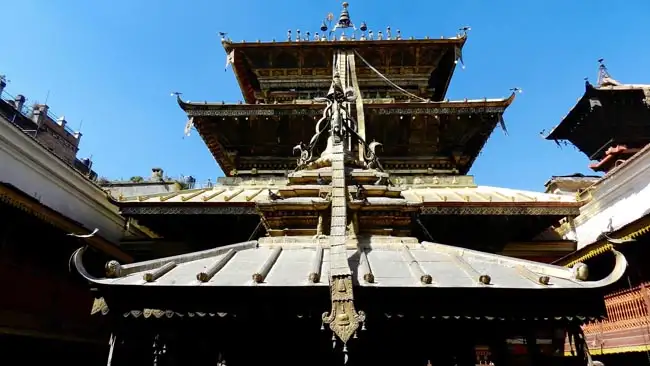
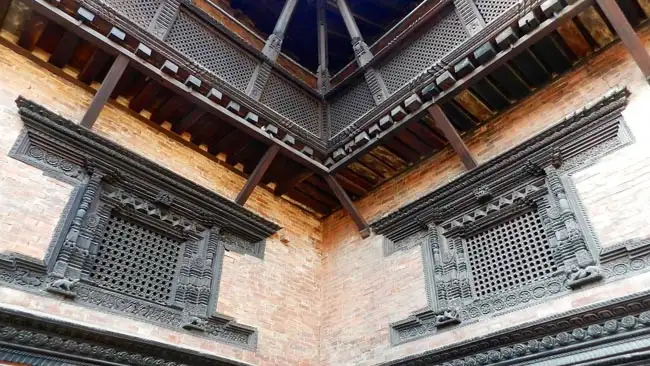
Kathmandu reveals itself as an eminently liveable city where pagodas dominate open squares and narrow alleys wind between wooden buildings with intricate fretwork screens. Thousands of years of culture unfold through historic temples and monasteries belonging to both Hindus and Buddhists.
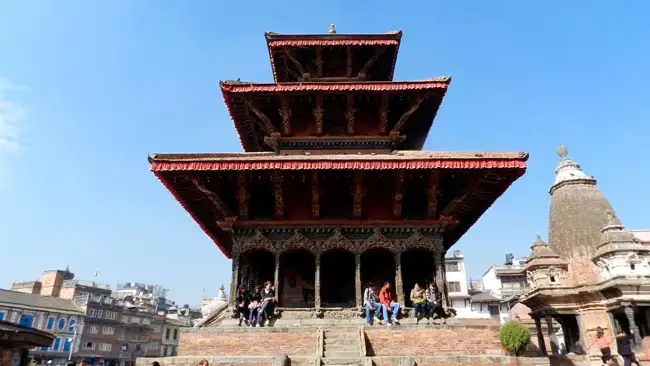
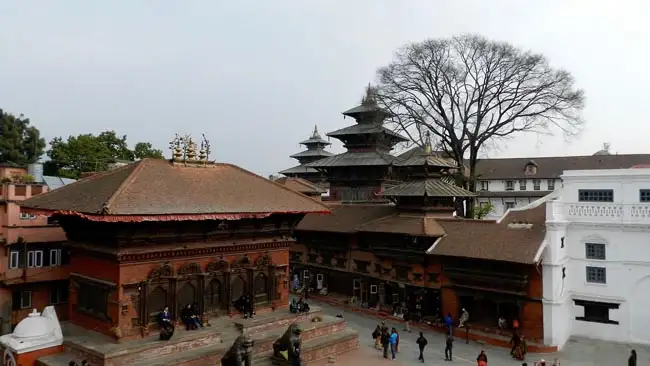
After settling into our hotel, we visit Durbar Square, Kathmandu's central meeting area and a profusion of temples reflecting architectural styles dating from the 11th century onward. This UNESCO World Heritage site was where kings were crowned and ruled. The area comprises three loosely linked squares including the Royal Palace with its gilded gates and elaborate statues. The square throngs with visitors mingling among stalls displaying Nepalese and Tibetan handicrafts.
We continue to Swayambhunath Temple at approximately 1400 m/4,593 ft, Nepal's most significant centre of Buddhist worship. This UNESCO World Heritage site, also known as the Monkey Temple due to its large resident monkey population, has occupied this hilltop location since at least the 5th century. The temple buildings offer excellent views across Kathmandu and its valley.
This afternoon we visit Patan, located just 5 km/3 mi from Kathmandu. Despite such proximity, Patan's preserved character distinguishes it as distinctly different. Patan's Durbar Square contains some of Nepal's finest examples of Newari architecture.
Overnight in Kathmandu.
NOTE: During our Nepal stay, travellers booked on tour code HH1 with Tibet will complete bureaucratic requirements for our Tibet permits through the Chinese Embassy in Kathmandu. This process requires at least three days, so we'll explore Nepal's cultural treasures while permits are finalised.
Included Meal(s): Breakfast and Dinner - Day 13:Bhaktapur, Pashupatinath & Boudhanath - Drive to NagarkotToday we explore historic Bhaktapur at approximately 1400 m/4,593 ft, a UNESCO World Heritage Site founded in the 12th century. This ancient city contains remarkable Hindu and Buddhist religious sites and art, though the tragic 2015 earthquake caused terrible devastation. Whole streets of traditional houses were lost, and while only a few temples were completely destroyed, the disaster's scars remain clearly visible. Full recovery will require years of dedicated restoration work.
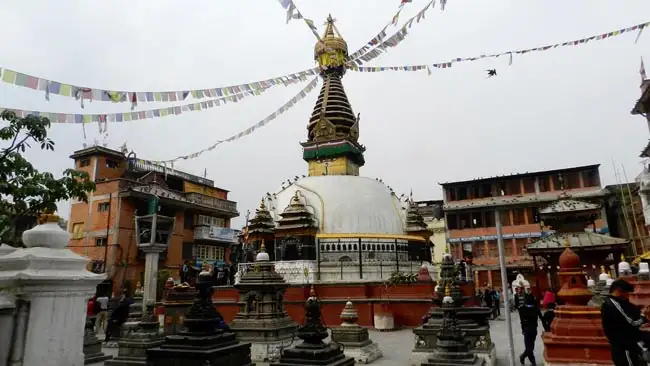
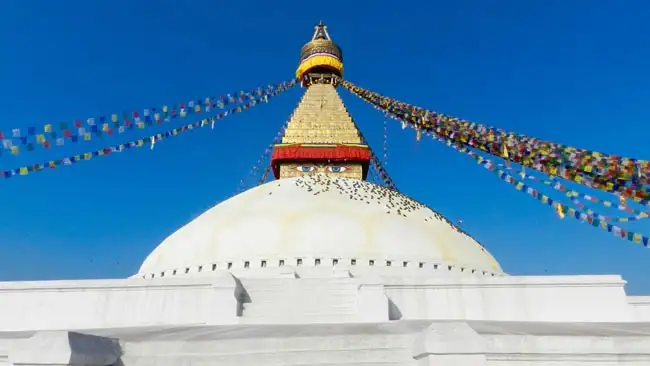
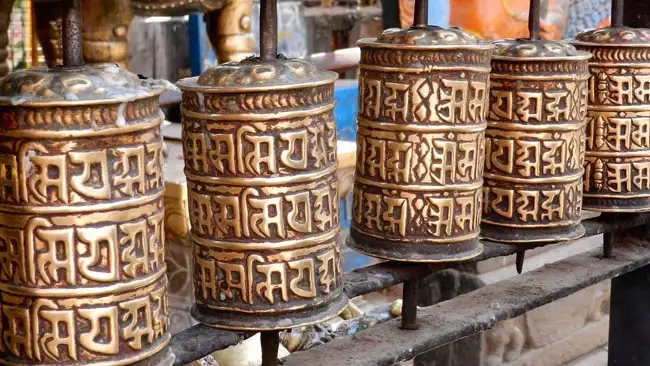
Beyond Bhaktapur, we explore additional Kathmandu Valley sites. Pashupatinath at 1330 m/4,364 ft ranks as perhaps Nepal's most important Hindu temple and one of the subcontinent's most significant Shiva temples, drawing numerous devotees from across India annually. Boudhanath at 1350 m/4,429 ft, among South Asia's largest stupas, has become Tibetan Buddhism's focal point in Nepal. The white mound looms 36 m/118 ft overhead. Located on the ancient trade route to Tibet, this stupa provided a resting place where Tibetan merchants offered prayers for centuries. When refugees fled Tibet in the 1950s, many settled around Boudhanath, establishing numerous gompas and creating Nepal's "Little Tibet." This remains the valley's best location for observing Tibetan lifestyle: monks in maroon robes, prayer wheels spinning, and devotees performing ritual prostrations as they circumambulate the stupa.
Our destination today is Nagarkot at 2195 m/7,201 ft, positioning us perfectly for tomorrow's sunrise viewing.
Overnight in Nagarkot.
Included Meal(s): Breakfast and Dinner - Day 14:Nagarkot Sunrise & Chandragiri Hill PanoramaBefore dawn we rise to witness sunrise over the Himalaya from Nagarkot, a popular hill station east of Kathmandu. The viewpoint tower sits at 2195 m/7,201 ft elevation, providing one of the region's best panoramic views encompassing eight mountain ranges stretching from Annapurna in the west to Makalu in the east. On exceptionally clear days, Mount Everest becomes visible. Weather permitting, we hope to view the Central Himalayan ranges, including the Langtang and Rolwaling ranges.
On our return drive to Kathmandu this afternoon, we ascend Nepal's newest cable car up Chandragiri Hill to approximately 2550 m/8,366 ft for more impressive Himalayan vistas. Opened in 2016, this exciting 10-minute journey carries us to the summit where panoramic views of the snow-capped Himalaya unfold before us. We spend time enjoying this spectacular setting before descending. From these viewpoints, the peaks that separate Nepal from the Tibetan plateau stand impossibly close and impossibly distant — visible, yet beyond reach for most who've come here across the centuries.
This afternoon provides free time in Kathmandu for independent exploration or relaxation.
Overnight in Kathmandu at 1310 m/4,297 ft.
Included Meal(s): Breakfast and Dinner - Day 15:Kathmandu - Trans-Himalayan Flight to Lhasa, TibetToday we fly to Tibet on a remarkable trans-Himalayan flight passing directly by the Everest group of peaks. In slightly over one hour, we cross terrain that once required months for trade caravans to navigate. The landscape transforms below us: Nepal's green terraced hillsides give way to the high, barren plateau. This flight completes a pattern we've been following since Leh — we've encountered Tibetan Buddhist forms at the Himalaya's edges: Ladakh's wind-scoured gompas, Bhutan's valley dzongs, Kathmandu's Boudhanath stupa built by Tibetan traders. Now we arrive at the cultural heartland from which those traditions radiated outward: Lhasa at 3650 meters, on the roof of the world. On clear days, as many as eight of the world's fourteen peaks exceeding 8000 m/26,247 ft become visible. We fly over deep-blue Yamdrok Lake before landing at Gonggar Airport at approximately 3570 m/11,713 ft, some 85 km/53 mi south of Lhasa.
Upon arrival we drive along the flat Yarlung Tsangpo River valley to our hotel in Lhasa. The remainder of the day allows acclimatisation to the high altitude, essential for comfortable activity in coming days. This represents the tour's second major altitude transition, ascending over 2,300 m/7,500 ft from Kathmandu in just over an hour.
Referred to as the "Roof of the World," Tibet feels both mystical and profoundly spiritual, as if we've entered an entirely different realm.
Overnight in Lhasa.
NOTE: Occasionally we must fly to Lhasa on Day 16 due to changeable flight schedules. If this occurs, we add sightseeing in Nepal today (Old Town of Kirtipur, Khokana, and Bungamati) and adjust the Tibet itinerary so no listed sites are missed. Your Tour Leader will brief you of any changes while on tour.
Included Meal(s): Breakfast and Dinner - Day 16:Lhasa: Jokhang Temple & the Barkhor CircuitWe begin our day at Jokhang Temple at 3650 m/11,975 ft, the religious and geographical centre of Lhasa and the most important temple in the world for all sects of Tibetan Buddhism. Pilgrims from across Tibet, many having walked hundreds of kilometres to visit the Jokhang once in their lives, queue for hours to enter and perform ritual circuits in prostration before its sacred shrines. Joining them through dark hallways filled with low chanting and lit only by butter lamps creates a moving experience. In Leh and Paro and Kathmandu, we've walked among pilgrims. Here at the Jokhang, we understand where their journeys begin and end. The main image worshipped here is Jowo Rinpoche, a gilded Buddha Shakyamuni statue said to have been modelled during his lifetime.
The Jokhang is encircled by the Barkhor, an 800 m/2,625 ft flagstone pathway serving as both sacred circumambulation route and Tibet's largest bazaar. Day and night, Tibetans walk clockwise around it, earning religious merit while shopping, people-watching, and chatting with friends. Here we encounter people from across Tibet: striking tall Khampa men from the east with elaborate knives and red tassels wrapped in their hair, Golok women with hair plaited in 108 tiny braids, nomad families bundled in sheepskins. The Barkhor represents Tibet's true beating heart.
Overnight in Lhasa.
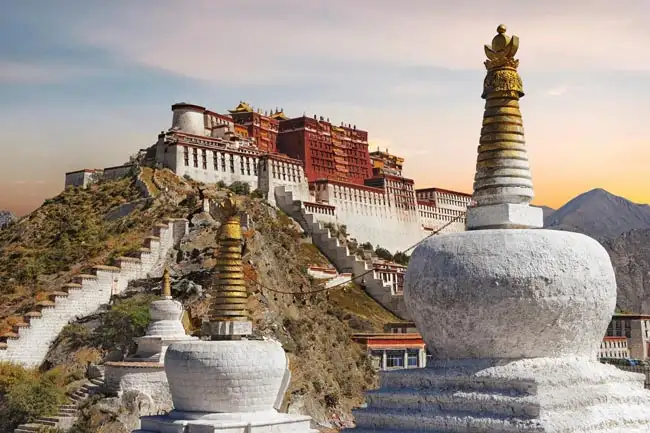
Included Meal(s): Breakfast and Dinner - Day 17:Lhasa: Potala Palace & Sera MonasteryThis morning we visit the magnificent Potala Palace, once the seat of Tibetan government and winter residence of the Dalai Lamas. The Potala stands as Lhasa's cardinal landmark, though the site's first recorded use dates to the 7th century AD. The palace reached its full glory during the 17th-century reign of the Fifth Dalai Lama. Rising 117 m/384 ft high across 13 storeys and constructed entirely of wood, earth, and stone, the Potala contains over 1,000 rooms. Leh's palace deliberately echoed this one. The Potala is the original — 13 storeys, 117 meters high, visible for miles across the plateau.
This afternoon we visit Sera Monastery, one of the most important Gelugpa (Yellow Hat sect) monasteries. Located at the foot of Tatipu Hill in Lhasa's northern suburbs, Sera ranks as one of three famous monasteries alongside Drepung and Ganden. The monastery hosts the famous monk debates on some weekday afternoons. During this ritual question-and-answer session, senior monks quiz juniors with much grimacing, clapping, and mock threatening. Though seemingly entertaining to visitors, these debate rituals constitute serious business, serving as an important component of monks' training in theosophical questions of Tibetan Lamaistic Buddhism.
Overnight in Lhasa.
Included Meal(s): Breakfast and Dinner - Day 18:Lhasa: Drepung Monastery & NorbulingkaThis morning we visit Drepung Monastery, located at the foot of Mount Gephel. Dating to 1416, this was once Tibet's largest monastery, housing over 10,000 monks at its peak. Today Drepung accommodates approximately 700 monks and attracts pilgrims and visitors from around the world. With numerous mansion-like buildings and zigzagging alleys, the monastery resembles an impressive city unto itself. Both Drepung and Sera suffered varying degrees of damage during the Cultural Revolution's turbulent days but have since been restored, and monks have returned.
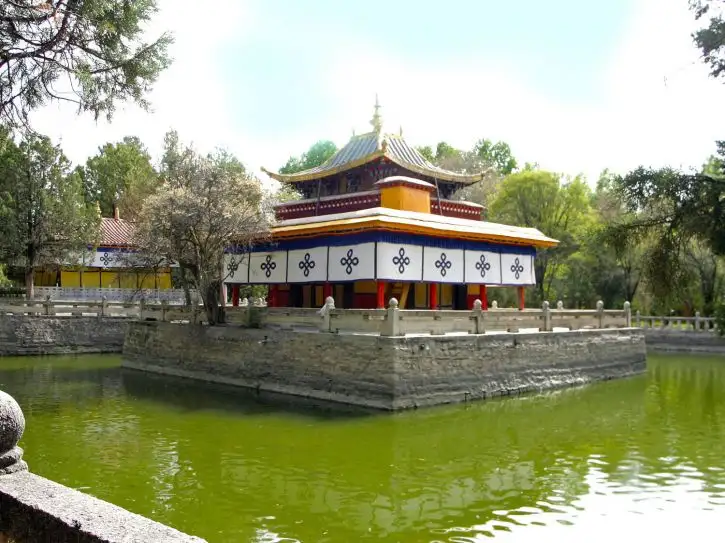
This afternoon we visit Norbulingka, the Dalai Lama's summer palace and current site of a museum. The name means "Treasure Garden" in Tibetan. First built in 1751, it borrowed architectural styles from inland China while maintaining local ethnic and religious features. Norbulingka served as traditional summer palace and residence beginning with the Seventh Dalai Lama, and now ranks as Tibet's largest garden.
Nearby, the Tibet Museum houses a rich collection including prehistoric cultural relics, statues, imperial jade seals, gifts granted by emperors, colourful thangkas, and various Sanskrit and Tibetan scriptures. Folk art displays include unique Tibetan handicrafts, costumes, and jewellery crafted from gold, silver, and jade, alongside fine Chinese pottery.
Overnight in Lhasa.
Included Meal(s): Breakfast and Dinner - Day 19:Lhasa - Gyantse - Yamdrok Tso Lake - ShigatseAn early departure takes us across the high Tibetan plateau toward Shigatse. We pass colourful rock carvings of Buddha as we leave Lhasa's outskirts, following the Yarlung Tsangpo River which, upon entering India, becomes the Brahmaputra. From Kamba La Pass at 4794 m/15,728 ft, spectacular views unfold across the blue waters of sacred Yamdrok Tso Lake at 4400 m/14,436 ft. The lake lies surrounded by snow-capped peaks, and in the distance, Holy Mount Nyenchen Khangsar rises to 7191 m/23,593 ft, the highest mountain near Lhasa. At nearly 5000 meters, this is the highest we'll reach. The air is impossibly thin, the light sharp and clean. This is the altitude Tibetan Buddhism was born into.
We cross the mighty Yarlung Tsangpo River and follow Yamdrok Tso's twisting northern bank for hours before climbing to Karo La Pass, flanked by gigantic peaks including 7260 m/23,819 ft Nazin Kang Sa.
Continuing toward Shigatse, we stop at Gyantse, famous for its multi-tiered stupa known as the Kumbum. The sprawling Pelkor Chode Monastery compound houses this monumental chorten filled with fine paintings and statues. Palkhor lies at Dzong Hill's foot and is renowned for its Kumbum containing 108 chapels across four floors. The multi-storey Kumbum Stupa wears a golden dome and umbrella, surrounded by chapels filled with unique religious statues and murals.
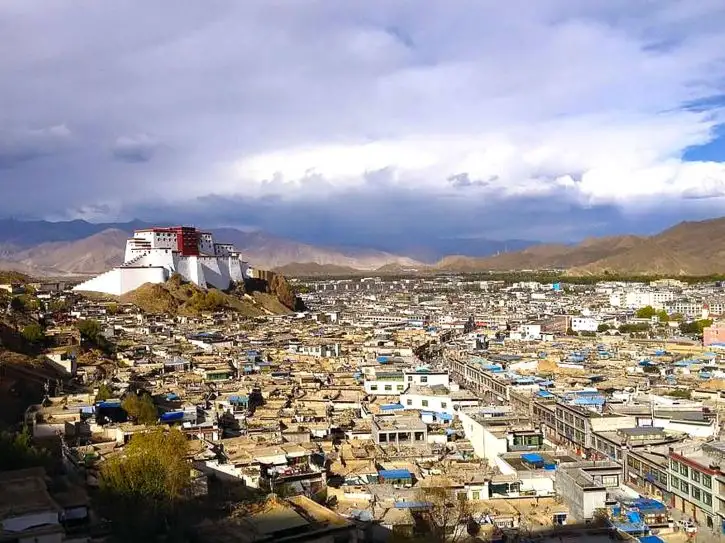
We arrive in Shigatse at 3900 m/12,795 ft, Tibet's second-largest city and seat of the Panchen Lama.
Overnight in Shigatse.
Included Meal(s): Breakfast and Dinner - Day 20:Shigatse Area SightseeingToday we visit Shigatse's main attraction, Tashilhunpo Monastery. Located on a central hill, the monastery's full Tibetan name means "all fortune and happiness gathered here." Standing at the entrance, we see grand buildings with golden roofs and white walls rising before us. The remarkable Thangka Wall, nine floors high, was built by the First Dalai Lama in 1468. The images are so massive they're easily visible from Shigatse City. Main structures include the Maitreya Chapel, Panchen Lama's Palace, and Kelsang Temple.
Tashilhunpo has served as the Panchen Lama's seat since the Fourth Panchen Lama took charge. The Panchen Lama ranks as Tibet's second most important spiritual leader after the Dalai Lama. Approximately 800 lamas currently reside here, maintaining this important centre of Tibetan Buddhism.
Overnight in Shigatse.
Included Meal(s): Breakfast and Dinner - Day 21:Shigatse - LhasaToday we retrace our route back to Lhasa for our final night in Tibet. Travelling by road from Shigatse to Lhasa offers an immersive experience, allowing connection with Tibetan landscape and culture impossible to achieve by other means. The journey provides opportunities to observe rural Tibetan life, small villages, and the dramatic high-altitude scenery that defines this remarkable region. Tomorrow we descend, carrying what we've seen.
NOTE: We do not end our tour in Lhasa as visa regulations require all group members to depart Tibet (China) on the same flight on the same day.
Overnight in Lhasa.
Included Meal(s): Breakfast and Dinner - Day 22:Lhasa, Tibet - Fly to Kathmandu, NepalToday we fly back to Kathmandu, completing our circuit of the Himalayan kingdoms. The trans-Himalayan flight provides a final opportunity to view the world's highest peaks from above. The same peaks we crossed two weeks ago. This time we carry the knowledge of what lies beyond them.
This evening we convene for our farewell dinner, sharing memories of an extraordinary journey through Ladakh, Bhutan, Nepal, and Tibet.
Overnight in Kathmandu.
Included Meal(s): Breakfast - Day 23:DepartureThis morning we depart Kathmandu, our journey through the Himalayan kingdoms complete.
From Delhi's plains to Ladakh's high desert monasteries, from Bhutan's fortress valleys to Nepal's sacred temples, from the Tibetan plateau's spiritual heartland back to Kathmandu's vibrant streets — we've traced a vertical arc across the Himalaya. Not just altitude gained and lost, but a pattern followed to its source and carried back down. The prayer flags we saw in Leh make more sense now. So do the chortens in Paro, the stupas in Kathmandu. They were always pointing upward, toward the plateau where thin air and devotion meet. We followed them all the way. Now we descend, but the mountains remain.
Bon Voyage! Namaste! Tashi Delek!
Included Meal(s): Breakfast
Countries Visited: Bhutan, India, Nepal and Tibet
*The red tour trail on the map does not represent the actual travel path.
Book This Tour
- Final payment: Due 90 days prior to departure.
- Deposit: A non-refundable $1000 CAD Deposit is required at booking.
- Optional Single Supplement: $2930 CAD (number of singles limited).
(View options forsingle travellers) - $1000 deposit required. Once our tour becomes 'guaranteed,' we will request an additional pre-payment of $1500 per person. Contrary to our usual terms and conditions governing deposits, once the tour is guaranteed and further pre-payment is made, all monies become 100% non-refundable, non-transferrable.
Prices below are per person, twin-sharing costs in Canadian Dollars (CAD). Pricing does not include airfare to/from the tour and any applicable taxes.
Frequently Asked Questions
- What is the maximum number of participants on a trip?Most of our tours carry a maximum of 18 participants; some tours (ie hiking tours) top out at 16. In the event that we do not achieve our minimum complement by our 90-day deadline, we may offer group members the option of paying a "small-group surcharge" as an alternative to cancellation. If all group members agree, we will confirm the trip at existing numbers; this surcharge is refundable in the event that we ultimately achieve our regular minimum. If the small group surcharge is not accepted, we will offer a refund of your deposit or a different trip of your choice.
- Can I extend my tour either at the beginning or end? What about stopovers?Yes, you can extend your tour either at the beginning or the end and we can book accommodation in our tour hotel. Stopovers are often permitted, depending on air routing. Stopovers usually carry a "stopover" fee levied by the airline.
- How do I make a reservation? How and when do I pay?The easiest way to make a reservation is via our website; during office hours, you are also more than welcome to contact us by telephone.
A non-refundable deposit is payable at the time of booking; if a reservation is made within 90 days, full payment is required. Some trips require a larger deposit. If international airline bookings require a non-refundable payment in order to secure space or the lowest available fare, we will require an increase in deposit equal to the cost of the ticket(s).
Early enrolment is always encouraged as group size is limited and some trips require greater preparation time.
Once we have received your deposit, we will confirm your space and send you a confirmation package containing your trip itinerary, any visa/travel permit related documents, invoice, clothing and equipment recommendations, general information on your destination(s), and forms for you to complete, sign and return to us. Your air e-tickets (if applicable), final hotel list, final trip itinerary, and instructions on how to join your tour, will be sent approximately 2-3 weeks prior to departure. - What about cancellations, refunds, and transfers?Please review our cancellation policy page for details.
- I am a single who prefers my own room. What is a single supplement?All of our tours have a single supplement for those who want to be guaranteed their own room at each location.
This supplement is a reflection of the fact that most hotels around the world do not discount the regular twin-share rate for a room by 50% for only one person occupying a room. Most hotels will give a break on the price, but usually in the range of 25-30% of the twin-share rate. This difference, multiplied by each night, amounts to the single supplement.
The conventional amount can also vary from country to country and some destinations are more expensive than others for single occupancy. In order to be "single friendly," the supplements we apply are not a profit centre for us and we do our best to keep them as reasonable as possible.
On most tours we limit the number of singles available, not to be punitive, but rather because many hotels allow for only a limited number of singles; some smaller hotels at remote locations also have a limited number of single rooms available.
Please note that most single rooms around the world are smaller than twin-share rooms and will likely have only one bed. - Do you have a shared accommodation program?Yes! If you are single traveller and are willing to share, we will do our best to pair you with a same-gender roommate. Please note that should we fail to pair you, we will absorb the single supplement fee and you will default to a single room at no extra charge.