- History
- Classic
- Overview
- Info & Inclusions
- Itinerary
- Map & Hotels
- Photos
- Dates & Prices
- Tour Duration: 12 Days
- Max Group Size 18
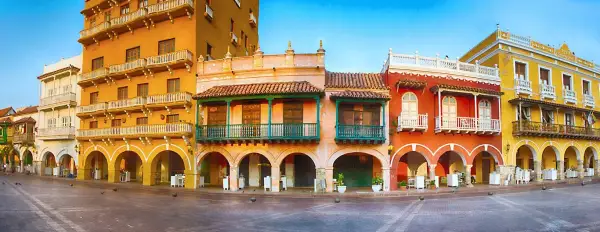
- Charming, historic Cartagena
- Lively Bogota
- Verdant Hills
- Coffee plantations
- Unspoiled villages, friendly locals
- Cathedral of Salt
- Colonial treasures
- Singles friendly (view options for single travellers)
- MealsSavour authentic flavours with included daily breakfasts and dinners at hotels or handpicked local restaurants—immersing you in local cuisine without worrying about reservations or budgets.
- Transport & Logistics
Private air-conditioned coaches and included internal ferries and flights—ensuring hassle-free travel so you can focus entirely on the discoveries ahead.
"Adventures Abroad tour leader's management and guest services managed the tour with great skill and dedication. The tour leader was on top of every move and transfer. We have not experienced any issues with logistics and had a great time."
~ JULIA O"The tour leader did an excellent job coordinating some difficult travel logistics, power outage issues and resolving problems and dealing with guests who had unrealistic expectations."
~ CYNTHIA COLLINS - Expert Guidance
Unlock insider secrets at every landmark with your full-time Tour Leader and expert local guides , all gratuities covered—no hidden tipping surprises—so you immerse fully in your destination's stories, worry-free. (Except for the tips to your tour leader at the end of your tour.)
"Amazing tour guide. Our tour guide was very well organized, Her passion, knowledge, and enthusiasm completely transformed the travel experience into something truly unforgettable..."
~ MELANIE LEMAIRE"Highly recommend every trip with Adventures Abroad. It's a well organized and well thought out adventure. The tour leaders are friendly, knowledgeable and experienced professionals. Highly recommend this company."
~ SUSAN WALL - Sightseeing & EntrancesAll entrance fees for sites visited as per the itinerary—no hidden costs—so you can explore ancient ruins and excursions with complete peace of mind.
- AccommodationsUnwind in clean, well-located 3 to 4-star hotels with private en suite facilities—handpicked for comfort and convenience after each day's discoveries—so you can rest easy knowing your stay supports the real adventure, not steals the spotlight.
- Small Group
Discover the world in small groups of up to 18 travellers plus your expert Tour Leader—unlocking spontaneity, off-the-beaten-path adventures, and genuine connections at a relaxed pace, free from crowds.
"Looking Forward to My Next Adventure The best feature of the Adventures tour was the small size that allowed the group to quickly load up, let everyone get acquainted within the first 24 hours, capitalize on unplanned surprises along..."
~ PHILIP BLENSKI"Good value for a great time I have traveled with Adventures Abroad for over 20 years now. Well thought out, interesting itineraries and the other travelers congenial and friendly. The price always seems fair and overall a..."
~ Trusted Customer - Airport Transfers For Land & Air CustomersWe handle hassle-free airport transfers for all our land and air tour customers—plus early arrivals or late departures when you book extra hotel nights directly with us for added peace of mind.
- International airfare to/from the tour.
- Tour Leader gratuity, some lunches, drinks, personal items (phone, laundry, etc), departure taxes, domestic and international air taxes (if applicable).
- Airport transfers for Land Only customers.
- Optional trip cancellation insurance.
- Our post-reservation trip notes offer further guidance on optional meal costs, shopping, and locally paid departure taxes.
- Seasonality and Weather:
In late October and early November, Colombia is in its "green" season, with increased precipitation and humidity. Despite the showers, the landscapes are lush and green, and it's a great time to experience Colombia's culture and history without the crowds. Some areas, like the coffee region, can still be enjoyed, and the rain can bring a welcome coolness to the cities.
In the second half of February, Colombia is in its dry season, with pleasant weather and minimal rainfall. - Transport and Travel Conditions:
Land transport throughout by private air-conditioned motor coach, 24-36 seats depending on ultimate group size (see 'group size'). Though we will have some full bus days, road travel is not particularly arduous as there are plenty of stops of interest. Most roads are in good condition though winding on some stretches.
We have numerous walking tours on uneven surfaces. Our excursion in Salento will likely involve simple Jeep-like transport, which can be bumpy and slow. On foot, this excursion also involves some walking on slopes, which can be slippery if it has rained. By this point in the tour, your Tour Leader will be familiar with your abilities and able to provide advice on your suitability prior to the excursion.
Most people are not seriously affected by altitude (2400-3300m/8,000-9,500 ft).
Our difficulty level "2" rating refers to the above-mentioned busy days, walking tours on uneven terrain, lack of handrails (public and elsewhere, ie shower stalls), and fatigue that can be caused by heat and humidity and unfamiliar food and drink. Please note that porters are generally not available at smaller hotel properties outside of major cities; you will need to be independent with your own luggage as necessary.
Am I suitable for this tour? Please refer to our self-assessment form - Activity Level: 2
These are particularly busy tours that feature a lot of moving around, sometimes by train and short journeys on local transport. Walking tours of towns and cities are leisurely but you should be prepared to be on your feet for several hours. Some of our cultural trips that occur at high altitude and/or require greater independence with baggage handling (at hotels, airports, train stations) also fall into this category.
To learn more about the Activity levels, please visit our tour styles page. - Accommodation:
Well-located, air-conditioned, mid-range hotels with en suite toilet and bath throughout. Smaller hotels in rural areas will be of a simpler standard and will likely not provide baggage handling.
For more hotel information, please click on the "Map & Hotels" tab on this page. - Staff and Support:
Tour Leader, driver/s local guides at some locations. - Group Size:
Maximum 18 plus Tour Leader
- Day 1:Arrival in BogotaWe arrive in Bogota, Colombia, and make our way to our hotel.
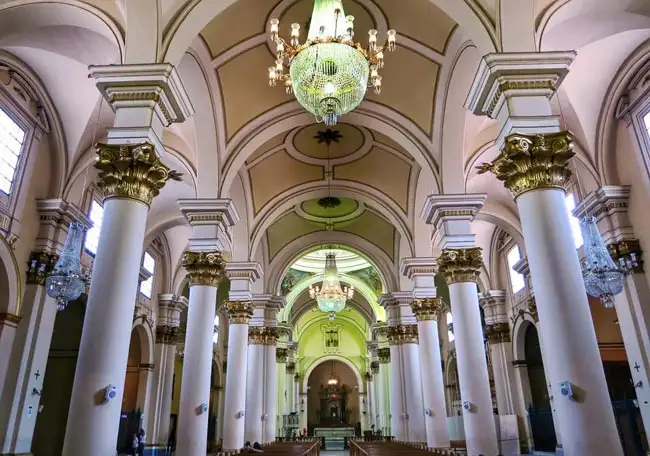
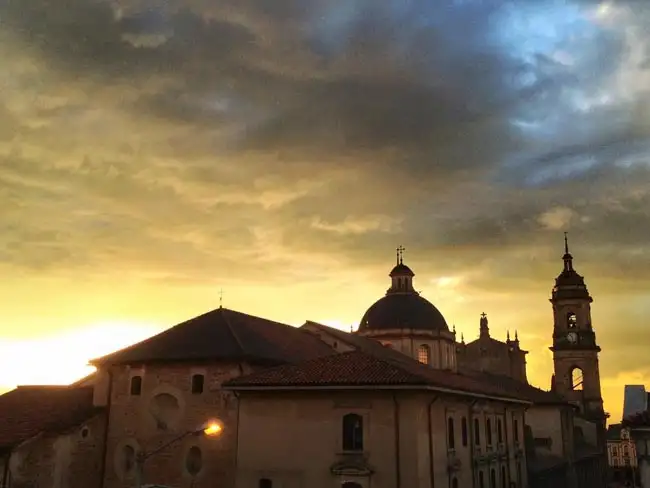
Colombia's capital was once known as Santa Fe de Bogota, and Bogotanos still carry a reputation for civility good enough to have earned the city an old nickname, the Athens of the Americas.
Set at over 2600 m/8,530 ft in the eastern ranges of the Cordillera, this is where the country's art, academia, history, culture and government all converge, Colombia's working centre, not just its capital.
Over the days ahead, two versions of this country's story will keep surfacing, often on the same wall: the walls the Spanish built to keep people out, and the walls Colombians have since reclaimed to say who they are.
Bogota gives us the second kind first. Some of the most respected street art in the Americas is a short walk from tonight's hotel, and we go looking for it tomorrow.
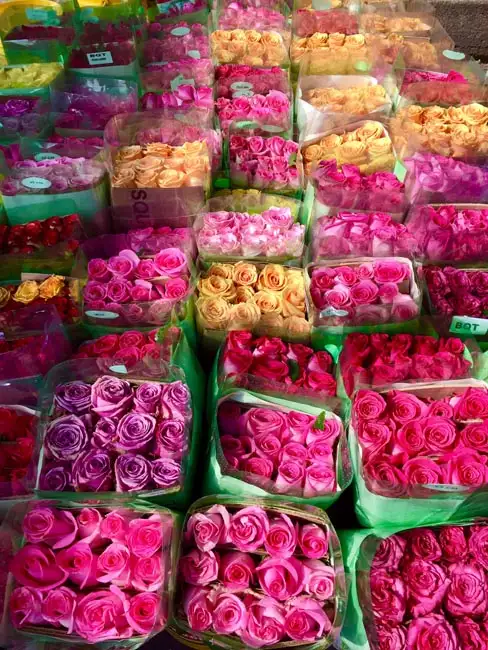
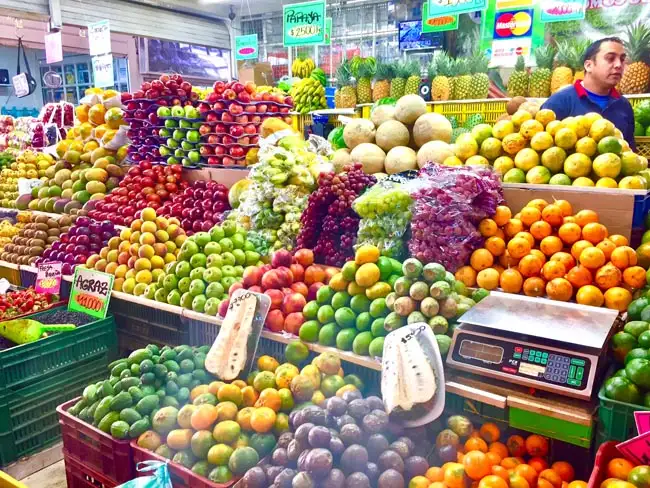
Included Meal(s): Dinner - Day 2:Bogota: Paloquemao Market, Cerro Monserrate & Gold MuseumThis morning we visit the Plaza de Mercado de Paloquemao, Bogota's best-known flower and food market and the point where produce from the Caribbean and Pacific coasts, the Andes and the tropical lowlands all meet under one roof.
The market runs in sections, flowers, then fruit and vegetables and herbs, then meat and fish, and gives us as good a read on daily Bogota life as any museum will.
A cable car then lifts us to Cerro Monserrate, crowned by a church built around the statue of Senor Caido, the fallen Christ, and a pilgrimage site since colonial times.
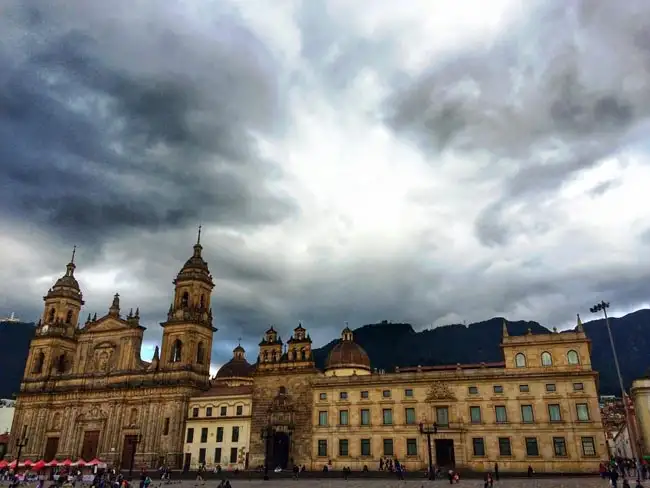
The afternoon belongs to the walls. Bogota draws some of the world's most respected graffiti artists to paint its streets, and we spend the next few hours in the old quarter of La Candelaria tracing their work, crossing Plaza de Bolivar and stopping at La Puerta Falsa, a 200-year-old restaurant, for the local sweets.
We then step from the street into the Botero Museum, built around the collection of Fernando Botero, Colombia's best-known painter and sculptor, whose more than 100 pieces here share wall space with Dali, Picasso, Monet and Matisse.
We close the day at the Gold Museum, whose collection of pre-Hispanic gold work is considered the finest anywhere, well laid out with English-language explanations throughout.
Included Meal(s): Breakfast and Dinner - Day 3:Bogota: Catedral de Sal & Paso Fino Horse RanchThis morning we travel north to Zipaquira to visit the Salt Cathedral, a Roman Catholic church carved 200 m/660 ft underground inside the tunnels of a still-working salt mine.
The tunnels themselves date to the Muisca period, long before the church was cut into them; today curving passages lead past 14 small chapels representing the Stations of the Cross, each with its own cross and kneeling platform carved directly into the salt.
It is one more kind of wall put to work here, this one shaped by hand into a place of devotion rather than painted with one.
Miners themselves built the first chapel in 1954 for their own spiritual protection underground; safety concerns closed it in 1990, and the cathedral we visit today reopened in 1995 to current engineering standards. The mine is still active, salt extraction continuing alongside the pilgrims and visitors who come for the chapels.
From Zipaquira we continue to a traditional hacienda on the outskirts of Bogota for a taste of local gastronomy, starting with ajiaco, Colombia's classic chicken and potato soup, followed by a private exhibition of Colombia's paso fino horses, celebrated for their smooth gait.
Because of tomorrow's early departure, we return to our hotel this evening with dinner left open for you to arrange on your own.
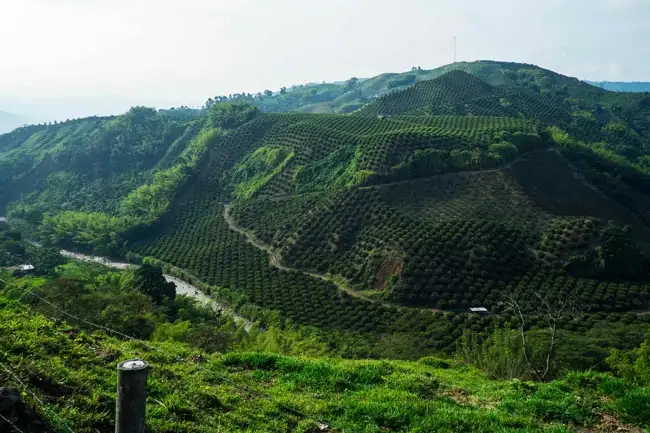
Included Meal(s): Breakfast and Lunch - Day 4:Bogota - Fly to Cafetera Region & Coffee ExperienceEarly this morning we fly from Bogota to Armenia (or Pereira, depending on schedule), gateway to Colombia's Coffee Triangle, inscribed by UNESCO in 2011 as a landscape of deep green hillsides shaped entirely by small-scale farming.
The isolation once imposed here by civil war and by the central Andes at its eastern edge has, in recent years, turned into an asset: this is now the heart of Colombia's rural tourism industry, built on history, ecology and a growing pride in knowing where things come from.
Once we land, a hands-on coffee experience walks us through the full process, from cultivation and harvesting to roasting and tasting, in soil and climate that make this region genuinely suited to growing quality coffee.
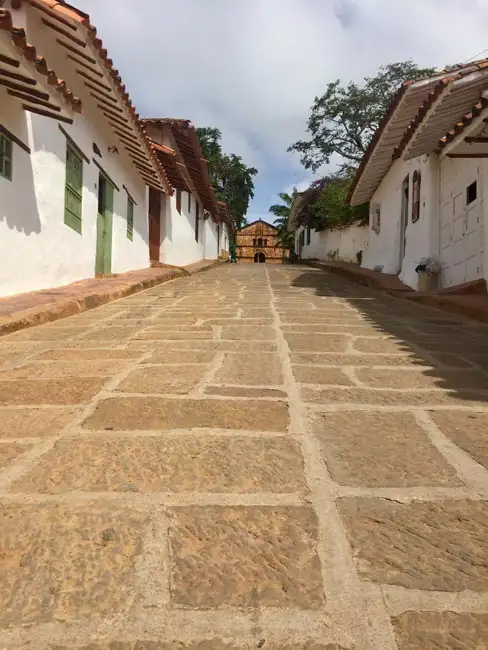
We spend the night in Salento, one of the oldest and smallest towns in Quindio department. Remarkably well preserved, it survives on coffee, trout farming and a growing number of visitors drawn to its quiet streets, paisa architecture and closeness to the Valle de Cocora.
NOTE: hotels here are small and simple, with limited luggage help and a 15 to 20 minute walk to dinner; pack a flashlight and sturdy, well-treaded shoes.
Included Meal(s): Breakfast and Dinner - Day 5:Salento: Barbas Bremen Nature Reserve & Cocora ValleyWe begin the day at the Barbas Bremen reserve, an easy 2 km/1.2 mi walk through river and forest habitat that is home to howler monkeys, butterflies and a long list of birds; your Tour Leader will brief you on specifics the night before.
From there we stop in Filandia, a gentler counterpoint to Salento's dramatic peaks, set instead amid rolling coffee hills. Founded in 1878 and nicknamed La Colina Iluminada, the Illuminated Hill, its name translates as Daughter of the Andes.
Tile-roofed houses here are painted in blues, greens and oranges, not murals with a message, just two centuries of a town keeping its own colour scheme, and a blue-and-white colonial church anchors the square, its beams original to the town's founding.
Daily life still runs on coffee and craft rather than tourism: look for bejuco wickerwork, baskets and furniture woven from vine-like fibres in a tradition tied to the coffee harvest, and shops selling hand-knit ponchos, sweaters and scarves.
Quindio's bimodal rainfall gives farmers here two harvests a year rather than one, part of why this small department produces such a disproportionate share of the country's coffee.
If time allows, we finish at the mirador that gives Filandia its nickname, with views across the Quindio valleys and coffee-planted hills.
Included Meal(s): Breakfast and Dinner - Day 6:Salento - Cocora Valley - Fly to MedellinThis morning we walk in the Valle de Cocora, just east of Salento, among towering wax palms, Colombia's national tree and, at up to 60 m/197 ft, the tallest palm species on Earth.
The valley has been a protected sanctuary since the 1980s for the endemic yellow-eared parrot that nests among the palms.
NOTE: reaching the palms means walking some distance on unpaved, occasionally slippery terrain; raise any mobility concerns with your Tour Leader beforehand.
This evening we fly to Medellin and settle into El Poblado, a modern neighbourhood that gives little hint of the city's history. Medellin is Colombia's second city and the capital of Antioquia department, set in the Aburra Valley and ringed by the Andes.
In the 1980s and 90s its name was synonymous with cartel violence; since then it has carried out one of the more striking urban turnarounds in Latin America, rebuilding itself around inclusion rather than division.
Cable cars now link hillside barrios once cut off from downtown to the metro system below, transit infrastructure built as much for social repair as for transportation.
Glass towers, colonial-era streets, serious museums and street art that tells the city's own story of reinvention all sit within a few blocks of each other, Medellin's version of a wall reclaimed, this time at city scale.
Included Meal(s): Breakfast and Dinner - Day 7:Medellin: City & Area TouringToday's walking tour traces Medellin's transformation directly, block by block. We start in the historic centre, where the difficult decades of the 1980s and 90s gave way to a deliberate, city-wide effort to make Medellin an inclusive place, one where every neighbourhood, not just the wealthy ones, gets a say in how the city looks and functions.
We see the result first as art: the street murals of Comuna San Javier, painted largely by residents rather than commissioned from outside, and the massive bronze figures of Fernando Botero filling the plaza at the city centre.
Nearby, the Medellin Memorial Center lays out the harder history behind that art, the cartel and gang violence that once defined the city's reputation, without softening it.
After lunch, the metro carries us to San Javier station, where we board a cable car built to connect hillside comunas to downtown, transit as social policy, and our own aerial view of the Aburra Valley and the steep terrain that once kept these neighbourhoods isolated.
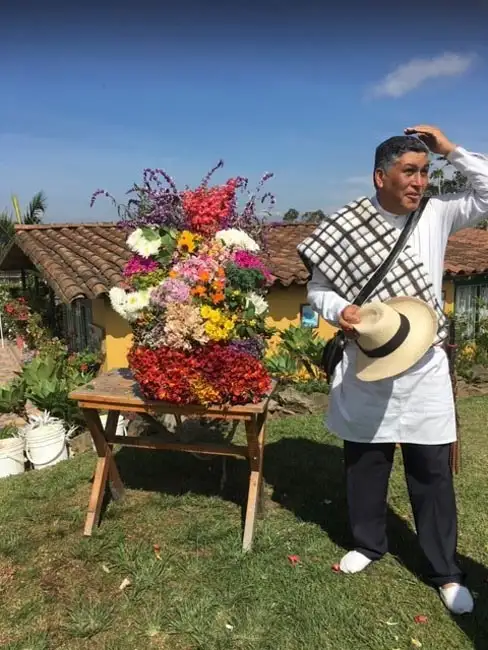
We close the day in Santa Elena, the village behind Medellin's annual Flower Festival. Its farmers, known as silleteros, build elaborate arrangements into shapes and even faces, a craft passed down for generations; we walk a working flower farm and, time permitting, talk with a grower about the work itself.
Included Meal(s): Breakfast and Dinner - Day 8:Medellin & GuatapeToday we leave the city for Guatape, a village in the hills of Antioquia relocated to its present site in the 1970s, when the Guatape hydroelectric dam flooded its original location.
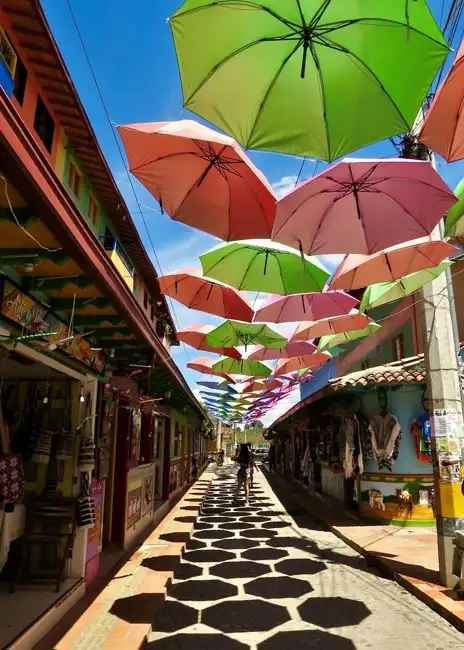
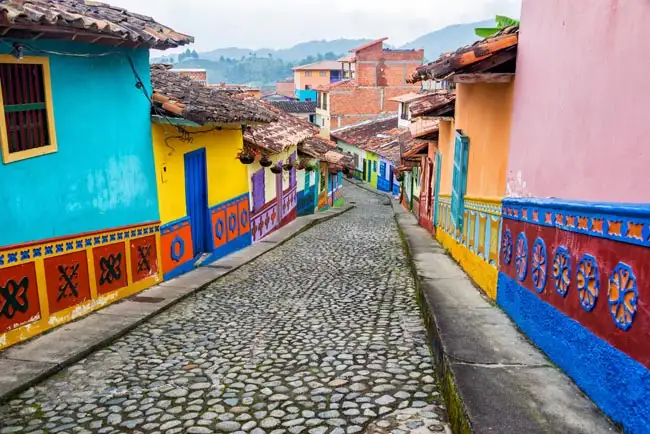
Rather than let that history disappear, the community turned to its house fronts: nearly every building in town now carries a mural recording a family trade, a memory or a piece of local history in colour. It is the same instinct we saw in Medellin's comunas, applied here on a much smaller and more personal scale.
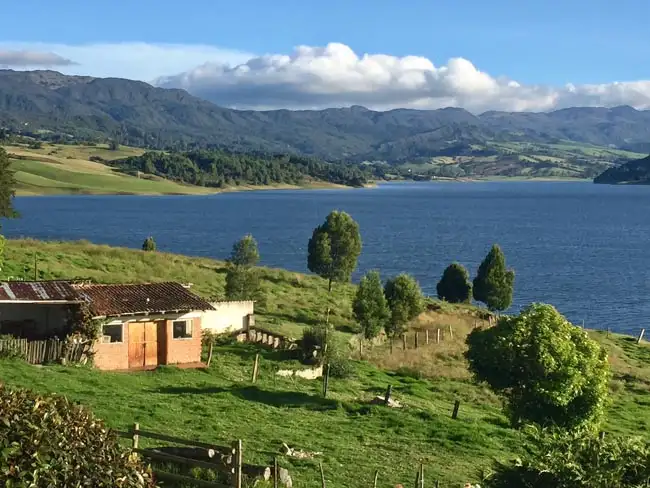
We start with an hour-long cruise on Lake Guatape, the reservoir the dam created, its shoreline now dotted with weekend homes for Medellin's wealthier residents, before wandering the murals themselves on foot.
From the village we climb El Penol, a granite monolith rising straight out of the water nearby. A staircase of more than 700 steps leads to the top, where the reward is a 360-degree view over the lake, its islands and the green countryside beyond, among the more memorable vantage points on this trip.
We return to Medellin for dinner and the night.
Included Meal(s): Breakfast and Dinner - Day 9:Medellin - Fly to Cartagena: Old Town Walking TourThis morning we fly to Cartagena, on Colombia's Caribbean coast. Founded in 1533 by the Spaniard Pedro de Heredia and named for the port of Cartagena in Spain's Murcia region, it became one of the major centres of early Spanish settlement in the Americas.
In time it also became one of the most heavily defended cities in the Americas, and one of the main ports through which enslaved Africans were brought into Spanish South America. Its colonial core is now a UNESCO World Heritage Site.
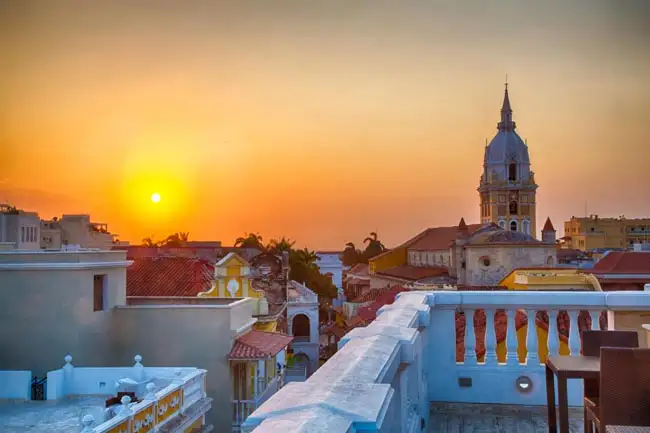
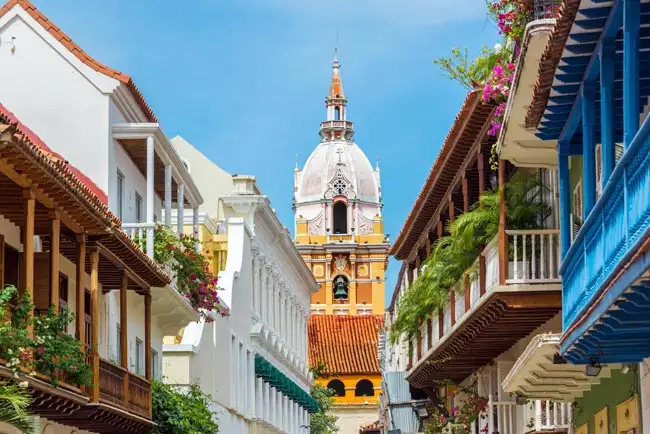
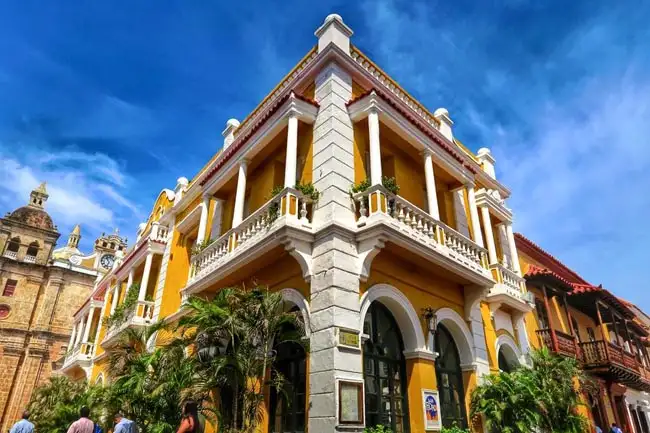
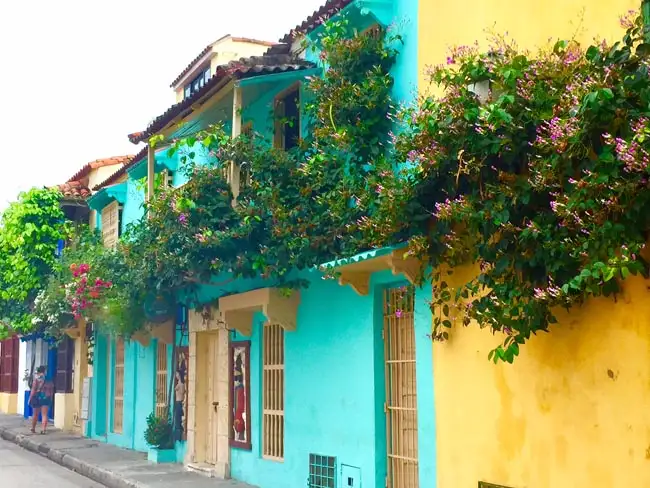
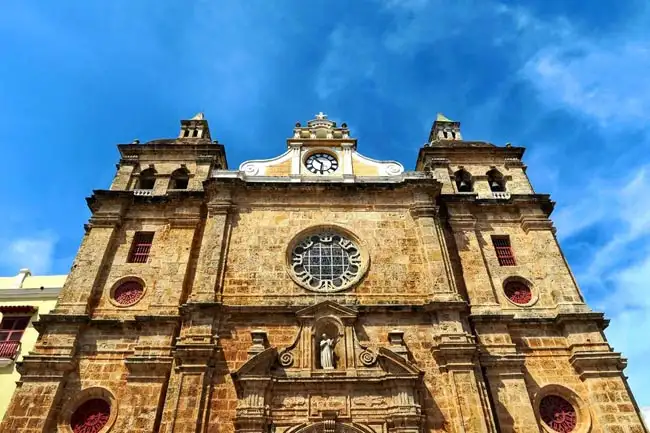
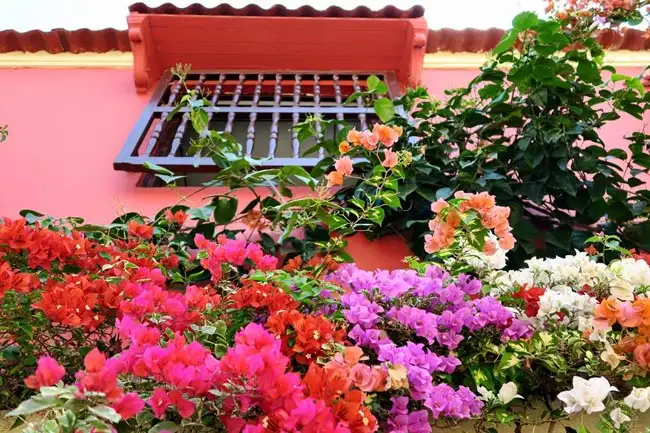
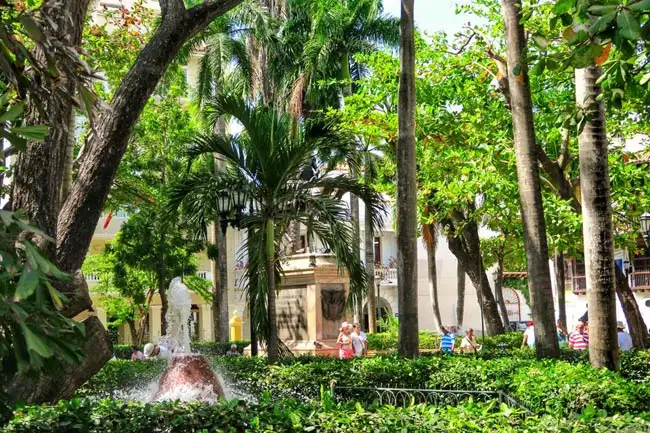
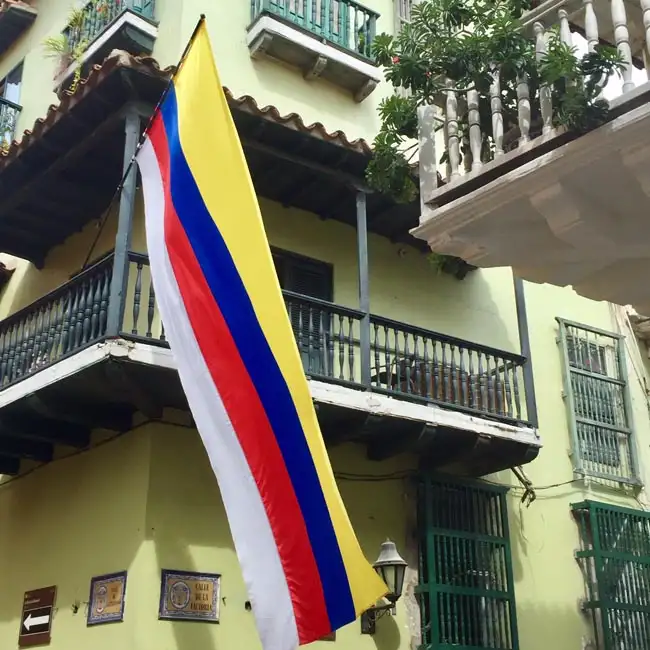
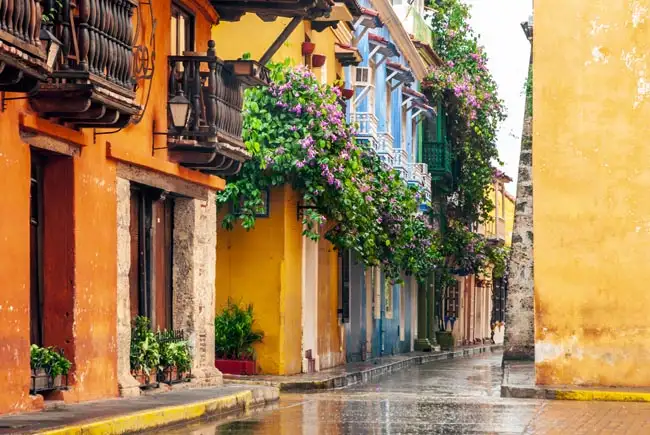
This afternoon we walk that core: Plaza de Bolivar, the Cathedral of Cartagena, San Pedro Claver Square and San Pedro Church, then the narrow, balcony-shaded streets of the walled Old City itself, where flowers spill from wooden railings and tiled patios hide behind unmarked doorways.
The walls that give the district its name are not decorative, they run nearly the full circumference of the old town, standing 4 m/13 ft tall and, in places, 18 m/59 ft thick, built by the Spanish to keep out exactly the kind of visitors we are today.
The historic centre is flat, compact and made for walking, with a photograph waiting at nearly every corner.
Included Meal(s): Breakfast and Dinner - Day 10:Cartagena: San Fernando Fortress & La Popa MonasteryCartagena's geography is as defensive as its walls. The city sits on a cluster of islands at the mouth of a bay, its original marshland filled in to connect it to the mainland, with bridges linking the districts and lagoons still separating the suburbs from the old walled centre.
Today we see how far that defensive instinct went. San Fernando Fortress, on the island of Tierra Bomba, once guarded the harbour approach against corsairs; nearby, the well-preserved Fortress of San Rafael tells the same story from a different angle.
In the old city itself, the Fortress of San Felipe stands as one of the most complete pieces of Spanish military engineering anywhere in the Americas.
Its defences held in 1741 against a British fleet of more than 180 ships under Admiral Vernon, one of the largest amphibious assaults before the 20th century, turned back by a badly outnumbered Spanish garrison.
We finish at La Popa Monastery, on Cartagena's highest ground, where the view finally turns from defense to result: modern high-rises and the old walled city laid out together, 360 degrees of a place that spent three centuries planning for attacks that, mostly, never came.
Included Meal(s): Breakfast and Dinner - Day 11:Cartagena: Palenque & Leisure TimeThis morning we travel two hours to San Basilio de Palenque, founded by Benkos Bioho and other escaped slaves, and registered as the first free town for enslaved people anywhere in the Americas, over a century before abolition reached the rest of the country.
There were no walls here, defensive or otherwise, just a community that walked out from under the ones the Spanish had built and made its own rules.
With a local guide we step into homes, share food and drink, hear traditional music and learn about a language and culture recognized by UNESCO, still spoken and taught nowhere else on Earth. After roughly 90 minutes we head back to Cartagena by way of Bocagrande and Manga.
Palenque's population today numbers under four thousand, small enough that the language and customs UNESCO recognized have survived mostly through direct teaching from one generation to the next.
The rest of the day is yours, with lunch and exploration on your own. If you would like a suggestion, Cartagena's Gold Museum is worth the visit: a small but rich collection built around the Zenu people, who lived across what are now the departments of Bolivar, Cordoba, Sucre and northern Antioquia long before the Spanish arrived.
Included Meal(s): Breakfast and Dinner - Day 12:DepartureWe depart from Cartagena, having traced Colombia's story in three kinds of wall: the ramparts and fortresses the Spanish raised to keep people out, the murals and street art Colombians have since claimed to say who they are, and San Basilio de Palenque, which simply refused to build one at all. Buen viaje!
Included Meal(s): Breakfast
Countries Visited: Colombia
*The red tour trail on the map does not represent the actual travel path.
Book This Tour
- Final payment: Due 90 days prior to departure.
- Deposit: A non-refundable $500 USD Deposit is required at booking.
- Internal Flight Taxes: An extra $116 USD applies for taxes and fees on tour flights. The internal airfares are included, but taxes are listed separately as they may change. Exceptions are noted in Red.
- Optional Single Supplement: $1030 USD (number of singles limited).
(View options forsingle travellers) - Transfering Tour or Date: Transferring to another tour or tour date is only permissible outside of 120 days prior to departure and is subject to a $100 USD change fee.
(Read our cancellation policy)
Prices below are per person, twin-sharing costs in US Dollars (USD). Pricing does not include airfare to/from the tour and any applicable taxes.
Frequently Asked Questions
- What is the maximum number of participants on a trip?Most of our tours carry a maximum of 18 participants; some tours (ie hiking tours) top out at 16. In the event that we do not achieve our minimum complement by our 90-day deadline, we may offer group members the option of paying a "small-group surcharge" as an alternative to cancellation. If all group members agree, we will confirm the trip at existing numbers; this surcharge is refundable in the event that we ultimately achieve our regular minimum. If the small group surcharge is not accepted, we will offer a refund of your deposit or a different trip of your choice.
- Can I extend my tour either at the beginning or end? What about stopovers?Yes, you can extend your tour either at the beginning or the end and we can book accommodation in our tour hotel. Stopovers are often permitted, depending on air routing. Stopovers usually carry a "stopover" fee levied by the airline.
- How do I make a reservation? How and when do I pay?The easiest way to make a reservation is via our website; during office hours, you are also more than welcome to contact us by telephone.
A non-refundable deposit is payable at the time of booking; if a reservation is made within 90 days, full payment is required. Some trips require a larger deposit. If international airline bookings require a non-refundable payment in order to secure space or the lowest available fare, we will require an increase in deposit equal to the cost of the ticket(s).
Early enrolment is always encouraged as group size is limited and some trips require greater preparation time.
Once we have received your deposit, we will confirm your space and send you a confirmation package containing your trip itinerary, any visa/travel permit related documents, invoice, clothing and equipment recommendations, general information on your destination(s), and forms for you to complete, sign and return to us. Your air e-tickets (if applicable), final hotel list, final trip itinerary, and instructions on how to join your tour, will be sent approximately 2-3 weeks prior to departure. - What about cancellations, refunds, and transfers?Please review our cancellation policy page for details.
- I am a single who prefers my own room. What is a single supplement?All of our tours have a single supplement for those who want to be guaranteed their own room at each location.
This supplement is a reflection of the fact that most hotels around the world do not discount the regular twin-share rate for a room by 50% for only one person occupying a room. Most hotels will give a break on the price, but usually in the range of 25-30% of the twin-share rate. This difference, multiplied by each night, amounts to the single supplement.
The conventional amount can also vary from country to country and some destinations are more expensive than others for single occupancy. In order to be "single friendly," the supplements we apply are not a profit centre for us and we do our best to keep them as reasonable as possible.
On most tours we limit the number of singles available, not to be punitive, but rather because many hotels allow for only a limited number of singles; some smaller hotels at remote locations also have a limited number of single rooms available.
Please note that most single rooms around the world are smaller than twin-share rooms and will likely have only one bed. - Do you have a shared accommodation program?Yes! If you are single traveller and are willing to share, we will do our best to pair you with a same-gender roommate. Please note that should we fail to pair you, we will absorb the single supplement fee and you will default to a single room at no extra charge.