- Off The Beaten Path
- History
- Overview
- Info & Inclusions
- Itinerary
- Map & Hotels
- Photos
- Dates & Prices
- Tour Duration: 15 Days
- Max Group Size 18
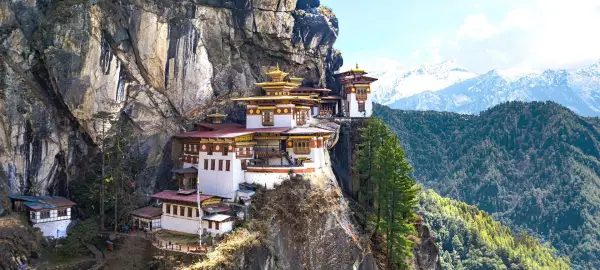
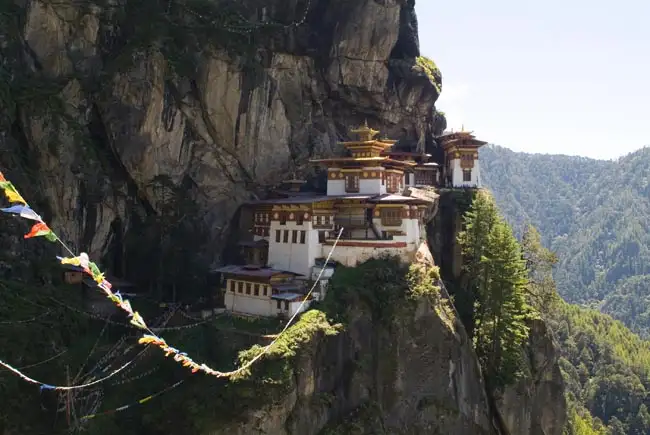
- Tiger's Nest Monastery clinging to sheer cliffs 900 metres above Paro Valley
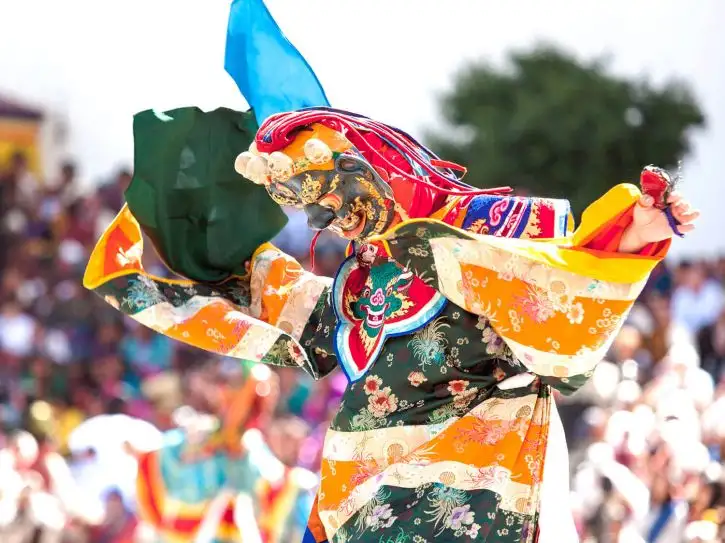
- Jakar Tshechu festival with masked cham dances and ritual performances
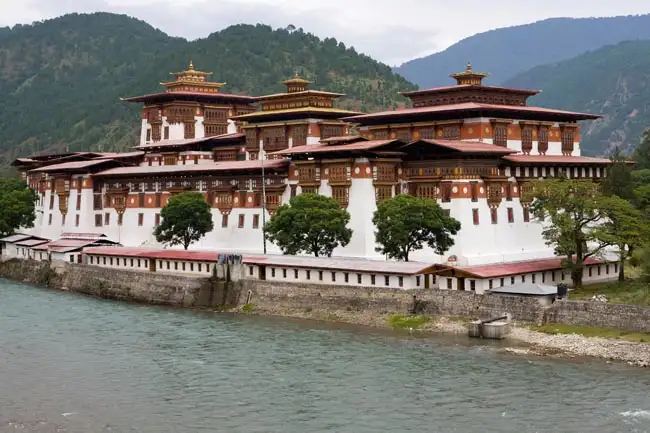
- Punakha Dzong at the confluence of father and mother rivers
- Black-necked crane habitat in protected Phobjikha Valley
- Bumthang's sacred temples and monasteries
- Dochula Pass panoramas across the Himalayan range
- Singles friendly (view options for single travellers)
Buddhism permeates everything. Prayer flags mark every pass, chortens guard villages, and monks maintain rituals unchanged for centuries. The government measures success through Gross National Happiness rather than GDP—a philosophy shaping policy from tourism restrictions to forest conservation. Bhutan limits visitor numbers through visa requirements and daily fees, ensuring you'll rarely encounter crowds even at major sites.
This comprehensive journey moves from Thimphu's developing capital through Bumthang's spiritual heartland to Paro's iconic Tiger's Nest Monastery. We experience annual tshechu festivals where masked dances convey Buddhist teachings, hike to monasteries clinging to cliff faces, witness black-necked cranes in protected Phobjikha Valley, and explore dzongs serving simultaneously as government offices and active monasteries. The route crosses high passes offering Himalayan panoramas, descends to Punakha's subtropical rice valleys, and provides encounters with farmhouse life where traditional patterns persist.
The pace allows for genuine interaction—watching families circle the Memorial Chorten in prayer, observing monks debate in courtyards, joining locals at weekend markets where farmers sell yak butter and handwoven textiles. This is Bhutan beyond the photographs: dzongs at river confluences, festivals drawing nomads from remote valleys, and landscapes where spiritual practice shapes daily rhythms.
- MealsSavour authentic flavours with included daily breakfasts, some lunches, and dinners at hotels or handpicked local restaurants—immersing you in local cuisine without worrying about reservations or budgets.
- Transport & Logistics
Private air-conditioned coaches and included internal ferries and flights—ensuring hassle-free travel so you can focus entirely on the discoveries ahead.
"Adventures Abroad tour leader's management and guest services managed the tour with great skill and dedication. The tour leader was on top of every move and transfer. We have not experienced any issues with logistics and had a great time."
~ JULIA O"The tour leader did an excellent job coordinating some difficult travel logistics, power outage issues and resolving problems and dealing with guests who had unrealistic expectations."
~ CYNTHIA COLLINS - Expert Guidance
Unlock insider secrets at every landmark with your full-time Tour Leader and expert local guides , all gratuities covered—no hidden tipping surprises—so you immerse fully in your destination's stories, worry-free. (Except for the tips to your tour leader at the end of your tour.)
"Amazing tour guide. Our tour guide was very well organized, Her passion, knowledge, and enthusiasm completely transformed the travel experience into something truly unforgettable..."
~ MELANIE LEMAIRE"Highly recommend every trip with Adventures Abroad. It's a well organized and well thought out adventure. The tour leaders are friendly, knowledgeable and experienced professionals. Highly recommend this company."
~ SUSAN WALL - Sightseeing & EntrancesAll entrance fees for sites visited as per the itinerary—no hidden costs—so you can explore ancient ruins and excursions with complete peace of mind.
- AccommodationsUnwind in clean, well-located 3 to 4-star hotels with private en suite facilities—handpicked for comfort and convenience after each day's discoveries—so you can rest easy knowing your stay supports the real adventure, not steals the spotlight.
- Small Group
Discover the world in small groups of up to 18 travellers plus your expert Tour Leader—unlocking spontaneity, off-the-beaten-path adventures, and genuine connections at a relaxed pace, free from crowds.
"Looking Forward to My Next Adventure The best feature of the Adventures tour was the small size that allowed the group to quickly load up, let everyone get acquainted within the first 24 hours, capitalize on unplanned surprises along..."
~ PHILIP BLENSKI"Good value for a great time I have traveled with Adventures Abroad for over 20 years now. Well thought out, interesting itineraries and the other travelers congenial and friendly. The price always seems fair and overall a..."
~ Trusted Customer - Airport Transfers For Land & Air CustomersWe handle hassle-free airport transfers for all our land and air tour customers—plus early arrivals or late departures when you book extra hotel nights directly with us for added peace of mind.
- International airfare to/from the tour. Tour Leader gratuities, some lunches, drinks, personal items (phone, laundry, etc), international (if applicable) air taxes, visa fees, and any excursions referenced as 'optional'. Airport transfers for Land Only customers. Optional trip cancellation insurance. Our post-reservation trip notes offer further guidance on shopping, not included meals, visas.
- Our start and end hotel in Bangkok is located on airport property and, as such, hotel shuttle service is provided on a complimentary basis whether or not you have booked your flights with Adventures Abroad.
- "Visa Fees" are not included in the tour cost - we list these separately as they can change without notice. The "visa" for Bhutan is very easy and we acquire an entry permit on your behalf.
- Seasonality and Weather:
Our October-November departures coincide with Bhutan's clearest weather following monsoon season. Skies remain predominantly blue with exceptional visibility toward Himalayan peaks—including several unclimbed 7000-metre summits along the Tibetan border. This period offers ideal conditions for the Tiger's Nest hike and Dochula Pass views. Temperatures range from cool mornings requiring layers to comfortable afternoons.
October-November timing also aligns with major tshechu festivals across Bhutan, though specific dates vary annually as they follow the lunar calendar. The autumn landscape shows willows turning gold, barley harvested from terraced fields, and forests displaying seasonal colour against whitewashed dzongs. - Transport and Travel Conditions:
Land transport via private vehicle appropriate to group size. Road conditions vary from paved highways to rougher mountain sections—expect winding routes with occasional delays from weather or landslides. Vehicles generally lack air conditioning, though temperatures at these elevations rarely require it.
This tour involves significant time on foot at sites featuring stairs, uneven surfaces, and elevation. Dzongs require climbing multiple levels, monasteries sit atop hills, and the Tiger's Nest hike represents a serious physical challenge. Altitudes range from 1200 metres/3,937 feet in Punakha to 3100 metres/10,170 feet at Dochula Pass, with overnight stays typically at 2200-3000 metres. Some travellers experience mild altitude effects—headaches, breathlessness, fatigue—though serious problems are uncommon at these moderate elevations.
The Tiger's Nest hike averages 4-5 hours round-trip plus monastery touring time. Horses carry riders partway, but the final steep approach requires walking. Many travellers of average fitness find this challenging; your Tour Leader will help assess your comfort level. Alternative activities exist for those choosing not to attempt the climb.
All passengers must complete a medical self-assessment attesting to suitability for travel at altitude on mountain roads. Those with conditions exacerbated by elevation, compromised immune systems, or mobility limitations should carefully consider participation.
Porters assist at hotels, but you must manage luggage at airports. Pack appropriately for early starts and long days at sites requiring stamina and steady footing.
Am I suitable for this tour? Please refer to our self-assessment form - Activity Level: 2
These are particularly busy tours that feature a lot of moving around, sometimes by train and short journeys on local transport. Walking tours of towns and cities are leisurely but you should be prepared to be on your feet for several hours. Some of our cultural trips that occur at high altitude and/or require greater independence with baggage handling (at hotels, airports, train stations) also fall into this category.
To learn more about the Activity levels, please visit our tour styles page. - Accommodation:
Accommodation is comfortable 3-4 star hotels throughout, primarily in Thimphu, Paro, Punakha, Phobjikha, and Bumthang. Bhutan's hotel infrastructure developed only in recent decades as tourism opened, and properties prioritize cleanliness and location over luxury amenities. Hotels in smaller valleys like Phobjikha and Bumthang offer simpler facilities than Thimphu or Paro but provide authentic experiences in remote settings.
Single rooms are limited and possibly smaller than twins. Porters are generally available (see 'Inclusions'). - Staff and Support:
Tour Leader throughout, local drivers, local guides at various locations. - Group Size:
Maximum 18 plus Tour Leader
- Day 1:Arrival in BangkokToday we arrive in Bangkok, our assembly point for our tomorrow's flight to Paro.
Overnight at Bangkok Airport area hotel.
Included Meal(s): Dinner - Day 2:Bangkok, Thailand - Fly to Paro, Bhutan - Drive to ThimphuThis morning we fly to Paro via Druk Air.* The descent into Paro Valley ranks among the world's most dramatic airport approaches—the aircraft threads between Himalayan peaks before dropping into the narrow valley, terraced farmhouses and prayer flags visible on slopes below.
Crisp mountain air greets us at 2225 metres/7,300 feet elevation as we transfer by road to Thimphu, Bhutan's capital, roughly one hour distant. The route follows the Paro Chhu downstream, crossing at Chuzom where three rivers converge. Here stand three chortens built in distinct styles—Bhutanese, Nepalese, and Tibetan—reflecting the cultural crossroads where these traditions meet. Across the valley, the Iron Bridge Builder Monastery clings to the opposite hillside, commemorating the 15th-century saint Thangtong Gyalpo who constructed iron chain bridges throughout the Himalayas.
Thimphu sits at 2320 metres/7,609 feet in a north-south valley flanked by forested ridges. The capital blends traditional architecture with contemporary development—small cafés and handicraft shops line main streets, yet construction remains bound by regulations requiring traditional Bhutanese design. The compact town centre invites independent exploration, easily navigated on foot.
* Please note the Druk Air flight commonly departs very early—typically between 5:00-6:00 am.
Overnight in Thimphu.
Included Meal(s): Breakfast and Dinner - Day 3:Thimphu: City SightseeingThis morning we visit the Buddha Dordenma, one of the world's largest Buddha statues overlooking Thimphu Valley from a southern hilltop. The 51-metre/169-foot bronze figure sits in meditation posture, its gold-painted surface gleaming above the capital. Completed in 2015, the statue fulfills an ancient prophecy about emanating blessings across the region.
At the Memorial Chorten, local Bhutanese of all ages circle the whitewashed stupa clockwise in continuous prayer, spinning prayer wheels and murmuring mantras. Built in 1974 to honour the third king, the chorten demonstrates how Buddhism permeates daily life—elderly with prayer beads, office workers on lunch breaks, families with children all pause here throughout the day.
We visit living museums documenting rural traditions: the Folk Heritage Museum and Simply Bhutan complex recreate farmhouse life through artifacts and demonstrations. At a weaving centre we observe traditional backstrap looms creating the intricate patterns that distinguish Bhutanese textiles. The National Library preserves religious manuscripts in Dzongkha and classical Tibetan, some centuries old, their loose pages wrapped in silk between wooden covers.
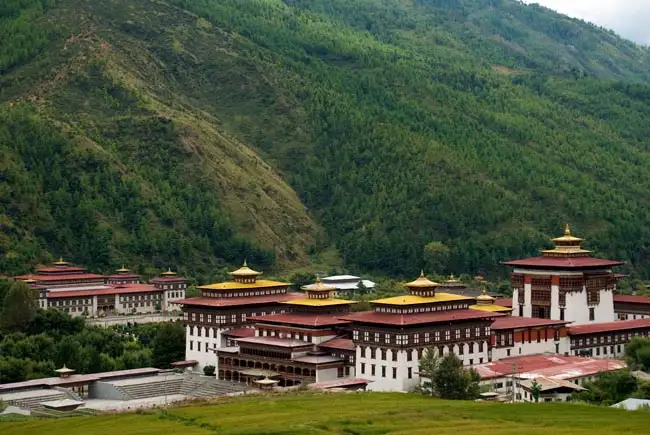
Tashichho Dzong dominates the valley's west bank—a fortress-monastery serving as Bhutan's administrative centre and summer residence of the monastic body. Rebuilt in the 1960s following fire damage, the complex maintains traditional architecture: whitewashed walls, red-painted upper sections, and elaborate wood carving. The king's offices occupy one section.
The Weekend Market operates Friday evening through Sunday, drawing villagers from surrounding valleys who sell dried chilies, yak butter, vegetables, textiles, and bamboo crafts—a lively exchange between rural producers and city residents.
We conclude at 12th-century Changangkha Monastery, perched on a ridge above central Thimphu. This guardian monastery protects the valley, and parents bring infants here for blessings. The courtyard offers views across the capital's expanding neighbourhoods.
Overnight in Thimphu.
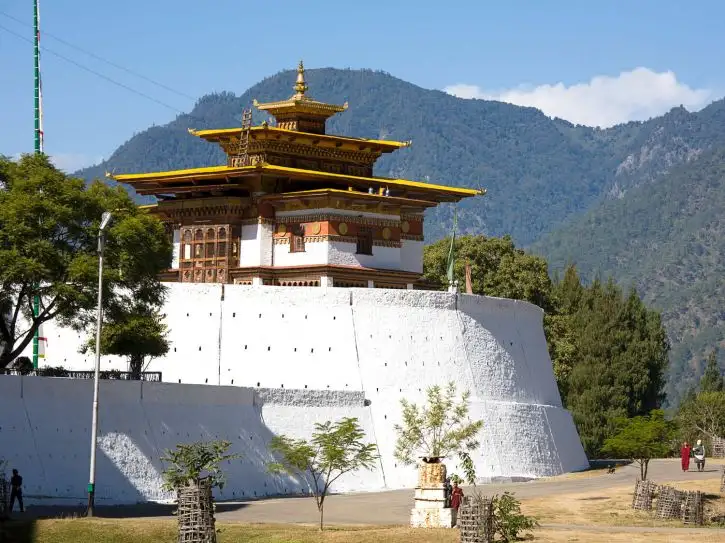
Included Meal(s): Breakfast and Dinner - Day 4:Thimpu - Phobjikha: Dochula Pass, Punakha & Wangdue ValleysLeaving Thimphu, we climb toward Dochula Pass at 3100 metres/10,170 feet. The pass marks a sacred threshold, and 108 whitewashed chortens crown the summit alongside a monastery—structures built in 2005 to honour Bhutanese soldiers. Prayer flags stretch in every direction, their colours fading as wind carries printed mantras across the mountains. Travellers follow Bhutanese custom by hoisting their own flags to increase good fortune. On clear days, the panorama extends across the eastern Himalayas—an unbroken chain of peaks above 7000 metres including Gangkar Puensum, the world's highest unclimbed mountain.
Descending eastward, we continue to Phobjikha Valley at 3000 metres/9,843 feet, a bowl-shaped glacial valley on the western slopes of the Black Mountains. The valley sits within protected wilderness where black-necked cranes winter from late October to mid-February, migrating from the Tibetan Plateau. These rare birds hold sacred status in Bhutanese Buddhism, and the valley's designation as a protected area reflects both conservation priorities and spiritual significance. Phobjikha is considered a beyul—a hidden valley that serves as refuge from worldly turmoil according to Himalayan Buddhist tradition.
This afternoon we visit a traditional Bhutanese farmhouse where rural life continues at its ancestral pace. Families still maintain the ground-floor livestock quarters, first-floor living spaces, and upper-level storage for grain and fodder—a three-storey pattern refined over centuries for efficiency and warmth in high-altitude winters.
Overnight in Phobjikha.
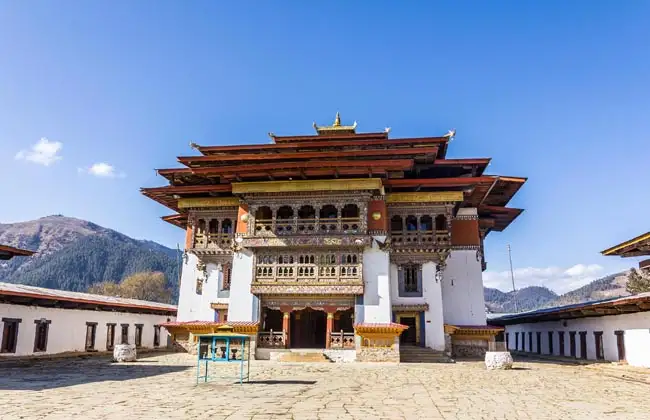
Included Meal(s): Breakfast, Lunch and Dinner - Day 5:Phobjikha: Gangtey MonasteryGangtey Monastery dominates Phobjikha Valley from a small hill rising from the valley floor. The complex serves as the only Nyingmapa monastery west of the Black Mountains, its origins tracing to the 16th century when Pema Thinley predicted a monastery would be built here. His grandson fulfilled the prophecy, establishing Gangtey as a centre for the Nyingma school—Bhutan's oldest Buddhist tradition. Recent restoration has returned the monastery to its former glory, and resident monks maintain centuries-old practices of prayer and study. Visitors can observe morning and evening rituals, watching monks in their distinctive red robes conduct ceremonies unchanged for generations.
The Royal Society for the Protection of Nature operates the Black-Necked Crane Information Centre at the forest edge overlooking valley wetlands. The observation room provides high-powered telescopes for watching cranes during their winter residence, typically late October through mid-February, though migration patterns shift with weather. Display panels explain the natural and cultural significance of these birds—revered in Bhutan as manifestations of the deity Mahakala. The cranes' seasonal return marks an important annual event, celebrated with the Black-Necked Crane Festival each November.
We participate in morning or evening prayers at the monastery, joining monks as they chant ancient texts. The monastery also welcomes participants in hoisting lungta prayer flags—the most popular form featuring a wind horse carrying jewels. Bhutanese raise these flags to increase good fortune and ward off obstacles. Any donations made support the monastery's Buddhist school, providing food, books, and clothing for young monks.
This afternoon we hike through the valley and surrounding villages, experiencing the landscape that draws both cranes and contemplatives to this remote elevation.
Overnight in Phobjikha.
Included Meal(s): Breakfast, Lunch and Dinner - Day 6:Phobjikha - Bumthang: Trongsa & Chumey ValleysToday's journey takes us to Bumthang Valley at 2800 metres/9,186 feet, passing through Trongsa where Bhutan's royal family originated. Trongsa Dzong commands the ridge above the roaring Mangde Chhu, perhaps the most dramatically sited fortress in Bhutan. The structure drops down the mountainside in multiple levels, its southern face often disappearing into cloud. Because this dzong straddles the only route between eastern and western Bhutan, the Trongsa Penlop effectively controlled all central and eastern territories. Every king has served as Trongsa Penlop before ascending the throne.
The renovated Ta Dzong watchtower now serves as a museum displaying royal regalia and historical artifacts. From Trongsa we continue through Chumey Valley, renowned for yathra weaving. We stop at a weaving centre where artisans create these distinctive woolen textiles using techniques unique to Bumthang, their colourful geometric patterns worked on traditional backstrap looms.
Bumthang represents Bhutan's spiritual heartland. Buddhism entered through this valley in the 8th century when Guru Padmasambhava was invited to subdue hostile spirits. The region comprises four valleys: Choekhor, Chumey, Tang, and Ura. Monasteries and temples dot the landscape, and the area remains deeply significant as the ancestral home of Pema Lingpa, the 15th-century Buddhist master whose descendants include the current royal dynasty.
This evening we visit Jambay Lhakhang and Kurjey Lhakhang. Jambay, reputedly built in 659 by Tibetan King Songtsen Gampo, contains three stone steps representing past, present, and future ages—when all three sink into earth, the current age ends. Kurjey's three temples occupy the sanctuary where Guru Rinpoche left his body imprint on rock. The spring above is believed to possess curative properties, making this one of Bhutan's most revered pilgrimage sites.
Overnight in Bumthang.
Included Meal(s): Breakfast, Lunch and Dinner - Day 7:Bumthang: Jakar Festival / Mebartsho & Tamshing GoembaThis morning we attend the Jakar Tshechu, one of Bhutan's most celebrated festivals. The tshechu—meaning "tenth day"—celebrates Guru Rinpoche's birthday, considered the most auspicious day in Bhutanese Buddhism.* The three-day festival unfolds within the massive Jakar Dzong, where mask dances and ritual performances continue from dawn through afternoon. Monks and villagers perform cham dances wearing elaborate costumes and painted wooden masks representing deities, demons, and sacred animals. These aren't theatrical performances but religious rituals believed to convey blessings and subdue evil forces.
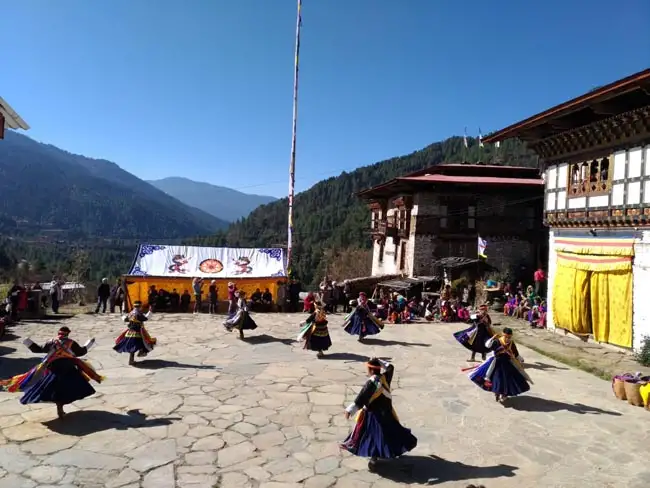
The festival draws Bhutanese from across the country—families in finest traditional dress, nomads from remote valleys, monks in burgundy robes. Beyond the religious ceremonies, the tshechu serves as important social gathering where communities discuss concerns, arrange marriages, and reconnect with distant relatives. Vendors sell traditional foods, and the atmosphere blends devotion with celebration.
This afternoon we visit Mebartsho—the Burning Lake—a revered pilgrimage site in the Tang Valley. The name commemorates the 15th-century terton Pema Lingpa, a discoverer of sacred treasures. According to legend, Pema Lingpa declared that Guru Rinpoche had hidden treasures in the lake centuries earlier. Skeptical locals demanded proof. Pema Lingpa dove into the deep pool holding a burning butter lamp. After remaining underwater an impossible duration, he emerged holding a chest and scrolls—with the butter lamp still burning bright in his hand. The lake has been known as Mebartsho ever since.
* Please note the festival we attend can vary depending on annual dates, location, and logistics.
Overnight in Bumthang.
Included Meal(s): Breakfast, Lunch and Dinner - Day 8:Bumthang & DrangchelToday we drive east through the valley, following back roads through picturesque villages and farmland where rural life continues at its traditional pace. The route reveals Bumthang's agricultural character—stone farmhouses surrounded by buckwheat fields, potato plots, and apple orchards. Unlike the rice-growing valleys at lower elevations, Bumthang's 2800-metre altitude supports different crops adapted to shorter growing seasons and cooler temperatures. Villages cluster around temples, their chorten-marked entrances blessing those who pass through.
We visit Ugyen Choling Palace, now a museum offering insight into aristocratic life of the previous century. The palace belonged to a prominent Bumthang family whose influence extended through religious and political spheres. The beautifully maintained structure houses period furniture, religious artifacts, household items, and textiles that illustrate how elite families lived—separate from but deeply connected to the farming communities surrounding them. Religious chapels within the complex contain murals and statuary dating back centuries.
The museum's exhibits document broader themes of Bhutanese heritage: traditional architecture with its precise joinery and symbolic decoration, religious practices that governed daily rhythms, and the social structures that organized valley communities. Walking through the palace rooms provides context for understanding how Bhutan maintained cultural continuity even as neighbouring kingdoms fell to outside powers.
Overnight in Bumthang.
Included Meal(s): Breakfast, Lunch and Dinner - Day 9:Bumthang - PunakhaToday we retrace our route westward toward Punakha at 1200 metres/3,937 feet, descending from Bumthang's high valleys toward the warmer Punakha-Wangdue region. The journey reverses yesterday's climb over Yotong La pass, offering different perspectives on landscapes we've already traversed. We stop at Chendebji Chorten, built in the 18th century in Nepalese style with its painted eyes gazing in four directions—a reminder of cultural exchange along Bhutan's historic trade routes.
Punakha served as Bhutan's capital and seat of government until the mid-1950s when administrative functions shifted to Thimphu. The valley remains politically significant as the winter residence of the Je Khenpo and the central monk body, who descend from Thimphu each October to escape harsh mountain cold.
We visit Punakha Dzong, arguably Bhutan's most magnificent fortress. The massive structure occupies an island where the Pho Chhu and Mo Chhu—father and mother rivers—converge. Founded in 1637 by Zhabdrung Ngawang Namgyal, the dzong served as the seat of government for three centuries. Every Bhutanese king has been crowned here, linking the monarchy's legitimacy to this fortress's spiritual and political authority. The complex suffered repeated damage from fire, earthquakes, and floods over centuries, but extensive restoration has returned the dzong to its former grandeur. Carved woodwork, painted murals, and gilded metalwork demonstrate Bhutanese craftsmanship at its finest.
Overnight in Punakha.
Included Meal(s): Breakfast, Lunch and Dinner - Day 10:Punakha - Khamsum Yuelley MonasteryPunakha Valley spreads wide and fertile at 1200 metres elevation, the kingdom's rice basket where both red and white varieties grow along the riverbanks. The warmer temperatures here—substantially milder than Thimphu or Bumthang—support two annual crops in some fields. Ritsha village exemplifies traditional valley settlement: mud-walled houses with stone foundations, only two storeys high, each surrounded by gardens growing oranges, papayas, and organic vegetables alongside rice paddies.
This morning we visit Chimi Lhakhang, known as the Fertility Temple. The small monastery sits atop a hill blessed by Drukpa Kunley, the 15th-century "Divine Madman" whose unorthodox teaching methods included sexual encounters used as paths to enlightenment. The saint worked to spread Buddhist teachings through unconventional means, and the monastery built in his honour in 1499 attracts couples praying for children. The approach follows footpaths through rice fields and past the quaint village of Lobesa.
This afternoon we hike to Khamsum Yuelley Namgyal Chorten, built by the Queen Mother in the 1990s. The trail climbs through terraced paddies before winding up the hillside, about 1-2 hours total walking time depending on pace. The four-storey chorten displays rare architectural features—different levels honour distinct deities, and the structure combines elements from several Buddhist traditions. From the hilltop, views extend across Punakha Valley's patchwork of fields toward forested ridges and distant snowpeaks.
Overnight in Punakha.
Included Meal(s): Breakfast, Lunch and Dinner - Day 11:Punakha - ParoToday we return toward Paro, retracing our route over Dochula Pass. The journey offers final views of the Punakha-Wangdue valleys before climbing back into the cooler elevations of the Thimphu region. We stop at Simtokha Dzong, Bhutan's oldest fortress-monastery, built in 1627 by Zhabdrung Ngawang Namgyal shortly after his arrival from Tibet. The dzong now houses a school for religious and cultural studies, its strategic position guarding the entrance to the Thimphu Valley unchanged for four centuries.
Paro Valley extends from the Tibetan border at Jomolhari south to Chuzom where the Thimphu and Punakha rivers meet. Before road construction in the 1960s, most trade entered Bhutan through Paro—from Tibet via Tremo La pass or from India through the southern Haa Valley. The valley floor's 2200-metre/7,218-foot elevation supports apple orchards and barley fields, while terraced paddies climb the lower slopes.
Paro town blends traditional architecture with contemporary shops, cafés, and galleries. The compact centre rewards wandering—handicraft stores sell textiles and carved wooden items, small restaurants offer momos and ema datshi, and the streets lead naturally to the traditional cantilever bridge spanning the Paro Chhu. Across the river, Ugyen Pelri Palace rises on a hillside surrounded by chortens. Near town, the archery field often hosts matches—Bhutan's national sport draws enthusiastic crowds, and archers in traditional dress compete with bamboo bows or modern compounds.
Overnight in Paro.
Included Meal(s): Breakfast, Lunch and Dinner - Day 12:Paro: Area SightseeingA short drive from town brings us to Kyichu Lhakhang, one of Bhutan's oldest and most sacred temples. Built in the 7th century, the monastery sits among rice paddies, its antiquity evident in the architectural style and spiritual atmosphere. The temple ranks equally holy with Lhasa's Jokhang Temple in Tibetan Buddhist tradition. Adjacent stands Dumtse Lhakhang, built in Tibetan style—legend claims the entire structure flew here from Tibet, settling on its current foundation.
We visit the National Museum housed in the ancient Ta Dzong watchtower above Paro Dzong. The 17th-century circular structure provides panoramic views across the valley from its distinctive position. Opened in 1968, the museum's collection includes fine bronzes, thangka paintings, textiles, jewellery, and handicrafts documenting Bhutan's artistic heritage. The top floor chapel displays a "tree" depicting major figures from Tibetan Buddhism's four schools—Nyingma, Kagyu, Sakya, and Gelug.
Note: At time of writing, earthquake repairs to the watchtower mean exhibits are temporarily housed in an adjacent building.
From the museum we walk down to Rinpung Dzong, the fortress-monastery serving as Paro's administrative headquarters and home to the district monk body. Built in 1644, the dzong exemplifies Bhutanese fortress architecture—massive whitewashed walls, traditional wooden cantilever construction throughout, and elaborate wall paintings depicting Buddhist teachings. The covered bridge across the Paro Chhu connects town to dzong, its wooden roof sheltering murals of Milarepa's life and teachings.
Overnight in Paro.
Included Meal(s): Breakfast and Dinner - Day 13:Paro & Tiger's Nest MonasteryToday we hike to Taktsang Monastery—Tiger's Nest—Bhutan's most iconic site. The temple complex clings impossibly to a sheer cliff 900 metres/2,953 feet above the Paro Valley floor. According to legend, Guru Rinpoche flew here from Tibet on a tigress's back in the 8th century, meditating in a cave for three months to subdue demons preventing Buddhism's spread. The monastery built around that cave became a pilgrimage destination, rebuilt several times after fires—most recently following a devastating 1998 blaze.
The only access is by foot—no vehicles reach the monastery. Horses can be hired to carry riders partway up, though all visitors must walk the final steep approach. The round-trip averages 4-5 hours plus one hour touring the monastery. The trail climbs through blue pine and rhododendron forest, prayer flags marking the path as it switchbacks upward. Roughly two hours brings us to a cafeteria where the monastery comes into full view across a ravine—the perspective captured in countless photographs.
Those who wish can stop at this viewpoint, having achieved substantial elevation gain with excellent views. The final ascent drops into the gorge before climbing steeply via stone steps to the monastery entrance. Inside, dimly lit chapels contain the meditation cave, statues, murals, and the spiritual intensity that draws Bhutanese pilgrims despite the challenging approach. The setting alone—buildings perched on cliff ledges, prayer flags snapping in updrafts, mountains rising beyond—justifies the monastery's reputation.
By now your Tour Leader will know your capabilities. Please discuss your comfort level for this hike, which many travellers of average fitness characterize as challenging. Alternative activities exist for those choosing not to attempt the climb.
We descend by the same route, returning to Paro for our farewell dinner.
Overnight in Paro.
Included Meal(s): Breakfast and Dinner - Day 14:Paro, Bhutan - Bangkok, ThailandThis morning we fly back to Bangkok where we include your hotel stay this evening near the airport. Your Tour Leader remains available to assist with airport transfers for onward journeys. Dinner is on your own.
Overnight in Bangkok airport hotel.
Included Meal(s): Breakfast - Day 15:Departure from BangkokDeparture from Bangkok.
BON VOYAGE!
Included Meal(s): Breakfast
Countries Visited: Bhutan
*The red tour trail on the map does not represent the actual travel path.
Book This Tour
- Final payment: Due 90 days prior to departure.
- Deposit: A non-refundable $500 CAD Deposit is required at booking.
- Optional Single Supplement: $1480 CAD (number of singles limited).
(View options forsingle travellers) - Additional deposit/pre-payment of $1000 payable upon 'guarantee.' Once paid, your initial deposit plus the pre-payment become 100% non-refundable/non-transferrable. If you're booking more than a year out, please note our dates may shift due to the confirmation of festival location/dates.
Prices below are per person, twin-sharing costs in Canadian Dollars (CAD). Pricing does not include airfare to/from the tour and any applicable taxes.
Frequently Asked Questions
- What is the maximum number of participants on a trip?Most of our tours carry a maximum of 18 participants; some tours (ie hiking tours) top out at 16. In the event that we do not achieve our minimum complement by our 90-day deadline, we may offer group members the option of paying a "small-group surcharge" as an alternative to cancellation. If all group members agree, we will confirm the trip at existing numbers; this surcharge is refundable in the event that we ultimately achieve our regular minimum. If the small group surcharge is not accepted, we will offer a refund of your deposit or a different trip of your choice.
- Can I extend my tour either at the beginning or end? What about stopovers?Yes, you can extend your tour either at the beginning or the end and we can book accommodation in our tour hotel. Stopovers are often permitted, depending on air routing. Stopovers usually carry a "stopover" fee levied by the airline.
- How do I make a reservation? How and when do I pay?The easiest way to make a reservation is via our website; during office hours, you are also more than welcome to contact us by telephone.
A non-refundable deposit is payable at the time of booking; if a reservation is made within 90 days, full payment is required. Some trips require a larger deposit. If international airline bookings require a non-refundable payment in order to secure space or the lowest available fare, we will require an increase in deposit equal to the cost of the ticket(s).
Early enrolment is always encouraged as group size is limited and some trips require greater preparation time.
Once we have received your deposit, we will confirm your space and send you a confirmation package containing your trip itinerary, any visa/travel permit related documents, invoice, clothing and equipment recommendations, general information on your destination(s), and forms for you to complete, sign and return to us. Your air e-tickets (if applicable), final hotel list, final trip itinerary, and instructions on how to join your tour, will be sent approximately 2-3 weeks prior to departure. - What about cancellations, refunds, and transfers?Please review our cancellation policy page for details.
- I am a single who prefers my own room. What is a single supplement?All of our tours have a single supplement for those who want to be guaranteed their own room at each location.
This supplement is a reflection of the fact that most hotels around the world do not discount the regular twin-share rate for a room by 50% for only one person occupying a room. Most hotels will give a break on the price, but usually in the range of 25-30% of the twin-share rate. This difference, multiplied by each night, amounts to the single supplement.
The conventional amount can also vary from country to country and some destinations are more expensive than others for single occupancy. In order to be "single friendly," the supplements we apply are not a profit centre for us and we do our best to keep them as reasonable as possible.
On most tours we limit the number of singles available, not to be punitive, but rather because many hotels allow for only a limited number of singles; some smaller hotels at remote locations also have a limited number of single rooms available.
Please note that most single rooms around the world are smaller than twin-share rooms and will likely have only one bed. - Do you have a shared accommodation program?Yes! If you are single traveller and are willing to share, we will do our best to pair you with a same-gender roommate. Please note that should we fail to pair you, we will absorb the single supplement fee and you will default to a single room at no extra charge.