- Off The Beaten Path
- Classic
- History
- Rail
- Overview
- Info & Inclusions
- Itinerary
- Map & Hotels
- Photos
- Dates & Prices
- Tour Duration: 13 Days
- Max Group Size 18
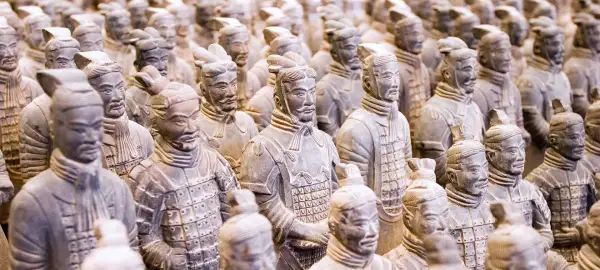
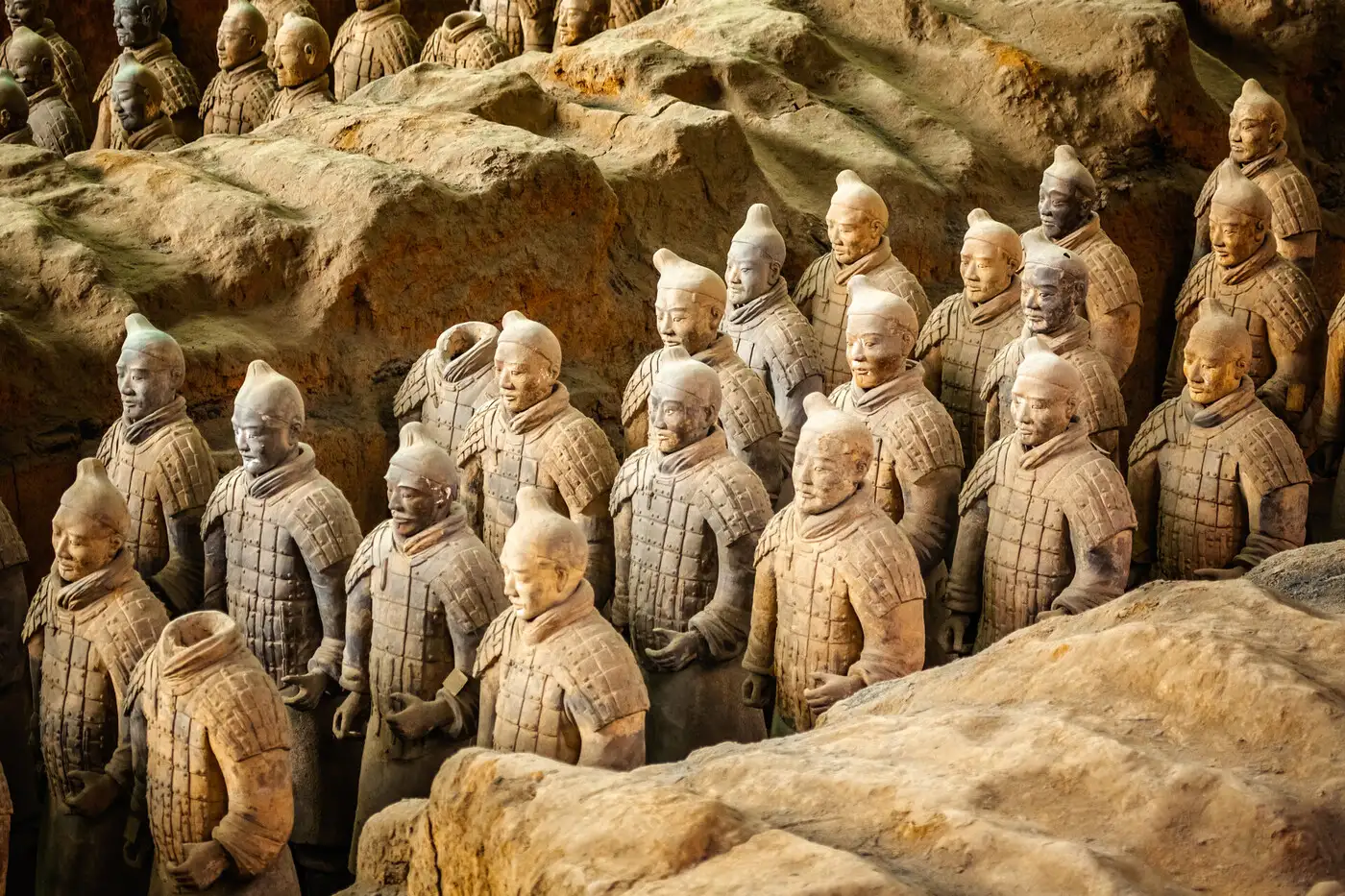
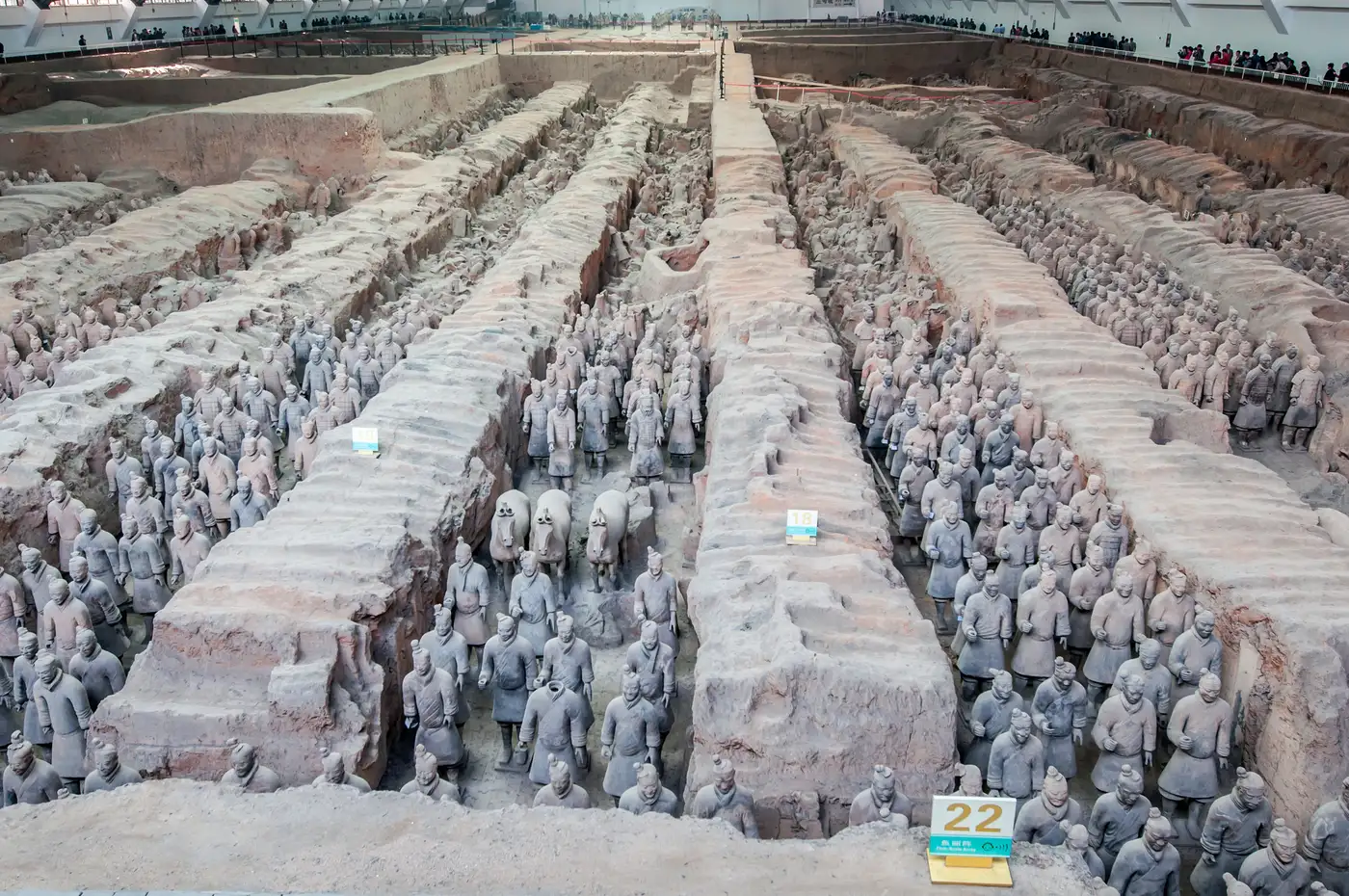
- Standing before the 8,000-strong funerary army at Xi'an's Terracotta Warriors
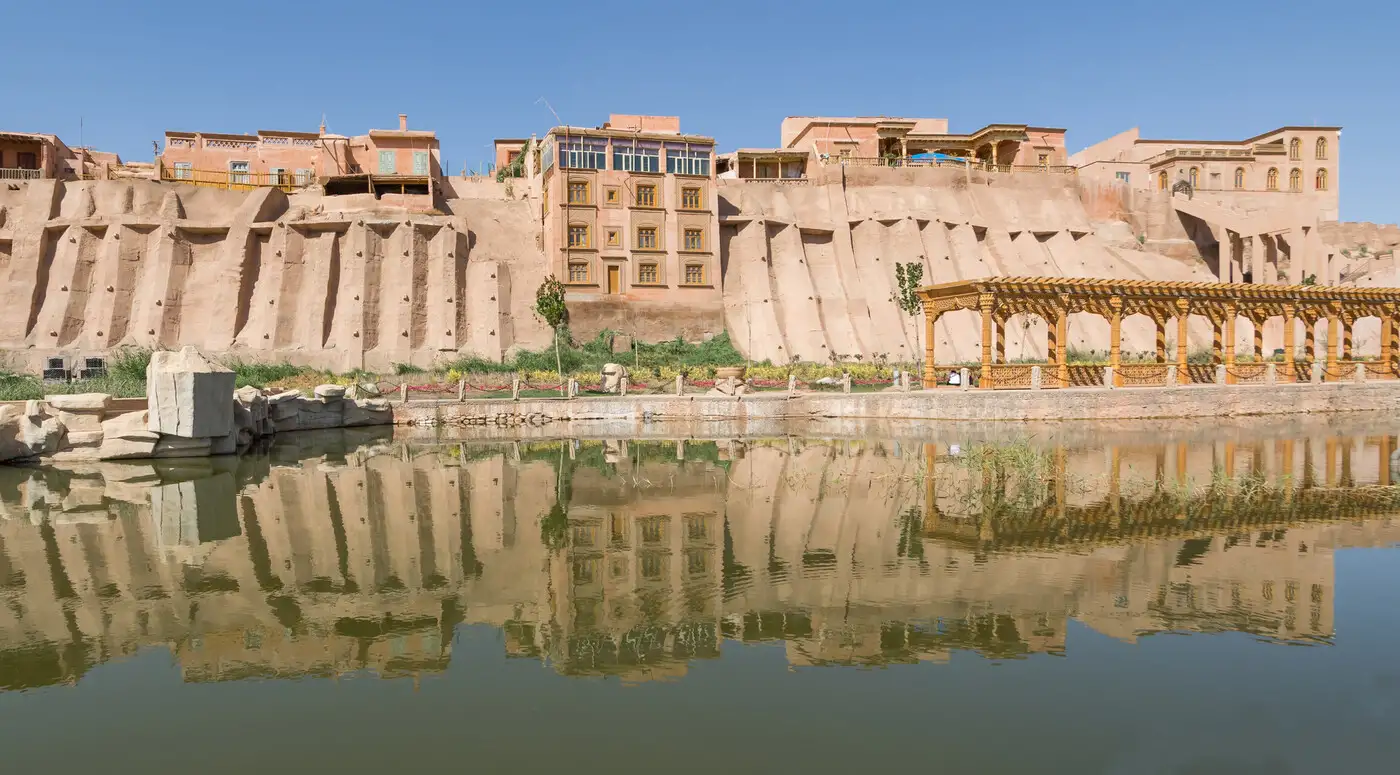
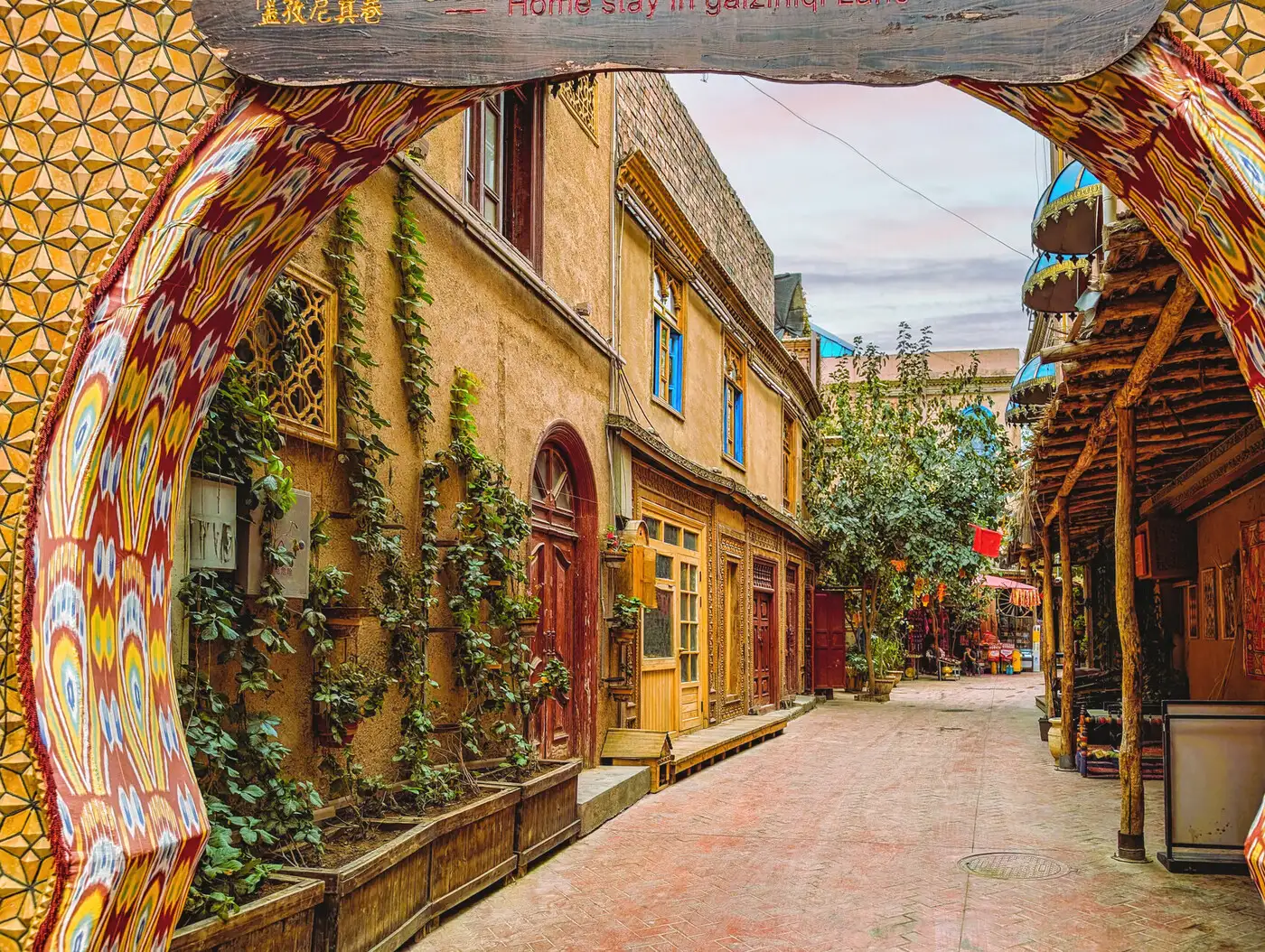
- Exploring the ancient bazaar quarter of Kashgar, where Central Asia begins
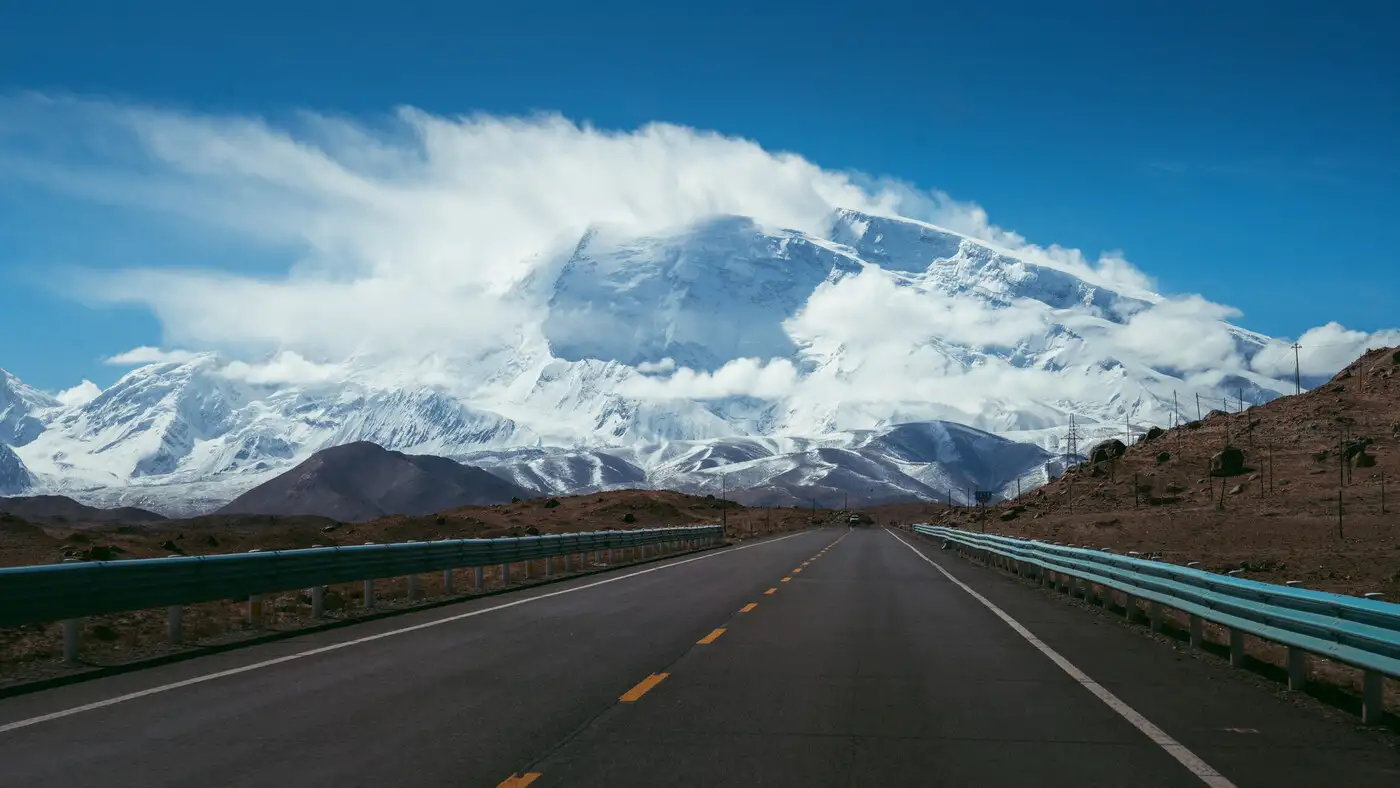
- Driving the Karakoram Highway to glacial Karakul Lake
- Riding the high-speed rail across the Gobi Desert from Turpan to Dunhuang
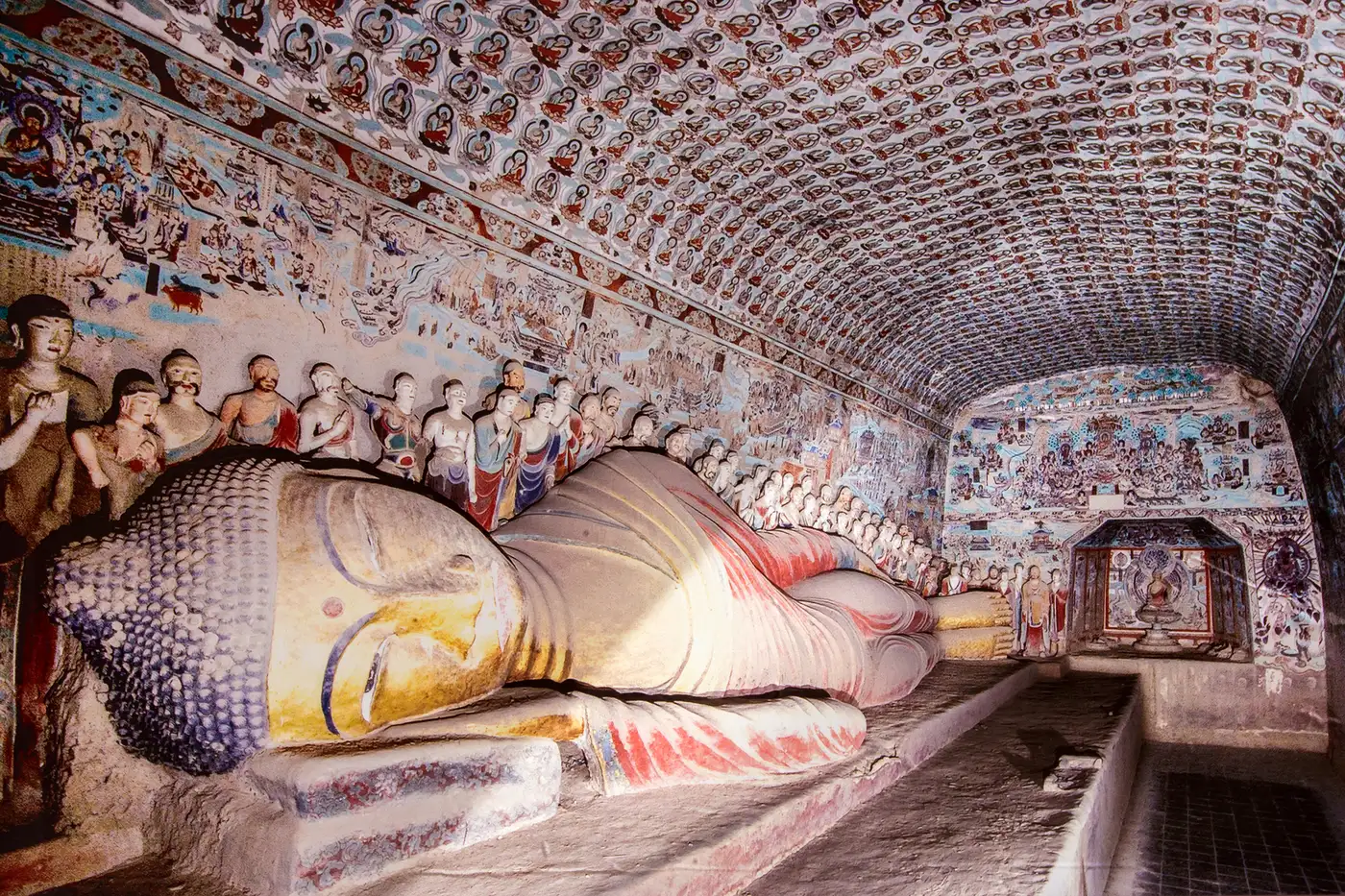
- Entering the painted caves of Mogao — the greatest repository of Buddhist art on earth
- Watching the sun descend over the wind-sculpted formations of the Yardang Geopark at dusk
- Singles friendly (view options for single travellers)
The journey begins in Xi'an, where the First Qin Emperor's buried army announces the ambition of Chinese civilisation at its most confident. From here we fly west across the Taklamakan — whose name translates roughly as "you go in, you don't come out" — to Kashgar, the great Central Asian crossroads where the Tian Shan, the Pamirs, and the Karakoram converge. In Kashgar the script changes, the faces change, and minarets replace pagodas. China and Central Asia occupy the same city, uneasily and fascinatingly.
The road east passes through Turpan's oasis of vineyards and ruins, where the Bezeklik cave temples document the moment Buddhism began its retreat before the advance of Islam — a transition the Mogao Caves in Dunhuang reverse magnificently, their thousand-year accumulation of Buddhist art preserved because this small oasis sat far enough east to survive. A day on the Karakoram Highway to Karakul Lake — glacial, silent, dominated by the 7546 m peak of Muztagh Ata — offers the raw physical world that made all this history necessary.
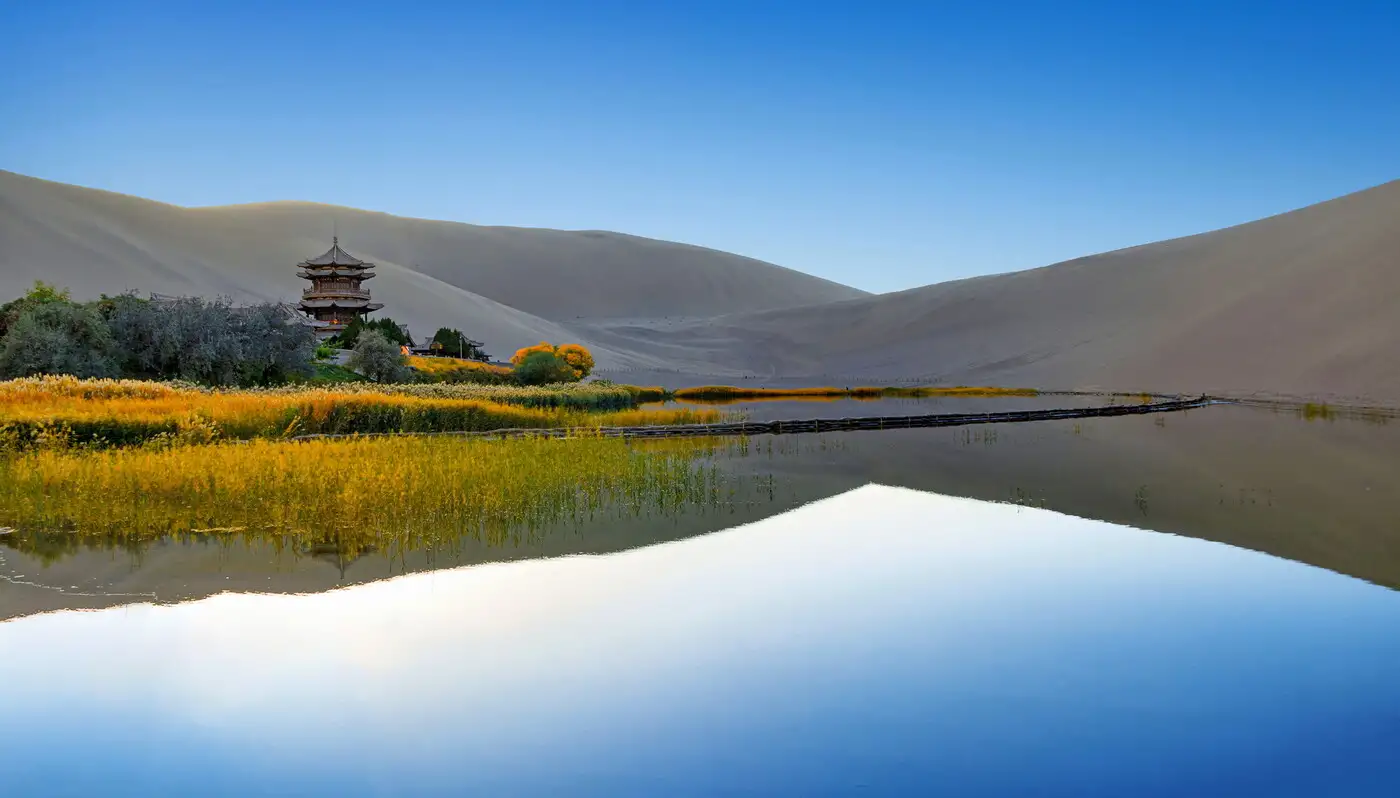
Dunhuang brings the journey to its natural close: a desert, a crescent lake, a wind-carved moonscape, and the painted caves of Mogao glowing in the cliffs above. The Silk Road was built on commerce, but what it carried that mattered most was intangible.
- MealsSavour authentic flavours with included daily breakfasts and dinners at handpicked local restaurants—immersing you in local cuisine without worrying about reservations or budgets.
- Transport & Logistics
Private air-conditioned coaches and included internal ferries and flights—ensuring hassle-free travel so you can focus entirely on the discoveries ahead.
"Adventures Abroad tour leader's management and guest services managed the tour with great skill and dedication. The tour leader was on top of every move and transfer. We have not experienced any issues with logistics and had a great time."
~ JULIA O"The tour leader did an excellent job coordinating some difficult travel logistics, power outage issues and resolving problems and dealing with guests who had unrealistic expectations."
~ CYNTHIA COLLINS - Expert Guidance
Unlock insider secrets at every landmark with your full-time Tour Leader and expert local guides , all gratuities covered—no hidden tipping surprises—so you immerse fully in your destination's stories, worry-free. (Except for the tips to your tour leader at the end of your tour.)
"Amazing tour guide. Our tour guide was very well organized, Her passion, knowledge, and enthusiasm completely transformed the travel experience into something truly unforgettable..."
~ MELANIE LEMAIRE"Highly recommend every trip with Adventures Abroad. It's a well organized and well thought out adventure. The tour leaders are friendly, knowledgeable and experienced professionals. Highly recommend this company."
~ SUSAN WALL - Sightseeing & EntrancesAll entrance fees for sites visited as per the itinerary—no hidden costs—so you can explore ancient ruins and excursions with complete peace of mind.
- AccommodationsUnwind in clean, well-located 3 to 4-star hotels with private en suite facilities—handpicked for comfort and convenience after each day's discoveries—so you can rest easy knowing your stay supports the real adventure, not steals the spotlight.
- Small Group
Discover the world in small groups of up to 18 travellers plus your expert Tour Leader—unlocking spontaneity, off-the-beaten-path adventures, and genuine connections at a relaxed pace, free from crowds.
"Looking Forward to My Next Adventure The best feature of the Adventures tour was the small size that allowed the group to quickly load up, let everyone get acquainted within the first 24 hours, capitalize on unplanned surprises along..."
~ PHILIP BLENSKI"Good value for a great time I have traveled with Adventures Abroad for over 20 years now. Well thought out, interesting itineraries and the other travelers congenial and friendly. The price always seems fair and overall a..."
~ Trusted Customer - Airport Transfers For Land & Air CustomersWe handle hassle-free airport transfers for all our land and air tour customers—plus early arrivals or late departures when you book extra hotel nights directly with us for added peace of mind.
- International airfare to/from the tour
- Tour Leader gratuities, lunches/drinks, personal items
- Visa fees, and any excursions referenced as 'optional'
- Airport transfers for "Land Only" customers
- Optional trip cancellation insurance - see "Resources" tab
- Seasonality and Weather:
Western China occupies a classic continental climate — short, intense summers and cold winters, with a narrow but reliable window on either side. We offer departures in both spring and fall, avoiding the national holiday periods that bring heavy domestic crowds to major sites.
Spring departures run in early May. Conditions across Xi'an and the Xinjiang basin are mild and clear at this time, with the oasis landscapes of Turpan and Kashgar green and flowering. Temperatures are comfortable for walking and desert exploration.
Fall departures run in mid-September after the summer heat has broken and the skies are reliably clear. The Turpan grape harvest is underway — the valley's raisin drying houses are at their most active and the markets are full of the season's produce. Rain is unlikely at any point on either routing, but a warm layer is advisable for evenings in the desert. - Transport and Travel Conditions:
Ground transport is by private air-conditioned coach throughout, with direct internal flights from Xi'an to Kashgar and from Kashgar to Urumqi. The journey's eastern leg features a high-speed rail service from Turpan to Liuyuan — a comfortable daytime run across the desert — followed by a scenic road transfer to Dunhuang. The day excursion to Karakul Lake involves approximately seven hours of driving along the Karakoram Highway. No hiking is required; the journey itself is the experience.
Sightseeing throughout involves moderate walking on cobbled lanes, desert paths, and uneven archaeological terrain, with stairs at some sites, some of which are large. We will have several full days of travel and sightseeing and possibly some early starts.
Am I suitable for this tour? Please refer to our self-assessment form - Activity Level: 2
These are particularly busy tours that feature a lot of moving around, sometimes by train and short journeys on local transport. Walking tours of towns and cities are leisurely but you should be prepared to be on your feet for several hours. Some of our cultural trips that occur at high altitude and/or require greater independence with baggage handling (at hotels, airports, train stations) also fall into this category.
To learn more about the Activity levels, please visit our tour styles page. - Accommodation:
Accommodation throughout is at well-located 4 and 5-star hotels selected for comfort, character, and proximity to sightseeing. Full details are available on the 'Map & Hotels' tab. - Staff and Support:
Adventures Abroad Tour Leader throughout, supported by specialist local guides at each destination. In Xinjiang particularly, local Uyghur guides bring knowledge and personal connection to the region's culture and history that no outside guide could replicate. - Group Size:
Maximum 18 guests plus Tour Leader
- Day 1:Arrival in Xi'anWelcome to Xi’an — ancient capital of thirteen dynasties and the city where China’s Silk Road began.
Few cities carry a name so weighted with consequence. It was from this Wei River valley that the First Qin Emperor unified China in 221 BC, and it was from here that the Han Dynasty emperors, two centuries later, first dispatched camel caravans westward into the unknown. That decision — to reach beyond China’s borders toward Central Asia and the Mediterranean world — would shape the movement of goods, faiths, and ideas across Eurasia for the next thousand years. Xi’an was the starting point of all of it.
This evening we gather with fellow travellers for our first meal together.
Overnight in Xi'an.
Included Meal(s): Dinner - Day 2:Xi'an: Terracotta Warriors, Great Mosque & Tang Dynasty Dinner ShowThe discovery that announced Xi'an to the world happened almost by accident. In 1974, farmers digging a well in Lintong County struck terracotta. What they had found was the funerary army of Qin Shi Huangdi — an estimated 8,000 life-size warriors, each individually modelled, arranged in battle formation to guard the emperor into eternity. We visit pits 1, 2, and 3 in sequence, moving from the sheer scale of the main chamber to the more intimate detail of the command figures. Two millennia underground have done nothing to diminish their authority.
Returning toward the city, we stop at the Big Wild Goose Pagoda, a Tang Dynasty Buddhist tower built in 652 to house scriptures brought overland from India by the pilgrim monk Xuanzang — one of the great journeys of the ancient world, and an early reminder that Xi'an was always a place where ideas arrived from elsewhere.
This afternoon we visit the Great Mosque in the heart of the Muslim Quarter. Founded in AD 742 and expanded across successive dynasties, it is among the largest mosques in China — built entirely in Chinese rather than Arabic style, with tiered pavilions and moon gates replacing domes and minarets. It stands as eloquent evidence of the Silk Road's deeper legacy: not just the movement of goods, but the transplanting of faith.
This evening we attend the Tang Dynasty Dinner Show — Xi'an's celebrated combination of dumpling banquet and classical performance, where dozens of dumpling varieties arrive alongside music, dance, and costume that brings the cosmopolitan splendour of Tang-era Chang'an vividly to life.
Overnight in Xi'an.
Included Meal(s): Breakfast and Dinner - Day 3:Xi'an - Fly to KashgarThis morning we fly direct from Xi’an to Kashgar — roughly four and a half hours that compress what the Silk Road’s camel caravans measured in months. The window seat earns its keep: the Wei River valley gives way to the Gobi’s corrugated emptiness, then the Taklamakan opens below, the largest shifting sand desert in the world, its dunes arranged in patterns that from altitude resemble nothing so much as the surface of another planet. The name means “you go in, you don’t come out.” The merchants who skirted its edges knew exactly what they were avoiding.
Kashgar appears at the desert’s western rim — a green smudge resolving into minarets and poplar trees as we descend. We are met on arrival and transferred to our hotel. The air is different here, the faces are different, the script on the shopfronts is different. Xi’an and Kashgar are both Chinese cities, technically. The four and a half hours between them cross a greater distance than that.
Overnight in Kashgar.
Included Meal(s): Breakfast and Dinner - Day 4:Kashgar: City TourKashgar is the pivot point of the entire journey — the place where China gives way to Central Asia so completely that the transition feels less like crossing a border than crossing a continent. For centuries this oasis at the junction of at least four Silk Road branches was the point where caravans from China, India, Persia, and the Russian steppe converged to trade, rest, and resupply. The surrounding geography explains why: the Tian Shan mountains to the north, the Pamirs and Karakoram to the south, the Taklamakan to the east. Every route through this part of the world passed through Kashgar.
We begin at the Tomb of Abakh Hoja, an unusual piece of Islamic architecture on the edge of the oasis — its tiled dome and courtyard more Samarkand than Shanghai. Buried here alongside the 17th-century Sufi leader is a woman known to Chinese legend as the Fragrant Concubine, said to have been brought — or taken — to the court of Emperor Qianlong, where her origins on the empire’s western edge made her both exotic and political.
We continue to the Id Kah Mosque, the largest in China, and into the labyrinth of the old bazaar quarter, where coppersmiths, woodworkers, and cobblers still occupy the same narrow lanes their predecessors worked for centuries. We also visit a local family in their home — a door into daily Uyghur life that runs to rhythms quite distinct from the China we left behind in Xi’an.
Overnight in Kashgar.
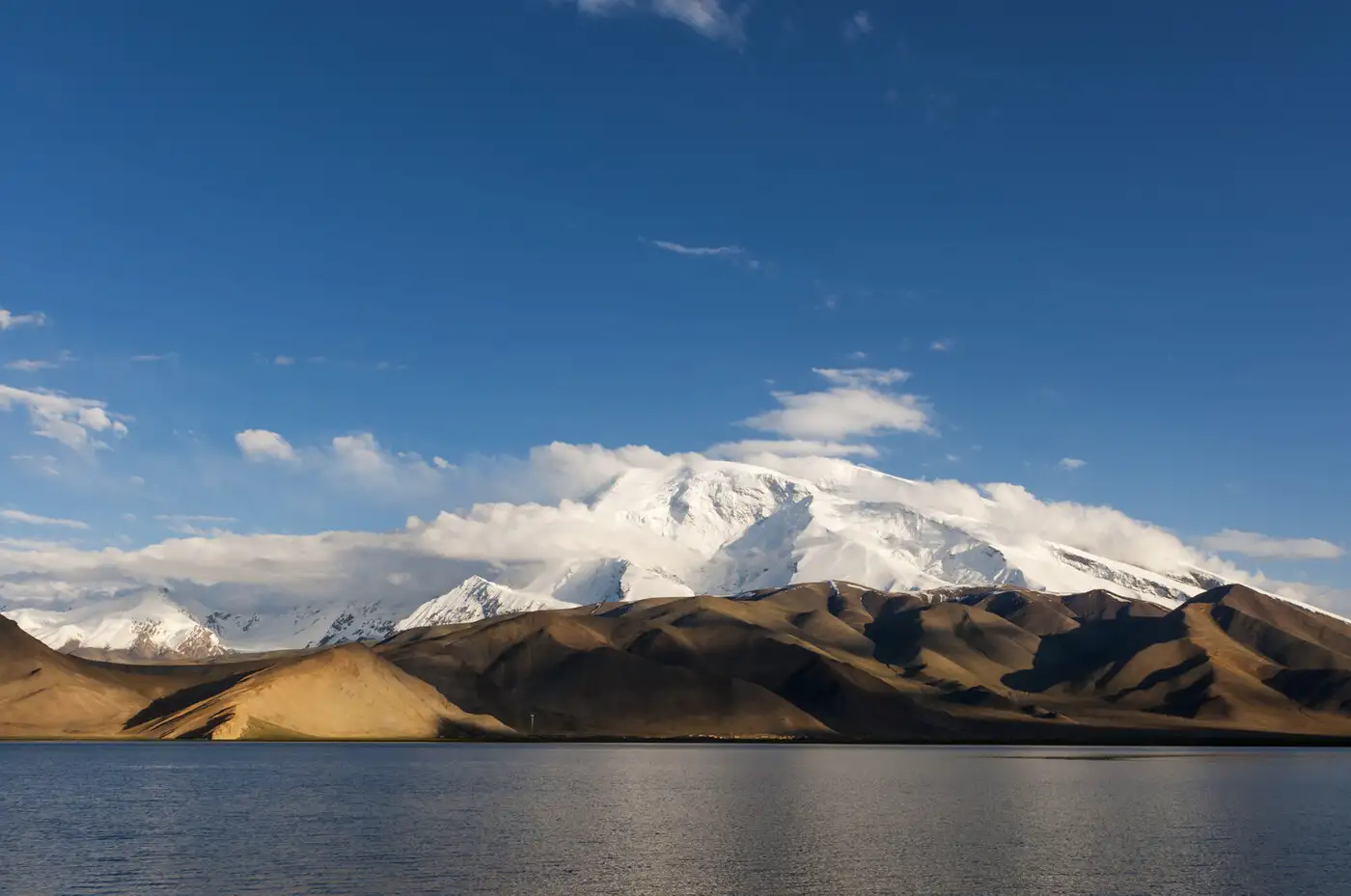
Included Meal(s): Breakfast and Dinner - Day 5:Karakul Lake & the Karakoram HighwayThis morning we head south from Kashgar on the Karakoram Highway — one of the great mountain roads on earth, climbing toward the 4693 m/15,397 ft Khunjerab Pass and the Pakistan border beyond. We stop first at Baisha Lake, a serene high-altitude pool set against the first dramatic rise of the Pamirs, before continuing to Karakul Lake — a glacial basin at 3600 m/11,811 ft whose deep blue surface reflects the massive cone of Muztagh Ata on the opposite shore. At 7546 m/24,757 ft, Muztagh Ata — "Father of Ice Mountains" — is one of the highest peaks in the world accessible without technical climbing, and from the lake shore its scale is simply difficult to process. Kyrgyz herders have grazed their flocks on these shores for centuries, their yurts still pitched at the water’s edge in the grazing season.
After so many days moving through the layered human history of the Silk Road — the warriors and mosques and cave temples and merchant cities — Karakul offers something the itinerary has not yet provided: the physical world that made all of it necessary. The mountains visible from this shore are the same barriers that forced ancient caravans to find passes, oases, and waypoints. Every city we have visited exists because of geography like this. We return to Kashgar in the late afternoon.
Overnight in Kashgar.
Included Meal(s): Breakfast and Dinner - Day 6:Kashgar Livestock Market - Fly to UrumqiThis morning we make our way to the outskirts of town for the Sunday livestock market — and this, emphatically, is the real thing. Uyghur farmers arrive before dawn from across the Kashgar oasis, driving sheep, goats, horses, and cattle through the dust to a sprawling open-air ground that operates on principles unchanged since the Silk Road era. The famous "sleeve trading" still happens here: buyers and sellers reach under each other’s jackets to negotiate prices in tactile silence, a system that kept transactions private in the days when every deal carried risk. Food stalls around the perimeter sell lamb skewers, flatbreads, and pomegranate juice to the crowds. It is noisy, dusty, pungent, and completely absorbing — one of the few places left in Xinjiang where the commercial DNA of the ancient world is still plainly visible.
This afternoon we board our flight to Urumqi, tracing our route back east across the Xinjiang basin.
Overnight in Urumqi.
Included Meal(s): Breakfast and Dinner - Day 7:Urumqi TouringUrumqi — "beautiful pastures" in Mongolian — sits at 900 m below the snow-capped Bogda Peak of the Tian Shan range, a modern Han-majority city that serves as Xinjiang’s administrative capital. We have a full day here before continuing east, and it rewards the time.
We begin at Hongshan Park, the red sandstone hill at the city’s heart whose summit pagoda offers the best panoramic view of Urumqi — the Tian Shan range spread across the horizon to the south, Bogda Peak’s glaciated crown presiding over everything. From here we visit the Xinjiang Uyghur Autonomous Region Museum, which houses one of the most remarkable collections in China: the celebrated Tarim mummies, extraordinarily well-preserved Bronze Age figures recovered from the desert with distinctly non-Chinese features, their existence in the heart of Central Asia a vivid reminder that this region has always been a place where worlds collide. The ethnographic galleries document the astonishing cultural diversity of Xinjiang’s fifty-plus ethnic groups with equal depth.
This afternoon we explore the Grand Bazaar — one of the largest in Central Asia, its covered halls selling Uyghur textiles, dried fruits, spices, and crafts in an atmosphere that connects unmistakably to the markets we encountered in Kashgar.
Overnight in Urumqi.
Included Meal(s): Breakfast and Dinner - Day 8:Urumqi to Turpan: JiaoheThis morning we drive southeast through the desert to Turpan, one of the Silk Road’s most improbable settlements: a city below sea level, in one of the hottest and driest places on earth, sustained entirely by an ancient engineering marvel.
A short drive west of Turpan brings us to Jiaohe, whose name means "confluence of rivers" — the two channels that carved the plateau on which this city stands. The ruins are Tang Dynasty at their most visible, though the settlement is far older: streets, residential compounds, watchtowers, and a Buddhist monastery complex emerge from the dusty plateau in the late afternoon light, a ghost city that was simply abandoned rather than destroyed, its mud-brick structures slowly returning to the earth from which they were raised.
Overnight in Turpan.
Included Meal(s): Breakfast and Dinner - Day 9:Turpan: Emin Minaret, Karez System, Gaochang & Grape ValleyTurpan's population is predominantly Uyghur, and the city's identity is inseparable from the grapes grown in the surrounding oasis — the raisins produced here are among the finest in the world, dried in distinctive ventilated brick towers whose latticed walls appear throughout the landscape.
This morning we visit the Emin Minaret and Sougong Ta Mosque, located at the oasis edge among vineyards and cornfields. Built in 1778 and rising 37 m from a base of plain mud brick, the minaret's elegant tapering form is pre-Safavid in style, its origins in Iran — a direct line connecting Turpan's architecture to the Persian cultural world that the Silk Road made accessible.
We also visit the ancient karez irrigation system — over 1600 km of hand-dug underground channels that carry snowmelt from the Tian Shan down to the oasis without losing a drop to evaporation in the desert heat above. It is the karez that makes the Grape Valley possible: a lush corridor of vines threaded between the desert hills, where we visit local families drying their harvest in the traditional airy brick houses that have served this purpose for generations. Turpan grapes have been famous along the Silk Road since the Tang Dynasty — the raisins that leave these drying houses today travel the same routes as their predecessors.
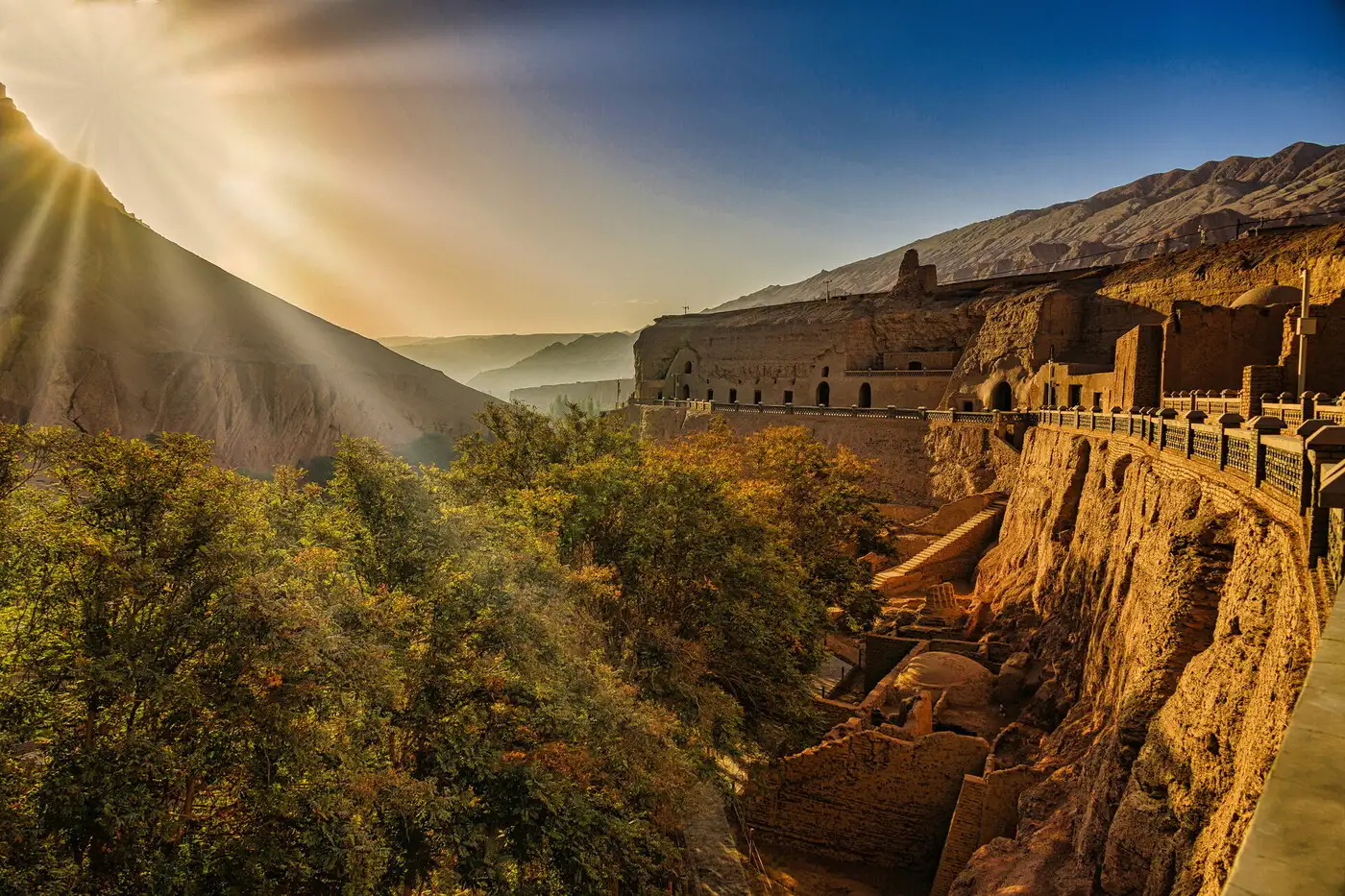
This afternoon we visit the Bezeklik Thousand Buddha Caves, cut into the cliffs above the Mutou Valley — and here the Silk Road's religious story takes a turn that Dunhuang will complete. These caves were active Buddhist sanctuaries from the fifth to the fourteenth century, their murals depicting donors, deities, and narrative scenes in a style that blends Chinese, Indian, and Central Asian influences. But unlike Mogao, Bezeklik tells a story of faith in retreat: as Islam advanced along the Silk Road from the west, Buddhism receded eastward. Many figures were defaced by later inhabitants; others were removed by early twentieth-century expeditions. What remains is fragmentary but affecting — a civilisation caught mid-transition.
We continue to the ruins of Gaochang, once the capital of a kingdom that sat astride the Silk Road, its monasteries drawing Buddhist pilgrims from across Central Asia before the city was abandoned to the encroaching desert.
Overnight in Turpan.
Included Meal(s): Breakfast and Dinner - Day 10:Turpan to Dunhuang by High-Speed Rail & RoadThis morning we board the high-speed train at Turpan North Station, trading the old overnight ordeal for a comfortable daytime run west along the Lanxin corridor. The journey to Liuyuan takes approximately four hours, the desert landscape scrolling past the window — an experience the Silk Road merchants would have found incomprehensible, crossing in hours what took their caravans weeks.
At Liuyuan we transfer to road transport for the final 2.5 hours to Dunhuang — a drive across the Gobi that provides its own orientation. The oasis appears gradually: first a darkening on the horizon, then the distinctive poplars and cultivated fields of a desert settlement that has been welcoming exhausted travellers for two thousand years.
Dunhuang — "Blazing Beacon" — was the westernmost Chinese garrison town on the Silk Road, the last outpost of empire before the routes diverged toward India, Persia, and Rome. That its name means what it does suggests how keenly the Chinese felt its position at the edge of the known world.
Overnight in Dunhuang.
Included Meal(s): Breakfast and Dinner - Day 11:Dunhuang: Mogao Caves, Crescent Lake & Shazhou Night MarketEarly this morning we visit the Mogao Caves — and here, at the far western edge of our journey, the Silk Road's deepest story reaches its most extraordinary expression.
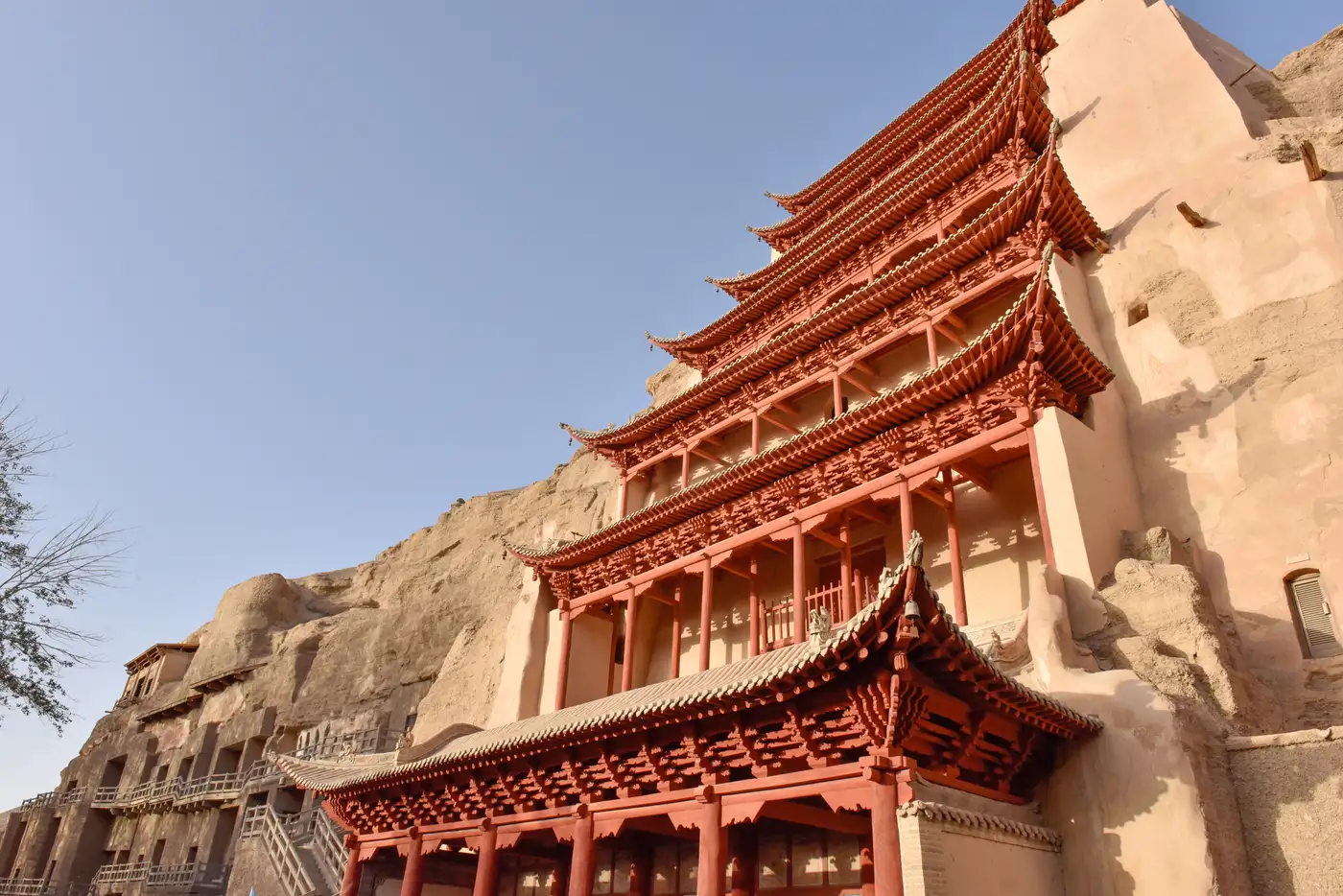
The caves were begun in AD 366 when a monk named Le Zun had a vision of a thousand Buddhas shimmering in the cliff face above the Dachuan River. Over the next thousand years, successive dynasties of merchants, monks, and pilgrims funded the excavation and decoration of cave after cave, filling them with murals and sculptures that document Buddhist cosmology, Chinese court life, Central Asian musical traditions, and the daily reality of Silk Road travel. The result is the greatest repository of Buddhist art on earth: 492 decorated caves, 45,000 square metres of murals, more than 2,000 painted sculptures. The thread that led us here from Xi'an's Great Mosque, from Kashgar's Id Kah, from Turpan's Persian-styled minaret, finds its resolution in these painted caves: the Silk Road was always, underneath the commerce, a corridor of belief.
This afternoon we drive to the edge of the oasis where Mingsha Shan — the Singing Sand Mountain — rises abruptly from the desert floor. Nestled at the dune base is Yueyaquan, the spring-fed Crescent Lake, whose survival amid the surrounding desert has been considered miraculous for two thousand years. Camel rides into the dunes are available for those who wish to experience something of the Silk Road's original mode of transport.
This evening the Shazhou Night Market draws us in — the liveliest gathering in the northwest, its stalls selling dried fruits, jade, silk, and Uyghur flatbreads as the temperature drops and the stars appear with the particular clarity reserved for desert skies.
Overnight in Dunhuang.
Included Meal(s): Breakfast and Dinner - Day 12:Dunhuang: Yumen Pass, Han Great Wall, Western Thousand Buddha Caves & Yardang GeoparkAn early start today as we head northwest into the open desert, where the Han Dynasty’s effort to hold and define its western frontier is still visible in the landscape.
Yumen Pass — the Jade Gate — was the official western exit point of China for two thousand years. Silk went out through this gate; jade, glass, and the first Buddhist texts came in. The rammed-earth watchtower that marks the site today is among the oldest surviving structures in China, its mud-brick construction maintained against the desert’s patient erosion for more than two millennia. Nearby, the remains of the Han Great Wall extend across the Gobi in a line of eroded earthworks — older than the stone wall we know from Beijing, less photogenic, and considerably more affecting for it. We also visit the Western Thousand Buddha Caves, smaller and less frequented than Mogao but preserving murals of considerable beauty and intimacy.
We continue to the Yardang National Geopark — and here the landscape produces its final, most disorienting surprise. Wind erosion over millions of years has sculpted the desert floor into a city of forms: towers, ridges, and hull-shaped masses that resemble a fleet of ships frozen mid-voyage across a stone sea. We time our arrival for the late afternoon, when the descending sun draws extraordinary colour from the formations and the shadows deepen between the ridges. The Chinese name — "Devil City" — reflects how travellers have always experienced this place after dark, when the wind through the rock produces sounds that defy easy explanation. In the dying light it is simply one of the strangest and most beautiful landscapes on earth.
Overnight in Dunhuang.
Included Meal(s): Breakfast and Dinner - Day 13:Departure from DunhuangDeparture from Dunhuang.
BON VOYAGE!
Included Meal(s): Breakfast
Countries Visited: China
*The red tour trail on the map does not represent the actual travel path.



Book This Tour
- Final payment: Due 90 days prior to departure.
- Deposit: A non-refundable $500 USD Deposit is required at booking.
- Internal Flight Taxes: An extra $66 USD applies for taxes and fees on tour flights. The internal airfares are included, but taxes are listed separately as they may change. Exceptions are noted in Red.
- Optional Single Supplement: $730 USD (number of singles limited).
(View options forsingle travellers) - Transfering Tour or Date: Transferring to another tour or tour date is only permissible outside of 120 days prior to departure and is subject to a $100 USD change fee.
(Read our cancellation policy)
Prices below are per person, twin-sharing costs in US Dollars (USD). Pricing does not include airfare to/from the tour and any applicable taxes.
Frequently Asked Questions
- What is the maximum number of participants on a trip?Most of our tours carry a maximum of 18 participants; some tours (ie hiking tours) top out at 16. In the event that we do not achieve our minimum complement by our 90-day deadline, we may offer group members the option of paying a "small-group surcharge" as an alternative to cancellation. If all group members agree, we will confirm the trip at existing numbers; this surcharge is refundable in the event that we ultimately achieve our regular minimum. If the small group surcharge is not accepted, we will offer a refund of your deposit or a different trip of your choice.
- Can I extend my tour either at the beginning or end? What about stopovers?Yes, you can extend your tour either at the beginning or the end and we can book accommodation in our tour hotel. Stopovers are often permitted, depending on air routing. Stopovers usually carry a "stopover" fee levied by the airline.
- How do I make a reservation? How and when do I pay?The easiest way to make a reservation is via our website; during office hours, you are also more than welcome to contact us by telephone.
A non-refundable deposit is payable at the time of booking; if a reservation is made within 90 days, full payment is required. Some trips require a larger deposit. If international airline bookings require a non-refundable payment in order to secure space or the lowest available fare, we will require an increase in deposit equal to the cost of the ticket(s).
Early enrolment is always encouraged as group size is limited and some trips require greater preparation time.
Once we have received your deposit, we will confirm your space and send you a confirmation package containing your trip itinerary, any visa/travel permit related documents, invoice, clothing and equipment recommendations, general information on your destination(s), and forms for you to complete, sign and return to us. Your air e-tickets (if applicable), final hotel list, final trip itinerary, and instructions on how to join your tour, will be sent approximately 2-3 weeks prior to departure. - What about cancellations, refunds, and transfers?Please review our cancellation policy page for details.
- I am a single who prefers my own room. What is a single supplement?All of our tours have a single supplement for those who want to be guaranteed their own room at each location.
This supplement is a reflection of the fact that most hotels around the world do not discount the regular twin-share rate for a room by 50% for only one person occupying a room. Most hotels will give a break on the price, but usually in the range of 25-30% of the twin-share rate. This difference, multiplied by each night, amounts to the single supplement.
The conventional amount can also vary from country to country and some destinations are more expensive than others for single occupancy. In order to be "single friendly," the supplements we apply are not a profit centre for us and we do our best to keep them as reasonable as possible.
On most tours we limit the number of singles available, not to be punitive, but rather because many hotels allow for only a limited number of singles; some smaller hotels at remote locations also have a limited number of single rooms available.
Please note that most single rooms around the world are smaller than twin-share rooms and will likely have only one bed. - Do you have a shared accommodation program?Yes! If you are single traveller and are willing to share, we will do our best to pair you with a same-gender roommate. Please note that should we fail to pair you, we will absorb the single supplement fee and you will default to a single room at no extra charge.