- History
- Overview
- Info & Inclusions
- Itinerary
- Map & Hotels
- Photos
- Dates & Prices
- Tour Duration: 15 Days
- Max Group Size 18
- Bucharest: "The Little Paris of the East"
- The "painted monasteries" of Bucovina
- Bran Castle, mythical home of Dracula
- Famous Valley of the Roses
- Unsurpassed frescoes of Rila Monastery
- Sofia: City tour
- Singles friendly (view options for single travellers)
- MealsSavour authentic flavours with included daily breakfasts and dinners at hotels or handpicked local restaurants—immersing you in local cuisine without worrying about reservations or budgets.
- Transport & Logistics
Private air-conditioned coaches and included internal ferries and flights—ensuring hassle-free travel so you can focus entirely on the discoveries ahead.
"Adventures Abroad tour leader's management and guest services managed the tour with great skill and dedication. The tour leader was on top of every move and transfer. We have not experienced any issues with logistics and had a great time."
~ JULIA O"The tour leader did an excellent job coordinating some difficult travel logistics, power outage issues and resolving problems and dealing with guests who had unrealistic expectations."
~ CYNTHIA COLLINS - Expert Guidance
Unlock insider secrets at every landmark with your full-time Tour Leader and expert local guides , all gratuities covered—no hidden tipping surprises—so you immerse fully in your destination's stories, worry-free. (Except for the tips to your tour leader at the end of your tour.)
"Amazing tour guide. Our tour guide was very well organized, Her passion, knowledge, and enthusiasm completely transformed the travel experience into something truly unforgettable..."
~ MELANIE LEMAIRE"Highly recommend every trip with Adventures Abroad. It's a well organized and well thought out adventure. The tour leaders are friendly, knowledgeable and experienced professionals. Highly recommend this company."
~ SUSAN WALL - Sightseeing & EntrancesAll entrance fees for sites visited as per the itinerary—no hidden costs—so you can explore ancient ruins and excursions with complete peace of mind.
- AccommodationsUnwind in clean, well-located 3 to 4-star hotels with private en suite facilities—handpicked for comfort and convenience after each day's discoveries—so you can rest easy knowing your stay supports the real adventure, not steals the spotlight.
- Small Group
Discover the world in small groups of up to 18 travellers plus your expert Tour Leader—unlocking spontaneity, off-the-beaten-path adventures, and genuine connections at a relaxed pace, free from crowds.
"Looking Forward to My Next Adventure The best feature of the Adventures tour was the small size that allowed the group to quickly load up, let everyone get acquainted within the first 24 hours, capitalize on unplanned surprises along..."
~ PHILIP BLENSKI"Good value for a great time I have traveled with Adventures Abroad for over 20 years now. Well thought out, interesting itineraries and the other travelers congenial and friendly. The price always seems fair and overall a..."
~ Trusted Customer - Airport Transfers For Land & Air CustomersWe handle hassle-free airport transfers for all our land and air tour customers—plus early arrivals or late departures when you book extra hotel nights directly with us for added peace of mind.
- International airfare to/from the tour. Tour Leader gratuities, lunches, drinks, personal items (phone, laundry, etc), domestic and international air taxes (if applicable), excursions referenced as 'optional'. Airport transfers for Land Only customers. Our post-reservation trip notes offer further guidance on optional meal costs and shopping.
- Seasonality and Weather:
This tour is offered in spring, summer and fall the most popular of which is are spring and fall when temperatures are relatively mild and crowds thinner. Showers quite possible in spring and fall, somewhat less so in summer though can occur any time. Summers can be humid though long daylight hours maximize exploration. - Transport and Travel Conditions:
Land transport throughout by private air-conditioned motor coach, 24-36 seats depending on ultimate group size (see 'group size'). Though we will have a couple of full bus days there are plenty of stops of interest. There may not be porters available in all locations. We also make use of public transit in some cities in order to maximize sightseeing where vehicles are impractical (most people quite enjoy this insight into daily life).
This trip is typical of most of our European tours, which are ambitious and involve full days of travel and sightseeing. While we don't have any actual strenuous activity (ie hiking) built into the program, you will do a lot of walking on this trip. These walks will mostly be in the form of walking tours of towns and cities and short walks to dinner. Being Europe, and a hilly/mountainous area, cobbles, uneven surfaces, and slopes/stairs are common. If you are accustomed to typical "bus tours," which rely heavily on vehicular transport for all sightseeing activities, you should be aware that this tour is considerably more active.
Am I suitable for this tour? Please refer to our self-assessment form - Activity Level: 2
These are particularly busy tours that feature a lot of moving around, sometimes by train and short journeys on local transport. Walking tours of towns and cities are leisurely but you should be prepared to be on your feet for several hours. Some of our cultural trips that occur at high altitude and/or require greater independence with baggage handling (at hotels, airports, train stations) also fall into this category.
To learn more about the Activity levels, please visit our tour styles page. - Accommodation:
Well-located, air-conditioned, mid-range hotels (3-4 star) throughout. All hotels have en suite toilet and bath. Porter service is sometimes available; you MUST be independent with your luggage. Single rooms are limited in number and likely smaller than twins. - Staff and Support:
Tour Leader, driver, local step-on guides in various locales. - Group Size:
Maximum 18 plus Tour Leader
- Day 1:Arrive in BucharestWelcome to Bucharest, capital of a country that spent centuries at the meeting point of larger empires — Ottoman to the south, Habsburg to the west, Russian to the east — and absorbed a little of each without ever quite becoming any of them. In the 1930s, its grand boulevards earned Bucharest comparisons to Paris; more recently the city has rebuilt itself again as Romania's confident, contemporary capital.
We gather this evening for dinner and to meet fellow travellers before the journey begins.
Overnight in Bucharest.
Included Meal(s): Dinner - Day 2:Bucharest: City Tour - Fly to Suceava - Gura HumoruluiThis morning belongs to Bucharest itself. We begin at the Arc de Triomphe on Soseaua Kiseleff, a boulevard longer than the Champs-Elysees and built to give a young nation, recently free of Ottoman suzerainty, a European face. From there we tour Cotroceni Palace, still an official presidential residence, and pass the Romanian Athenaeum and University Square, scene of the 1989 revolution.
The Cathedral of National Salvation is Orthodox Christianity announced at cathedral scale. Consecrated only a few years ago beside the Palace of Parliament, it stands as a deliberate counterweight — faith reasserting itself in the shadow of the regime that once tried to erase it. The National History Museum rounds out the morning with the story of everything in between: Roman Dacia, medieval principalities, and a century of juggling larger neighbours.
In the afternoon we visit the Bucharest Village Museum, one of Europe's oldest open-air museums, where wooden churches, watermills, and farmhouses gathered from across the country preserve a rural life that outlasted every regime layered on top of it.
PLEASE NOTE: We always attempt to include the Palace of Parliament, but the building frequently closes to visitors for official functions, often without notice.
An early dinner precedes our flight north to Suceava, gateway to Bucovina.
Overnight in Gura Humorului.
Included Meal(s): Breakfast and Dinner - Day 3:Bucovina: Painted Monasteries & Cacica Salt MineWe begin at the Museum of Bucovinian Traditions in Gura Humorului, a fitting introduction to a region where Orthodox faith and folk art have always been intertwined. From here we trace the deepest historical layer of this crossroads — not empires competing for Romania, but a Moldavian civilisation confident enough, in the fifteenth and sixteenth centuries, to paint its faith on the outside of its churches for everyone to see.
At Voronet, frescoes in a blue so distinctive it carries the monastery's name cover the exterior walls floor to roofline — a nuns' monastery consecrated to St. George, built once Stephen the Great had centralised the Moldavian state and given it the confidence for this kind of statement. Sucevita, the largest and best-preserved of the painted monasteries, goes further still: an almost complete fresco cycle wraps its fortified enclosure, built in 1586, inside and out — UNESCO-protected, and rightly compared to the mural tradition of Venice's San Marco.
We break from monasteries for the Cacica Salt Mine, worked since the eighteenth century, where a small chapel carved entirely from salt sits deep beneath the surface alongside the old mining galleries.
Leaving the painted monasteries behind, we drive south to Piatra Neamt, a small city framed by the Eastern Carpathians and our base for tomorrow's mountain crossing.
Overnight in Piatra Neamt.
Included Meal(s): Breakfast and Dinner - Day 4:Piatra Neamt - Bicaz Gorges & Lacu Rosu - SighisoaraThis morning's drive is one of Romania's most dramatic, through the Bicaz Gorges, where the road narrows and climbs for 5 km/3.1 mi beneath limestone walls rising 300 m/985 ft overhead — a stretch so tight in places it's known locally as the 'neck of hell.' Protected within Hasmas-Bicaz Gorges National Park, the gorge marks our crossing from Moldavia into Transylvania.
A few kilometres on, we reach Lacu Rosu, or Red Lake, formed in 1837 when an earthquake-triggered landslide dammed the Bicaz River. We stop here for lunch, the reddish sediment that names the lake visible along its shoreline against a backdrop of alpine peaks.
We continue west into Transylvania proper, arriving by evening in Sighisoara.
Overnight in Sighisoara.
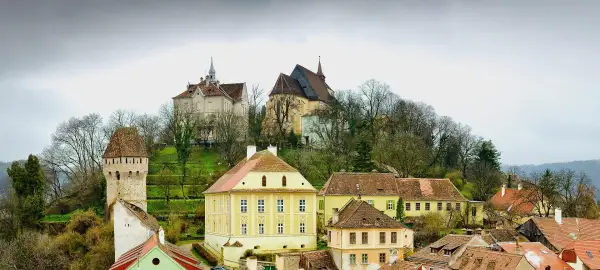
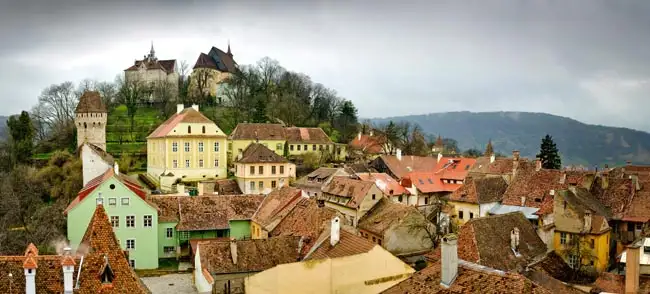
Included Meal(s): Breakfast and Dinner - Day 5:Sighisoara - Viscri - BrasovSighisoara is the only inhabited medieval citadel in Europe, and this morning we explore it on foot: cobbled lanes climbing past craft-guild towers — tinsmiths, furriers, butchers — to the fourteenth-century Clock Tower, where the History Museum occupies the former Town Hall and the view stretches across Saxon rooftops unchanged in centuries. This is Transylvania's other layer of empire: German-speaking colonists, invited here by Hungarian kings eight centuries ago to farm and defend the frontier, who built towns strong enough to still be standing.
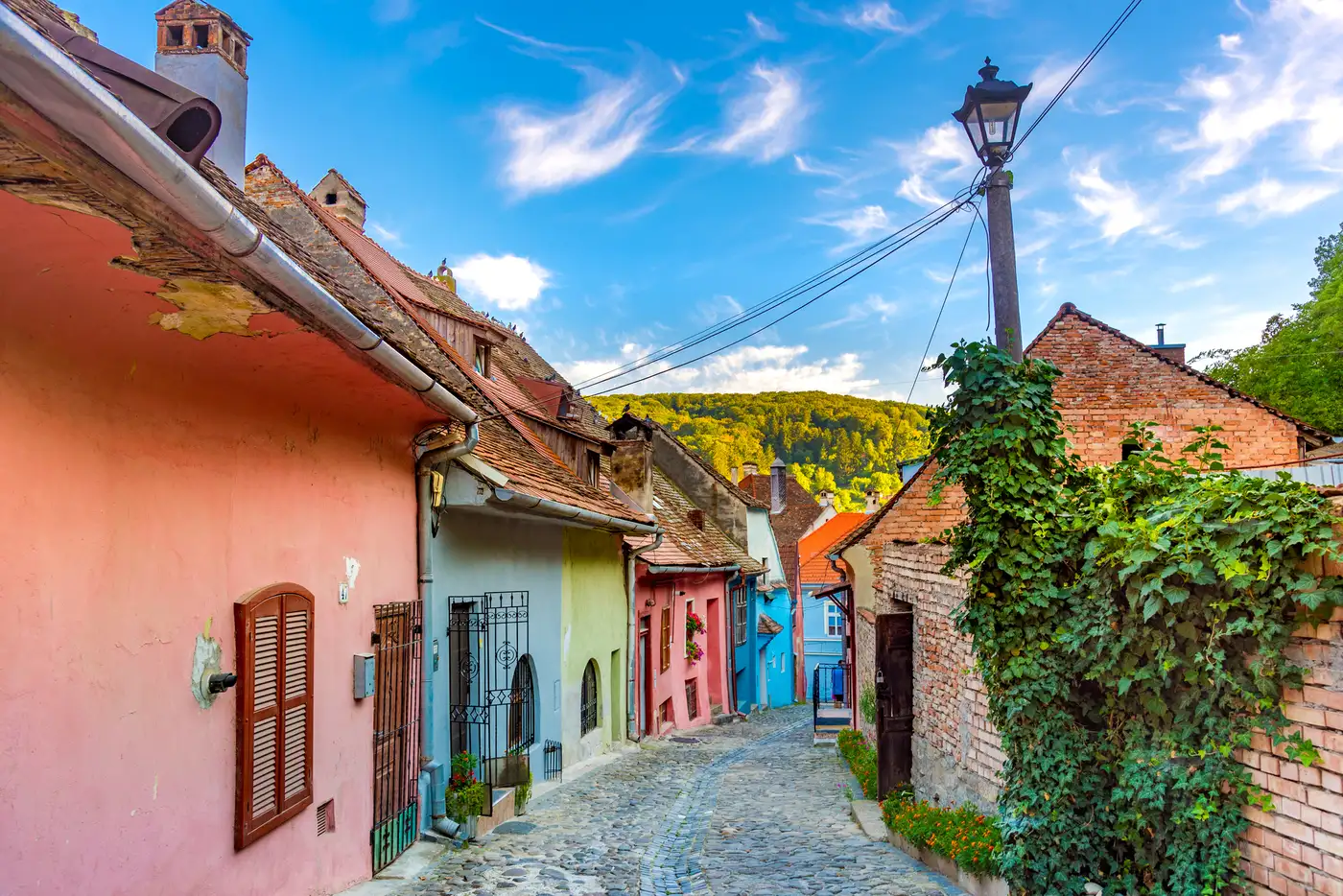
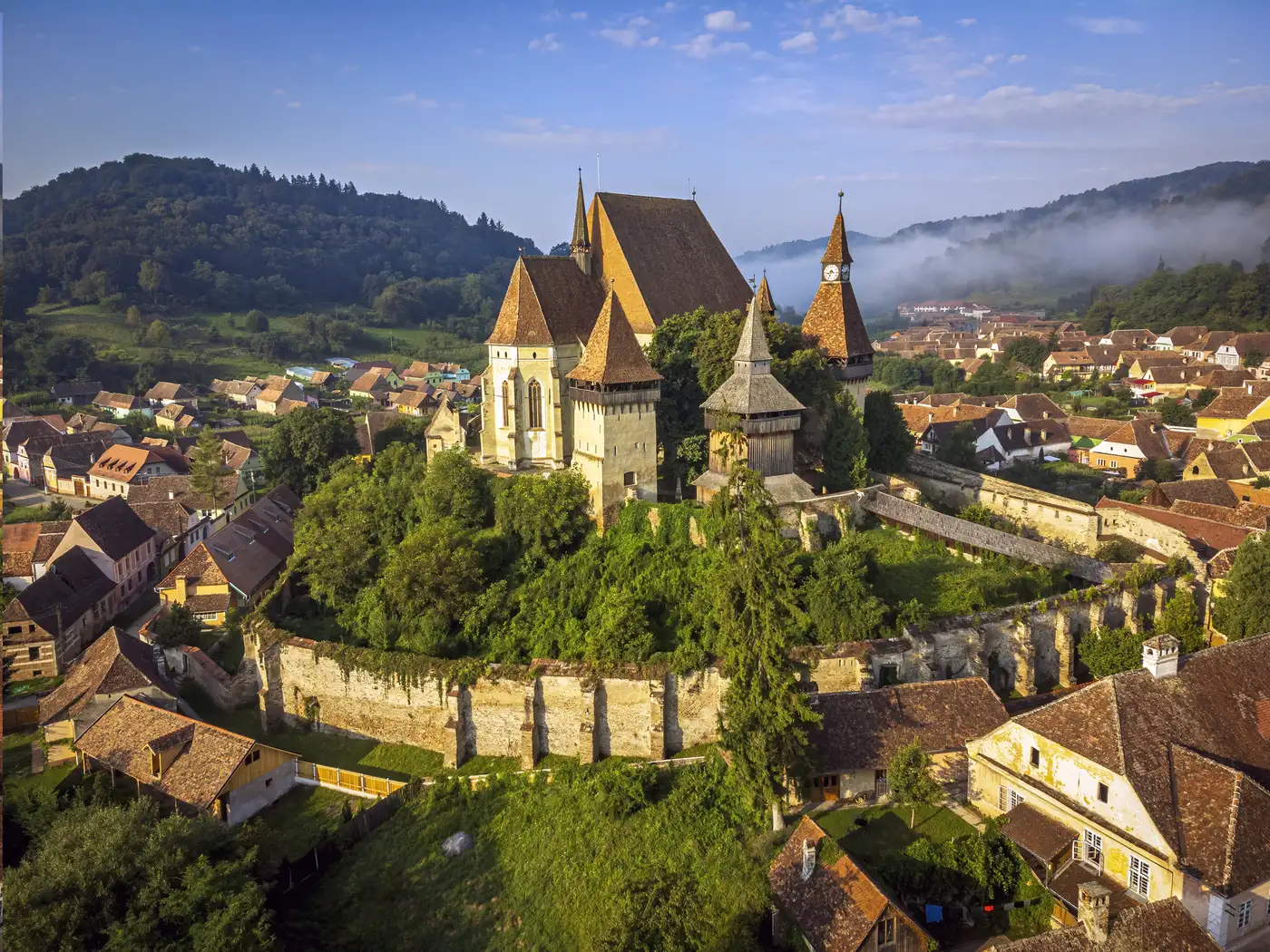
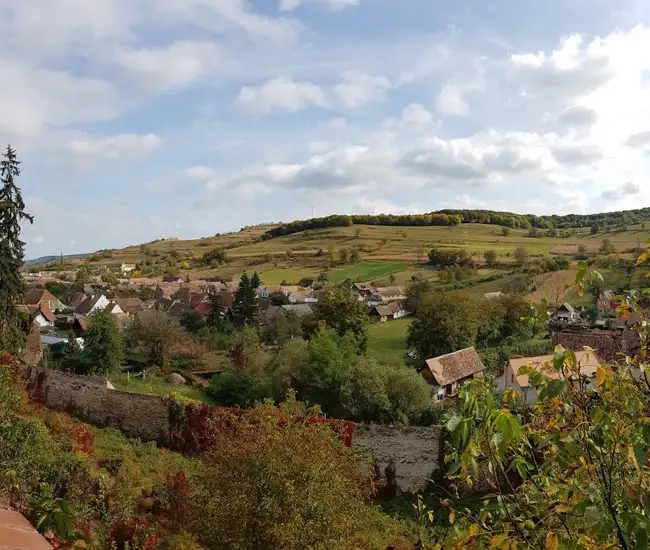
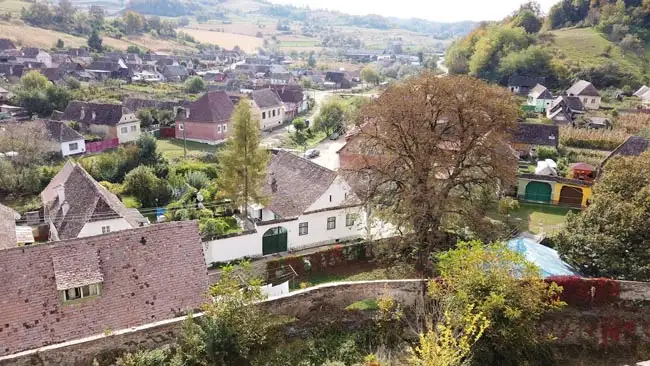
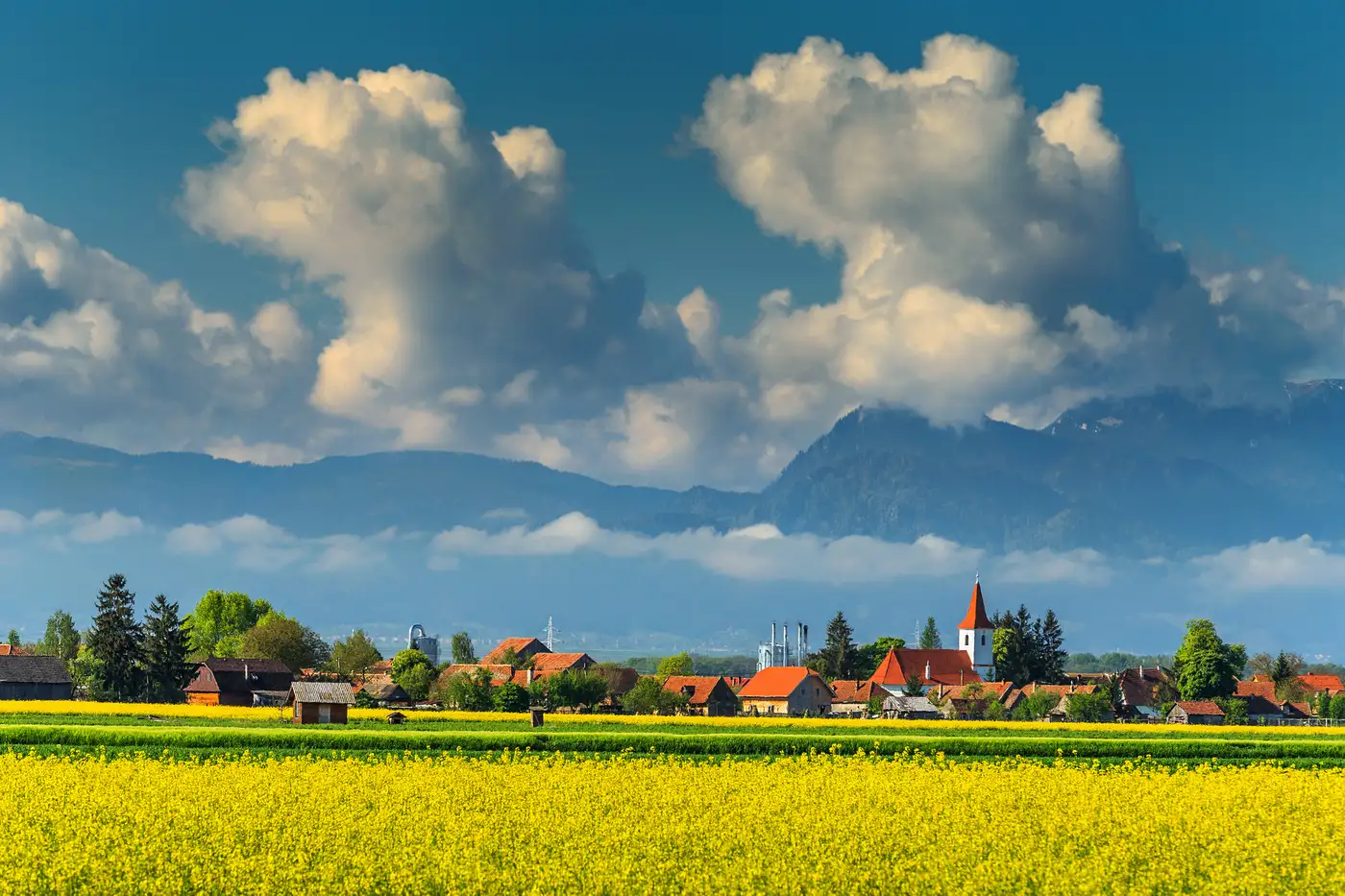
We continue to Viscri, a Saxon village so well preserved that King Charles III bought a house here decades before his coronation, drawn by the same fortified church and slow rural rhythm that first attracted Saxon settlers. Storks nest on chimney pots above houses painted in the region's traditional ochre and blue.
By late afternoon we reach Brasov, Romania's second city, tucked between two mountains in a bowl the Saxons chose for the same defensible logic as Sighisoara. We tour the Black Church, the largest Gothic structure in southeastern Europe, blackened — as the name suggests — by a seventeenth-century fire it never fully shed.
Overnight in Brasov
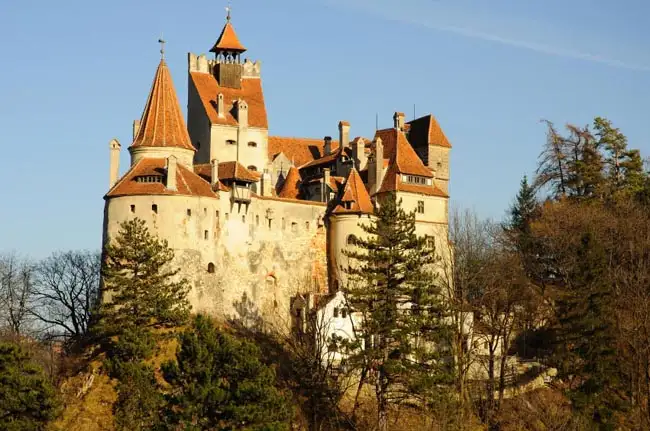
Included Meal(s): Breakfast and Dinner - Day 6:Brasov: Bran Castle & SinaiaA short drive from Brasov brings us to Bran Castle, perched on its rocky outcrop exactly where the Saxons built it in 1377 to guard the mountain pass into Wallachia. Its association with Dracula is a twentieth-century invention, but the real history needs no embellishment: a customs post and frontier fortress whose rooms and towers, linked by passages cut into the rock, controlled trade between Transylvania and the lands beyond the mountains.
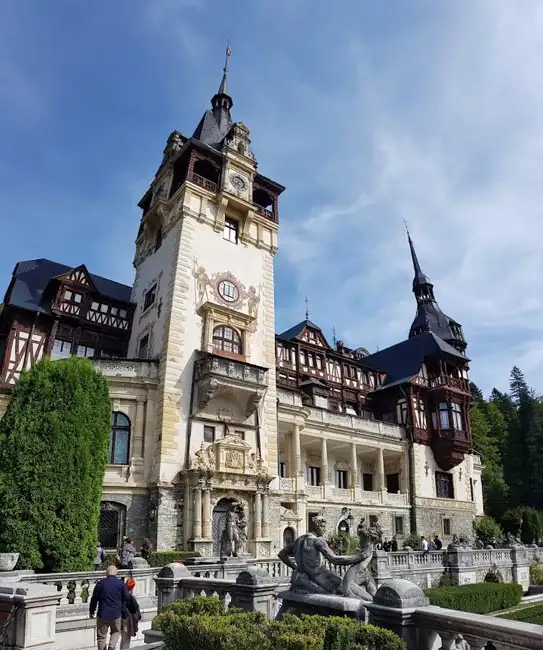
From medieval frontier we jump four centuries forward, to Sinaia and Peles Castle — Romania's answer to the question of what a newly independent nation does with a German prince for a king. Built in the 1870s and 80s for Carol I, first of the Hohenzollern monarchs imported to rule a country freshly out from under Ottoman suzerainty, Peles is German Renaissance fantasy transplanted to the Carpathians: 160 rooms, decorated throughout by Carol's eccentric wife Carmen Sylva. The same confidence that filled Bucharest's boulevards at the start of our journey reaches its fullest expression here — a Western European court built, quite literally, onto a Romanian mountainside.
We also visit Pelisor, the smaller Art Nouveau residence built for Carol's successor, and climb to Sinaia Monastery, the seventeenth-century cluster of churches that gave the resort town its name.
We return to Brasov for a second night, with the evening free to explore the old town at leisure.
Overnight in Brasov
Included Meal(s): Breakfast and Dinner - Day 7:Brasov - BucharestWe leave Brasov and Transylvania behind, retracing our path toward Bucharest and the close of a week spent among Saxon fortresses, Orthodox frescoes, and a royal family that was never quite Romanian — three different answers to the same question of how a small country survives at the edge of larger ones.
Optional: time and interest permitting, we stop en route in Targoviste, medieval capital of Wallachia and seat of the Princely Court where Vlad the Impaler took his throne in 1456 — a ruler whose reputation, like Bran Castle's borrowed vampire legend, has grown stranger over time than the facts ever were.
Overnight in Bucharest.
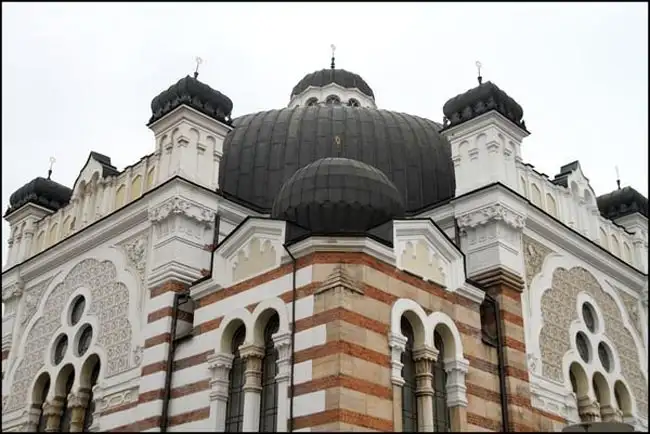
Included Meal(s): Breakfast and Dinner - Day 8:Bucharest, Romania - Fly to Sofia, BulgariaSofia, Bulgaria's capital, largely presents itself as a city of wide boulevards and squares, pleasant parks, and enormous Socialist Realism-style buildings. In the 5th century BC, Sofia was the Thracian city of Serdika, and when Romans conquered Thrace, they made it their capital. Attila the Hun's hordes set it ablaze in the 5th century AD, after which Justinian rebuilt it as an important Byzantine stronghold.
NOTE: The timing of today's flight will determine whether we have free time in Bucharest or Sofia.
Upon arrival in Sofia, we settle into our accommodations and begin our introduction to this ancient city where Thracian, Roman, Byzantine, Ottoman, and modern Bulgarian influences create a fascinating cultural mosaic. The wide boulevards reflect 19th-century urban planning, while archaeological sites scattered throughout the city centre reveal layers of two millennia of continuous habitation.
Overnight in Sofia.
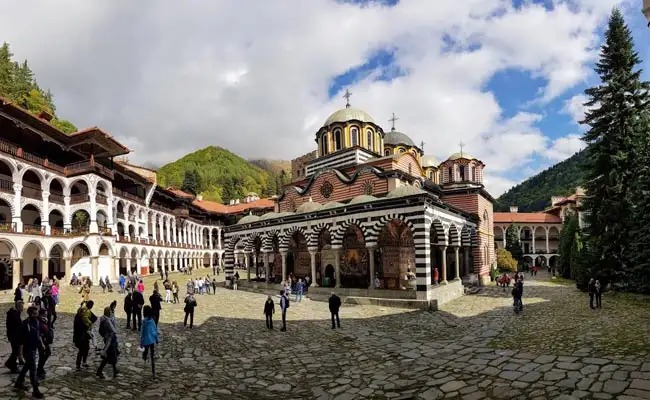
Included Meal(s): Breakfast and Dinner - Day 9:Sofia & Rila MonasteryWe journey 121 kilometres south of Sofia through high rock walls with formations like giant animals waiting to pounce, arriving at the 10th-century Rila Monastery nestled in soft, green woods. Mountains rise all around this most-revered of Bulgarian monasteries, while below, the Rilska River races over a stony bed through pristine wilderness.
In the 9th century, twenty-year-old Ivan Rilski (John of Rila) fled to this peaceful place seeking escape from worldly corruption. Finding a cave in the woods above the present monastery site, he embraced the hermit life, feeding animals and birds while praying in the stillness. Like-minded men eventually joined him, building the first monastery about 2.4 kilometres from the present site, where today you can visit his tomb, the little Church of St. Luke, and the cave he inhabited.
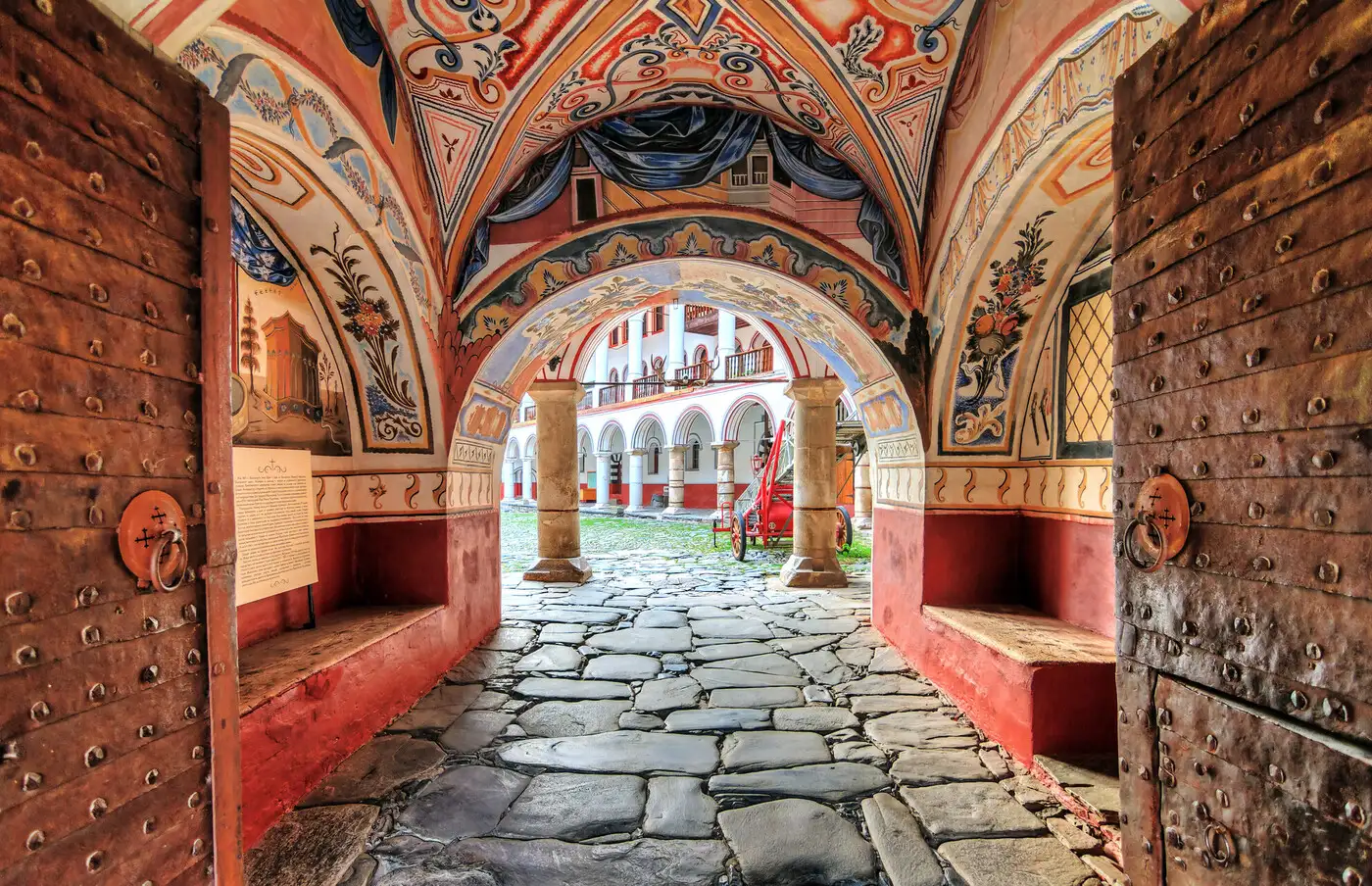
Rila Monastery ranks among Europe's largest monasteries, located in some of Bulgaria's most beautiful terrain. Our exploration features the unsurpassed frescoes of the Church of the Blessed Virgin, where monks still practice within this five-domed treasure. The exquisite fortress-like walls also contain the Historical Museum, featuring objects connected with the monastery's thousand-year history, including precious manuscripts, woodcarvings, and ecclesiastical treasures.
After lunch, we return to Sofia for a visit to the National Museum of History, providing an excellent introduction to Bulgarian culture, from ancient Thracian gold treasures to medieval manuscripts to folk traditions that survive today.
Overnight in Sofia.
Included Meal(s): Breakfast and Dinner - Day 10:Sofia - PlovdivWe travel to ancient Plovdiv, situated in the Plain of Thrace, where history unfolds in layers across three dramatic hills. Plovdiv was formerly known as Pulpudeva until Philip II of Macedon's weary horse collapsed beneath him at the edge of the Thracian plain in 342 BC. Taking this as an omen, he built Philippolis on the site in his horse's honour. Later Romans renamed it Trimontium – the City on Three Hills – while five centuries of Turkish rule (when it was known as Philibe) brought significant changes to its character.
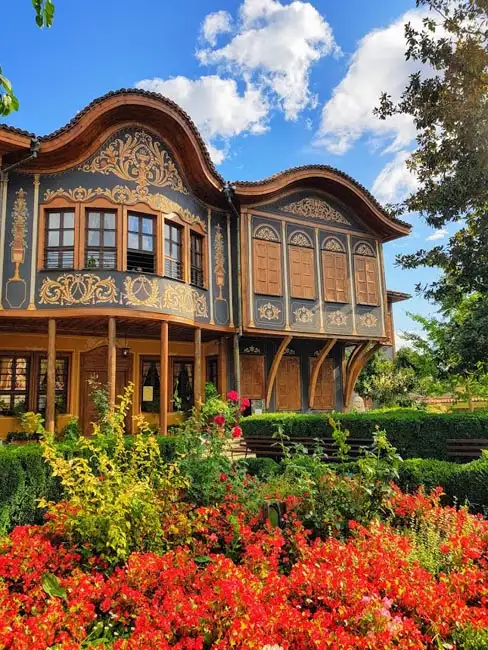
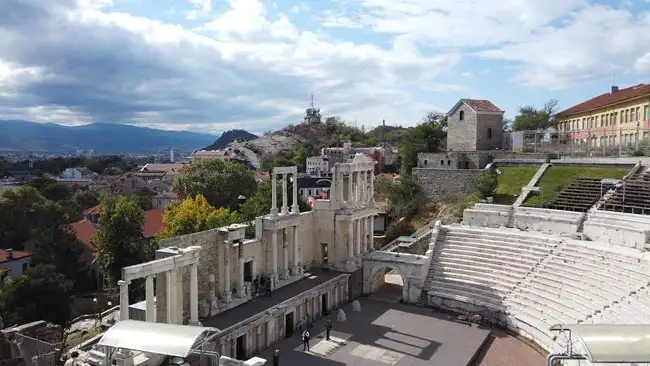
Today Plovdiv charms visitors with its lovely "stariyat grad" (old town), displaying Turkish influences alongside a distinctive Bulgarian character. Our tour explores the Old Quarter, the Ethnographical Museum housed in a beautifully preserved 19th-century mansion, and the remarkably well-preserved Roman Amphitheatre, still used for performances during summer festivals.
Within Trimontium, the historic heart of Plovdiv, typical 19th-century Bulgarian homes line cobblestoned streets, their overhanging upper floors and painted facades creating one of the Balkans' most photogenic neighbourhoods. The revival-period architecture reflects the prosperity of 19th-century Bulgarian merchants who traded throughout the Ottoman Empire while maintaining their cultural identity.
Overnight in Plovdiv
Included Meal(s): Breakfast and Dinner - Day 11:Plovdiv - Valley of the Roses - Veliko TarnovoThe world-famous Valley of the Roses unfolds before us, where 70 percent of the world's "attar" (rose extract) is produced in fields that transform into a pink carpet during May and June harvest season. Nimble-fingered women and girls do most of the picking in the early morning hours, while donkeys carry the precious petals to distilleries where the ancient art of rose oil production continues unchanged for centuries.
In Kazanlak, we visit the Thracian Tomb (4th-3rd centuries BC), a UNESCO World Heritage site representing the original Bulgarians' sophisticated burial customs. The Thracians, closely linked with ancient Greeks, created this underground chamber decorated with remarkable frescoes that survive as masterpieces of ancient art.
Before crossing the spectacular Shipka Pass with its majestic vistas and momentous history, we visit the Shipka Memorial Church, where golden domes rise from the hillside in Russian style, commemorating Bulgarian and Russian soldiers who died fighting for Bulgarian independence. The open-air Ethnographical Museum of Etura recreates a typical 19th-century village, where traditional crafts and rural life continue in authentic workshops and homes.
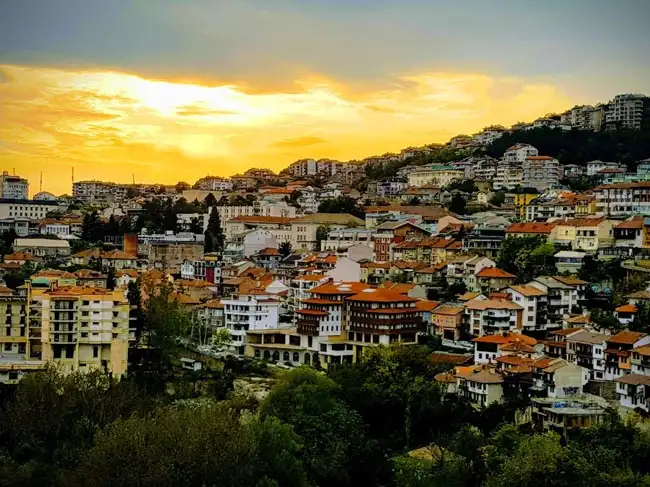
We arrive in Veliko Tarnovo, once Bulgaria's capital (1185-1396) and still displaying remains of its past glory through fortress walls and palaces perched among steep cliffs of the Yantra Gorge. This capital of the Second Bulgarian Kingdom rises on three main hills: fortified Tsarevets; Trapezitsa, where boyars lived; and Sveta Gora, once a scholarly monastery centre, now a university site.
Overnight in Veliko Tarnovo
Included Meal(s): Breakfast and Dinner - Day 12:Veliko Tarnovo: Town TourWe explore this town laced with history through our tour of the commanding Tsarevets Citadel (Castle of the Czar), first fortified in the 6th century and evolved into the royal centre of the Second Bulgarian Kingdom by the 12th century's end. The breathtaking views from this picturesque region reveal why medieval Bulgarian rulers chose this dramatic setting for their capital.
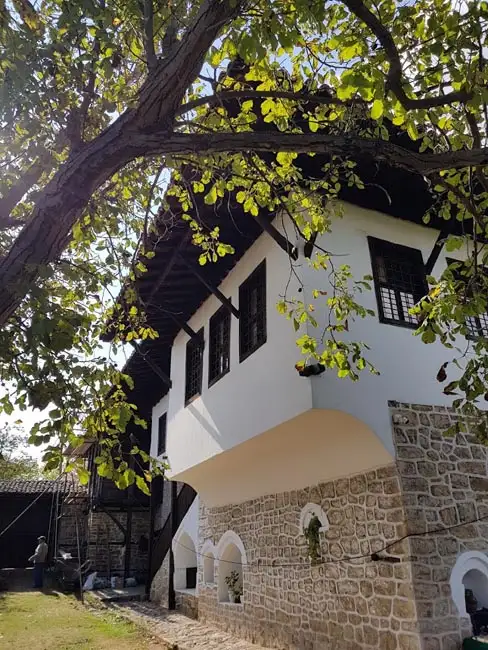
A short drive brings us to the hilltop village of Arbanassi, first settled by Albanian immigrants in the 15th century. Here we visit several houses dating from the 16th and 17th centuries, their thick stone walls and hidden courtyards reflecting the uncertain times when wealthy merchants needed to protect their families and fortunes from bandits and tax collectors.
These remarkable houses demonstrate how Bulgarian Christians maintained their prosperity and culture during Ottoman rule, creating architectural gems that blend Bulgarian, Byzantine, and Ottoman influences. The Church of the Nativity contains some of Bulgaria's finest religious frescoes, painted when the village served as a summer retreat for wealthy Bulgarians.
The afternoon offers leisure time to absorb the medieval atmosphere of Veliko Tarnovo, perhaps exploring artisan shops or enjoying coffee while watching the Yantra River wind through the dramatic gorge below the ancient fortress.
Overnight in Veliko Tarnovo
Included Meal(s): Breakfast and Dinner - Day 13:Veliko Turnovo - SofiaThe beautiful Danube Plain provides our scenic route back to Sofia as we cross the Troyan Pass and visit the nearby Troyan Monastery, Bulgaria's third largest. This spiritual centre, founded in the 17th century, houses remarkable frescoes and wood carvings that represent the pinnacle of Bulgarian religious art during the National Revival period.
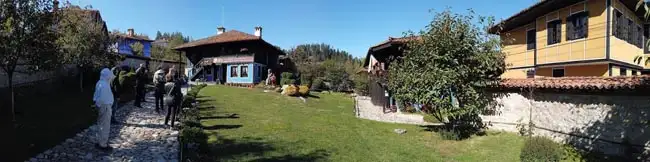
After lunch, we continue to the well-preserved "museum-town" of Koprivshtitsa, where the revolt against Ottoman occupation began in 1876. This historic town preserves an invaluable collection of 19th-century Bulgarian architecture, when wealthy merchants built elaborate houses that celebrated Bulgarian identity through distinctive design and decoration.
Our walk through this enchanting town reveals unique houses with wooden columns, painted facades, richly decorated interiors, and lovely gardens that create a living museum of Bulgarian Renaissance culture. Each house tells stories of the families who lived here during Bulgaria's struggle for independence, when education, culture, and commerce flourished despite political oppression.
The architectural ensemble of Koprivshtitsa demonstrates how Bulgarians expressed their national awakening through art, literature, and architecture, creating a distinctive style that blended traditional Bulgarian elements with cosmopolitan influences from across Europe.
Overnight in Sofia
Included Meal(s): Breakfast and Dinner - Day 14:Sofia: City SightseeingSofia's motto proclaims "Sofia Grows but Never Ages," reflecting a city founded over 7,000 years ago that today serves as an exciting meeting place of history and modernity. Traces of Thracian and Roman lives, Proto-Bulgarian and Slavic cultures create layers visible throughout the contemporary city, while more than 250 historic, archaeological and architectural monuments preserve Sofia's role as the centre of Bulgarian political and cultural life.
Our walking tour reveals Sofia's most famous landmarks, beginning with the magnificent St. Alexander Nevsky Cathedral, one of the city's most spectacular buildings. Beyond the splendour of the building itself, the cathedral houses remarkable icons and murals painted by the era's foremost artists, while its crypt contains Bulgaria's most valuable collection of medieval icons spanning centuries of religious art.
St. Sofia's Church, the second oldest but most significant building in the city, gave Sofia its name and stands as a remarkable archaeological monument witnessing Serdica's golden age during the 6th century. The large archaeological complex of Roman and medieval ruins, dominated by St. George Rotunda, preserves Sofia's oldest building. Repeatedly destroyed and rebuilt, the 5th-century St. George Rotunda has been restored to its original appearance as a Christian church, its circular walls containing frescoes from multiple historical periods.
The remainder of the afternoon invites independent exploration of this fascinating capital, where ancient ruins neighbour contemporary galleries, traditional restaurants serve dishes perfected over centuries, and modern Sofia continues its eternal dance between past and future.
Overnight in Sofia
Included Meal(s): Breakfast and Dinner - Day 15:DepartureDeparture from Sofia.
As we bid farewell to our fellow travellers and this land of endless discoveries, we carry with us memories of spectacular landscapes, architectural treasures, and the warm hospitality of peoples whose cultures have endured and flourished despite centuries of challenge and change.
PRIJATNO PATUVANE!! (Pleasant Journey in Bulgarian!)
Included Meal(s): Breakfast
Countries Visited: Bulgaria and Romania
*The red tour trail on the map does not represent the actual travel path.
Book This Tour
- Final payment: Due 90 days prior to departure.
- Deposit: A non-refundable $500 CAD Deposit is required at booking.
- Optional Single Supplement: $1420 CAD (number of singles limited).
(View options forsingle travellers) - Transfering Tour or Date: Transferring to another tour or tour date is only permissible outside of 120 days prior to departure and is subject to a $100 CAD change fee.
(Read our cancellation policy)
Prices below are per person, twin-sharing costs in Canadian Dollars (CAD). Pricing does not include airfare to/from the tour and any applicable taxes.
Frequently Asked Questions
- What is the maximum number of participants on a trip?Most of our tours carry a maximum of 18 participants; some tours (ie hiking tours) top out at 16. In the event that we do not achieve our minimum complement by our 90-day deadline, we may offer group members the option of paying a "small-group surcharge" as an alternative to cancellation. If all group members agree, we will confirm the trip at existing numbers; this surcharge is refundable in the event that we ultimately achieve our regular minimum. If the small group surcharge is not accepted, we will offer a refund of your deposit or a different trip of your choice.
- Can I extend my tour either at the beginning or end? What about stopovers?Yes, you can extend your tour either at the beginning or the end and we can book accommodation in our tour hotel. Stopovers are often permitted, depending on air routing. Stopovers usually carry a "stopover" fee levied by the airline.
- How do I make a reservation? How and when do I pay?The easiest way to make a reservation is via our website; during office hours, you are also more than welcome to contact us by telephone.
A non-refundable deposit is payable at the time of booking; if a reservation is made within 90 days, full payment is required. Some trips require a larger deposit. If international airline bookings require a non-refundable payment in order to secure space or the lowest available fare, we will require an increase in deposit equal to the cost of the ticket(s).
Early enrolment is always encouraged as group size is limited and some trips require greater preparation time.
Once we have received your deposit, we will confirm your space and send you a confirmation package containing your trip itinerary, any visa/travel permit related documents, invoice, clothing and equipment recommendations, general information on your destination(s), and forms for you to complete, sign and return to us. Your air e-tickets (if applicable), final hotel list, final trip itinerary, and instructions on how to join your tour, will be sent approximately 2-3 weeks prior to departure. - What about cancellations, refunds, and transfers?Please review our cancellation policy page for details.
- I am a single who prefers my own room. What is a single supplement?All of our tours have a single supplement for those who want to be guaranteed their own room at each location.
This supplement is a reflection of the fact that most hotels around the world do not discount the regular twin-share rate for a room by 50% for only one person occupying a room. Most hotels will give a break on the price, but usually in the range of 25-30% of the twin-share rate. This difference, multiplied by each night, amounts to the single supplement.
The conventional amount can also vary from country to country and some destinations are more expensive than others for single occupancy. In order to be "single friendly," the supplements we apply are not a profit centre for us and we do our best to keep them as reasonable as possible.
On most tours we limit the number of singles available, not to be punitive, but rather because many hotels allow for only a limited number of singles; some smaller hotels at remote locations also have a limited number of single rooms available.
Please note that most single rooms around the world are smaller than twin-share rooms and will likely have only one bed. - Do you have a shared accommodation program?Yes! If you are single traveller and are willing to share, we will do our best to pair you with a same-gender roommate. Please note that should we fail to pair you, we will absorb the single supplement fee and you will default to a single room at no extra charge.