
- History
- Rail
- Overview
- Info & Inclusions
- Itinerary
- Map & Hotels
- Photos
- Dates & Prices
- Tour Duration: 10 Days
- Max Group Size 18
- Partial Canal transit
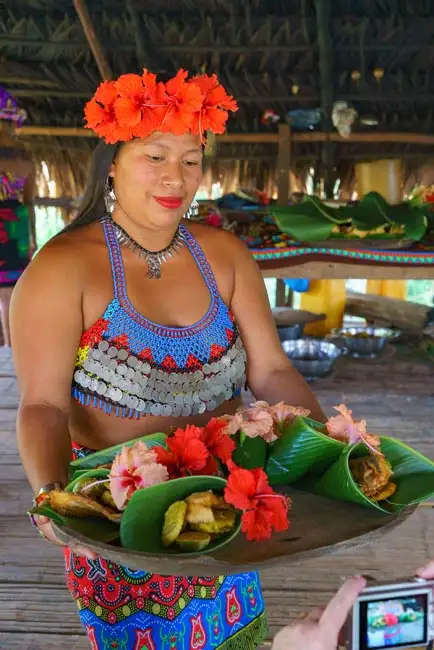
- Parque Metropolitano & Amerindian Village
- Chiriqui Highlands & La Amistad Park
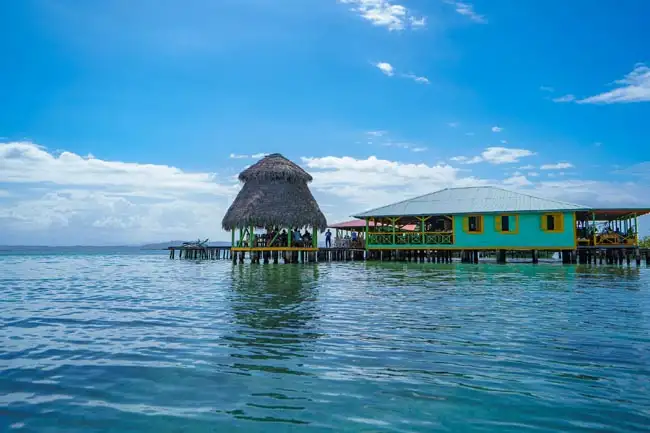
- Bocas del Toro: White sands & coral reefs
- Singles friendly (view options for single travellers)
Panama is a land rich in natural wonder and we get right into the meat of things when we board a passenger ferry down the world-famous Panama Canal.
See the intricate process of how boats are elevated with rising and lowering waters controlled by a purely gravity-powered system.
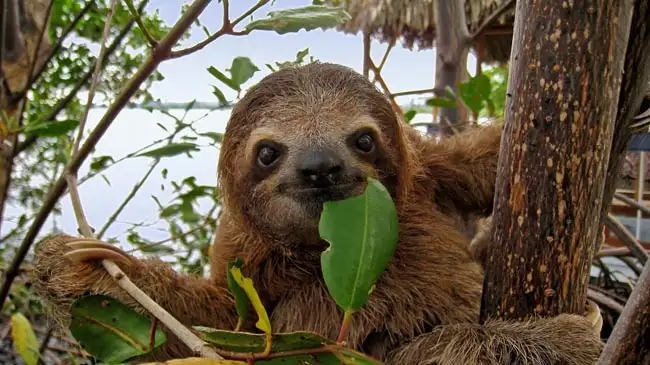
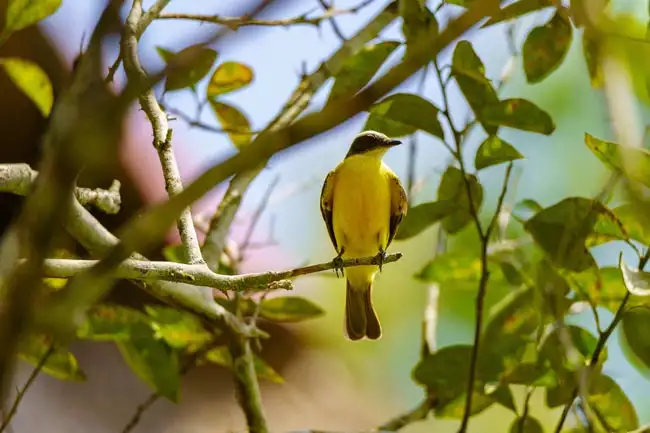
The country is teeming with an immense population of wildlife. In 1985, a world record was set by a team who counted 385 species of birds in Soberania National Park in a span of just 24 hours.
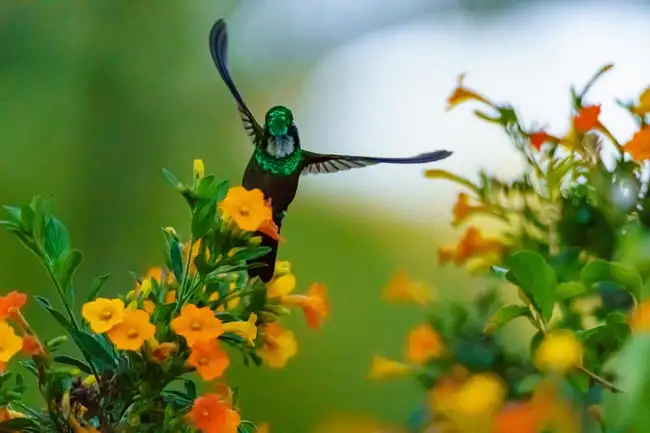
So, it will be no surprise when we become familiar with originally unrecognizable animals, such as a prong-billed barbet or a volcano hummingbird.
On our Pleasures Of Panama tour, you'll be able to take time to absorb the sights of the valleys that support the interspersed coffee plantations or vegetable farms.
- MealsSavour authentic flavours with included daily breakfasts and dinners at hotels or handpicked local restaurants—immersing you in local cuisine without worrying about reservations or budgets.
- Transport & Logistics
Private air-conditioned coaches and included internal ferries and flights—ensuring hassle-free travel so you can focus entirely on the discoveries ahead.
"Adventures Abroad tour leader's management and guest services managed the tour with great skill and dedication. The tour leader was on top of every move and transfer. We have not experienced any issues with logistics and had a great time."
~ JULIA O"The tour leader did an excellent job coordinating some difficult travel logistics, power outage issues and resolving problems and dealing with guests who had unrealistic expectations."
~ CYNTHIA COLLINS - Expert Guidance
Unlock insider secrets at every landmark with your full-time Tour Leader and expert local guides , all gratuities covered—no hidden tipping surprises—so you immerse fully in your destination's stories, worry-free. (Except for the tips to your tour leader at the end of your tour.)
"Amazing tour guide. Our tour guide was very well organized, Her passion, knowledge, and enthusiasm completely transformed the travel experience into something truly unforgettable..."
~ MELANIE LEMAIRE"Highly recommend every trip with Adventures Abroad. It's a well organized and well thought out adventure. The tour leaders are friendly, knowledgeable and experienced professionals. Highly recommend this company."
~ SUSAN WALL - Sightseeing & EntrancesAll entrance fees for sites visited as per the itinerary—no hidden costs—so you can explore ancient ruins and excursions with complete peace of mind.
- AccommodationsUnwind in clean, well-located 3 to 4-star hotels with private en suite facilities—handpicked for comfort and convenience after each day's discoveries—so you can rest easy knowing your stay supports the real adventure, not steals the spotlight.
- Small Group
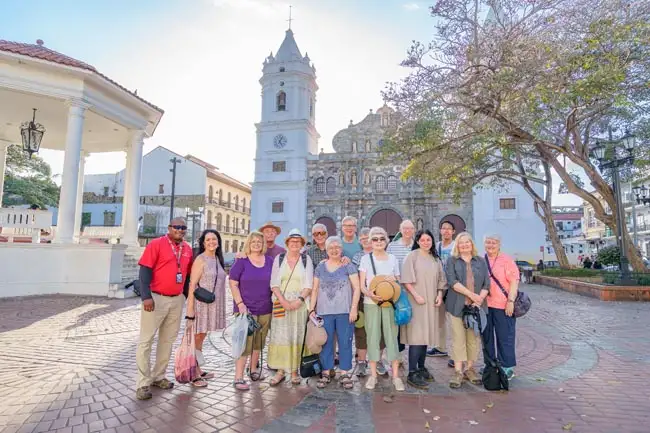
Discover the world in small groups of up to 18 travellers plus your expert Tour Leader—unlocking spontaneity, off-the-beaten-path adventures, and genuine connections at a relaxed pace, free from crowds.
"Looking Forward to My Next Adventure The best feature of the Adventures tour was the small size that allowed the group to quickly load up, let everyone get acquainted within the first 24 hours, capitalize on unplanned surprises along..."
~ PHILIP BLENSKI"Good value for a great time I have traveled with Adventures Abroad for over 20 years now. Well thought out, interesting itineraries and the other travelers congenial and friendly. The price always seems fair and overall a..."
~ Trusted Customer - Airport Transfers For Land & Air CustomersWe handle hassle-free airport transfers for all our land and air tour customers—plus early arrivals or late departures when you book extra hotel nights directly with us for added peace of mind.
- International airfare to/from the tour. Tour Leader gratuity, lunches, drinks, personal items (phone, laundry, etc), departure taxes, domestic and international air taxes (if applicable). Airport transfers for Land Only customers. Optional trip cancellation insurance. Our post-reservation trip notes offer further guidance on not included meal costs, shopping, and locally paid departure taxes.
- Seasonality and Weather:
October & November are within the "green" season in Panama, especially on on the Pacific coast, while the Caribbean coast experiences relatively drier and sunnier weather. Come November drier weather has arrived. Visiting during these times can be like experiencing a lush, green Central America, with fewer tourists and lower prices. The rainforests are particularly vibrant, and the rain can bring a welcome coolness to the cities.
In February/early March, Panama is in their dry season, with plenty of sunshine and minimal rainfall. - Transport and Travel Conditions:
Road transport by private air-conditioned motor coach, 24-36 seats depending on ultimate group size (see 'group size'). Numerous nature walks and walking tours on uneven surfaces. Internal flights via scheduled domestic carriers in smaller aircraft with limited space for luggage.
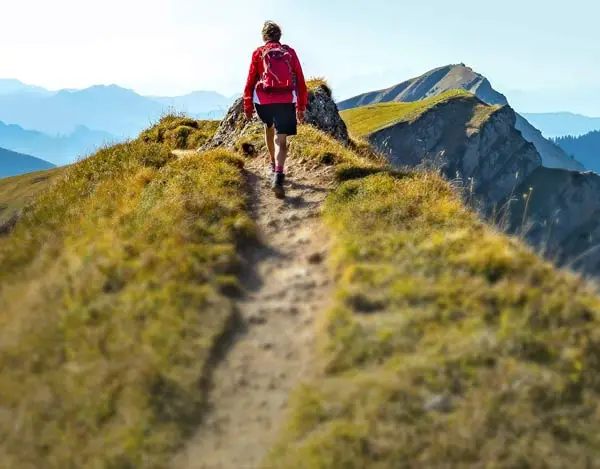
Our difficulty level "2" rating refers to the above-mentioned busy days, walking tours on uneven terrain, lack of handrails (public and elsewhere, ie shower stalls), and fatigue that can be caused by heat and humidity and unfamiliar food and drink.
Am I suitable for this tour? Please refer to our self-assessment form - Activity Level: 2
These are particularly busy tours that feature a lot of moving around, sometimes by train and short journeys on local transport. Walking tours of towns and cities are leisurely but you should be prepared to be on your feet for several hours. Some of our cultural trips that occur at high altitude and/or require greater independence with baggage handling (at hotels, airports, train stations) also fall into this category.
To learn more about the Activity levels, please visit our tour styles page. - Accommodation:
Well-located, heated / air-conditioned, mid-range (3 star) hotels with en suite toilet and bath throughout (probably shower only). Single rooms are limited and likely smaller than doubles. Hotel porter service is sometimes available (see 'inclusions') though you should be independent with your luggage. Some hotels have outdoor swimming pools. - Staff and Support:
Tour Leader, driver/s, and local step-on guides at various locations. - Group Size:
Maximum 18 (plus Tour Leader)
- Day 1:Arrival in Panama CityPanama City rises where two oceans nearly meet, barely 80 km/50 mi apart at the isthmus's narrowest point.
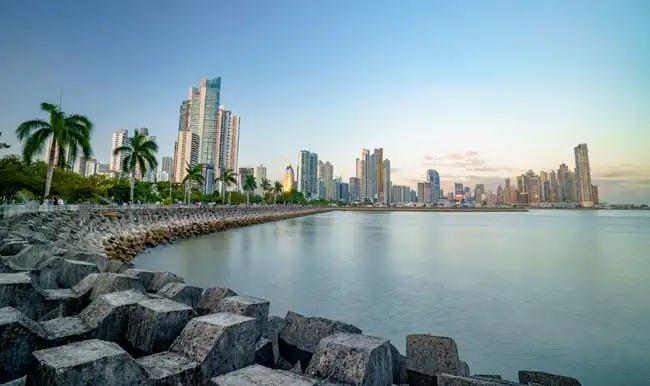
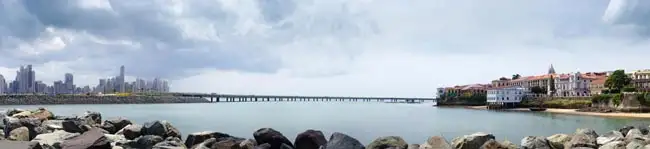
Skyscrapers line the Pacific bay in a skyline built on shipping and finance, while Casco Viejo's colonial streets, a short walk inland, recall the centuries when this same ground carried Spanish silver instead of container traffic.
The city has always made its living from being in between: between oceans, between continents, between empires seeking a shortcut. Nearly five million people live along this narrow strip of land, and much of the country's economy moves through, or because of, the canal we cross tomorrow.
We gather this evening for a welcome dinner among fellow travellers.
Overnight in Panama City.
Included Meal(s): Dinner - Day 2:Partial Canal TransitToday delivers the experience this tour is named for: a partial transit of the Panama Canal. A short drive to Balboa port puts us aboard a ferry and into the canal itself.
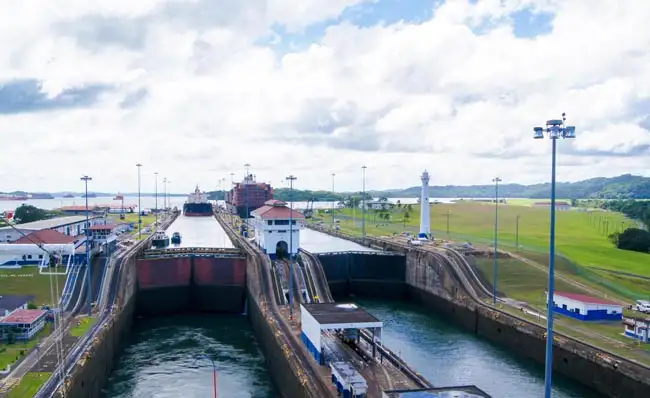
At Miraflores Locks, our ship rises 16 m/52 ft through two gravity-fed chambers, no pumps, just water finding its own level, the same principle that has moved ships here since 1914. Pedro Miguel Locks lift us a further 26 m/85 ft, drawing on Gatun Lake's own reserves to do the work.
The original locks, opened in 1914, measure 33.5 m/110 ft wide, a limit that defined the maximum size of oceangoing ships for nearly a century until a wider set opened alongside them in 2016. Small, powerful locomotives called mules guide the ship through the narrow chambers, holding it steady while gravity handles the heavy lifting.
Beyond the locks we cross the Continental Divide and reach Gamboa, headquarters of the canal's dredging division, still clearing the same landslide-prone cut that defeated the original French effort in the 1880s.
Every drop of water raising us through these chambers fell as rain somewhere in the watershed we cross later this trip, proof that this entire system runs, quite literally, downhill.
Overnight in Panama City.
Included Meal(s): Breakfast, Lunch and Dinner - Day 3:Panama City: Portobelo & Agua Clara LocksWe trace two very different ways of moving wealth across this isthmus, three centuries apart.
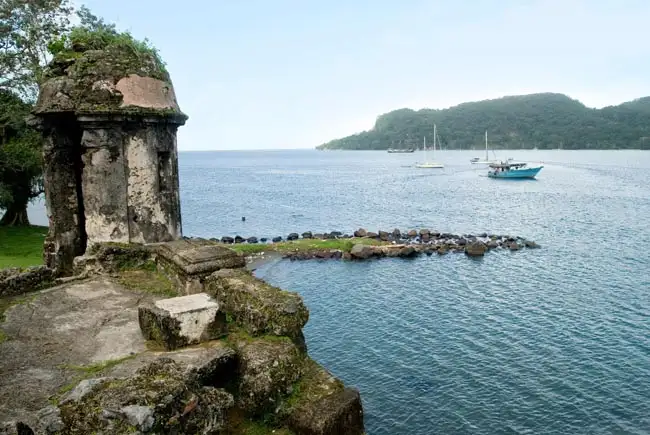
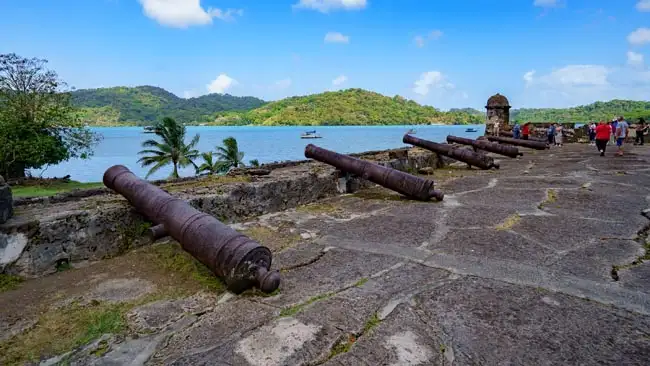
A bus first takes us to Portobelo, once the Caribbean terminus for Spain's entire Pacific trade. An annual fair here ran thirty to sixty days, moving ten to twelve million gold pesos at a stretch, before pirate raids grew persistent enough that Spain abandoned the route in 1738.
Fort San Geronimo and Fort Santiago still stand guard over a harbour long since gone quiet, though it once anchored more treasure than any other port in the Spanish Americas. Inside San Felipe Church, the Black Christ, a life-sized wooden Jesus found on the shore under circumstances nobody fully agrees on, draws pilgrims from across Central America each October.
NOTE: some monuments may be inaccessible due to ongoing renovations.
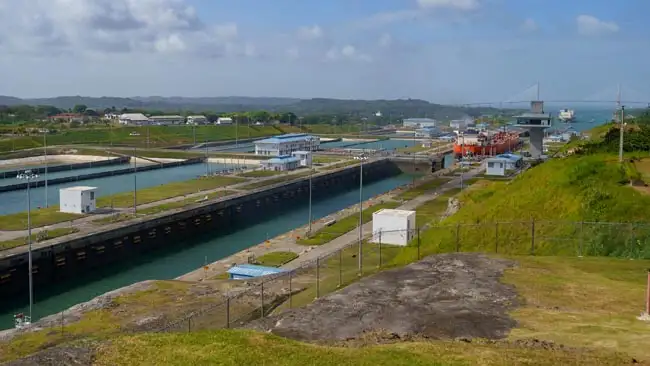
From Portobelo we continue to Agua Clara Locks, part of the canal's modern expansion, where overflow tanks recycle 60 per cent of the fresh water each transit uses, gravity doing now what it did for Spanish galleons then, just with better bookkeeping.
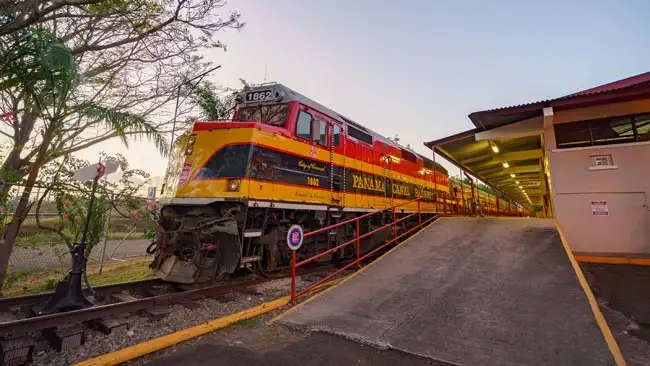
We finish the day boarding the Interoceanic Train at Colon for the run back to the capital. Completed in 1855, it was the world's first transcontinental railway, just 80 km/50 mi long, and it carried Gold Rush prospectors long before it carried canal freight.
Overnight in Panama City.
Included Meal(s): Breakfast and Dinner - Day 4:Parque Metropolitano & Amerindian VillageA short drive from the skyscrapers, Parque Metropolitano protects a wedge of tropical forest inside the city limits. A trail climbs to a 150 m/490 ft mirador with views across the city, the bay and the canal reaching toward Miraflores.
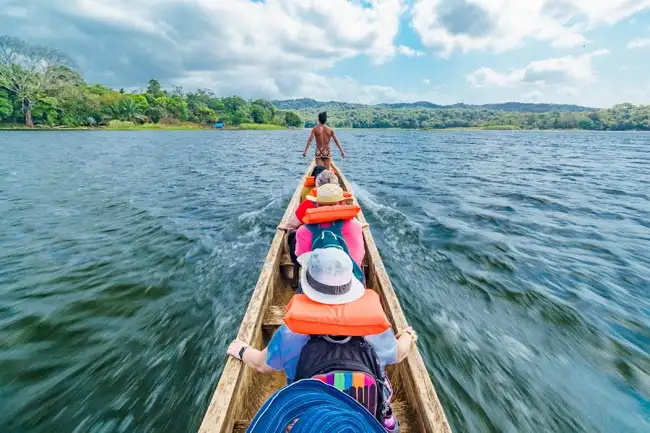
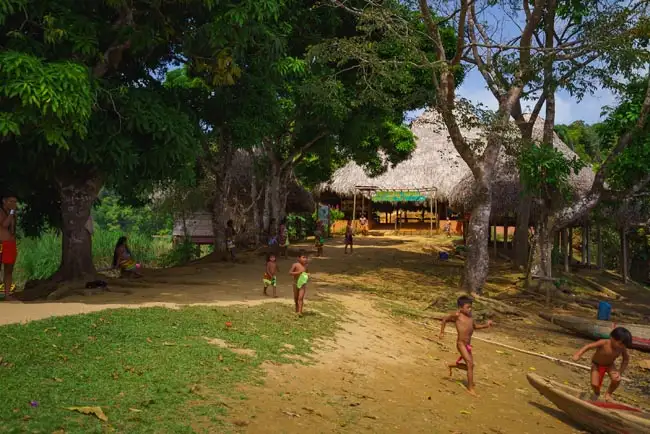
In the afternoon we travel by boat to an Embera village on the Chagres watershed, one of the river systems the canal depends on for its water. The Chagres was dammed in 1935 to create Gatun Lake, flooding an entire river valley to build the canal's summit level.
The Embera and Choco peoples have adapted to this changed landscape while keeping much of their traditional life intact, still building homes on stilts above the seasonal floodline.
Guides walk us through basket weaving using natural fibres and explain the medicinal uses of local plants, knowledge passed down rather than written. Jagua dye, pressed from a local fruit, still marks ceremonial occasions, and dugout canoes tied along the riverbank are carved much as they would have been before Spanish ships first appeared offshore.
It is a useful corrective: the canal moves the world's cargo through this watershed, but people have been reading this same forest, on its own terms, for far longer than ships have needed it to cooperate.
Overnight in Panama City.
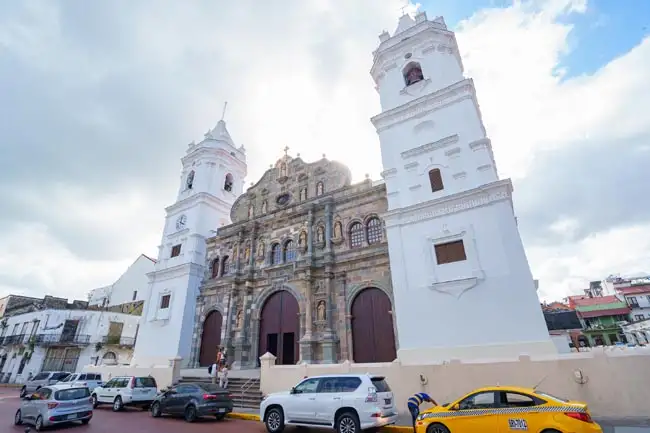
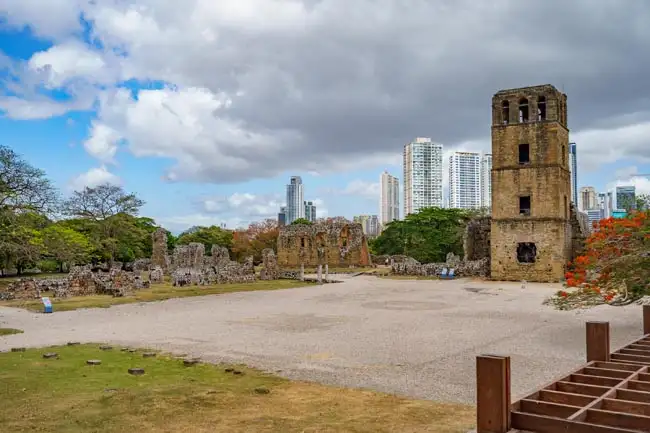
Included Meal(s): Breakfast and Dinner - Day 5:Panama City Touring - Fly to David, Chiriqui HighlandsPanama City's morning belongs to its own layered history. Casco Viejo, the colonial quarter dating to the late 1600s, replaced the original settlement at Panama Viejo after Henry Morgan's pirates burned it to the ground.
Its streets mix Spanish colonial, French and early Republican architecture, layer on layer. Monuments here honour Ferdinand de Lesseps and the French canal attempt that failed a generation before the Americans succeeded where he could not.
Inside San Jose Church, the Altar de Oro survives from the city's first Pacific-coast settlement in 1519, reportedly saved from Morgan's raiders by nuns who painted it black to disguise its gold.
The Panama Canal Museum closes out the morning inside de Lesseps's own former canal company headquarters, an ironic address for the story of how his project failed and America's succeeded.
By afternoon we fly to David in Chiriqui Province, trading sea level for the cloud-wrapped highlands of the Cordillera Central: volcanic peaks, coffee estates and Guaymi communities living at an elevation the canal's engineers never needed to reach.
NOTE: a 12 kg/26 lb weight restriction applies to this flight; excess baggage can be stored in Panama City.
Overnight in Chiriqui Highlands.
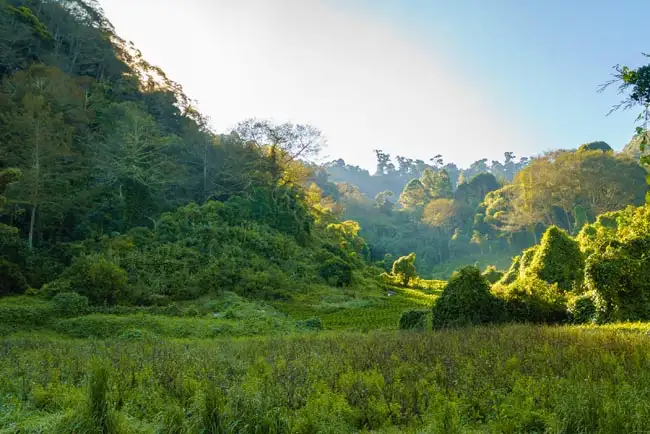
Included Meal(s): Breakfast and Dinner - Day 6:Chiriqui HighlandsAt Cerro Punta, above 2,000 m/6,560 ft, the air turns cool and thin, our first real sense of how much vertical relief this small country contains.
Quetzals and volcano hummingbirds work the cloud forest canopy, each species keyed to its own narrow band of altitude. Some of the world's most sought-after geisha coffee grows on these same slopes, its price shaped as much by altitude and cloud cover as by flavour, and we stop to taste a cup at the source.
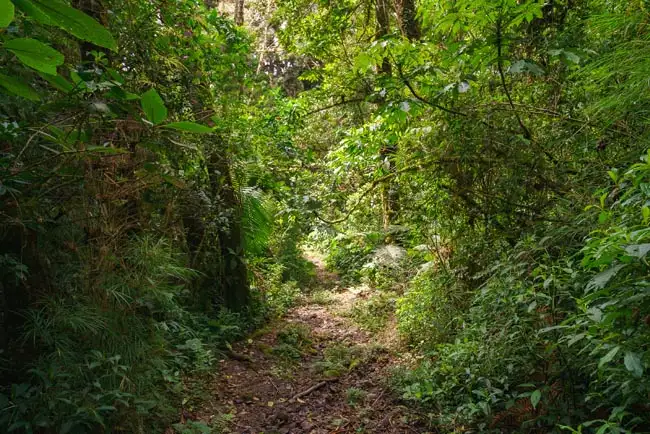
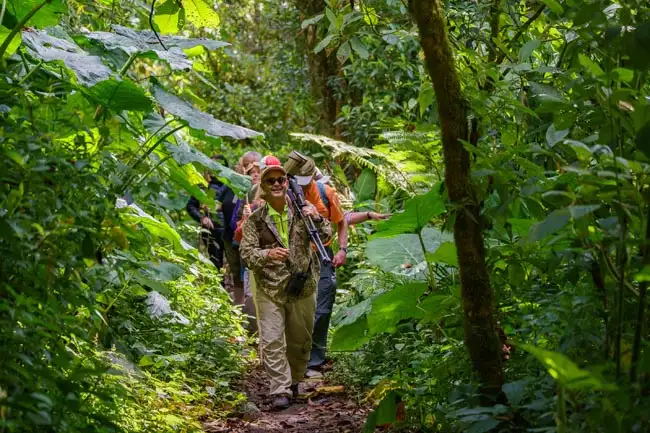
We continue to La Amistad International Park, a binational reserve straddling the Costa Rican border and covering more protected forest, over 400,000 hectares in total, than any other site in Central America. We walk the El Retono Trail, a 3 km/1.9 mi loop through cloud forest thick with epiphytes and orchids.
NOTE: trails are steep, uneven and often muddy; sturdy waterproof footwear is essential.
We end at Haras Cerro Punta, a thoroughbred farm raising some 200 horses in a mountain valley that could pass for bluegrass country, if bluegrass country sat on the Continental Divide.
Overnight in Chiriqui Highlands.
Included Meal(s): Breakfast and Dinner - Day 7:Chiriqui Highlands - Bocas del ToroToday we descend from cloud forest to coral reef in a single afternoon. The drive to Almirante, on Panama's Caribbean coast, passes Fortuna Dam at the Continental Divide, the exact ridgeline where rainfall decides whether it reaches the Pacific or the Caribbean.
We cross the Palo Seco Protected Area, a buffer zone for La Amistad park, watching the vegetation thicken and the architecture trade its Spanish colonial lines for Afro-Caribbean colour as the elevation drops.
Villages along the last stretch trade zinc roofs for wooden stilt houses raised above tidal creeks, the clearest sign yet that we have left the Pacific slope behind. By the time we reach the coast for our boat transfer, the transformation is complete.
Columbus anchored here five centuries ago and named the wider region Veraguas, a contraction of verdes aguas, green waters, and it is not hard to see why once the boat pushes off into water this clear.
Overnight in Bocas del Toro.
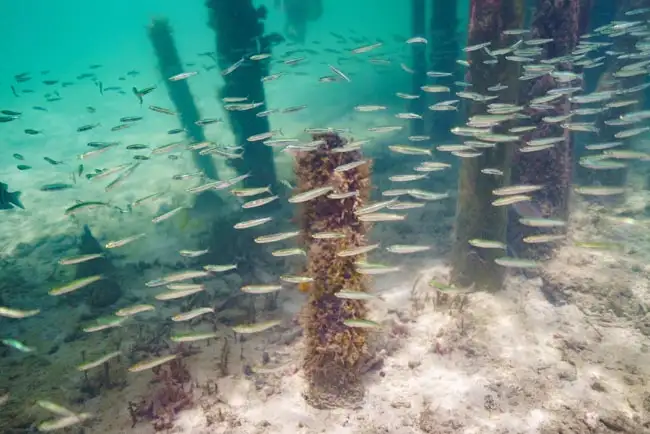
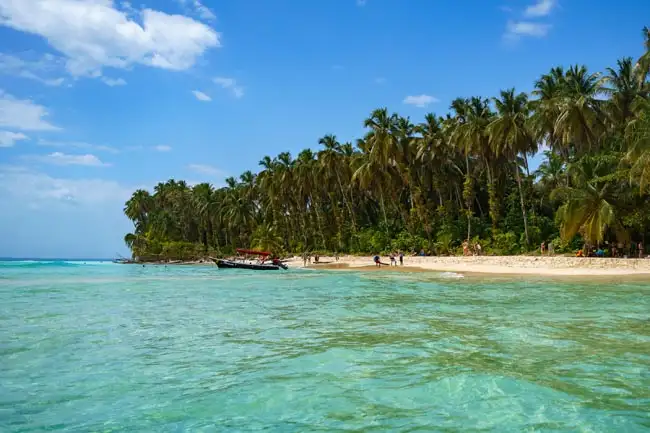
Included Meal(s): Breakfast and Dinner - Day 8:Bocas del ToroThe Bocas del Toro archipelago is still 92 per cent forest, and today we go looking for what lives in it. The chain runs to 68 islands and countless mangrove keys, home to roughly 93,000 people scattered along the coasts, surrounded by coral fields and marine life that punches well above the region's modest land area.
Hawksbill turtles still nest on several of these beaches between March and October, drawn back to the same stretches of sand where they hatched decades earlier.
A boat tour threads between islands, past Bastimentos and its protected marine park, before putting us ashore for swimming and a walk to Red Frog Beach, named for the tiny, thumbnail-sized poison dart frogs that turn up underfoot with startling regularity.
Their calls, a chirping chorus easy to mistake for insects, are one small example of a species found nowhere else on Earth.
It is easy, on an island this quiet, to forget that this same narrow country holds one of the busiest shipping corridors on the planet. That contrast, more than any single sight, is the point of Panama.
Overnight in Bocas del Toro.
Included Meal(s): Breakfast and Dinner - Day 9:Bocas de Toro - Fly to Panama City: Panama City TouringA final morning in Bocas del Toro is ours to spend as we like, one more swim or a walk along a favourite beach before our afternoon flight back to the capital.
That flight is its own kind of highlight: in under an hour we retrace, from the air, almost everything Panama has shown us, the Caribbean archipelago falling away below, the cloud forest ridgeline where the watershed splits, and finally the canal itself, ships queued at anchor waiting their turn through the locks.
From the window we can pick out Barro Colorado Island in Gatun Lake, a research station older than most of the countries whose flags we have seen on ships this week.
This evening's farewell dinner gives us a chance to compare notes on a country that turned out to be far less about a canal than we expected, and far more about everything that canal made possible.
Overnight in Panama City.
Included Meal(s): Breakfast and Dinner - Day 10:DepartureWe depart from a country defined, in the end, by the width of ground between two oceans -- narrow enough to cross in an hour by rail, wide enough to hold cloud forest, coral reef, colonial gold and the busiest lock system on Earth.
¡Buen viaje!
Included Meal(s): Breakfast
Countries Visited: Panama
*The red tour trail on the map does not represent the actual travel path.
Book This Tour
- Final payment: Due 90 days prior to departure.
- Deposit: A non-refundable $500 CAD Deposit is required at booking.
- Optional Single Supplement: $1190 CAD (number of singles limited).
(View options forsingle travellers) - Transfering Tour or Date: Transferring to another tour or tour date is only permissible outside of 120 days prior to departure and is subject to a $100 CAD change fee.
(Read our cancellation policy)
Prices below are per person, twin-sharing costs in Canadian Dollars (CAD). Pricing does not include airfare to/from the tour and any applicable taxes.
Frequently Asked Questions
- What is the maximum number of participants on a trip?Most of our tours carry a maximum of 18 participants; some tours (ie hiking tours) top out at 16. In the event that we do not achieve our minimum complement by our 90-day deadline, we may offer group members the option of paying a "small-group surcharge" as an alternative to cancellation. If all group members agree, we will confirm the trip at existing numbers; this surcharge is refundable in the event that we ultimately achieve our regular minimum. If the small group surcharge is not accepted, we will offer a refund of your deposit or a different trip of your choice.
- Can I extend my tour either at the beginning or end? What about stopovers?Yes, you can extend your tour either at the beginning or the end and we can book accommodation in our tour hotel. Stopovers are often permitted, depending on air routing. Stopovers usually carry a "stopover" fee levied by the airline.
- How do I make a reservation? How and when do I pay?The easiest way to make a reservation is via our website; during office hours, you are also more than welcome to contact us by telephone.
A non-refundable deposit is payable at the time of booking; if a reservation is made within 90 days, full payment is required. Some trips require a larger deposit. If international airline bookings require a non-refundable payment in order to secure space or the lowest available fare, we will require an increase in deposit equal to the cost of the ticket(s).
Early enrolment is always encouraged as group size is limited and some trips require greater preparation time.
Once we have received your deposit, we will confirm your space and send you a confirmation package containing your trip itinerary, any visa/travel permit related documents, invoice, clothing and equipment recommendations, general information on your destination(s), and forms for you to complete, sign and return to us. Your air e-tickets (if applicable), final hotel list, final trip itinerary, and instructions on how to join your tour, will be sent approximately 2-3 weeks prior to departure. - What about cancellations, refunds, and transfers?Please review our cancellation policy page for details.
- I am a single who prefers my own room. What is a single supplement?All of our tours have a single supplement for those who want to be guaranteed their own room at each location.
This supplement is a reflection of the fact that most hotels around the world do not discount the regular twin-share rate for a room by 50% for only one person occupying a room. Most hotels will give a break on the price, but usually in the range of 25-30% of the twin-share rate. This difference, multiplied by each night, amounts to the single supplement.
The conventional amount can also vary from country to country and some destinations are more expensive than others for single occupancy. In order to be "single friendly," the supplements we apply are not a profit centre for us and we do our best to keep them as reasonable as possible.
On most tours we limit the number of singles available, not to be punitive, but rather because many hotels allow for only a limited number of singles; some smaller hotels at remote locations also have a limited number of single rooms available.
Please note that most single rooms around the world are smaller than twin-share rooms and will likely have only one bed. - Do you have a shared accommodation program?Yes! If you are single traveller and are willing to share, we will do our best to pair you with a same-gender roommate. Please note that should we fail to pair you, we will absorb the single supplement fee and you will default to a single room at no extra charge.