Tourcode: PK1
- Overview
- Info & Inclusions
- Itinerary
- Map & Hotels
- Photos
- Dates & Prices
- Max Group Size 18
- A thorough exploration of Northern Pakistan where three empires meet, with stops in Islamabad, Gilgit, Hunza, Khunjerab Pass, Skardu, Shigar, Khapulu & Lahore.
- Singles friendly (view options for single travellers)
Our focus is in the north of the country where multiple tales of the 19th century Great Game between the expanding Russian empire and the British Raj played out over control of the lands here in Central and South Asia.
Our tour embarks on an exploration of the capital, Islamabad, before setting off for the mountains of the Himalaya, the Karakorum Highway, and Hindu Kush. Ancient towns and villages lie ahead with discoveries of the old forts and dramatic scenery of the mountains. Highlights include the Hunza Valley, Skardu, and Shigar, all important stops on the ancient Silk Road.
Our tour concludes in the city of Lahore, home to the Lahore Fort, the Shalimar Garden, and the famous flag lowering ceremony at the Line of Control between India and Pakistan.
- Hotel breakfast included daily
- All dinners and lunches are included on all full touring days. A picnic lunch and assorted snacks/purified water will be provided on long travel days
- Evening meals on tour will be taken mostly at hotels where we are staying. Bottled water will be provided at lunch and dinner, as well as on the road throughout the day.
- All transport (including internal flight and alternative land transport in the event of flight cancellation)
- Accommodation, sightseeing and entrance fees for sites noted as 'visited' in the detailed itinerary. Services of a full-time Adventures Abroad Tour Leader and local English-speaking step-on guides at several locations on our route.
- Gratuities for drivers, restaurant/hotel staff, porters, local guides. Airport transfers for land & air customers. If you extend your stay pre- or post-tour, we will include your airport transfers if you book both your air and extra nights through us. We also include your 'Letter of Invitation' required to apply for your visas (see "Exclusions").
- International airfare to/from the tour. Tour Leader gratuities, personal items (phone, laundry, etc), additional beverages, any meals not listed in the itinerary, international (if applicable) air taxes, visa fees (see below), and any excursions referenced as 'optional'.
- Airport transfers for Land Only customers (available for purchase). Optional trip cancellation insurance (strongly recommended). Our post-reservation trip notes offer further guidance on visas, any not included meals, money matters, what to bring, etc.
- Visas: A tourist visa is required to travel to Pakistan, which is not included in the cost of your tour. This must be obtained in advance of your arrival and can be acquired online (Canadian, USA, UK passports). We will provide you with a 'Letter of Invitation' to assist you in applying for your visa (included). More information will be provided in your pre-departure notes emailed at time of reservation.
- Seasonality and Weather:
Pakistan’s climate is difficult to pin down as a single entity. It ranges from tropical and subtropical to semi-arid and desert, and then up north you’ve got the ridiculously beautiful – and ridiculously cold – mountainous areas incorporating the Karakoram, Himalaya, and Hindu Kush ranges.
October is the month when autumn arrives in the valleys, bringing with it a vibrant palette of leaf colour and slopes high above covered in snow, making this a very picturesque season in the region.
Weather conditions can be highly-changeable throughout, and one should be prepared for a wide range depending on altitude, shelter from wind, time of day, and whether or not the sun is shining! - Transport and Travel Conditions:
Land transportation will vary from private air-conditioned mini-bus in major cities (ie Toyota “Coaster”) to 4x4 air-conditioned Toyota Land Cruisers (3 passengers each, plus driver) for longer overland journeys between locations. Our one internal flight is provided via a local scheduled carrier.
The roads outside of major centres are very winding, rough, and slow on mountainous sections, which can/will be uncomfortable despite the high quality and ruggedness of our vehicles. Anyone joining this trip must understand that in many places the tourist infrastructure (roads, restaurants, and washrooms) is very primitive. Some days are long and hard, and the level of services will not match those offered in most touristic locations. Security checkpoints can also be annoying, but travellers must be flexible and patient. Many roads are in a bad state of repair and journeys can be long and tiring; you need to be flexible and maintain an open mind, a sense of adventure, and a tolerant and patient spirit during all aspects of the tour.
Difficulty Level 2: Though this tour does not feature any hiking (some walking excursions are possible but optional), or "roughing it" in terms of accommodation, it can be considered moderately strenuous due to the fact that it is very busy and moves around a lot: you must be prepared for some early starts and full days of road travel (see detailed itinerary for more details). You also need to be steady on your feet and able to endure some heat/cold and extended time at moderate elevations (all overnight points are under 3000m/10,000 ft). We have numerous walking tours and visit several sites that are quite large and feature steps and uneven surfaces.
Suitability: We visit remote locations with limited access to modern medical care; those with pre-existing conditions or persons with compromised immune systems and mobility problems should carefully consider their participation. Please note that, outside of major cities, it may be very difficult or impossible to cater to those with very specific dietary requirements/preferences. Though the altitudes on this trip are not considered extreme (ie under 3000m/10,000 ft), we require all passengers to complete a simple online "self-assessment" form as a condition of participation (click on link below to preview). Advancing a deposit to Adventures Abroad confirms your confidence in your physical and mental fitness to undertake this journey.
Safety: Pakistan is one of those countries that sets off alarm bells in the minds of friends and family. Their reaction is understandable given the news coverage of Pakistan over the past 20 years, and there's no doubt that some areas that should be avoided. That said, you can rest assured that we would not take you anywhere unless we were convinced it was safe. There's much more to Pakistan than the media might lead you to believe.
Am I suitable for this tour? Please refer to our self-assessment form - Activity Level: 2
These are particularly busy tours that feature a lot of moving around, sometimes by train and short journeys on local transport. Walking tours of towns and cities are leisurely but you should be prepared to be on your feet for several hours. Some of our cultural trips that occur at high altitude and/or require greater independence with baggage handling (at hotels, airports, train stations) also fall into this category.
To learn more about the Activity levels, please visit our tour styles page. - Accommodation:
Just because you're travelling in a remote, little-visited country doesn't mean you have to rough it. From quaint family-run inns/guest houses to converted forts and palaces, the name of the game here is "character" and the spectacular locations where most of them reside. Our city hotels (Islamabad & Lahore) are modern, international class properties of a high standard.
Overall, our accommodation choices on this trip bely the ruggedness of the land and the simplicity of local life, with comfortable properties with the modern comforts and conveniences one craves after a full day of exploration and travel. Nonetheless, it is important to note that not everything is going to work flawlessly: there may be occasional power outages, hot water may only be available at certain times of day, internet may just be OK or only be available at lobby, etc.
Please note that due to the lack of single accommodation in some locations, we may ask same-gender travellers who have paid the single supplement to 'double up' for a night or two; we will prorate your supplement post-tour. Please also note that due to the high cost of single accommodation in the region, if you book on our share program and we fail to pair you, you will be required to pay a "forced" upgrade equal to 100% of the single supplement fee.
Baggage handling is available/included at some hotels, however you must be able to manage with your baggage when porters are not available.
For full details, please click on the "Map & Hotels" tab elsewhere on this page. Most of these hotel do not have an official "star" rating, but we can generally place them all from 3-5 star international equivalent. - Staff and Support:
Your full time Tour Leader will be assisted by a team of drivers (including a "senior driver" who will also act as a guide); and possibly local guides at some locations. - Group Size:
Maximum 17 travellers plus Tour Leader
- Day 1:Arrival in IslamabadToday we assemble in Islamabad - welcome to Pakistan!
About this Itinerary: This is our best hope for what we expect to accomplish on our trip, however a "go with the flow" attitude is necessary. While we and our local partners have tried our best to make this itinerary as accurate as possible, it should be considered an approximation of activities rather than a strict schedule. Though we try our best to adhere to the schedule, many unforeseen factors influence our tour -- weather conditions, health, route conditions, government restrictions, and other factors beyond our control. Alternative arrangements will be sought in such circumstances and the program will be modified accordingly.
Overnight in Islamabad. 
Included Meal(s): Dinner, if required - Day 2:Islamabad SightseeingAfter a leisurely morning allowing for late-night arrivals and lingering jet lag effects, we begin exploring Islamabad, Pakistan's capital. This modern city was established in the 1950s as a planned capital, carefully designed with wide boulevards, organized sectors, and extensive green spaces. Set against the dramatic backdrop of the Margalla Hills at the northern edge of the Potohar Plateau, Islamabad presents a striking contrast to Pakistan's older, more congested urban centres.
We visit the Pakistan Monument at Shakarparian Hill, an iconic structure representing Pakistan's four provinces and three territories through its petal-shaped design. We continue to Lok Virsa, the National Institute of Folk and Traditional Heritage, which preserves and promotes Pakistan's diverse cultural traditions through exhibits showcasing regional crafts, music, and folk arts.
Our tour includes Shah Faisal Mosque, the world's second-largest mosque and one of Islamabad's most recognizable landmarks. Designed by Turkish architect Vedat Dalokay and financed largely by Saudi Arabian donations, this striking modernist structure breaks from traditional mosque design with its tent-shaped main hall and four minarets standing 88 m/289 ft tall. The mosque can accommodate 300,000 worshippers and serves as both a functioning place of worship and an architectural landmark symbolizing Pakistan's Islamic identity.
We drive through the diplomatic enclave, passing the Supreme Court of Pakistan, the Prime Minister's House, and Parliament, witnessing the administrative heart of the nation. If time permits, we can visit a typical shopping mall where you may explore contemporary Pakistani fashion, including traditional outfits designed by prominent local designers.
Overnight in Islamabad. 
Included Meal(s): Breakfast, Lunch and Dinner - Day 3:Islamabad: Taxila & RawalpindiAfter breakfast we drive approximately one hour to Taxila, one of South Asia's most important archaeological treasures. This UNESCO World Heritage site preserves remains of three great cities and dozens of Buddhist monasteries dating from 600 BCE to 600 AD, strategically positioned where trade routes linking China, India, Central Asia, and the West converged. Taxila survived through successive empires including the Achaemenids, Greeks, Mauryans, and Kushans, each leaving their architectural and cultural mark.
Buddhism took hold here around 275 BCE under Emperor Ashoka's patronage, and from this centre the religion spread northward to Central Asia, Tibet, and China. The city became renowned as a centre of learning, attracting scholars from across the ancient world to study philosophy, medicine, and the arts.
We visit Taxila Museum, housing one of the world's finest collections of Gandharan art and sculpture. This distinctive artistic style emerged from the fusion of Greek, Persian, and Indian influences, producing remarkably realistic Buddha figures and narrative reliefs that influenced Buddhist art across Asia. The museum displays artifacts spanning nearly 2,000 years of continuous habitation, including coins, jewelry, pottery, and architectural fragments.
We explore the Dharmarajika Stupa, one of the earliest Buddhist monuments in the region, originally built to house relics of the Buddha himself. Weather and time permitting, we visit the nearby ancient city of Sirkap, laid out in a grid pattern reflecting Greek urban planning principles.
We continue to Rawalpindi for lunch, followed by exploration of this historic garrison city and its vibrant old bazaar, where traditional commerce continues much as it has for centuries.
We return to Islamabad for the evening.
Overnight in Islamabad. 
Included Meal(s): Breakfast, Lunch and Dinner - Day 4:Islamabad - NaranAfter an early breakfast we depart Islamabad for Naran, a 6-7 hour drive north through Khyber Pakhtunkhwa Province. The first three hours take us through the Hazara district, where the road runs through green and well-forested western Himalayan spurs. En route we pass through Abbottabad, Mansehra, Balakot, and the Kaghan Valley.
This region holds rich history dating to Alexander the Great's 4th-century BCE conquest. Buddhist rule followed in the 3rd century BCE, leaving archaeological sites including Ashoka's Rock Edicts at Mansehra, inscribed around the 3rd century AD. These ancient stone inscriptions represent some of Emperor Ashoka's efforts to spread Buddhist teachings across his vast empire.
The drive itself provides a window into northern Pakistan's diverse landscapes, transitioning from the settled plains around Islamabad to increasingly dramatic mountain terrain as we approach the Himalayan foothills.
Overnight in Naran at 2400 m/7,874 ft elevation. 
Included Meal(s): Breakfast, Lunch and Dinner - Day 5:Naran - Hunza via Babusar PassToday we continue via the N15 highway toward Babusar Pass at 4173 m/13,691 ft, connecting Khyber Pakhtunkhwa with Gilgit-Baltistan. The road follows the Kunhar River through small towns, passing 2.5 km/1.6 mi long Lulusar Lake before reaching Gittidas, the last village before the pass. The valley climbs steadily for 7 km/4.3 mi to Babusar summit, our journey's highest point, where spectacular panoramas reward the challenging ascent.
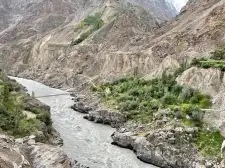
From the pass we descend through Thak Valley to Chilas on the Karakoram Highway, where ancient rock carvings mark routes used by Buddhist pilgrims travelling between China and South Asia. After a break at Chilas, we continue toward Gilgit, winding around Nanga Parbat at 8125 m/26,660 ft, the world's ninth-highest mountain. We stop where three great mountain ranges meet: the Himalaya, Karakoram, and Hindu Kush.
We continue through spectacular scenery toward Hunza. Weather permitting, we see Rakaposhi Peak at 7788 m/25,551 ft rising above terraced fields. In spring, fruit tree blossoms line the route; in autumn, the same trees blaze with yellow, orange, and red foliage.
This afternoon we arrive in Karimabad village, Hunza's main centre, set on a mountainside beneath Ultar Peak at 7388 m/24,239 ft with commanding views of Mount Rakaposhi and Diran Peak at 7257 m/23,809 ft. We continue to Altit for our accommodation. Time permitting, we may visit historic Altit Fort today, perched on a rocky outcrop above the Hunza River.
Overnight in Hunza (Altit or Aliabad) at approximately 2500 m/8,202 ft. 
Included Meal(s): Breakfast, Lunch and Dinner - Day 6:Hunza: Baltit Fort & Village ExcursionAfter a relaxed breakfast we visit Baltit Fort, seat of the Ayashkutz family who ruled Hunza as a princely state for over 900 years. The ruler held the title Mir of Hunza to outsiders and Thum to locals, while the people call themselves Hunzokutz. The Ayashkutz family's rule ended in 1974 when Prime Minister Zulfikar Ali Bhutto abolished all princely states in Pakistan.
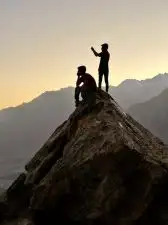
Baltit Fort remained occupied by elderly Ayashkutz family members until 1960, though the Mir had moved to a new palace much earlier. In 1996 the Aga Khan Trust for Culture reopened Baltit Fort following meticulous restoration, transforming it into a heritage museum that has received several international awards. The restoration preserved centuries of architectural evolution while making the structure safe and accessible.
We also explore the local bazaar before returning to our hotel, experiencing the rhythms of daily life in this mountain community.
Overnight in Hunza (Altit or Aliabad). 
Included Meal(s): Breakfast, Lunch and Dinner - Day 7:Hunza - Hoppar Valley - DuikerToday we leave Hunza Valley and cross the river to Nagar Valley, home to some of the region's larger glaciers and starting points for popular trekking routes. The valley lies along the Bualtar Glacier's southwest boundary, offering a unique landscape transformed and shaped by powerful glacial forces over millennia. Unlike the more cultivated Hunza Valley, Nagar retains a wilder, more rugged character.
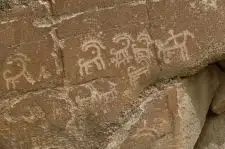
We walk through Hoppar village, encountering local residents whose lives revolve around the rhythms of these high mountain communities. The village sits at the edge of massive ice fields, with glacial tongues extending down valley slopes. We enjoy lunch among the glaciers with striking views encompassing multiple 7000 m/22,966 ft peaks. The setting provides insight into life where glacial melt provides essential water for agriculture, yet the proximity to advancing and retreating ice presents constant challenges.
We return to Karimabad and continue ascending to Duiker at 2850 m/9,350 ft, the area's highest settlement and our tour's highest overnight point. The road climbs through increasingly sparse vegetation as altitude limits what can grow. Before sunset, we walk to a nearby viewpoint for a magnificent 360-degree panorama of snow-covered peaks and the valley spreading far below, a fitting reward for reaching this remote location.
Overnight in Duiker. 
Included Meal(s): Breakfast, Lunch and Dinner - Day 8:Duiker - Attabad Lake - Janapad PassuDuikar – Attabad Lake - PassuToday we depart for Passu, continuing north along the Karakoram Highway. En route we stop at Attabad Lake, one of the region's most dramatic recent geological events. In January 2010, a massive landslide buried the village of Attabad and blocked both the Karakoram Highway and Hunza River, creating a barrier 150 m/492 ft high. Water backed up rapidly, forming a lake that eventually stretched 21 km/13 mi upstream, displacing thousands of residents and severing the vital link between Pakistan and China.
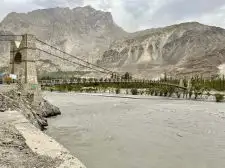
By 2015, Pakistani and Chinese engineers completed five tunnels totalling 7 km/4.3 mi, restoring road access. The lake remains, its pristine turquoise waters now a striking feature of the landscape. We stop at various viewpoints for photographs and take a traditional boat excursion on the lake, experiencing this transformed landscape from water level. Local boatmen navigate the submerged remains of the old highway and villages now lying beneath the surface.
Time allowing, we visit Borith Lake, a natural glacial lake serving as a resting point for migratory waterfowl. Several bird species pause here during seasonal journeys, offering opportunities to observe avian life against the dramatic mountain backdrop. The lake's relatively gentle setting contrasts with Attabad's more dramatic origins.
We continue to Janapad Passu for our accommodation at 2600 m/8,530 ft.
Overnight in Janapad Passu. 
Included Meal(s): Breakfast, Lunch and Dinner - Day 9:Passu & Khunjerab PassAfter breakfast we drive to Sost, the last border town on the Karakoram Highway, continuing to Khunjerab National Park. Established in 1979 by Prime Minister Zulfikar Ali Bhutto, the park covers 2270 sq km/876 sq mi and ranks among the world's highest-altitude national parks. The park encompasses three distinct valleys: Khunjerab through which the KKH passes, Ghujerab, and the remote Shimshal Valley accessible only by challenging jeep tracks.
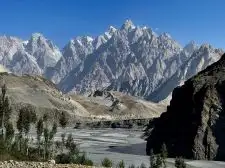
At the valley's end sits Khunjerab Pass at 4700 m/15,420 ft, marking the Pakistan-China border and claiming the distinction of the world's highest paved international border crossing. The name Khunjerab means "Valley of Blood," referring to bandits who once preyed on caravans using this ancient Silk Road route.
Today's drive takes us through high, wild, magnificent scenery characteristic of the Karakoram's harshest environments. The region hosts Markhor (Marco Polo) sheep with their distinctive spiralling horns, Himalayan ibex, blue sheep, and if extraordinarily fortunate, snow leopards and Tibetan wolves. The sparse vegetation at this altitude supports limited wildlife, making any sightings particularly memorable. We also pass near the Wakhan Corridor, a narrow strip of Afghanistan created in the late 19th century by Britain and Russia to maintain a buffer zone between their empires.
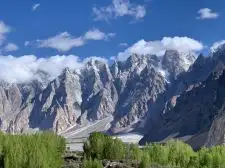
We return to Passu after our high-altitude excursion. Weather permitting, we hope to see the distinctive Passu Cones, a series of jagged cathedral-like peaks that have become one of the Karakoram's most photographed formations.
Overnight in Passu. 
Included Meal(s): Breakfast, Lunch and Dinner - Day 10:Passu - Gilgit & KargahAfter a relaxed breakfast we continue our journey with a scenic 3-4 hour drive back to Gilgit, retracing our route along the Karakoram Highway through dramatic mountain scenery. Gilgit serves as the capital of Gilgit-Baltistan and functions as the region's administrative and commercial hub at 1500 m/4,921 ft elevation. The town sits at the confluence of three rivers and has long served as a crucial junction for traders and travellers moving between Central Asia, China, and the Indian subcontinent.
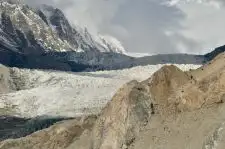
This afternoon we visit nearby Kargah, known for its large standing Buddha carved high on a cliff face. This remarkable 7th-century carving stands approximately 15 m/49 ft tall and represents one of the region's most significant Buddhist monuments, dating from the period when Buddhism flourished throughout these valleys before Islam's arrival. The Buddha figure, though weathered by centuries of exposure, remains a powerful testament to the area's Buddhist heritage and the religion's former widespread influence across the Karakoram.
We explore Gilgit's vibrant bazaar, where merchants sell everything from local handicrafts and dried fruits to mountaineering equipment for expeditions heading to nearby peaks. The bazaar provides insight into daily life in this mountain trading centre, where cultures from surrounding regions have mingled for centuries.
Overnight in Gilgit. 
Included Meal(s): Breakfast, Lunch and Dinner - Day 11:Gilgit - Kachura - ShigarAfter breakfast we drive to Kachura-Skardu, capital of Baltistan. No other part of the world concentrates such a large number of high mountains in such confined space. The route from the west follows the Indus River for 106 km/66 mi from the KKH to Skardu. Previously plagued with rockfalls and slow-moving traffic on a narrow rough track, this road has been substantially expanded and paved by Pakistan Army Engineers from 2018 onward, though sections remain challenging.
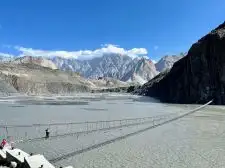
Soon after leaving the KKH and crossing Gilgit River at Maqpun Das, we see Nanga Parbat's magnificent west face, the world's ninth-highest peak at 8125 m/26,660 ft and Pakistan's second-highest mountain. The mountain's dramatic relief rises over 7000 m/22,966 ft from the Indus River to its summit, creating one of the world's greatest vertical faces.
After a lunch stop at Kachura we continue through Skardu to Shigar. The final portion passes through a "cold desert" region, where large sandy dunes flank the river when not in flood with melting snows, creating a surreal landscape of sand against snow-capped peaks. The broad fertile Shigar Valley sits ringed by mountains, several snow-capped year-round. Shigar town serves as gateway to the great Karakoram mountains and the "eight-thousanders," the 14 mountains exceeding 8000 m/26,247 ft, including K2, the world's second-highest mountain.
We overnight at Shigar Fort, which has won numerous international tourism and historic preservation awards for its quality restoration by the Aga Khan Trust. A local site guide will likely tour us through Shigar Fort shortly after arrival.
Overnight in Shigar at 2230 m/7,316 ft. 
Included Meal(s): Breakfast, Lunch and Dinner - Day 12:Shigar SightseeingOur day unfolds based on weather conditions and local circumstances. We walk through the relaxed town of Shigar, where opportunities arise to interact with people living in this lush mountain environment. Despite the harsh surrounding landscape, the valley produces abundant apples, apricots, pears, cherries, and walnuts, sustained by careful irrigation systems channelling glacial meltwater to terraced fields.
Our exploration includes the delicately-constructed wooden Amburiq Mosque, built in the 14th century by Kashmiri craftsmen. A conservation group has carefully restored this remarkable structure in efforts to preserve the Tibetan and Kashmiri architectural traditions evident in the original construction. The mosque's wooden architecture, with its intricate joinery and carved details, represents a building tradition largely disappeared from the region, making its preservation particularly significant.
Today we also embark on a 4WD excursion into the surrounding area to appreciate the expansive valley and mountain views. The drive takes us to vantage points offering perspectives across the Shigar Valley toward some of the Karakoram's most imposing peaks. The contrast between the green, cultivated valley floor and the stark, icy mountains rising immediately beyond creates a dramatic landscape unique to this region.
Overnight at Shigar Fort. 
Included Meal(s): Breakfast, Lunch and Dinner - Day 13:Shigar - Fly to IslamabadAfter breakfast we transfer to the airport at Skardu for our flight to Islamabad, a spectacular one-hour journey renowned for mountain views as the aircraft navigates between towering peaks.
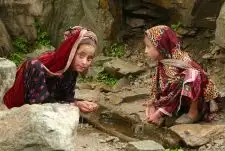
Upon arrival we transfer to our hotel for check-in. Later we visit the nearby Pakistan National Council of Art Museum, which houses collections showcasing Pakistan's diverse artistic heritage including contemporary paintings, traditional crafts, and cultural artifacts representing the nation's various regions and ethnic groups.
Overnight in Islamabad.
NOTE: In the event of flight cancellation due to weather, we will travel back to Islamabad by road today and tomorrow, reversing our northern route. 
Included Meal(s): Breakfast, Lunch and Dinner - Day 14:Islamabad & Excursion to PeshawarToday we have an excursion to Peshawar, capital of Khyber Pakhtunkhwa Province.
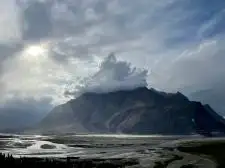
Khyber Pakhtunkhwa, formerly known as North West Frontier Province, ranks as Pakistan's most diverse province, covering over 100,000 sq km/38,610 sq mi including the Tribal Areas. The province stretches from the Pamir in the extreme north to Dera Ismail Khan on the Indus River's banks in the south, encompassing high mountains, fertile river basins, and semi-arid deserts. At the province's heart lies the Peshawar Valley, where rich alluvial soils watered by the Kabul and Swat rivers make this among Pakistan's most productive agricultural regions.
The drive to Peshawar provides a unique experience along routes used for centuries by traders and invaders moving to and from India, making and losing fortunes. Traces of those times remain visible in fortresses and caravanserais (travellers' inns) dotting the landscape. The historic Khyber Pass, though closed to visitors since 2001 due to security concerns, lies nearby and has long featured in the romance and strategic importance of this frontier region.
Peshawar today is a large, rapidly-developing city with distinct character. Much of its unique atmosphere thrives in the fascinating bazaars of the old city. In traditional Central Asian style, the Old City was formerly completely encircled by walls and centred on a citadel. The bazaars retain their traditional character, with different areas specializing in specific trades and crafts as they have for generations.
In the late afternoon we return to Islamabad.
Overnight in Islamabad.
NOTE: The Peshawar excursion occurs only if our previous day's flight operated as scheduled. In the event of weather-related flight cancellation, this day continues our road journey back to Islamabad. 
Included Meal(s): Breakfast, Lunch and Dinner - Day 15:Islamabad - Hindu Temple at Katas - LahoreToday we travel by road to Lahore via Katas, where extensive Hindu temples centre around a large sacred pool and spring. According to legend, the pool formed from tears shed by Shiva's eye as he wept over his wife Parvati's death. Tears from his second eye fell near Ajmer in Rajasthan, forming a second sacred pool. The temple complex, known as Satghara, sprawls across the hillside with structures dating from different periods.
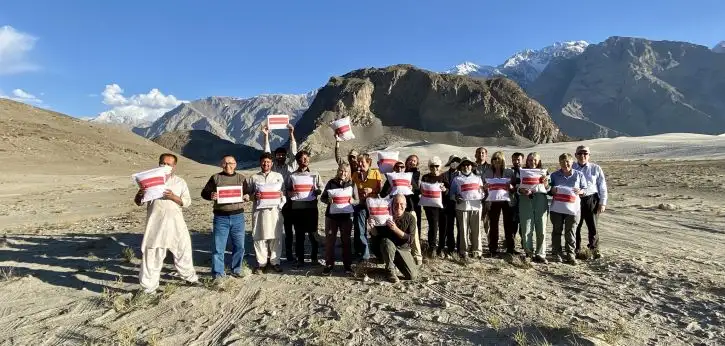
The oldest temple sits atop the hill overlooking the complex. A narrow internal staircase leads to the roof, offering excellent views across the site and surrounding Salt Range hills. The site represents an important pilgrimage destination for Hindus and showcases temple architecture spanning several centuries of development.
We continue to Lahore, Pakistan's cultural capital and second-largest city.
Overnight in Lahore. 
Included Meal(s): Breakfast, Lunch and Dinner - Day 16:Lahore: Royal Bath, Lahore Fort & Badshahi MosqueToday we explore Lahore, Pakistan's cultural heart and a city that has witnessed empires rise and fall for over a millennium.
We visit the Shahi Hammam and Walled City of Lahore, containing numerous buildings, bazaars, public spaces, and monuments of high cultural, architectural, and historic value. The Shahi Hammam, located inside Delhi Gate, dates to the Mughal period and provides ideal context for welcoming visitors to the Walled City. In 2012, the Walled City Authority created an enabling environment for restoration by removing commercial encroachments surrounding this historic building, allowing visitors to appreciate its original grandeur.
We continue to Wazir Khan Mosque, located deeper within the Walled City. Built in 1643, the mosque is renowned for its exceptional use and execution of inlaid pottery decoration in the wall panelling, creating intricate floral and geometric patterns that represent the pinnacle of Mughal decorative arts.
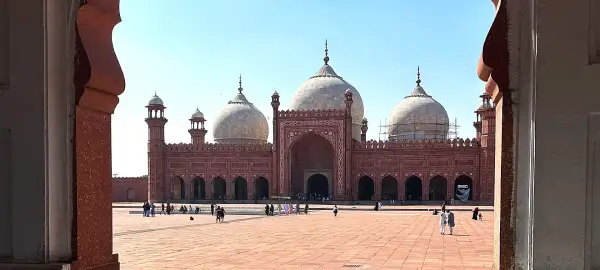
The Badshahi Mosque, built for Emperor Aurangzeb in 1673-74, stands as Lahore's most striking building. Modelled on the great Jami Masjid in Delhi, it features an impressive 20 m/66 ft high gateway and a central prayer chamber topped by three large white marble domes opening onto an enormous courtyard. The mosque can accommodate 100,000 worshippers simultaneously, making it one of the world's largest mosques.
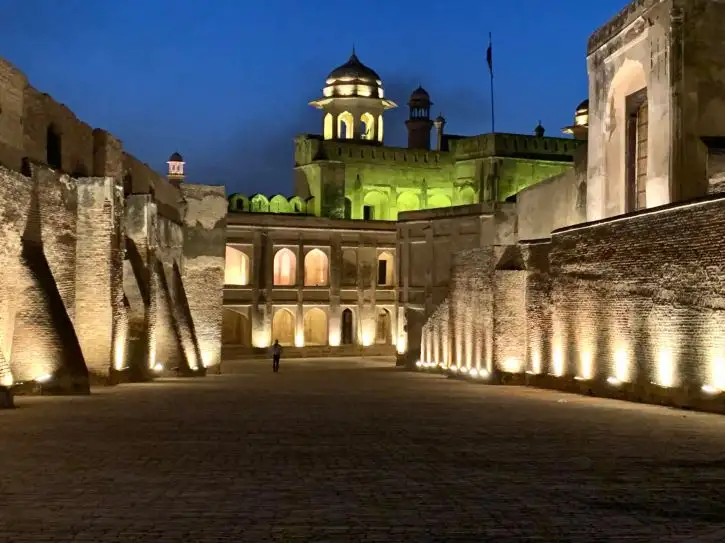
We also visit Lahore Fort, built by the Mughals during their rule. The fort contains some of South Asia's most impressive secular Mughal buildings, embellished with carved red sandstone, marble, pietra dura work, glazed coloured and Kashi tile work, plus frescoes depicting princely pleasures. The complex functions more as a palace than a fortress, reflecting the Mughals' sophisticated taste for art and architecture.
Overnight in Lahore. 
Included Meal(s): Breakfast and Dinner - Day 17:Lahore: Lahore Museum, Shalimar Garden & Waga BorderAfter breakfast we visit Lahore Museum, Pakistan's oldest and finest. The museum's first curator was John Lockwood Kipling, father of Rudyard Kipling, who referred to it as the "Ajaib Ghar" or House of Wonders in his novel "Kim." The museum houses an extremely valuable coin collection, some pieces dating from Alexander the Great's era, alongside outstanding Gandharan art and artifacts spanning Pakistan's diverse history.
Standing outside is the famous Zamzama Gun, immortalized in "Kim's" opening lines. This mighty cannon earned its name because its firing resembled a lion's roar. The gun saw action in the Battle of Panipat in 1761 and was badly damaged in the Battle of Multan in 1818.
We visit Shalimar Gardens, dating from the Mughal Empire's artistic zenith. Laid out as a Persian paradise garden representing earthly utopia where humans coexist in harmony with nature, the gardens were inscribed as a UNESCO World Heritage Site in 1981, recognizing them as embodying Mughal garden design at its apex. The gardens feature three descending terraces with flowing water, fountains, and pavilions creating a cool retreat from Lahore's heat.
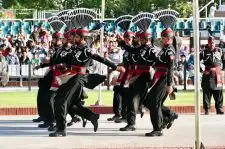
We then witness the Flag Lowering Ceremony at Wagah Border, a daily "Beating Retreat" ceremony performed since 1959. Indian and Pakistani security forces execute an elaborate synchronized parade building to a crescendo before flags are lowered simultaneously. The ceremony ends with abrupt handshakes between soldiers, followed by closing of the border gates. The event attracts large, enthusiastic crowds on both sides, blending national pride with theatrical spectacle.
Overnight in Lahore. 
Included Meal(s): Breakfast and Dinner - Day 18:DepartureDeparture from Lahore.
BON VOYAGE!
Countries Visited: Pakistan
*The red tour trail on the map does not represent the actual travel path.
Book This Tour
- Final payment: Due 90 days prior to departure.
- Deposit: A non-refundable $1000 CAD Deposit is required at booking.
- Optional Single Supplement: $2160 CAD (number of singles limited).
(View options forsingle travellers) - Transfering Tour or Date: Transferring to another tour or tour date is only permissible outside of 120 days prior to departure and is subject to a $100 CAD change fee.
(Read our cancellation policy)
Prices below are per person, twin-sharing costs in Canadian Dollars (CAD). Pricing does not include airfare to/from the tour and any applicable taxes.
Tourcode: PK1
Frequently Asked Questions
- What is the maximum number of participants on a trip?Most of our tours carry a maximum of 18 participants; some tours (ie hiking tours) top out at 16. In the event that we do not achieve our minimum complement by our 90-day deadline, we may offer group members the option of paying a "small-group surcharge" as an alternative to cancellation. If all group members agree, we will confirm the trip at existing numbers; this surcharge is refundable in the event that we ultimately achieve our regular minimum. If the small group surcharge is not accepted, we will offer a refund of your deposit or a different trip of your choice.
- Can I extend my tour either at the beginning or end? What about stopovers?Yes, you can extend your tour either at the beginning or the end and we can book accommodation in our tour hotel. Stopovers are often permitted, depending on air routing. Stopovers usually carry a "stopover" fee levied by the airline.
- How do I make a reservation? How and when do I pay?The easiest way to make a reservation is via our website; during office hours, you are also more than welcome to contact us by telephone.
A non-refundable deposit is payable at the time of booking; if a reservation is made within 90 days, full payment is required. Some trips require a larger deposit. If international airline bookings require a non-refundable payment in order to secure space or the lowest available fare, we will require an increase in deposit equal to the cost of the ticket(s).
Early enrolment is always encouraged as group size is limited and some trips require greater preparation time.
Once we have received your deposit, we will confirm your space and send you a confirmation package containing your trip itinerary, any visa/travel permit related documents, invoice, clothing and equipment recommendations, general information on your destination(s), and forms for you to complete, sign and return to us. Your air e-tickets (if applicable), final hotel list, final trip itinerary, and instructions on how to join your tour, will be sent approximately 2-3 weeks prior to departure. - What about cancellations, refunds, and transfers?Please review our cancellation policy page for details.
- I am a single who prefers my own room. What is a single supplement?All of our tours have a single supplement for those who want to be guaranteed their own room at each location.
This supplement is a reflection of the fact that most hotels around the world do not discount the regular twin-share rate for a room by 50% for only one person occupying a room. Most hotels will give a break on the price, but usually in the range of 25-30% of the twin-share rate. This difference, multiplied by each night, amounts to the single supplement.
The conventional amount can also vary from country to country and some destinations are more expensive than others for single occupancy. In order to be "single friendly," the supplements we apply are not a profit centre for us and we do our best to keep them as reasonable as possible.
On most tours we limit the number of singles available, not to be punitive, but rather because many hotels allow for only a limited number of singles; some smaller hotels at remote locations also have a limited number of single rooms available.
Please note that most single rooms around the world are smaller than twin-share rooms and will likely have only one bed. - Do you have a shared accommodation program?Yes! If you are single traveller and are willing to share, we will do our best to pair you with a same-gender roommate. Please note that should we fail to pair you, we will absorb the single supplement fee and you will default to a single room at no extra charge.