- History
- Off The Beaten Path
- Rail
- Overview
- Info & Inclusions
- Itinerary
- Map & Hotels
- Photos
- Dates & Prices
- Tour Duration: 17 Days
- Max Group Size 18
- Ladakh's Buddhist monasteries including Hemis and Thiksey
- Traditional village cultural immersion
- Darjeeling's UNESCO Toy Train journey
- Tea estate tours with tastings
- Four-night Brahmaputra River cruise
- Assamese silk-weaving workshops
- Kamakhya tantric temple
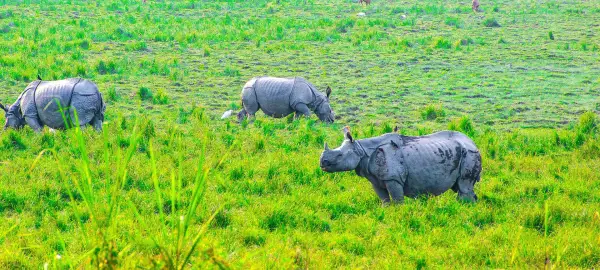
- Kaziranga safaris for one-horned rhinos and tigers.
- Singles friendly (view options for single travellers)
Each elevation reveals distinct spiritual landscapes shaped by geography. Ladakh's high-altitude Buddhism evolved in stark Trans-Himalayan conditions, its monasteries preserving Tibetan traditions since the 11th century. Darjeeling blends Buddhist, Hindu, and colonial Christian influences in a cultural crossroads born of 19th-century tea cultivation. The Brahmaputra valley sustains ancient Assamese Hinduism enriched by tribal traditions, the river's annual floods creating abundance that contrasts sharply with Ladakh's austere beauty. October provides ideal timing: post-monsoon clarity illuminates Himalayan peaks, Darjeeling's tea gardens bustle with harvest activity, and Kaziranga's grasslands offer superb wildlife viewing as water levels recede. This journey captures the complete Himalayan experience—not just mountain heights, but the full spectrum of cultures, landscapes, and spiritual traditions the world's greatest range has shaped over millennia.
- MealsSavour authentic flavours with included daily breakfasts and dinners at handpicked local restaurants—immersing you in local cuisine without worrying about reservations or budgets.
- Transport & Logistics
Private air-conditioned coaches and included internal ferries and flights—ensuring hassle-free travel so you can focus entirely on the discoveries ahead.
"Adventures Abroad tour leader's management and guest services managed the tour with great skill and dedication. The tour leader was on top of every move and transfer. We have not experienced any issues with logistics and had a great time."
~ JULIA O"The tour leader did an excellent job coordinating some difficult travel logistics, power outage issues and resolving problems and dealing with guests who had unrealistic expectations."
~ CYNTHIA COLLINS - Expert Guidance
Unlock insider secrets at every landmark with your full-time Tour Leader and expert local guides , all gratuities covered—no hidden tipping surprises—so you immerse fully in your destination's stories, worry-free. (Except for the tips to your tour leader at the end of your tour.)
"Amazing tour guide. Our tour guide was very well organized, Her passion, knowledge, and enthusiasm completely transformed the travel experience into something truly unforgettable..."
~ MELANIE LEMAIRE"Highly recommend every trip with Adventures Abroad. It's a well organized and well thought out adventure. The tour leaders are friendly, knowledgeable and experienced professionals. Highly recommend this company."
~ SUSAN WALL - Sightseeing & EntrancesAll entrance fees for sites visited as per the itinerary—no hidden costs—so you can explore ancient ruins and excursions with complete peace of mind.
- AccommodationsUnwind in clean, well-located 3 to 4-star hotels with private en suite facilities—handpicked for comfort and convenience after each day's discoveries—so you can rest easy knowing your stay supports the real adventure, not steals the spotlight.
- Small Group
Discover the world in small groups of up to 18 travellers plus your expert Tour Leader—unlocking spontaneity, off-the-beaten-path adventures, and genuine connections at a relaxed pace, free from crowds.
"Looking Forward to My Next Adventure The best feature of the Adventures tour was the small size that allowed the group to quickly load up, let everyone get acquainted within the first 24 hours, capitalize on unplanned surprises along..."
~ PHILIP BLENSKI"Good value for a great time I have traveled with Adventures Abroad for over 20 years now. Well thought out, interesting itineraries and the other travelers congenial and friendly. The price always seems fair and overall a..."
~ Trusted Customer - Airport Transfers For Land & Air CustomersWe handle hassle-free airport transfers for all our land and air tour customers—plus early arrivals or late departures when you book extra hotel nights directly with us for added peace of mind.
- International airfare to/from the tour
- Tour Leader gratuities, most lunches, drinks & personal items, domestic and international (if applicable) air taxes, visa fees, and any excursions referenced as 'optional'
- Airport transfers for Land Only customers
- Gratuities for cruise crew
- Optional trip cancellation insurance.
- Seasonality and Weather:
October represents optimal timing for this multi-elevation journey. Ladakh enjoys post-monsoon clarity with stable weather and comfortable temperatures before winter arrives. Darjeeling experiences its second harvest season with tea gardens active and clear mountain views. The Brahmaputra's receding water levels concentrate wildlife in Kaziranga's grasslands, creating exceptional viewing conditions. This timing allows experiencing Ladakh's crystalline visibility, Darjeeling's productive harvest, and Assam's wildlife peak simultaneously. - Transport and Travel Conditions:
Transport includes domestic flights, private vehicles with maximum four passengers per vehicle in Ladakh, and four nights aboard the ABN Sukapha river vessel. Walking involves monastery visits with stairs, market exploration, and village walks on uneven surfaces. Darjeeling requires navigating the town's steep hillside paths. The Brahmaputra cruise provides comfortable respite with level decks. Kaziranga safaris use open jeeps on rough park roads. Your Tour Leader and cruise crew coordinate pacing throughout.
We spend five nights at 3524 m/11,562 ft with intentionally light initial days and comprehensive altitude briefing. The day trip to Khardung La Pass briefly reaches 5359 m/17,582 ft—manageable for properly acclimatized travellers. Most participants adjust successfully with gradual activity and hydration.
The journey's elevation descent—from high altitude through mid-elevation hills to river plains—reveals dramatically different Himalayan landscapes while allowing gradual adaptation.
Am I suitable for this tour? Please refer to our self-assessment form - Activity Level: 2
These are particularly busy tours that feature a lot of moving around, sometimes by train and short journeys on local transport. Walking tours of towns and cities are leisurely but you should be prepared to be on your feet for several hours. Some of our cultural trips that occur at high altitude and/or require greater independence with baggage handling (at hotels, airports, train stations) also fall into this category.
To learn more about the Activity levels, please visit our tour styles page. - Accommodation:
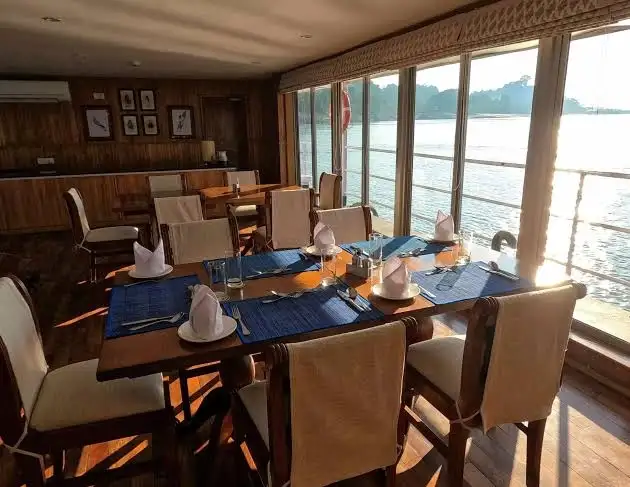
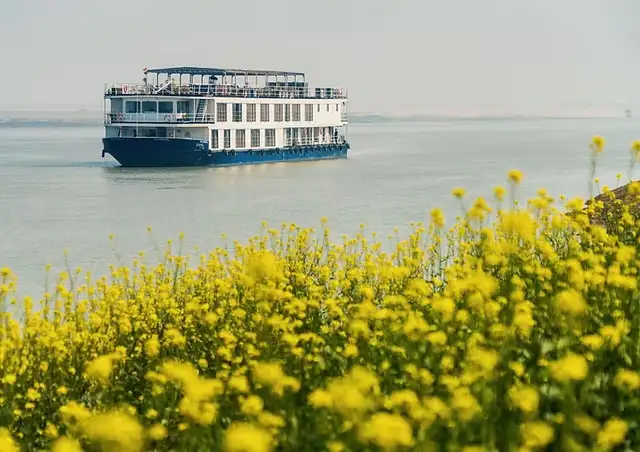
Accommodation throughout maintains 4-5 star standards with strategic selections for location and character. In Leh we stay at the Grand Dragon offering oxygen-enriched rooms that ease altitude adjustment. Darjeeling's accommodation is a heritage property dating to the colonial tea planter era. The four-night Brahmaputra cruise aboard ABN Sukapha features Upper Deck cabins with ensuite facilities and picture windows—the vessel carries maximum 24 passengers ensuring intimate experience. Guwahati and Delhi properties provide modern amenities with convenient airport access. - Staff and Support:
Full-time Tour Leader days 01-11; your time on the cruise will be manged by the crew and expert guides on board. - Group Size:
Maximum 18 plus Tour Leader/guides.
- Day 1:Arrive DelhiWelcome to India's capital, a sprawling metropolis where ancient monuments stand amid modern infrastructure. Contemporary Delhi began as a series of fortified cities—seven distinct settlements built and abandoned over 2,000 years—each leaving architectural traces visible today. The current incarnation serves as both historical repository and gateway to the subcontinent, tree-lined avenues connecting Mughal-era tombs, British colonial buildings, and the contemporary government quarter. This evening we gather for our first meal together, meeting fellow travellers before tomorrow's early flight to the Himalaya.
Overnight in Delhi (airport area hotel).
Included Meal(s): Dinner - Day 2:Delhi - Fly to LehOur Himalayan journey begins with an early morning flight from Delhi to Leh, soaring over successive mountain ranges to land at 3524 metres/11,562 feet elevation. The day remains intentionally light—altitude acclimatization requires patience and gradual activity. After hotel check-in, we receive a comprehensive briefing on altitude awareness, hydration protocols, and the importance of measured movement over the next few days.
A suggested gentle walk through Leh's market introduces the rhythm of Ladakhi life: prayer flags fluttering above narrow lanes, apricot vendors arranged beside incense sellers, the sharp mountain air carrying scents of juniper smoke from monastery hearths. The market serves both local Ladakhis and the surrounding villages, its stalls reflecting the region's position where Indian, Tibetan, and Central Asian trade routes once converged. We keep movement minimal, allowing our bodies to adjust to reduced oxygen levels.
Overnight in Leh.
Included Meal(s): Breakfast and Dinner - Day 3:Leh: Hemis Gompa & StokThis morning takes us deeper into Ladakh's monastic heartland with visits to two significant Buddhist centres. Hemis Monastery, nestled in a secluded valley 40 kilometres from Leh, ranks as the region's largest and wealthiest gompa. Founded in the 1630s, Hemis accumulated substantial wealth through royal patronage and extensive land holdings—its treasuries once contained gold statues, ancient manuscripts, and religious artifacts that made it Ladakh's economic powerhouse as well as spiritual centre. The monastery holds particular fame for its triennial festival when masked dances re-enact Buddhist teachings, and for its colossal thangka—a religious scroll measuring 12 by 18 metres, unfurled once every twelve years for public veneration.
From Hemis we continue to Stok Monastery, a 14th-century gompa that houses a remarkable library containing 108 volumes of the Kangyur—Buddha's teachings translated into Tibetan. The monastery sits directly below Stok Palace, still home to Ladakh's royal family who relocated here in the 1840s after Dogra forces conquered Leh. The current queen mother maintains the palace as both residence and museum, its collection including royal ceremonial robes, turquoise-studded jewelry, and thangkas spanning five centuries. Views from the monastery courtyard extend across the Indus Valley to Leh, the same perspectives Ladakhi kings surveyed for generations.
The afternoon remains free for continued acclimatization—gentle walks, reading, or simply absorbing the high-altitude landscape's stark beauty.
Overnight in Leh.
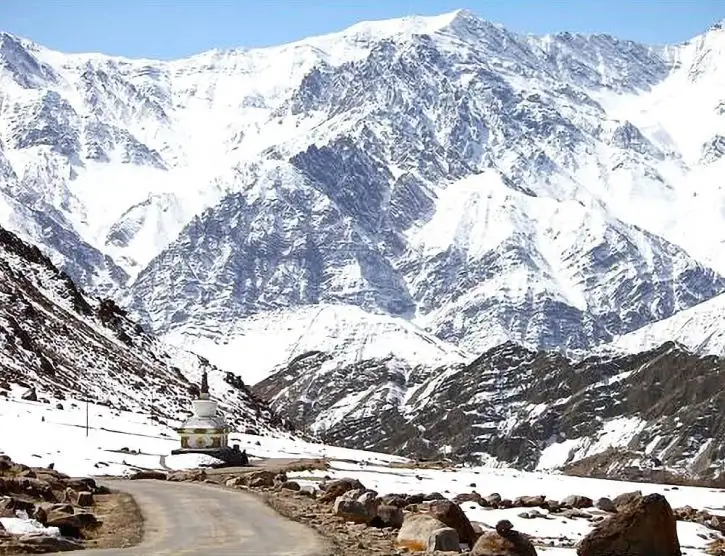
Included Meal(s): Breakfast and Dinner - Day 4:Leh: Khardung La Pass & Leh PalaceWe drive to Khardung La this morning, a mountain pass perched at 5359 metres/17,582 feet on the ancient trade route connecting Leh to the Nubra and Shyok valleys.* While local claims of "world's highest motorable road" remain disputed—several Himalayan passes reach higher elevations—Khardung La nonetheless provides dramatic perspectives over the Ladakh and Zanskar ranges. The pass served crucial strategic importance during the Silk Road era, with caravans moving goods between Central Asia and the subcontinent. At the summit, prayer flags snap in thin air, and on clear days views extend over bare brown peaks stretching toward Tibet and Pakistan. Yaks often graze the surrounding slopes, their thick coats and efficient lungs adapted to extreme altitude where oxygen levels measure roughly 60 percent of sea level.
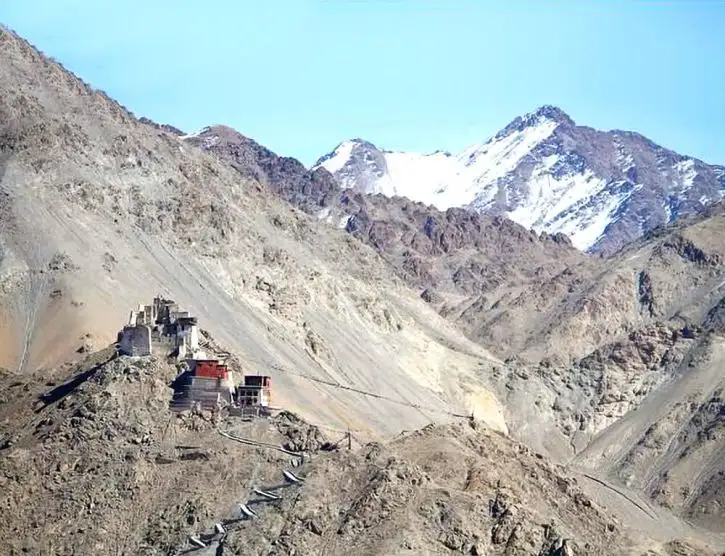
Returning to Leh, we visit the historic Leh Palace, a nine-storey royal residence built in the 17th century. King Sengge Namgyal modelled his palace on Tibet's Potala Palace—the same distinctive architectural style of stacked structures rising from rocky outcrops. The mudbrick and stone construction blends Tibetan, Indian, and Mughal influences, its balconies offering panoramic views over Leh town and the surrounding peaks. The palace served as the royal family's main residence until the 1840s, when Dogra forces from Kashmir conquered Ladakh and the royals relocated to Stok. Though now largely empty—many treasures moved to Stok Palace—the building's scale and commanding position demonstrate the power Ladakhi kings once wielded across this high-altitude realm.
* NOTE: Khardung La Pass may be inaccessible due to weather conditions, particularly during March when snow often blocks high-altitude roads. Alternative sightseeing in the Leh area will be arranged if the pass is closed.
Overnight in Leh.
Overnight in Leh.
Included Meal(s): Breakfast and Dinner - Day 5:Leh: Monasteries & Cultural ImmersionThis morning presents a choice between two of Ladakh's most significant religious sites. Thiksey Monastery rises in a multi-tiered cascade up the hillside, its distinctive profile often compared to Tibet's Potala Palace. Founded in the 15th century, the gompa maintains an active community of monks whose morning prayers fill the assembly hall with chanting and ceremonial horns. The monastery houses a 15-metre Maitreya Buddha statue, its gilded presence dominating the temple's upper level. Alternatively, Shey Palace served as Ladakh's summer capital for centuries, its temple containing a massive copper-gilded Buddha commissioned in the 1630s.
The afternoon shifts to cultural immersion as we visit a traditional Ladakhi village. Inside a family home we share butter tea—the salty Tibetan-style beverage that provides essential calories and hydration at altitude. Our hosts explain daily life rhythms: barley cultivation in brief summer months, livestock management, preserving vegetables for winter isolation when snow blocks roads. Traditional crafts like carpet weaving and woodcarving continue in many households, skills passed through generations.
For those seeking deeper spiritual connection, optional evening prayers at a monastery offer a meditative close to the day.
Overnight in Leh.
Included Meal(s): Breakfast and Dinner - Day 6:Leh - Fly to DelhiAfter breakfast we transfer to Leh Airport for our return flight to Delhi, transitioning from Ladakh's stark desert beauty to the lush landscapes that define India's eastern Himalaya. The flight path retraces our journey over successive mountain ranges, the geography shifting from arid Trans-Himalayan terrain to the fertile river valleys of the plains.
Upon arrival at Delhi Airport, we transfer to our Aerocity hotel. The remainder of the day offers leisure time to rest, explore the hotel's surroundings, or prepare for tomorrow's continuation to Darjeeling. This pause between high-altitude intensity and the programme ahead provides welcome breathing space.
Overnight in Delhi.
Included Meal(s): Breakfast and Dinner - Day 7:Delhi - Fly to DarjeelingAn early transfer brings us to Delhi Airport for our morning flight to Bagdogra, the gateway to India's eastern Himalayan hill stations. The landscape shifts dramatically during the flight—from the dry plains around Delhi to the lush, tea-planted slopes of West Bengal. Upon arrival at Bagdogra, we begin the three-hour drive to Darjeeling, climbing from the humid plains into cooler mountain air.
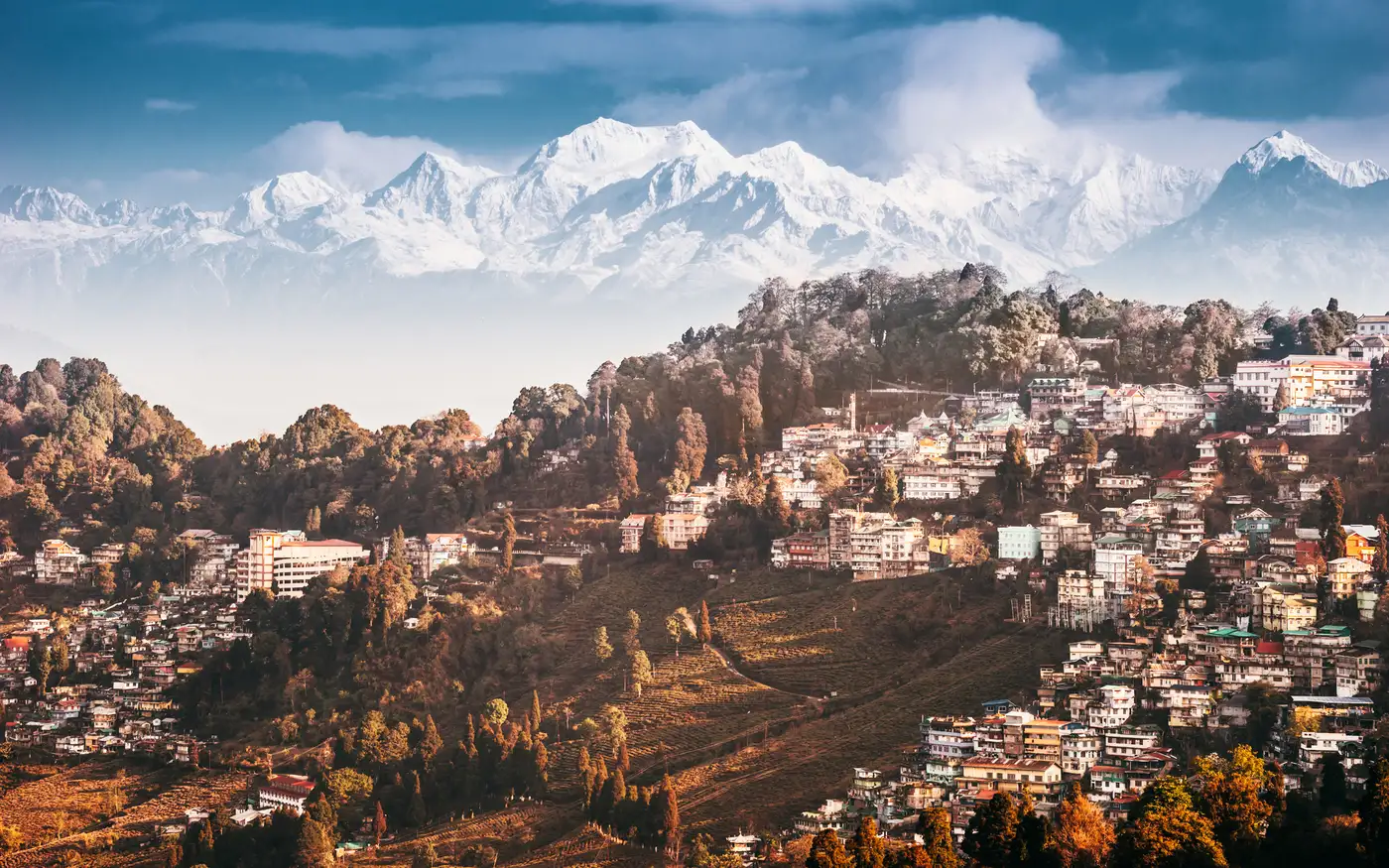
The road winds through terraced tea estates that have defined this region's economy since the 1850s, when British planters discovered these slopes produced exceptional tea. Darjeeling clings to a ridge at 2042 metres/6700 feet elevation, its Victorian-era buildings and Tibetan Buddhist monasteries creating an architectural blend unique to this border region. The town developed as a colonial hill station—a summer retreat from Calcutta's oppressive heat—and maintains that legacy in its Gothic churches, mock-Tudor cottages, and the steam railway that still operates along impossible gradients.
We check into our hotel with time to settle before evening.
Overnight in Darjeeling.
Included Meal(s): Breakfast and Dinner - Day 8:Darjeeling Orientation & Tea TastingA morning walking tour introduces Darjeeling's compact centre, the orientation covering The Mall and Chowrasta Square—the social heart of hill station life for 150 years. The Mall's wide pedestrian promenade connects shops selling Tibetan handicrafts, bookstores stocked with mountaineering literature, and cafés where chai arrives in porcelain cups rather than roadside glasses. Chowrasta Square serves as the town's meeting point, locals and visitors gathering where four roads converge beneath views extending to Kanchenjunga when clouds permit.
This walk reveals Darjeeling's layered character: colonial architecture housing contemporary businesses, Tibetan refugees operating restaurants beside Nepali shopkeepers, Buddhist prayer flags strung above Christian church spires. The town became refuge for Tibetans fleeing Chinese occupation in 1959, their community adding another cultural strand to an already complex tapestry of Bengali, Nepali, Bhutia, and Lepcha residents.
Our evening tea tasting session provides introduction to why Darjeeling tea commands premium prices worldwide. We sample various grades and flush periods—first flush teas picked in March offering delicate floral notes, second flush from May and June producing the muscatel flavours that made Darjeeling famous. The tasting reveals how elevation, rainfall timing, and processing methods create distinct characteristics in leaves grown mere kilometres apart.
Overnight in Darjeeling.
Included Meal(s): Breakfast and Dinner - Day 9:Darjeeling: Toy Train & Tea EstateThis morning offers an optional pre-dawn excursion to Tiger Hill, weather permitting, where sunrise illuminates Kanchenjunga's five peaks—at 8586 metres/28,169 feet, the world's third-highest mountain and sacred to local Buddhist and Hindu communities. The 90-kilometre distant peak glows orange as first light strikes its snow fields, the spectacle drawing crowds to the viewpoint's terraces. After returning to the hotel, breakfast precedes our main activity.
The Darjeeling Himalayan Railway, a UNESCO World Heritage site, provides this morning's journey. The narrow-gauge steam train operates on the Darjeeling-Ghum-Batasia Loop sector, a two-hour round trip offering glimpses into the region's colonial past. Built between 1879 and 1881, the railway conquered gradients considered impossible for locomotive traction—engineers employed sharp curves, reverses, and loops rather than tunnels to gain elevation. The line climbs from Darjeeling's lower reaches through pine forests to Ghum, at 2258 metres the highest railway station in India, before descending via the famous Batasia Loop where tracks spiral 360 degrees around a war memorial.
This afternoon we visit Happy Valley Tea Estate, one of Darjeeling's oldest gardens established in 1854. The visit includes walking through terraced tea bushes where pickers work with practiced efficiency, selecting only the finest leaves and buds. Inside the factory we observe the withering, rolling, oxidation, and drying processes that transform fresh leaf into finished tea. A tasting session concludes the visit, multiple varieties demonstrating how processing decisions affect final flavour profiles.
The evening remains free for independent exploration—browsing bookshops, shopping for Tibetan handicrafts, or simply relaxing at a café.
Overnight in Darjeeling.
Included Meal(s): Breakfast and Dinner - Day 10:Darjeeling: Himalayan HeritageAfter breakfast we begin a half-day tour highlighting Darjeeling's cultural and natural heritage. The Himalayan Mountaineering Institute, established in 1954 following the first successful Everest ascent, chronicles the region's mountaineering history through equipment displays, expedition photographs, and detailed topographical models. Adjacent to the institute, the Tenzing Norgay Memorial honours the Sherpa who reached Everest's summit with Edmund Hillary in May 1953—Tenzing spent his later years in Darjeeling, training mountaineers and advocating for Sherpa recognition.
The Padmaja Naidu Himalayan Zoological Park focuses on conservation of endangered Himalayan species. Red pandas, snow leopards, and Himalayan wolves inhabit enclosures designed to replicate their natural habitats, the zoo's breeding programmes contributing significantly to species preservation efforts. The facility sits at elevation suitable for these cold-adapted animals, making it one of few zoos worldwide where such species thrive.
Our afternoon visits include the Tibetan Refugee Self-Help Centre, established in 1959 to provide livelihood for Tibetans fleeing Chinese occupation. The centre maintains traditional carpet weaving and handicraft production, skills that might otherwise have been lost during diaspora. We then proceed to Observatory Hill, a sacred site for both Buddhists and Hindus where prayer flags and religious offerings cluster around the Mahakal Temple. The hilltop provides panoramic views across Darjeeling's ridges to the plains far below.
The evening offers time to pack and prepare for tomorrow's journey to Assam.
Overnight in Darjeeling.
Included Meal(s): Breakfast and Dinner - Day 11:Darjeeling - Bagdogra Airport - Fly to GuwahatiAfter breakfast we check out and drive approximately three and a half hours to Bagdogra Airport. Here you will bid your Tour Leader farewell as they will not be accompanying the group on the cruise on which your experience will be expertly managed by the ship's crew and expert guides.
Our afternoon flight to Guwahati includes a layover in Kolkata—a four and a half hour gap allowing the aircraft connection to India's northeast. We arrive in Guwahati by late evening, the city serving as the gateway to Assam and the broader northeastern states.
Guwahati spreads along the Brahmaputra's southern bank, this ancient city functioning as a trading hub for two millennia. The Brahmaputra—one of the world's great rivers—originates in Tibet, flows 2900 kilometres through the Himalaya, and creates the massive floodplains that define Assam's geography and agriculture. Tomorrow we board our river vessel for four days exploring this landscape.
Upon arrival at Guwahati Airport, we transfer to our hotel for overnight rest before beginning the cruise portion of our journey.
Overnight in Guwahati.
Included Meal(s): Breakfast and Dinner - Day 12:Guwahati to Silghat - Embark CruiseAfter breakfast we transfer to Pandu Port where we board ABN Sukapha, our vessel for the next four days navigating the Brahmaputra. The ship carries a maximum of 24 passengers in Upper Deck cabins, its shallow draft and twin engines designed specifically for this powerful river's shifting channels and sandbars. Boarding brings the pleasant chaos of settling into cabins, meeting crew, and orienting ourselves to the vessel's layout before we cast off mid-morning.
We enjoy lunch onboard as the vessel cruises downstream toward Sualkuchi, a bustling town that serves as the centre of Assamese silk production. An afternoon walk through Sualkuchi's workshops reveals the complete silk manufacturing process—from cocoon boiling and thread spinning through natural dyeing to the intricate hand-weaving of mekhela chadars, the two-piece traditional sari worn by Assamese women. The silk industry here dates back centuries, techniques passed through family lineages. The distinctive muga silk produced only in Assam comes from semi-domesticated silkworms that feed on specific tree leaves, its natural golden colour requiring no dye. Weavers work on traditional pit looms, their hands flying across threads in patterns memorized since childhood, each mekhela chadar requiring several days of concentrated work.
The vessel continues upstream, docking near the great Saraighat Bridge where the Brahmaputra narrows to approximately one kilometre. The bridge marks the site of the 1671 Battle of Saraighat, where Ahom Kingdom forces defeated Mughal expansion attempts—a victory still celebrated in Assamese culture as a defining moment of regional identity and independence.
Overnight aboard ABN Sukapha.
Included Meal(s): Breakfast, Lunch and Dinner - Day 13:Kamakhya Temple & River JourneyThis morning we drive up Nilachal Hill to visit Kamakhya Temple, one of India's most revered centres of tantric practice. Dedicated to the goddess Kamakhya—the granter of desires—the temple marks one of the 51 Shakti Peethas, sites where body parts of the goddess Sati fell to earth according to Hindu mythology. The current structure dates to the 16th century, built by Ahom kings, though worship at this location extends back over a millennium. The temple's architecture blends Aryan and indigenous Assamese elements, its beehive-shaped shikhara distinct from temples in other Indian regions.
We walk the temple's exterior grounds among pilgrims from across India, the site drawing devotees year-round but particularly during the annual Ambubachi Mela when hundreds of thousands gather. The vibrant energy, devotional chanting, and continuous flow of offerings provide insight into living Hindu practice rather than historical monument.
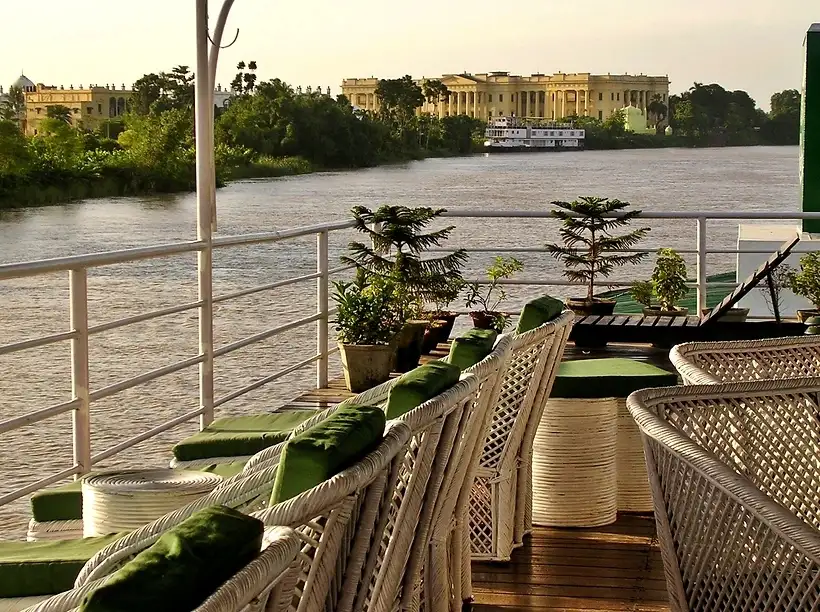
Returning to the vessel, we cruise upstream toward Mayong, the landscape shifting from urban Guwahati to rural riverbanks where villages appear among mango groves and rice paddies. The Brahmaputra's scale becomes evident—at places the river spreads several kilometres wide, its channels constantly shifting as monsoon floods rework sandbars and islands each year.
Overnight aboard ABN Sukapha.
Included Meal(s): Breakfast, Lunch and Dinner - Day 14:River Village & Upstream NavigationThis morning we cruise upstream and visit a riverside village surrounded by lush vegetable fields. The Brahmaputra's annual flooding deposits nutrient-rich sediment that makes these floodplains extraordinarily fertile—the foundation of Assam's agricultural abundance. Village homes sit on raised platforms designed to survive seasonal inundation, the walk revealing daily rhythms of farming and fishing that define life along the river.
The day proceeds mostly with upstream navigation, presenting opportunity for reading, writing about the journey thus far, or simply watching life unfold along the riverbanks. Fishermen work from dugout canoes, water buffalo wallow in shallows, and jungle-covered hills rise on either bank as we move deeper into Assam's interior. River dolphins occasionally surface—the endangered Ganges river dolphin still survives in these waters.
An onboard Indian cooking demonstration this afternoon reveals techniques for regional dishes—the use of mustard oil, bamboo shoots, and fresh fish that define Assamese cuisine, aromatic combinations of ginger, garlic, and coriander that flavour curries throughout the northeast.
The vessel's pace allows appreciation of the Brahmaputra's role in shaping northeastern India's culture and economy, this major river winding through landscapes that have changed little over centuries.
Overnight aboard ABN Sukapha.
Included Meal(s): Breakfast, Lunch and Dinner - Day 15:Kaziranga National ParkWe cruise to reach Silghat this morning, where after lunch we disembark for our drive to Kaziranga National Park. A late afternoon jeep safari explores the park's Western Range, introducing us to one of Asia's most significant wildlife sanctuaries.
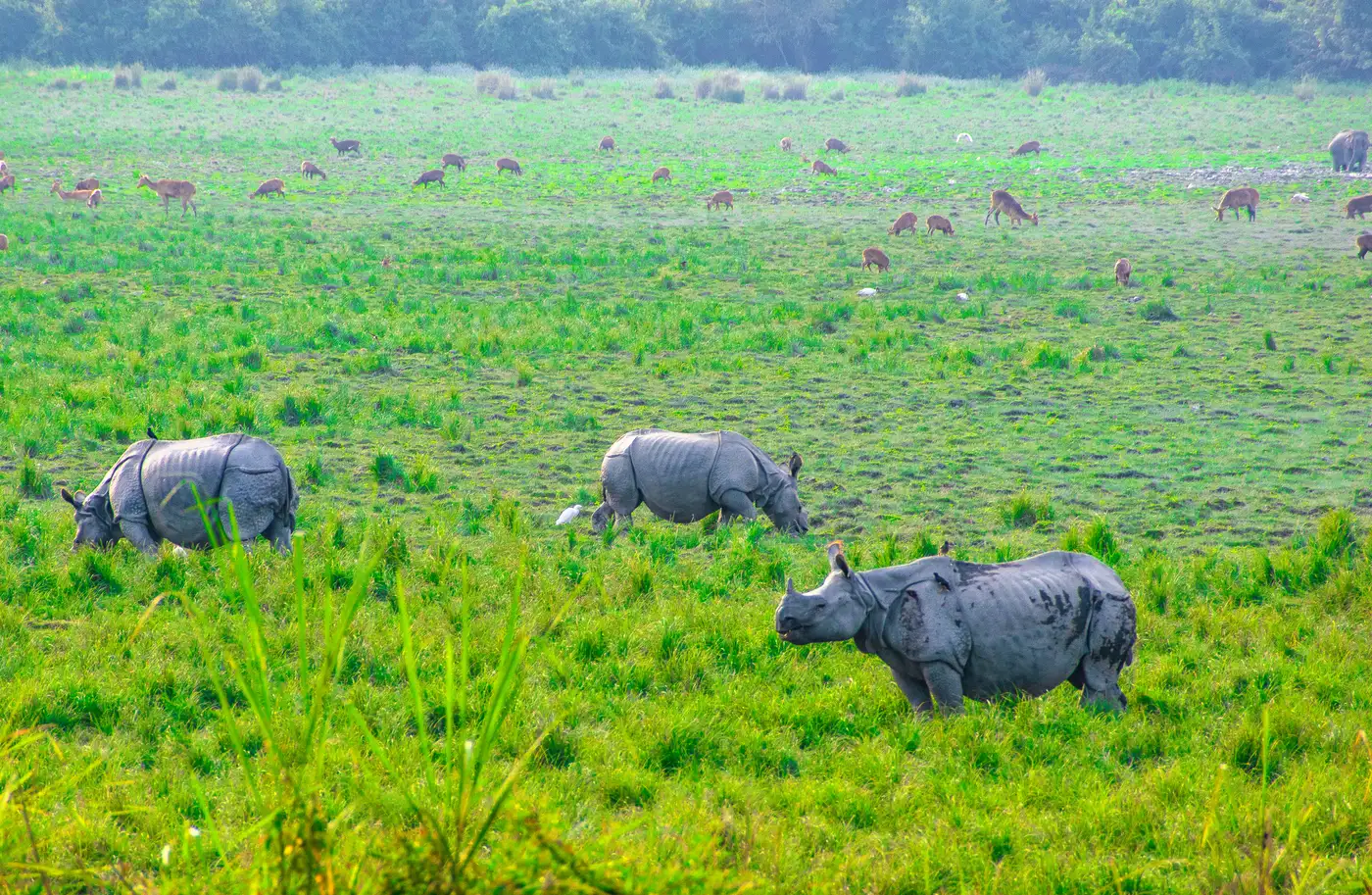
Covering approximately 430 square kilometres, this UNESCO World Heritage Site protects the world's largest population of Indian one-horned rhinoceros—over 2400 individuals, more than two-thirds of the species' global total. The rhinos graze openly across Kaziranga's grasslands and marshes, their prehistoric appearance—armour-like skin folds, single nasal horn—unchanged for millions of years. The park also shelters exceptional populations of Indian wild water buffalo, the highest density of Royal Bengal tigers anywhere (one per five square kilometres), plus significant numbers of Asian elephants, swamp deer, and hog deer.
Kaziranga's marshy terrain and elephant grass thickets create habitat comparable to Africa's Serengeti, the abundance of large mammals earning it recognition as one of the world's premier wildlife destinations. The park stretches along the Brahmaputra's southern floodplain, seasonal flooding renewing grasslands that support this remarkable biodiversity.
Birdwatchers find Kaziranga equally rewarding—over 480 species recorded here include Oriental honey buzzard, black-shouldered kite, white-tailed eagle, and Himalayan griffon. The park's wetlands attract migratory waterfowl throughout winter months.
We return to the vessel for our final night aboard.
Overnight aboard ABN Sukapha. - Day 16:Silghat to GuwahatiAfter checking out from the cruise at Silghat this morning, we drive back to Guwahati, a journey of approximately three to four hours retracing our route along the Brahmaputra's southern bank. The drive provides final perspectives of rural Assam—rice paddies extending to horizons, roadside stalls selling seasonal fruits, occasional glimpses of the great river that has shaped this landscape for millennia.
Upon arrival in Guwahati we check into our hotel. The rest of the evening remains at leisure—opportunity to explore the city's markets, walk along the riverfront promenade, or simply rest after four days aboard the vessel. Guwahati's modern development contrasts sharply with the rural villages we've encountered upstream, the city's growth reflecting Assam's increasing economic importance and its role connecting India's remote northeastern states.
Overnight in Guwahati (dinner at the hotel).
Included Meal(s): Breakfast and Dinner - Day 17:Depart GuwahatiThis morning we bid farewell and transfer to Lokpriya Gopinath Bordoloi International Airport for onward journeys. Our route has traced an arc from the Himalaya's heights to the plains where its waters flow—from Ladakh's Buddhist desert through Darjeeling's tea-covered slopes to the fertile abundance of the Brahmaputra valley. Each elevation revealed distinct cultures shaped by geography, the journey complete.
Bon Voyage - Juley (Ladakhi) - Bistārai jānuhos (Nepali) - Bhāl thākibi (Assamese)!
Included Meal(s): Breakfast
Countries Visited: India
*The red tour trail on the map does not represent the actual travel path.
Book This Tour
- Final payment: Due 90 days prior to departure.
- Deposit: A non-refundable $1000 USD Deposit is required at booking.
- Optional Single Supplement: $2510 USD (number of singles limited).
(View options forsingle travellers) - Transfering Tour or Date: Transferring to another tour or tour date is only permissible outside of 120 days prior to departure and is subject to a $100 USD change fee.
(Read our cancellation policy)
Prices below are per person, twin-sharing costs in US Dollars (USD). Pricing does not include airfare to/from the tour and any applicable taxes.
Frequently Asked Questions
- What is the maximum number of participants on a trip?Most of our tours carry a maximum of 18 participants; some tours (ie hiking tours) top out at 16. In the event that we do not achieve our minimum complement by our 90-day deadline, we may offer group members the option of paying a "small-group surcharge" as an alternative to cancellation. If all group members agree, we will confirm the trip at existing numbers; this surcharge is refundable in the event that we ultimately achieve our regular minimum. If the small group surcharge is not accepted, we will offer a refund of your deposit or a different trip of your choice.
- Can I extend my tour either at the beginning or end? What about stopovers?Yes, you can extend your tour either at the beginning or the end and we can book accommodation in our tour hotel. Stopovers are often permitted, depending on air routing. Stopovers usually carry a "stopover" fee levied by the airline.
- How do I make a reservation? How and when do I pay?The easiest way to make a reservation is via our website; during office hours, you are also more than welcome to contact us by telephone.
A non-refundable deposit is payable at the time of booking; if a reservation is made within 90 days, full payment is required. Some trips require a larger deposit. If international airline bookings require a non-refundable payment in order to secure space or the lowest available fare, we will require an increase in deposit equal to the cost of the ticket(s).
Early enrolment is always encouraged as group size is limited and some trips require greater preparation time.
Once we have received your deposit, we will confirm your space and send you a confirmation package containing your trip itinerary, any visa/travel permit related documents, invoice, clothing and equipment recommendations, general information on your destination(s), and forms for you to complete, sign and return to us. Your air e-tickets (if applicable), final hotel list, final trip itinerary, and instructions on how to join your tour, will be sent approximately 2-3 weeks prior to departure. - What about cancellations, refunds, and transfers?Please review our cancellation policy page for details.
- I am a single who prefers my own room. What is a single supplement?All of our tours have a single supplement for those who want to be guaranteed their own room at each location.
This supplement is a reflection of the fact that most hotels around the world do not discount the regular twin-share rate for a room by 50% for only one person occupying a room. Most hotels will give a break on the price, but usually in the range of 25-30% of the twin-share rate. This difference, multiplied by each night, amounts to the single supplement.
The conventional amount can also vary from country to country and some destinations are more expensive than others for single occupancy. In order to be "single friendly," the supplements we apply are not a profit centre for us and we do our best to keep them as reasonable as possible.
On most tours we limit the number of singles available, not to be punitive, but rather because many hotels allow for only a limited number of singles; some smaller hotels at remote locations also have a limited number of single rooms available.
Please note that most single rooms around the world are smaller than twin-share rooms and will likely have only one bed. - Do you have a shared accommodation program?Yes! If you are single traveller and are willing to share, we will do our best to pair you with a same-gender roommate. Please note that should we fail to pair you, we will absorb the single supplement fee and you will default to a single room at no extra charge.