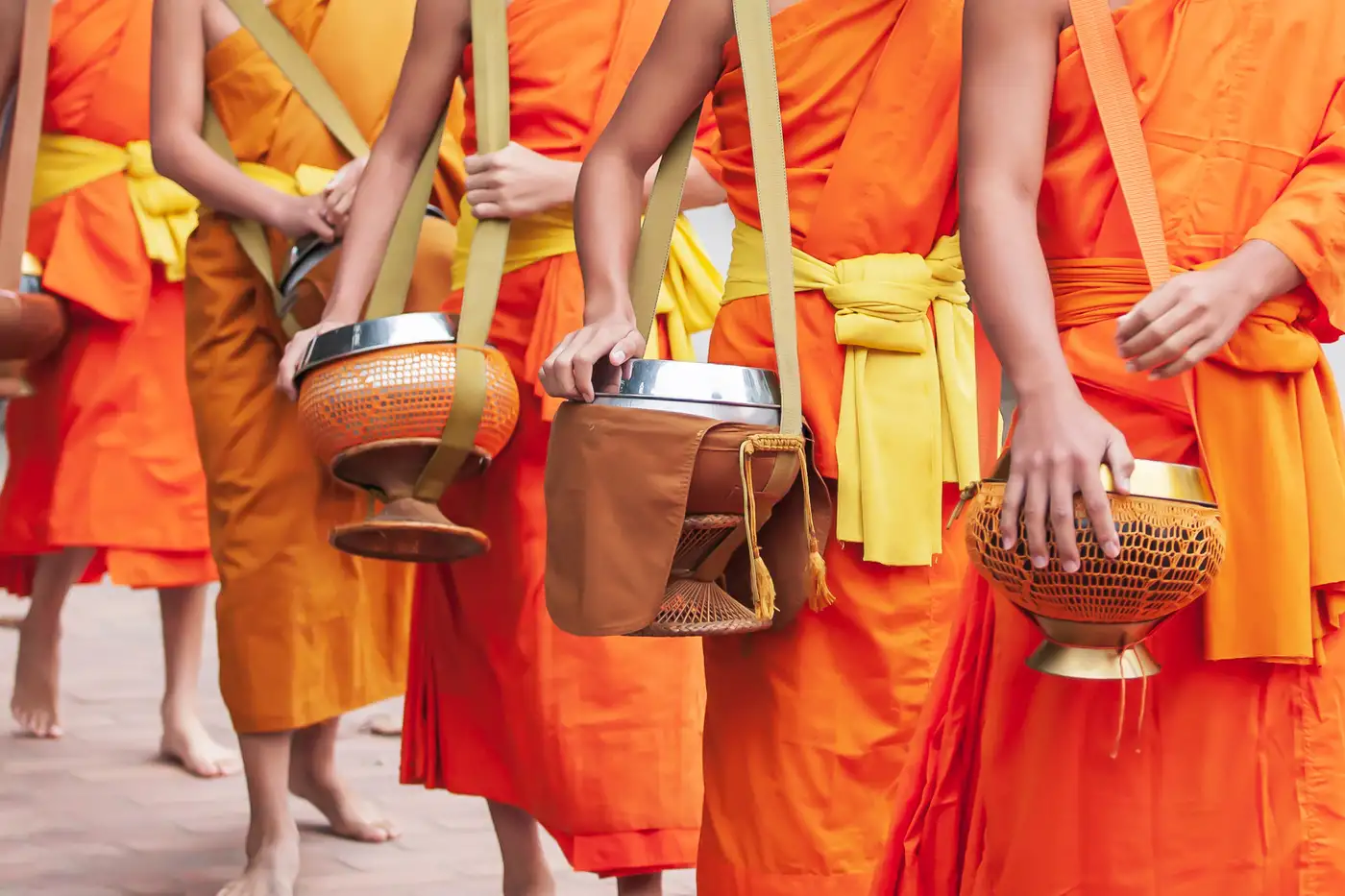
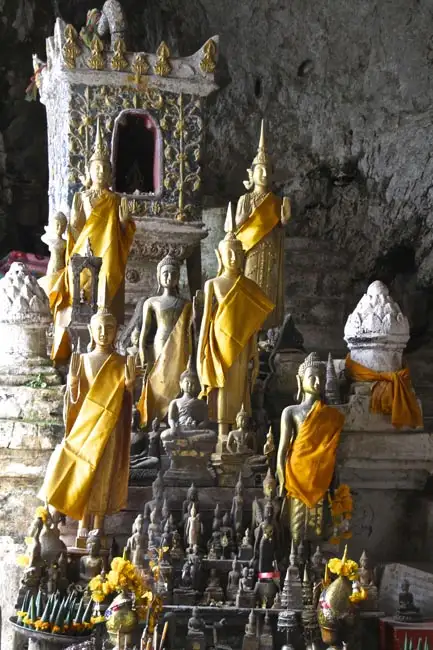
In the mid-14th century, King Fa Ngum united a patchwork of principalities to found Lan Xang, the "Kingdom of a Million Elephants," and made this bend in the Mekong his capital, the start of six centuries during which Luang Prabang would remain Laos's spiritual heart, even after the political capital later moved to Vientiane. Legend places the town's founding earlier still, chosen by two hermits and known then as Xieng Thong, the "Copper Tree City."
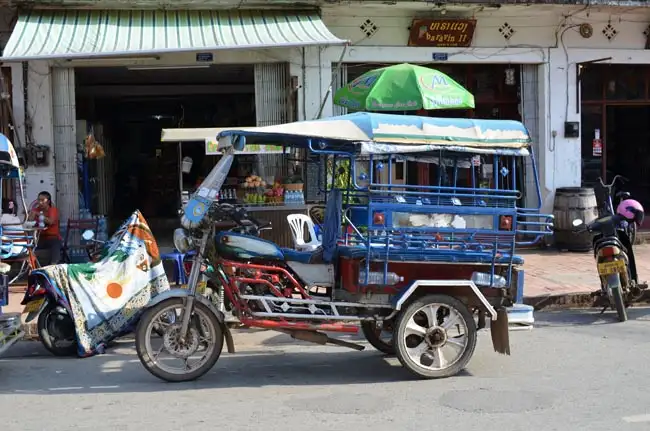
We spend the morning tracing the peninsula on foot, along the single main street where French colonial shophouses now hold galleries, cafés, and workshops rather than the merchants and monks who once filled them. The mix of gilded temple roofs and shuttered colonial façades is part of why UNESCO listed the entire town as a World Heritage Site in 1995, one of the best-preserved fusions of traditional and colonial architecture anywhere in Southeast Asia.
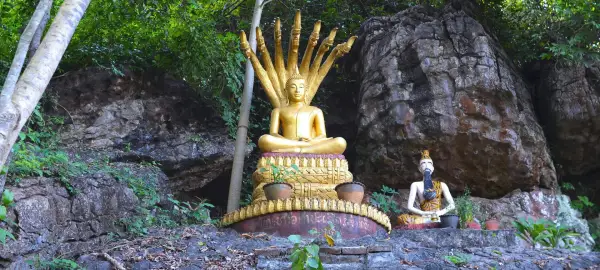
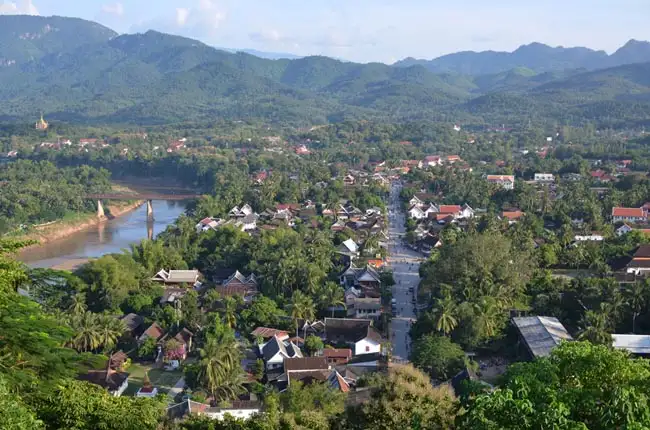
The walk climbs Phu Si Hill, a steep 100-metre/328-foot mound at the peninsula's centre crowned by the gilded stupa of Wat Chom Si. From the summit, the former Royal Palace reveals its cruciform ground plan directly below, while the Mekong and Nam Khan rivers trace the shape of the town Fa Ngum chose six centuries ago.
Optional: return to Phu Si Hill toward sunset, when the town's monks and monasteries are visible from above as the light turns gold over the two rivers.
As evening falls, the main street fills with the stalls of Luang Prabang's night market, a good option for dinner on your own before an early start tomorrow.
Overnight in Luang Prabang.
Included Meal(s): Breakfast and Dinner