
- History
- Overview
- Info & Inclusions
- Itinerary
- Map & Hotels
- Photos
- Dates & Prices
- Tour Duration: 33 Days
- Max Group Size 18
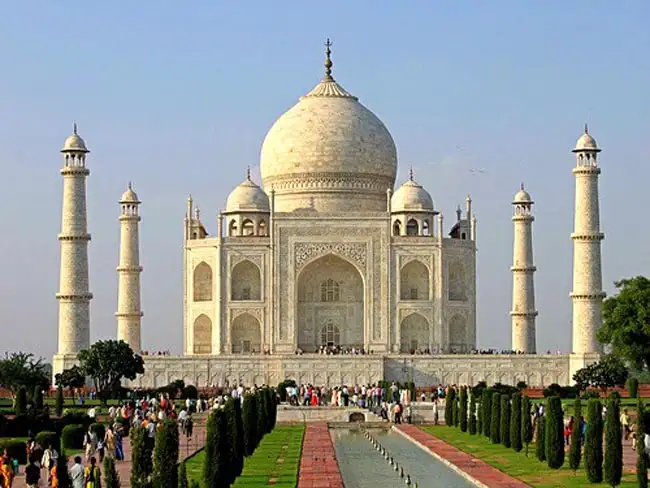
- Watch the Taj Mahal's marble shift from dawn pink to golden sunset
- Cross the Thar Desert by jeep to a Rajasthani campfire of music and dance
- Drift a pre-dawn boat past Varanasi's ghats as the Ganga Aarti lights the Ganges
- Wander the boulder-strewn ruins of Hampi, once among the wealthiest cities on earth
- Sleep aboard a traditional houseboat gliding through Kerala's palm-shaded backwaters
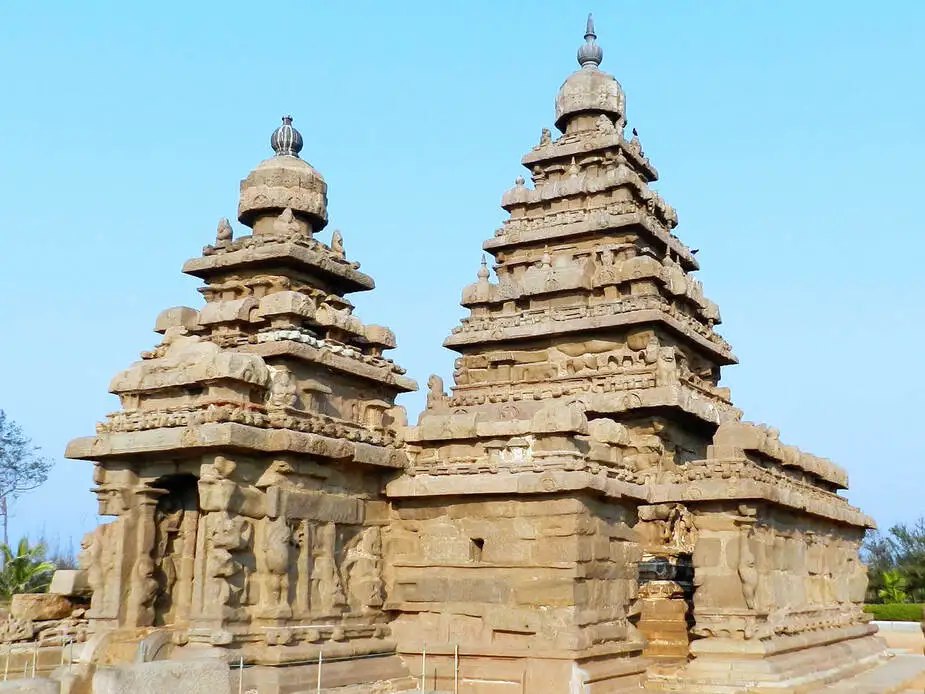
- End at Mahabalipuram's seventh-century Shore Temple, where South Indian temple architecture began
- Singles friendly (view options for single travellers)
- MealsSavour authentic flavours with included daily breakfasts and dinners at handpicked local restaurants—immersing you in local cuisine without worrying about reservations or budgets.
- Transport & Logistics
Private air-conditioned coaches and included internal ferries and flights—ensuring hassle-free travel so you can focus entirely on the discoveries ahead.
"Adventures Abroad tour leader's management and guest services managed the tour with great skill and dedication. The tour leader was on top of every move and transfer. We have not experienced any issues with logistics and had a great time."
~ JULIA O"The tour leader did an excellent job coordinating some difficult travel logistics, power outage issues and resolving problems and dealing with guests who had unrealistic expectations."
~ CYNTHIA COLLINS - Expert Guidance
Unlock insider secrets at every landmark with your full-time Tour Leader and expert local guides , all gratuities covered—no hidden tipping surprises—so you immerse fully in your destination's stories, worry-free. (Except for the tips to your tour leader at the end of your tour.)
"Amazing tour guide. Our tour guide was very well organized, Her passion, knowledge, and enthusiasm completely transformed the travel experience into something truly unforgettable..."
~ MELANIE LEMAIRE"Highly recommend every trip with Adventures Abroad. It's a well organized and well thought out adventure. The tour leaders are friendly, knowledgeable and experienced professionals. Highly recommend this company."
~ SUSAN WALL - Sightseeing & EntrancesAll entrance fees for sites visited as per the itinerary—no hidden costs—so you can explore ancient ruins and excursions with complete peace of mind.
- AccommodationsUnwind in clean, well-located 3 to 4-star hotels with private en suite facilities—handpicked for comfort and convenience after each day's discoveries—so you can rest easy knowing your stay supports the real adventure, not steals the spotlight.
- Small Group
Discover the world in small groups of up to 18 travellers plus your expert Tour Leader—unlocking spontaneity, off-the-beaten-path adventures, and genuine connections at a relaxed pace, free from crowds.
"Looking Forward to My Next Adventure The best feature of the Adventures tour was the small size that allowed the group to quickly load up, let everyone get acquainted within the first 24 hours, capitalize on unplanned surprises along..."
~ PHILIP BLENSKI"Good value for a great time I have traveled with Adventures Abroad for over 20 years now. Well thought out, interesting itineraries and the other travelers congenial and friendly. The price always seems fair and overall a..."
~ Trusted Customer - Airport Transfers For Land & Air CustomersWe handle hassle-free airport transfers for all our land and air tour customers—plus early arrivals or late departures when you book extra hotel nights directly with us for added peace of mind.
- International airfare to and from the tour
- Tour Leader gratuities
- Lunches and drinks not specified as included
- Personal expenses such as phone calls and laundry
- Domestic and international air taxes where applicable
- Visa fees
- Excursions noted as optional
- Airport transfers for Land Only customers
- Optional trip cancellation insurance
- Seasonality and Weather:
IA4 departs in January and November, both timed to avoid India's punishing pre-monsoon heat and summer monsoon rains. By late autumn the monsoon has cleared, leaving Rajasthan's deserts cool at night and comfortable by day and lifting the haze over Delhi and Agra for clearer views of the Taj Mahal. The same winter conditions hold through the south, keeping Kerala's backwaters and the Tamil Nadu coast pleasant rather than oppressive.
November departures coincide with the Pushkar Camel Fair, one of the subcontinent's great gatherings, while January departures trade the Fair for a quieter, less crowded route through the same desert region. Both windows fall well outside India's peak summer season, when heat and domestic travel make touring far less comfortable. - Transport and Travel Conditions:
Ground transport is by private air-conditioned motor coach, supplemented by internal flights linking the tour's northern and southern halves and a scheduled train between Agra and Gwalior. The pace is steady rather than strenuous — Activity Level 1 — though it is a full itinerary with some early starts and long touring days, so travellers should be comfortable on their feet and able to handle heat and humidity, particularly in the south. One night is spent aboard a traditional Kerala houseboat, drifting at a gentle pace through calm backwater canals; no swimming or water activity is required.
Group size is capped at 18 plus Tour Leader, keeping the experience personal even across an itinerary this expansive — the reward for travellers ready for it is one of the most complete introductions to India any single tour can offer.
Am I suitable for this tour? Please refer to our self-assessment form - Activity Level: 1
No particular physical activity is involved other than town/city walks and short walks to dinners and sites of interest, some of which are large.
To learn more about the Activity levels, please visit our tour styles page. - Accommodation:
Accommodation is in air-conditioned 3-5 star hotels throughout, most modern and Western-style, with a few older character properties offering simpler rooms and, in some cases, no elevator. One night is spent aboard a traditional Kerala houseboat. See the Map and Hotels tab for sample properties. - Staff and Support:
An Adventures Abroad Tour Leader accompanies the group for the full 33 days, supported by local guides and drivers at each stop, each familiar with their own region's history and culture. - Group Size:
Maximum 18 plus Tour Leader
- Day 1:Arrival in DelhiWelcome to India! This vast subcontinent enthralls visitors with its extraordinary cultural diversity, ancient history, and natural beauty from the Himalaya to tropical coastlines. Delhi itself reflects this complexity, a sprawling metropolis where Mughal monuments rise beside modern infrastructure, where ancient bazaars pulse with life, and where millennia of history unfold at every turn.
This evening we gather with fellow travellers for our first meal together, beginning what promises to be an unforgettable journey through one of the world's most captivating countries.
Overnight in Delhi.
Included Meal(s): Dinner - Day 2:Delhi: City TourAfter breakfast at the hotel, we embark on our full-day exploration of Delhi, beginning with a drive north along Rajpath, the ceremonial boulevard leading to India Gate. This 42 m/138 ft archway commemorates Indian soldiers who fell fighting for the British Army during World War I and the Afghan War of 1919, its Arc de Triomphe-inspired design dominating the broad avenue.
Our journey continues to Old Delhi and the Jama Masjid, India's largest mosque. Built between 1644 and 1658, this imposing structure can accommodate 25,000 worshippers beneath its three gateways and twin minarets. We then experience the energy of Chandni Chowk by cycle-rickshaw, navigating the imperial avenue where Shah Jahan once rode at the head of lavish cavalcades. The street now throngs with vendors, shoppers, and the organized chaos that defines Old Delhi. We pass the Red Fort, Shah Jahan's massive 17th-century sandstone fortress that blends Persian, Timurid, and Indian architectural styles into a powerful symbol of Mughal authority.
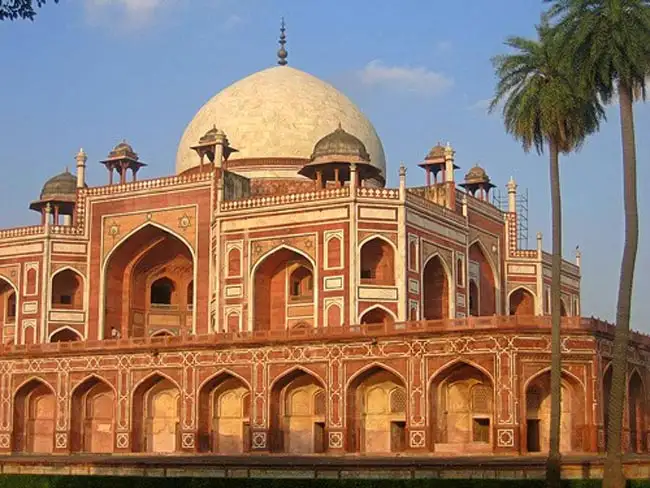
After lunch, we visit Humayun's Tomb, a stunning predecessor to the Taj Mahal built nearly a century earlier. This Persian-style mausoleum combines red sandstone with black and white marble inlay, its garden setting and geometric precision establishing the template that Mughal architecture would refine over the following decades.
We conclude our day at Qutub Minar, the monument that heralded Muslim rule in India and introduced the Indo-Islamic architectural style that would transform the subcontinent. The towering minaret and surrounding complex mark the beginning of a new artistic era that merged Central Asian traditions with Indian craftsmanship.
Overnight in Delhi.
Included Meal(s): Breakfast and Dinner - Day 3:Delhi - MandawaAfter an early breakfast, we depart Delhi and drive northeast to Mandawa in the heart of Shekhawati, arriving early afternoon.
Shekhawati's semi-arid landscape seems an unlikely setting for artistic treasures, yet this region harbours some of India's most remarkable painted architecture. From the 18th century onward, wealthy merchant families commissioned grand havelis adorned with vibrant frescoes depicting everything from Hindu mythology to the arrival of the first motor cars and aeroplanes. As we approach Mandawa, these ornate mansions emerge from the sandy plains like a mirage made real.
We explore the town's winding lanes, discovering the opulent havelis of prominent families including the Goenkas, Sarafs, Ladias, and Chokhanis. Impressive gateways lead to interior courtyards where every surface carries paintings in ochre, indigo, and rust red. The frescoes blend traditional subjects with whimsical observations of the changing modern world, creating an open-air gallery that chronicles both timeless mythology and the merchant class's fascination with European fashions and new technologies.
Overnight in Mandawa.
Included Meal(s): Breakfast and Dinner - Day 4:Mandawa - Shekhavati - BikanerAfter breakfast we depart Mandawa, pausing at additional Shekhavati settlements to explore more painted havelis before continuing to Bikaner, where we arrive around midday.
Founded in 1488, Bikaner stands on high ground surrounded by formidable battlemented walls. The city's defining monument is Junagarh Fort, constructed in the 16th century and unusual among Rajasthani forts for standing on level ground rather than atop a hill. The entrance, flanked by two life-size stone elephants, leads into a complex of palaces, temples, and a mosque built primarily of red and yellow sandstone.
Within these massive walls lie some of the finest examples of Rajput artistry. The Durbar Hall displays Mughal-influenced decoration with elaborate paintings, while the Zenana, the women's quarters, dazzles with gilt reliefs, glass mosaics, and intricate mirror work. Separated from the main palace by a broad courtyard with panelled niches, the Zenana represents the intimate, graceful counterpoint to the fort's martial exterior. The marble images throughout are considered exceptional specimens of Hindu sculptural art.
Overnight in Bikaner.
Included Meal(s): Breakfast and Dinner - Day 5:Bikaner - Manvar ResortAfter breakfast we drive to Manvar, our base for experiencing the Thar Desert's unique landscape, culture, and wildlife. We arrive in time for lunch at our comfortable desert resort.
This afternoon we venture into the desert by jeep, exploring the vast sand dunes and scrubland. The shy chinkara, a graceful gazelle adapted to this arid environment, makes its way across the silent sands alongside other desert wildlife. Our visit provides insight into the fascinating culture of desert communities who have thrived in this seemingly inhospitable landscape for centuries, their traditions shaped by scarcity, isolation, and the rhythms of desert life.
As evening approaches, we gather around a campfire beneath a dazzling canopy of stars. Traditional mashaals and local musicians and dancers enliven the gathering, their songs and movements echoing across the tranquil wilderness. In this peaceful corner of Rajasthan, life reveals itself in elemental form: spectacular sunrises, mesmerizing sunsets, star-filled night skies, and a silence so profound it becomes almost tangible.
Overnight near Manvar.
Included Meal(s): Breakfast, Lunch and Dinner - Day 6:Manvar - Jodhpur - LuniAfter breakfast we depart for Luni, stopping en route at Jodhpur.
Jodhpur rises from the Thar Desert in dramatic fashion. A bleak rocky ridge rears 120 m/394 ft above the desert valley, and straddling this natural fortress is Mehrangarh Fort, its sheer walls a testament to the strength and ambition of the Rathore warrior kings who built it. Seven formidable gates control access up the winding approach, each representing a layer of defence against would-be attackers.
The museum within the fort ranks among Rajasthan's finest, displaying royal apparel, ancient paintings and manuscripts, the royal household's treasured possessions, and an impressive armoury. One section features folk musical instruments from across Rajasthan, illustrating the region's diverse cultural traditions. Despite the fort's rugged military exterior, delicately latticed windows and pierced sandstone screens create an elegant aesthetic throughout the palace chambers. The contrast between martial necessity and artistic refinement defines Rajput architecture at its best.
We continue to Luni, a village known for its vivid blue-painted houses that give parts of the settlement an almost surreal appearance against the tawny desert landscape.
Overnight in Luni.
Included Meal(s): Breakfast and Dinner - Day 7:Bishnoi Village Jeep ExcursionAfter breakfast, we visit a Bishnoi village by jeep. The Bishnoi community follows 29 tenets laid down by 15th-century Guru Jambeshwar, with environmental conservation at the core of their faith. They fervently protect animal and plant life, creating villages where blackbuck antelope, chinkara gazelle, and other wildlife roam without fear. This deep reverence for nature extends even to their burial practices: Bishnois are sometimes interred in sitting positions at house thresholds or near cattle sheds, believing they will be reincarnated as deer, hence the herds of blackbuck commonly seen near their settlements.
We continue to Ranakpur, where remarkable Jain temples lie hidden in a shady glen. The central Chaumukha (four-faced) temple represents the most complex and extensive Jain temple in India, covering over 3600 sq m/38,750 sq ft. Its 29 halls are supported by 1,444 pillars, no two identical. Subsidiary shrines cluster in all directions, including a temple dedicated to the Sun God featuring intricate erotic carvings that demonstrate the artistic freedom permitted in Jain sacred architecture.
Overnight in Ranakpur.
NOTE: Our January departure includes an extra night in Ranakpur with a leopard jeep safari, replacing the Pushkar Camel Fair which occurs only on our autumn departure.
Included Meal(s): Breakfast and Dinner - Day 8:Ranakpur - UdaipurThis morning we take time to appreciate the serene forest setting, nestled within the Aravalli mountain range. These ancient hills, worn smooth by millions of years of erosion, provide a green sanctuary in otherwise arid Rajasthan.
We then drive to Udaipur, arriving with time to settle into our hotel. The afternoon offers leisure to explore at your own pace. The city's vibrant bazaars wind through narrow lanes filled with artisan workshops, textile merchants, and jewellers. You might wander through these atmospheric streets, discovering miniature paintings, hand-blocked fabrics, and the skilled craftspeople who maintain centuries-old traditions.
Overnight in Udaipur.
Included Meal(s): Breakfast and Dinner - Day 9:Udaipur: City TourOur morning exploration of Udaipur begins at the City Palace, perched on a ridge overlooking Lake Pichola. Rajasthan's largest palace complex grew over several generations yet maintains remarkable architectural harmony, its massive octagonal towers crowned with cupolas rising above the lake. Now a museum, the palace unfolds as a labyrinth of courtyards decorated with inlaid mirror work, galleries covered with frescoes, intimate temples, and roof gardens offering panoramic views across the city and lake.
The Jagdish Temple in the old town, built in the mid-17th century, features a striking bronze Garuda, the mythical bird who serves as Lord Vishnu's mount. Nearby, Sahelion-ki-Bari (Garden of the Handmaidens) exemplifies princely landscape design with ornamental pools, finely sculptured black stone cenotaphs, and numerous fountains creating a cool retreat from Rajasthan's heat.
This afternoon we cruise Lake Pichola, its steel-blue waters reflecting two extraordinary palace islands. Jag Niwas, now the Lake Palace hotel, was built in 1746 as the summer residence of Udaipur's rulers. Jag Mandir, constructed by Maharana Karan Singh for Prince Khurram (the future Emperor Shah Jahan), showcases translucent stone slabs of remarkable thinness and rooms embellished with onyx, jade, carnelian, jasper, and agate inlay. The lake was artificially created in the 14th century, transforming what was once a valley into the scenic jewel that defines Udaipur today.
Overnight in Udaipur.
Included Meal(s): Breakfast and Dinner - Day 10:Udaipur - PushkarAfter breakfast we depart on the drive to Pushkar. On arrival we check in at our resort, set amidst orchards of Indian gooseberry and fields of roses. As Pushkar is a holy town, the resort serves no alcohol or non-vegetarian food, though an extensive selection of vegetarian cuisine from around the world is available.
During our time in Pushkar we visit the Brahma Temple, the only temple in the world dedicated to Lord Brahma, the Creator in Hinduism's holy trinity. We walk through Pushkar's winding lanes before reaching the sacred lake, which according to legend was created by fallen petals from Lord Brahma's lotus. The lake becomes particularly magical at sunset, when pilgrims gather along the ghats.
We attend an aarti ceremony at the lake's edge, a Hindu prayer ritual involving fire, incense, and chanted mantras. The rhythmic devotions and flickering lamps reflected in the water create an atmosphere of profound spirituality that has drawn pilgrims to Pushkar for centuries.
Overnight in Pushkar.
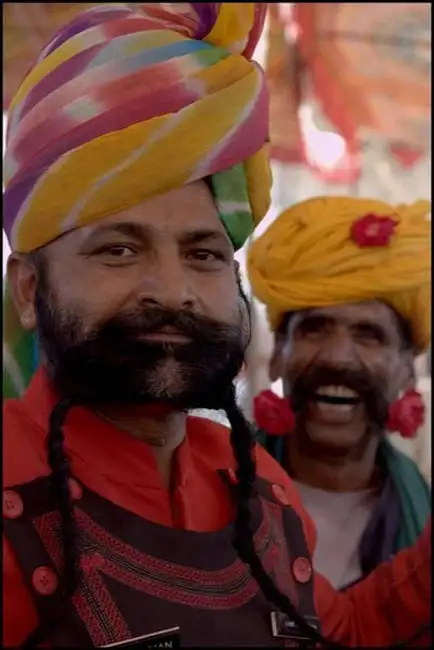
NOTE: Our autumn departure coincides with the Pushkar Camel Fair, held on the full moon of the Hindu month of Karttika. Over 200,000 buyers, sellers, and spectators descend on this peaceful holy village, creating extraordinary mayhem. The fair combines livestock trading with cultural celebration, vibrant colour, and unfiltered energy, topped with the town's inherent spirituality. It provides non-stop photography opportunities and, should you wish, bargain-priced camels.
Included Meal(s): Breakfast and Dinner - Day 11:Pushkar - JaipurThis morning we spend additional time at the Pushkar Camel Fair (fall date) before departing for Jaipur.
We arrive in Jaipur with time to explore one of India's best-planned cities. Founded by the astronomer-king Jai Singh II in 1727 and built of rose-pink sandstone, Jaipur earned its nickname "The Pink City" from this distinctive building material. The City Palace stands at the city's heart, part royal residence, part museum. The museum sections display rare manuscripts, fine Rajput and Mughal paintings, royal apparel, and an extensive armoury that chronicles centuries of martial tradition.
Jantar Mantar observatory, built by Jaipur's founder, features massive stone instruments designed to study celestial movements with remarkable precision. The huge geometric structures, some standing several storeys high, track the sun, moon, and planets with accuracy that still impresses modern astronomers.
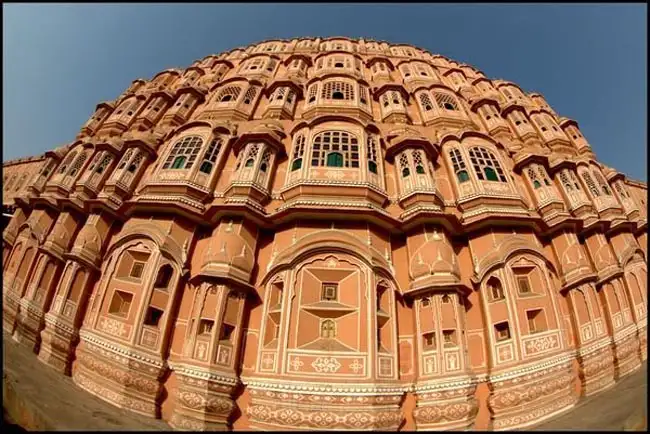
Hawa Mahal (Palace of Winds) serves as Jaipur's most recognizable landmark. This five-storey pink sandstone facade features a delicate honeycomb design of semi-octagonal overhanging windows, each with perforated screens. The elaborate structure allowed court ladies to observe street processions and daily life while remaining unseen from outside, a striking architectural solution to social restrictions of the era.
Overnight in Jaipur.
NOTE: Our January departure proceeds directly to Jaipur without the Camel Fair visit, spending only one night in Pushkar.
Included Meal(s): Breakfast and Dinner - Day 12:Jaipur & Amer FortAfter breakfast we drive 11 km/7 mi north to Amber Fort, capital of the region for six centuries before Jaipur was established. The fort and palace complex climbs the slopes of a rugged hill, blending Hindu and Muslim architectural styles across several building phases. The austere earlier Hindu constructions in the inner apartments contrast sharply with later additions featuring the ornate flourishes characteristic of Muslim influence.
We access the fort by vehicle rather than by elephant, an option we've discontinued out of concern for animal welfare. Within the fort's massive walls, we explore palaces decorated with mirror work, marble, and semi-precious stone inlay. The Sheesh Mahal (Mirror Palace) glitters with thousands of tiny mirrors embedded in the walls and ceiling, designed so that a single candle flame would illuminate the entire chamber.
The afternoon is yours to explore Jaipur's renowned bazaars at leisure. These colourful markets showcase ancient craft traditions: meenakari enamel work, exquisite jewellery in silver and gold set with emeralds, rubies, and sapphires dangling with pearls. Small workshops reveal age-old tie-dye methods, miniature paintings on silk or cotton, hand-carved wood and bone statues, fine metalwork, and Jaipur's distinctive blue pottery.
Overnight in Jaipur.
NOTE: Our autumn tour, which spends an extra night in Pushkar, proceeds to Agra today as per tomorrow's programme.
Included Meal(s): Breakfast and Dinner - Day 13:Jaipur - Fatehpur Sikri - AgraToday we journey to Agra, stopping en route at Fatehpur Sikri, the magnificent ghost city that served as the Mughal Empire's capital under Akbar the Great from 1571 to 1585. Perched atop a rugged ridge, this abandoned sandstone city stands as a haunting testament to imperial ambition cut short by water scarcity.
The deserted palaces, imposing fortifications, and serene mosques showcase a fascinating blend of architectural styles. Akbar employed craftsmen from across his vast empire, resulting in buildings that merge Hindu, Islamic, Persian, and indigenous Indian elements into a distinctive Mughal synthesis. The Buland Darwaza (Gate of Victory), rising 54 m/177 ft high, remains one of the world's tallest gateways, while the delicate carvings throughout the complex reveal the extraordinary skill of Akbar's artisans.
The city's brief occupation adds poignancy to its grandeur. After just 14 years, the court abandoned Fatehpur Sikri when the water supply proved inadequate for a capital city, leaving this architectural masterpiece to the desert wind and silence.
We continue to Agra, checking into our hotel with the evening at leisure.
Overnight in Agra.
Included Meal(s): Breakfast and Dinner - Day 14:Agra: The Taj Mahal & Agra FortThis morning we visit the Taj Mahal, one of the world's most recognizable monuments and an enduring symbol of love. Mughal Emperor Shah Jahan commissioned this white marble mausoleum for his beloved wife Mumtaz Mahal, who died in childbirth in 1631. Construction required 17 years and employed over 20,000 artisans from across the empire and beyond. As morning light illuminates the pristine marble facade, the monument displays subtle colour shifts, appearing to change from soft pink at dawn to brilliant white at midday to golden at sunset.
The perfection lies in details: semi-precious stone inlay creating floral patterns across the marble, perfectly proportioned minarets flanking the central dome, reflecting pools that mirror the monument's ethereal beauty. The structure rests on the banks of the Yamuna River, its placement and orientation carefully calculated for maximum visual and spiritual impact.
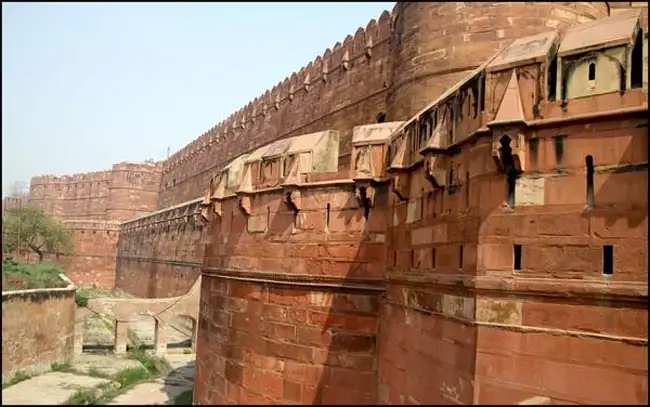
This afternoon we explore Agra's bazaars, where craftsmen continue the centuries-old tradition of marble inlay work using techniques passed down through generations. We then visit Agra Fort, a massive red sandstone fortress commanding the Yamuna's west bank. Shaped by successive emperors Akbar, Jahangir, and Shah Jahan, the fort contains palaces, audience halls, and mosques that chronicle the evolution of Mughal architectural taste from Akbar's bold monumentalism to Shah Jahan's refined elegance.
Overnight in Agra.
Included Meal(s): Breakfast and Dinner - Day 15:Agra - Train to Gwalior & Gwalior FortAfter an early breakfast, we transfer to the railway station to board the Shatabdi Express to Gwalior. We're met on arrival and transfer to our hotel.
This afternoon we visit Gwalior Fort, where walls and buildings constructed by successive rulers create a layered historical record. The 8th-century Suraj Kund tank, two 11th-century temples known as Sas Bahu ka Mandir dedicated to Vishnu, the 16th-century Gujari Mahal Palace, and the Hindola Gate housing a small archaeological museum all contribute to the complex's architectural diversity.
We also visit Jai Vilas Palace and Museum in the city below. This enormous 19th-century palace features some of India's most extravagant royal possessions, including a pair of the world's heaviest chandeliers suspended in the Durbar Hall. Before installation, ten elephants were placed on the roof to test whether the ceiling could support their weight. The palace also features a crystal staircase and a dining table fitted with a silver electric train that carried brandy and cigars to guests after dinner, exemplifying the eccentric grandeur of princely India's twilight years.
Overnight in Gwalior.
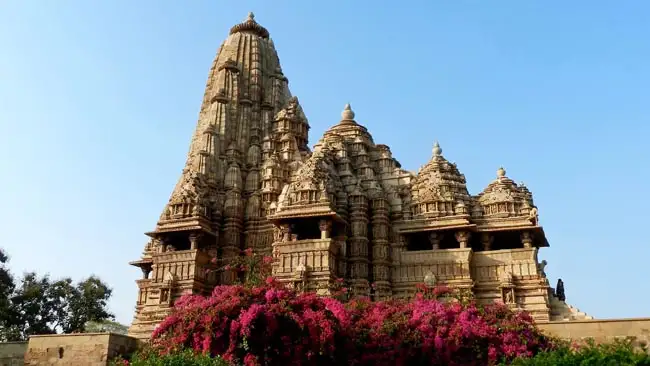
Included Meal(s): Breakfast and Dinner - Day 16:Gwalior - KhajurahoToday we travel by road to Khajuraho, where we explore the western group of temples upon arrival. Built between 950 and 1050 AD during the Chandela dynasty's peak, these temples rank among India's most creative architectural achievements. Only 22 of the original 85 temples survive, their sandstone surfaces covered with thousands of intricate carvings.
The sculptures celebrate life in all its dimensions: gods in cosmic evolution, mythical beasts, celestial nymphs, and humans experiencing the full spectrum of emotion from devotion to desire. The erotic carvings that made Khajuraho famous represent only a fraction of the total artwork, yet they demonstrate a frank celebration of physical love as one aspect of spiritual completeness.
The Kandariya Mahadev Temple represents the pinnacle of Chandela artistry. Built between 1025 and 1050 AD, its soaring shikhara tower rises 31 m/102 ft and carries over 900 sculptures arranged in ascending tiers. The Lakshmana Temple, one of the earliest and best preserved, dates from 930-950 AD and retains its full five-part floor plan with four subsidiary shrines. The massive Varaha Temple houses a huge intricately carved boar incarnation of Vishnu, while the Chitragupta Temple uniquely honours Surya, the Sun God. The Matangesvara Temple remains in active worship, unlike its museum-piece neighbours within the fenced enclosure.
Overnight in Khajuraho.
Included Meal(s): Breakfast, Lunch and Dinner - Day 17:Khajuraho Touring - Fly to VaranasiThis morning we visit Khajuraho's eastern temple group before flying to Varanasi, arriving late afternoon.
Varanasi has served as Hinduism's spiritual heart since before recorded history. When Buddha visited in 550 BC, it was already an ancient, flourishing settlement. Known as Kashi in the 7th century BC, the city represents the oldest continuously inhabited city on earth and the epicentre of Hindu religious life. For devout Hindus, to die in Varanasi and have one's ashes scattered in the Ganges ensures liberation from the cycle of rebirth.
This evening we attend the spectacular Ganga Aarti ceremony on the riverbank, where thousands of butter lamps are lit and set afloat on the sacred river. The ceremony begins with the blowing of a conch shell and continues with priests waving incense in elaborate patterns and circling large flaming lamps. The movement of the lamps, held in the priests' hands, synchronizes tightly to rhythmic chants and clanging cymbals. The heady scent of sandalwood permeates the air as crowds of pilgrims and visitors press close to witness this ancient ritual that unfolds every evening without fail.
Overnight in Varanasi.
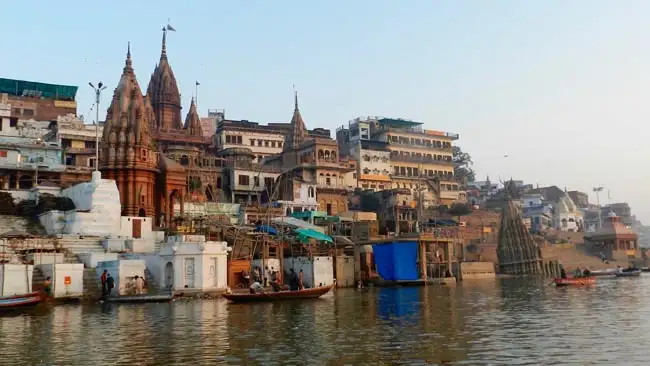
Included Meal(s): Breakfast and Dinner - Day 18:Varanasi TouringBefore sunrise we take a boat ride on the sacred Ganges, where devout Hindus perform their daily ablutions along the ghats. These bathing steps extend over 5 km/3 mi along a steep bank, forming the soul of the city. Pilgrims immerse themselves in the holy waters, perform puja ceremonies, practice yoga, and meditate as the sun rises over the river. The spectacle of thousands engaged in spiritual practice creates an unforgettable scene of devotion and renewal.
After returning to the hotel for breakfast, we walk through an intricate maze of narrow alleyways hiding no fewer than 2,000 temples and shrines in seemingly disorderly array. Domes, pinnacles, and towers rise alongside derelict 18th-century palaces dominating the Ganges' left bank. The streets pulse with noise and vibrant colour, vendors selling everything from silk saris to religious paraphernalia to street food. We visit important temples including Bharat Mata Mandir and Durga Temple, and walk down Vishwanathji Ki Gali, an ancient alley lined with beautiful temples and shops selling every item required for temple worship.
This afternoon we visit Sarnath, 9 km/6 mi from Varanasi. This site holds profound significance for Buddhism as the location where Buddha preached his first sermon after attaining enlightenment. The Dhamek Stupa, dating to 500 AD and adorned with geometric ornaments, marks the spot. Emperor Ashoka built the Dharmarajika Stupa in the 3rd century BC to contain bodily relics of the Buddha, making Sarnath the Buddhist equivalent of Varanasi's importance to Hinduism.
Overnight in Varanasi.
Included Meal(s): Breakfast and Dinner - Day 19:Varanasi - Fly to GoaToday we fly to Goa, the former Portuguese enclave on India's western coast.
Portuguese navigator Vasco da Gama sailed down the Malabar Coast in 1498 seeking "Christians and spices." Though he found neither initially, Portugal established a colony here that endured for 451 years, separated from the rest of India by the jungle-covered Western Ghats. This long colonial period left Goa with a distinctive character unlike anywhere else in India: whitewashed churches instead of temples, pork vindaloo alongside vegetarian thalis, and a relaxed coastal culture shaped by centuries of cultural fusion.
Goa's heartland and population centres lie inland from the beaches, a lush patchwork of paddy fields, coconut plantations, laterite-stone villages, and gently meandering rivers. Our hotel is located inland to allow focus on the region's rich cultural heritage, though free time during our stay provides opportunities to experience Goa's famous beaches.
Overnight in Goa.
Included Meal(s): Breakfast and Dinner - Day 20:Goa Area TouringThis morning we tour Panaji, a former fishing village elevated to capital status by decree from Lisbon. The city feels distinctly un-Indian, its skyline of sloping red-tiled roofs, whitewashed churches, and pastel-painted houses stacked around lush terraced hillsides at the mouth of the Mandovi River. Portuguese architectural influence appears everywhere, particularly in Altinho, the residential area with colonial-era bungalows. The Patriarch's Palace, with its statue of Christ the King on the lawns, dominates the skyline. The Idalcao Palace, built in 1490, stands as Panaji's oldest monument, while the Church of Our Lady of Immaculate Conception offers the best views across the city.
We drive through Fontainhas, the atmospheric Latin Quarter, passing colourful old villas and pausing at St Sebastian Chapel to view statues including the Roman Catholic monk Abade Faria, Goa's most famous son.
Our tour continues to Old Goa, once called "Rome of the East" and now a UNESCO World Heritage site. This former metropolis, though largely in ruins, contains an extraordinary concentration of churches and cathedrals dating from the 16th century. The profusion of religious architecture showcases late Renaissance, early Baroque, Manueline, and Gothic styles, creating one of Asia's most impressive Christian architectural complexes.
At midday we visit Sahakari Spice Farm, an award-winning plantation set amidst lush greenery. A guide explains the cultivation and uses of spices, tropical fruits, herbs, and roots grown here: cashew, areca nut (betel nut), star fruit, jackfruit, custard apple, banana, papaya, and pineapple. We then enjoy an exquisite traditional Goan lunch served in authentic style.
The remainder of the day is yours to explore this laid-back town at leisure.
Overnight in Goa.
Included Meal(s): Breakfast, Lunch and Dinner - Day 21:Goa: Heritage TourThis morning we explore several sleepy villages, stepping back in time to glimpse historic remnants of Portuguese Goa.
Our first stop is Loutolim village and a grand mansion built in 1590, predating the Taj Mahal by decades. Jesuit priests from nearby Rachol Seminary designed it for the newly-converted Figueiredo family. The sumptuous interior, with its period furniture, Chinese porcelain, and Belgian chandeliers, contrasts beautifully with the paddy fields and coconut groves surrounding the property. The house expanded in the 18th century as the family's power grew, achieving its current impressive proportions.
We continue to Chandor village to visit the Menezes Braganza Mansion, Goa's largest Portuguese mansion. Built in the 17th century and stretching along one entire side of Chandor's village square, it exemplifies the grand lifestyle enjoyed by Goa's colonial elite. Finally, we visit Palacio do Deao, a 250-year-old mansion built by a Portuguese nobleman and renowned for its beautiful pleasure gardens, considered the most exquisite in Goa.
We enjoy traditional lunch at Palacio do Deao, savouring Goan cuisine that blends ancient Hindu roots with Portuguese and Muslim influences. The tropical setting intensifies the spices and flavours that make Goan food distinctive.
The remainder of the day is yours for further exploration, shopping, or visiting one of the area's many beaches. Owing to our included lunch and the open-ended nature of the afternoon, dinner is on your own account this evening.
Overnight in Goa.
Included Meal(s): Breakfast and Lunch - Day 22:Goa - BadamiToday we embark on a long but scenic drive northeast to Badami, arriving late afternoon. Once we've settled into our hotel, we set out to explore Badami's remarkable rock-cut cave temples.
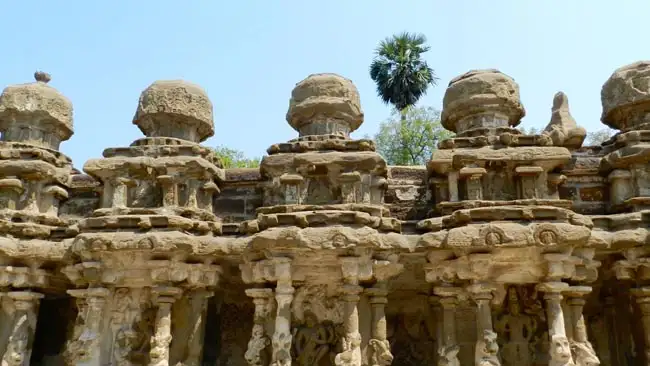
These 6th-century temples, carved directly from towering sandstone cliffs, represent some of India's earliest and finest rock-cut architecture. Four main caves contain intricate sculptures depicting Hindu deities including Shiva, Vishnu, and various manifestations of the divine. The Badami Chalukya dynasty, which ruled this region from 543 to 757 AD, created these masterpieces by removing thousands of tons of solid rock to reveal the temples within.
The setting adds drama to the artistry: the caves overlook Agastya Lake, with the ancient town spreading below and red sandstone fortifications climbing the surrounding hills. Depending on our arrival time, we may continue exploring Badami's historical sites tomorrow morning.
Overnight in Badami.
Included Meal(s): Breakfast and Dinner - Day 23:Badami - Aihole - Patadakkal - HospetAfter breakfast we travel by road to Hospet, stopping at two significant archaeological sites en route.
At Aihole, we explore a remarkable concentration of over 70 temples spanning the 4th to 12th centuries, earning the site recognition as the "cradle of Indian temple architecture." The experimental nature of these structures shows artisans testing different styles and forms that would later be refined at Pattadakal and elsewhere. The Durga Temple, with its unusual apsidal plan and pyramidal roof, features exceptional sculptural work, while the Jain Meguti Temple consists of 630 precisely fitted stone blocks assembled without mortar.
We continue to Pattadakal, a UNESCO World Heritage site where Chalukyan kings held their coronation ceremonies. The temples here represent the culmination of architectural experiments begun at Aihole. The Papanath Temple, built around 680 AD, contains a ceiling carving of a smiling Shiva whose outstretched palm appears to offer blessing from every viewing angle, a remarkable sculptural achievement. The larger Virupaksha Temple features a curious figure appearing as an elephant from one side and a buffalo from the other, demonstrating the sculptors' playful mastery of form.
We arrive in Hospet by late afternoon.
Overnight in Hospet.
Included Meal(s): Breakfast and Dinner - Day 24:Hospet - Hampi - HospetAfter breakfast we depart for a full-day excursion to Hampi, the ruined capital of the Vijayanagara Empire. This vast city, which flourished in the 14th to 16th centuries, commanded the largest empire in post-Mughal India, controlling territory across several modern states. Although now in ruins, the capital once boasted wealth and splendour known far beyond India's shores, with visiting Persian and Portuguese chroniclers recording their amazement at its markets, palaces, and temples.
The ruins scatter across 26 sq km/10 sq mi amidst giant boulders and scrubby vegetation. The Tungabhadra River protects the north, while rocky granite ridges shield the other three sides, creating a natural fortress. The site's surreal landscape of massive rounded boulders appears almost otherworldly, as if deposited by giants rather than shaped by geological forces.
The scattered remains of palaces, gateways, temples, stepped tanks, and sophisticated hydraulic systems silently chronicle a tale of extraordinary architectural achievement and creative power alongside catastrophic destruction. When a coalition of Deccan sultanates conquered and sacked Vijayanagara in 1565, the city never recovered, left to the elements and gradual ruin. The broken city's splendid remains nonetheless convey the scale and sophistication of a civilization that dominated southern India for over two centuries.
We return to Hospet in the late afternoon.
Overnight in Hospet.
Included Meal(s): Breakfast and Dinner - Day 25:Hospet - HassanAfter an early breakfast, we embark on a long but scenic drive through rural Karnataka to Hassan, a journey of approximately 7 hours. The route takes us through changing landscapes: cotton fields giving way to sugarcane plantations, small market towns bustling with morning commerce, and stretches of scrubland punctuated by granite outcrops.
This is rural India at its most authentic, far from tourist circuits. We pass bullock carts sharing the road with modern trucks, roadside temples adorned with fresh marigolds, and villages where daily life unfolds at a pace unchanged for generations. The drive provides a window into the agricultural heartland that sustains much of India's population.
We arrive in Hassan by late afternoon, with time to settle into our hotel and rest after the journey.
Overnight in Hassan.
Included Meal(s): Breakfast and Dinner - Day 26:Hassan: Belur & HalebidToday we visit Belur and Halebid, twin capitals of the medieval Hoysala dynasty, renowned for temples built in the 12th and 13th centuries that represent the pinnacle of South Indian sculptural art.
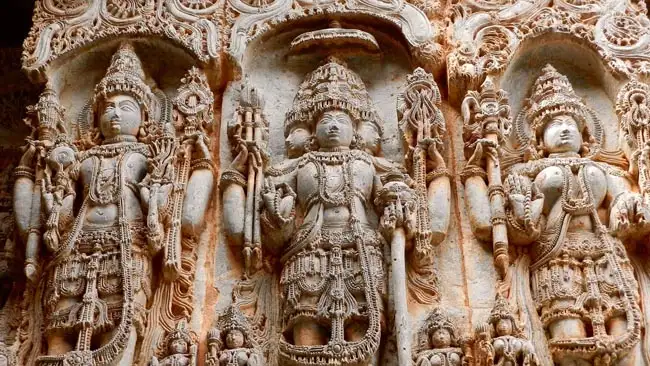
At Belur, the Chennakeshava Temple took 103 years to complete, and the reason becomes immediately apparent. Not a single surface remains undecorated: the facade carries intricate sculptures and friezes depicting elephants in procession, episodes from Hindu epics, celestial dancers frozen in graceful poses, and mythological narratives rendered in extraordinary detail. The artisans left no portion blank, creating what amounts to a complete encyclopedia of Hindu mythology and medieval life carved in stone.
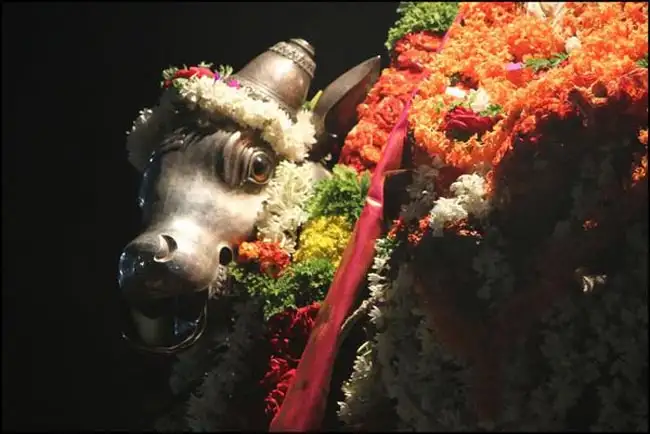
Halebid's Hoysaleswara Temple, though never completed despite 86 years of construction, astounds with its wealth of sculptural detail. The temple walls carry an endless variety of gods and goddesses, animals both real and mythical, birds, and apsaras (celestial dancers). The remarkable aspect is that no two sections repeat: each band of carvings tells different stories, depicts different deities, explores different artistic themes. A massive Nandi bull guards the entrance, eternally patient before a temple that remained unfinished when the Hoysala kingdom fell to invaders from the north.
The intricacy of the carving rivals anything found in India. Working in soft soapstone that hardens over time when exposed to air, Hoysala sculptors achieved a level of detail more common in ivory or wood than in stone architecture.
We return to Hassan in the late afternoon.
Overnight in Hassan.
Included Meal(s): Breakfast and Dinner - Day 27:Hassan - MysoreThis morning we drive to Mysore, arriving around midday with the afternoon devoted to exploring this elegant city.
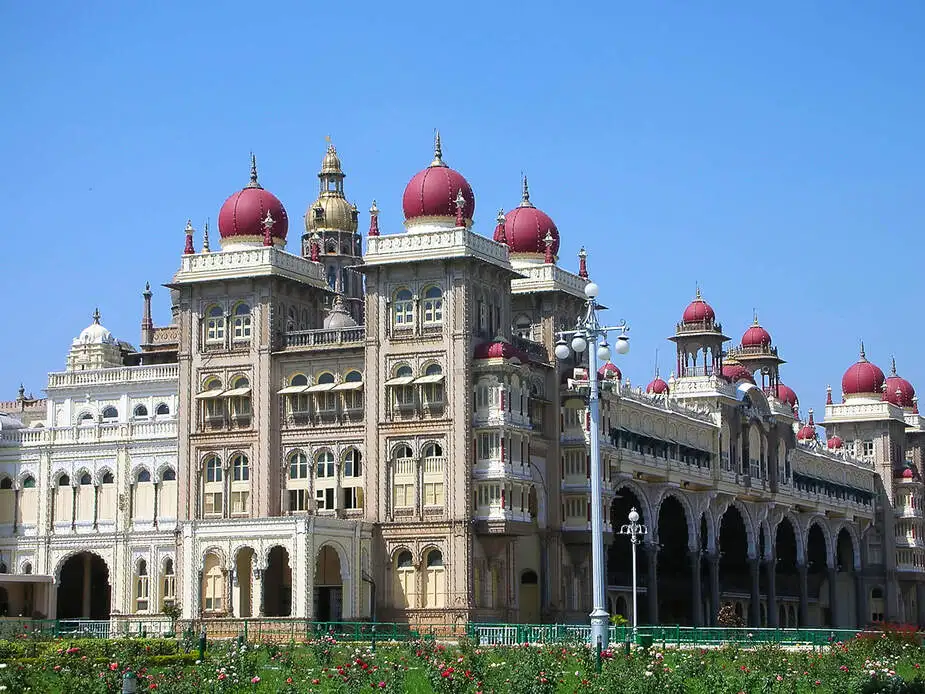
Mysore's fame rests on silk, sandalwood, and spectacular palaces set along tree-lined boulevards and well-maintained parks. The Maharaja's Palace stands as the city's crowning jewel, a modern edifice built in 1897 after fire destroyed the previous wooden palace. One of India's largest palaces, it represents an exuberant synthesis of Hindu and Muslim architectural styles where oriental decorative imagination runs gloriously unchecked. The royal family's private chambers, including the impressive Durbar Hall, open to visitors. The Marriage Hall displays vivid paintings of the Dussehra procession, while the museum houses the ruler's golden elephant throne, used during festivals and state occasions.
We ascend Chamundi Hill, 10 km/6 mi from Mysore and named for Chamundeshwari, consort of Lord Shiva and patron goddess of Mysore's royal family. Partway up stands a colossal Nandi bull carved from a single rock in 1659, one of the largest such sculptures in India. The view from the hilltop temple extends across Mysore's orderly grid of streets and the surrounding plains, explaining why this site has held religious significance for centuries.
Overnight in Mysore.
Included Meal(s): Breakfast and Dinner - Day 28:Mysore - Bangalore: City TourToday we travel by road to Bangalore, the cosmopolitan capital of Karnataka, arriving with time for an afternoon city tour.
Bangalore earned its nickname "Garden City" from the delicate blossoms and lush greenery that soften this sprawling metropolis. The city enjoys India's most pleasant climate, with moderate temperatures year-round that attracted both the Raj-era British and modern tech companies seeking comfortable working conditions. The name Bangalore derives from "benda-kaal-ooru," meaning "town of boiled beans," though the city's character today extends far beyond this humble etymology.
Founded around the 16th century by Kempe Gowda, a chieftain of the Vijayanagara Empire, the city's original boundaries were marked by four towers built in the cardinal directions. Modern Bangalore has expanded exponentially beyond these markers, becoming India's tech hub and fifth-largest city.
We visit Lal Bagh Botanical Gardens, a green oasis featuring centuries-old trees, fountains, lotus pools, terraced gardens, and an impressive collection of tropical and subtropical plants. The gardens were commissioned by Hyder Ali in 1760 and completed by his son Tipu Sultan, creating a 240-acre sanctuary that remains the city's favourite retreat. We also view the imposing government buildings constructed during the British period, their Indo-Saracenic architecture reflecting the colonial administration's attempt to blend European and Indian styles.
Overnight in Bangalore.
Included Meal(s): Breakfast and Dinner - Day 29:Bangalore - Fly to Kochi - Allaphuza: HouseboatEarly this morning we fly to Kochi, then continue by road to Alappuzha (Alleppey), known as the "Venice of the East." This bustling commercial town sits on Vembanad Lake, India's longest, where a maze of canals and network of bridges justify its evocative nickname. Alappuzha thrives on coir production, the retted fibre of coconut husks, and serves as a major black pepper trading centre.
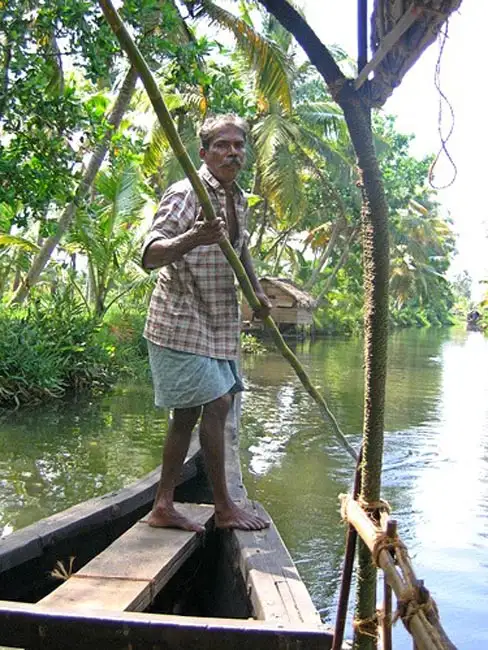
Today we board our houseboat for a quintessential Kerala experience: a leisurely cruise through the backwaters' forests and palm-shaded canals. Our vessel measures approximately 60 feet long and 13 feet wide, with comfortable beds, traditional lanterns, air conditioning, and a sundeck for daytime relaxation. Constructed from local natural fibres including coir, bamboo, and palm fronds, these boats echo the harmony between villagers and their aquatic environment.
As our oarsman silently propels us along the waterways (some boats use silenced motors), we glide past working villages where life unfolds along the water's edge. Locals fish, bathe, wash clothes, craft coir rope, and tend small gardens on canal banks. Children wave from doorways of homes accessible only by boat. Kingfishers dart across the water while egrets stand motionless in the shallows. The pace slows to match the gentle current, creating a tranquil interlude far removed from India's usual intensity.
Overnight on Kerala houseboat.
NOTE: Single cabins are not available on houseboats. Single supplements reflect sharing for this night.
Included Meal(s): Breakfast, Lunch and Dinner - Day 30:Return to Kochi: City TourThis morning we disembark from our houseboat and return to Kochi for a city tour.
Kochi's history chronicles European competition for control of India's lucrative spice trade. Portuguese, Dutch, and British powers successively dominated the port from the early 16th century onward, each leaving architectural and cultural marks. From 1800, Cochin became part of the British Madras Presidency, administered by a series of diwans (financial ministers) from 1812 until Independence in 1947. In the 1920s, the British expanded the port for modern ocean-going vessels, with extensive dredging creating Willingdon Island between Ernakulam and Fort Cochin.
We explore the Chinese fishing nets, an unmistakable harbour landmark. Records indicate these massive cantilevered nets were first erected between 1350 and 1450 AD, introduced by traders from the court of Kublai Khan. Constructed from teak wood and bamboo poles working on the principle of balance, they require four to six people operating counterweights to raise and lower them. The best viewing point is Vasco da Gama Square, where small stalls serve fresh seafood and tender coconuts.
We visit Santa Cruz Basilica, built by the Portuguese and elevated to cathedral status by Pope Paul IV in 1558. Spared when the Dutch destroyed many Catholic buildings in 1663, it later fell victim to the British, who demolished it in 1795. The present building, commissioned in 1887, recreates the grandeur of its predecessor with soaring Gothic arches and vibrant ceiling paintings.
Overnight in Kochi.
Included Meal(s): Breakfast and Dinner - Day 31:Kochi - Fly to Chennai: City TouringToday we fly to Chennai (formerly Madras), capital of Tamil Nadu.
Unlike India's ancient cities, Chennai is a relatively modern creation, founded by the British East India Company in 1639 on a narrow strip of land between the Cooum and Adyar rivers. The location lay just north of the ancient Tamil port of Mylapore and the Portuguese settlement of San Thome, established in 1522. The British faced repeated challenges from the French, who destroyed much of the city in 1746 and took Robert Clive prisoner. This experience reportedly inspired the clerk to become a military campaigner. Clive helped retake Chennai three years later and used it as his base for expanding British power in India.
Following the French siege of 1759, fortifications were strengthened and completed by 1783, though by then Calcutta had eclipsed Chennai's importance as Britain's primary Indian port.
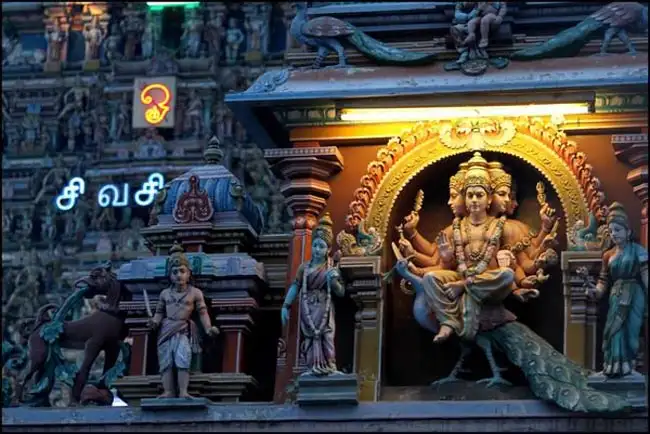
We visit Fort St George, the British stronghold that anchored their presence in southern India, and St Mary's Church, the oldest Anglican church in India, dating to 1680. At San Thome Cathedral, we view the site where St Thomas the Apostle's remains are believed to rest. The Mylapore Temple, dedicated to Lord Shiva, showcases Dravidian temple architecture with its towering gopuram gateway. We drive along the Marina, Chennai's pride: a 13 km/8 mi beach of white sand and azure waters stretching along the Bay of Bengal.
Overnight in Chennai.
Included Meal(s): Breakfast and Dinner - Day 32:Chennai & MahabalipuramToday we drive approximately 60 km/37 mi south to Mahabalipuram, an ancient seaport and once-thriving centre of the Pallava dynasty.
This coastal town is renowned for rock-cut temples and intricate sculptures dating to the 7th century, when Pallava kings ruled much of southern India from their capital at Kanchipuram. Unlike the soaring gopurams of later Tamil temple architecture, Mahabalipuram's monuments embrace elegant simplicity and human scale. The famous Shore Temple, standing sentinel on the beach with waves breaking around its base, represents one of India's oldest structural stone temples, predating most northern Indian temple architecture by centuries.
The Five Rathas (chariots) are actually five temples carved from single boulders, each demonstrating a different architectural style. Nearby, the massive relief carving known as "Arjuna's Penance" or "Descent of the Ganges" covers a rock face 27 m/89 ft long and 9 m/30 ft high, depicting gods, humans, animals, and celestial beings in exquisite detail. The sculptures depict everyday life alongside divine narratives, offering remarkable insights into Pallava society and artistic vision.
What distinguishes Mahabalipuram is the experimental nature of the work: artisans here were innovating, testing forms and styles that would influence South Indian temple architecture for centuries to come.
After lunch by the serene Bay of Bengal, we return to Chennai, carrying with us the memory of these extraordinary monuments that helped shape an entire architectural tradition.
Overnight in Chennai.
Included Meal(s): Breakfast and Dinner - Day 33:DepartureThis morning we depart Chennai, our India journey complete. The memories we carry home reflect India's extraordinary ability to overwhelm and enchant, challenge and inspire, all while revealing layers of history, spirituality, and culture that continue to unfold long after departure.
Bon Voyage! Namaste!
Included Meal(s): Breakfast
Countries Visited: India
*The red tour trail on the map does not represent the actual travel path.

Book This Tour
- Final payment: Due 90 days prior to departure.
- Deposit: A non-refundable $1000 USD Deposit is required at booking.
- Internal Flight Taxes: An extra $200 USD applies for taxes and fees on tour flights. The internal airfares are included, but taxes are listed separately as they may change. Exceptions are noted in Red.
- Optional Single Supplement: $3020 USD (number of singles limited).
(View options forsingle travellers) - $1000 DEPOSIT REQUIRED due to the nature of the internal flights that need to be booked/paid for far in advance. Because these tickets are non-refundable once issued, contrary to our usual terms and conditions governing deposits, once the tour is 'guaranteed' all monies become 100% non-refundable, non-transferrable.
Prices below are per person, twin-sharing costs in US Dollars (USD). Pricing does not include airfare to/from the tour and any applicable taxes.
Frequently Asked Questions
- What is the maximum number of participants on a trip?Most of our tours carry a maximum of 18 participants; some tours (ie hiking tours) top out at 16. In the event that we do not achieve our minimum complement by our 90-day deadline, we may offer group members the option of paying a "small-group surcharge" as an alternative to cancellation. If all group members agree, we will confirm the trip at existing numbers; this surcharge is refundable in the event that we ultimately achieve our regular minimum. If the small group surcharge is not accepted, we will offer a refund of your deposit or a different trip of your choice.
- Can I extend my tour either at the beginning or end? What about stopovers?Yes, you can extend your tour either at the beginning or the end and we can book accommodation in our tour hotel. Stopovers are often permitted, depending on air routing. Stopovers usually carry a "stopover" fee levied by the airline.
- How do I make a reservation? How and when do I pay?The easiest way to make a reservation is via our website; during office hours, you are also more than welcome to contact us by telephone.
A non-refundable deposit is payable at the time of booking; if a reservation is made within 90 days, full payment is required. Some trips require a larger deposit. If international airline bookings require a non-refundable payment in order to secure space or the lowest available fare, we will require an increase in deposit equal to the cost of the ticket(s).
Early enrolment is always encouraged as group size is limited and some trips require greater preparation time.
Once we have received your deposit, we will confirm your space and send you a confirmation package containing your trip itinerary, any visa/travel permit related documents, invoice, clothing and equipment recommendations, general information on your destination(s), and forms for you to complete, sign and return to us. Your air e-tickets (if applicable), final hotel list, final trip itinerary, and instructions on how to join your tour, will be sent approximately 2-3 weeks prior to departure. - What about cancellations, refunds, and transfers?Please review our cancellation policy page for details.
- I am a single who prefers my own room. What is a single supplement?All of our tours have a single supplement for those who want to be guaranteed their own room at each location.
This supplement is a reflection of the fact that most hotels around the world do not discount the regular twin-share rate for a room by 50% for only one person occupying a room. Most hotels will give a break on the price, but usually in the range of 25-30% of the twin-share rate. This difference, multiplied by each night, amounts to the single supplement.
The conventional amount can also vary from country to country and some destinations are more expensive than others for single occupancy. In order to be "single friendly," the supplements we apply are not a profit centre for us and we do our best to keep them as reasonable as possible.
On most tours we limit the number of singles available, not to be punitive, but rather because many hotels allow for only a limited number of singles; some smaller hotels at remote locations also have a limited number of single rooms available.
Please note that most single rooms around the world are smaller than twin-share rooms and will likely have only one bed. - Do you have a shared accommodation program?Yes! If you are single traveller and are willing to share, we will do our best to pair you with a same-gender roommate. Please note that should we fail to pair you, we will absorb the single supplement fee and you will default to a single room at no extra charge.