
- History
- Overview
- Info & Inclusions
- Itinerary
- Map & Hotels
- Photos
- Dates & Prices
- Tour Duration: 16 Days
- Max Group Size 18
- Budapest walking tour
- Byzantine, Moorish, Romanesque and Hungarian legacies
- Holloko, Hungary's most beautiful town
- Eger: narrow streets, arcaded buildings, wrought-iron gates
- Southern Transdanubia - region of undulating hills, forest clad ridges and rural ambience
- The "painted monasteries" of Bucovina
- Bran Castle, mythical home of Dracula
- Singles friendly (view options for single travellers)
The city's renowned shopping along the Vorosmarty Ter will provide hours of entertainment and the sense of discovery will be felt as we search for the monuments in Liberty Square.
It's then time to explore Romania, the land of the spectacular Eastern Carpathian Mountains.
This country seems to contain all the elements that one can desire in any adventure; a natural beauty that will mystify meshed with cities that exist in a unique world of their own.
Understand why the capital city, Bucharest, is nicknamed 'The Little Paris of the East' when we see the influences shine through the city's architectural styles and overall ambience.
The sidewalk cafes scattered throughout the garden-laden streets and the fin-de-siecle style of the structures that dot the city are qualities we won't forget anytime soon after our trip.
An excursion to the outdoor Bucharest Village Museum shows a collect of the country's oldest structures, from towering windmills, to restored churches.
- MealsSavour authentic flavours with included daily breakfasts and dinners at hotels or handpicked local restaurants—immersing you in local cuisine without worrying about reservations or budgets.
- Transport & Logistics
Private air-conditioned coaches and included internal ferries and flights—ensuring hassle-free travel so you can focus entirely on the discoveries ahead.
"Adventures Abroad tour leader's management and guest services managed the tour with great skill and dedication. The tour leader was on top of every move and transfer. We have not experienced any issues with logistics and had a great time."
~ JULIA O"The tour leader did an excellent job coordinating some difficult travel logistics, power outage issues and resolving problems and dealing with guests who had unrealistic expectations."
~ CYNTHIA COLLINS - Expert Guidance
Unlock insider secrets at every landmark with your full-time Tour Leader and expert local guides , all gratuities covered—no hidden tipping surprises—so you immerse fully in your destination's stories, worry-free. (Except for the tips to your tour leader at the end of your tour.)
"Amazing tour guide. Our tour guide was very well organized, Her passion, knowledge, and enthusiasm completely transformed the travel experience into something truly unforgettable..."
~ MELANIE LEMAIRE"Highly recommend every trip with Adventures Abroad. It's a well organized and well thought out adventure. The tour leaders are friendly, knowledgeable and experienced professionals. Highly recommend this company."
~ SUSAN WALL - Sightseeing & EntrancesAll entrance fees for sites visited as per the itinerary—no hidden costs—so you can explore ancient ruins and excursions with complete peace of mind.
- AccommodationsUnwind in clean, well-located 3 to 4-star hotels with private en suite facilities—handpicked for comfort and convenience after each day's discoveries—so you can rest easy knowing your stay supports the real adventure, not steals the spotlight.
- Small Group
Discover the world in small groups of up to 18 travellers plus your expert Tour Leader—unlocking spontaneity, off-the-beaten-path adventures, and genuine connections at a relaxed pace, free from crowds.
"Looking Forward to My Next Adventure The best feature of the Adventures tour was the small size that allowed the group to quickly load up, let everyone get acquainted within the first 24 hours, capitalize on unplanned surprises along..."
~ PHILIP BLENSKI"Good value for a great time I have traveled with Adventures Abroad for over 20 years now. Well thought out, interesting itineraries and the other travelers congenial and friendly. The price always seems fair and overall a..."
~ Trusted Customer - Airport Transfers For Land & Air CustomersWe handle hassle-free airport transfers for all our land and air tour customers—plus early arrivals or late departures when you book extra hotel nights directly with us for added peace of mind.
- International airfare to/from the tour. Tour Leader gratuities, lunches, drinks, personal items (phone, laundry, etc), international air taxes (if applicable), excursions referenced as 'optional'. Airport transfers for Land Only customers. Our post-reservation trip notes offer further guidance on optional meal costs and shopping.
- Seasonality and Weather:
This tour is offered in spring, summer and fall the most popular of which is are spring and fall when temperatures are relatively mild and crowds thinner. Showers quite possible in spring and fall, somewhat less so in summer though can occur any time. Summers can be humid though long daylight hours maximize exploration. - Transport and Travel Conditions:
Land transport throughout by private air-conditioned motor coach, 24-36 seats depending on ultimate group size (see 'group size'). Though we will have a couple of full bus days there are plenty of stops of interest. There may not be porters available in all locations. We also make use of public transit in some cities in order to maximize sightseeing where vehicles are impractical (most people quite enjoy this insight into daily life).
This trip is typical of most of our European tours, which are ambitious and involve full days of travel and sightseeing. While we don't have any actual strenuous activity (ie hiking) built into the program, you will do a lot of walking on this trip. These walks will mostly be in the form of walking tours of towns and cities and short walks to dinner. Being Europe, and a hilly/mountainous area, cobbles, uneven surfaces, and slopes/stairs are common. If you are accustomed to typical "bus tours," which rely heavily on vehicular transport for all sightseeing activities, you should be aware that this tour is considerably more active.
Am I suitable for this tour? Please refer to our self-assessment form - Activity Level: 2
These are particularly busy tours that feature a lot of moving around, sometimes by train and short journeys on local transport. Walking tours of towns and cities are leisurely but you should be prepared to be on your feet for several hours. Some of our cultural trips that occur at high altitude and/or require greater independence with baggage handling (at hotels, airports, train stations) also fall into this category.
To learn more about the Activity levels, please visit our tour styles page. - Accommodation:
Well-located, air- conditioned, mid-range hotels (3-4 star) throughout. Many are smaller properties (3-4 story) that may not have elevators. All hotels have en suite toilet and bath, though most have shower only. Porter service is sometimes available; you MUST be independent with your luggage. Single rooms are limited and likely smaller than twins. - Staff and Support:
Tour Leader, driver, local step-on guides in various locales. - Group Size:
Maximum 18 plus Tour Leader
- Day 1:Arrive in BudapestToday we arrive in Budapest, Hungary.
Hungary is a land of beautiful monuments and romantic music. Buda and Pest, two of the city's three regions, both face the mighty Danube, which forms the physical and spiritual centre of the Hungarian capital. It is its centrepiece, its heart, and its pulse. Its relationship with the city is even more intimate than that of the Seine with Paris or the Arno with Florence.
Overnight in Budapest.
Included Meal(s): Dinner - Day 2:Budapest: City Tour* Logistical note * Travellers starting their journey here in Budapest, along with those arriving from Bratislava on a longer tour option, will enjoy the following touring today:
Heroes' Square provides our dramatic starting point, where we learn about Hungary's complex thousand-year history at the imposing Vajdahunyad Castle. This eclectic structure showcases different periods of Hungarian architecture, from Romanesque to Gothic to Renaissance styles.
We then cross Margaret Bridge to Buda's hilly side, where the Citadel offers panoramic views of the entire city spread along both banks of the Danube. The vista reveals Budapest's unique geographic setting, where rolling hills meet the great plain, and architectural treasures from every era create one of Europe's most beautiful urban landscapes.
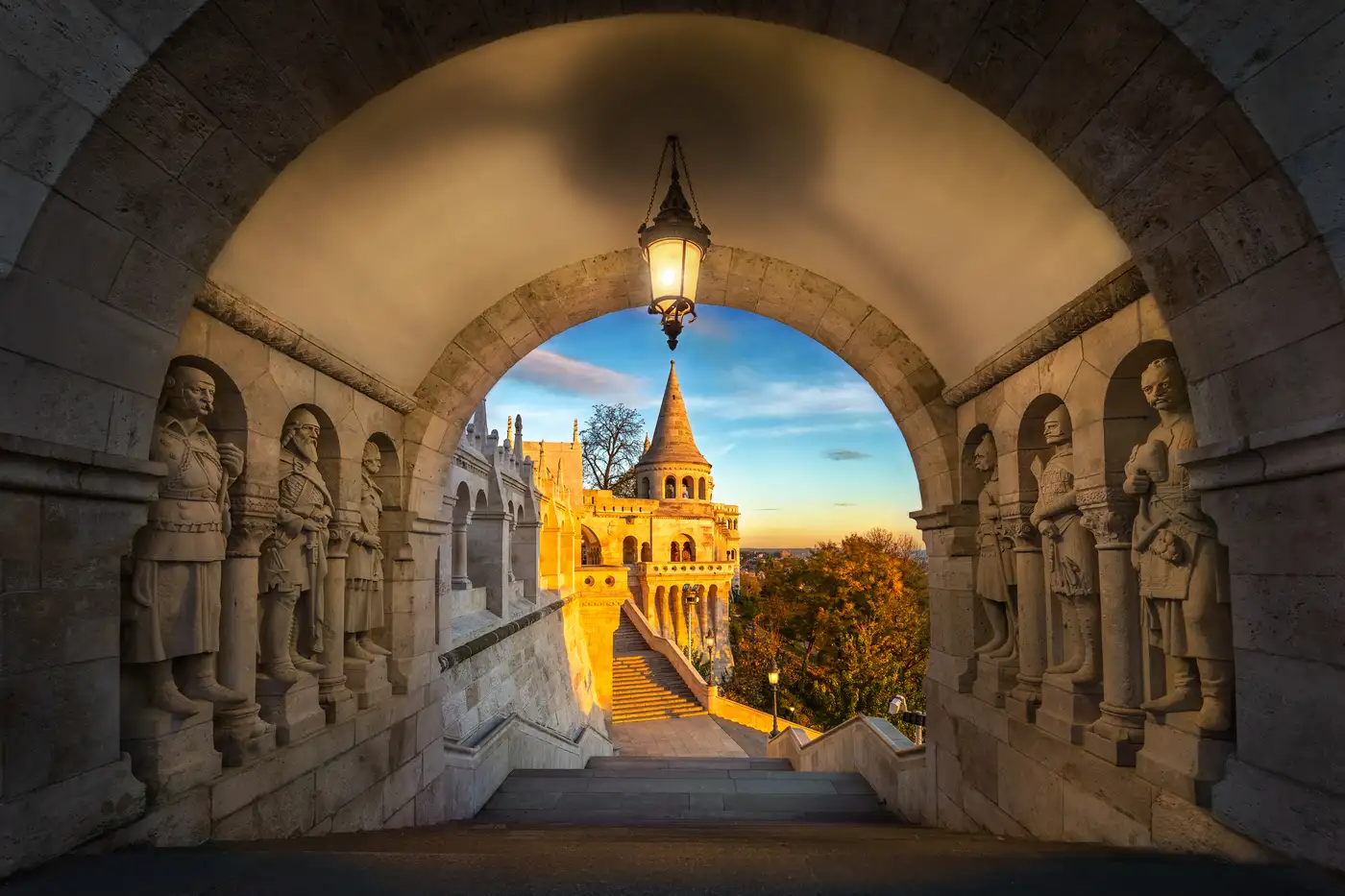
Castle Hill becomes our main focus, where we spend the remainder of the day exploring St. Matthias Church with its distinctive diamond-patterned roof and the fairytale Fisherman's Bastion with its seven towers representing the seven Magyar tribes that settled in the Carpathian Basin. These neo-Gothic and neo-Romanesque structures, though relatively recent, perfectly capture the romantic spirit of Hungarian history.
After lunch, we visit the Royal Palace, home to the National Gallery dedicated exclusively to Hungarian art. Here we trace the development of Hungarian artistic expression from medieval times through the present, gaining insight into how this unique culture preserved its identity through centuries of foreign domination.
Overnight in Budapest
Included Meal(s): Breakfast and Dinner - Day 3:Budapest: Walking Tour* Logistical note: * Those travellers who began their journey here in Budapest will enjoy the following touring today; those travellers who arrived from Bratislava will have a free day.
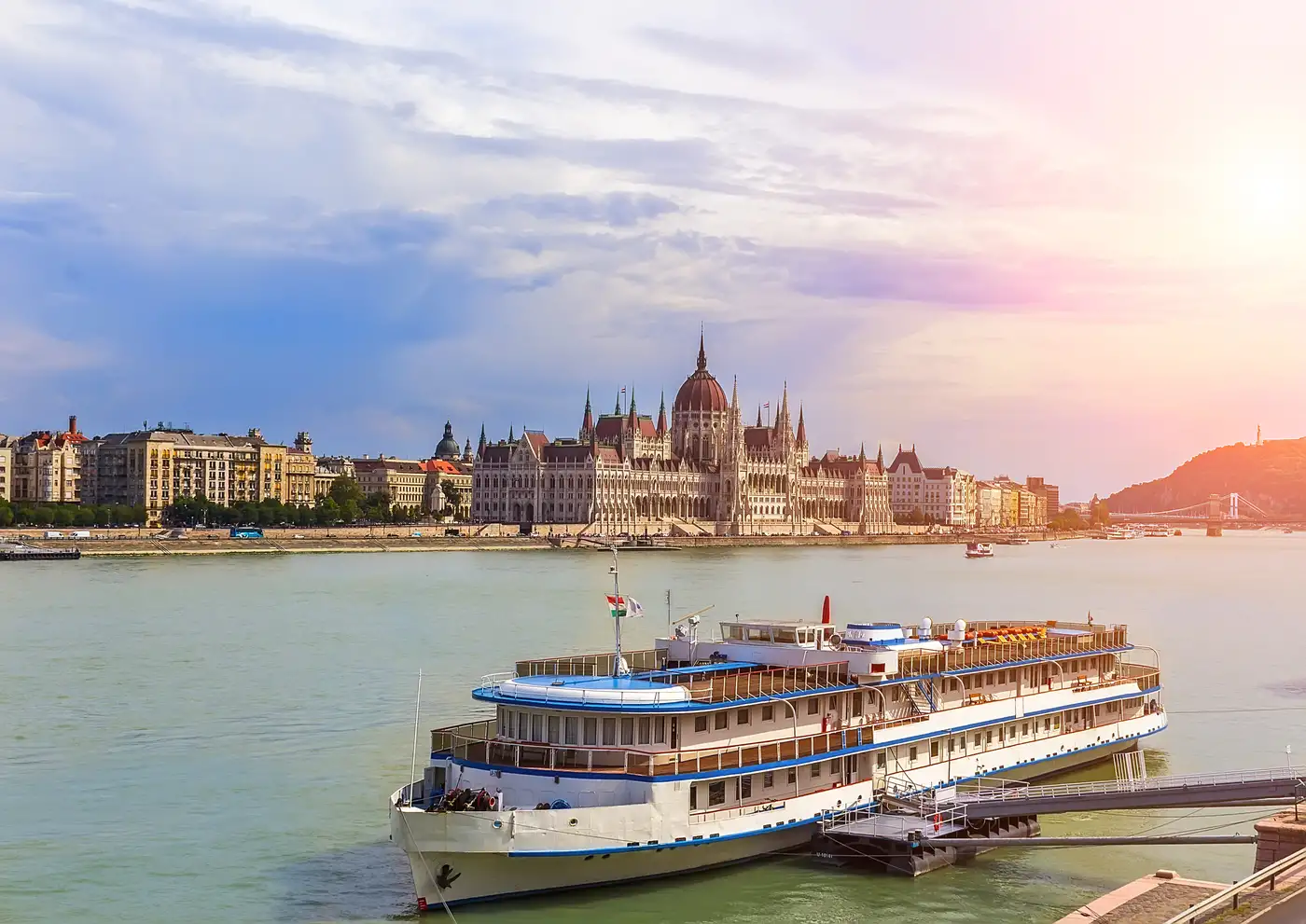
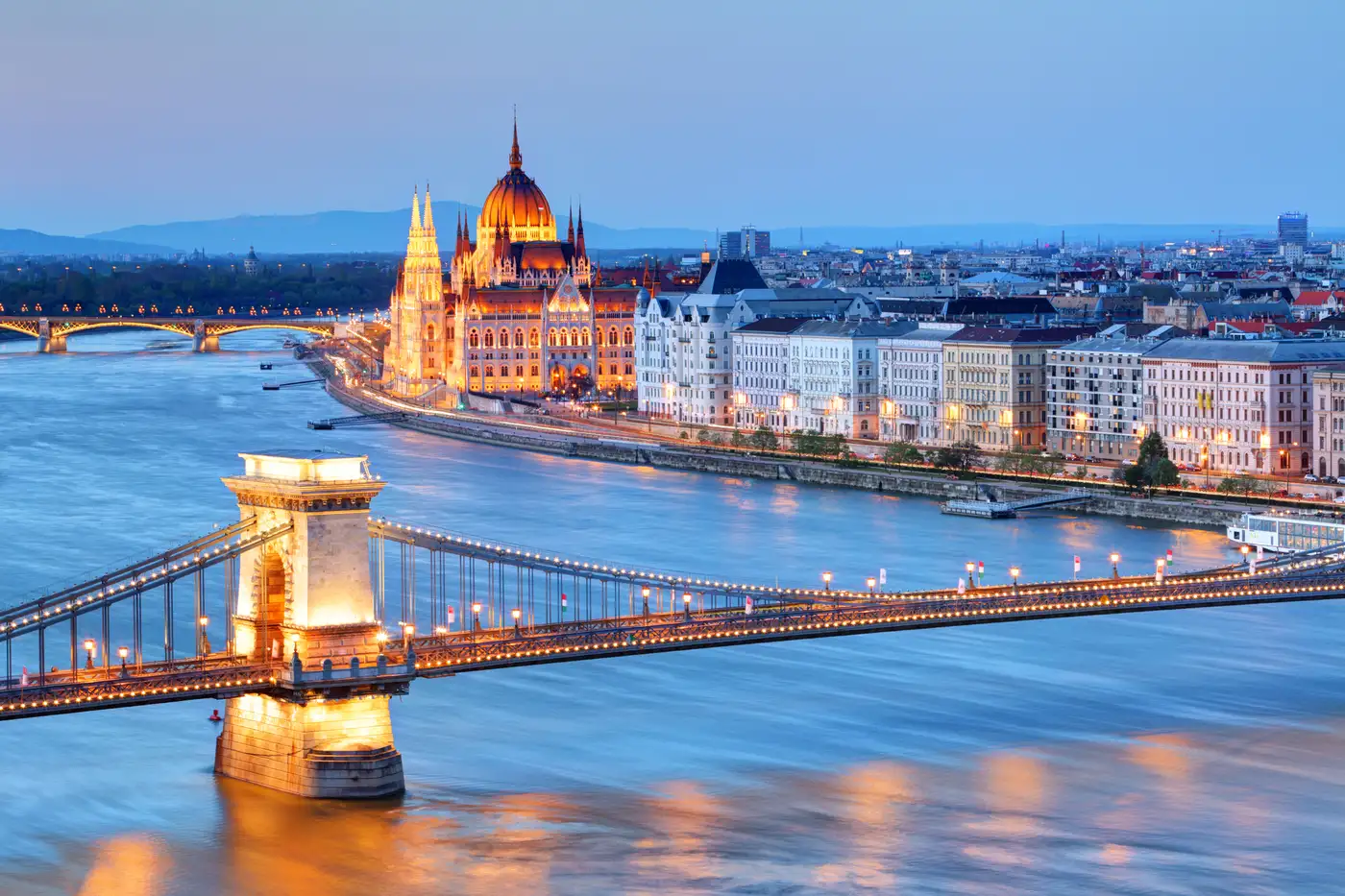
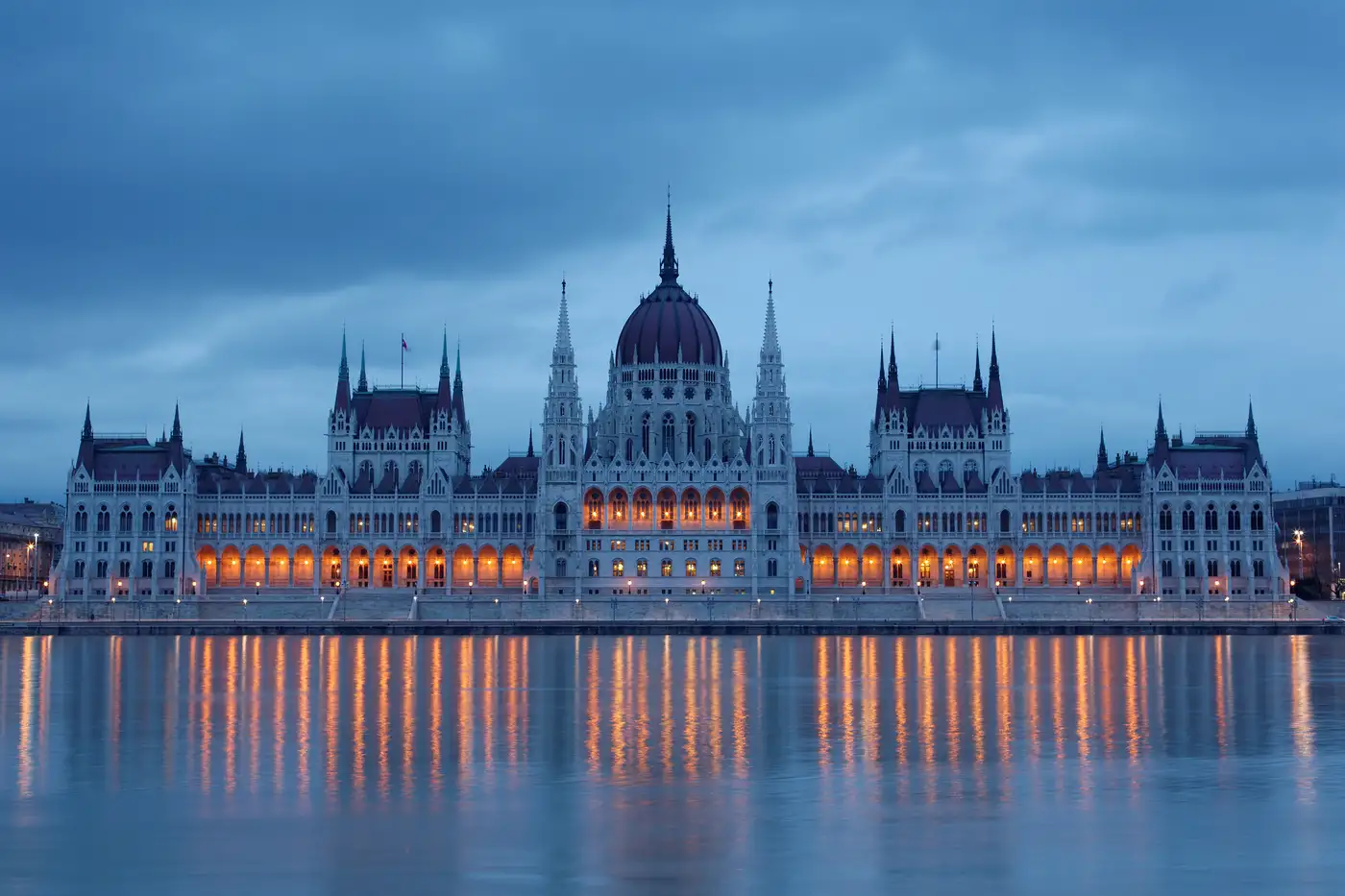
This morning we embark on a leisurely WALKING tour of city's urban heart. This is an area is full of stately old buildings, grand avenues, and innumerable tiny streets. We will take local transport to the huge neo-Gothic Parliament (Orszaghaz), the most visible building of Budapest's left bank. Built by 1,000 workers between 1885 and 1902, this building has now become the symbol of the capital with its slender towers, spacious arcades, high windows and vast central dome. Nearby one can see the magnificent building housing the Museum of Ethnography. Walking southeast we come to the stately and sprawling Liberty Square (Szabadsag ter). In the square's center remains a gold hammer and sickle atop a white stone obelisk, one of the few monuments to the Russian 'liberation' of Budapest in 1945. Passing by Roosevelt Square we soon come to the famous Chain Bridge, the oldest and most beautiful of the seven road bridges that span the Danube in Budapest. Before it was built, the river could be crossed only by ferry or by a pontoon bridge that had to be moved when ice blocks began floating downstream in the winter.
We continue along the pedestrian 'Promenade' with great views of Gellert Hill and Castle Hill on the opposite bank. We will stroll past the Concert Hall (Vigado), which is a curious mix of Byzantine, Moorish, Romanesque and Hungarian motifs. From here we walk to one of the liveliest places in Budapest, Vorosmarty Ter, a large square that the north end of Budapest's best known shopping street--Vaci Utca. This is a fantastic pedestrian-only area of the city that has undergone a full transformation over the last 10 years.
Eventually we will arrive at the famous 19th century Central Market Hall. This cavernous three-story market teems with people browsing stalls packed with everything from salamis and red-paprika chains to folk embroideries and souvenirs. The balance of the day at leisure.
Overnight in Budapest.
Included Meal(s): Breakfast and Dinner - Day 4:Budapest - Szentendre - Holloko - EgerThe romantic Danube Bend leads us to Szentendre, a riverside town celebrated for its museums, galleries and artists. Once called Ulcisia Castra (Wolf Castle) by the Romans, today Szentendre charms visitors with its south European atmosphere, baroque architecture, churches of various faiths, narrow side streets, and cobblestone roads. Our walking tour reveals why this picturesque town has attracted artists for generations.
We then visit the UNESCO-protected village of Holloko, where approximately 650 people maintain one of Europe's best-preserved traditional settlements. The 'Old Village' contains 50 houses listed as historic monuments, their white-painted walls and red-tile roofs creating a harmonious ensemble unchanged for centuries. Throughout time, Holloko has preserved its unique ethnographic and folk art values, while atop the nearby hill, the remains of a 13th-century castle remind us of medieval Hungary's turbulent frontier history.
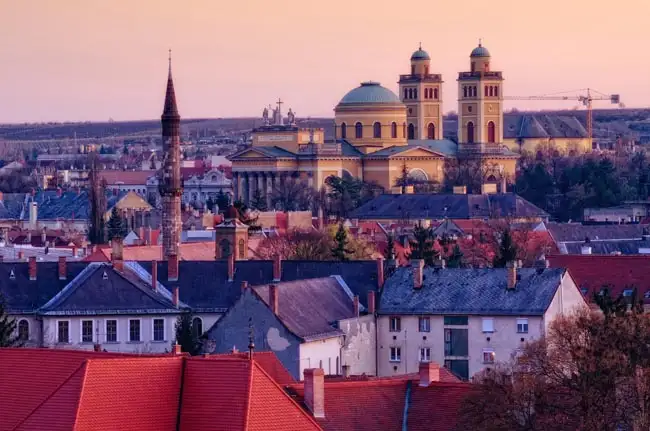
Our journey continues to Eger, nestled in the valley between the Bukk and Matra Hills. This historic city gained fame for three things: Egri Bikaver (Bull's Blood) wine, its magnificent medieval library, and possessing Europe's northernmost minaret – a reminder of 150 years of Turkish occupation. The narrow streets, arcaded buildings, wrought-iron gates, and baroque towers create perfect walking opportunities, while the peaks of Hungary's highest mountains provide a dramatic natural backdrop.
Overnight in Eger
Included Meal(s): Breakfast and Dinner - Day 5:Eger: Town TourEger's story stretches back to the Stone Age, but the town achieved its greatest glory during the 1552 Siege of Eger, when Hungarian forces successfully defended against overwhelming Ottoman odds. During the early Middle Ages, German, Avar and Slavonic tribes inhabited the area before Hungarian settlement in the 10th century brought prosperity that peaked during the 14th-16th centuries, when winegrowing became the economic foundation for which Eger remains famous today.
Our walking tour includes the impressive Eger Castle with its museum and underground casements, where we learn about the legendary defence that inspired generations of Hungarians. The fortress walls and towers tell stories of courage and determination that echo through Hungarian national consciousness.
We also visit the Archbishop's Palace, a baroque masterpiece that reflects the Counter-Reformation's influence in Hungary, and the Franciscan Church, whose elegant interior showcases religious art from several centuries. The Turkish Minaret, a 40-metre cylindrical tower, stands as one of Hungary's most unusual monuments – the northernmost minaret in Europe and one of the few surviving architectural reminders of Ottoman rule in Central Europe.
Overnight in Eger
Included Meal(s): Breakfast and Dinner - Day 6:Eger - Paks - Siklos - PecsSouthern Transdanubia welcomes us with its landscape of undulating hills, forest-clad ridges and rural ambience as we depart Eger for Hungary's southwestern region. Our route leads us past Budapest and south along the Danube River, through countryside where small villages and agricultural lands create a pastoral symphony of green fields and traditional farmsteads.
After passing Paks, situated on the banks of the Danube River, we continue toward Pecs, a city selected as European Capital of Culture in 2010, sharing the title with Essen and Istanbul. This distinction reflects Pecs' role as a major art centre and university town, where intellectual and cultural life has flourished for over a thousand years.
Our walking tour of the Old Town reveals layers of history: the historic cathedral with its distinctive four towers, the synagogue representing the once-thriving Jewish community, ancient mosques from the Ottoman period, and the fourth-century Christian necropolis – a UNESCO World Heritage Site featuring burial chambers decorated with remarkable early Christian murals that represent some of Europe's finest examples of late Roman and early Christian art.
Overnight in Pecs
Included Meal(s): Breakfast and Dinner - Day 7:Pecs - Villany - PecsThe historic town of Siklos and its remarkably well-preserved medieval castle anchor our morning exploration near Hungary's southern border. Wine production began here when Romans settled at a place they called Seres, and archaeological finds prove that viticulture has thrived in this region for over two millennia.
After exploring Siklos Castle's towers, walls, and courtyards, we embark on an afternoon journey along the famous Villany-Siklos Wine Road, a 30-kilometre route covering eight villages where vineyards cascade down south-facing slopes in perfect conditions for winemaking. The Romans first recognised this area's potential, and finds uncovered at the base of the hills confirm over 2,000 years of continuous grape cultivation.
Today the Villany-Siklos wine region encompasses approximately 2,000 hectares, where Mediterranean-style red wines thrive in a climate warmer than most of Hungary. Local winemakers specialise in full-bodied reds that have gained international recognition, particularly Cabernet Sauvignon, Merlot, and the indigenous Kadarka variety. We sample these distinctive wines while learning about traditional and modern winemaking techniques from local vintners.
Overnight in Pecs
Included Meal(s): Breakfast and Dinner - Day 8:Pecs - Lake Balaton Region - BudapestLake Balaton, affectionately called the "Hungarian Sea," spreads before us as we journey north to Central Europe's largest lake. This massive freshwater lake, stretching 77 kilometres in length, has served as Hungary's premier holiday destination for generations of families seeking respite from urban life.
Our exploration focuses on the Tihany Peninsula, declared a national park in 1952 and renowned for its historical monuments, beautiful panoramas, and Mediterranean-like climate created by the lake's moderating influence. We cross the lake by ferry from Szantod to Tihany, enjoying views across the water toward distant hills where vineyards and resort towns dot the shoreline.
At Tihany, we visit the Benedictine Abbey Church, built in 1754 on the site of King Andrew I's original 11th-century church. This twin-spired, ochre-coloured baroque masterpiece dominates the peninsula's skyline. Inside, we admire the fantastic altars, pulpits and screens carved between 1753 and 1779 by Austrian lay brother Sebastian Stuhlhof – each a baroque-rococo masterpiece. King Andrew I's remains rest in a limestone sarcophagus in the atmospheric Romanesque crypt.
We also visit Balatonfured, a charming town on the lake's northern shore that played an important role in 18th-century social life. Here the first Balaton steamship began its journeys, and the first yachtsmen's association established its headquarters. For three centuries, patients have been treated with mineral water springs beneficial for diabetes and digestive ailments.
Overnight in Budapest
Included Meal(s): Breakfast and Dinner - Day 9:Budapest, Hungary - Bucharest, RomaniaRomanian legend tells us that Bucharest was founded on the banks of the Dambovita River by a shepherd named Bucur, whose name literally means "joy." His enchanting flute playing reportedly dazzled the people, while his hearty wine from nearby vineyards endeared him to local traders, who gave his name to their settlement.
This morning we fly to Romania's largest city and capital, once known for its wide, tree-lined boulevards, glorious Belle Epoque buildings and reputation for high living that earned it the nickname "Little Paris" in the early 1900s. Today Bucharest pulses as a bustling metropolis where medieval streets meet communist-era boulevards and modern European districts.
After settling into our accommodations, we embark on an informal walking orientation of the city centre, where layers of history create a fascinating urban palimpsest. Romanian, Ottoman, Austrian, French, and Soviet influences blend in architecture, cuisine, and cultural traditions, while the vibrant energy of contemporary Romania emerges in cafes, galleries, and public spaces throughout the historic centre.
Overnight in Bucharest
Included Meal(s): Breakfast and Dinner - Day 10:Bucharest: City Tour - Fly to Suceava - Gura HumoruluiThis morning belongs to Bucharest itself. We begin at the Arc de Triomphe on Soseaua Kiseleff, a boulevard longer than the Champs-Elysees and built to give a young nation, recently free of Ottoman suzerainty, a European face. From there we tour Cotroceni Palace, still an official presidential residence, and pass the Romanian Athenaeum and University Square, scene of the 1989 revolution.
The Cathedral of National Salvation is Orthodox Christianity announced at cathedral scale. Consecrated only a few years ago beside the Palace of Parliament, it stands as a deliberate counterweight — faith reasserting itself in the shadow of the regime that once tried to erase it. The National History Museum rounds out the morning with the story of everything in between: Roman Dacia, medieval principalities, and a century of juggling larger neighbours.
In the afternoon we visit the Bucharest Village Museum, one of Europe's oldest open-air museums, where wooden churches, watermills, and farmhouses gathered from across the country preserve a rural life that outlasted every regime layered on top of it.
PLEASE NOTE: We always attempt to include the Palace of Parliament, but the building frequently closes to visitors for official functions, often without notice.
An early dinner precedes our flight north to Suceava, gateway to Bucovina.
Overnight in Gura Humorului.
Included Meal(s): Breakfast and Dinner - Day 11:Bucovina: Painted Monasteries & Cacica Salt MineWe begin at the Museum of Bucovinian Traditions in Gura Humorului, a fitting introduction to a region where Orthodox faith and folk art have always been intertwined. From here we trace the deepest historical layer of this crossroads — not empires competing for Romania, but a Moldavian civilisation confident enough, in the fifteenth and sixteenth centuries, to paint its faith on the outside of its churches for everyone to see.
At Voronet, frescoes in a blue so distinctive it carries the monastery's name cover the exterior walls floor to roofline — a nuns' monastery consecrated to St. George, built once Stephen the Great had centralised the Moldavian state and given it the confidence for this kind of statement. Sucevita, the largest and best-preserved of the painted monasteries, goes further still: an almost complete fresco cycle wraps its fortified enclosure, built in 1586, inside and out — UNESCO-protected, and rightly compared to the mural tradition of Venice's San Marco.
We break from monasteries for the Cacica Salt Mine, worked since the eighteenth century, where a small chapel carved entirely from salt sits deep beneath the surface alongside the old mining galleries.
Leaving the painted monasteries behind, we drive south to Piatra Neamt, a small city framed by the Eastern Carpathians and our base for tomorrow's mountain crossing.
Overnight in Piatra Neamt.
Included Meal(s): Breakfast and Dinner - Day 12:Piatra Neamt - Bicaz Gorges & Lacu Rosu - SighisoaraThis morning's drive is one of Romania's most dramatic, through the Bicaz Gorges, where the road narrows and climbs for 5 km/3.1 mi beneath limestone walls rising 300 m/985 ft overhead — a stretch so tight in places it's known locally as the 'neck of hell.' Protected within Hasmas-Bicaz Gorges National Park, the gorge marks our crossing from Moldavia into Transylvania.
A few kilometres on, we reach Lacu Rosu, or Red Lake, formed in 1837 when an earthquake-triggered landslide dammed the Bicaz River. We stop here for lunch, the reddish sediment that names the lake visible along its shoreline against a backdrop of alpine peaks.
We continue west into Transylvania proper, arriving by evening in Sighisoara.
Overnight in Sighisoara.
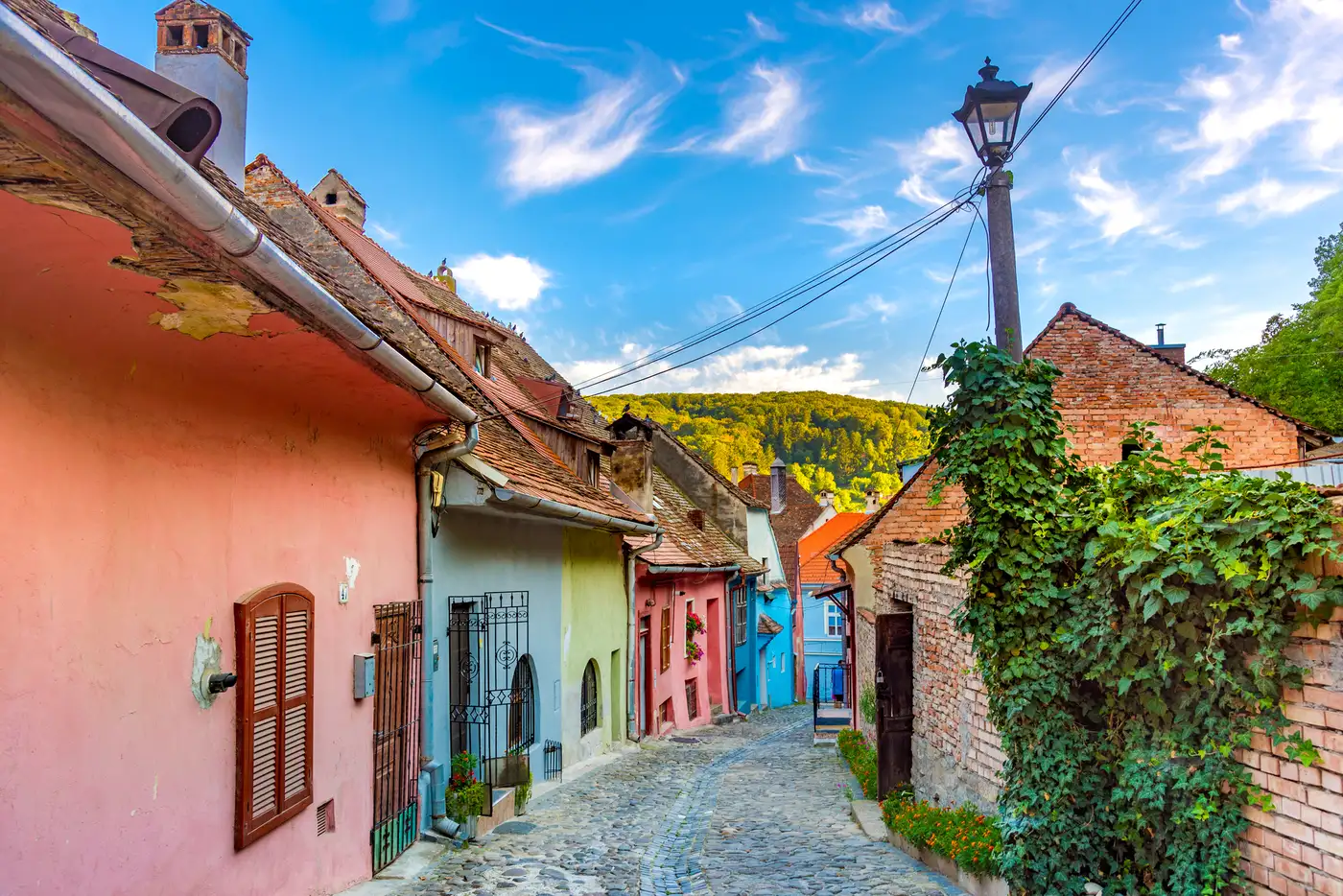
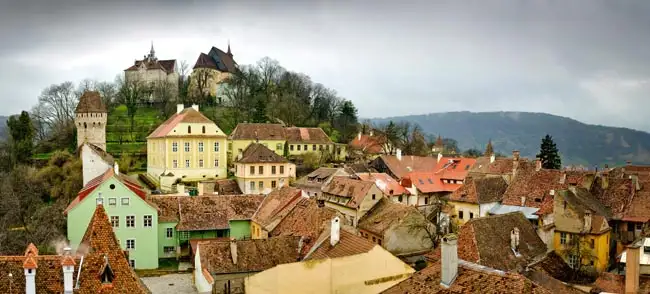
Included Meal(s): Breakfast and Dinner - Day 13:Sighisoara - Viscri - BrasovSighisoara is the only inhabited medieval citadel in Europe, and this morning we explore it on foot: cobbled lanes climbing past craft-guild towers — tinsmiths, furriers, butchers — to the fourteenth-century Clock Tower, where the History Museum occupies the former Town Hall and the view stretches across Saxon rooftops unchanged in centuries. This is Transylvania's other layer of empire: German-speaking colonists, invited here by Hungarian kings eight centuries ago to farm and defend the frontier, who built towns strong enough to still be standing.
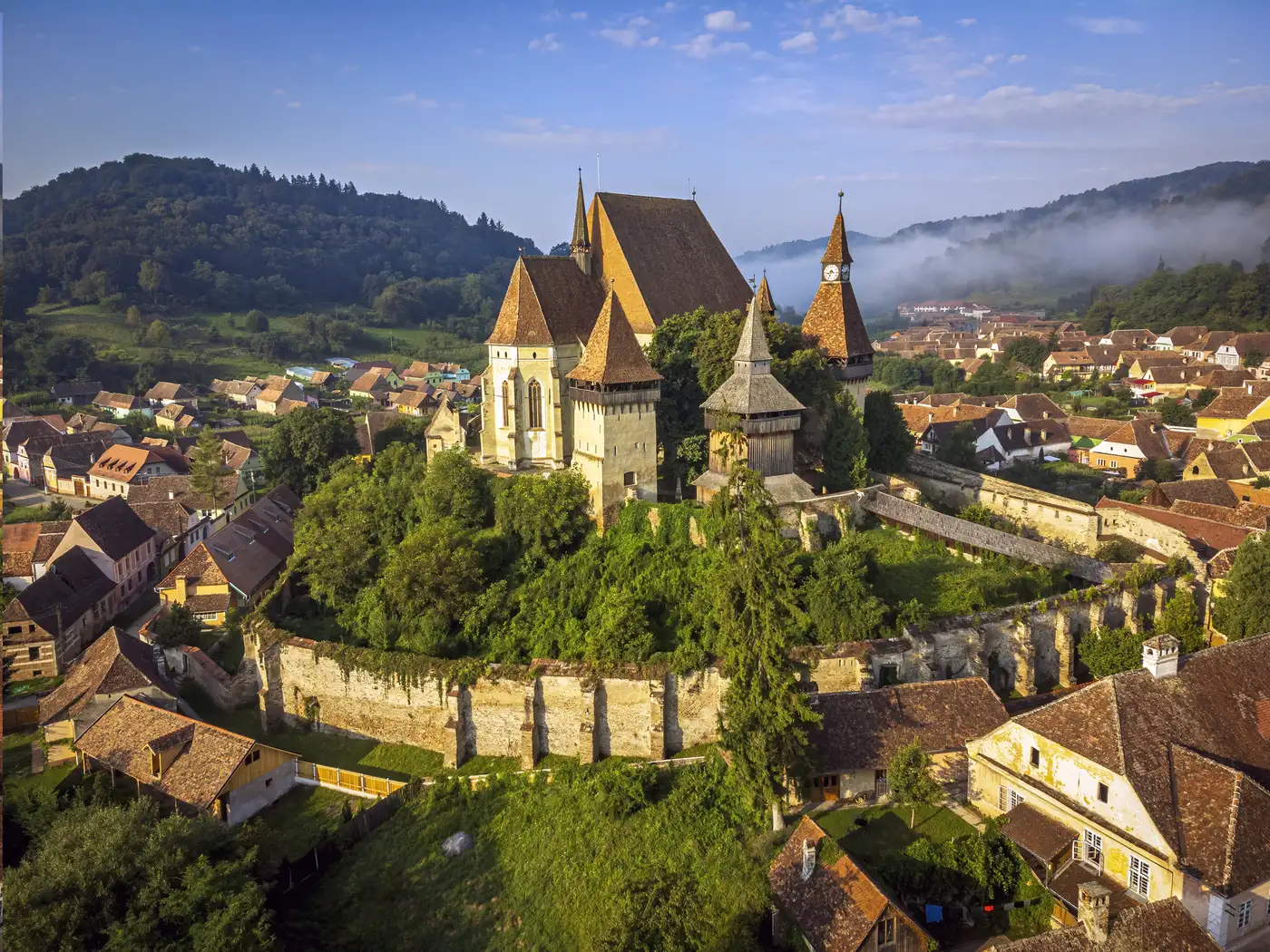
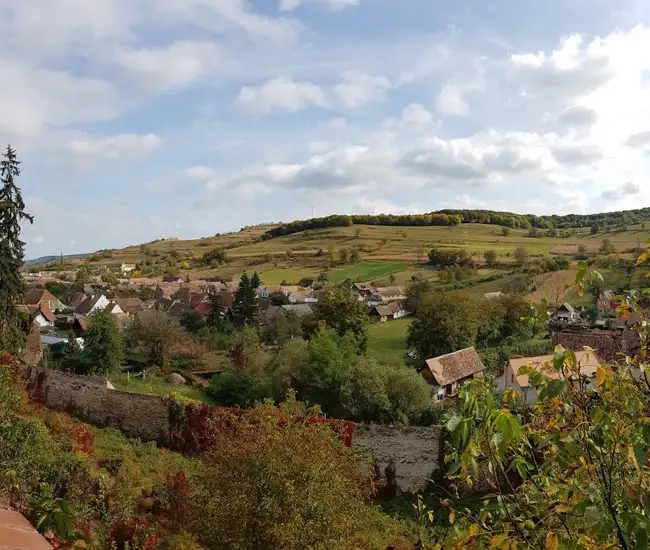
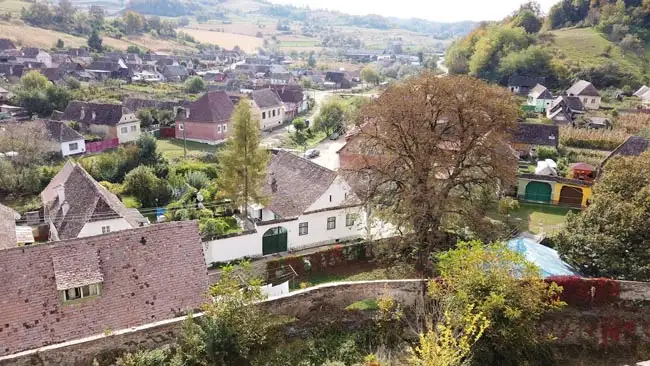
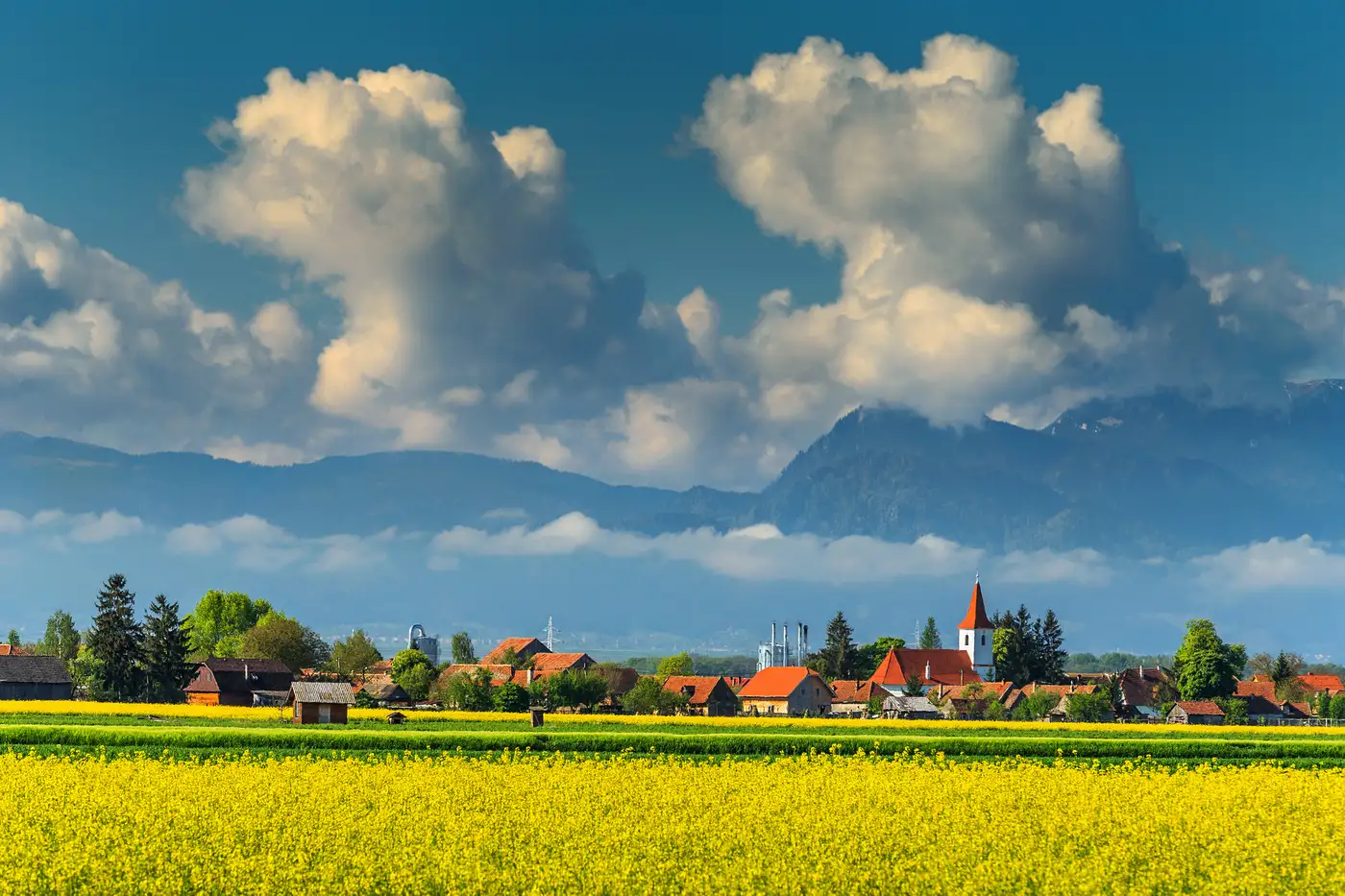
We continue to Viscri, a Saxon village so well preserved that King Charles III bought a house here decades before his coronation, drawn by the same fortified church and slow rural rhythm that first attracted Saxon settlers. Storks nest on chimney pots above houses painted in the region's traditional ochre and blue.
By late afternoon we reach Brasov, Romania's second city, tucked between two mountains in a bowl the Saxons chose for the same defensible logic as Sighisoara. We tour the Black Church, the largest Gothic structure in southeastern Europe, blackened — as the name suggests — by a seventeenth-century fire it never fully shed.
Overnight in Brasov
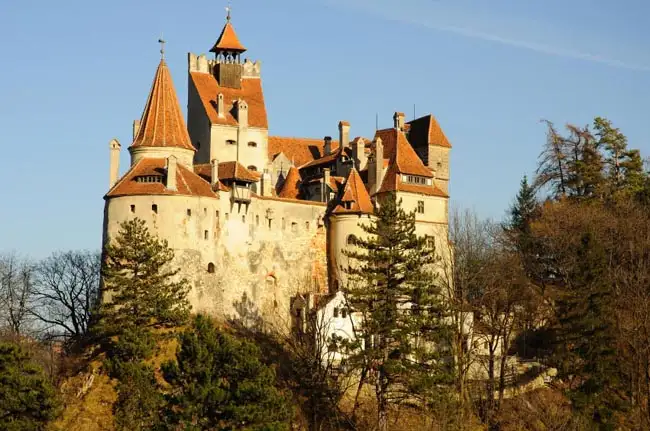
Included Meal(s): Breakfast and Dinner - Day 14:Brasov: Bran Castle & SinaiaA short drive from Brasov brings us to Bran Castle, perched on its rocky outcrop exactly where the Saxons built it in 1377 to guard the mountain pass into Wallachia. Its association with Dracula is a twentieth-century invention, but the real history needs no embellishment: a customs post and frontier fortress whose rooms and towers, linked by passages cut into the rock, controlled trade between Transylvania and the lands beyond the mountains.
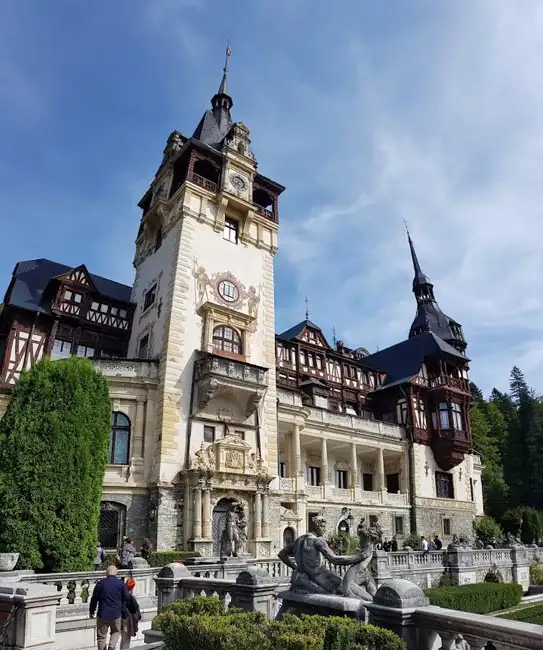
From medieval frontier we jump four centuries forward, to Sinaia and Peles Castle — Romania's answer to the question of what a newly independent nation does with a German prince for a king. Built in the 1870s and 80s for Carol I, first of the Hohenzollern monarchs imported to rule a country freshly out from under Ottoman suzerainty, Peles is German Renaissance fantasy transplanted to the Carpathians: 160 rooms, decorated throughout by Carol's eccentric wife Carmen Sylva. The same confidence that filled Bucharest's boulevards at the start of our journey reaches its fullest expression here — a Western European court built, quite literally, onto a Romanian mountainside.
We also visit Pelisor, the smaller Art Nouveau residence built for Carol's successor, and climb to Sinaia Monastery, the seventeenth-century cluster of churches that gave the resort town its name.
We return to Brasov for a second night, with the evening free to explore the old town at leisure.
Overnight in Brasov
Included Meal(s): Breakfast and Dinner - Day 15:Brasov - BucharestWe leave Brasov and Transylvania behind, retracing our path toward Bucharest and the close of a week spent among Saxon fortresses, Orthodox frescoes, and a royal family that was never quite Romanian — three different answers to the same question of how a small country survives at the edge of larger ones.
Optional: time and interest permitting, we stop en route in Targoviste, medieval capital of Wallachia and seat of the Princely Court where Vlad the Impaler took his throne in 1456 — a ruler whose reputation, like Bran Castle's borrowed vampire legend, has grown stranger over time than the facts ever were.
Overnight in Bucharest.
Included Meal(s): Breakfast and Dinner - Day 16:DepartureOur journey together ends where it began, in Bucharest — a fitting close to a week spent among Saxon towns, painted monasteries, and a royal court built from someone else's blueprint. Thank you for exploring a country that absorbed centuries of larger neighbours without ever losing itself.
Drum bun — safe travels!
Departure from Bucharest.
Included Meal(s): Breakfast
Countries Visited: Hungary and Romania
*The red tour trail on the map does not represent the actual travel path.
Book This Tour
- Final payment: Due 90 days prior to departure.
- Deposit: A non-refundable $500 CAD Deposit is required at booking.
- Optional Single Supplement: $1570 CAD (number of singles limited).
(View options forsingle travellers) - Transfering Tour or Date: Transferring to another tour or tour date is only permissible outside of 120 days prior to departure and is subject to a $100 CAD change fee.
(Read our cancellation policy)
Prices below are per person, twin-sharing costs in Canadian Dollars (CAD). Pricing does not include airfare to/from the tour and any applicable taxes.
Frequently Asked Questions
- What is the maximum number of participants on a trip?Most of our tours carry a maximum of 18 participants; some tours (ie hiking tours) top out at 16. In the event that we do not achieve our minimum complement by our 90-day deadline, we may offer group members the option of paying a "small-group surcharge" as an alternative to cancellation. If all group members agree, we will confirm the trip at existing numbers; this surcharge is refundable in the event that we ultimately achieve our regular minimum. If the small group surcharge is not accepted, we will offer a refund of your deposit or a different trip of your choice.
- Can I extend my tour either at the beginning or end? What about stopovers?Yes, you can extend your tour either at the beginning or the end and we can book accommodation in our tour hotel. Stopovers are often permitted, depending on air routing. Stopovers usually carry a "stopover" fee levied by the airline.
- How do I make a reservation? How and when do I pay?The easiest way to make a reservation is via our website; during office hours, you are also more than welcome to contact us by telephone.
A non-refundable deposit is payable at the time of booking; if a reservation is made within 90 days, full payment is required. Some trips require a larger deposit. If international airline bookings require a non-refundable payment in order to secure space or the lowest available fare, we will require an increase in deposit equal to the cost of the ticket(s).
Early enrolment is always encouraged as group size is limited and some trips require greater preparation time.
Once we have received your deposit, we will confirm your space and send you a confirmation package containing your trip itinerary, any visa/travel permit related documents, invoice, clothing and equipment recommendations, general information on your destination(s), and forms for you to complete, sign and return to us. Your air e-tickets (if applicable), final hotel list, final trip itinerary, and instructions on how to join your tour, will be sent approximately 2-3 weeks prior to departure. - What about cancellations, refunds, and transfers?Please review our cancellation policy page for details.
- I am a single who prefers my own room. What is a single supplement?All of our tours have a single supplement for those who want to be guaranteed their own room at each location.
This supplement is a reflection of the fact that most hotels around the world do not discount the regular twin-share rate for a room by 50% for only one person occupying a room. Most hotels will give a break on the price, but usually in the range of 25-30% of the twin-share rate. This difference, multiplied by each night, amounts to the single supplement.
The conventional amount can also vary from country to country and some destinations are more expensive than others for single occupancy. In order to be "single friendly," the supplements we apply are not a profit centre for us and we do our best to keep them as reasonable as possible.
On most tours we limit the number of singles available, not to be punitive, but rather because many hotels allow for only a limited number of singles; some smaller hotels at remote locations also have a limited number of single rooms available.
Please note that most single rooms around the world are smaller than twin-share rooms and will likely have only one bed. - Do you have a shared accommodation program?Yes! If you are single traveller and are willing to share, we will do our best to pair you with a same-gender roommate. Please note that should we fail to pair you, we will absorb the single supplement fee and you will default to a single room at no extra charge.