- Off The Beaten Path
- Wildlife
- History
- Overview
- Info & Inclusions
- Itinerary
- Map & Hotels
- Photos
- Dates & Prices
- Tour Duration: 13 Days
- Max Group Size 18
- John Rylands Library, Manchester's neo-Gothic masterpiece
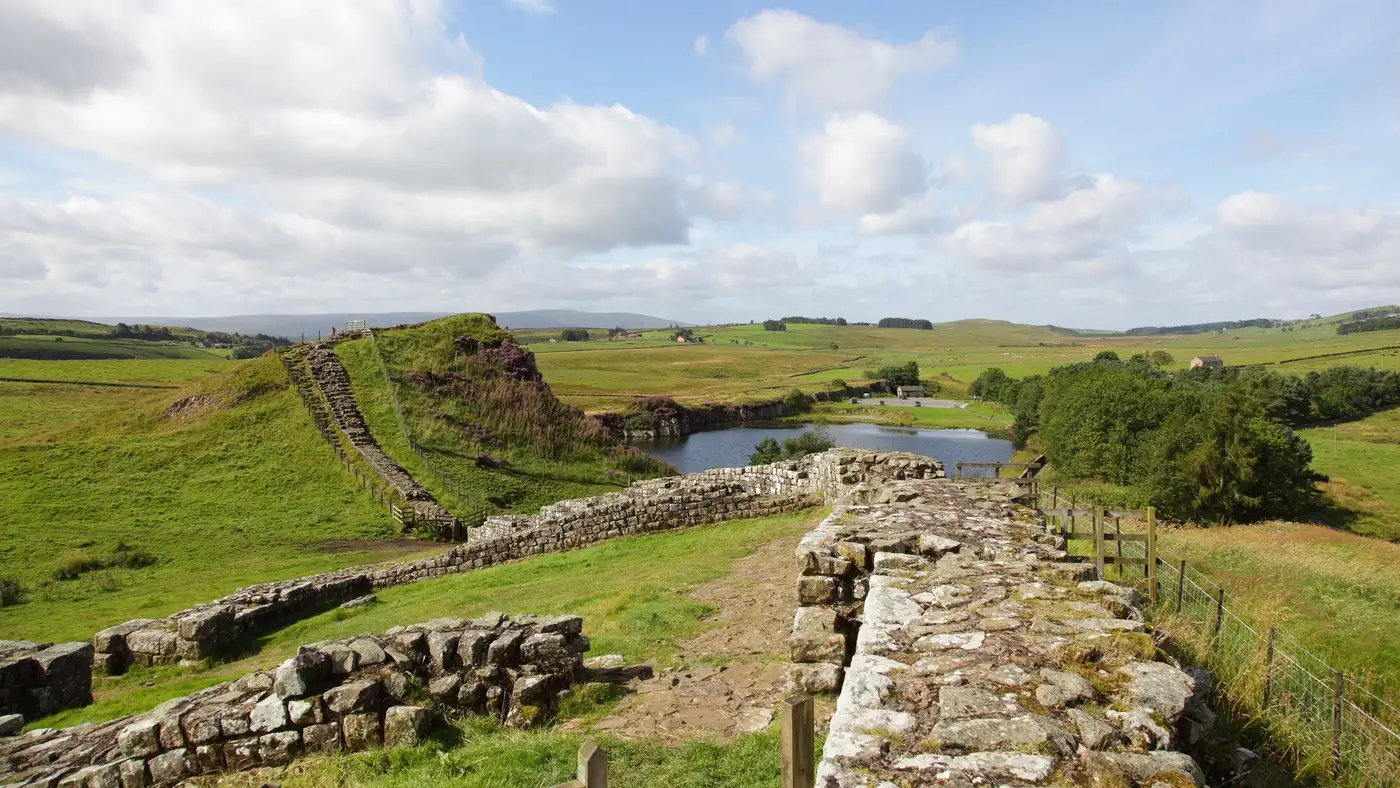
- The Roman frontier at Vindolanda and Hadrian's Wall
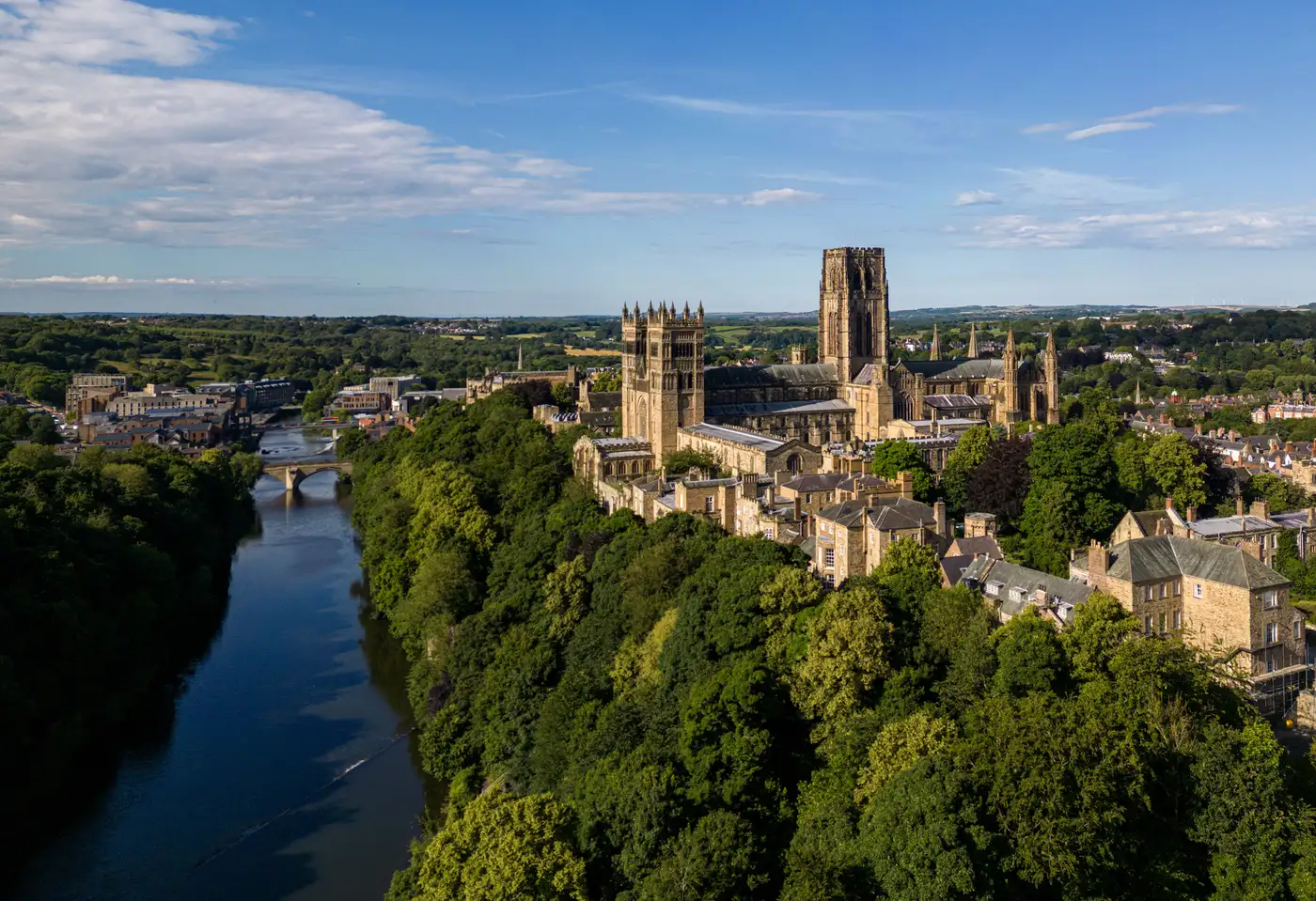
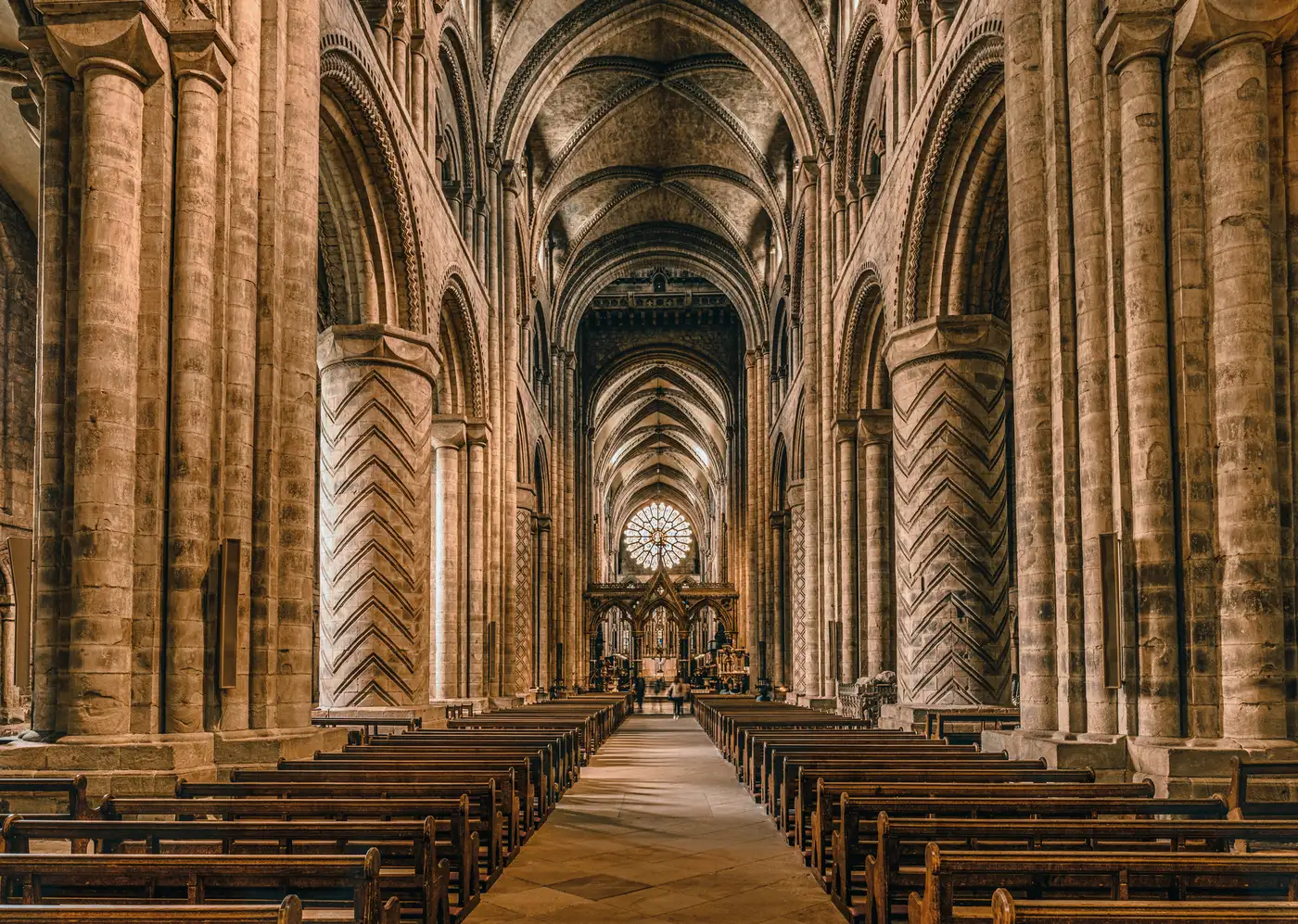
- Durham Cathedral, the finest Norman interior in England
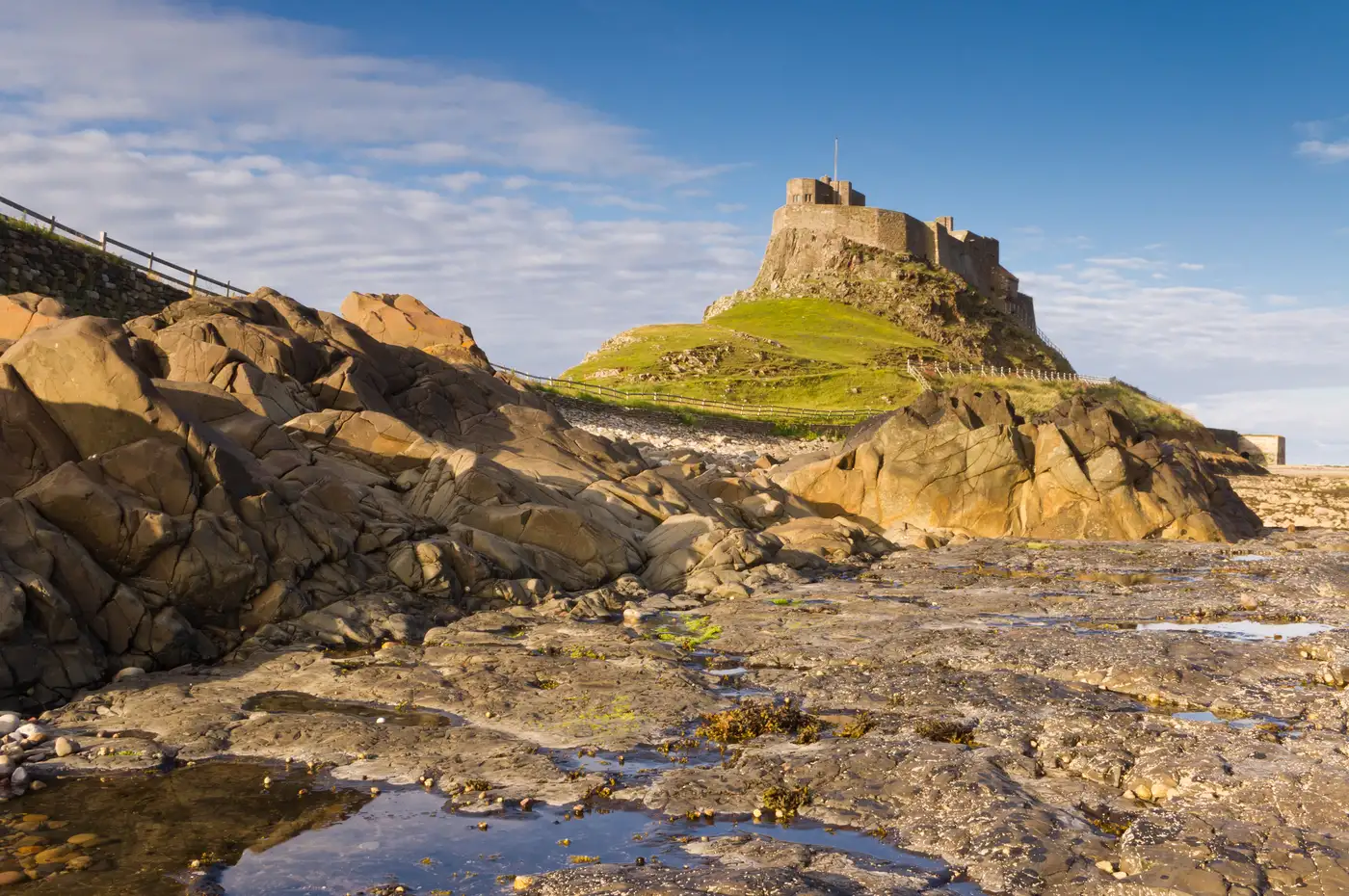
- Crossing the tidal causeway to Holy Island, Lindisfarne
- York's medieval walls, Viking underworld and soaring Minster
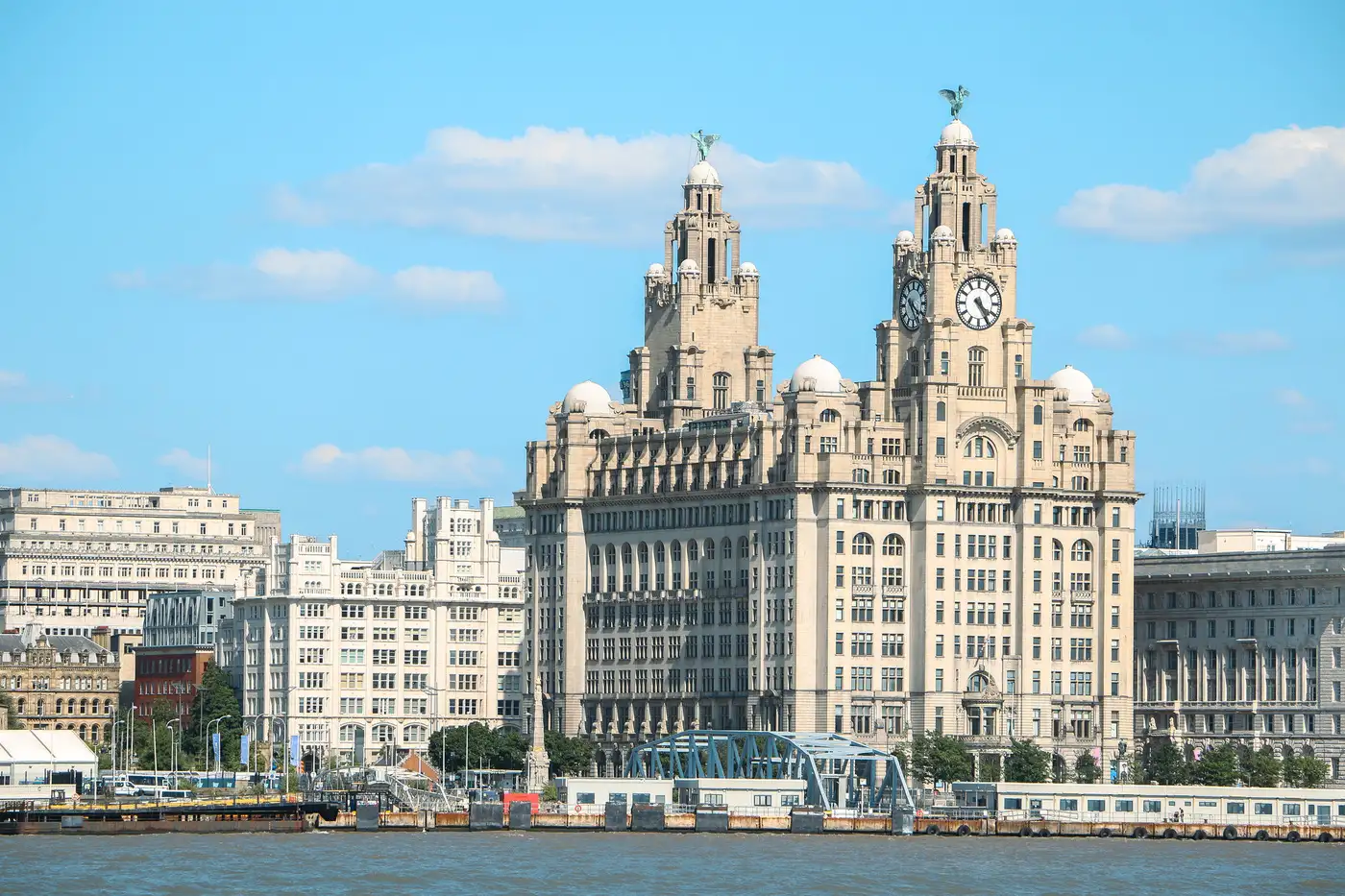
- The Mersey waterfront and a farewell ferry crossing at Liverpool
- Singles friendly (view options for single travellers)
"The Hodgson name traces its roots to County Durham — and this itinerary passes right through that landscape. In a way, this tour is a homecoming. I hope you'll join me." — Jonathan
Most tours of England begin and end in London, radiating outward from the capital like spokes from a wheel. This one doesn't. England's North is a journey through a different England entirely — older in some ways, more industrial in others, and considerably less visited than the cathedral towns and thatched villages of the south.
We begin in Manchester, the city that powered the first Industrial Revolution, and end thirteen days later on the Liverpool waterfront, where that revolution's products were loaded onto ships bound for the world. Between those two bookends lies a journey that moves through Roman frontier country, early Christian island outposts, Norman cathedral cities, Viking undercities and Romantic lakeland — each layer distinct, each connected to the last by the same restless northern energy that has been making things and sending them out into the world for two thousand years.
The Lake District gives us three unhurried nights among the fells and lakes that shaped Wordsworth and Beatrix Potter. Hadrian's Wall gives us Vindolanda, where Roman soldiers wrote letters home requesting warm socks. Durham gives us what many consider the finest Norman cathedral in Europe. Lindisfarne gives us a tidal causeway, a ruined priory, and the particular silence of an island that the North Sea reclaims twice daily. York gives us two thousand years in a walled city. Whitby gives us a clifftop abbey and 199 steps. Liverpool gives us the Mersey.
Thirteen days, two great industrial cities, the edge of a Roman empire, a tidal island, a clifftop abbey, the fells of Cumbria, the walls of York. This is time well spent.
- MealsSavour authentic flavours with included daily breakfasts and most dinners at hotels or handpicked local restaurants—immersing you in local cuisine without worrying about reservations or budgets.
- Transport & Logistics
Private air-conditioned coaches and included internal ferries and flights—ensuring hassle-free travel so you can focus entirely on the discoveries ahead.
"Adventures Abroad tour leader's management and guest services managed the tour with great skill and dedication. The tour leader was on top of every move and transfer. We have not experienced any issues with logistics and had a great time."
~ JULIA O"The tour leader did an excellent job coordinating some difficult travel logistics, power outage issues and resolving problems and dealing with guests who had unrealistic expectations."
~ CYNTHIA COLLINS - Expert Guidance
Unlock insider secrets at every landmark with your full-time Tour Leader and expert local guides , all gratuities covered—no hidden tipping surprises—so you immerse fully in your destination's stories, worry-free. (Except for the tips to your tour leader at the end of your tour.)
"Amazing tour guide. Our tour guide was very well organized, Her passion, knowledge, and enthusiasm completely transformed the travel experience into something truly unforgettable..."
~ MELANIE LEMAIRE"Highly recommend every trip with Adventures Abroad. It's a well organized and well thought out adventure. The tour leaders are friendly, knowledgeable and experienced professionals. Highly recommend this company."
~ SUSAN WALL - Sightseeing & EntrancesAll entrance fees for sites visited as per the itinerary—no hidden costs—so you can explore ancient ruins and excursions with complete peace of mind.
- AccommodationsUnwind in clean, well-located 3 to 4-star hotels with private en suite facilities—handpicked for comfort and convenience after each day's discoveries—so you can rest easy knowing your stay supports the real adventure, not steals the spotlight.
- Small Group
Discover the world in small groups of up to 18 travellers plus your expert Tour Leader—unlocking spontaneity, off-the-beaten-path adventures, and genuine connections at a relaxed pace, free from crowds.
"Looking Forward to My Next Adventure The best feature of the Adventures tour was the small size that allowed the group to quickly load up, let everyone get acquainted within the first 24 hours, capitalize on unplanned surprises along..."
~ PHILIP BLENSKI"Good value for a great time I have traveled with Adventures Abroad for over 20 years now. Well thought out, interesting itineraries and the other travelers congenial and friendly. The price always seems fair and overall a..."
~ Trusted Customer - Airport Transfers For Land & Air CustomersWe handle hassle-free airport transfers for all our land and air tour customers—plus early arrivals or late departures when you book extra hotel nights directly with us for added peace of mind.
- International airfare to/from the tour
- Tour Leader gratuities, lunches, drinks, personal items (phone, laundry, etc), international air taxes (if applicable), any excursions referenced as 'optional'
- Airport transfers for Land Only customers
- Optional trip cancellation insurance (for information please click on the "Resources" tab)
- Seasonality and Weather:
This tour operates in early to mid-September, one of the most rewarding months to travel in northern England. The summer crowds have thinned, accommodation and attractions are easier to navigate, and the light takes on the particular quality of early autumn — lower, warmer, and more atmospheric than the flat brightness of midsummer. The Lake District's fells begin to show their first seasonal colour, the North Yorkshire Moors are still in full heather bloom, and the North Sea coast at Whitby and Lindisfarne has a bracing clarity that suits both landscapes perfectly.
Rainfall is always possible in northern England regardless of season — this is, after all, the landscape that made the Lake District poets so productive indoors — but September typically offers more settled conditions than the months on either side. Days are long enough for unhurried sightseeing without the extended twilight of midsummer. - Transport and Travel Conditions:
This tour travels entirely by private coach, making it one of the more comfortable ways to cover northern England's varied terrain. Daily distances are moderate and well-paced, with the coach serving as a reliable base between excursions rather than a long-haul vehicle. Walking is an integral part of the experience — city tours, abbey ruins, Roman forts and lakeside paths all involve time on foot, typically 2-3 hours of gentle to moderate walking per day on mixed surfaces including cobblestone, gravel paths and uneven historic stonework.
The rewards are considerable: landscapes that range from the still waters of the Lake District to the open moorland of the North Yorkshire Moors, cities whose medieval street plans remain largely intact, and sites where the physical experience of being there — standing on Hadrian's Wall, crossing a tidal causeway, climbing to a clifftop abbey — is irreplaceable.
Am I suitable for this tour? Please refer to our self-assessment form - Activity Level: 1
No particular physical activity is involved other than town/city walks and short walks to dinners and sites of interest, some of which are large.
To learn more about the Activity levels, please visit our tour styles page. - Accommodation:
Throughout the tour we stay in well-located 4-star hotels chosen for proximity to each destination's key areas — in most cases within walking distance of the sites and city centres we explore. In the Lake District, our hotel sits on the shores of Windermere. In Durham, our hotel occupies a riverside setting below the cathedral peninsula. York and Liverpool accommodation is centrally located in both cases. - Staff and Support:
Full-time Tour Leader (Jonathan Hodgson) plus local guide support at several locations.
Please note: Any advance notice/advertising regarding tour leadership assignation was accurate as of tour publish date. Factors such as unforeseen placement challenges, illness/injury, personal/family obligations, and other logistical considerations may necessitate adjustments without notice or compensation.
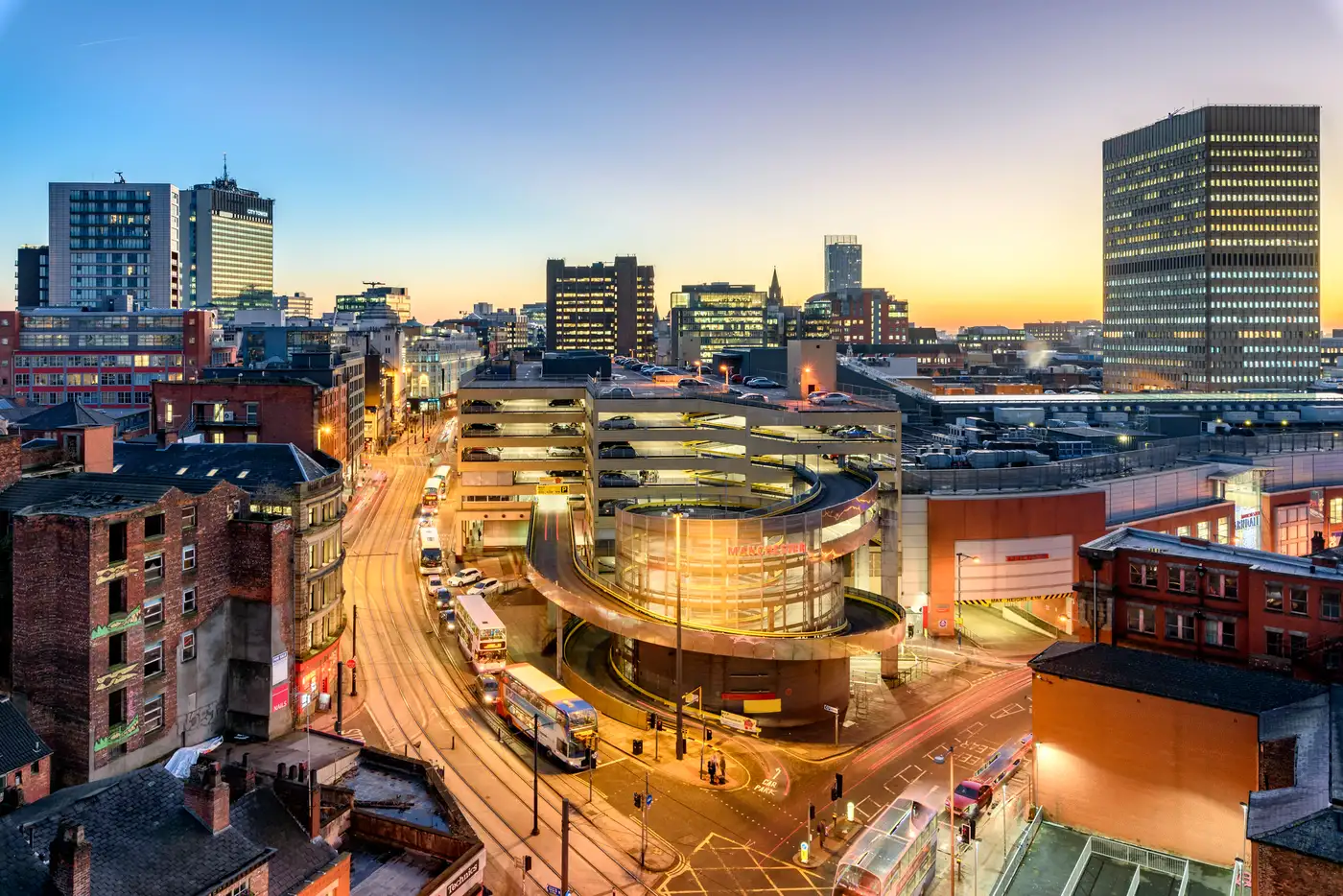
- Day 1:Arrival in ManchesterManchester announces itself on arrival — not with ancient monuments or cathedral spires, but with the sheer accumulated energy of a city that helped invent the modern world. The first industrial metropolis, the birthplace of the suffragette movement and the Free Trade movement, Manchester wears its history with the particular confidence of a place that knows what it started.
We settle in this evening and gather for a welcome dinner — the journey begins.
Overnight in Manchester.
Included Meal(s): Dinner - Day 2:Manchester Touring & the Lake DistrictThe morning belongs to Manchester. A guided walk through the city centre brings us to John Rylands Library on Deansgate — and here the tour announces its intentions early. Built in 1890 by Enriqueta Rylands as a memorial to her industrialist husband, this neo-Gothic masterpiece stops first-time visitors cold. Vaulted stone ceilings soar above the historic reading room, stained glass filters the light into something cathedral-like, and the collection — rare manuscripts, a Gutenberg Bible, one of the oldest known fragments of the New Testament — is as extraordinary as the building that houses it. Manchester's first multi-millionaire built cotton mills; his widow built this.
Nearby, Manchester Cathedral occupies a quieter corner of the city centre. Its perpendicular Gothic interior, largely 15th century, contains some of the finest medieval choir stalls in England.
After a break for lunch we board the coach for the journey west and north into Cumbria. The landscape shifts gradually from urban to pastoral to dramatic as the Lake District's fells come into view — England's highest ground, shaped by glaciers and celebrated by poets. We check in to our hotel on the shores of Windermere as the light softens over the water.
Overnight in the Lake District.
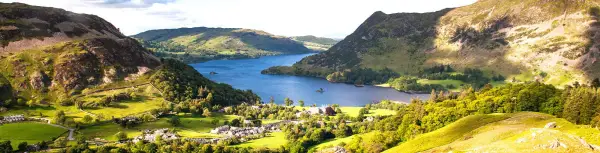
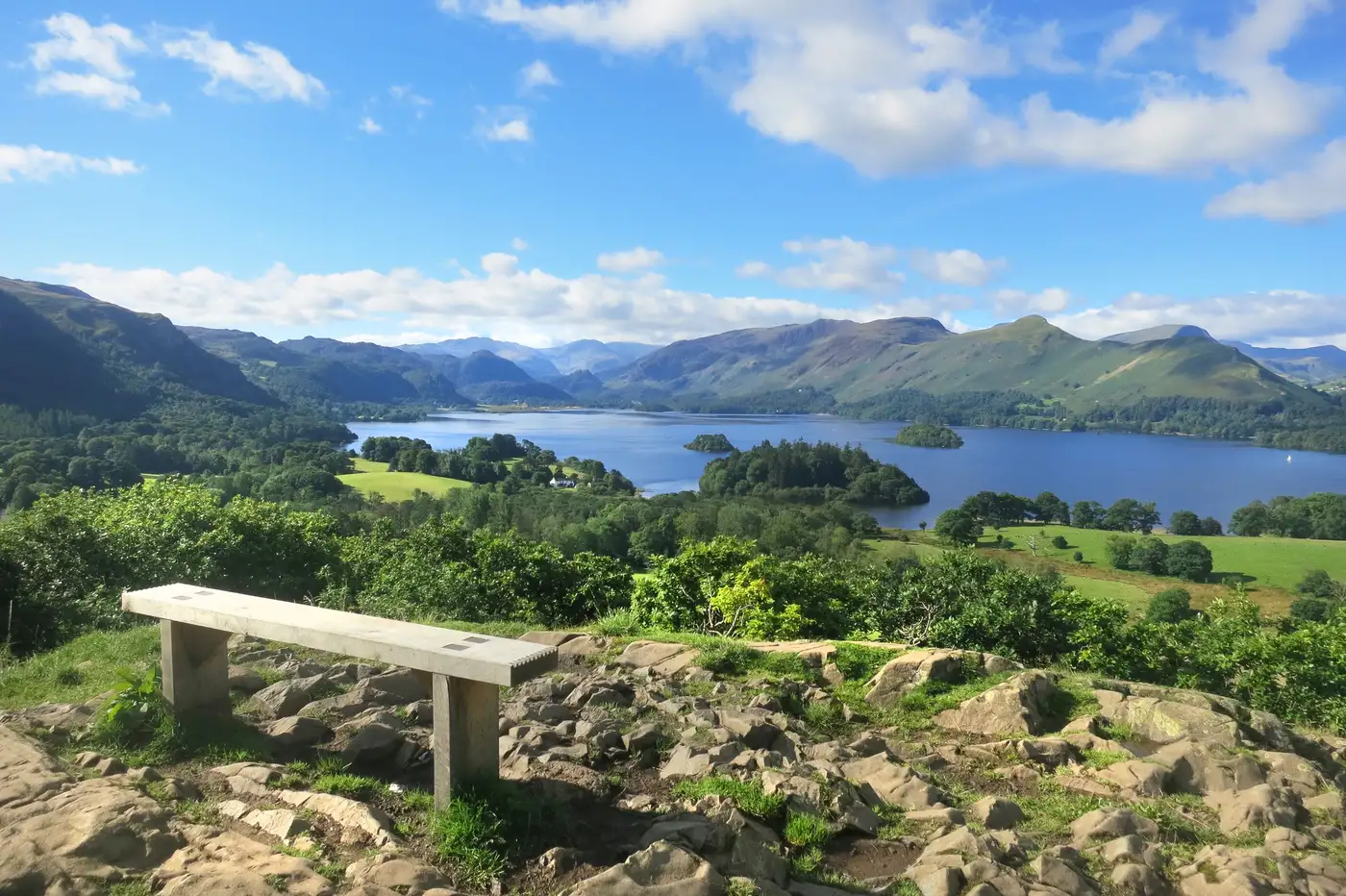
Included Meal(s): Breakfast and Dinner - Day 3:The Literary LakesThe Lake District rewards slow attention, and today we give it exactly that. A morning cruise on Windermere — England's largest lake, stretching 18 km/11 mi through a valley the glaciers carved — sets the tone. The fells rise on either side, their reflections caught in water that shifts from silver to slate to deep green depending on the light and the weather, sometimes within the same hour.
From the lake we travel to Near Sawrey, where Beatrix Potter farmed for the last thirty years of her life. Hill Top, her 17th-century farmhouse, remains much as she left it — the garden, the rooms, the views across the fields she loved and documented in meticulous watercolour. The books made her famous; the farm made her happy.
In Grasmere we visit Dove Cottage, where William Wordsworth lived during his most creative years. The rooms are intimate and surprisingly modest for a poet whose work would define an entire movement. Wordsworth and his sister Dorothy arrived here in 1799, and it was in these low-ceilinged rooms and on the surrounding fells that he wrote much of what would become the Prelude. The landscape wasn't merely backdrop — it was argument, subject, and spiritual sustenance.
Overnight in the Lake District.
Included Meal(s): Breakfast and Dinner - Day 4:Derwentwater & GrasmereDerwentwater is the wilder, more intimate cousin of Windermere — smaller, ringed more tightly by fells, its shoreline dotted with small wooded islands that appear and disappear in the morning mist. A cruise from Keswick to Lodore Falls traces the lake's eastern shore, the Borrowdale valley opening ahead and the summit of Skiddaw rising behind. This is the Lake District at its most quintessentially English.
The village of Grasmere, a short drive south, has been drawing visitors since Wordsworth put it on the literary map. We stop at the Grasmere Gingerbread Shop — a institution since 1854, operating from a tiny stone cottage beside the churchyard with a recipe that remains a closely guarded secret. The ambassador shares the story behind it over tea, fresh gingerbread, and a Cumberland rum butter sample on oatcake. It is, by any measure, a civilised way to spend a morning.
The afternoon is free to explore Grasmere at your own pace — the village, the fells above it, or simply the view from a good chair.
Overnight in the Lake District.
Included Meal(s): Breakfast and Dinner - Day 5:The Lake District - Hadrian's Wall - DurhamLeaving the lakes behind, we travel east through the northern Pennines toward one of the ancient world's most ambitious construction projects. Hadrian's Wall — 117 km/73 mi of dressed stone, forts, milecastles and ditches stretching coast to coast across northern England — was built on the orders of Emperor Hadrian in AD 122 to mark the northwestern limit of Roman civilisation. Standing on it today, looking north into what was then considered barbarian territory, the audacity of the enterprise is still palpable.
We visit Vindolanda first, and here the Wall stops being an abstraction and becomes something startlingly human. The fort sits just south of the Wall itself, and archaeologists have been excavating it for decades — the waterlogged anaerobic soil preserving organic material that would elsewhere have vanished millennia ago. Leather shoes, textiles, wooden combs, and most remarkably the Vindolanda writing tablets — thin slivers of wood bearing personal letters, duty rosters, and shopping lists from Roman soldiers and their families. One invites a fellow officer to a birthday party. Another is a young soldier's letter home requesting warm socks and underwear. The empire had edges, and people lived on them.
At Housesteads Roman Fort, a short drive east, we walk the Wall itself — a well-preserved stretch running dramatically across the ridge, the views north exactly as Roman sentries would have known them.
By evening we arrive in Durham and check in to our hotel on the banks of the River Wear.
Overnight in Durham.
Included Meal(s): Breakfast and Dinner - Day 6:Durham & Newcastle: A Day on the TyneThe River Tyne has been working for a long time. Romans crossed it, medieval merchants traded on it, and Victorian engineers spanned it with bridges that became icons of industrial confidence. Today we explore Newcastle's Quayside — the regenerated waterfront strip that runs below the city's steep banks — in the company of a local guide.
The Tyne Bridge, completed in 1928, dominates the view: its steel arch a direct ancestor of Sydney Harbour Bridge, both designed by the same engineering firm and built within four years of each other. The Quayside below it has reinvented itself several times over, most recently as one of northern England's liveliest cultural precincts.
We visit the Baltic Centre for Contemporary Art, a converted flour mill on the Gateshead bank — a building that once stored grain for the industrial north now houses rotating exhibitions of modern and contemporary work. Admission is free, and the rooftop view back across the Tyne toward Newcastle's layered skyline is worth the visit on its own terms.
We return to Durham this evening.
Overnight in Durham.
Included Meal(s): Breakfast and Dinner - Day 7:Day Trip to Lindisfarne - The Tidal IslandThe causeway to Lindisfarne is governed by the tides, not by us. Twice daily the North Sea covers the road and the island becomes what it has always essentially been — remote, self-contained, indifferent to the mainland. We time our crossing to the tide tables, driving across as the sea retreats, the mudflats stretching away on either side and the island's low silhouette resolving ahead into dunes, rooftops, and the outline of a ruined priory.
Lindisfarne's story begins in AD 635, when the Irish monk Aidan crossed from Iona at the invitation of the Northumbrian king and established a monastery on this unlikely outpost. What followed was one of the most remarkable chapters in early Christian history. The monks of Lindisfarne produced the Lindisfarne Gospels — an illuminated manuscript of breathtaking complexity and beauty, created around AD 715 and now housed in the British Library — and sent missionaries across northern England and into Europe. Christianity's reach into Britain was shaped in no small part by men living on a tidal island in the North Sea.
The priory ruins date from a later Norman foundation, built on the site of Aidan's original monastery after the Vikings had done their worst. The red sandstone arches, worn by thirteen centuries of North Sea weather, frame views of sky and sea that haven't changed since the first monks arrived.
The afternoon is free to walk the island's coastline, explore the village, or simply sit with the particular silence that tidal islands seem to generate on their own.
We return to Durham as the tide reclaims the causeway behind us.
Overnight in Durham.
Included Meal(s): Breakfast and Dinner - Day 8:Durham: Norman Stone & River Light - YorkThis morning we visit Durham Cathedral — one of those buildings that makes you stop walking. It rises above a bend in the River Wear on a rocky peninsula — Romanesque nave, massive compound piers, the earliest ribbed stone vaulting in Europe — and the cumulative effect of its interior is something that photographs fail to prepare you for. Built between 1093 and 1133, it remains the most complete Norman cathedral in England, its scale and confidence a deliberate statement of permanence from a Church that intended to last. The tomb of St Cuthbert, Lindisfarne's most celebrated monk, lies behind the high altar — a thread connecting yesterday's tidal island to this morning's cathedral city.
Durham Castle, adjacent to the cathedral on the same rocky promontory, has been continuously occupied since William the Conqueror ordered its construction in 1072. A guided tour leads through the great hall, the Norman chapel, and the Black Staircase — the castle now serves as a university college, its medieval fabric lived in and used rather than merely preserved.
A walk along the River Wear below the peninsula offers the view that has defined Durham for centuries — castle and cathedral reflected in the water, the city gathered around them on the steep banks above.
We travel south to York this afternoon, checking in as evening settles over the city's medieval walls.
Overnight in York.
Included Meal(s): Breakfast and Dinner - Day 9:York: Two Thousand Years in a Walled CityYork is one of those rare cities where history isn't something you visit — it's something you walk through. The Roman legionary fortress of Eboracum, the Viking trading settlement of Jorvik, the Norman city that grew up around a castle and a minster — each layer sits on top of the last, and the medieval street plan remains so intact that the 21st century feels, in places, like a recent arrival.
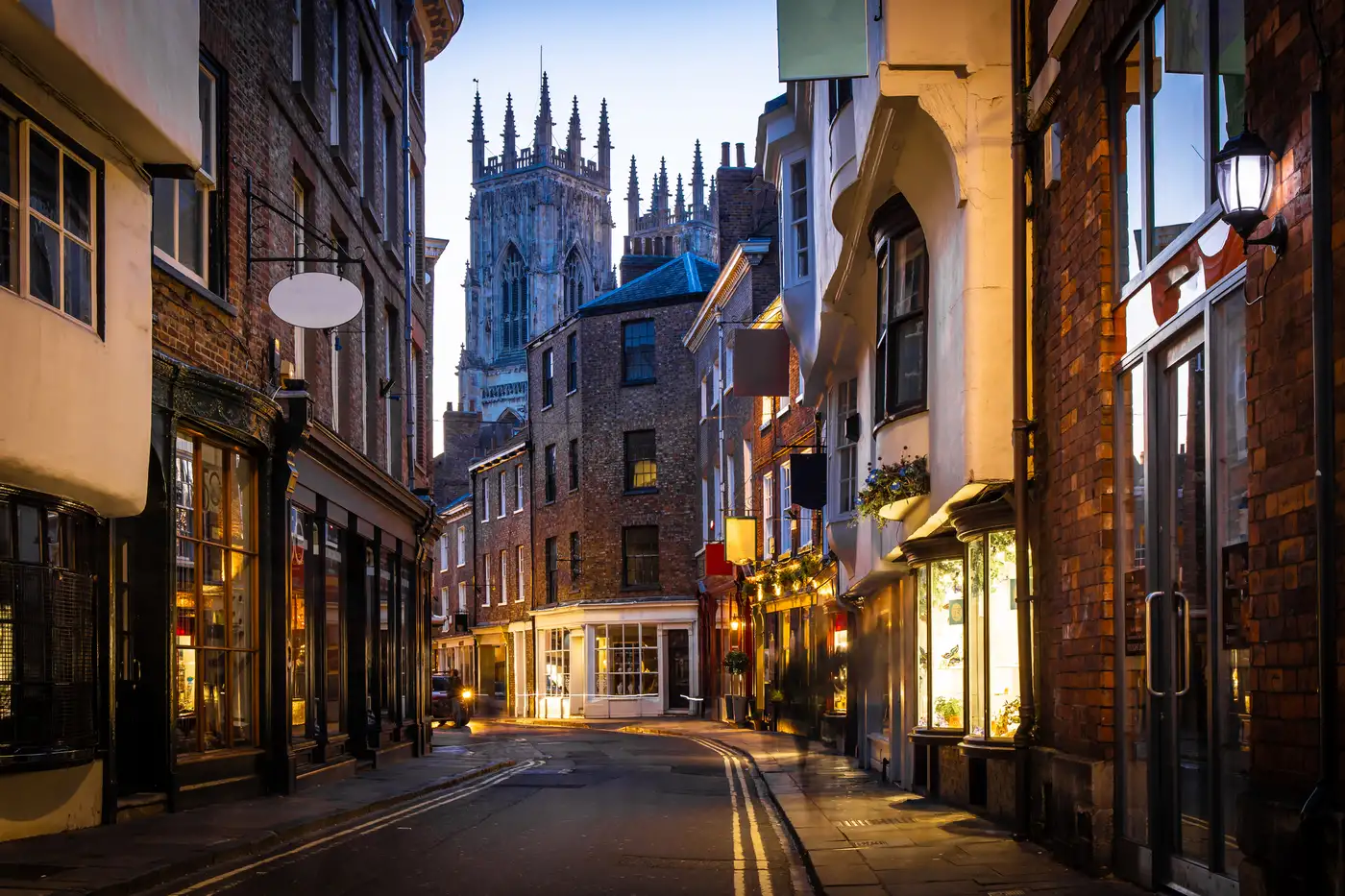
York Minster anchors the morning. The largest Gothic cathedral in northern Europe, its nave stretching 160 m/525 ft from west front to east end, it took 250 years to build and contains more medieval stained glass than any other building in England. We explore at our own pace, the scale of the interior making itself felt gradually rather than all at once.
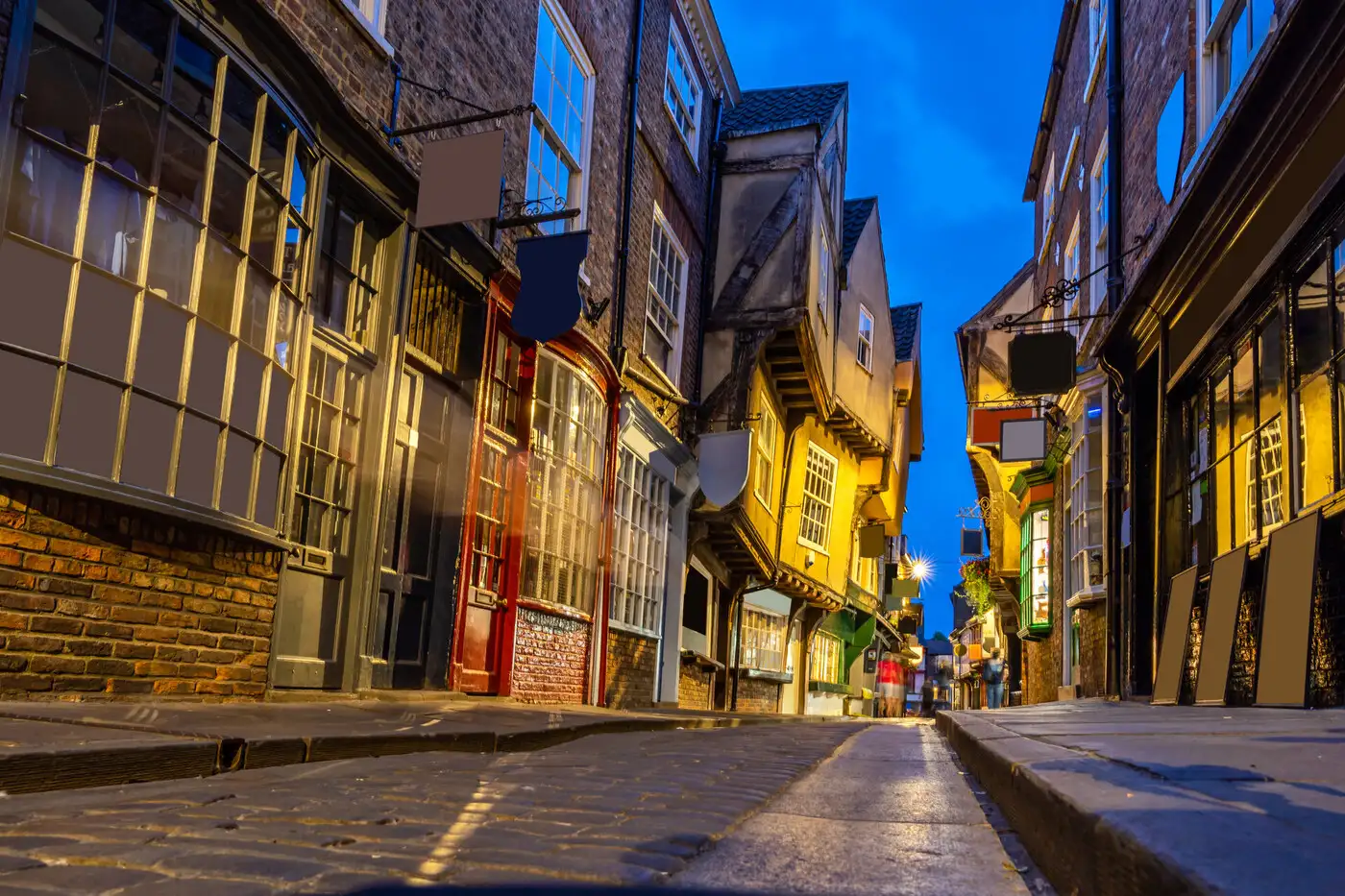
A guided walk follows through the medieval city — the Shambles, whose timber-framed buildings lean toward each other across a lane barely wide enough for two people, and the city walls, a largely intact circuit of Roman and medieval fortification offering rooftop views across the tangle of streets below.
Below street level, the Jorvik Viking Centre reconstructs the sights, sounds and — famously — smells of 10th-century York with archaeological precision. We visit Clifford's Tower, the stark stone remnant of William the Conqueror's castle, which looks out over the city from its artificial mound.
Overnight in York.
Included Meal(s): Breakfast and Dinner - Day 10:Whitby and the North Yorkshire MoorsThe North Yorkshire Moors stretch east from York in long unbroken ridges of heather and open sky — one of England's emptiest landscapes, crossed by ancient drovers' roads and punctuated by the ruins of abbeys that once organised this whole territory. We traverse them this morning, the moorland gradually giving way to the North Sea coast and the town of Whitby below.
Whitby is built on two sides of the River Esk where it meets the sea, the old town climbing steeply from the harbour on the east bank. At the top of 199 stone steps — worn smooth by centuries of feet — the ruins of Whitby Abbey stand on the clifftop, open to every wind that comes off the North Sea. Founded in AD 657 by the abbess Hilda, it was here that the Synod of Whitby in 664 settled the date of Easter for the entire English Church — a decision whose consequences reached from this clifftop across Christendom. The Normans rebuilt it in the 13th century; Henry VIII dissolved it in the 16th; the North Sea weather has been finishing the job ever since.
Bram Stoker sat on the bench above the harbour in 1890, watching the town below and the abbey ruins above, and found his setting for Dracula's arrival in England. The novel repaid the compliment — Whitby has never quite shaken the association, nor does it seem to want to.
The afternoon is free to explore the old town, the harbour, and the 199 steps at your own pace.
Overnight in York.
Included Meal(s): Breakfast and Dinner - Day 11:York to Liverpool via the Peak DistrictLeaving York, we travel south and west through the Vale of York before turning into the Peak District — England's first national park, a landscape of limestone dales, gritstone edges and deep river valleys that sits at the geographic heart of northern England.
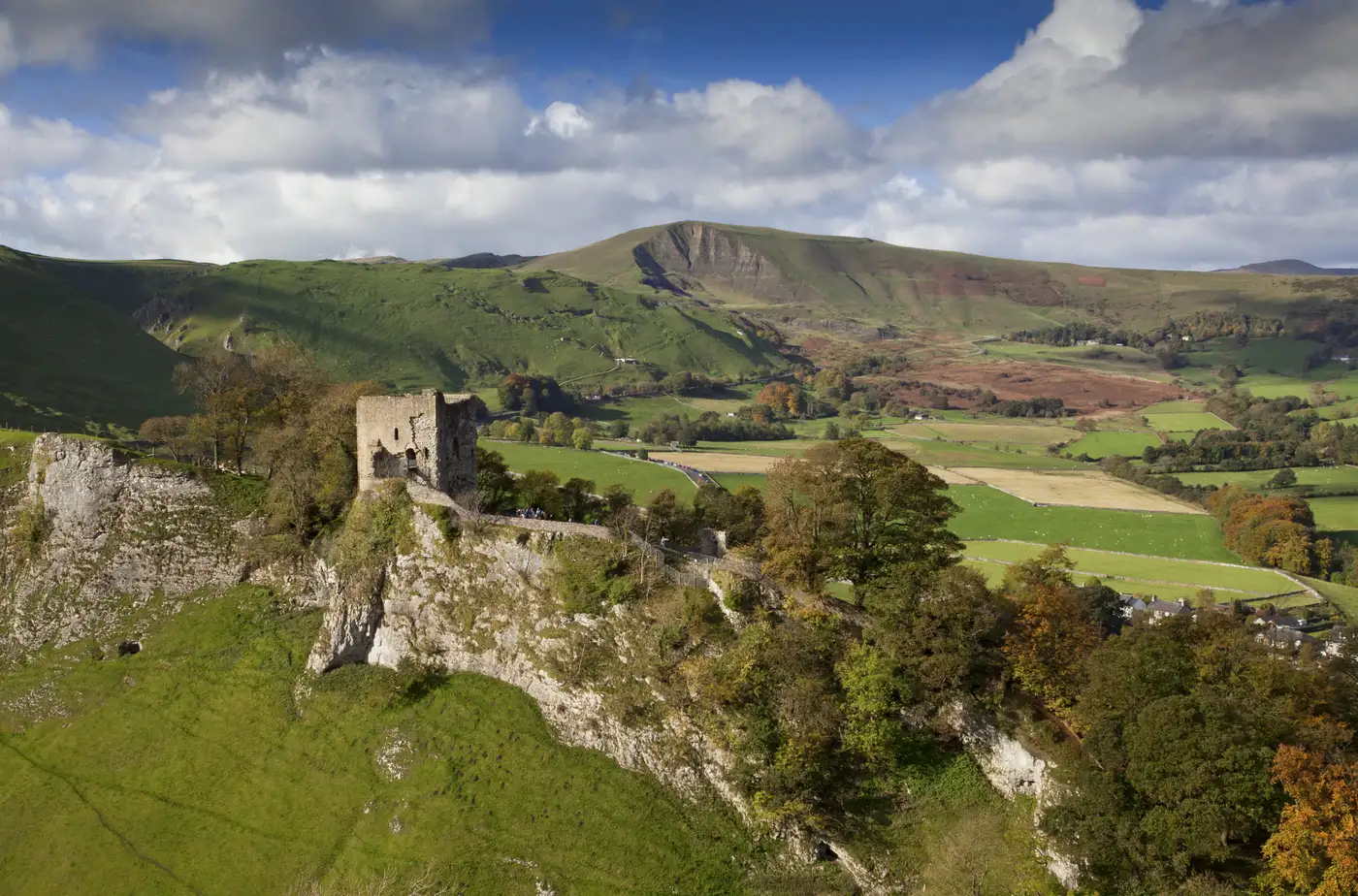
At Castleton we stop for Peveril Castle, a Norman fortress occupying a dramatic ridge above the Hope Valley. Built by William Peveril — an illegitimate son of William the Conqueror, rewarded with land after Hastings — it commands views across the valley that made its strategic purpose immediately obvious. The climb from the village is steep and short; the reward is a horizon that takes in half of Derbyshire.
From Castleton we continue west, the landscape flattening as we cross into Lancashire and approach the Mersey estuary. Liverpool announces itself gradually — the city's scale emerging through industrial and residential sprawl before the waterfront opens up ahead. We check in this evening with a day of the city still ahead of us.
Overnight in Liverpool.
Included Meal(s): Breakfast and Dinner - Day 12:Liverpool: The City That Faced the SeaIf Manchester made the industrial revolution, Liverpool sold it to the world. The city's waterfront — the Pier Head, the Albert Dock, the Royal Liver Building with its mythical Liver Birds standing watch over the estuary — is the physical record of an era when this port handled forty percent of the world's trade and millions of emigrants passed through on their way to new lives in North America, Australia, and beyond. A guided tour this morning traces that story through the streets and along the water.
The Mersey ferry crossing is one of those simple experiences that earns its place on any itinerary. Fifty minutes on the river, the Liverpool skyline receding behind and the Wirral coast approaching ahead, the recorded commentary tracing the estuary's history from medieval fishing port to imperial gateway. The water that began this journey as the still surface of Windermere ends it here — tidal, working, salt-scented, facing west toward the Atlantic.
The afternoon is free to explore Albert Dock, the magnificent Victorian warehouse complex that curves along the waterfront, gives the afternoon its geography. The buildings, restored in the 1980s after decades of dereliction, house museums, galleries, restaurants and cafes.
Overnight in Liverpool.
Included Meal(s): Breakfast and Dinner - Day 13:Departure from LiverpoolAfter breakfast we say our farewells and depart Liverpool — a city that has been sending people out into the world for centuries and seems entirely comfortable doing so. Thirteen days, two great industrial cities, the edge of a Roman empire, a tidal island, a clifftop abbey, the fells of Cumbria, the walls of York. Time well spent.
Bon voyage!
Included Meal(s): Breakfast
Countries Visited: United Kingdom
*The red tour trail on the map does not represent the actual travel path.

Book This Tour
- Final payment: Due 90 days prior to departure.
- Deposit: A non-refundable $500 USD Deposit is required at booking.
- Optional Single Supplement: $1550 USD (number of singles limited).
(View options forsingle travellers) - Transfering Tour or Date: Transferring to another tour or tour date is only permissible outside of 120 days prior to departure and is subject to a $100 USD change fee.
(Read our cancellation policy)
Prices below are per person, twin-sharing costs in US Dollars (USD). Pricing does not include airfare to/from the tour and any applicable taxes.
Frequently Asked Questions
- What is the maximum number of participants on a trip?Most of our tours carry a maximum of 18 participants; some tours (ie hiking tours) top out at 16. In the event that we do not achieve our minimum complement by our 90-day deadline, we may offer group members the option of paying a "small-group surcharge" as an alternative to cancellation. If all group members agree, we will confirm the trip at existing numbers; this surcharge is refundable in the event that we ultimately achieve our regular minimum. If the small group surcharge is not accepted, we will offer a refund of your deposit or a different trip of your choice.
- Can I extend my tour either at the beginning or end? What about stopovers?Yes, you can extend your tour either at the beginning or the end and we can book accommodation in our tour hotel. Stopovers are often permitted, depending on air routing. Stopovers usually carry a "stopover" fee levied by the airline.
- How do I make a reservation? How and when do I pay?The easiest way to make a reservation is via our website; during office hours, you are also more than welcome to contact us by telephone.
A non-refundable deposit is payable at the time of booking; if a reservation is made within 90 days, full payment is required. Some trips require a larger deposit. If international airline bookings require a non-refundable payment in order to secure space or the lowest available fare, we will require an increase in deposit equal to the cost of the ticket(s).
Early enrolment is always encouraged as group size is limited and some trips require greater preparation time.
Once we have received your deposit, we will confirm your space and send you a confirmation package containing your trip itinerary, any visa/travel permit related documents, invoice, clothing and equipment recommendations, general information on your destination(s), and forms for you to complete, sign and return to us. Your air e-tickets (if applicable), final hotel list, final trip itinerary, and instructions on how to join your tour, will be sent approximately 2-3 weeks prior to departure. - What about cancellations, refunds, and transfers?Please review our cancellation policy page for details.
- I am a single who prefers my own room. What is a single supplement?All of our tours have a single supplement for those who want to be guaranteed their own room at each location.
This supplement is a reflection of the fact that most hotels around the world do not discount the regular twin-share rate for a room by 50% for only one person occupying a room. Most hotels will give a break on the price, but usually in the range of 25-30% of the twin-share rate. This difference, multiplied by each night, amounts to the single supplement.
The conventional amount can also vary from country to country and some destinations are more expensive than others for single occupancy. In order to be "single friendly," the supplements we apply are not a profit centre for us and we do our best to keep them as reasonable as possible.
On most tours we limit the number of singles available, not to be punitive, but rather because many hotels allow for only a limited number of singles; some smaller hotels at remote locations also have a limited number of single rooms available.
Please note that most single rooms around the world are smaller than twin-share rooms and will likely have only one bed. - Do you have a shared accommodation program?Yes! If you are single traveller and are willing to share, we will do our best to pair you with a same-gender roommate. Please note that should we fail to pair you, we will absorb the single supplement fee and you will default to a single room at no extra charge.