Small Group Experiential Travel
14 Day Dodecanese Islands Tour

14 Day Dodecanese Islands Tour

Volcanic Landscapes, Medieval Harbours & Island Traditions
Tour Code
GD1
When To Go
May, Sep
Start
Rhodos (RHO)
End
Athens (ATH)
Countries Visited (1)
Greece
Overnight In (6)
Athens, Rhodes...More >
Activity Level
2 - ModerateDetails >
Tour Type
CulturalDetails >
Tour Type
  • History
  • Overview
  • Info & Inclusions
  • Itinerary
  • Map & Hotels
  • Photos
  • Dates & Prices
Highlights
  • 14 Days
  • Max Group Size 18
  • Rhodes' UNESCO-protected medieval city
  • Symi's neoclassical harbour & monastery of Panormitis
  • Nisyros volcano & hydrothermal crater you can walk into Kalymnos: sponge diving heritage & coastal walks
  • Leros' Italian rationalist architecture & Byzantine castle
  • Tour Leader-led optional walks on three islands
  • Local tavernas, island specialties & a Leros winery visit
  • Singles friendly
    (view options for single travellers)


Description
Six islands, six entirely different stories.

Rhodes holds a medieval fortress city so intact it's a UNESCO World Heritage site. Symi's neoclassical merchant palaces cascade down a hillside so steep that commerce meant stairs. Nisyros sits atop an active volcano with a crater you can walk into, where earth still steams and vents sulphurous gas. Kalymnos built its entire civilization on sponge diving, then watched a 1986 viral collapse wipe out the industry overnight. Leros hosted Mussolini's "New Rome" — rationalist architecture, art deco government buildings, and a deep-water harbour designed for imperial ambitions.

Each island solved its own problems in wildly different ways. They never agreed on a single identity, never competed to be "most authentic." They simply stayed themselves.

The islands are also compact and hilly, and the best perspectives tend to require shoe leather rather than a coach window. On Symi, Kalymnos, and Leros your Tour Leader will offer optional walks that reveal corners of each island the itinerary alone can't reach. Nothing strenuous. Always optional. Consistently worth it.
Price Includes
  •  
    Meals
    Savour authentic flavours with included daily breakfasts and dinners at handpicked local restaurants—immersing you in local cuisine without worrying about reservations or budgets.
  •  
    Transport & Logistics

    Private air-conditioned coaches and included internal ferries and flights—ensuring hassle-free travel so you can focus entirely on the discoveries ahead.

    "Adventures Abroad tour leader's management and guest services managed the tour with great skill and dedication. The tour leader was on top of every move and transfer. We have not experienced any issues with logistics and had a great time."
    ~ JULIA O

    "The tour leader did an excellent job coordinating some difficult travel logistics, power outage issues and resolving problems and dealing with guests who had unrealistic expectations."
    ~ CYNTHIA COLLINS

  •  
    Expert Guidance

    Unlock insider secrets at every landmark with your full-time Tour Leader and expert local guides , all gratuities covered—no hidden tipping surprises—so you immerse fully in your destination's stories, worry-free. (Except for the tips to your tour leader at the end of your tour.)

    "Amazing tour guide. Our tour guide was very well organized, Her passion, knowledge, and enthusiasm completely transformed the travel experience into something truly unforgettable..."
    ~ MELANIE LEMAIRE

    "Highly recommend every trip with Adventures Abroad. It's a well organized and well thought out adventure. The tour leaders are friendly, knowledgeable and experienced professionals. Highly recommend this company."
    ~ SUSAN WALL

  •  
    Sightseeing & Entrances
    All entrance fees for sites visited as per the itinerary—no hidden costs—so you can explore ancient ruins and excursions with complete peace of mind.
  •  
    Accommodations
    Unwind in clean, well-located 3 to 4-star hotels with private en suite facilities—handpicked for comfort and convenience after each day's discoveries—so you can rest easy knowing your stay supports the real adventure, not steals the spotlight.
  •  
    Small Group

    Discover the world in small groups of up to 18 travellers plus your expert Tour Leader—unlocking spontaneity, off-the-beaten-path adventures, and genuine connections at a relaxed pace, free from crowds.

    "Looking Forward to My Next Adventure The best feature of the Adventures tour was the small size that allowed the group to quickly load up, let everyone get acquainted within the first 24 hours, capitalize on unplanned surprises along..."
    ~ PHILIP BLENSKI

    "Good value for a great time I have traveled with Adventures Abroad for over 20 years now. Well thought out, interesting itineraries and the other travelers congenial and friendly. The price always seems fair and overall a..."
    ~ Trusted Customer

  •  
    Airport Transfers For Land & Air Customers
    We handle hassle-free airport transfers for all our land and air tour customers—plus early arrivals or late departures when you book extra hotel nights directly with us for added peace of mind.


Exclusions
  • International airfare to/from the tour.
  • Tour Leader gratuities, lunches, personal items (phone, laundry, etc), and excursions referenced as 'optional'.
  • Airport transfers for Land Only customers.
  • Travel insurance.(please refer to the "Resources" tab for details)
  • To add a post-trip 3-night/2-day extension in Athens, please refer to tour code GD2


Trip Info
  • Seasonality and Weather:
    In the Dodecanese Islands, including Rhodes, both May and late September/early October are considered shoulder seasons, each offering pleasant conditions for island exploration outside the peak summer crowds. May brings mild, warming temperatures and a landscape still green from spring, with sea temperatures cooler but comfortable for swimming as the season progresses. Late September/early October offers warm, sunny days and the season's most reliably calm seas, with daytime temperatures ideal for hiking and sightseeing and sea temperatures still pleasant for swimming.

    Both periods see long daylight hours and minimal rainfall, with only occasional showers possible. Overall, these shoulder-season windows are excellent times to explore the islands' landscapes and historic sites in more comfortable conditions and lighter crowds than the high summer months.
  • Transport and Travel Conditions:

    This is not a cruise! We travel to/between islands via local ferries, which can range from hydrofoils to large vehicle carrying vessels. Uncontrollable factors such as weather may result in delays & Greek ferry schedules tend to change without notice; some itinerary adjustments may be necessary with late notice.

    Land transport (city & island tours, port transfers) by private air-conditioned coaches, minibuses and vans, depending on group size (see 'group size'). Locally we may make short hops using multiple local taxis.

    Porter service is rarely available on the islands (see 'inclusions'); you MUST be independent with your luggage, especially getting on/off ferries and at hotels.

    This trip is typical of most of our European tours, which are ambitious and involve full days of travel and sightseeing. On several islands your Tour Leader will offer optional walks — to a hilltop castle on Leros, a coastal chapel on Kalymnos, a quiet fishing village on Symi. These are easy to moderate in effort, always optional, and typically one to two hours. Beyond these, you will do a lot of walking on this trip in the form of walking tours of towns and cities and short walks to dinner.


    Am I suitable for this tour? Please refer to our self-assessment form
  • Activity Level: 2
    These are particularly busy tours that feature a lot of moving around, sometimes by train and short journeys on local transport. Walking tours of towns and cities are leisurely but you should be prepared to be on your feet for several hours. Some of our cultural trips that occur at high altitude and/or require greater independence with baggage handling (at hotels, airports, train stations) also fall into this category.

    To learn more about the Activity levels, please visit our tour styles page.
  • Accommodation:
    Our accommodation choices reflect the charm and spectacular views of for which the Greek Isles are famous. Large chain hotels are rare in the islands, and most hotels are still smaller, locally-owned/family-run establishments. Our mid-range rated (international 3-4 star standard) island properties feature private bath, air-conditioning, and in-house breakfast.

    Please note that our hotels on the smaller islands will likely feature rooms that are not uniform in size, style, and aspect, and sometimes our group may be split between two properties located near to each other.

    Click on the "Map & Hotels" tab for more information.
  • Staff and Support:
    Full-time Tour Leader, local step-on local guides in various locations
  • Group Size:
    Maximum 18 plus Tour Leader
View / Print Itinerary

  • Day 1: 
    Arrival on Rhodes
    Rhodes announces itself as a medieval fortress city — not with beaches or resort hotels, but with walls. The Knights Hospitaller wrapped this island in massive stone ramparts in the 14th century and built them to last. They did.

    Although Rhodes is the Dodecanese capital today, it wasn't one of the original twelve islands that gave the archipelago its name. The Dodecanese — literally twelve islands — scatter across the southeastern Aegean, closer to Turkey than to mainland Greece.

    We transfer to our hotel; tomorrow we begin our touring in the heart of Rhodes' medieval old city — the labyrinth of narrow streets, arched gateways, and limestone walls that have held human life for seven centuries.

    Overnight in Rhodos.


    Included Meal(s): Dinner, if required
  • Day 2: 
    Rhodes Touring
    The Palace of the Grand Masters rises above the old town -- gothic towers, crenellations, the architecture of serious medieval defence. The Knights built it not to impress but to repel. In 1856 an accidental explosion in a nearby church destroyed the palace. Italian occupiers later rebuilt it, and Mussolini used it as a summer retreat. History keeps arriving in Rhodes and leaving its layers behind.

    The Knights of St. John began as a religious order in 11th-century Amalfi, shifted toward military action, and eventually became something closer to a maritime mercenary outfit. By the time they arrived in Rhodes they were warrior-monks with money and intent. They held the island for two centuries before the Ottomans took it — a long, expensive commitment to a piece of stone in a difficult sea.

    Our walking tour traces the old town — UNESCO World Heritage site, the largest preserved medieval city in Europe. The streets are intentionally narrow and confusing. Defence strategy. The walls are thick enough to withstand cannonfire. Every spatial decision reflects the assumption that enemies would arrive by water without notice.

    Overnight in Rhodes.


    Included Meal(s): Breakfast and Dinner
  • Day 3: 
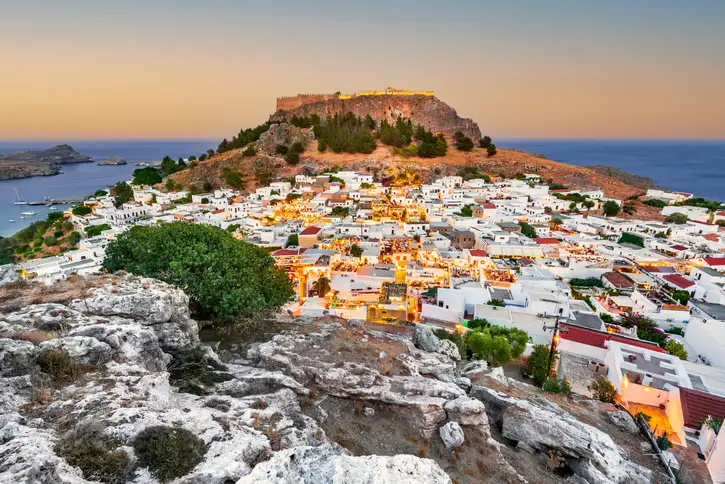
    Rhodes: Acropolis of Lindos
    Lindos sits on the eastern coast, the Acropolis of Athena Lindia crowning a hilltop 116 metres above the village below. Bronze Age sanctuary, 4th-century temple, St. Paul arriving in the bay in 58 AD — one empire replacing another in slow geological time.

    The village itself reveals what happens when trade produces prosperity but geography enforces constraint. The streets are narrow, steep, paved in stone. Whitewashed houses, blue doors — not a design choice but a response to heat, wind, and what local stone could provide. Traditional island architecture develops because of limits, not despite them.

    Our return journey crosses Rhodes from east to west, the landscape shifting from coastal resort development to interior villages to moorland. Filerimos Mountain gives us the view that explains Rhodes politically: three ancient city-states — Lindos, Ialysos, Kamiros — each controlling their own territory because the island's scale and terrain made unified rule impractical. They competed, cooperated, and eventually faded into the larger Roman structure.

    We return to Rhodes town mid to late afternoon.

    Overnight in Rhodes.


    Included Meal(s): Breakfast and Dinner
  • Day 4: 
    Rhodes - Ferry to Nisyros
    This morning we ferry to Nisyros — a volcano rising from the sea, still steaming. The crossing takes roughly two and a half hours, arriving with the afternoon ahead.

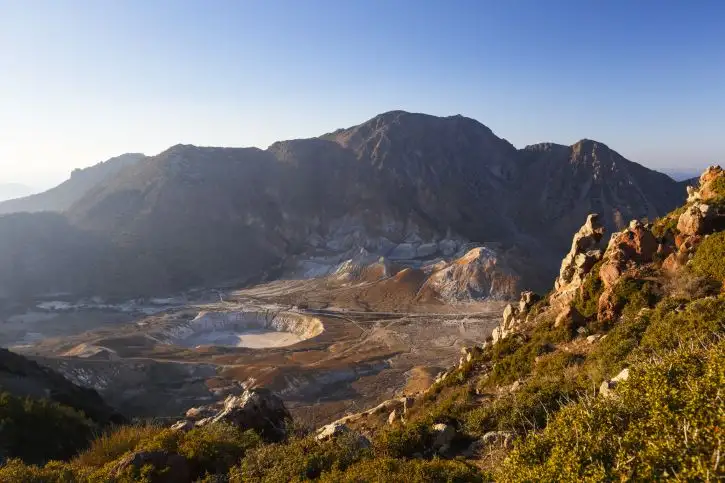
    Nisyros sits atop an active volcano. Greece's youngest volcano. Population approximately 1,000. The island features one of the world's largest hydrothermal craters, natural hot springs with waters ranging from 30 to 60 degrees Celsius. The oldest rock formations date 160,000 years back; the youngest are approximately 15,000 years old. The island is, geologically speaking, a teenager.

    In Homer's Iliad, Nisyros contributed ships to the Greek force sailing against Troy. Later it joined the Athenian alliance. Today the economy runs on fishing, agriculture, tourism, and mineral extraction — pumice and perlite quarried from volcanic deposits and shipped worldwide. The island is literally being mined, slowly disassembled, a resource base rather than an agricultural one.

    Our hotel sits near Mandraki, the island's small port and capital. Narrow lanes wind through a medieval castle district. Whitewashed houses, traditional architecture — the island has resisted major development, partly because it's less accessible, partly because tourism never arrived at scale.

    Mandraki's Archaeological Museum displays artifacts revealing the island's long history. The Folklore Museum preserves photographs and objects from recent centuries. Local specialties include pythia — a chickpea-based dish — and koukouzina, a traditional spirit distilled from grapes and figs.

    NOTE: Ferry schedules are subject to change based on weather, vessel availability, and seasonal variations. The sequence of islands visited and specific sightseeing activities may vary for your chosen departure date.

    Overnight on Nisyros.


    Included Meal(s): Breakfast and Dinner
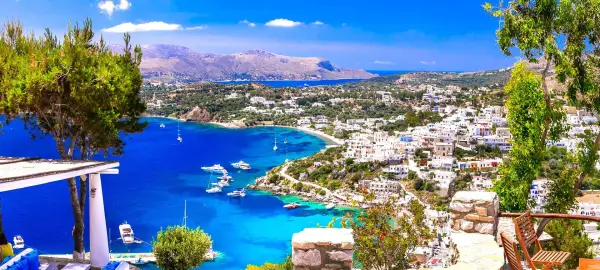
  • Day 5: 
    Nisyros Touring
    We begin at the Volcanological Museum in Nikia village, which provides essential context for understanding what we'll encounter today. Nikia sits 400 metres above sea level, close enough to the volcano to command panoramic views across the island and the surrounding Aegean.

    The island's primary attraction is the crater Stefanos — 260 to 330 metres in diameter, 27 metres deep. Pyroclastic deposits and volcanic mud cover the surrounding rocks. Steam vents perforate the crater floor. The landscape is genuinely otherworldly: grey mud, sulphurous vents, mineral deposits in shades of ochre and rust, geometry that suggests the moon more than the Mediterranean.

    We also visit Paleokastro, the island's ancient acropolis — 4th century BC, constructed from volcanic stone, the defensive walls still standing above Mandraki. Ancient builders working with the difficult, brittle material the island provided. It held enemies for centuries until enemies didn't matter anymore.

    Our touring includes Emporios, a village perched 400 metres above sea level. The Greek government designated it as architecture of high cultural importance because it retained its traditional character despite modern pressure.

    Overnight on Nisyros.


    Included Meal(s): Breakfast and Dinner
  • Day 6: 
    Nisyros - Ferry to Symi
    We depart very early this morning for Symi — a crossing that tests the commitment but rewards it. The ferry takes three hours across open water. We arrive mid-morning with the afternoon ahead.

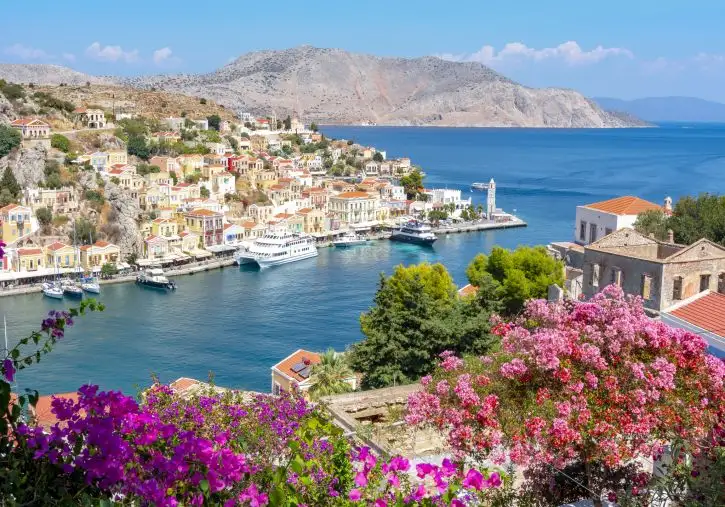
    Yialos — Symi's main harbour — presents itself as something genuinely unusual. Neoclassical merchant mansions cascade down a hillside in pastel hues, amphitheatre-style, each one facing the water where everyone could see it. We walk the waterfront, orienting ourselves to the town's geometry and energy. This is architecture as economic statement — the moment when maritime wealth knew exactly what to build.

    The afternoon is deliberately unstructured. This is rest and settling-in time. Swimming in the harbour if the mood strikes. A taverna lunch at your own pace. Exploring the steep lanes at leisure without a schedule. The island's fishing heritage remains visible: boats depart daily, nets are hauled, the rhythm of the place reveals itself when you're not rushing through it.

    Local tavernas serve garides — small sweet prawns caught in surrounding waters, traditionally eaten whole because the shells are delicate enough to be edible. The island hasn't fully pivoted to tourism, so you still eat what the sea provides.

    Overnight on Symi.


    Included Meal(s): Breakfast and Dinner
  • Day 7: 
    Symi Touring
    We visit Chorio, the upper village perched 200+ metres above Yialos harbour. Rather than climbing the 500 stone steps of Kali Strata, we travel by coach through the upper town — passing neoclassical houses in various states of preservation, some lovingly restored, others standing as ruins, which is their own kind of honesty about what happened when the merchant economy shifted elsewhere.

    The elevated position provides views across the harbour and surrounding sea. An ancient acropolis occupied this ridge in antiquity. The Knights of Saint John constructed a castle here in the 15th century, designed to protect against pirate raids. The Ottomans conquered it in 1522. Today there's not much left — the stone was repurposed, the strategic value evaporated — but the elevated position still says what it always said: control the high ground, command the harbour, manage the sea approaches.

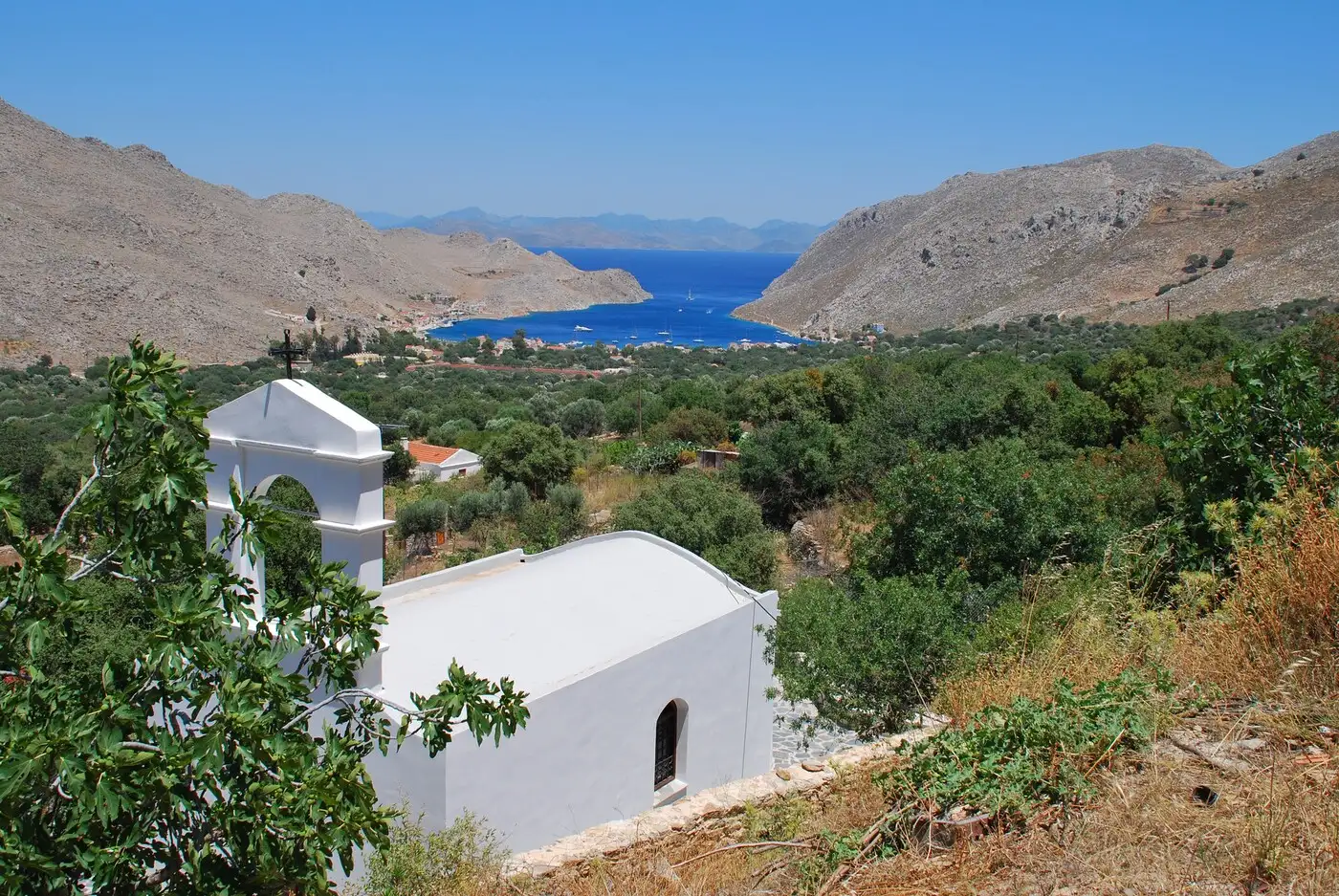
    We visit the 18th-century Panormitis Monastery, the Archangel Michael. Church, bell tower, two small museums displaying ecclesiastical artifacts and folk traditions. For those with energy after the monastery, your Tour Leader can lead you on one of Symi's most satisfying walks: a gentle descent from the Chorio neighbourhood down to the small seaside village of Pedi, about an hour each way on a well-marked path. The route trades the famous harbour bustle for quiet lanes, lizards on stone walls, and a fishing village that hasn't reconfigured itself for visitors.

    Those who'd rather linger over a coffee in Yialos are equally well-placed. Along the waterfront, merchants sell Symi sponges — natural sea sponges, silica and calcium formations, harvested from surrounding waters, cleaned and dried. The sponge trade shaped the eastern Mediterranean economy for centuries.

    Overnight on Symi.


    Included Meal(s): Breakfast and Dinner
  • Day 8: 
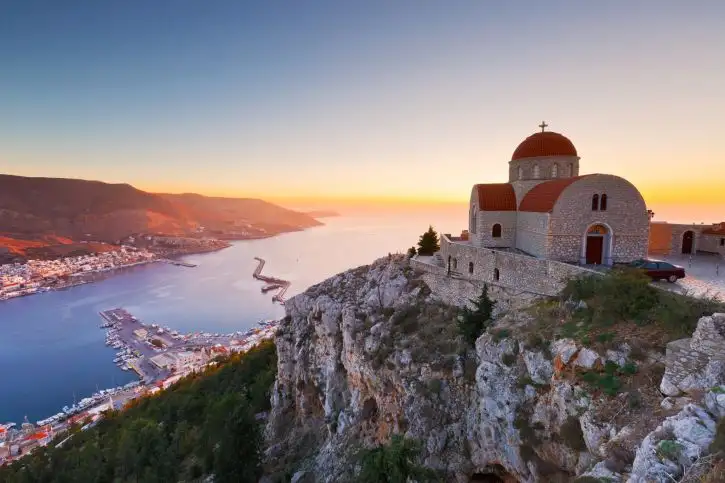
    Symi - Ferry to Kalymnos
    This morning we ferry to Kalymnos — roughly two hours across open water to an island that had to completely reinvent itself. We arrive mid-morning.

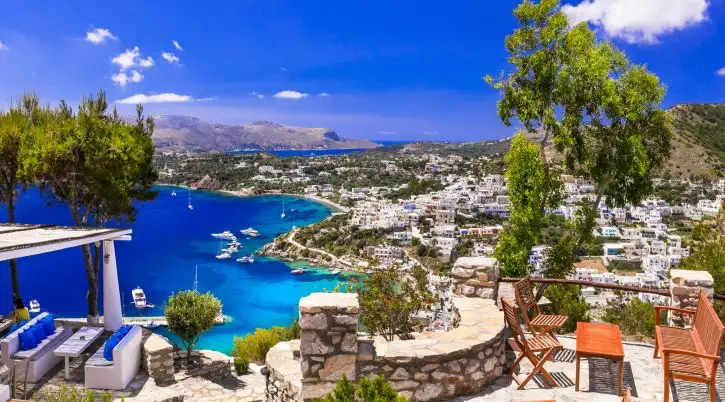
    Kalymnos built its entire civilization around sponge diving. Nearly all the island's men worked the sponge waters. The industry generated wealth, shaped culture, defined identity. In 1986, a viral disease killed most of the sponge beds. The economic foundation vanished in a season. Rather than fade, Kalymnos adapted. Rock climbing arrived. Tourism developed. New livelihoods emerged. The old identity became heritage, memory.

    We transfer to our hotel and settle in. The remainder of the afternoon is yours to explore at your own pace — walk the winding streets of Pothia, sit in a waterfront taverna, absorb the rhythms of a place rebuilding itself.

    Kalymnian cuisine reflects both Greek and broader Mediterranean influences. Fila is the local interpretation of stuffed grape leaves. Avgolemono combines chicken broth, egg yolks, and lemon. Seasonal specialties include Kalymnian salad featuring watermelon during summer months.

    Overnight on Kalymnos.


    Included Meal(s): Breakfast and Dinner
  • Day 9: 
    Kalymnos Touring
    The Archaeological Museum houses artifacts documenting the island's ancient past: prehistoric settlements, classical and Byzantine periods. The collection reveals Kalymnos's steady presence throughout different eras — not famous, not dominant, but consistently inhabited and consistently part of the broader Aegean network.

    We visit Agios Savvas, a church perched on the mountainside with expansive views over the town and harbour. The elevated position provides perspective on the island's dramatic topography and its relationship to the surrounding sea.

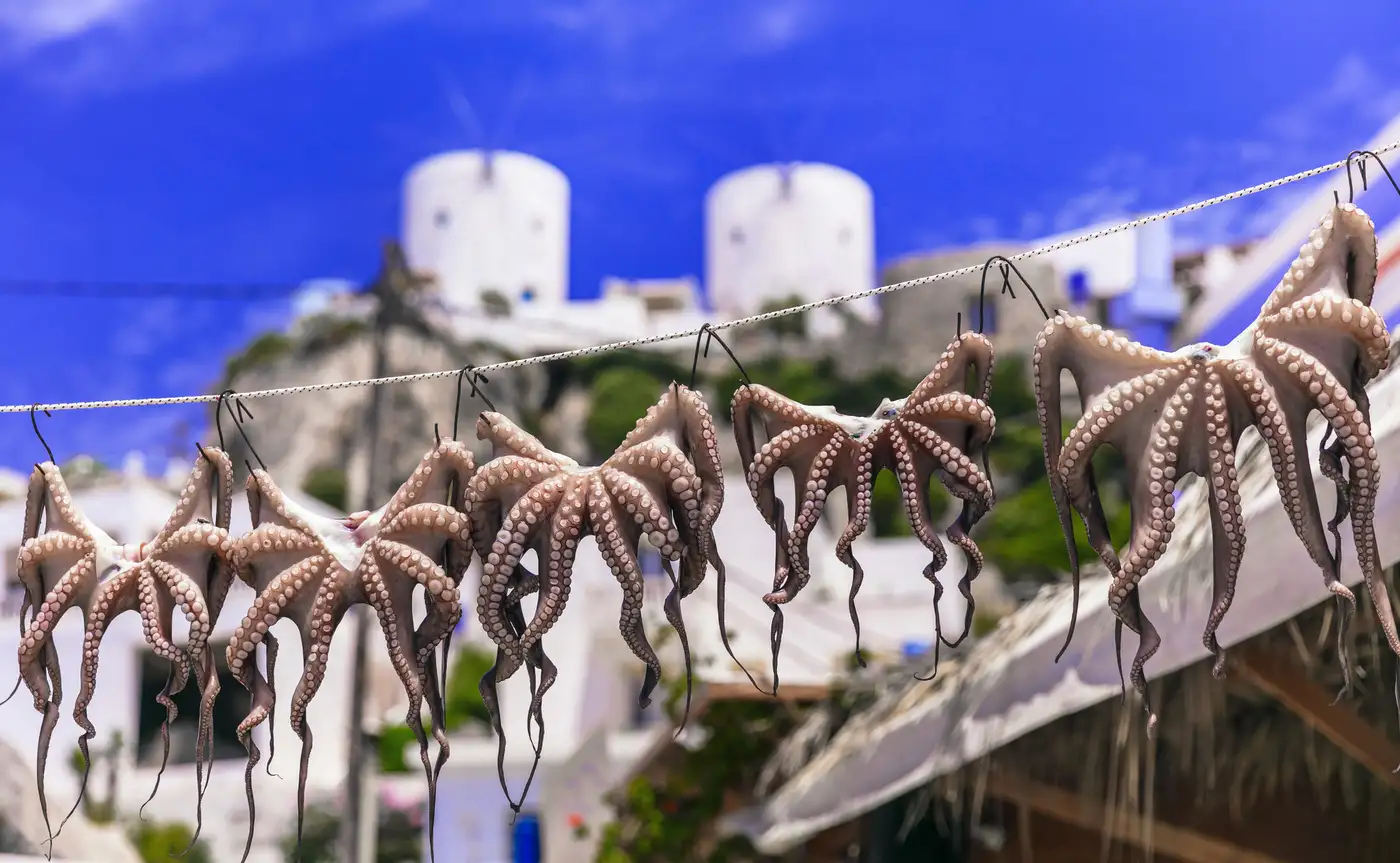
    To understand the sponge industry that defined Kalymnos for generations, we visit one of the island's sponge processing facilities. These operations demonstrate how raw sponges are cleaned, treated, and prepared for market — a process refined over centuries. Some facilities continue serving niche markets; others are closed or converted to other uses. The visible record of economic transition.

    For those who'd like to stretch their legs before dinner, the coastal path to Cape Trachilas and the chapel of Agios Fotios makes an ideal afternoon walk — roughly 6.5 km from the village of Kantouni, following the southwestern coastline to the island's edge and a small whitewashed chapel above the sea. Easy going with rewarding views, and no transport required. Your Tour Leader can point you in the right direction or join the group depending on interest.

    Those preferring a slower afternoon will find a waterfront taverna and a glass of local wine an equally sound choice.

    Overnight on Kalymnos.


    Included Meal(s): Breakfast and Dinner
  • Day 10: 
    Kalymnos - Ferry to Leros
    Today we ferry to Leros — a short crossing arriving at Agia Marina. According to mythology, the goddess Artemis came to Leros seeking solitude. The island maintains this character — hidden beaches and bays scattered along its coastline, traditional and neoclassical houses in settlements, a rhythm of life that remains deliberately unhurried.

    Leros is different from the islands we've visited. Founded as Porto Lagos in the 1930s during Italian occupation, the island's main port — Lakki — represents a distinctive moment in European urban planning: rationalist architecture, wide streets lined with eucalyptus trees, art deco and Italo-Mediterranean buildings arranged with geometric precision. It's an open-air museum of 1930s idealism, preserved not by nostalgia but by geography. Tourism never arrived at scale, so the architecture never needed updating.

    We transfer to our hotel and settle in. Depending on our arrival time, your Tour Leader may suggest/lead an informal orientation walk in the port area to observe the distinctive architecture and get a sense of the island's unhurried pace.

    Overnight on Leros.


    Included Meal(s): Breakfast and Dinner
  • Day 11: 
    Leros: Pantelio Castle & Leisure Time
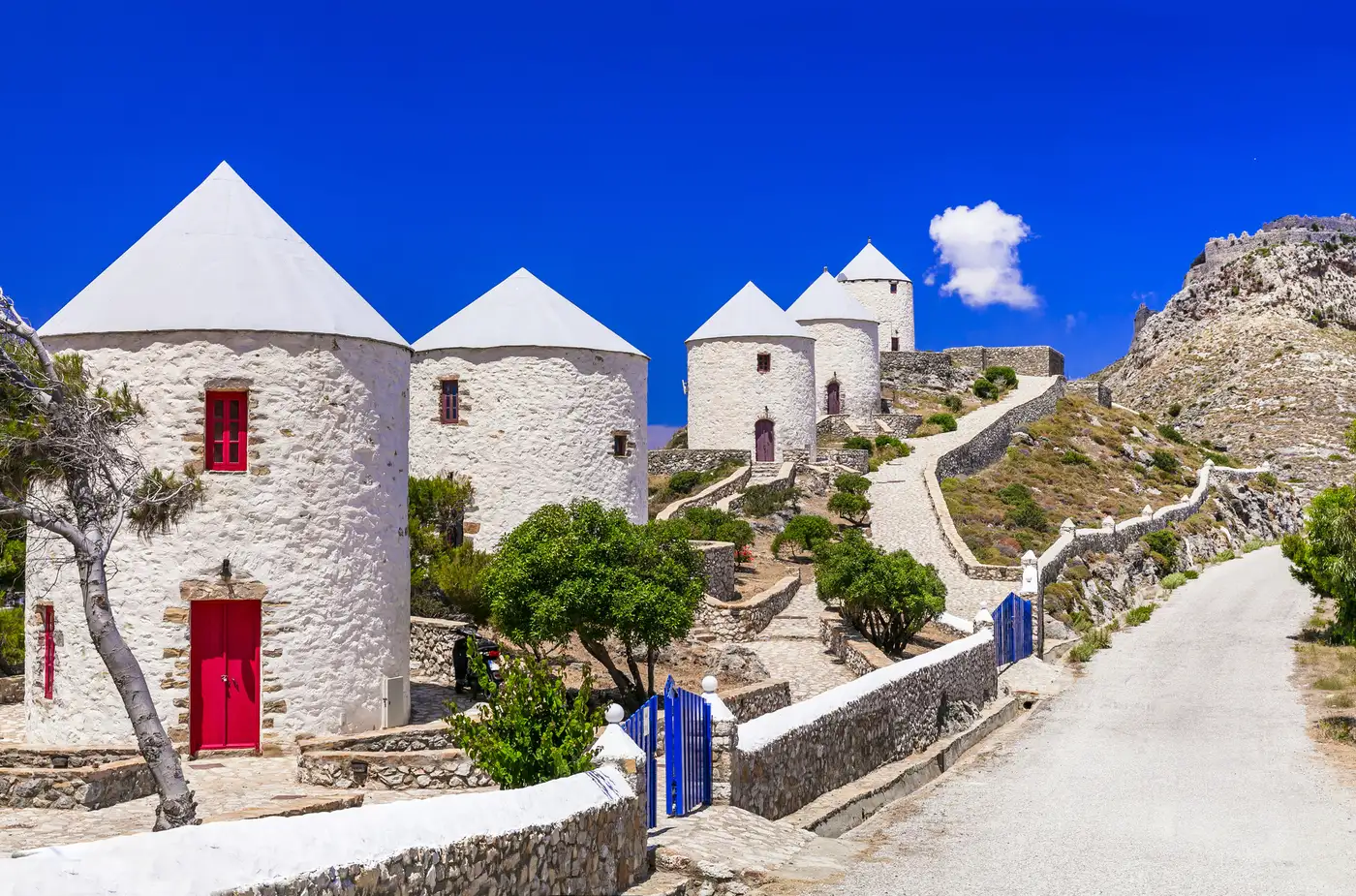
    This morning your Tour Leader leads an optional walk to Pantelio Castle and the island's famous windmills — a gentle climb from Platanos along a well-marked trail, rising through the ridge to six large stone windmills standing in a row above the town. The path continues to the Byzantine Castle of Pantelio, 11th century, occupying a rocky outcrop at the hill's summit with sweeping views over the bays of Agia Marina and Panteli and the surrounding sea. The walk takes roughly an hour and a half at a comfortable pace. Those who prefer a slower morning are equally welcome to find a café table and let Leros come to them.

    The afternoon is yours entirely. Your Tour Leader can help arrange a boat trip from Agia Marina harbour to the neighbouring island of Lipsi — a small, almost car-free island of about 700 people, white chapels, clear water, and a pace of life that makes Leros feel metropolitan.

    Closer to home, the Military Museum occupies Italian-built tunnels from the Second World War, focused on the 1943 Battle of Leros — a fierce, largely forgotten engagement in which British and German forces fought for control of the island's deep-water harbour.

    The Historical and Folklore Museum in Bellenis Tower displays wartime photographs, traditional instruments, and manuscripts. If the afternoon calls for nothing more ambitious than a waterfront taverna and a plate of whatever came off the boat this morning, that's also Leros doing its job.

    Overnight on Leros.


    Included Meal(s): Breakfast and Dinner
  • Day 12: 
    Lakki Bay & Castle Sightseeing
    No visit to Leros is complete without the island's castle — the Castle of the Virgin, located atop Pityki Hill 200 metres above sea level. Byzantine construction on the site of an ancient fort. It houses the Monastery of the Virgin Mary, whose icon, according to legend, appeared from the sea and is believed to possess healing powers. Rather than climbing the 500 steps from Platanos, we drive through the village, arriving at the elevated position with sweeping views of the bays of Agia Marina and Panteli.

    The coastal town of Agia Marina has grown to merge with Platanos, creating Leros's largest settlement. We walk its cobblestone streets past neoclassical mansions — some showing Egyptian influences, reflecting the island's connections to broader Mediterranean trade networks — traditional houses, and bougainvillea-filled courtyards. The architecture demonstrates the prosperity certain families achieved through maritime commerce — a pattern repeated across the Dodecanese.

    We visit the Archaeological Museum, displaying artifacts documenting Leros's long history from ancient through medieval periods.

    The Lakki Bay area contains remarkable examples of period architecture: a church, school, hospital, theatre, navy barracks, hotel, and circular agora with clocktower — all designed in the distinctive Italo-Mediterranean rationalist style. Mussolini envisioned Leros as Nea Polis (New City) — a planned settlement on former marshland, positioned to serve as the main port of Fascist Italy's Mediterranean navy. The harbour is the largest natural deep-water anchorage in the Mediterranean, protected from winds by surrounding mountains. The occupation ended. The architecture remains.

    Our tour continues to a local winery where we learn about wine production on the island. The visit includes tasting and lunch featuring local ingredients and traditional preparations. This evening we gather for our final dinner in the Dodecanese.

    Overnight on Leros.


    Included Meal(s): Breakfast, Lunch and Dinner
  • Day 13: 
    Leros - Fly to Athens
    Today we fly to Athens, the capital of Greece and the historical capital of Europe. Upon arrival we transfer to our central hotel.

    Athens has a long history dating from the first settlement in the Neolithic age; in the 5th Century BC, the city’s values and civilization acquired a universal significance. In 1834, it became the capital of the modern Greek state and an attractive modern metropolis with unrivalled charm.

    Flight schedule permitting, we may be able to achieve some informal sightseeing upon arrival. If you would like to add an optional two-day guided extension in Athens, please refer to tour GD2.

    Overnight in Athens.


    Included Meal(s): Breakfast and Dinner

  • Day 14: 
    Departure
    Departure from Athens.

    KALO TAXIDI/BON VOYAGE!


    Included Meal(s): Breakfast
Regions Visited: Europe, Eastern Europe and Western Europe
Countries Visited: Greece


*The red tour trail on the map does not represent the actual travel path.

Excellent
Overall Rating
4.7
Extend Your Trip
This tour is part of a series that can be upgraded to make for a longer trip.
Book Your Tour Here
Fast and easy

Book This Tour

Book your unforgettable adventure today! For any questions or advice, don't hesitate to contact us.

Have questions?

1-800-665-3998
  • Final payment: Due 90 days prior to departure.
  • Deposit: A non-refundable $500 USD Deposit is required at booking.
  • Optional Single Supplement: $1100 USD (number of singles limited).
    (View options for
    single travellers
    )
  • Transfering Tour or Date: Transferring to another tour or tour date is only permissible outside of 120 days prior to departure and is subject to a $100 USD change fee.
    (Read our cancellation policy)
Choose your departure date:

Prices below are per person, twin-sharing costs in US Dollars (USD). Pricing does not include airfare to/from the tour and any applicable taxes.


2026
2027
  • 01: 
    Can Adventures Abroad book my flights?
    Yes! We have full-service in-house air department with years of experience booking our passengers to far-flung places around the world from any place that has an airport. Travelling from Los Angeles to Rome? No problem. Travelling from Deer Lake, Newfoundland to Antananarivo? Also not a problem!


    • 01: 
      Can Adventures Abroad get better deals than I can online?
      Here’s the clear answer: Usually, no.


      Booking your flights with us is super convenient—it’s like one-stop shopping! Plus, we’ll take care of you if something goes wrong, like a canceled flight or missed connection. We include airport transfers at your destination when you book flights through us. Some routes to less common destinations can be hard to find on your own or through online search engines. Which usually only show popular routes. Let us make it easy for you!
    • 02: 
      Why should I book my flights with Adventures Abroad?
      • Included airport transfers: Enjoy a smoother trip with airport transfers provided when you book flights with us.
      • Peace of mind: Feel confident knowing we’ve got you covered during your trip.
      • Help with disruptions: If your travel plans change, we assist with rebooking flights and updating our partners and staff at your destination.
      • Avoid stress and confusion: Booking with us means you won’t have to deal directly with airlines or ticket sellers if issues arise.
  • 02: 
    Does the group fly together on a set route and airline?
    Unlike with some companies, you are not obliged to fly with a particular airline on "bulk" group flights. Because our travellers are coming from (usually) across North America, everyone who flies with us receives a custom air quotation that best serves their situation and preferences—we do not have "set" routings on only a limited number of airlines.


    While fare and convenience are always at the top of the list of criteria, we can work with you to find the option that suits you best.
  • 03: 
    When should my flights be quoted / booked?
    Everyone wants to know their flight details early. To get the best fares and routes, book your tour and pay your deposit as soon as possible. This helps us confirm the tour early. Booking 8-12 months ahead takes some trust, but it’s the best way to plan with so many factors involved. We can’t always provide exact flight costs more than 6 months out or before the tour is confirmed. But we almost always find a solution that works for our travellers.

If you are booking more than one person with different addresses and separate billing, please book each person individually.

7 or more travellers - Please contact us to book.
Single Travellers -
(View options)
Deposit Due Today: $500 USD
Reserve Your Spot
Greek Isles
Adventures Abroad offers several tours to the Greek Islands. Our tours take travellers to the Cyclades island group and Crete, where they can explore idyllic villages, stunning beaches, and ancient ruins. Highlights of the tour include visits to iconic landmarks such as the Acropolis in Athens, the breathtaking Santorini caldera, and the dramatic island of Folegandros. Along the way, travellers can enjoy delicious Greek cuisine, sip local wines,
Exciting Videos of
Tourcode: GD1
Greek Isles
Adventures Abroad offers several tours to the...
<01>

Frequently Asked Questions

  •  
    What is the maximum number of participants on a trip?
    Most of our tours carry a maximum of 18 participants; some tours (ie hiking tours) top out at 16. In the event that we do not achieve our minimum complement by our 90-day deadline, we may offer group members the option of paying a "small-group surcharge" as an alternative to cancellation. If all group members agree, we will confirm the trip at existing numbers; this surcharge is refundable in the event that we ultimately achieve our regular minimum. If the small group surcharge is not accepted, we will offer a refund of your deposit or a different trip of your choice.
  •  
    Can I extend my tour either at the beginning or end? What about stopovers?
    Yes, you can extend your tour either at the beginning or the end and we can book accommodation in our tour hotel. Stopovers are often permitted, depending on air routing. Stopovers usually carry a "stopover" fee levied by the airline.
  •  
    How do I make a reservation? How and when do I pay?
    The easiest way to make a reservation is via our website; during office hours, you are also more than welcome to contact us by telephone.

    A non-refundable deposit is payable at the time of booking; if a reservation is made within 90 days, full payment is required. Some trips require a larger deposit. If international airline bookings require a non-refundable payment in order to secure space or the lowest available fare, we will require an increase in deposit equal to the cost of the ticket(s).

    Early enrolment is always encouraged as group size is limited and some trips require greater preparation time.

    Once we have received your deposit, we will confirm your space and send you a confirmation package containing your trip itinerary, any visa/travel permit related documents, invoice, clothing and equipment recommendations, general information on your destination(s), and forms for you to complete, sign and return to us. Your air e-tickets (if applicable), final hotel list, final trip itinerary, and instructions on how to join your tour, will be sent approximately 2-3 weeks prior to departure.
  •  
    What about cancellations, refunds, and transfers?
    Please review our cancellation policy page for details.
  •  
    I am a single who prefers my own room. What is a single supplement?
    All of our tours have a single supplement for those who want to be guaranteed their own room at each location.

    This supplement is a reflection of the fact that most hotels around the world do not discount the regular twin-share rate for a room by 50% for only one person occupying a room. Most hotels will give a break on the price, but usually in the range of 25-30% of the twin-share rate. This difference, multiplied by each night, amounts to the single supplement.

    The conventional amount can also vary from country to country and some destinations are more expensive than others for single occupancy. In order to be "single friendly," the supplements we apply are not a profit centre for us and we do our best to keep them as reasonable as possible.

    On most tours we limit the number of singles available, not to be punitive, but rather because many hotels allow for only a limited number of singles; some smaller hotels at remote locations also have a limited number of single rooms available.

    Please note that most single rooms around the world are smaller than twin-share rooms and will likely have only one bed.
  •  
    Do you have a shared accommodation program?
    Yes! If you are single traveller and are willing to share, we will do our best to pair you with a same-gender roommate. Please note that should we fail to pair you, we will absorb the single supplement fee and you will default to a single room at no extra charge.

Share:
 DATES & PRICES
This website uses cookies to ensure you get the best experience on our website.
Additional Cookie Details.


Got it