- Cruise
- History
- Overview
- Info & Inclusions
- Itinerary
- Map & Hotels
- Photos
- Dates & Prices
- Tour Duration: 14 Days
- Max Group Size 18
- Vienna bookend experience: ship introduction plus two immersive nights for museums, opera, and coffeehouse culture
- Schonbrunn Palace baroque gardens with time beyond cruise-day visits
- Exclusive Oktoberfest celebration aboard ship with Bavarian music
- UNESCO Wachau Valley scenic cruising past terraced vineyards
- Melk Abbey's baroque masterpiece and medieval manuscripts
- Budapest's Szechenyi thermal baths where locals play chess in steaming pools
- Jewish Quarter including Europe's largest synagogue and ruin-pub architecture
- Belvedere Palace and Klimt's "The Kiss" with unhurried gallery time.
- Singles friendly (view options for single travellers)
Post-cruise, the itinerary extends beyond the typical model with additional nights in both Budapest and Vienna. Budapest reveals its layered stories across two nights—the Jewish Quarter's resilience, ruin pubs transforming decay into art, thermal baths where locals play chess in steaming water. Vienna, glimpsed during the cruise, receives two full nights for deeper exploration: Schonbrunn's palace and gardens, Klimt's golden masterpieces at the Belvedere, coffeehouse culture, and evening concerts in gilded halls. This is the Danube's imperial corridor experienced properly: not rushed, but with the time these legendary cities deserve.
- MealsSavour authentic flavours with included daily breakfasts, some lunches, and dinners at hotels or handpicked local restaurants—immersing you in local cuisine without worrying about reservations or budgets.
- Transport & Logistics
Private air-conditioned coaches and included internal ferries and flights—ensuring hassle-free travel so you can focus entirely on the discoveries ahead.
"Adventures Abroad tour leader's management and guest services managed the tour with great skill and dedication. The tour leader was on top of every move and transfer. We have not experienced any issues with logistics and had a great time."
~ JULIA O"The tour leader did an excellent job coordinating some difficult travel logistics, power outage issues and resolving problems and dealing with guests who had unrealistic expectations."
~ CYNTHIA COLLINS - Expert Guidance
Unlock insider secrets at every landmark with your full-time Tour Leader and expert local guides , all gratuities covered—no hidden tipping surprises—so you immerse fully in your destination's stories, worry-free. (Except for the tips to your tour leader at the end of your tour.)
"Amazing tour guide. Our tour guide was very well organized, Her passion, knowledge, and enthusiasm completely transformed the travel experience into something truly unforgettable..."
~ MELANIE LEMAIRE"Highly recommend every trip with Adventures Abroad. It's a well organized and well thought out adventure. The tour leaders are friendly, knowledgeable and experienced professionals. Highly recommend this company."
~ SUSAN WALL - Sightseeing & EntrancesAll entrance fees for sites visited as per the itinerary—no hidden costs—so you can explore ancient ruins and excursions with complete peace of mind.
- AccommodationsUnwind in clean, well-located 3 to 4-star hotels with private en suite facilities—handpicked for comfort and convenience after each day's discoveries—so you can rest easy knowing your stay supports the real adventure, not steals the spotlight.
- Small Group
Discover the world in small groups of up to 18 travellers plus your expert Tour Leader—unlocking spontaneity, off-the-beaten-path adventures, and genuine connections at a relaxed pace, free from crowds.
"Looking Forward to My Next Adventure The best feature of the Adventures tour was the small size that allowed the group to quickly load up, let everyone get acquainted within the first 24 hours, capitalize on unplanned surprises along..."
~ PHILIP BLENSKI"Good value for a great time I have traveled with Adventures Abroad for over 20 years now. Well thought out, interesting itineraries and the other travelers congenial and friendly. The price always seems fair and overall a..."
~ Trusted Customer - Airport Transfers For Land & Air CustomersWe handle hassle-free airport transfers for all our land and air tour customers—plus early arrivals or late departures when you book extra hotel nights directly with us for added peace of mind.
- International airfare
- Travel insurance (strongly recommended)
- AmaWaterways ship gratuities, Tour Leader/local guide gratuities (suggested guidelines provided)
- Optional excursions and concerts
- Meals not specified in itinerary
- Items of a personal nature.
- Seasonality and Weather:
Spring Departures (March-May): Early season brings fresh energy to the Danube Valley. March sees budding vineyards and fewer crowds, with temperatures ranging cool to mild—layering essential. April transforms the Wachau into apricot blossom territory, with longer daylight and awakening café terraces. May offers the season's finest balance: warm days perfect for cycling excursions, gardens in full bloom at Mirabell and Schönbrunn, and outdoor thermal bathing in Budapest becoming truly pleasurable. Occasional spring showers enhance the valley's emerald intensity rather than hindering exploration.
Fall Departures (September-November): Autumn paints the Danube in wine-country colours. September maintains summer warmth while shedding peak crowds—ideal for leisurely palace visits and riverbank strolls. October brings harvest season to the Wachau's vineyards, golden light perfect for photography, and comfortable walking temperatures. November offers the deepest value, with Christmas markets beginning to appear, cooler but crisp conditions, and Vienna's concert season in full swing. Pack layers for variable weather, but embrace the season's cozy coffeehouses and steaming thermal pools as part of the authentic Central European rhythm. - Transport and Travel Conditions:
This journey combines comfortable river cruising with moderate walking in historic city centres. AmaWaterways ships feature elevators between most decks, spacious staterooms with picture windows, and stable platforms for easy embarkation. Shore excursions offer activity-level choices: gentle walking tours on mostly flat terrain, moderate hikes with elevation gain (optional Dürnstein Fortress or Bratislava Castle climbs), or cycling options for the more active.
European Old Towns feature cobblestones, uneven surfaces, and occasional gradients—Buda Castle District involves moderate uphill walking, though motorcoach transport reduces distances. Most sites are accessible, though some historic buildings have limited elevator access. Walking days average 2-4 kilometres (1-2.5 miles) at a leisurely pace with frequent photo stops and rest opportunities.
Post-cruise land travel uses comfortable motorcoaches and trains with reserved seating. Hotels are centrally located to minimize transfers. The Salzkammergut lake excursion involves gentle, optional walks on maintained paths. Mobility aids are manageable throughout, though advance notice helps ensure smooth arrangements. The reward? Intimate access to UNESCO sites, thermal bath experiences, and vineyard landscapes that river routes uniquely provide—all without the constant packing and unpacking of traditional touring.
Am I suitable for this tour? Please refer to our self-assessment form - Activity Level: 1
No particular physical activity is involved other than town/city walks and short walks to dinners and sites of interest, some of which are large.
To learn more about the Activity levels, please visit our tour styles page. - Accommodation:
Land Hotels (6 nights): Superior 4-star hotels centrally located in Munich's Altstadt and Budapest's city center. Properties selected for character, comfort, and proximity to major sites—most within walking distance of museums, restaurants, and riverfront promenades. Rooms feature modern amenities, en-suite bathrooms, and European breakfast buffets.
River Cruise Ship (7 nights): AmaWaterways operates the "Romantic Danube" route on multiple ships from their European fleet (ship assignment subject to availability). Our pricing reflects Categories E and D with spacious 170 sq ft (16 sq m) staterooms with fixed picture windows providing scenic river views. Ships include elevators, main dining room, specialty restaurants, lounges, sun deck with pool, fitness center, complimentary bicycles, and Wi-Fi throughout.
Stateroom Categories:
Category E — 170 sq ft, fixed picture window, lower deck location with full amenities and river views.
Category D — 170 sq ft, fixed picture window, upper deck location. Good positioning with river views and convenient access to dining venues and public spaces.
Both categories include identical furnishings, en-suite bathrooms, individual climate control, in-room entertainment systems, and daily housekeeping. - Staff and Support:
Tour Leader or local guiding on land (depending on group size), plus ship's crew and professional guiding. - Group Size:
Maximum 18 (or as limited by cabin availability).
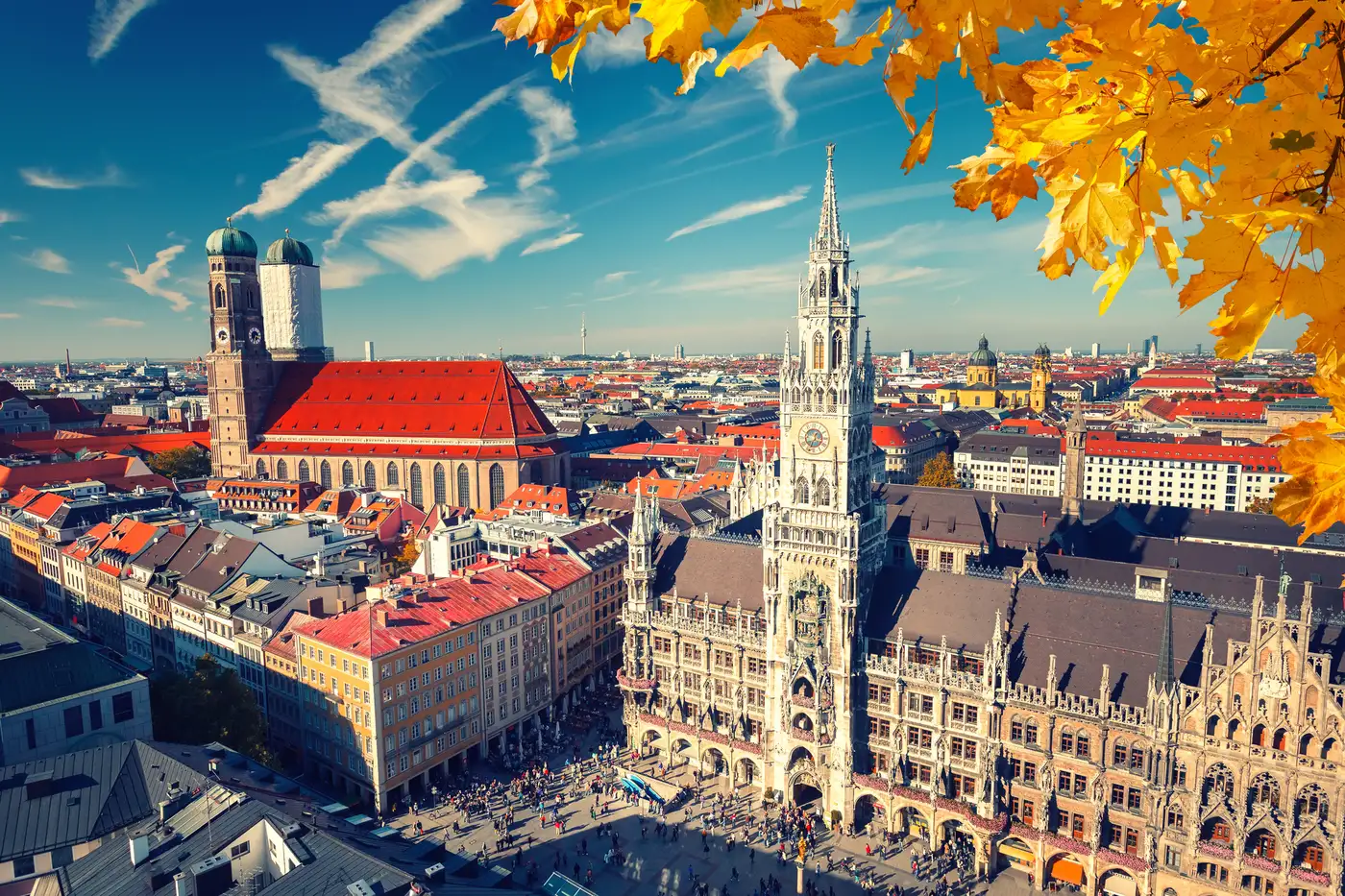
- Day 1:Arrive MunichWelcomes to Munich, a city where Baroque façades and cosmopolitan museums meet beer gardens and lively markets. Transfer to the Platzl Hotel, ideally situated steps from the Altstadt. After settling in, you can shake off the flight with a leisurely walk through the historic quarter. The Residenz and Marienplatz provide a dramatic introduction, while the Viktualienmarkt's produce stalls hint at Bavaria's culinary heart.
Due to the possibility of late arrivals, we'll have our welcome group dinner tomorrow evening.
Overnight in Munich - Day 2:Munich Museums & Market LifeThis morning we focus on Munich's artistic heritage with timed entry to either the Alte Pinakothek or the Residenz Treasury, depending on exhibitions. Our local guide's storytelling makes masterpieces approachable and alive. Founded as a medieval market town, Munich became the seat of Bavarian dukes in the 12th century and later the capital of the Kingdom of Bavaria. Its wealth funded the grand collections we explore today.
The afternoon is yours to discover Munich at your own pace. Explore the English Garden's winding paths and watch surfers ride the Eisbach standing wave. Sample confectioner's classics at traditional patisseries—perhaps Dallmayr for marzipan or Cafe Frischhut for fresh schmalzgebäck. Wander the Viktualienmarkt's produce stalls and spice vendors, where vendors have traded since 1807. Visit the Residenz's Cuvilliés Theatre, a rococo jewel box of gilt and velvet. Or simply sit with a coffee at Marienplatz and watch the Glockenspiel's mechanical figures perform their 15-minute show. Your Tour Leader shares suggestions tailored to mood and mobility, always considering individual interests.
Tonight we gather for a welcome dinner at a traditional Wirtshaus, where wooden tables, vaulted ceilings, and Bavarian hospitality set the tone for the journey ahead. This allows flexibility for those arriving late on Day 1, ensuring everyone joins for our proper introduction. Regional specialties accompany stories of what lies ahead—river valleys, imperial capitals, and the slower rhythm the Danube teaches.
Overnight in Munich.
Included Meal(s): Breakfast and Dinner - Day 3:To Vilshofen & Embark ShipA relaxed morning transfer carries us northeast toward the confluence of three rivers. We board our AmaWaterways ship in Vilshofen, a charming 1,200-year-old Bavarian town that serves as our gateway to the Danube. With porterage arranged, we settle into our staterooms—spacious, elegantly appointed floating rooms with picture windows framing the river ahead.
After the safety briefing, we're treated to an exclusive Oktoberfest celebration—an AmaWaterways tradition—with Bavarian beer, folk music, and dancing. As evening falls and the ship prepares to sail, the tempo shifts. The Danube has a way of doing that.
IMPORTANT NOTE: AmaWaterways' "Romantic Danube" cruise operates on various ships. Specific ship assignment subject to availability and final contracting. Pricing based on stateroom categories E & D; fixed windows, 170 sq ft.
Ship Night
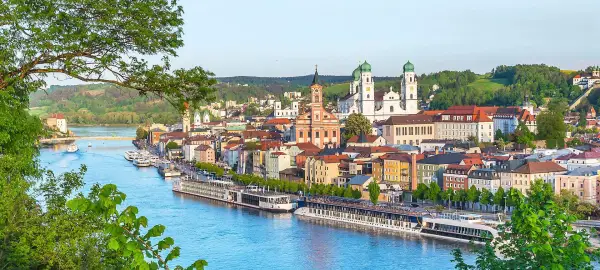
Included Meal(s): Breakfast and Dinner - Day 4:Passau: City of Three RiversWe wake to find ourselves docked in Passau, where the Danube, Inn, and Ilz rivers converge in a swirl of blue, green, and black waters. This 2,000-year-old city wears its history in layers: Roman fort, medieval trade hub, Renaissance sword-making centre, and baroque masterpiece rebuilt after devastating fires in the 17th century.
We join a walking tour through cobbled lanes to St. Stephen's Cathedral, home to the world's largest cathedral organ—17,974 pipes creating thunderous sacred music. Alternatively, the more active may hike high above the old town to Veste Oberhaus fortress for sweeping views across three nations, or cycle along the Inn River on a guided bike tour. By afternoon we're back aboard, sailing deeper into Austria as vineyard-clad hills begin their march along the riverbanks.
Ship Night
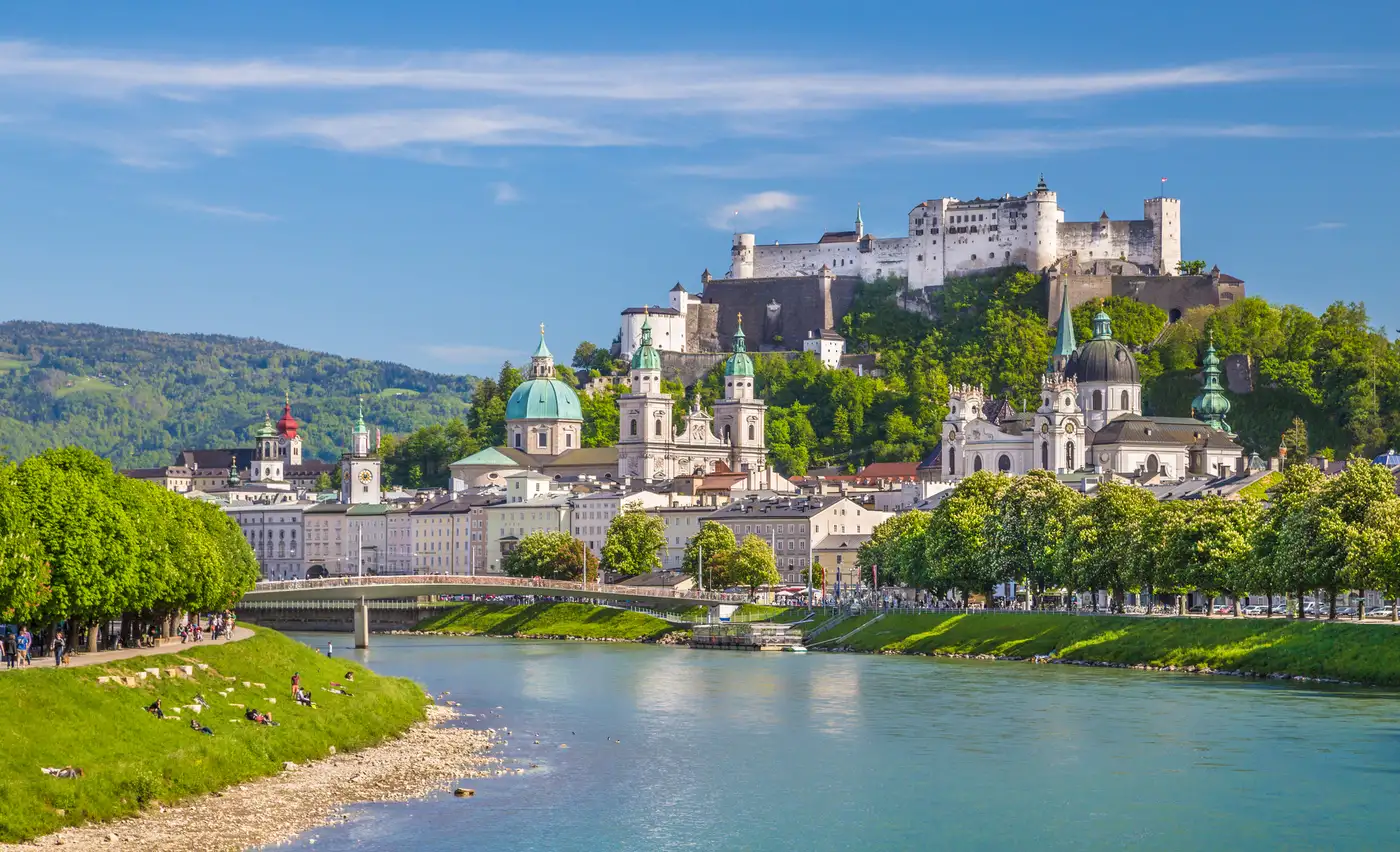
Included Meal(s): Breakfast, Lunch and Dinner - Day 5:Linz: Cesky Krumlov & Salzburg OptionsThe ship arrives in Linz, Austria's third-largest city and a UNESCO City of Media Arts—a title earned for its forward-thinking digital culture set against medieval foundations. We face delightful choices today. Those longing for alpine drama opt for the full-day excursion to Salzburg, Mozart's birthplace. We tour the historic centre, Mirabell Gardens (where the von Trapp children sang "Do-Re-Mi"), Residenz Square, and the Old Market. En route, we pause at Mondsee to see the Basilica St. Michael, site of the famous wedding scene in The Sound of Music.
Alternatively, venture across the Czech border to Cesky Krumlov, a mountain town seemingly untouched since the Renaissance. Cobblestone streets wind past pastel houses to one of Europe's largest castle complexes, where layers of Gothic, Renaissance, and Baroque architecture tell 700 years of Bohemian history. Those remaining in Linz can choose a walking tour past the Mozart House—where he composed the Linz Symphony in just three days—or a bike tour along the "Cultural Mile." Late afternoon brings a fascinating journey into whiskey distillation at a local distillery, revealing Austria's lesser-known spirits tradition.
NOTE: Full-day excursions to Salzburg or Cesky Krumlov are not combinable with other tours on this day.
Ship Night
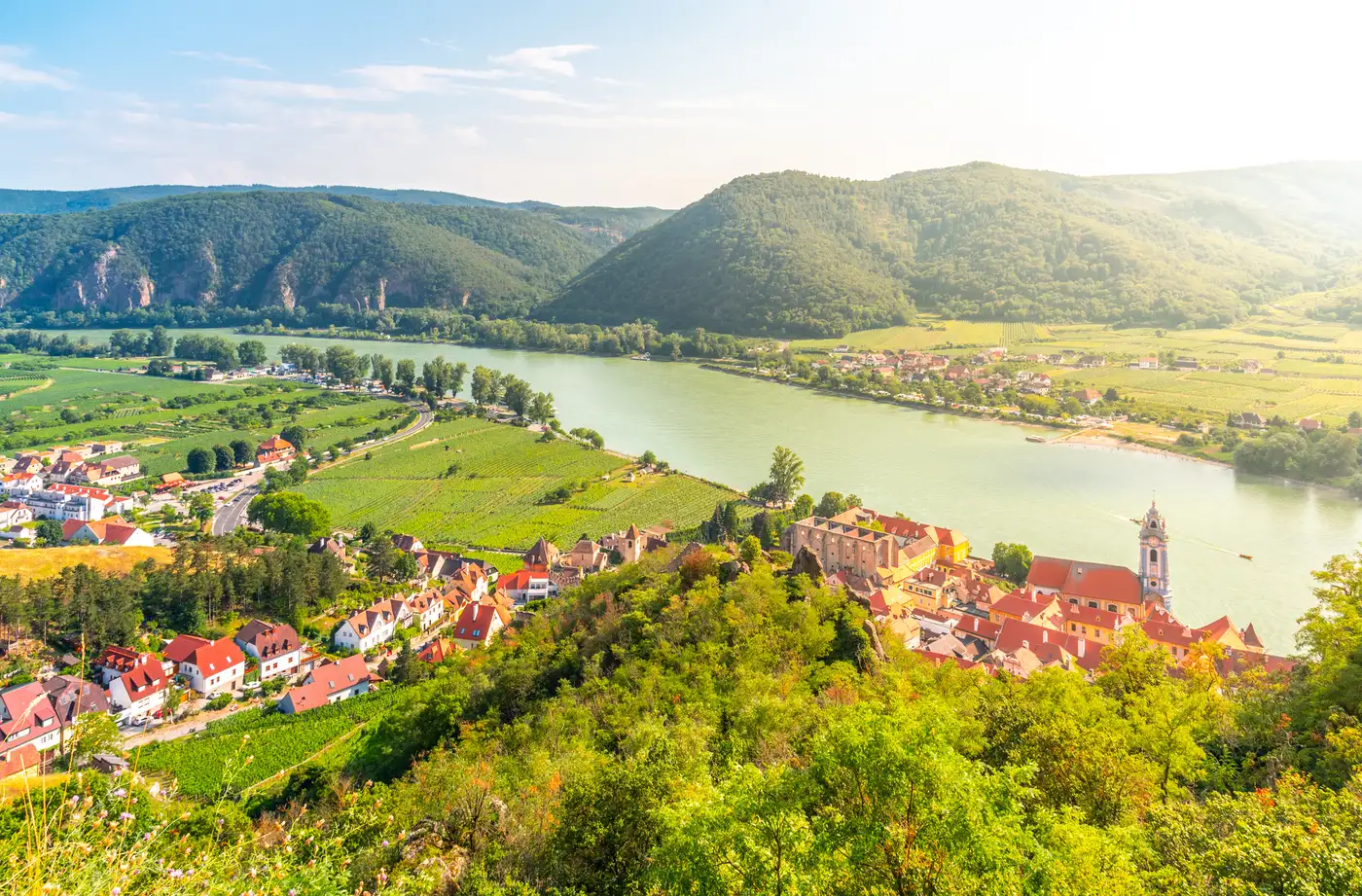
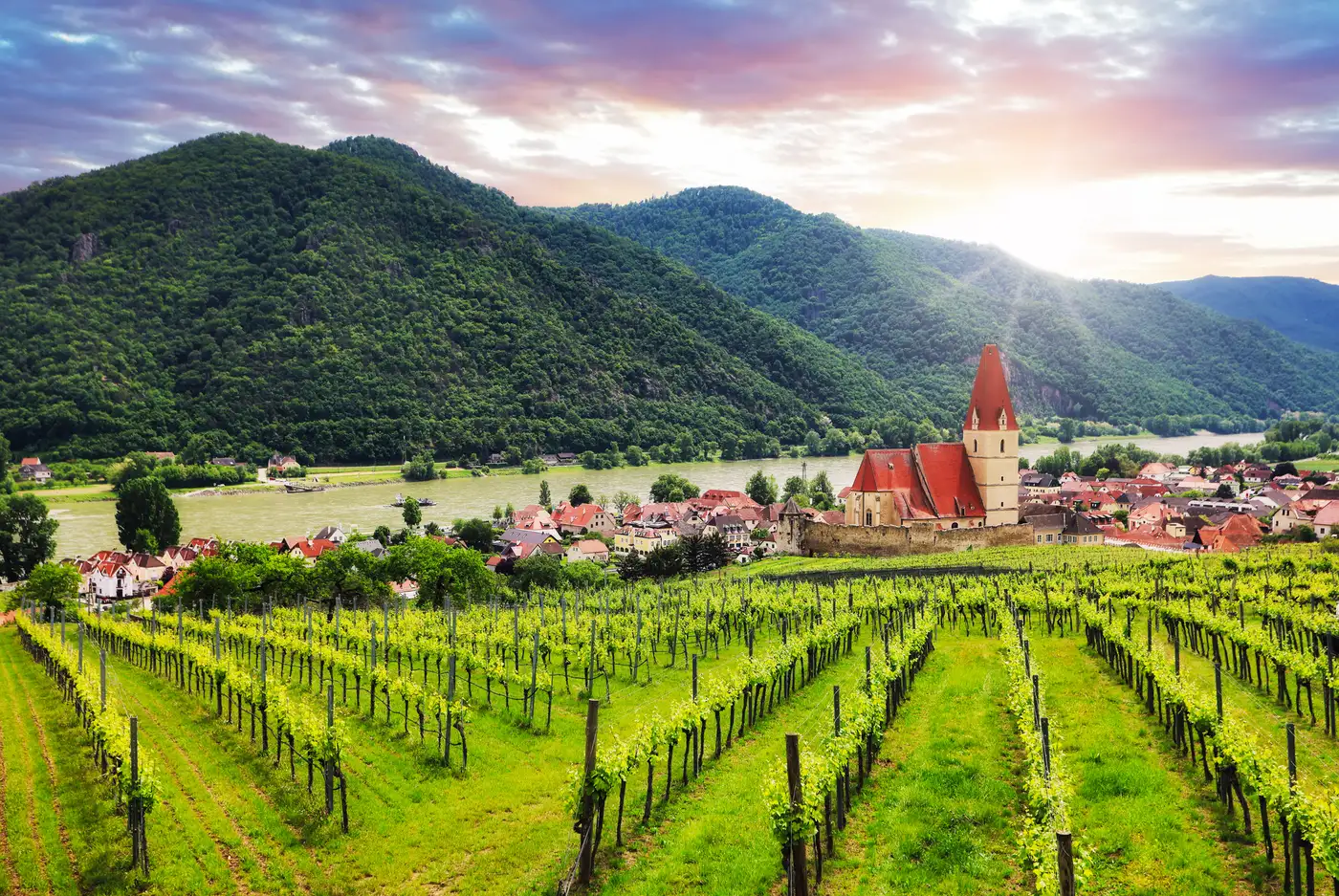
Included Meal(s): Breakfast, Lunch and Dinner - Day 6:Wachau Valley & Melk AbbeyDawn reveals why this stretch earned UNESCO World Heritage designation. We glide through the Strudengau and Wachau valleys, where terraced vineyards climb impossibly steep slopes above medieval villages. Apricot orchards glow golden in morning light; stone towers mark river bends where toll collectors once extracted fees from passing traders. The river here is living history—a trade route since Celtic times, shaped by Romans, fortified by crusaders, romanticised by poets.
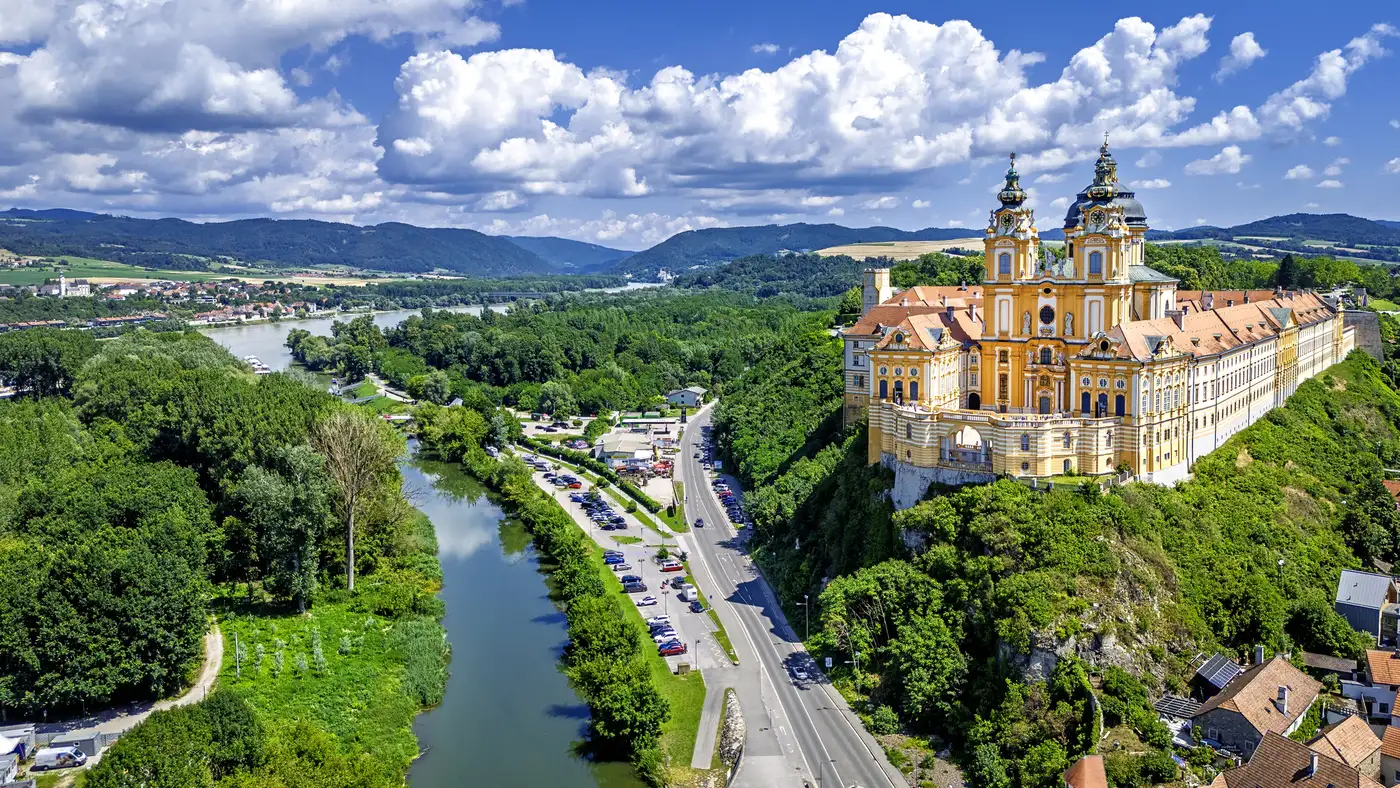
We dock at Weissenkirchen and face delicious choices. Some walk the cobbled lanes of Dürnstein before ascending to Melk Abbey—a baroque masterpiece gleaming ochre and gold above the river. Founded in 1089, this Benedictine monastery houses frescoes by Rottmayr and Troger, a library of medieval manuscripts, and terraces offering sweeping Danube views. The more active may hike to Dürnstein Fortress ruins, where Richard the Lionheart was held captive in 1192, or cycle through vineyard paths on a guided bike tour.
For those seeking culinary immersion, a walking tour includes wine tasting with a local vintner and sampling of Wachau's famous apricot delicacies—from jam to brandy—at a family boutique. By evening, vineyard slopes give way to the approaches of Vienna.
Ship Night
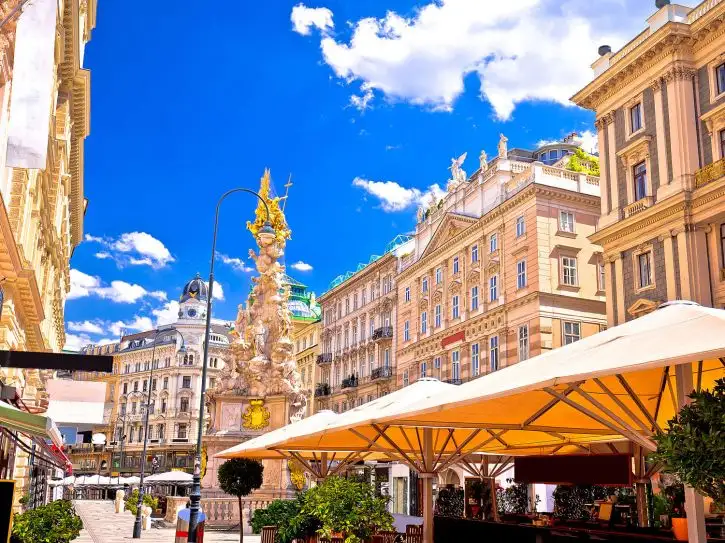
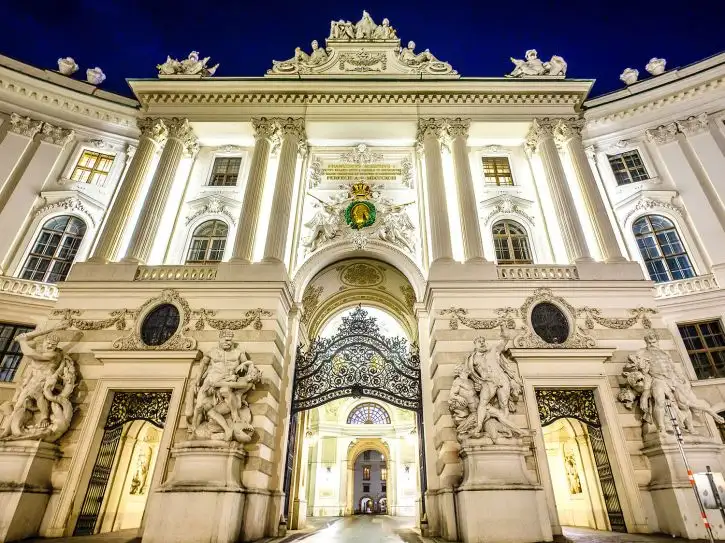
Included Meal(s): Breakfast, Lunch and Dinner - Day 7:Vienna's Imperial GrandeurThe "City of Waltzes" unfolds its treasures as we tour by motorcoach through the Ringstrasse—the grand boulevard encircling the historic center. We pass the Opera House, where premieres once sparked riots; the Hofburg Palace, nerve center of the Habsburg Empire that ruled Central Europe for 600 years; and the Parliament building with its Athena fountain. Our tour culminates at St. Stephen's Cathedral, its Gothic spire a survivor of Ottoman sieges, Napoleon's occupation, and World War II bombings.
Alternatively, discover Vienna by bike, pedaling along the Danube Canal and through parks to the Ringstrasse. The afternoon is yours to explore: perhaps Klimt's golden masterpieces at the Belvedere, the bustling Naschmarkt with its spice stalls, or simply a coffeehouse ritual—Vienna's living rooms, where newspapers hang on wooden rods and a single melange can last an afternoon. Your Tour Leader curates optional evening performance options, from intimate chamber concerts to grand opera.
A Note About Vienna: One day in Vienna? We know what you're thinking. How can one day possibly be enough? It can't. Consider today your Vienna teaser—the Ringstrasse orientation, St. Stephen's soaring nave, perhaps a fleeting cafe stop. Get your bearings. Feel the city's rhythm. Because here's the good news: we're coming back. Days 12-13 give you two full nights in Vienna to explore at your own pace. So today: relax, get oriented, take the overview. The real Vienna experience awaits at the end of your journey.
Ship Night
Included Meal(s): Breakfast, Lunch and Dinner - Day 8:Bratislava, Coronation CityCompact Bratislava rewards unhurried feet. We disembark into Slovakia's capital, a city that crowned 11 Hungarian kings and queens between 1536 and 1830—hence its title "Coronation City of Kings." Cobbled alleys link Baroque palaces to whimsical statues (watch for the Čumil peeking from a manhole). Cafés spill onto squares that feel made for lingering. We ascend to Bratislava Castle for sweeping views across three countries—Slovakia, Austria, and Hungary—a geographical reminder of Central Europe's layered identities.
For those preferring immersion through taste, a "Tastes of Slovakia" tour introduces regional specialities and local beer in family-run establishments. The more adventurous may hike to the castle rather than coach, earning those views through effort. We drift back downhill for an hour of independent exploring before returning to the ship, where an onboard tasting introduces Slovak wine varietals—Grüner Veltliner, Blaufränkisch—that rarely travel beyond these valleys.
Ship Night
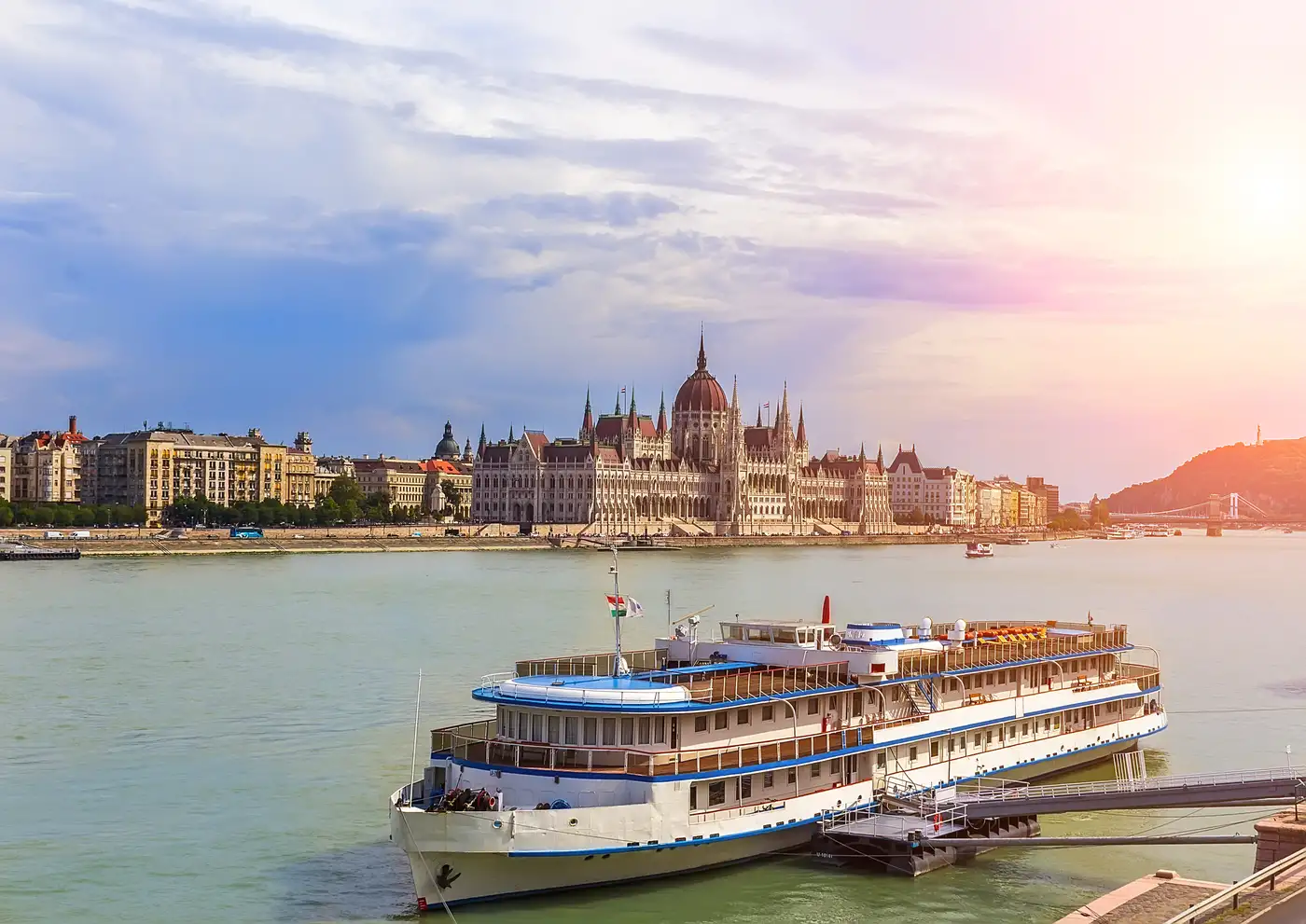
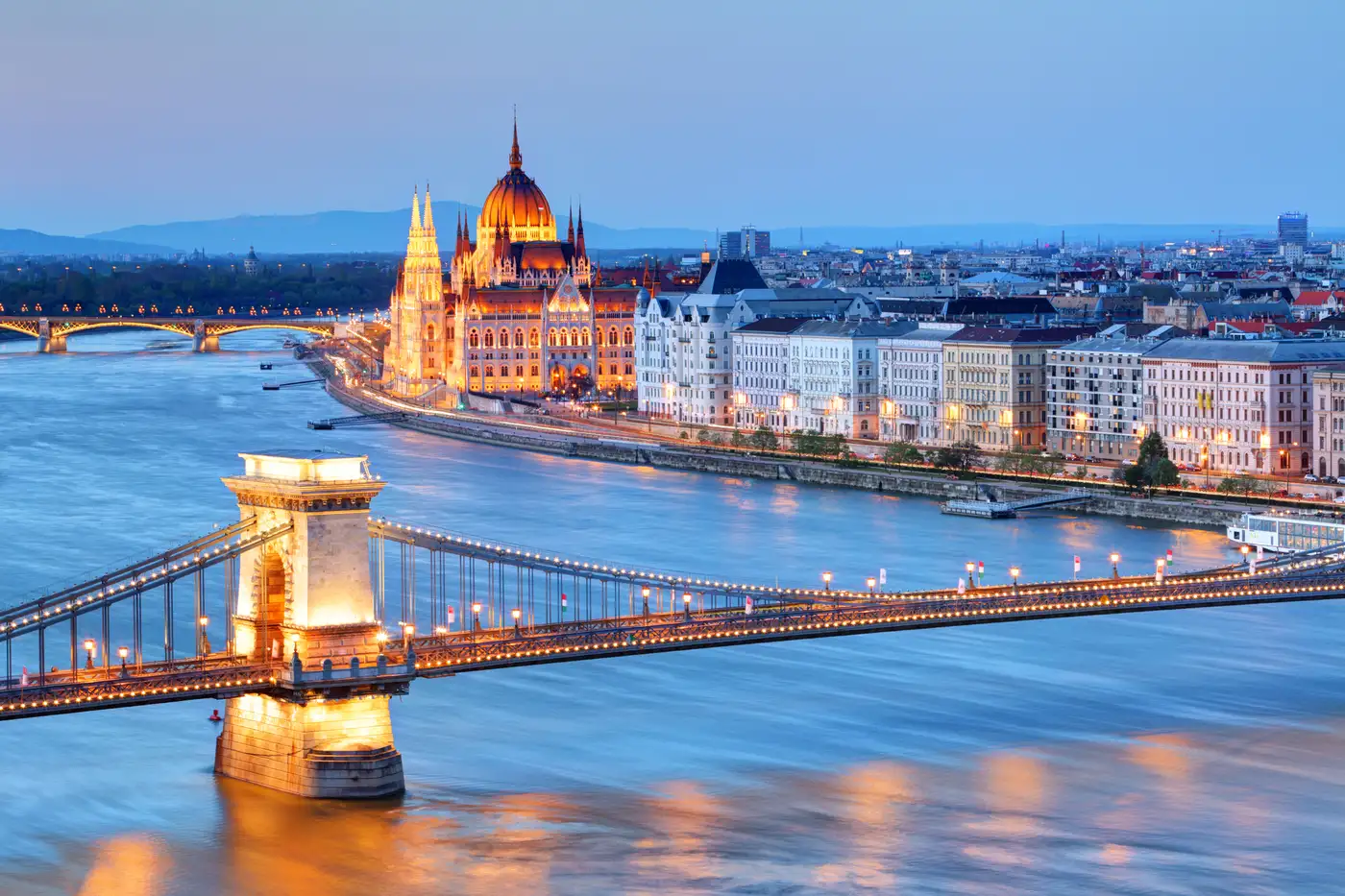
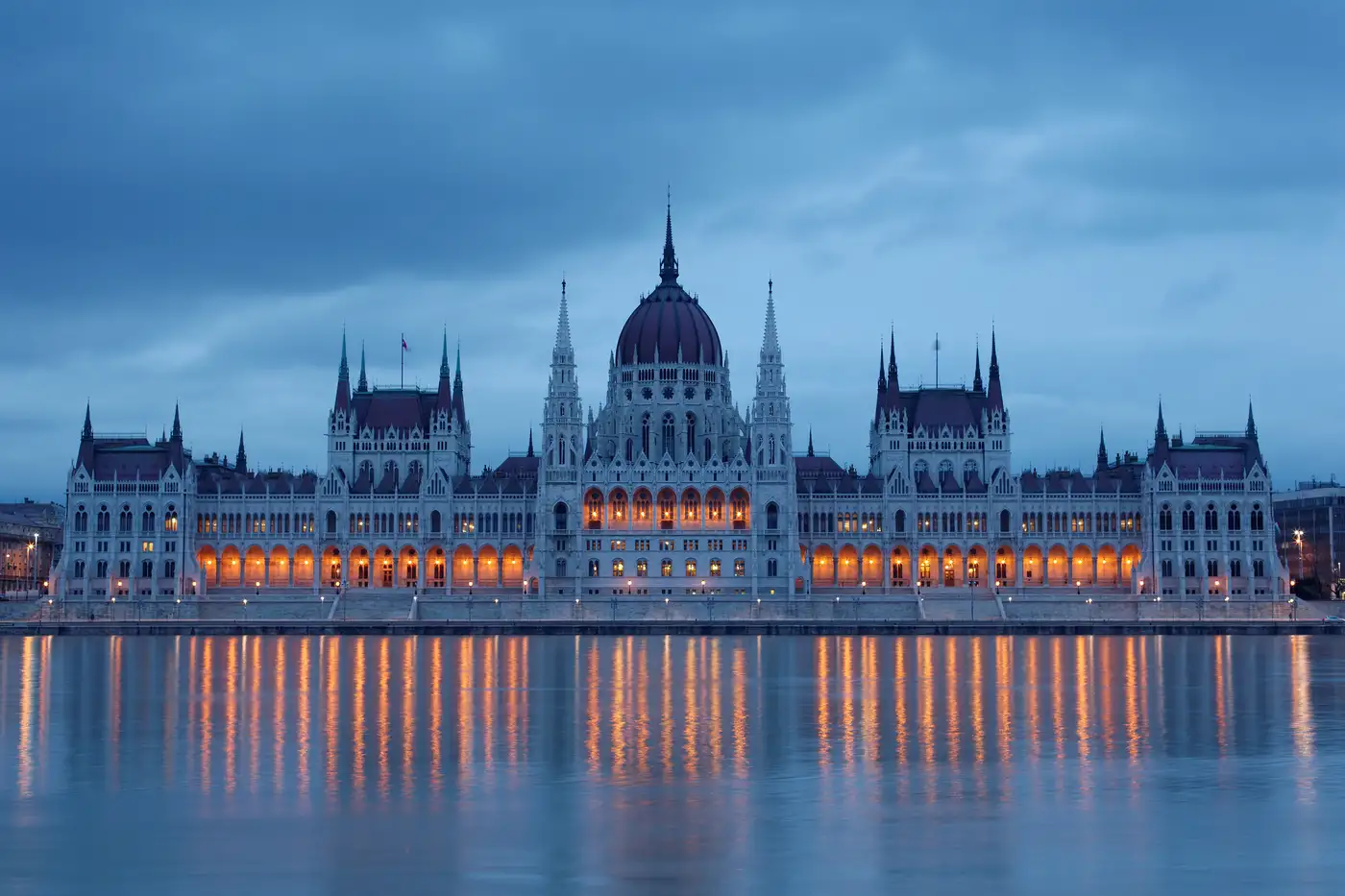
Included Meal(s): Breakfast, Lunch and Dinner - Day 9:Budapest Arrival & IlluminationsFew arrivals in Europe rival this. As we sail into Budapest, the river becomes theatre: Parliament's neo-Gothic façade stretches 268 metres (880 feet) along the Pest bank, its golden dome echoing London's Westminster. Chain Bridge's stone lions guard the crossing where Buda's hills meet Pest's plains. Castle Hill glows honey-coloured above the water, a reminder that this city was once divided—Buda the royal seat, Pest the commercial heart—until unification in 1873 created the capital we see today.
We dock within walking distance of the riverfront promenade. This evening, a short orientation with your Tour Leader/local guide lends confidence for tomorrow's deeper exploration. Late-night flaneurs may wander to hear cafe chatter soften into jazz, or watch ruin bars—Budapest's quirky contribution to nightlife—come alive in the Jewish Quarter.
Ship Night
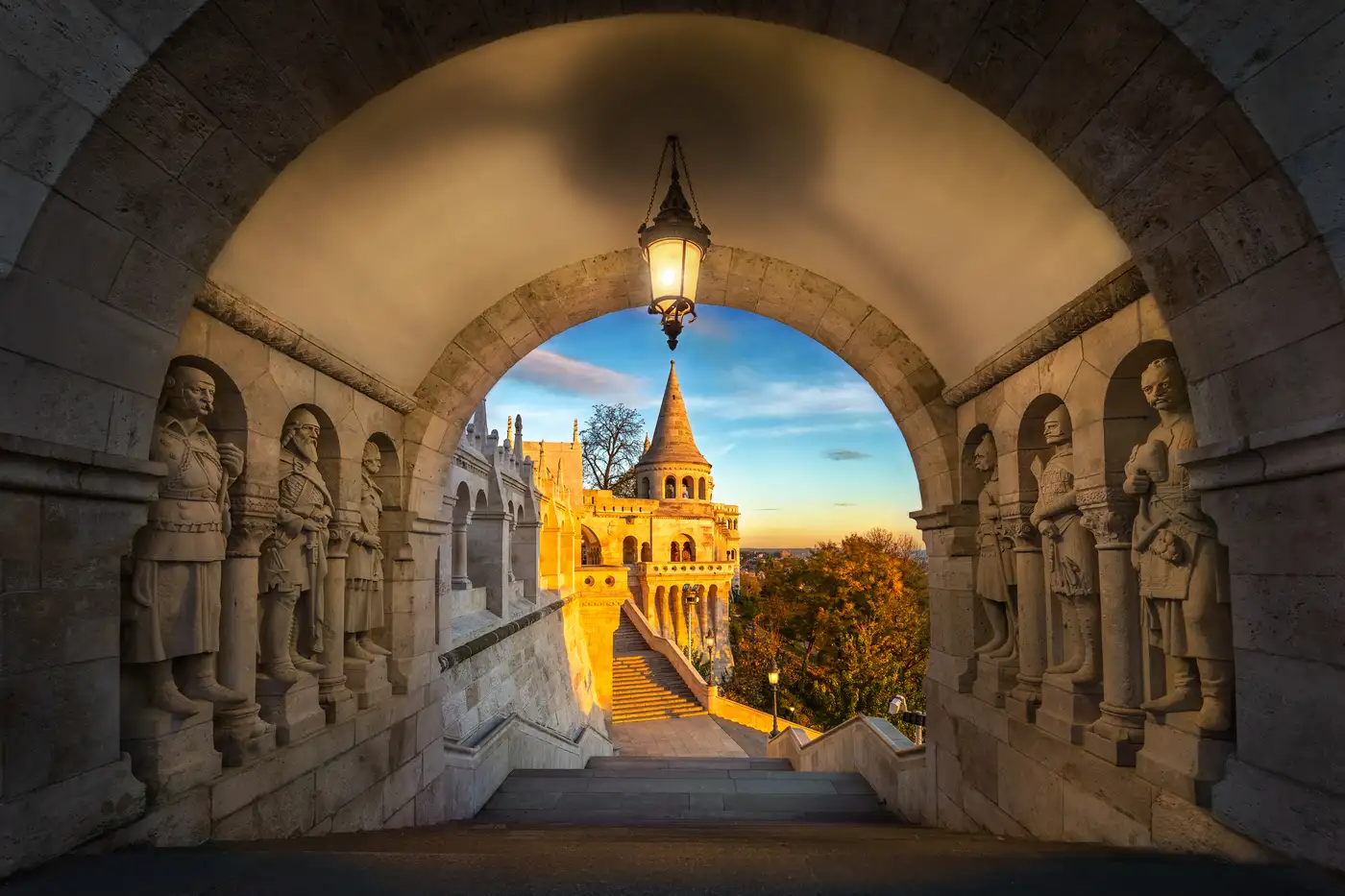
Included Meal(s): Breakfast, Lunch and Dinner - Day 10:Buda Castle & Thermal Traditions; DisembarkThis morning we cross to Buda's hilly side for Fisherman's Bastion—seven fairy-tale turrets representing the seven Magyar tribes who founded Hungary in 896. Views sweep across to Pest's grand boulevards fanning outward from the river. Nearby, Matthias Church displays its signature Zsolnay ceramic roof tiles in diamond patterns of gold, green, and red. Our well-paced walking route ensures frequent pauses for photos and perspectives.
Later, optional entry to Széchenyi thermal baths offers a quintessentially Hungarian interlude. Built in 1913 in Neo-Baroque style, these outdoor pools maintain a constant 38°C (100°F) year-round. Locals play chess on floating boards; steam rises into cooler air; visitors discover why thermal bathing has been Budapest's social ritual since Roman times. After a relaxed disembarkation with porterage arranged, we follow the Danube Bend north to riverside towns touched by artists and history. Szentendre's ateliers and pastel façades feel like an open-air gallery; we thread through small squares and cobbled lanes before returning to Budapest proper.
Tonight's dinner is independent—Budapest's restaurant scene ranges from Michelin-starred modern Hungarian to plant-forward bistros and historic beer halls. Your guide provides tailored suggestions to match appetites and budgets.
Overnight in Budapest
Included Meal(s): Breakfast - Day 11:Jewish Heritage & Market HallBudapest's Jewish Quarter tells layered stories of resilience, tragedy, and renewal. We visit Dohany Street Synagogue—Europe's largest, seating 3,000, built in Moorish Revival style with striped brickwork and twin onion domes. The interior dazzles with gilded arches, rose windows, and a massive organ. Behind the sanctuary, the Raoul Wallenberg Holocaust Memorial Park honors the Swedish diplomat who saved thousands during World War II. The weeping willow sculpture stands as quiet testament, each leaf engraved with a victim's name.
Architecture shifts dramatically as we step into a classic "ruin pub"—Budapest's innovative answer to urban decay. In the early 2000s, locals began transforming abandoned buildings into design-forward bars where mismatched furniture, street art, and whimsy reign. What began as underground counterculture now defines Budapest's identity. We pause for a drink to absorb the aesthetic: peeling plaster as intentional decor, Socialist-era relics repurposed as commentary.
After lunch, we visit the Great Market Hall, a three-level cathedral of commerce built in 1897. The ground floor bursts with paprika varieties, salami, cheeses, and seasonal produce. Upper levels house embroidered linens and folk crafts. By mid-afternoon, we pause for an exterior tour of the Hungarian Parliament Building—neo-Gothic splendor rivaling Westminster. The number 96 appears throughout: the dome's height in meters, commemorating Hungary's founding date of 896 AD. Nearby, Heroes' Square displays monuments to Magyar chieftains spanning a millennium. Late afternoon invites final independent exploration before tomorrow's return to Vienna.
Overnight in Budapest
Included Meal(s): Breakfast - Day 12:Budapest, Hungary - Train to Vienna, AustriaRemember that whirlwind Ringstrasse tour from the ship? Today we hop on a train (2.5 hours) and return to Austria's imperial capital with time to breathe. A scenic morning train journey from Budapest (2.5 hours) carries us through landscapes we cruised past, now viewed from a different angle. Comfortable reserved seating and onboard cafe service make the journey itself a pleasure.
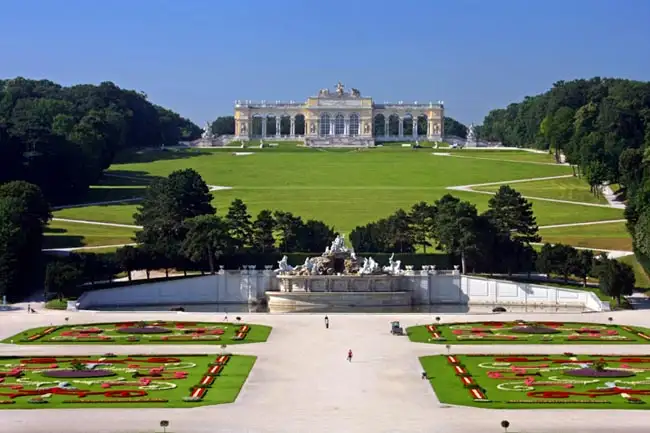
Arriving in Vienna by midday, we transfer to our hotel and settle in—this time with luggage to unpack, not just daypack tourism. Early afternoon brings our first proper Vienna experience: Schonbrunn Palace and its baroque gardens. While cruise passengers rush through state rooms, we have time to appreciate the scale. This was the summer residence where Maria Theresa raised 16 children, where Mozart performed for the Empress, where Napoleon slept during his occupation. We tour the Imperial apartments, then explore the gardens. Geometric parterres give way to wooded paths climbing toward the Gloriette pavilion, where Vienna spreads below.
Late afternoon and evening are yours to explore at your own pace. Your Tour Leader provides neighborhood orientation—which U-Bahn lines connect major sites, where to find the best Sacher-Torte, which museums stay open late. Perhaps visit the Museums Quartier, or head to the Naschmarkt for dinner—this mile-long market transitions from daytime produce stalls to evening restaurant terraces. Those seeking classical music can inquire about standing-room tickets at the State Opera or check for chamber concerts in historic venues.
Overnight in Vienna
Included Meal(s): Breakfast - Day 13:Vienna: Klimt, Coffee & FarewellsThis morning belongs to Gustav Klimt and the Belvedere. This baroque palace complex now houses Austria's national gallery, with the world's largest collection of Klimt paintings. "The Kiss" draws crowds with its shimmering gold leaf, but take time with "Judith," "Death and Life," and the landscapes he painted at Lake Attersee. The gallery also houses Egon Schiele's tortured figures and works spanning medieval altarpieces to contemporary installations. The palace gardens offer sculpted perfection with symmetrical fountains and sightlines framing the city below.
By late morning, we've earned a proper Viennese coffeehouse experience—the lingering ritual that UNESCO recognized as Intangible Cultural Heritage. Your Tour Leader suggests options: gilded Belle Epoque grandeur at Cafe Central, literary history at Cafe Hawelka, or neighborhood authenticity at a Bezirk cafe where regulars claim the same seat daily. Order a Melange, claim a newspaper from the wooden rack, and watch the city flow past. The waiters wear tuxedos. You can sit for hours—it's expected.
The afternoon offers choices shaped by your interests: the Kunsthistorisches Museum for Bruegel and Vermeer, Otto Wagner's Secession Building with Klimt's Beethoven Frieze, or the Prater park beneath the giant Ferris wheel. Tonight's farewell dinner celebrates the miles we've shared—from abbeys to thermal springs, from river valleys to urban quarters where history layers like sediment. For those with energy, Vienna's evening offerings tempt: opera, palace concerts, or illuminated streets where gas lamps still flicker.
Overnight in Vienna
Included Meal(s): Breakfast and Dinner - Day 14:Depart from ViennaAs you journey ends, the Danube's melodies tend to linger—Vienna's symphonies, Budapest's café jazz, and the Wachau's soft hush between vineyard rows.
Bon Voyage!
Included Meal(s): Breakfast
Countries Visited: Austria, Germany, Hungary and Slovakia
*The red tour trail on the map does not represent the actual travel path.
Book This Tour
- Final payment: Due 90 days prior to departure.
- Deposit: A non-refundable $1000 CAD Deposit is required at booking.
- Optional Single Supplement: $3800 CAD (number of singles limited).
(View options forsingle travellers) - Transfering Tour or Date: Transferring to another tour or tour date is only permissible outside of 120 days prior to departure and is subject to a $100 CAD change fee.
(Read our cancellation policy) - Dates and pricing are preliminary and subject to confirmation based on final cruise availability and rates. In the event that you chosen date is not available, we will offer you a different date, an entirely new tour, or a refund of your deposit.
Prices below are per person, twin-sharing costs in Canadian Dollars (CAD). Pricing does not include airfare to/from the tour and any applicable taxes.
Frequently Asked Questions
- What is the maximum number of participants on a trip?Most of our tours carry a maximum of 18 participants; some tours (ie hiking tours) top out at 16. In the event that we do not achieve our minimum complement by our 90-day deadline, we may offer group members the option of paying a "small-group surcharge" as an alternative to cancellation. If all group members agree, we will confirm the trip at existing numbers; this surcharge is refundable in the event that we ultimately achieve our regular minimum. If the small group surcharge is not accepted, we will offer a refund of your deposit or a different trip of your choice.
- Can I extend my tour either at the beginning or end? What about stopovers?Yes, you can extend your tour either at the beginning or the end and we can book accommodation in our tour hotel. Stopovers are often permitted, depending on air routing. Stopovers usually carry a "stopover" fee levied by the airline.
- How do I make a reservation? How and when do I pay?The easiest way to make a reservation is via our website; during office hours, you are also more than welcome to contact us by telephone.
A non-refundable deposit is payable at the time of booking; if a reservation is made within 90 days, full payment is required. Some trips require a larger deposit. If international airline bookings require a non-refundable payment in order to secure space or the lowest available fare, we will require an increase in deposit equal to the cost of the ticket(s).
Early enrolment is always encouraged as group size is limited and some trips require greater preparation time.
Once we have received your deposit, we will confirm your space and send you a confirmation package containing your trip itinerary, any visa/travel permit related documents, invoice, clothing and equipment recommendations, general information on your destination(s), and forms for you to complete, sign and return to us. Your air e-tickets (if applicable), final hotel list, final trip itinerary, and instructions on how to join your tour, will be sent approximately 2-3 weeks prior to departure. - What about cancellations, refunds, and transfers?Please review our cancellation policy page for details.
- I am a single who prefers my own room. What is a single supplement?All of our tours have a single supplement for those who want to be guaranteed their own room at each location.
This supplement is a reflection of the fact that most hotels around the world do not discount the regular twin-share rate for a room by 50% for only one person occupying a room. Most hotels will give a break on the price, but usually in the range of 25-30% of the twin-share rate. This difference, multiplied by each night, amounts to the single supplement.
The conventional amount can also vary from country to country and some destinations are more expensive than others for single occupancy. In order to be "single friendly," the supplements we apply are not a profit centre for us and we do our best to keep them as reasonable as possible.
On most tours we limit the number of singles available, not to be punitive, but rather because many hotels allow for only a limited number of singles; some smaller hotels at remote locations also have a limited number of single rooms available.
Please note that most single rooms around the world are smaller than twin-share rooms and will likely have only one bed. - Do you have a shared accommodation program?Yes! If you are single traveller and are willing to share, we will do our best to pair you with a same-gender roommate. Please note that should we fail to pair you, we will absorb the single supplement fee and you will default to a single room at no extra charge.