- Off The Beaten Path
- History
- Overview
- Info & Inclusions
- Itinerary
- Map & Hotels
- Photos
- Dates & Prices
- Tour Duration: 25 Days
- Max Group Size 18
- Explore 8 Caribbean island countries
- Discover rich colonial history and cultural heritage
- Experience diverse natural beauty
- Encounter unique flora and fauna
- Immerse yourself in island traditions and cuisine
- Uncover the region's vibrant cultural tapestry.
- Singles friendly (view options for single travellers)
We begin in St. Kitts, the "Mother Island" of English and French Caribbean colonization, and end in Trinidad — a South American world apart, with Hindu temples, scarlet ibis, and steelband music. In between, every island adds a new layer: the haunting fortresses of Antigua, the UNESCO rainforests of Dominica, the soaring Pitons of St. Lucia, the spice estates of Grenada. The Caribbean of popular imagination is here too — but it is the least interesting thing about this journey.
- MealsSavour authentic flavours with included daily breakfasts and dinners at hotels or handpicked local restaurants—immersing you in local cuisine without worrying about reservations or budgets.
- Transport & Logistics
Private air-conditioned coaches and included internal ferries and flights—ensuring hassle-free travel so you can focus entirely on the discoveries ahead.
"Adventures Abroad tour leader's management and guest services managed the tour with great skill and dedication. The tour leader was on top of every move and transfer. We have not experienced any issues with logistics and had a great time."
~ JULIA O"The tour leader did an excellent job coordinating some difficult travel logistics, power outage issues and resolving problems and dealing with guests who had unrealistic expectations."
~ CYNTHIA COLLINS - Expert Guidance
Unlock insider secrets at every landmark with your full-time Tour Leader and expert local guides , all gratuities covered—no hidden tipping surprises—so you immerse fully in your destination's stories, worry-free. (Except for the tips to your tour leader at the end of your tour.)
"Amazing tour guide. Our tour guide was very well organized, Her passion, knowledge, and enthusiasm completely transformed the travel experience into something truly unforgettable..."
~ MELANIE LEMAIRE"Highly recommend every trip with Adventures Abroad. It's a well organized and well thought out adventure. The tour leaders are friendly, knowledgeable and experienced professionals. Highly recommend this company."
~ SUSAN WALL - Sightseeing & EntrancesAll entrance fees for sites visited as per the itinerary—no hidden costs—so you can explore ancient ruins and excursions with complete peace of mind.
- AccommodationsUnwind in clean, well-located 3 to 4-star hotels with private en suite facilities—handpicked for comfort and convenience after each day's discoveries—so you can rest easy knowing your stay supports the real adventure, not steals the spotlight.
- Small Group
Discover the world in small groups of up to 18 travellers plus your expert Tour Leader—unlocking spontaneity, off-the-beaten-path adventures, and genuine connections at a relaxed pace, free from crowds.
"Looking Forward to My Next Adventure The best feature of the Adventures tour was the small size that allowed the group to quickly load up, let everyone get acquainted within the first 24 hours, capitalize on unplanned surprises along..."
~ PHILIP BLENSKI"Good value for a great time I have traveled with Adventures Abroad for over 20 years now. Well thought out, interesting itineraries and the other travelers congenial and friendly. The price always seems fair and overall a..."
~ Trusted Customer - Airport Transfers For Land & Air CustomersWe handle hassle-free airport transfers for all our land and air tour customers—plus early arrivals or late departures when you book extra hotel nights directly with us for added peace of mind.
- International airfare to/from the tour.
- Tour Leader gratuity, lunches, drinks, personal items (phone, laundry, etc), domestic and international air taxes (if applicable).
- Airport transfers for Land Only customers.
- Optional trip cancellation insurance.
- Our post-reservation trip notes offer further guidance on optional meal costs, shopping, packing, and advance reading. We can also quote for international air from any town / city.
- Seasonality and Weather:
April is the sweet spot for the Lesser Antilles. The dry season is at its most reliable, trade winds keep temperatures pleasant, and the islands are at their most settled and accessible before the summer rains arrive. Daytime temperatures hover around 27–30°C (80–86°F) across the region, with cooling breezes off the Caribbean moderating the heat on most days.
The Caribbean hurricane season runs from June through November, with peak activity in August and October — well outside our departure window. The islands divide broadly into the Leeward group to the north (St. Kitts, Antigua, Dominica) and the Windward group to the south (St. Lucia, St. Vincent, Grenada), with Trinidad and Tobago sitting largely outside the hurricane belt altogether. Rain showers can occur year-round, particularly at higher elevations, but brief tropical downpours are part of the experience rather than an obstacle to it.
April departures catch the islands at their best: dry, green from the preceding wet season, and alive with the particular energy of a region that takes its climate seriously. - Transport and Travel Conditions:
This is not a cruise! This tour moves between islands primarily on scheduled regional airlines, most of which operate smaller turboprop aircraft on inter-island routes. These flights are efficient and perfectly comfortable, but they come with strict baggage limits.
Ground transport on each island is by private air-conditioned coach, with taxis used occasionally for shorter transfers. Walking tours of towns and historic sites are a regular feature of the program; some surfaces are uneven — cobblestones, gravel paths, unpaved trails — and the tropical heat is a genuine consideration for some travellers. The pace is moderate and the activity level is 2, but comfortable walking shoes and sun awareness are essential throughout.
One important note: the sequence of islands on this itinerary is subject to change. Inter-island flight schedules in the Caribbean are infrequent and shift regularly, and we adjust routings accordingly to keep the program running smoothly. The order of islands as described should be treated as a reliable guide to what you will experience — not necessarily the precise sequence in which you will experience it.
Am I suitable for this tour? Please refer to our self-assessment form - Activity Level: 2
These are particularly busy tours that feature a lot of moving around, sometimes by train and short journeys on local transport. Walking tours of towns and cities are leisurely but you should be prepared to be on your feet for several hours. Some of our cultural trips that occur at high altitude and/or require greater independence with baggage handling (at hotels, airports, train stations) also fall into this category.
To learn more about the Activity levels, please visit our tour styles page. - Accommodation:
Hotels on this tour are, on average, of a 4-star rating. Very comfortable, well-located charming properties with all modern conveniences and amenities typical of higher-end accommodation.
Click on "Map & Hotels" tab for more information - Staff and Support:
Tour Leader throughout; local step-on guides and drivers at numerous locations.
- Day 1:St Kitts & Nevis ArrivalWelcome to the Federation of Saint Kitts and Nevis — the smallest sovereign state in the Americas and the birthplace of Caribbean colonization. It was here that the English and French first established permanent footholds in the region, using St. Kitts as the template for the plantation economy that would reshape the entire Caribbean. That history is still written into the landscape: in the ruins of sugar estates on the lower slopes of Mount Liamuiga, in plantation inns reinvented as boutique hotels, and in the formidable stonework of Brimstone Hill fortress.
St. Kitts has largely avoided the mass tourism that has overtaken other Caribbean destinations, and wears that distinction with quiet pride. This evening we settle in, meet our fellow travellers, and gather for our first dinner together.
Overnight in St. Kitts.
Included Meal(s): Dinner - Day 2:St. Kitts Island Exploration & Brimstone Hill FortressBasseterre reflects its unusual history as the first Caribbean island permanently settled by both the English and the French. Their competing influences survive in the architecture: Georgian civic buildings, a French colonial great house, Catholic and Anglican churches within a short walk of each other. We explore the Clock Tower, the Berkeley Memorial, and Independence Square — where slaves were once sold at auction, and where the nation's independence was proclaimed in 1983. The Old Treasury Building, dating from 1894, now houses the National Museum, its archway once the formal gateway from the pier for passengers arriving by ship.
At Romney Manor — a former sugar estate once owned by a relative of Thomas Jefferson — we learn about the sugar and rum production process that drove this island's economy for two centuries. We also visit the French colonial Fairview Great House, dating from 1701, before continuing to the dramatic Black Rocks on the northeast coast, formed by ancient lava flows that reached the sea in jagged volcanic formations.
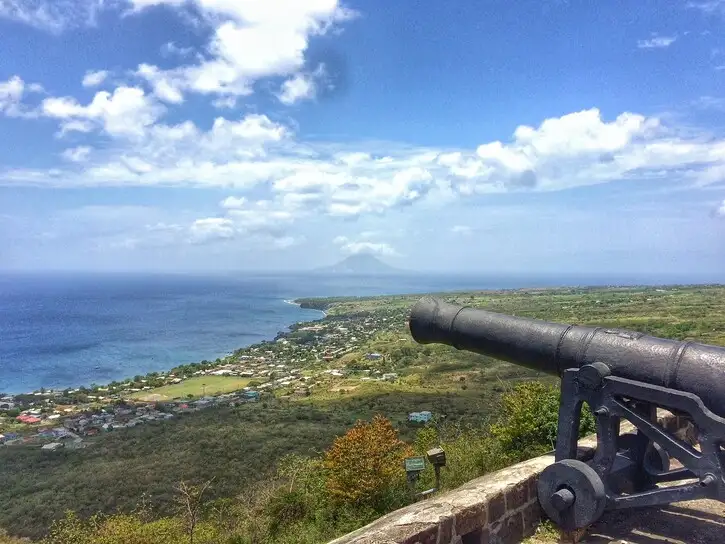
The afternoon is given over to Brimstone Hill Fortress, a UNESCO World Heritage Site. Built largely by enslaved Africans over more than a century, this mighty fortification rises 240 m/790 ft above the surrounding cane fields. Its cannon emplacements command sweeping views across the Caribbean to neighbouring islands — a panorama that once served the British Empire, and today serves the imagination.
Overnight in St. Kitts.
Included Meal(s): Breakfast and Dinner - Day 3:Nevis Island ExcursionA short speedboat crossing brings us to Nevis — once so wealthy from sugar production it was known as the "Queen of the Caribbees." That wealth is long gone, but the island retains an unhurried grace, its landscape dominated by the cloud-wrapped cone of Nevis Peak rising to 985 m/3,232 ft from the sea. The undulating interior is punctuated by the ruins of sugar mills and the grand facades of plantation-style properties, many now restored as small hotels.
Charlestown is one of the better-preserved Georgian towns in the Caribbean, its 18th and 19th century streetscape largely intact thanks to sustained local conservation efforts. The Museum of Nevis History documents 4,000 years of human settlement — and notes, almost in passing, that Alexander Hamilton was born here in 1755. At Montpelier Plantation we visit the site where a young Captain Horatio Nelson married Frances Nisbet in 1787 — the first of several appearances Nelson makes on this journey, a measure of just how central the Royal Navy was to Caribbean colonial life.
The Botanical Gardens of Nevis, whose rainforest conservatory is modelled on Kew's Palm House in London, close out a day that moves comfortably between natural beauty and layered history. We return by ferry to St. Kitts in the afternoon, with time at leisure before dinner.
Overnight in St. Kitts.
Included Meal(s): Breakfast and Dinner - Day 4:St Kitts & Nevis - Fly to Antigua: St Johns Touring & Nelsons DockyardWe fly this morning to Antigua, where Nelson returns. In 1784 the young captain established one of Britain's most important Caribbean naval bases here — and spent three largely miserable years enforcing trade laws that made him deeply unpopular with local merchants. Today his dockyard is one of the Caribbean's great heritage sites, and Antigua remains the largest of the English-speaking Leeward Islands.
We begin in St. John's, the capital — a lively, colourful town whose Museum of Antigua and Barbuda occupies the old Court House dating from 1750. Its exhibits trace the island's geological origins, its Amerindian past, and its colonial history in compact, well-presented displays. The twin-towered Cathedral of St. John, rebuilt three times after hurricane damage, looms over the town with considerable authority. We visit a local market before heading south to English Harbour.
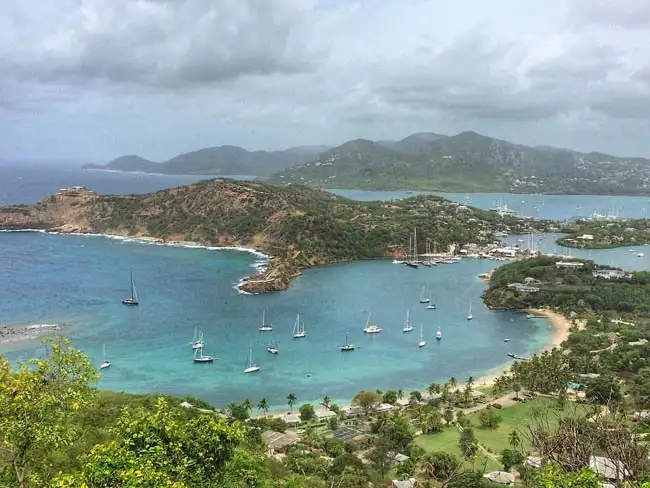
Nelson's Dockyard, dating from 1745, is the only working Georgian dockyard remaining in the world. Its beautifully restored buildings — now housing a museum, marina and hotel — sit within the natural amphitheatre of English Harbour, one of the Caribbean's finest anchorages. The scale of the operation, and its state of preservation, make plain just how much the British Navy invested in controlling these waters.
Overnight in Antigua.
Included Meal(s): Breakfast and Dinner - Day 5:Antigua: Full Day Island Tour & Shirley HeightsAntigua's varied landscapes reward a full day of exploration. We begin at Half Moon Bay on the Atlantic coast — almost a mile of pale sand facing the open ocean — before continuing to Devil's Bridge, a natural limestone arch where Atlantic swells drive through boreholes in the rock with considerable force. The contrast with the calm Caribbean side of the island is immediate and dramatic.
Betty's Hope, Antigua's first large sugar plantation, tells the island's colonial story plainly. Two restored windmill towers stand amid the ruins of the stillhouse — roughly a hundred such towers once dotted this landscape, their sails turning to crush cane that was shipped to Britain as raw sugar and returned as finished goods and profit. Fig Tree Drive winds through the lush interior — "fig" being the local name for banana — descending through groves of mango and coconut to the coast at Falmouth Harbour, where Pigeon Point offers a fine stretch of sand and a gentle walk.
We end the day at Shirley Heights, the hilltop fortification built to protect Nelson's Dockyard below. The views across English Harbour to the neighbouring islands of Montserrat and Guadeloupe are among the finest in the Caribbean — a fitting close to two rich days on an island that repays close attention.
Overnight in Antigua.
Included Meal(s): Breakfast and Dinner - Day 6:Antigua - Fly to to Dominica: Central Forest ReserveDominica is unlike anything else in the Caribbean. Where other islands were cleared for sugar, this one resisted — its sheer volcanic mountains and dense rainforest made large-scale plantation agriculture nearly impossible, and the island was left relatively intact. Today it is the youngest and most geologically active island in the Lesser Antilles, still being shaped by the same forces that created it. The highest point, Morne Diablotins, rises to 1447 m/4,747 ft; much of the interior remains blanketed in primary rainforest.
That resistance was not only geological. Dominica is the only Eastern Caribbean island where a population of Kalinago — the indigenous people the Europeans called Caribs — survived colonization. On every other island in this chain they were killed, displaced or absorbed; here, in the mountains, they endured. We will meet their descendants later in our time on the island.
This afternoon we drive the transinsular road through the Central Forest Reserve, established in 1952 — the first of its kind in Dominica. The reserve is home to vast stands of gommier trees, whose timber the Kalinago have used for canoe-building for centuries. We stop at the dramatic Spanny Falls before continuing to Jacko Falls in the shadow of Morne Trois Pitons.
Overnight in Dominica.
Included Meal(s): Breakfast and Dinner - Day 7:Roseau City Sightseeing, Cabrits National Park & Kalinago Barana AuteRoseau, Dominica's compact capital, contains one of the finest collections of 18th century Creole architecture in the Caribbean — wooden buildings with deep verandahs and intricate fretwork that reflect the island's French colonial period. We tour Fort Young, the old market, Parliament and State House before climbing to Morne Bruce for panoramic views over the town and coastline. The capital's unhurried character feels entirely in keeping with an island that has always done things on its own terms.
The afternoon takes us north to Cabrits National Park, where the ruins of Fort Shirley occupy a dramatic peninsula jutting into the Caribbean. The British built this garrison in the 18th century to protect Prince Rupert Bay; today jungle has reclaimed much of the stonework, lending the ruins a melancholy grandeur. A small museum documents the fort's history and the archaeological finds uncovered here.
We then visit Kalinago Barana Aute, the traditional village of the Kalinago people in the island's northeast — the only indigenous Caribbean community still living on their ancestral lands. For more than two centuries they resisted European control; their survival here, when their kin were being exterminated across the rest of the island chain, is a remarkable and sobering fact. We learn about their dugout canoe traditions, herbal medicine, and the language and customs they have worked to preserve.
Overnight in Dominica.
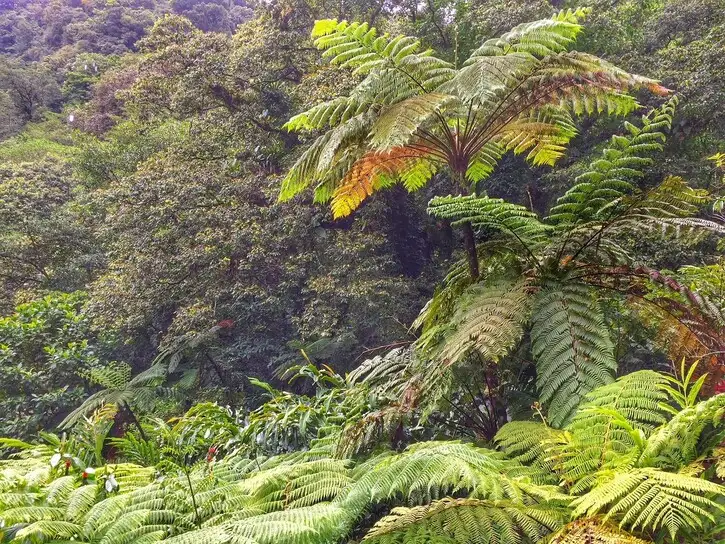
Included Meal(s): Breakfast and Dinner - Day 8:Dominica sightseeing: Morne Trois Pitons NP ExplorationDominica's volcanic interior reaches its most dramatic in Morne Trois Pitons National Park -- a UNESCO World Heritage Site encompassing 6880 hectares/17,000 acres of mountainous rainforest, waterfalls, crater lakes and geothermal features. The park is organized into six distinct vegetation zones, from seasonal coastal formations at lower elevations to elfin woodland near the summit, almost perpetually shrouded in mist. With its precipitous slopes, hot springs and remarkable biodiversity, this is the richest natural environment in the Lesser Antilles.
We hike to Freshwater Lake, one of two crater lakes within the park, before continuing to Trafalgar Falls -- twin cascades dropping through a lush gorge of tree ferns and tropical vegetation into steaming mineral pools below. At least half of Dominica's 175 bird species can be found within the park, including the endangered Sisserou parrot, the island's national bird and found nowhere else on earth.
Next we experience Boiling Lake, once reached only by a gruelling six-hour hike but now just a twenty-minute cable car ride away. The 6.6 km gondola climbs from the Roseau Valley over Trafalgar Falls and the park's volcanic gorges, trading the old trek's sweat for an aerial view of the same cloud forest and the same sulphurous plumes rising from the world's second-largest boiling lake.
Overnight in Dominica.
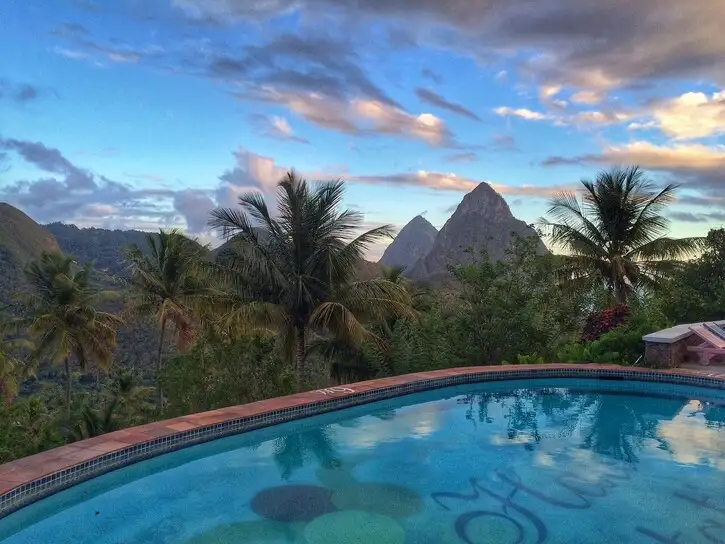
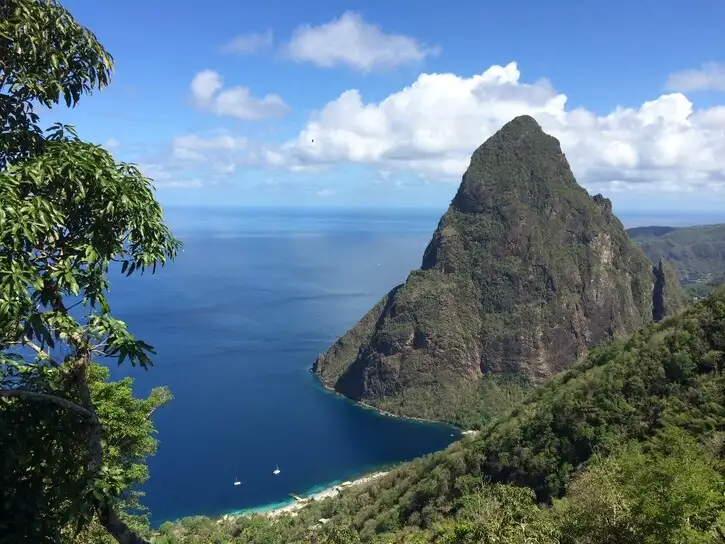
Included Meal(s): Breakfast and Dinner - Day 9:Dominica - Fly to St LuciaSt. Lucia has changed hands between Britain and France seven times — more than any other Caribbean island — and the result is a culture that draws on both traditions in equal measure. English is the official language; the street names, Creole cuisine and relaxed cadence of daily life are unmistakably French. The island's defining landmarks, however, belong to neither empire. The twin volcanic plugs of Gros Piton (770 m/2,526 ft) and Petit Piton (743 m/2,438 ft) rise straight from the sea on the southwest coast — a UNESCO World Heritage Site and one of the most dramatic natural formations in the Caribbean.
We arrive and head directly to Soufrière, St. Lucia's oldest town and the most scenically situated on the island. A short drive brings us to the Diamond Botanical Gardens and its mineral-stained falls before we continue to the Sulphur Springs — more than twenty bubbling, steaming pools of mineral-rich water set in a landscape of multicoloured volcanic deposits. The Caribbean's only drive-in volcano, as the locals like to say.
Overnight in St. Lucia.
Included Meal(s): Breakfast and Dinner - Day 10:St Lucia Sightseeing: Soufriere, the Pitons & Morne Coubaril EstateWe begin the morning on the Tet Paul Nature Trail, a short walk through gardens and smallholder farmland with commanding views across the Pitons and south toward Martinique. On a clear day the perspective is extraordinary — two ancient volcanic cones rising sheer from the sea, their flanks covered in forest, framing a bay that has captivated visitors since the first European ships rounded the headland. The Pitons were considered sacred to St. Lucia's first inhabitants, and it is not difficult to understand why.
From here we visit the Toraille waterfall, set in a small botanical garden on the outskirts of Soufrière, before continuing to Morne Coubaril Estate — St. Lucia's oldest French Creole working estate, growing cocoa, coconuts and manioc using methods little changed from the colonial era. A reconstructed village illustrates how plantation workers lived two centuries ago, and a guided walk through the estate's working grounds connects the landscape we see today with the labour history that shaped it.
The view from the estate's highest point, across the Piton Mitan ridge to the sea, is not easily forgotten.
Overnight in St. Lucia.
Included Meal(s): Breakfast and Dinner - Day 11:St Lucia: Adventure by Land and SeaToday we circumnavigate much of the island, beginning at the quiet southern villages of Choiseul and Laborie before reaching Vieux Fort at the island's southern tip — one of St. Lucia's oldest settlements, where the calm Caribbean meets the rougher Atlantic and their differing colours are sometimes visible as a distinct line in the water. The lighthouse at Moule à Chique stands 223 m/730 ft above sea level, with views across to St. Vincent just 34 km/21 mi away.
The rugged east coast is banana and coconut country, the hillsides densely planted and the Atlantic constant against the rocky shoreline. At Praslin we find boat builders still fashioning fishing canoes from gommier trees — the same timber the Kalinago of Dominica have used for centuries, the same tree, the same craft, carried south along the island chain. In Castries, Derek Walcott Square — named for St. Lucia's Nobel laureate — anchors a compact colonial town centre. The 400-year-old saman tree shading the square has witnessed rather more of the island's history than any of its buildings.
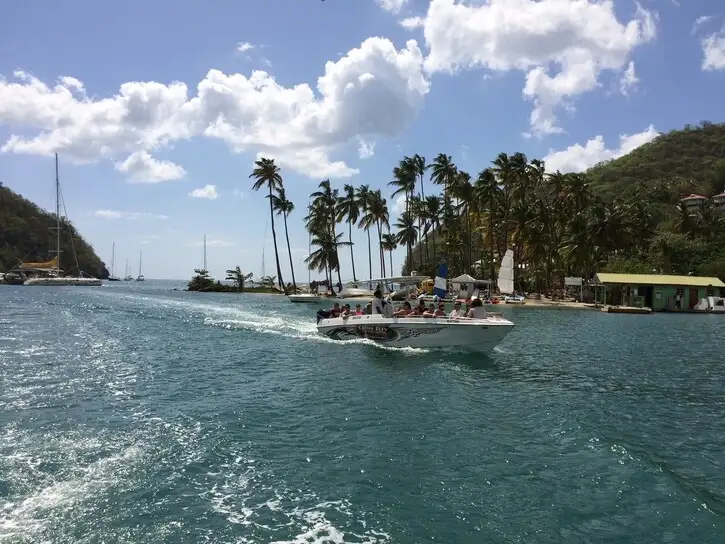
The day ends on the water: a boat cruise along the west coast, past the pirate haven of Marigot Bay and back to Soufrière as the light fades over the Pitons.
Overnight in St. Lucia.
Included Meal(s): Breakfast, Lunch and Dinner - Day 12:St Lucia - Fly to Barbados: Bridgetown TouringBarbados sits apart from the volcanic chain — a flat coral island of limestone and sugarcane, the easternmost point in the Caribbean and the most thoroughly British of all the islands. It was never French, never Spanish; from its first permanent settlement in 1627 until independence in 1966, it was uninterruptedly English, and that continuity shaped everything from its parliamentary traditions to its Georgian architecture.
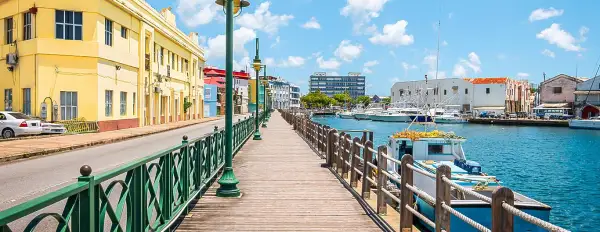
Historic Bridgetown and its Garrison is a UNESCO World Heritage Site — recognized as one of the earliest fortified British port towns in the Americas and a key node in the Atlantic slave trade and sugar economy. In National Heroes Square we find a statue of Lord Nelson, erected in 1813 — a full thirty years before London's own Trafalgar Square honoured him. Nelson, who first appears on this journey in Nevis and whose dockyard we explored in Antigua, completes his Caribbean arc here in bronze. The irony of his prominent placement in a square now dedicated to national heroes has not been lost on Barbadians, and the statue's future has been the subject of lively public debate.
The Parliament Buildings and the colonial streetscape of Bridgetown round out an afternoon that makes plain just how different Barbados is from the volcanic islands we have been travelling through.
Overnight in Barbados.
Included Meal(s): Breakfast and Dinner - Day 13:Barbados Sightseeing: Central Island ExplorationThe interior of Barbados is a landscape of rolling hills, modest parish churches and the remnants of the sugar industry that made this island one of the wealthiest places on earth in the 17th century. Gun Hill Signal Station, one of a chain built to relay shipping information across the island, sits at 215 m/705 ft with characteristic views across the cane fields to the distant coastline.
Anthony Hunte's Garden occupies a limestone sinkhole in the island's interior — a layered, almost theatrical space of dense tropical planting on multiple levels, from open sunny terraces down to a shadowed jungle heart. Morgan Lewis Mill, one of only two intact sugar windmills remaining in the Caribbean, stands nearby — its crumbling plantation house an eloquent reminder of an industry that consumed millions of lives in the pursuit of sweetness.
St. Nicholas Abbey, near the island's northern tip, is among the last surviving Jacobean plantation houses in the western hemisphere — built of brick and limestone in 1658, when most structures in North America were still timber. It produces award-winning rum today, as it has for most of its history. The dramatic limestone cliffs at North Point, where the Atlantic breaks hard against the island's northern edge, provide a suitably wild close to an afternoon of colonial history -- before closing the day with a tour and tasting at Mount Gay, the world's oldest rum distillery, in continuous production since 1703.
Overnight in Barbados.
Included Meal(s): Breakfast and Dinner - Day 14:Barbados Touring: Codrington College & Andromeda Botanic GardensThe south and east coasts of Barbados offer a wilder face of the island — the landscape punctuated by enormous coral boulders that have broken from ancient reefs and come to rest on the beaches at Bathsheba over thousands of years. This is world-class surfing territory, and the east coast road, hemmed by crashing surf on one side and sugarcane on the other, is one of the island's most dramatic drives. The rugged Atlantic coastline here feels entirely removed from the calm Caribbean beaches on the island's west.
Codrington College, built in 1715, is the oldest theological college in the western hemisphere — its serene colonnaded facade and tranquil lily pond sitting incongruously amid the tropical landscape. St. John's Church nearby occupies a clifftop with sweeping views of the Atlantic coast and contains monuments dating to the 17th century. The Andromeda Botanic Gardens wind through six acres of tropical planting, a horticultural collection begun by a single devoted amateur and now among the finest in the region.
We return to Bridgetown for a visit to George Washington House — the only residence outside the United States where Washington is known to have slept, during a visit in 1751.
Overnight in Barbados.
Included Meal(s): Breakfast and Dinner - Day 15:Barbados - Fly to St Vincent & the GrenadinesThe 32 islands and cays of St. Vincent and the Grenadines stretch southward in a glittering arc — the most unspoiled sailing waters in the Caribbean, and among the least visited by land-based travellers. St. Vincent itself is lush and volcanic, its interior dominated by La Soufrière, an active volcano that last erupted in 2021, forcing the evacuation of thousands and reshaping the northern landscape in ash and rock.
The colonial history here is as layered as anywhere on this journey. St. Vincent was first claimed by England, first settled by France, and for longer than either — held by the Kalinago and later by the Black Caribs, the community born of Kalinago and escaped African intermarriage. Their fierce resistance delayed European control well into the 18th century; the British eventually deported most of the Black Carib population to the Bay Islands of Honduras in 1797, where their descendants — the Garifuna — still live today.
We arrive this afternoon and settle in.
Overnight in St. Vincent.
Included Meal(s): Breakfast and Dinner - Day 16:St. Vincent Island TouringThe Leeward Highway runs north from Kingstown along St. Vincent's sheltered west coast, past pastel-coloured fishing villages and black-sand beaches from which small brightly painted boats set out daily. The volcanic soil here is extraordinarily fertile — coconut plantations, banana groves and kitchen gardens crowd the roadsides all the way to Richmond Beach, where La Soufrière looms at the island's northern end, its summit still scarred from the 2021 eruption.
The St. Vincent Botanical Gardens, established in 1765, are the oldest in the western hemisphere — planted originally to develop new crops, supply medicinal plants for the military, and improve the colony's self-sufficiency. It was here that Captain Bligh successfully introduced breadfruit to the Caribbean in 1793, on his second attempt after the infamous mutiny on the Bounty had cut short the first. The breadfruit tree he planted still stands. These gardens connect to a wider network of colonial botanical exchange — the same impulse that shaped the gardens of Nevis and Dominica — and reward a leisurely exploration.
Before returning to Kingstown we stop at the black sands of Richmond Beach, one of the island's most atmospheric stretches of coast, with views north toward the Grenadines.
Overnight in St. Vincent.
Included Meal(s): Breakfast and Dinner - Day 17:St Vincent island Touring - Fly to GrenadaWe head east from Kingstown into the Mesopotamia Valley — the island's fertile interior breadbasket, its panoramic ridgelines planted with bananas, nutmeg, cocoa, breadfruit and root crops. Commonly known as the "food basket" of St. Vincent, the valley's views across layer after layer of green ridge to the sea are probably unsurpassed in the Caribbean. The panorama from the valley's upper reaches gives a vivid sense of just how intensely cultivated this volcanic soil has always been.
The rugged Atlantic coast road south passes through arrowroot country — St. Vincent was once the world's leading producer of arrowroot starch, and cultivation continues in the north, in the same area where the population of Carib descent remains concentrated. Evidence of La Soufrière's 2021 eruption is visible at the Rabacca Dry River, where the landscape still carries the stark geometry of volcanic debris flows — a reminder that these islands are not merely scenic backdrops but active geological forces.
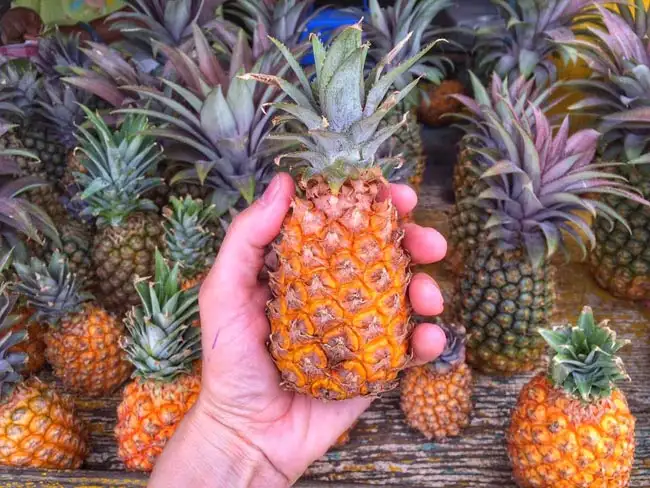
This evening we fly south to Grenada — the Spice Island — where nutmeg, cloves, cinnamon and vanilla perfume the air and the landscape shifts from black volcanic sand to white coral beaches. The transition feels like a chapter turning.
Overnight in Grenada.
Included Meal(s): Breakfast and Dinner - Day 18:Grenada TouringGrenada's capital, St. George's, is widely held to be the most beautiful town in the Caribbean — its horseshoe harbour ringed by pastel buildings climbing steeply to Fort George, the island's oldest fortification, built by the French in 1706. The town's name itself traces the full colonial arc: called Camerhogue by its Carib inhabitants, renamed Concepción by Columbus, rechristened Granada by passing Spanish sailors who found its hills evocative of Andalusia, then softened by the French to La Grenade and anglicised to Grenada. Every version of the name is a layer of history.
We visit the National Museum — built on the foundations of a French fort from 1704, later a women's prison, now a collection spanning Carib artifacts, plantation economics, whaling history and the island's modern political story. The colourful central market, once a site of public executions and slave trading, today belongs to farmers and spice vendors. Fort Frederick on Richmond Hill, nicknamed the "backwards facing fort" because its cannons face inland rather than out to sea, offers panoramic views across the island before we return to St. George's for the evening.
Overnight in Grenada.
Included Meal(s): Breakfast and Dinner - Day 19:Grenada: South Island TouringWe begin at De La Grenade Industries, where Grenada's celebrated nutmeg is processed into jams, jellies and syrups — a fragrant introduction to the spice economy that has defined this island since the 19th century. The adjacent Nutmeg Garden, set in the lush hills of St. Paul's parish, shows the tree in its natural setting before we continue east to the Grenville Nutmeg Processing Station, where the industry operates at commercial scale. Grenada was once the world's second-largest nutmeg producer, and the trade — disrupted by Hurricane Ivan in 2004 but steadily recovering — remains central to the island's identity and economy.
Grand Etang National Park occupies the volcanic interior — a landscape of towering rainforest, crater lakes and mist-wrapped peaks. The Grand Etang Lake itself, formed in an ancient volcanic crater, sits at 530 m/1,739 ft amid forest that feels genuinely primeval. We walk the self-guided trails beneath the rainforest canopy before continuing to Annandale Falls — 15 m/49 ft of cascading water enclosed in a garden of ferns and mossy rock — before returning to St. George's in the late afternoon.
Overnight in Grenada.
Included Meal(s): Breakfast and Dinner - Day 20:Grenada: North Island TouringThe Diamond Chocolate Estate introduces us to another of Grenada's signature products — cocoa, grown in the island's lush northern hills and processed here into artisanal chocolate using traditional methods that emphasise quality over volume. Nearby, the fishing villages of Victoria and Gouyave carry on a quieter, older Grenada, their colourful boats pulled up on black-sand beaches at the base of forested hillsides.
At Sauteurs on the island's northern tip we reach one of the most sobering sites on this entire journey. Carib's Leap is the clifftop from which the last Kalinago community on Grenada chose to jump to their deaths in 1651 rather than submit to French conquest. The town's name — Sauteurs, French for "jumpers" — memorialises the act without softening it. We have traced the Kalinago story from their ancient settlements in St. Kitts, through the living community in Dominica, to the Black Caribs of St. Vincent — and it ends here, on a cliff above the sea, in an act of terrible finality.
Levera National Park on the northeastern shore offers a spectacular coastal landscape where Caribbean meets Atlantic, with mangrove lagoons rich in herons, stilts and waterfowl. The 300-year-old Belmont Estate, a working cocoa and spice plantation, provides lunch amid gardens and a museum documenting Grenada's plantation history.
Overnight in Grenada.
Included Meal(s): Breakfast and Dinner - Day 21:Grenada - Fly to Port of Spain, Trinidad: City Tour & Northern BeachesTrinidad is a different world. Geologically it is a fragment of the South American mainland, separated from Venezuela by just 11 km/6.8 mi of water, and that continental connection runs deep — in the island's extraordinary biodiversity, in the Hindu and Muslim communities descended from indentured labourers brought from India after emancipation, and in the steelband music invented in the yards of Port of Spain in the 1930s and 40s. The Lesser Antilles chain ends here. Something larger begins.
Port of Spain is a city of vivid contrasts — gingerbread Victorian houses alongside modern towers, the expansive Queen's Park Savannah bordered by the "Magnificent Seven" colonial mansions, each built in a different architectural style by rival 19th century merchants. We tour the Red House parliament, the Hall of Justice, Woodford Square and the Botanical Gardens before climbing to Lady Young Lookout for a panoramic view across the city to the Gulf of Paria and the Venezuelan coast beyond.
Overnight in Port of Spain.
Included Meal(s): Breakfast and Dinner - Day 22:Trinidad: Central Trinidad, Pitch Lake & Caroni Nature SanctuaryCentral Trinidad is a landscape of rice fields, vast mangrove swamps and Hindu prayer flags — a world utterly removed from the colonial Anglican Caribbean we have been travelling through. We visit a Sadhu Hindu Temple built out over the sea, its construction an act of remarkable devotion and engineering, before heading south to Pitch Lake near La Brea.
Pitch Lake is the world's largest natural asphalt deposit — roughly 40 hectares/99 acres of warm, slightly yielding surface underlain by a vast reservoir of natural bitumen that has supplied road-paving material globally for over a century. Walking carefully across it, watching sulphur pools bubble at your feet, geological forces made visible and walkable, is one of the stranger experiences this journey offers.
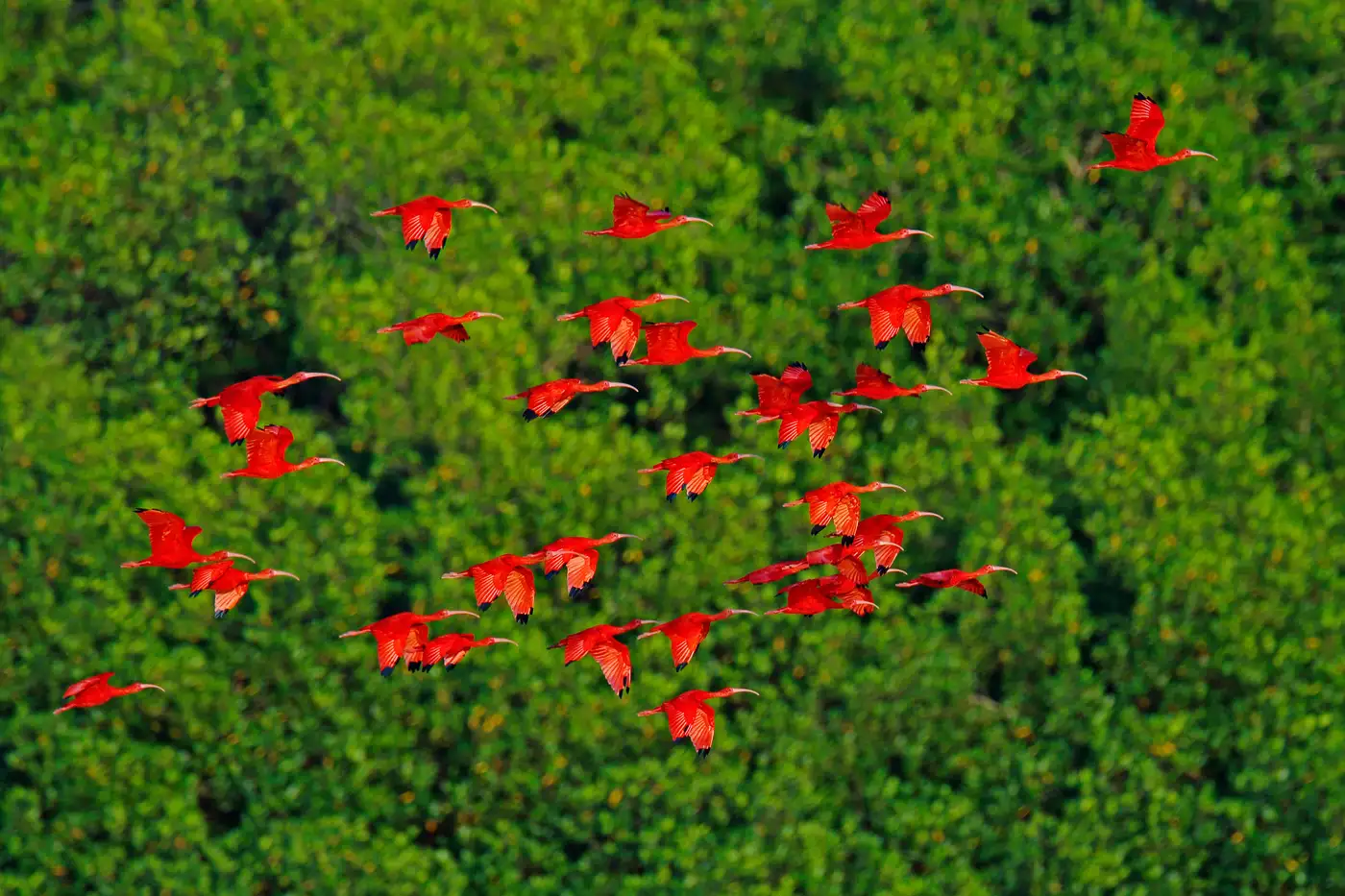
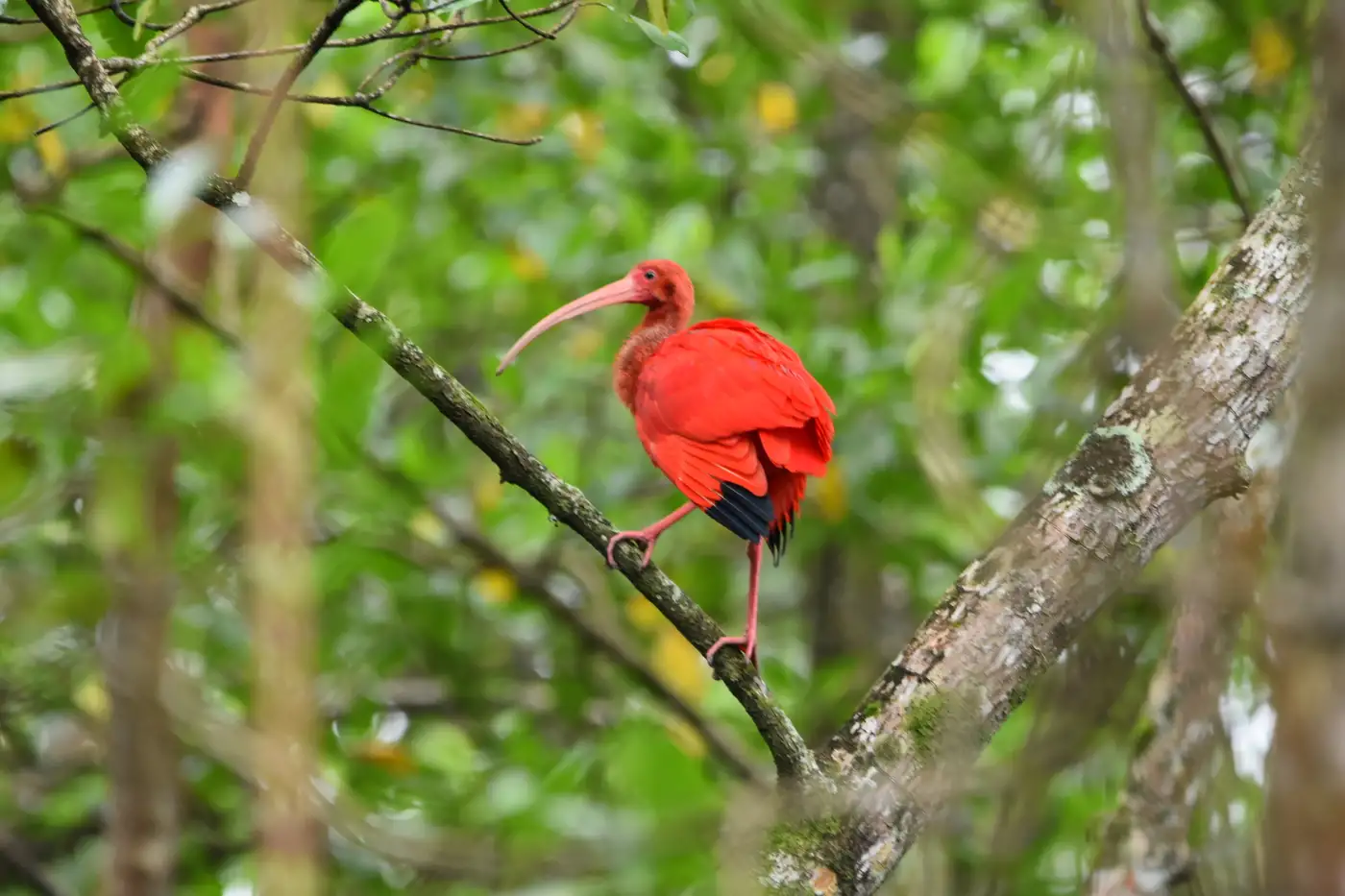
The afternoon brings the Caroni Bird Sanctuary, a 104 sq km/40 sq mi mangrove swamp on Trinidad's northwest coast. We board flat-bottomed boats and drift through the waterways as evening approaches — waiting for the moment when hundreds of scarlet ibis return to their roosting trees in an explosion of red against the green mangrove. It is, by any measure, one of the great wildlife spectacles in the Caribbean.
Overnight in Port of Spain.
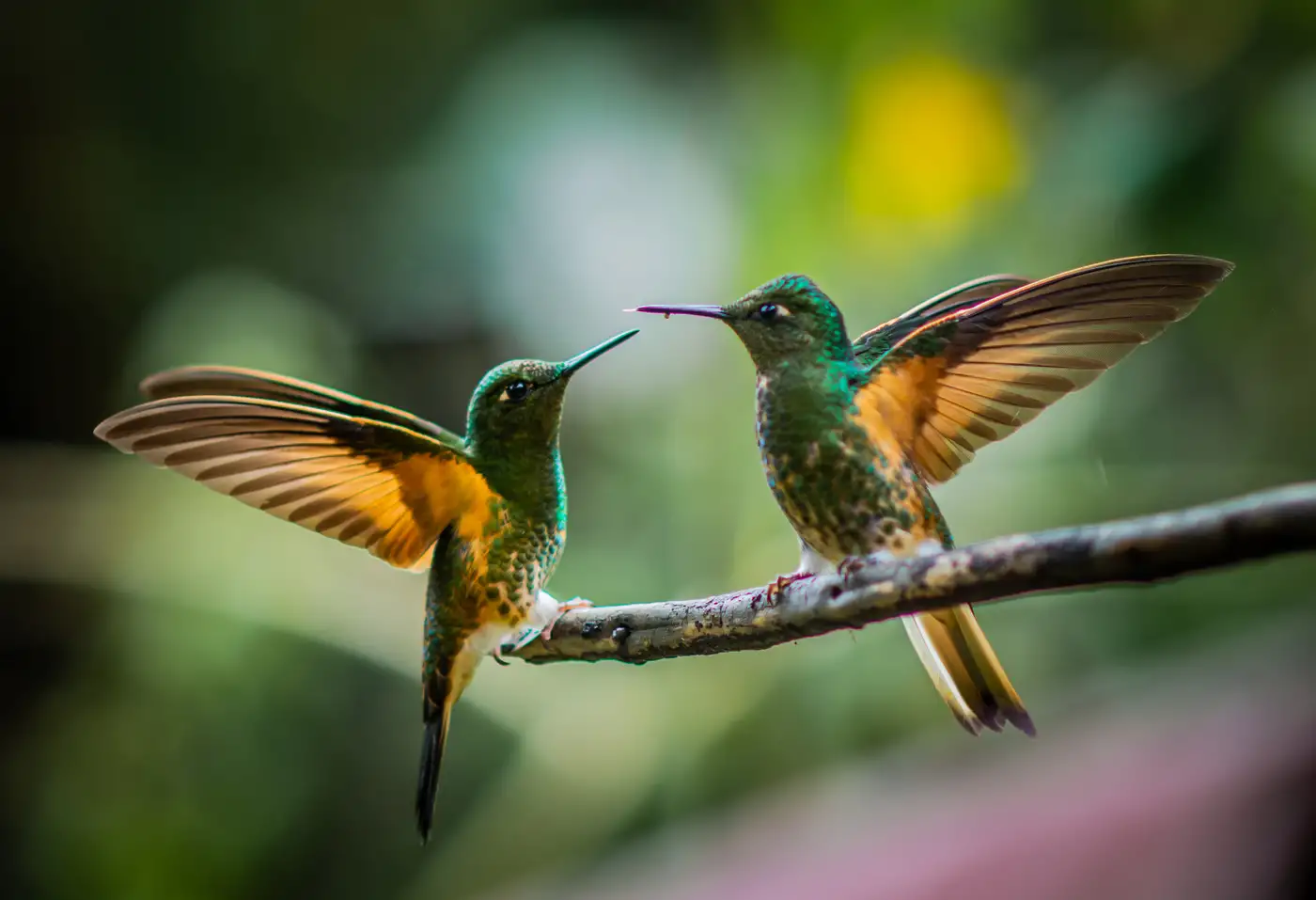
Included Meal(s): Breakfast and Dinner - Day 23:Trinidad: Asa Wright Nature Centre - TobagoThe Asa Wright Nature Centre in the Arima Valley is among the finest birdwatching destinations in the tropics — a former coffee and cocoa plantation converted in 1967 into a conservation and study area protecting a remarkable range of species. Our guided walk along the Discovery Trail explores the forest interior before we settle on the verandah as hummingbirds, honeycreepers and tanagers work the feeders just below. Trinidad has recorded over 470 bird species — more than the whole of Canada — and the Asa Wright Centre distils that abundance into a single extraordinary morning.
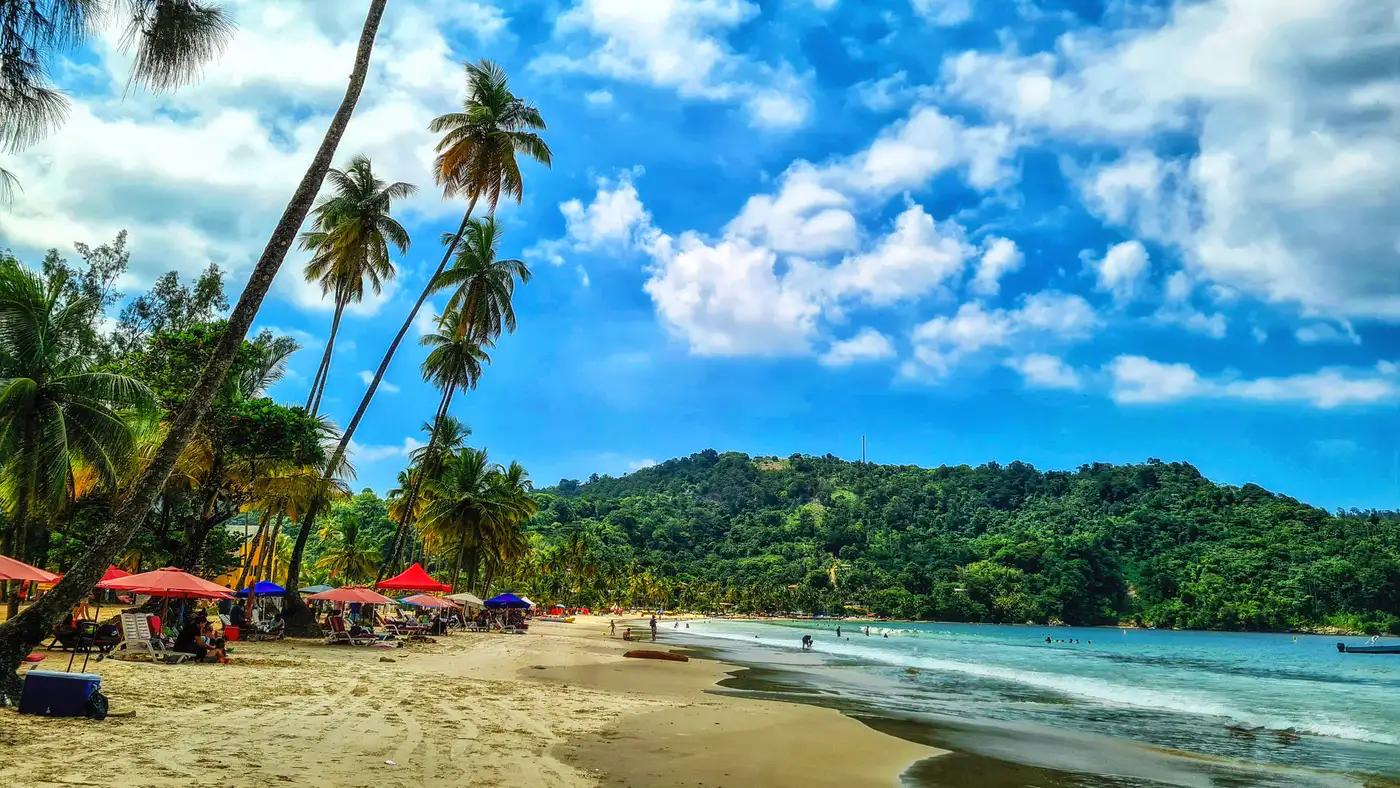
This afternoon we fly to Tobago — smaller, quieter, and fiercely proud of its distinct identity within the Republic of Trinidad and Tobago. Where Trinidad is urban, cosmopolitan and continental in feel, Tobago is unhurried and insular in the best sense, its forested hills and sheltered coves largely unchanged. Daniel Defoe is said to have modelled Robinson Crusoe's island on Tobago — and arriving here after the density of Trinidad, the claim feels entirely plausible.
Overnight in Tobago.
Included Meal(s): Breakfast, Lunch and Dinner - Day 24:Tobago: Island TourFort King George, high above Scarborough, offers our introduction to Tobago's colonial history — a well-preserved 18th century British fortification with sweeping views of the coastline. The fort changed hands repeatedly between the British and French before Britain gained permanent control in 1814; its small museum traces that contested history alongside the island's longer Amerindian and colonial story. Scarborough itself is a compact, lively capital whose market and steep streets reward a morning's exploration.
Charlotteville, a tranquil fishing village tucked into Man O' War Bay on the island's northern tip, gives us Tobago at its most elemental — colourful pirogues pulled up on the beach, the hills forested to the waterline, the pace of life entirely its own. Tobago's interior is largely given over to the Tobago Forest Reserve, the oldest protected rainforest in the western hemisphere, its canopy providing a lush green backdrop to the day's coastal explorations.
Lunch is at Jemma's Tree House Restaurant, perched in the branches of a large saman tree above the sea at Speyside — the same species that shades Derek Walcott Square in Castries, St. Lucia. Tobagonian cuisine eaten in the canopy, with the Caribbean below and the day's last light on the water: a fine way to close the final full day of the journey.
Overnight in Tobago.
Included Meal(s): Breakfast and Lunch - Day 25:Tobago - Fly to Port of Spain - DepartureToday we fly to Port of Spain and connect with onward flights home (this flight is included in tour price).
PLEASE NOTE: If you are booking your own air, please ensure that your departure time from Port of Spain is 11am or later.
SAFE TRAVELS!
Included Meal(s): Breakfast
Countries Visited: Antigua and Barbuda, Barbados, Dominica, Grenada, Saint Kitts and Nevis, Saint Lucia, Saint Vincent and The Grenadines and Trinidad and Tobago
*The red tour trail on the map does not represent the actual travel path.
Book This Tour
- Final payment: Due 90 days prior to departure.
- Deposit: A non-refundable $1000 CAD Deposit is required at booking.
- Internal Flight Taxes: An extra $630 CAD applies for taxes and fees on tour flights. The internal airfares are included, but taxes are listed separately as they may change. Exceptions are noted in Red.
- Optional Single Supplement: $4630 CAD (number of singles limited).
(View options forsingle travellers) - $1000 deposit required due to nature of internal flights; additional $1500 pre-payment upon 'guarantee." Once paid, both your deposit and $1500 pre-payment becomes 100% non-refundable/non-transferable.
Prices below are per person, twin-sharing costs in Canadian Dollars (CAD). Pricing does not include airfare to/from the tour and any applicable taxes.
Frequently Asked Questions
- What is the maximum number of participants on a trip?Most of our tours carry a maximum of 18 participants; some tours (ie hiking tours) top out at 16. In the event that we do not achieve our minimum complement by our 90-day deadline, we may offer group members the option of paying a "small-group surcharge" as an alternative to cancellation. If all group members agree, we will confirm the trip at existing numbers; this surcharge is refundable in the event that we ultimately achieve our regular minimum. If the small group surcharge is not accepted, we will offer a refund of your deposit or a different trip of your choice.
- Can I extend my tour either at the beginning or end? What about stopovers?Yes, you can extend your tour either at the beginning or the end and we can book accommodation in our tour hotel. Stopovers are often permitted, depending on air routing. Stopovers usually carry a "stopover" fee levied by the airline.
- How do I make a reservation? How and when do I pay?The easiest way to make a reservation is via our website; during office hours, you are also more than welcome to contact us by telephone.
A non-refundable deposit is payable at the time of booking; if a reservation is made within 90 days, full payment is required. Some trips require a larger deposit. If international airline bookings require a non-refundable payment in order to secure space or the lowest available fare, we will require an increase in deposit equal to the cost of the ticket(s).
Early enrolment is always encouraged as group size is limited and some trips require greater preparation time.
Once we have received your deposit, we will confirm your space and send you a confirmation package containing your trip itinerary, any visa/travel permit related documents, invoice, clothing and equipment recommendations, general information on your destination(s), and forms for you to complete, sign and return to us. Your air e-tickets (if applicable), final hotel list, final trip itinerary, and instructions on how to join your tour, will be sent approximately 2-3 weeks prior to departure. - What about cancellations, refunds, and transfers?Please review our cancellation policy page for details.
- I am a single who prefers my own room. What is a single supplement?All of our tours have a single supplement for those who want to be guaranteed their own room at each location.
This supplement is a reflection of the fact that most hotels around the world do not discount the regular twin-share rate for a room by 50% for only one person occupying a room. Most hotels will give a break on the price, but usually in the range of 25-30% of the twin-share rate. This difference, multiplied by each night, amounts to the single supplement.
The conventional amount can also vary from country to country and some destinations are more expensive than others for single occupancy. In order to be "single friendly," the supplements we apply are not a profit centre for us and we do our best to keep them as reasonable as possible.
On most tours we limit the number of singles available, not to be punitive, but rather because many hotels allow for only a limited number of singles; some smaller hotels at remote locations also have a limited number of single rooms available.
Please note that most single rooms around the world are smaller than twin-share rooms and will likely have only one bed. - Do you have a shared accommodation program?Yes! If you are single traveller and are willing to share, we will do our best to pair you with a same-gender roommate. Please note that should we fail to pair you, we will absorb the single supplement fee and you will default to a single room at no extra charge.