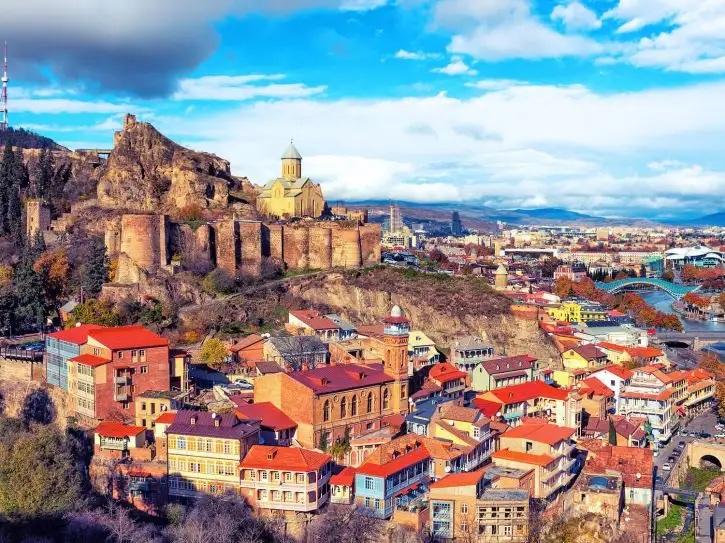
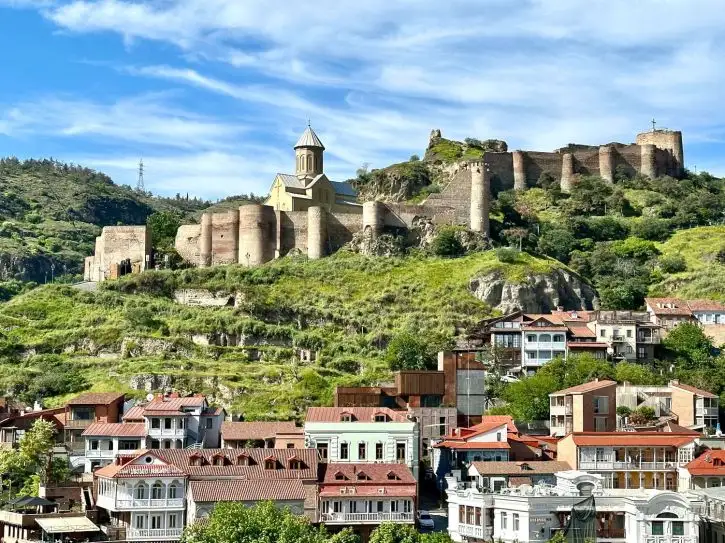
Tbilisi's old town climbs steep hillsides in a tangle of lanes, wooden balconies, and domed sulfur bathhouses. We begin with a cable car ride to Narikala Fortress, a 4th-century Persian stronghold expanded by everyone who subsequently conquered the city—Arabs, Mongols, Georgians, Russians. From the ramparts, Tbilisi spreads below: the Mtkvari River curving through the valley, Soviet-era apartment blocks on one bank, medieval churches on the other, and the ultramodern Bridge of Peace—a glass and steel pedestrian span lit like a spaceship at night—connecting old and new.
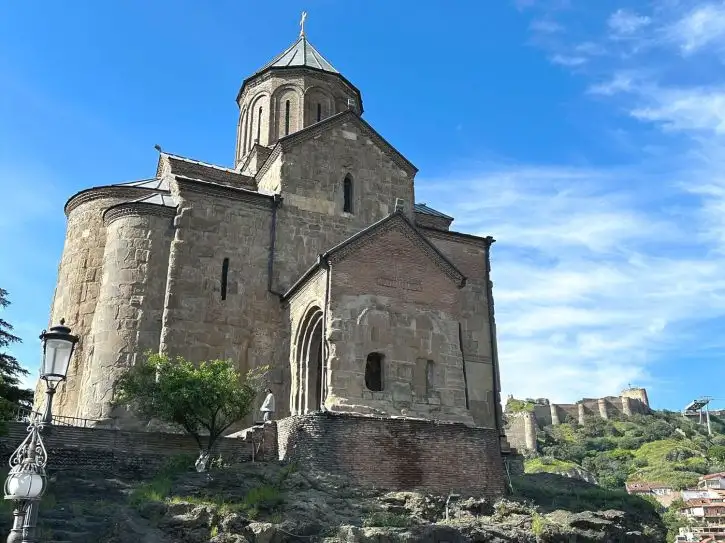
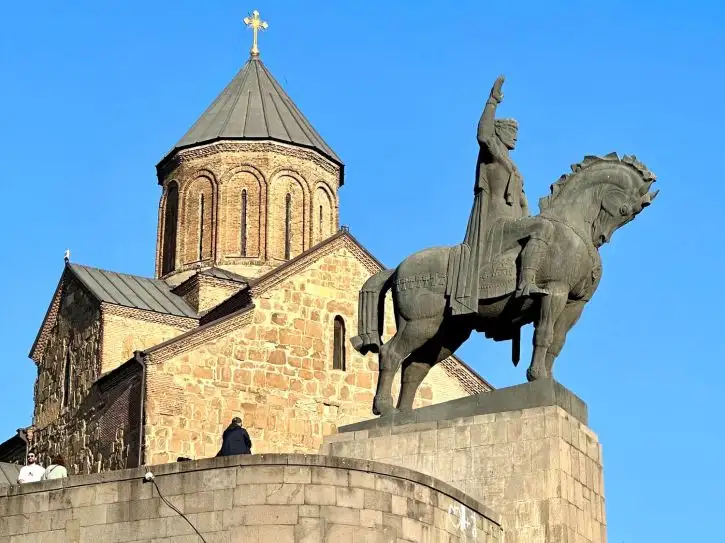
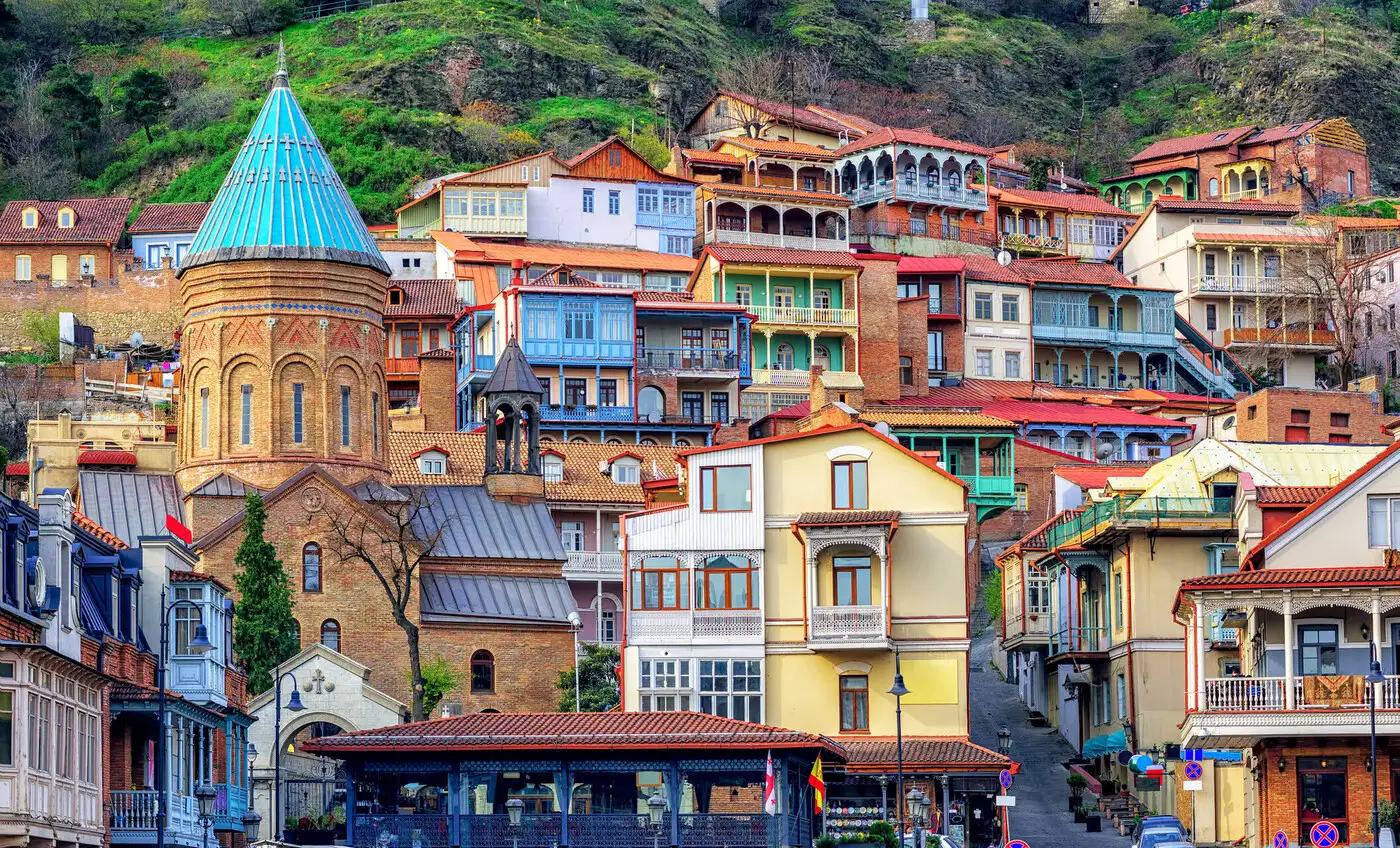
We descend to the Abanotubani district where sulfur bathhouses have operated since at least the 17th century. The baths' distinctive domed roofs peek above street level—the bathing chambers are built underground to capture naturally heated water that has made Tbilisi a spa destination for over 1,500 years. We visit Metekhi Church perched on a cliff above the river, then walk lanes lined with houses sporting elaborately carved wooden balconies that jut over narrow cobbled streets.
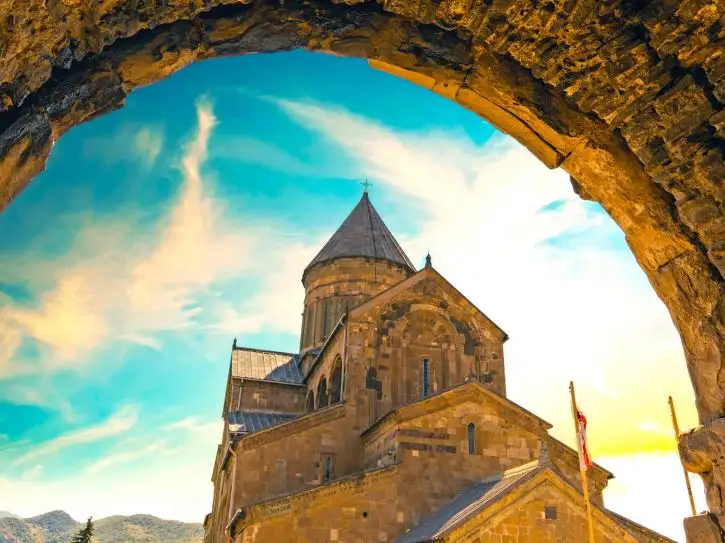
This afternoon we drive north (30 minutes) to Mtskheta, Georgia's ancient capital and spiritual heart. Jvari Monastery, built in the 6th century, sits on a hilltop where legend says Saint Nino erected a wooden cross in 327 AD, marking Georgia's conversion to Christianity. The church's austere stone exterior and cross-in-square design became the template for Georgian ecclesiastical architecture for the next millennium.
Below, Svetitskhoveli Cathedral rises in the town centre, built in the 11th century over the purported burial site of Christ's robe. The cathedral served as coronation and burial church for Georgian kings; frescoes inside depict these rulers, their faces worn by centuries but their golden crowns still visible. Both sites hold UNESCO World Heritage status.
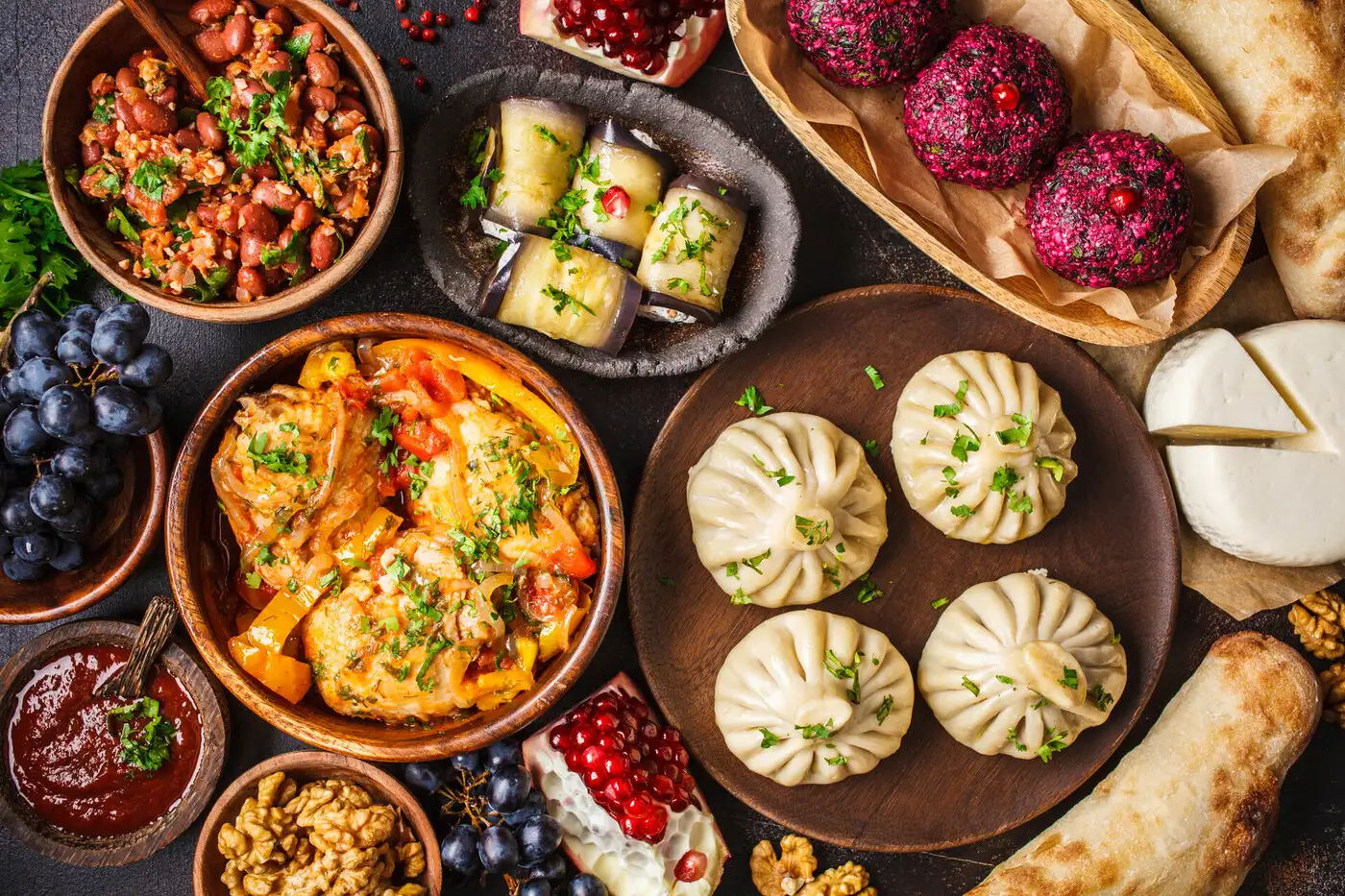
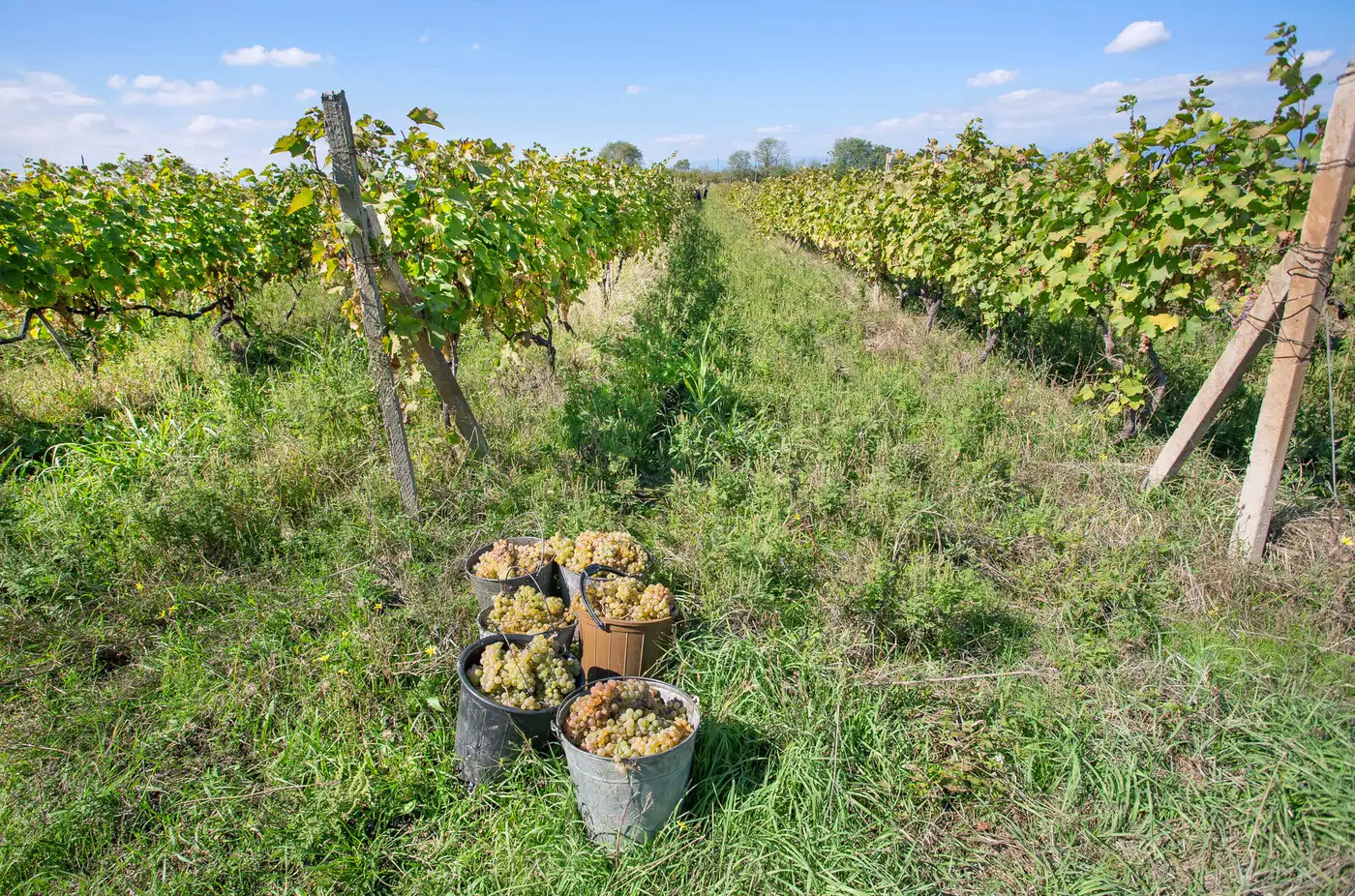
This evening brings a traditional supra feast, the Georgian banquet governed by elaborate toasting protocols. A tamada (toastmaster) proposes toasts to family, ancestors, guests, and peace—each followed by emptying one's glass of wine fermented in those ancient qvevri vessels. Polyphonic singing accompanies the meal, a UNESCO-recognized Georgian tradition with three-part harmonies that predate written music. Dishes include khachapuri (cheese-filled bread), khinkali (soup dumplings), and pork mtsvadi, demonstrating why Georgian cuisine has become trendy in food-obsessed cities worldwide.
Overnight in Tbilisi.
Included Meal(s): Breakfast and Dinner