- History
- Overview
- Info & Inclusions
- Itinerary
- Map & Hotels
- Photos
- Dates & Prices
- Tour Duration: 10 Days
- Max Group Size 18
- Lake Titicaca & Isla del Sol, Tiwanaku Ruins, historic towns, the vast Altiplano and Uyuni salt flats
- Singles friendly (view options for single travellers)
- MealsSavour authentic flavours with included daily breakfasts, some lunches, and most dinners at hotels or handpicked local restaurants—immersing you in local cuisine without worrying about reservations or budgets.
- Transport & Logistics
Private air-conditioned coaches and included internal ferries and flights—ensuring hassle-free travel so you can focus entirely on the discoveries ahead.
"Adventures Abroad tour leader's management and guest services managed the tour with great skill and dedication. The tour leader was on top of every move and transfer. We have not experienced any issues with logistics and had a great time."
~ JULIA O"The tour leader did an excellent job coordinating some difficult travel logistics, power outage issues and resolving problems and dealing with guests who had unrealistic expectations."
~ CYNTHIA COLLINS - Expert Guidance
Unlock insider secrets at every landmark with your full-time Tour Leader and expert local guides , all gratuities covered—no hidden tipping surprises—so you immerse fully in your destination's stories, worry-free. (Except for the tips to your tour leader at the end of your tour.)
"Amazing tour guide. Our tour guide was very well organized, Her passion, knowledge, and enthusiasm completely transformed the travel experience into something truly unforgettable..."
~ MELANIE LEMAIRE"Highly recommend every trip with Adventures Abroad. It's a well organized and well thought out adventure. The tour leaders are friendly, knowledgeable and experienced professionals. Highly recommend this company."
~ SUSAN WALL - Sightseeing & EntrancesAll entrance fees for sites visited as per the itinerary—no hidden costs—so you can explore ancient ruins and excursions with complete peace of mind.
- AccommodationsUnwind in clean, well-located 3 to 4-star hotels with private en suite facilities—handpicked for comfort and convenience after each day's discoveries—so you can rest easy knowing your stay supports the real adventure, not steals the spotlight.
- Small Group
Discover the world in small groups of up to 18 travellers plus your expert Tour Leader—unlocking spontaneity, off-the-beaten-path adventures, and genuine connections at a relaxed pace, free from crowds.
"Looking Forward to My Next Adventure The best feature of the Adventures tour was the small size that allowed the group to quickly load up, let everyone get acquainted within the first 24 hours, capitalize on unplanned surprises along..."
~ PHILIP BLENSKI"Good value for a great time I have traveled with Adventures Abroad for over 20 years now. Well thought out, interesting itineraries and the other travelers congenial and friendly. The price always seems fair and overall a..."
~ Trusted Customer - Airport Transfers For Land & Air CustomersWe handle hassle-free airport transfers for all our land and air tour customers—plus early arrivals or late departures when you book extra hotel nights directly with us for added peace of mind.
- International airfare to/from the tour.
- Tour Leader gratuities, lunches, some dinners (per the tour itinrary), drinks, personal items (phone, laundry, etc), international (if applicable), visa fees/departure taxes, any excursions referenced as 'optional'.
- Airport transfers for Land Only customers.
- Our post-reservation trip notes offer further guidance on optional meal costs, entry requirements, and shopping.
- Seasonality and Weather:
This tour is offered twice a year: In Bolivia, the start of the dry season from April-May, has fewer crowds and still feels fresh from the recent rains. Oct-Nov are also dry but a bit warmer, as spring approaches and crowds disperse. Overall, these are two of the best times to visit this destination, outside of the rains which can create problems for travelling, and before the height of summer when it can be hot in some locales. - Transport and Travel Conditions:
Ground transport in and around La Paz provided by private air-conditioned motor coach, 24-36 seats depending on ultimate group size (see 'group size'). Though we will have some full travel days, roads are generally in good condition (rougher in the Altiplano) though a little winding on some stretches. In the Alitplano, we'll be divided between several comfortable 4x4 vehicles.
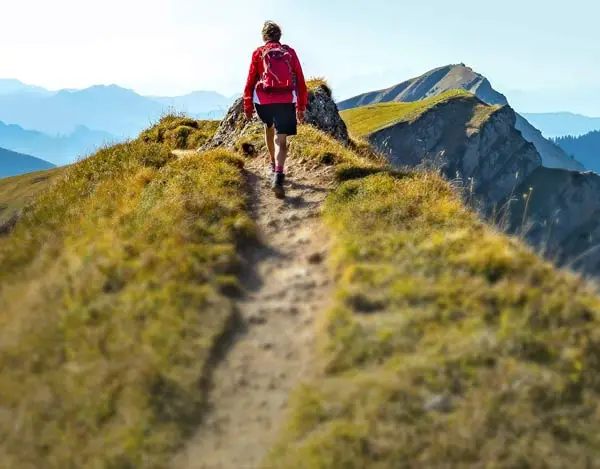
We feature numerous optional walking opportunities and walking tours on uneven surfaces. This tour is not strenuous in terms of physical activities, but in order to fully enjoy and experience the sites visited, you must be prepared for considerable walking at a leisurely pace.
Larger hotels generally provide baggage handling, but you must still be independent with your luggage at smaller hotels outside of major towns/cities.
We also have a couple of internal flights via domestic carriers, which can in itself be fatiguing (you will have to be able to manage your luggage). This is definitely a full itinerary with plenty of moving around!
One important consideration is the time spent at high altitude. We will be above 3100m/10,000 and, in some locations, above 3600m/12,000 ft. Travellers with pre-existing medical conditions should consult their physician; we will visit some very remote locations with limited access to healthcare. As such, all travellers will be required to complete a medical "self-assessment" form in order to affirm their suitability. To preview this form, please click on the "Resources" tab at the top of this page.
Our "Level 2" rating refers to the overall ambitious nature of the program, the tremendous amount of moving around we do, some early starts and full days of travel and activities, leisurely walks at sites and short walks to dinner, and time spent at high elevation.
Am I suitable for this tour? Please refer to our self-assessment form - Activity Level: 2
These are particularly busy tours that feature a lot of moving around, sometimes by train and short journeys on local transport. Walking tours of towns and cities are leisurely but you should be prepared to be on your feet for several hours. Some of our cultural trips that occur at high altitude and/or require greater independence with baggage handling (at hotels, airports, train stations) also fall into this category.
To learn more about the Activity levels, please visit our tour styles page. - Accommodation:
Well-located, air-conditioned/heated, mid-range hotels and inns in towns and cities and of a simpler standard in remote places (ie Uyuni area). All hotels have en suite toilet and bath. Porter service is usually available (see 'inclusions') though you should be independent with your luggage, especially at airports and smaller hotels. Single rooms are limited in number and likely smaller than twins.
* Please click on "Map & Hotels" tab for more information. Note that some of our preferred hotels in La Paz rate themselves 5-star based on a local rating system; internationally, they might be considered more of a 4-star.
Please click on "Map & Hotels" tab for more information - Staff and Support:
Tour Leader throughout, local guides at several locations, multiple drivers. - Group Size:
Maximum 18 plus Tour Leader
- Day 1:Arrival in La Paz, BoliviaWelcome to La Paz, one of the world's highest capital cities at 3,686 metres (12,090 feet) above sea level. The city sits hidden in a dramatic bowl-shaped canyon carved into the Altiplano, invisible until the high plateau suddenly drops away 400 metres (1,312 feet) to reveal the sprawling cityscape below. This geological drama has shaped La Paz's character - neighbourhoods climb the canyon walls in tiers, with the wealthiest residents occupying the lower, oxygen-rich areas while poorer communities perch higher on the rim.
This evening we gather with fellow travellers for our first meal together.
Overnight in La Paz.
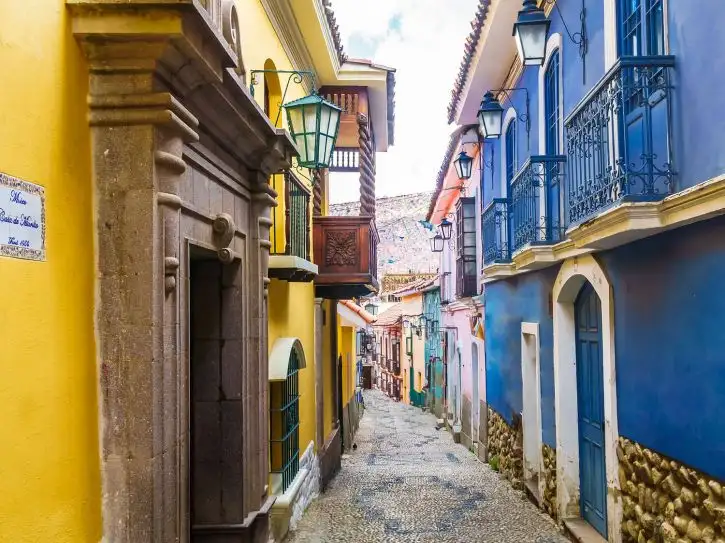
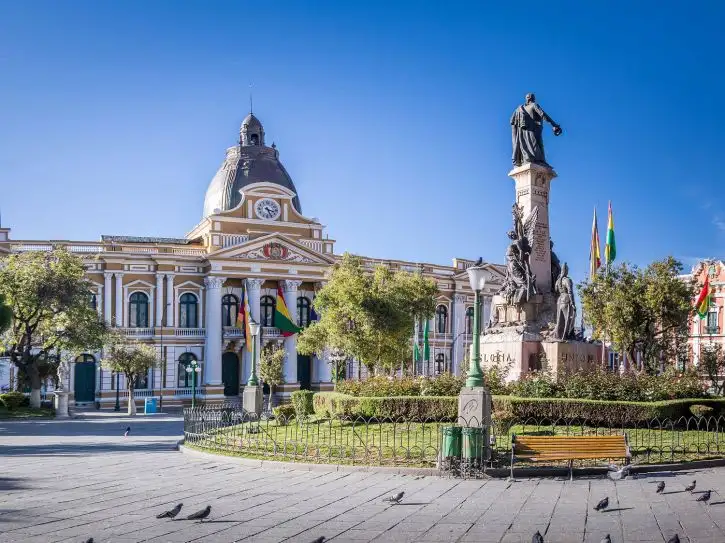
Included Meal(s): Dinner - Day 2:La Paz: City TourAfter breakfast at the hotel, we explore La Paz's well-preserved Spanish colonial quarter. The city sits beneath mountains averaging 5,500 metres (18,040 feet), dominated by the snow-capped triple peak of Mount Illimani at 6,402 metres (21,000 feet). Our tour includes the Precious Metals Museum and the Murillo Museum before continuing to Plaza Murillo, where the Cathedral, Government Palace, and National Congress buildings cluster around the historic square.
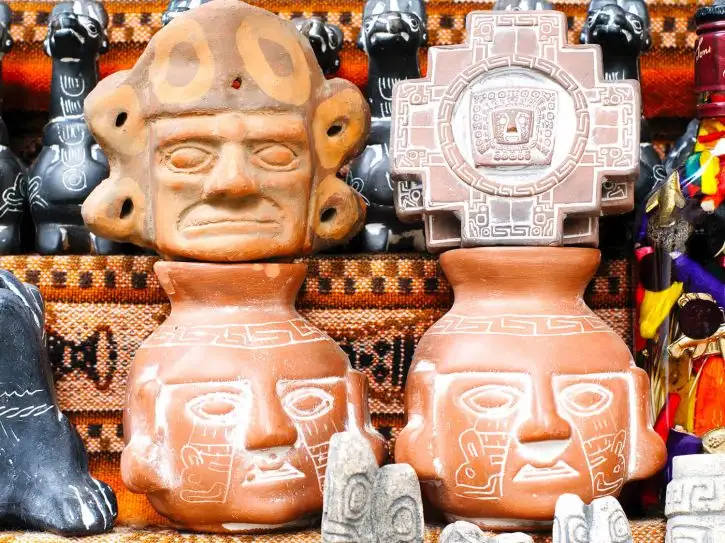
Later we walk through the Mercado de los Brujos, the Witch's Market, where vendors sell potions, herbs, and folk remedies used to guard against evil spirits. Dried llama foetuses hang alongside medicinal plants - traditional offerings for Pachamama (Mother Earth) that builders bury in foundations for good fortune. The market offers a window into Andean mysticism and the daily life of the colourfully-dressed Quechua and Aymara-speaking people. The women wear layers of petticoats beneath bright pollera skirts, carrying groceries or babies in striped aguayo blankets slung over their shoulders. Their signature bowler hats - always appearing slightly too small and worn at jaunty angles - arrived with British railway builders and became part of traditional Andean dress.
We ride the city's cable car system, now the world's longest urban cable car network. The Mi Teleférico has transformed how paceños navigate their vertical city while offering visitors elevated views across the canyon. We finish at the Valley of the Moon, where erosion has carved the clay hillside into a landscape of spires and canyons that resemble the moon's surface.
Overnight in La Paz.
Included Meal(s): Breakfast and Dinner - Day 3:La Paz: Lake Titicaca & Isla del SolAn early start takes us to Copacabana, a site of religious pilgrimage dating back to Inca times. Every year, hundreds of thousands of pilgrims travel from across Bolivia and Latin America for religious festivals here. The town's massive basilica houses the Dark Virgin of Copacabana, a 16th-century statue carved by indigenous artist Francisco Tito Yupanqui. Local legend warns that if the statue is ever removed, Lake Titicaca will rise up and flood the entire Altiplano.
After a brief visit, we board a catamaran to explore Lake Titicaca and Isla del Sol, the most sacred of the lake's islands. Lake Titicaca straddles the Bolivia-Peru border at 3,810 metres (12,497 feet) above sea level. The lake once extended far beyond its current 8,560 square kilometres (3,305 square miles) - the great city of Tiwanaku was built at the water's edge, but today sits more than 25 kilometres (15 miles) inland. This dramatic reduction transformed the Altiplano's climate over the past thousand years.
Our journey continues at the Inti Wata Cultural Complex, featuring exhibits on traditional medicine, living practices, and reed ship building. The complex includes a sailing experience aboard a traditional reed vessel for a visit to the Pilkokaina Inca Palace.
We return to the catamaran for a buffet lunch on board before making our way back to La Paz.
NOTE: Due to our early start, large lunch, and possible early departure tomorrow, dinner is not included this evening.
Overnight in La Paz.
Included Meal(s): Breakfast and Lunch - Day 4:La Paz: Tiwanaku RuinsToday we visit Tiwanaku, a UNESCO World Heritage Site located 72 kilometres from La Paz near the shores of Lake Titicaca. The Tiwanaku Empire dominated portions of southern Peru, northern Chile, and eastern Bolivia for approximately six hundred years (500-1100 CE). At its peak, Tiwanaku ranked among the world's largest cities, with perhaps 20,000 to 40,000 inhabitants thriving at altitudes between 3,800 and 4,200 metres despite frequent frosts and thin soils. The civilisation developed sophisticated raised-field agriculture and extensive trade networks that brought tropical goods from the Amazon and coastal products from the Pacific.
Around 1100 CE, the civilisation collapsed as a regional force. Evidence suggests climate change, including decreased rainfall and dropping groundwater levels, caused agricultural systems to fail throughout the empire. Whether environmental catastrophe alone explains Tiwanaku's end remains debated among archaeologists.
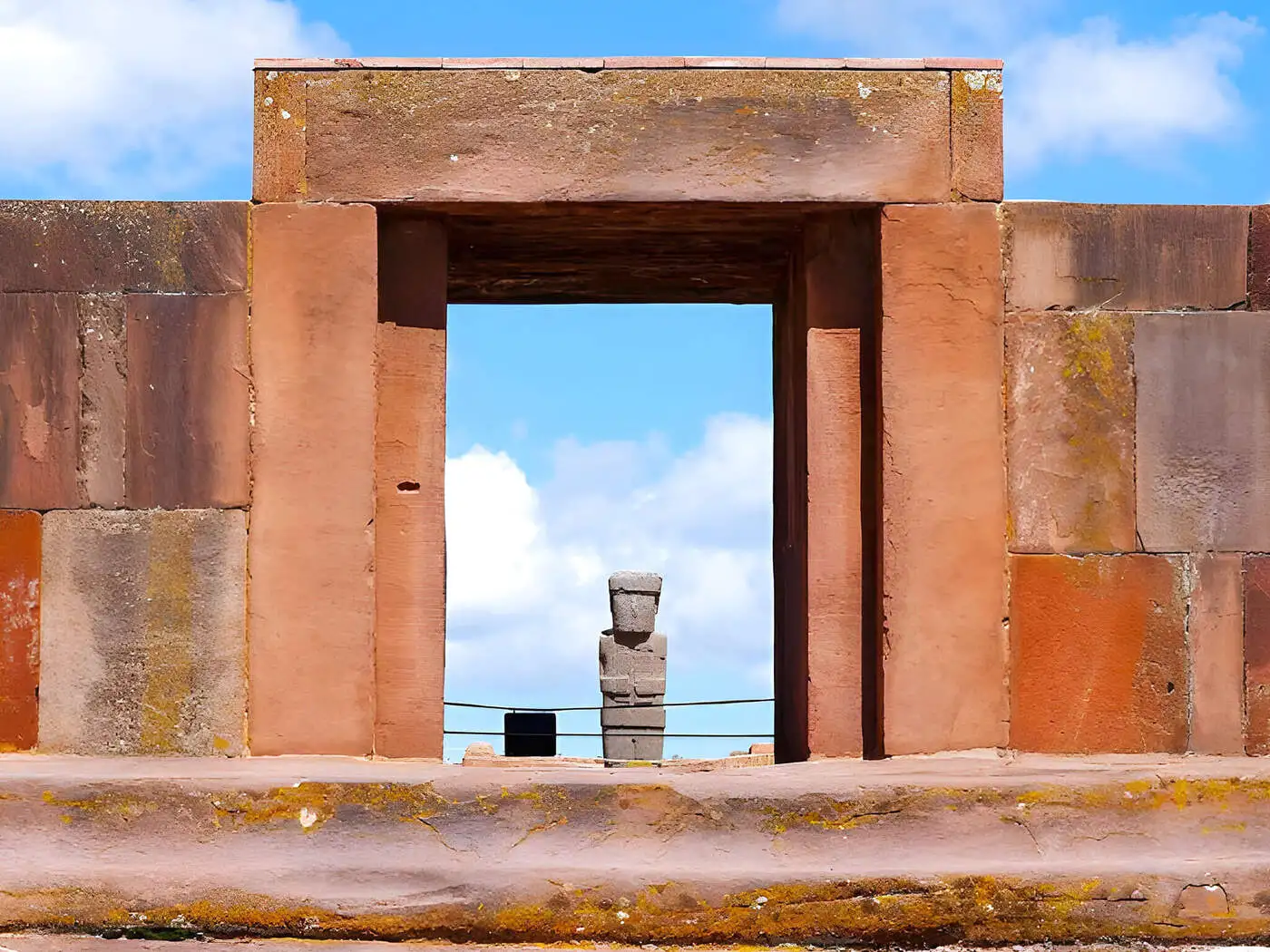
We explore the Kalasasaya Sun Temple, whose name means "standing stones" in Aymara, referring to the massive vertical pillars that once enclosed the temple platform. The semi-subterranean Earth Temple features walls studded with carved stone faces, each one unique. The Akapana Pyramid, though largely unexcavated, once stood seven terraces high. We also see the Gateway of the Sun, a single block of andesite weighing approximately 10 tons and covered with intricate carvings, including the central figure of the "Gateway God." Our visit includes the museum housing ceramic objects, tools, and textiles from Tiwanaku and earlier cultures.
Overnight in La Paz.
Included Meal(s): Breakfast and Dinner - Day 5:La Paz - Fly to Sucre - Parque Cretacico - SucreThis morning we fly to Sucre, Bolivia's constitutional capital and UNESCO World Heritage Site. The city's wealth of Spanish colonial architecture earned its designation. Sucre shares capital status with La Paz: Sucre houses the Supreme Court and serves as the constitutional capital, while La Paz functions as the seat of government. The city maintains an important university and a large indigenous population who preserve traditional clothing and customs.
We begin with a visit to Parque Cretacico, where dinosaur tracks discovered accidentally in 1994 reveal prints nearly 70 million years old. The tracks, preserved in what was once the muddy shoreline of a vast inland sea, belong to numerous species. The site contains one of the world's largest and most diverse collections of dinosaur footprints, with over 5,000 individual tracks identified across a massive limestone slab now tilted nearly vertical by tectonic forces.
After a break for lunch, we tour Sucre's colonial centre, visiting the Casa de la Libertad, where Bolivia's declaration of independence was signed in 1825. At the Museo del Tesoro, displays showcase Bolivia's precious and semi-precious stones. We also visit the Asur Textile Museum, which preserves remarkable indigenous weaving traditions. We view the exterior facades of San Lazaro and Santo Domingo churches, along with other historical monuments and Bolivar Park.
PLEASE NOTE: This will likely be a "painfully" early departure due to limited flight options (one morning, one late afternoon). Though not ideal, a morning flight serves our itinerary better than the alternative. The changeability of internal flight times over the next few days (up to and including our flight to Asuncion) could result in adjustments to the final itinerary.
Overnight in Sucre.
Included Meal(s): Breakfast and Dinner - Day 6:Sucre - Potosi - ColchaniThis morning we travel by road to Potosi (approximately 3 hours), a UNESCO World Heritage Site sitting at 4,090 metres (13,500 feet) - among the world's highest cities. The 1544 discovery of silver in Cerro Rico prompted the city's foundation in 1545. Within decades, Potosi exploded into one of the world's largest and wealthiest cities, its population reaching nearly 200,000. More than eighty churches served this boom town, and the phrase "valer un potosi" entered Spanish as a synonym for unimaginable wealth.
This wealth came at tremendous cost. Hundreds of thousands of indigenous workers and African slaves died in the mines under the brutal mita system of forced labour. According to official records, 45,000 tons of pure silver were mined between 1556 and 1783.
On arrival we visit the city's principal sites, including San Lorenzo Church with its elaborate facade combining European and indigenous artistic traditions. We admire the exterior of the Arch of Cobija and browse the artisans' market.
At the Casa Nacional de la Moneda, we explore the massive facility that operated continuously for 400 years until 1953. Inside, we see the original minting machinery - enormous wooden presses turned by mules - along with galleries displaying colonial art. The mint mark of Potosi may have inspired the dollar sign, though this theory remains disputed.
After our tour, we continue to our hotel in Colchani, gateway to the Uyuni salt flats.
NOTE: We regret if our flight-driven itinerary changes closer to departure have us visiting places on a Sunday when some sites may be closed.
Overnight in Colchani.
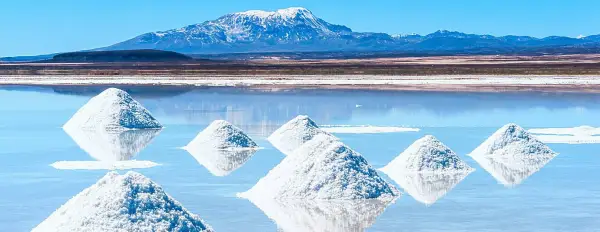
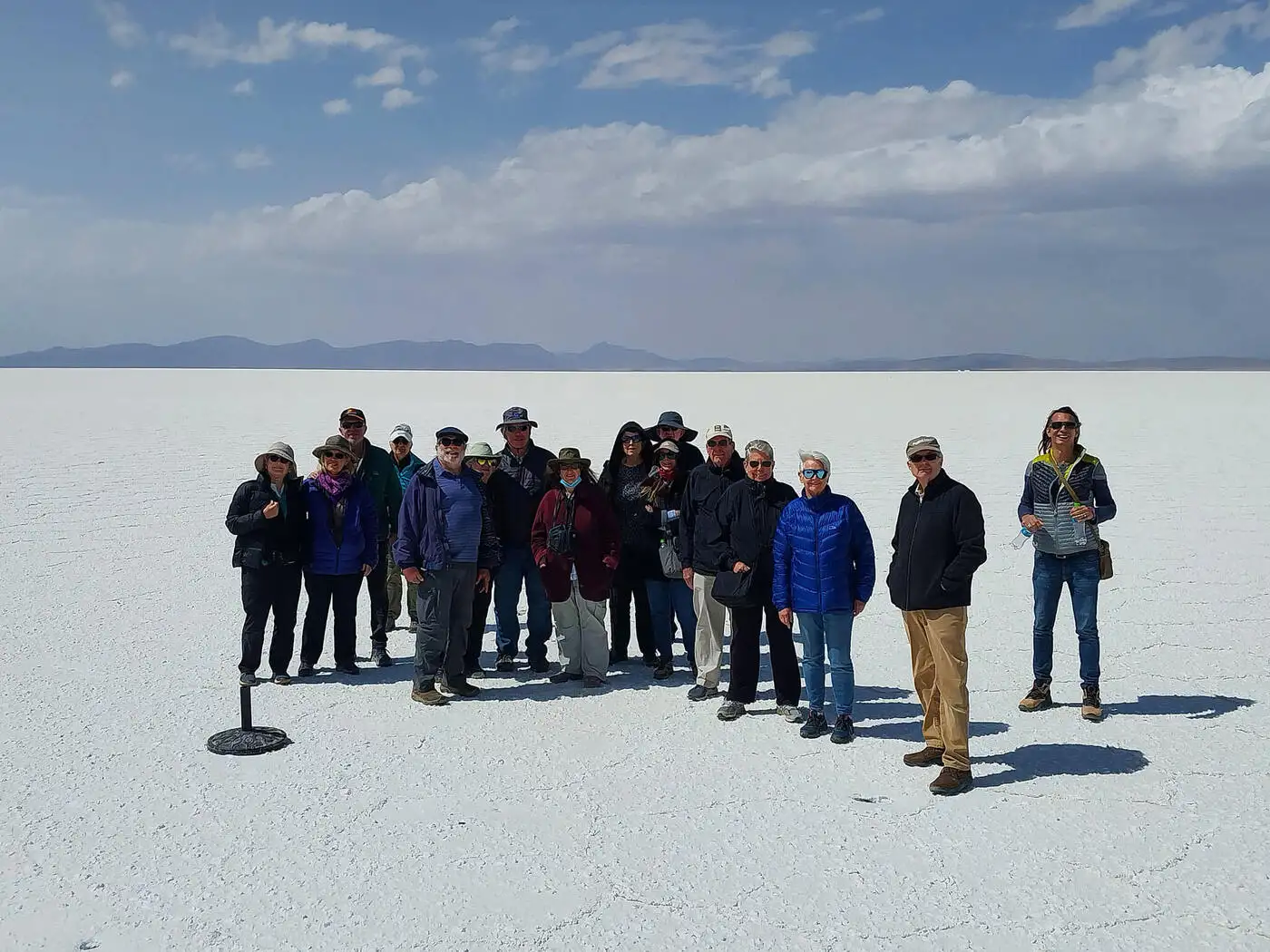
Included Meal(s): Breakfast and Dinner - Day 7:Uyuni: Area SightseeingIn the environs of Uyuni we experience the Salar de Uyuni, the world's highest and largest salt flat at 10,000 square kilometres, sitting at 3,656 metres (11,995 feet) above sea level. The salt flat formed when prehistoric lakes dried up thousands of years ago, leaving a thick crust of salt and minerals. On the flat's edge, we watch local inhabitants extracting salt using ancient methods - cutting blocks from the crust, piling them to dry, then processing the salt for iodisation. En route we visit the villages of Chaquila and TikaTika.
After lunch, we visit the old railway depot in Uyuni, where rusting locomotives sit abandoned - haunting reminders of Bolivia's 19th-century railway ambitions. British engineers built these lines to transport minerals from the Andes to Pacific ports. When mining declined, the railways were abandoned, and the desert's dry air has preserved the locomotives in their slow decay.
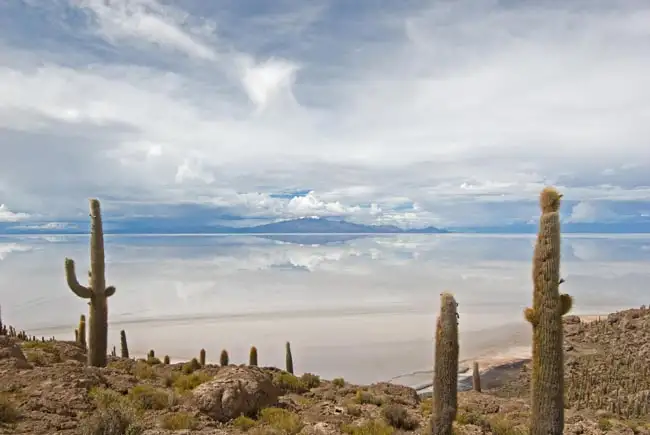
We continue to Incahuasi Island in the heart of the salt flat. This isolated outcrop is populated with giant cacti that can live over a thousand years, some growing up to 12 metres (40 feet) high. From the island's summit, 360-degree views reveal the salt flat stretching to the horizon in every direction.
Our hotel near Colchani village is entirely constructed of salt blocks - walls, floors, and furniture carved from compressed salt. After dinner you can stroll the surroundings and enjoy the stars in the unpolluted, cloudless skies.
Overnight in Colchani.
Included Meal(s): Breakfast, Lunch and Dinner - Day 8:Salar Uyuni Area SightseeingToday's 4x4 excursion takes us to the north side of Uyuni Salt Flat to view the Coquesa Mummies, human archaeological remains in a small cave near Tunupa Volcano. Ceramic, gold and copper artifacts, and articles of clothing discovered at some sites indicate the presence of an advanced but little-known culture. Unfortunately, the sites' remoteness has left them vulnerable to amateur treasure hunters who have plundered items of archaeological value.
As our visit coincides with the dry season (April to November), the salt flat surface provides unique opportunities for perspective photography. The perfectly flat, white surface and clear horizon create optical illusions - distance becomes impossible to judge, allowing creative photos where people appear to stand in someone's hand or balance on bottles.
We return to Colchani for overnight.
Included Meal(s): Breakfast, Lunch and Dinner - Day 9:Uyuni - Fly to La PazToday we fly back to the capital.
As some of your fellow travellers may be continuing to our tour of Paraguay, Uruguay, and Argentina, this flight will occur without your Tour Leader. If so, you will be met on arrival by a local guide, who will also see to your departure arrangements tomorrow. Dinner on your own this evening.
Overnight in La Paz.
Included Meal(s): Breakfast - Day 10:DepartDeparture from La Paz.
BUEN VIAJE!
Countries Visited: Bolivia
*The red tour trail on the map does not represent the actual travel path.
Book This Tour
- Final payment: Due 90 days prior to departure.
- Deposit: A non-refundable $500 CAD Deposit is required at booking.
- Internal Flight Taxes: An extra $250 CAD applies for taxes and fees on tour flights. The internal airfares are included, but taxes are listed separately as they may change. Exceptions are noted in Red.
- Optional Single Supplement: $960 CAD (number of singles limited).
(View options forsingle travellers) - $500 initial deposit required; due the nature of internal flights, additional $500 pre-payment upon 'guarantee." Once paid, both your deposit and $500 pre-payment becomes 100% non-refundable/non-transferable.
Prices below are per person, twin-sharing costs in Canadian Dollars (CAD). Pricing does not include airfare to/from the tour and any applicable taxes.
Frequently Asked Questions
- What is the maximum number of participants on a trip?Most of our tours carry a maximum of 18 participants; some tours (ie hiking tours) top out at 16. In the event that we do not achieve our minimum complement by our 90-day deadline, we may offer group members the option of paying a "small-group surcharge" as an alternative to cancellation. If all group members agree, we will confirm the trip at existing numbers; this surcharge is refundable in the event that we ultimately achieve our regular minimum. If the small group surcharge is not accepted, we will offer a refund of your deposit or a different trip of your choice.
- Can I extend my tour either at the beginning or end? What about stopovers?Yes, you can extend your tour either at the beginning or the end and we can book accommodation in our tour hotel. Stopovers are often permitted, depending on air routing. Stopovers usually carry a "stopover" fee levied by the airline.
- How do I make a reservation? How and when do I pay?The easiest way to make a reservation is via our website; during office hours, you are also more than welcome to contact us by telephone.
A non-refundable deposit is payable at the time of booking; if a reservation is made within 90 days, full payment is required. Some trips require a larger deposit. If international airline bookings require a non-refundable payment in order to secure space or the lowest available fare, we will require an increase in deposit equal to the cost of the ticket(s).
Early enrolment is always encouraged as group size is limited and some trips require greater preparation time.
Once we have received your deposit, we will confirm your space and send you a confirmation package containing your trip itinerary, any visa/travel permit related documents, invoice, clothing and equipment recommendations, general information on your destination(s), and forms for you to complete, sign and return to us. Your air e-tickets (if applicable), final hotel list, final trip itinerary, and instructions on how to join your tour, will be sent approximately 2-3 weeks prior to departure. - What about cancellations, refunds, and transfers?Please review our cancellation policy page for details.
- I am a single who prefers my own room. What is a single supplement?All of our tours have a single supplement for those who want to be guaranteed their own room at each location.
This supplement is a reflection of the fact that most hotels around the world do not discount the regular twin-share rate for a room by 50% for only one person occupying a room. Most hotels will give a break on the price, but usually in the range of 25-30% of the twin-share rate. This difference, multiplied by each night, amounts to the single supplement.
The conventional amount can also vary from country to country and some destinations are more expensive than others for single occupancy. In order to be "single friendly," the supplements we apply are not a profit centre for us and we do our best to keep them as reasonable as possible.
On most tours we limit the number of singles available, not to be punitive, but rather because many hotels allow for only a limited number of singles; some smaller hotels at remote locations also have a limited number of single rooms available.
Please note that most single rooms around the world are smaller than twin-share rooms and will likely have only one bed. - Do you have a shared accommodation program?Yes! If you are single traveller and are willing to share, we will do our best to pair you with a same-gender roommate. Please note that should we fail to pair you, we will absorb the single supplement fee and you will default to a single room at no extra charge.