- Popular
- History
- Classic
- Off The Beaten Path
- Overview
- Info & Inclusions
- Itinerary
- Map & Hotels
- Photos
- Dates & Prices
- Tour Duration: 9 Days
- Max Group Size 18
- UNESCO World Heritage Casbah of Algiers
- Roman cities of Timgad & Djemila in mountain settings
- Dramatic Constantine "City of Bridges" spanning spectacular gorges
- Ancient Phoenician & Roman coastal sites at Tipaza & Cherchell
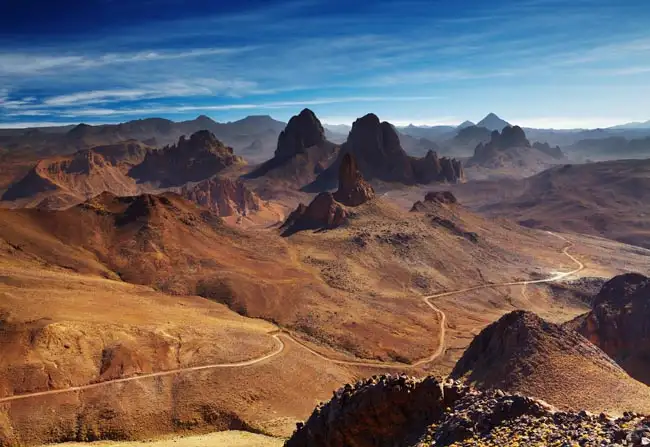
- Traditional M'Zab Valley oasis towns & Sahara edge
- Mysterious pre-Roman Numidian royal tombs
- Singles friendly (view options for single travellers)
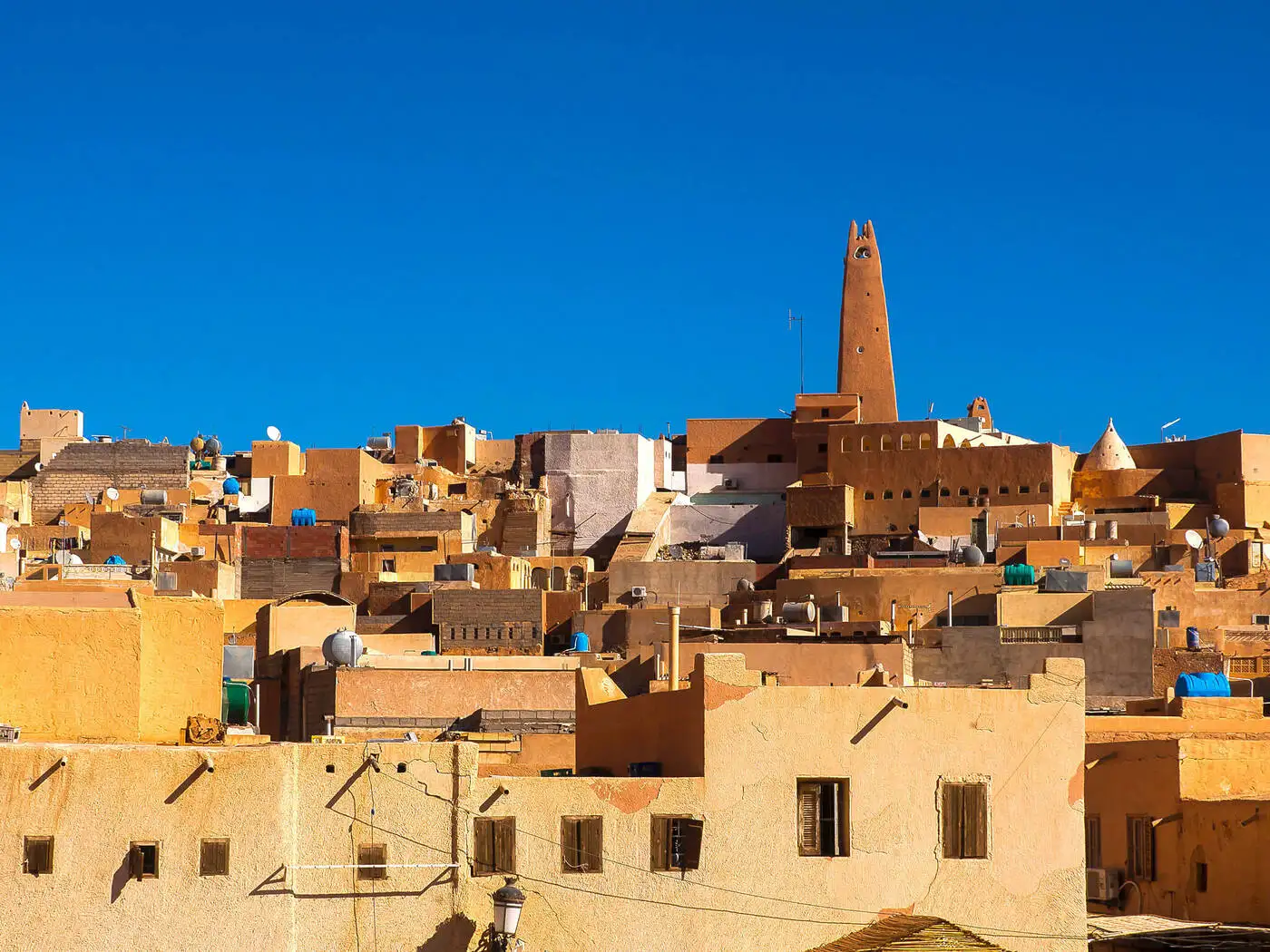
First comes the M'Zab Valley — five UNESCO-listed fortified towns where Ibadite communities maintain 11th-century traditions as living culture. Traditional dress, spiritual architecture, and palm groves irrigated by ancient underground channels represent unbroken continuity with the medieval past. Standing at Ghardaia on the Sahara's edge, the contrast with coastal Algeria becomes profound — yet both reveal authentic human responses to North African geography and history.
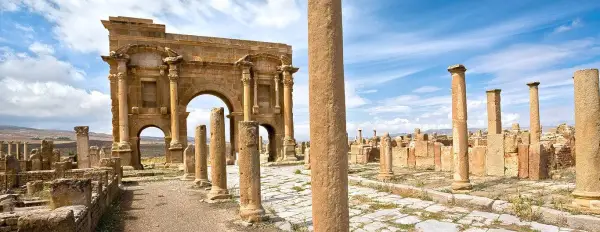
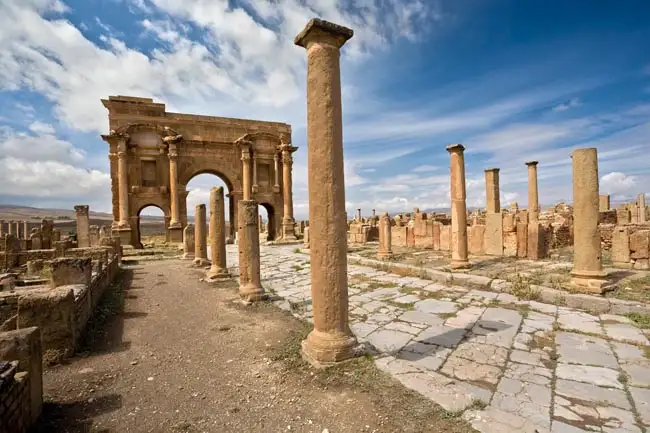
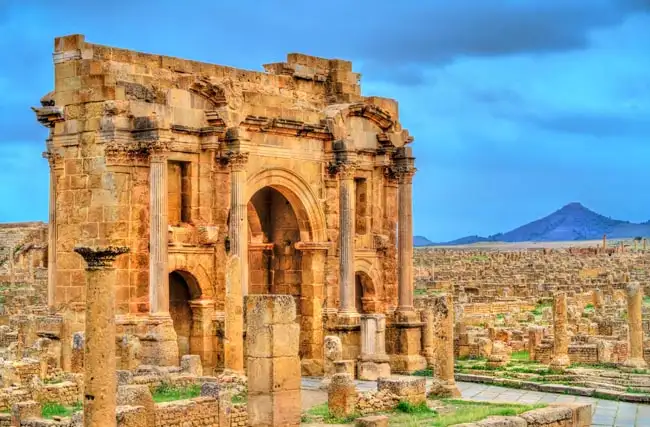
The Roman heritage rivals anything in Italy. Timgad spreads as Emperor Trajan's perfectly gridded colony, its triumphal arch and colonnaded streets frozen in time. Djemila flows with mountain contours in defiance of classical geometry. Constantine spans impossible gorges 120 metres deep, its suspension bridges connecting ancient quarters separated by geological drama. Along the coast, Phoenician harbours evolved into Roman Tipaza and Cherchell, while mysterious pre-Roman Numidian tombs rise from the landscape like unanswered questions.
- MealsSavour authentic flavours with included daily breakfasts and dinners at hotels or handpicked local restaurants—immersing you in local cuisine without worrying about reservations or budgets.
- Transport & Logistics
Private air-conditioned coaches and included internal ferries and flights—ensuring hassle-free travel so you can focus entirely on the discoveries ahead.
"Adventures Abroad tour leader's management and guest services managed the tour with great skill and dedication. The tour leader was on top of every move and transfer. We have not experienced any issues with logistics and had a great time."
~ JULIA O"The tour leader did an excellent job coordinating some difficult travel logistics, power outage issues and resolving problems and dealing with guests who had unrealistic expectations."
~ CYNTHIA COLLINS - Expert Guidance
Unlock insider secrets at every landmark with your full-time Tour Leader and expert local guides , all gratuities covered—no hidden tipping surprises—so you immerse fully in your destination's stories, worry-free. (Except for the tips to your tour leader at the end of your tour.)
"Amazing tour guide. Our tour guide was very well organized, Her passion, knowledge, and enthusiasm completely transformed the travel experience into something truly unforgettable..."
~ MELANIE LEMAIRE"Highly recommend every trip with Adventures Abroad. It's a well organized and well thought out adventure. The tour leaders are friendly, knowledgeable and experienced professionals. Highly recommend this company."
~ SUSAN WALL - Sightseeing & EntrancesAll entrance fees for sites visited as per the itinerary—no hidden costs—so you can explore ancient ruins and excursions with complete peace of mind.
- AccommodationsUnwind in clean, well-located 3 to 4-star hotels with private en suite facilities—handpicked for comfort and convenience after each day's discoveries—so you can rest easy knowing your stay supports the real adventure, not steals the spotlight.
- Small Group
Discover the world in small groups of up to 18 travellers plus your expert Tour Leader—unlocking spontaneity, off-the-beaten-path adventures, and genuine connections at a relaxed pace, free from crowds.
"Looking Forward to My Next Adventure The best feature of the Adventures tour was the small size that allowed the group to quickly load up, let everyone get acquainted within the first 24 hours, capitalize on unplanned surprises along..."
~ PHILIP BLENSKI"Good value for a great time I have traveled with Adventures Abroad for over 20 years now. Well thought out, interesting itineraries and the other travelers congenial and friendly. The price always seems fair and overall a..."
~ Trusted Customer - Airport Transfers For Land & Air CustomersWe handle hassle-free airport transfers for all our land and air tour customers—plus early arrivals or late departures when you book extra hotel nights directly with us for added peace of mind.
- International airfare to/from the tour.
- Tour Leader gratuities, lunches, drinks, personal items (phone, laundry, etc), international (if applicable) and domestic air taxes, and visa fees.
- Our post-reservation trip notes offer further guidance on packing, optional meal costs, and visas.
- Seasonality and Weather:
Our tour occurs entirely in the northern part of the country, a temperate zone that enjoys a mild, Mediterranean climate. It lies within approximately the same latitudes as southern California and has somewhat similar climatic conditions. Its broken topography, however, provides sharp local contrasts in both prevailing temperatures and incidence of rainfall.
Our dates in spring and fall will see comfortable mild-to-warm temperatures and the possibility of rain showers at any time. Spring will see green landscape and possibly wildflowers, while our fall date will enjoy the possibility of locally-produced fruits and vegetables. - Transport and Travel Conditions:
Land transport will be via private air-conditioned bus. Though we will have some full days of travel and sightseeing, road travel is not particularly arduous as there are plenty of stops of interest. Roads are generally in good condition, though a little winding on some stretches. We have a couple of internal flights via scheduled local airlines.
Though Algeria has stabilized greatly since its civil war ending in 2002, for security reasons we avoid areas near borders with neighbouring countries and restrict our explorations to the well-controlled and secure northern part of the country. At this time we do not currently offer the far south of the country, which is remote and not as well-patrolled. That said, we do get a nice taste of desert life on the edge of the Sahara in Ghardaia.
Our 'Level 2' difficulty rating reflects our comfortable transport and road journeys on good roads that are not terribly long. Heat should also not be a significant factor during our two dates. That said, our program is ambitious with plenty of moving around, some full days, early starts, remote locations, and plenty of time on your feet -- walking tours of towns and cities and at sites, some of which are large.
Am I suitable for this tour? Please refer to our self-assessment form - Activity Level: 2
These are particularly busy tours that feature a lot of moving around, sometimes by train and short journeys on local transport. Walking tours of towns and cities are leisurely but you should be prepared to be on your feet for several hours. Some of our cultural trips that occur at high altitude and/or require greater independence with baggage handling (at hotels, airports, train stations) also fall into this category.
To learn more about the Activity levels, please visit our tour styles page. - Accommodation:
Well-located, air-conditioned, mid-range hotels and inns throughout; our hotel in Ghardaia, however, is of a simpler standard but is clean and charming with local atmosphere (it does not have a website). All hotels have en suite bath, though some may have shower only. Porter service is usually available (see '˜Inclusions') though you should be independent with your luggage. Single rooms are limited in number and possibly smaller than twins.
Please click on the 'Map & Hotels' tab for more information. - Staff and Support:
Tour Leader, local guide, driver/s throughout. - Group Size:
Maximum 18 plus Tour Leader.
- Day 1:Arrival in Algiers - Gateway to the MaghrebToday we arrive in Algiers - welcome to Algeria!
The Mediterranean sparkles below as we descend toward Algiers, a city whose very name—Al-Jaza'ir, "the islands"—recalls the rocky islets that once guarded this strategic harbour. Built into the rolling Sahel hills, Algeria's capital stretches ten miles along the sweeping Bay of Algiers, its white buildings cascading down toward azure waters like an amphitheatre facing the sea. Today, elegant French boulevards wind between Socialist-era monuments and the timeless Islamic heart of the hillside Casbah, creating a visual symphony of architectural eras.
We settle into our accommodation, preparing for tomorrow's exploration of this remarkable city where three continents converge.
Overnight in Algiers.
Included Meal(s): Dinner - Day 2:Algiers Touring - Fly to GhardaiaThis morning we step into the labyrinthine Casbah, where centuries-old traditions pulse through narrow alleys lined with whitewashed houses. Built in the 16th century, this UNESCO treasure reveals itself slowly — each turn unveiling hidden courtyards, ornate doorways, and glimpses of daily life unchanged by time. The maze-like streets once confounded invading armies; today they embrace us with their timeless rhythm.
Descending toward the bay, we discover the elegant boulevards created during France's 130-year presence (1830–1962). The 17th-century Ketchaoua Mosque stands as one of the Ottoman period's finest surviving monuments, while the remarkable Palais des Rais — three interconnected palaces guarding the seafront — rewards exploration of its secret chambers and terraces. The bustling Martyrs' Square, the palatial Grand Post Office in its early 20th-century Moorish revival grandeur, and the tranquil Botanical Garden of El Hamma round out a morning rich in architectural contrast.
This afternoon we transfer to the airport for our early evening flight south to Ghardaïa (departing 18:55, arriving 20:25), trading the Mediterranean's blue horizons for the golden edge of the Sahara. The M'Zab Valley awaits — a UNESCO World Heritage landscape where traditional Islamic society has preserved its distinctive character for over a thousand years.
Overnight in Ghardaia.
Included Meal(s): Breakfast and Dinner - Day 3:Ghardaia: M'Zab Valley, El-Atteuf & Bou NouraWe awaken in a different world. The M'Zab Valley, home to the conservative Ibadite Muslim community, preserves social traditions and architectural forms virtually unchanged since the 11th century. Here, five fortified towns — Ghardaia, Melika, Beni Isguen, Bou Noura, and El-Atteuf — represent one of humanity's most successful experiments in sustainable desert living.
The Ibadites, who separated from mainstream Islam nine centuries ago, created these settlements as earthly reflections of spiritual ideals. Every aspect of daily life follows ancient codes: women wear traditional white haik coverings that leave only one eye exposed, while men sport elaborately pleated saroual loubia trousers. These aren't tourist performances — they're living traditions in communities that have maintained their identity despite centuries of outside pressure.
We explore marketplaces where the rhythm of commerce follows patterns established centuries ago. Narrow streets designed to channel cooling breezes past whitewashed walls demonstrate sophisticated understanding of desert architecture. The traditional palm groves, irrigated by ancient foggara (underground channels), transform the valley into an oasis of green abundance — a reminder that human ingenuity has sustained life here in one of Earth's harshest environments for a millennium.
Overnight in Ghardaia.
Included Meal(s): Breakfast and Dinner - Day 4:Fly to Algiers - Church of Notre Dame d'AfriqueOur morning flight carries us from the ancient rhythms of the M'Zab Valley back to Algeria's bustling capital. The aerial perspective provides a dramatic reminder of this country's scale — Saharan oases giving way to Atlas Mountain ranges before the Mediterranean coast resolves into view.
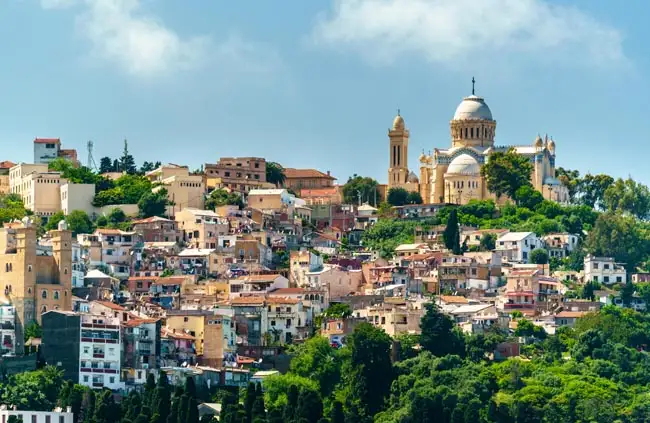
Back in Algiers, we make our way to the majestic Church of Notre Dame d'Afrique, perched dramatically above the Bab El Oued district. Here, colonial architects married European ecclesiastical design with North African sensibilities in a structure that continues to draw pilgrims of all faiths. The panoramic views from this hillside vantage point encompass the entire sweep of the bay — a vista that has inspired poets and painters for generations. The church's inscription above the altar, addressed to "Our Lady of Africa" for "the Christians and the Muslims," captures something essential about the religious complexity of this city.
The remainder of the afternoon is ours to absorb the contrast between the M'Zab's preserved traditionalism and the capital's dynamic modernity — two authentic faces of contemporary Algeria.
Overnight in Algiers.
Included Meal(s): Breakfast and Dinner - Day 5:Through the Atlas to Djemila - Continue to ConstantineRolling hills dotted with olive groves and wheat fields accompany us eastward as we leave the coastal plains for the dramatic landscapes of the interior. Our destination, Djemila — "beautiful" in Arabic — sits 900 metres above sea level, where Roman engineers once faced the challenge of adapting classical urban planning to mountainous terrain.
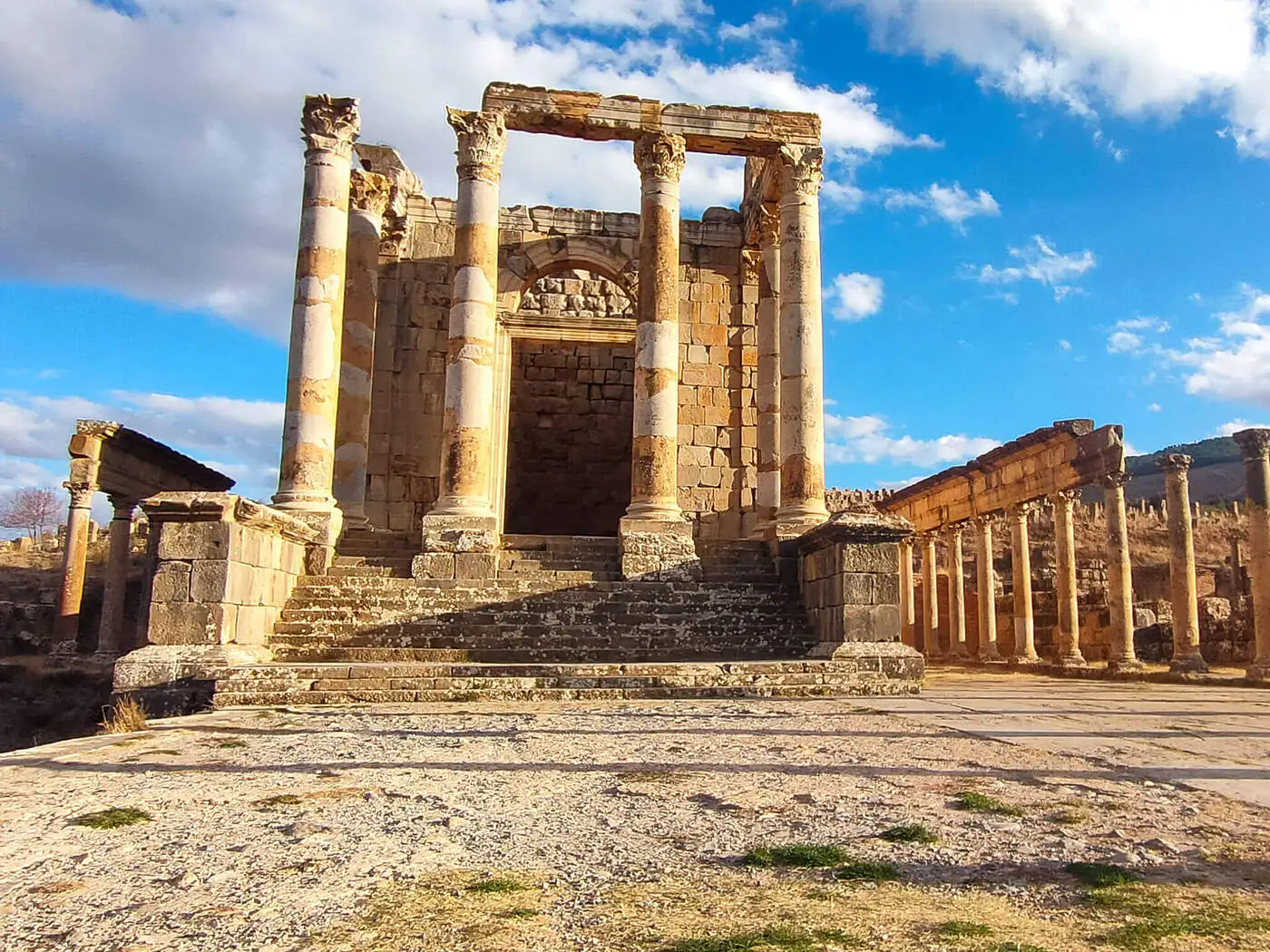
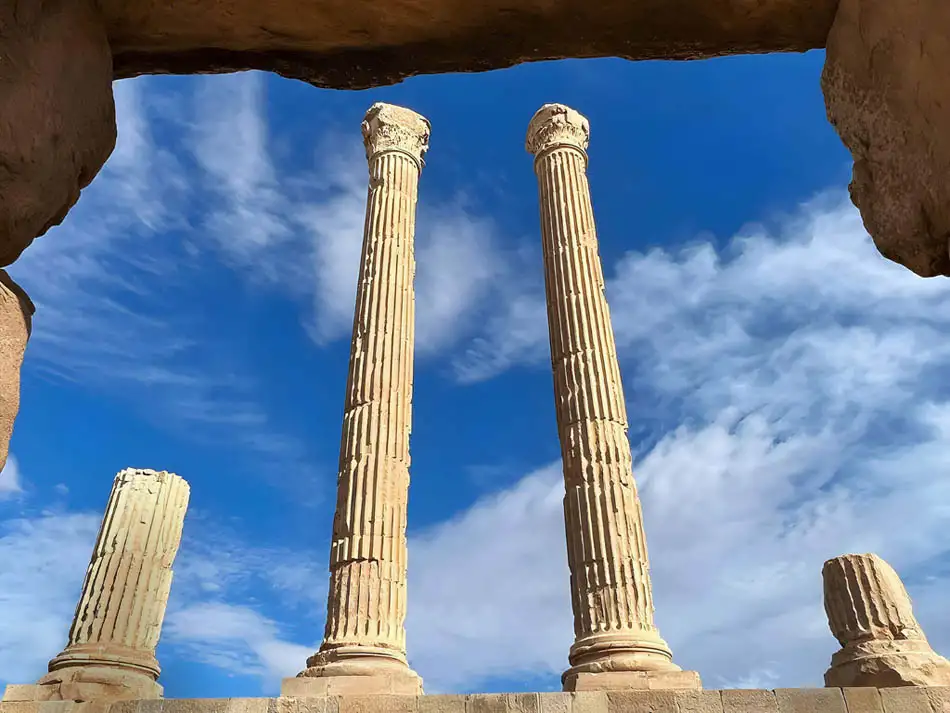
The result, dating from the 1st century CE, astounds with its ingenuity. Unlike the flat, grid-pattern Roman cities of the plains, Djemila flows with the contours of the landscape. We walk streets where toga-clad citizens once strolled, past a remarkably preserved forum where merchants haggled over goods from across the empire. The site's temples, basilicas, and triumphal arches demonstrate how Rome adapted its architectural vocabulary to diverse environments — each column capital and decorative element telling stories of cultural fusion.
In the Djemila Museum, extraordinary mosaics and sculptures reveal daily life in this mountain outpost. Intricate floor designs depicting hunting scenes, mythological figures, and geometric patterns showcase the wealth and sophistication of Roman North Africa. These aren't mere decorative elements — they're windows into a society where African, Mediterranean, and Roman influences created something entirely new.
As afternoon shadows lengthen across ancient stones, we continue our journey eastward to Constantine, the dramatic "City of Bridges," where we'll rest before exploring another Roman masterpiece tomorrow.
Overnight in Constantine.
Included Meal(s): Breakfast and Dinner - Day 6:Timgad: Trajan's Perfect City & Royal MysteriesMorning finds us journeying through the foothills of the Aurès Atlas Mountains toward Timgad, Emperor Trajan's bold experiment in urban planning. Founded in 100 CE as a military colony for retired legionnaires, Thamugadi was designed for 15,000 inhabitants — yet prosperity soon burst these boundaries, creating a fascinating study in organic versus planned development.
Standing at Timgad's western gate, we witness Roman city planning at its most ambitious. The original settlement follows a perfect grid, its straight streets intersecting at precise right angles like a textbook illustration. But look beyond the planned core, and we see how success created its own challenges: the expanding city spilled organically beyond its geometric boundaries, creating irregular neighbourhoods that speak to human nature's resistance to rigid order. We walk the Cardo Maximus past the magnificent Arch of Trajan, through markets where North African grain once fed the empire; the theatre, with its soaring stage backdrop, echoes still with centuries of performance under the African sun.
Our afternoon brings us to the mysterious royal Mausoleum Immedghassen — a circular stone monument predating Roman conquest. Built for a Numidian king whose identity remains lost to time, this tomb stands 18 metres high on 60 engaged columns, a reminder that Rome built upon foundations laid by earlier civilizations.
We return to Constantine for the night, the dramatic gorge city waiting to reveal its own stories tomorrow.
Overnight in Constantine.
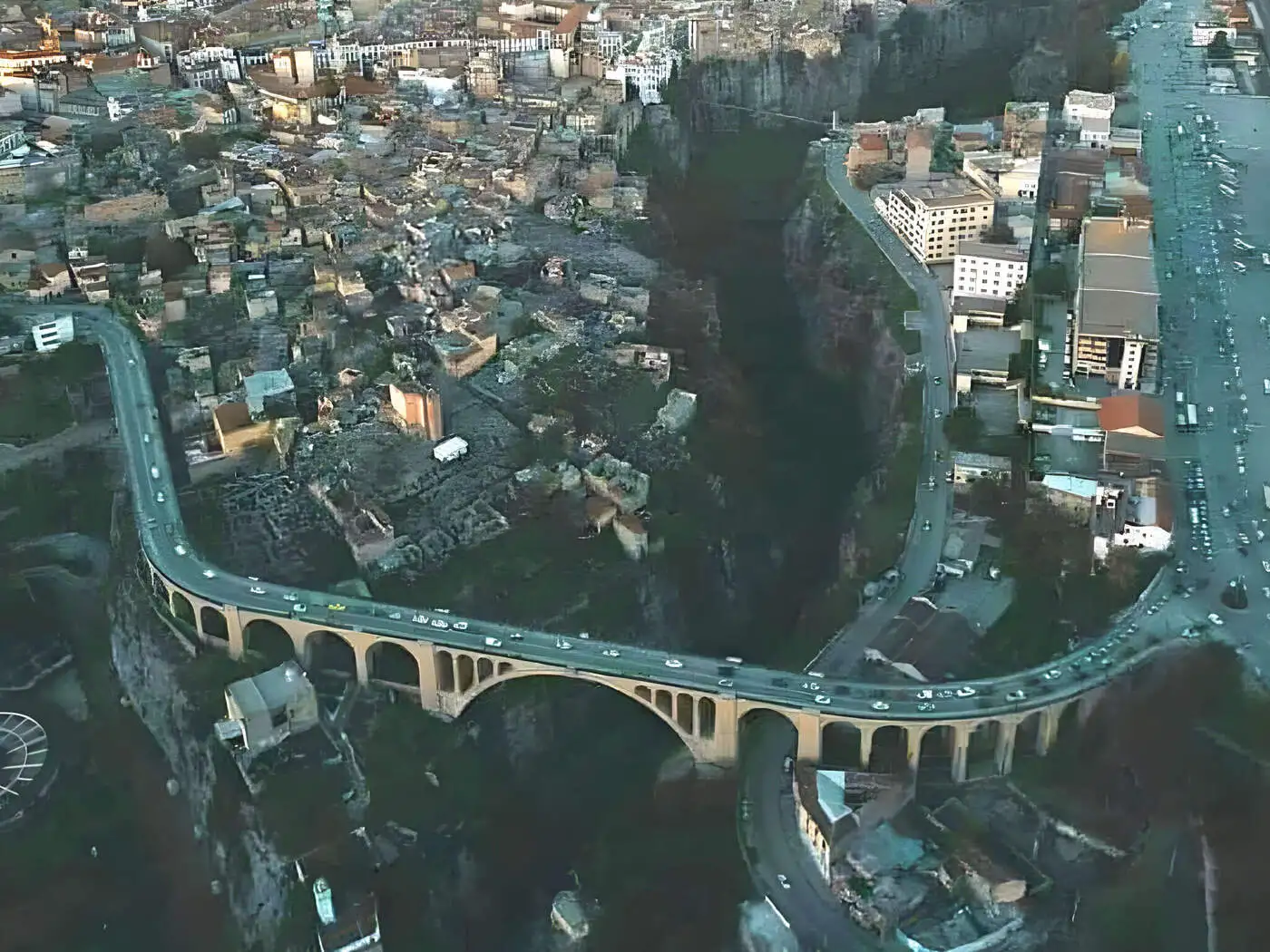
Included Meal(s): Breakfast and Dinner - Day 7:Constantine City Tour - Drive to AlgiersBuilt astride a spectacular gorge carved by the Rhumel River, Constantine appears to defy gravity itself. Known to Romans as Cirta, it became Constantine the Great's namesake in the 4th century, but its story stretches back over two millennia to Numidian kings who recognized this natural fortress's strategic perfection.
The gorge — 120 metres deep in places — creates a natural moat around three sides of the city. Ottoman, French, and modern engineers have spanned this chasm with increasingly ambitious bridges, each generation adding its own architectural signature to this vertical cityscape. From these swaying vantage points we peer down into the gorge where traditional tanneries still operate as they have for centuries, their colourful leather goods drying in the North African sun.
The Constantine Museum reveals artifacts spanning millennia, while the Kasbah district preserves the intimate scale of Ottoman residential architecture. At the Palace of Ahmed Bey, we encounter 19th-century attempts to blend European palatial grandeur with Islamic decorative traditions, before the Emir Abdelkader Mosque — one of the world's largest — offers a final meditation on how contemporary Algeria honours both heritage and innovation.
This afternoon we begin our drive back toward the capital, the landscapes shifting from mountain drama to coastal plain as Algiers draws near.
Overnight in Algiers.
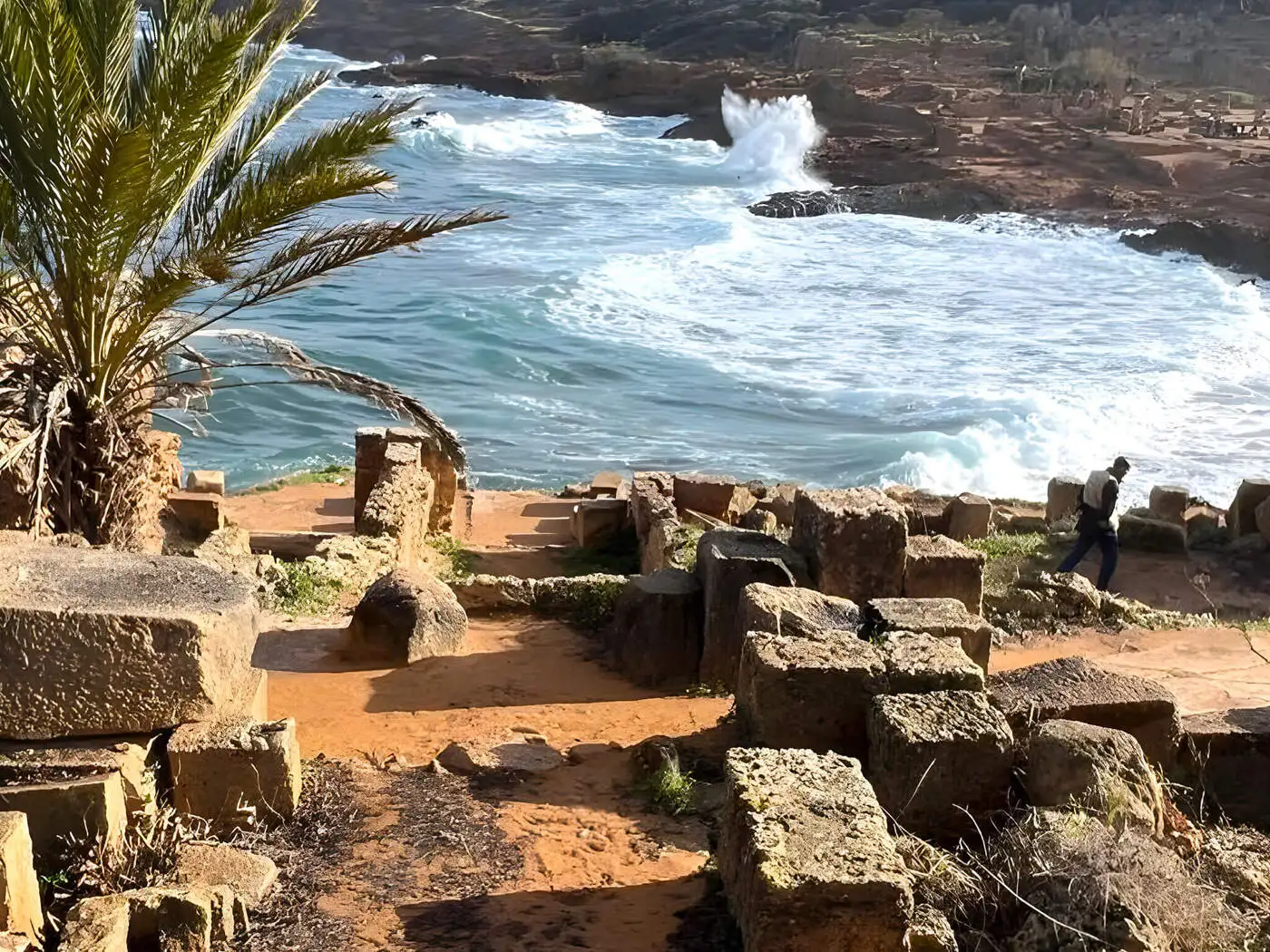
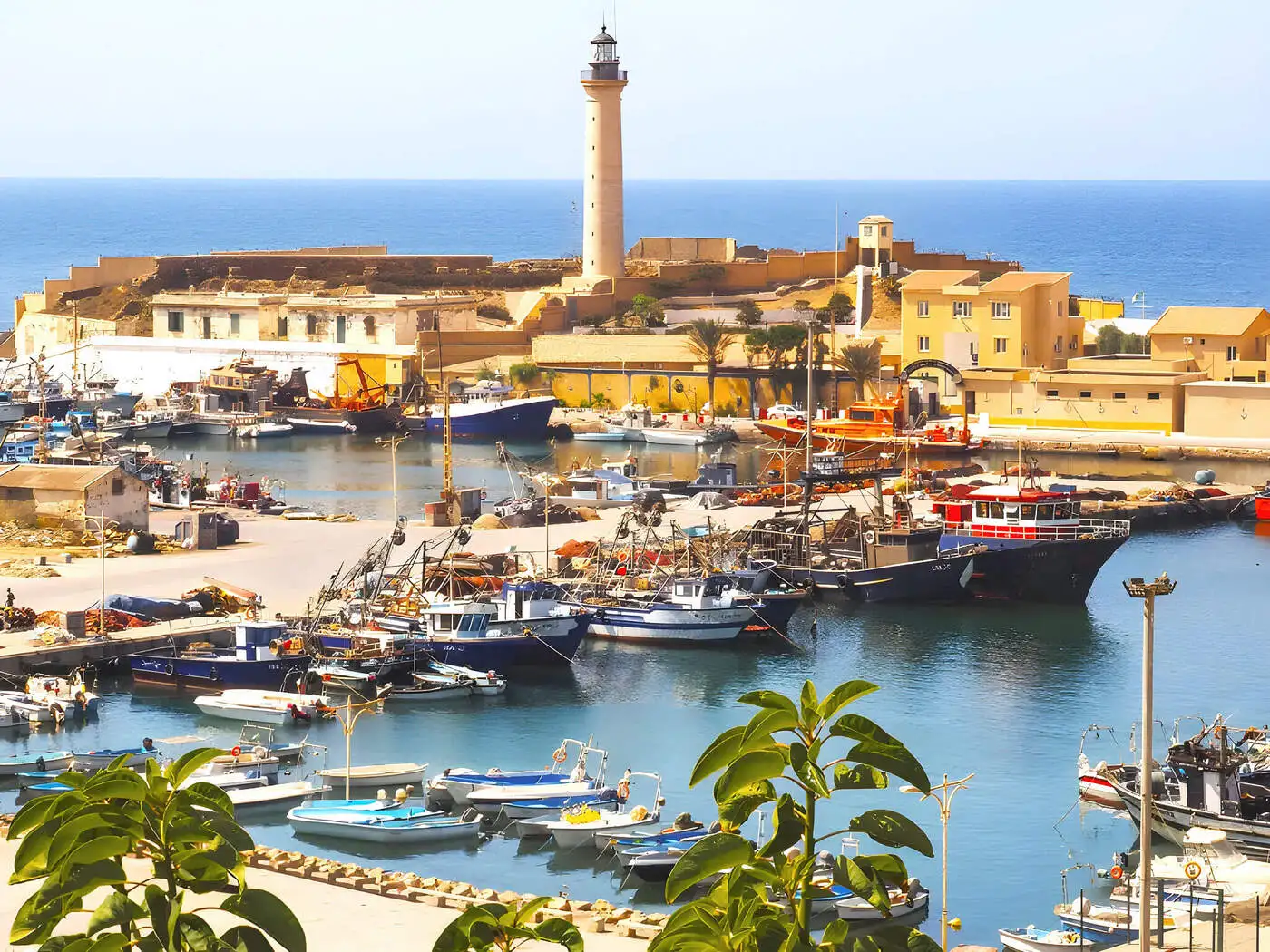
Included Meal(s): Breakfast and Dinner - Day 8:From Algiers: Tipaza & CherchellThe Mediterranean coast west of Algiers reveals layers of North African history. At Tipaza, Phoenician merchants first established trading posts over 2,000 years ago; what began as a commercial outpost evolved under Roman rule into one of Christianity's most important North African centres. Walking among ruins that cascade toward the sea, we witness how early Christians adapted Roman architectural forms to serve their revolutionary faith. The site's most poignant story emerges from the Vandal conquest of 430 CE, when most inhabitants fled to Spain rather than accept Arian Christianity — a tale of devotion that has lingered in local memory ever since.
After sampling Tipaza's renowned seafood, we continue to Cherchell, ancient Caesarea. This former capital of Mauretanian and Numidian kingdoms reveals how local rulers adopted Roman imperial symbols while maintaining African cultural traditions. The archaeological museum's treasures — mosaics, sculptures, and architectural fragments — illustrate the sophisticated fusion culture that flourished on this coast.
Our final stop presents a puzzle: the pyramid-like Tomb of the Christians, its pre-Roman origins challenging assumptions about North African civilization. Built for unknown Numidian royalty, this monument reminds us that sophisticated kingdoms flourished here long before Roman legions arrived. It makes for a fitting final contemplation — three thousand years of human ambition compressed into a single afternoon on the Algerian coast.
We return to Algiers for our last evening together.
Overnight in Algiers.
Included Meal(s): Breakfast and Dinner - Day 9:DepartureDeparture from Algiers.
BON VOYAGE!
Included Meal(s): Breakfast
Countries Visited: Algeria
*The red tour trail on the map does not represent the actual travel path.
Book This Tour
- Final payment: Due 90 days prior to departure.
- Deposit: A non-refundable $500 CAD Deposit is required at booking.
- Optional Single Supplement: $1050 CAD (number of singles limited).
(View options forsingle travellers) - Transfering Tour or Date: Transferring to another tour or tour date is only permissible outside of 120 days prior to departure and is subject to a $100 CAD change fee.
(Read our cancellation policy) - DUE TO VISA APPLICATION PROCEDURES, BOOKINGS CLOSE AT 60 DAYS PRIOR
Prices below are per person, twin-sharing costs in Canadian Dollars (CAD). Pricing does not include airfare to/from the tour and any applicable taxes.
Frequently Asked Questions
- What is the maximum number of participants on a trip?Most of our tours carry a maximum of 18 participants; some tours (ie hiking tours) top out at 16. In the event that we do not achieve our minimum complement by our 90-day deadline, we may offer group members the option of paying a "small-group surcharge" as an alternative to cancellation. If all group members agree, we will confirm the trip at existing numbers; this surcharge is refundable in the event that we ultimately achieve our regular minimum. If the small group surcharge is not accepted, we will offer a refund of your deposit or a different trip of your choice.
- Can I extend my tour either at the beginning or end? What about stopovers?Yes, you can extend your tour either at the beginning or the end and we can book accommodation in our tour hotel. Stopovers are often permitted, depending on air routing. Stopovers usually carry a "stopover" fee levied by the airline.
- How do I make a reservation? How and when do I pay?The easiest way to make a reservation is via our website; during office hours, you are also more than welcome to contact us by telephone.
A non-refundable deposit is payable at the time of booking; if a reservation is made within 90 days, full payment is required. Some trips require a larger deposit. If international airline bookings require a non-refundable payment in order to secure space or the lowest available fare, we will require an increase in deposit equal to the cost of the ticket(s).
Early enrolment is always encouraged as group size is limited and some trips require greater preparation time.
Once we have received your deposit, we will confirm your space and send you a confirmation package containing your trip itinerary, any visa/travel permit related documents, invoice, clothing and equipment recommendations, general information on your destination(s), and forms for you to complete, sign and return to us. Your air e-tickets (if applicable), final hotel list, final trip itinerary, and instructions on how to join your tour, will be sent approximately 2-3 weeks prior to departure. - What about cancellations, refunds, and transfers?Please review our cancellation policy page for details.
- I am a single who prefers my own room. What is a single supplement?All of our tours have a single supplement for those who want to be guaranteed their own room at each location.
This supplement is a reflection of the fact that most hotels around the world do not discount the regular twin-share rate for a room by 50% for only one person occupying a room. Most hotels will give a break on the price, but usually in the range of 25-30% of the twin-share rate. This difference, multiplied by each night, amounts to the single supplement.
The conventional amount can also vary from country to country and some destinations are more expensive than others for single occupancy. In order to be "single friendly," the supplements we apply are not a profit centre for us and we do our best to keep them as reasonable as possible.
On most tours we limit the number of singles available, not to be punitive, but rather because many hotels allow for only a limited number of singles; some smaller hotels at remote locations also have a limited number of single rooms available.
Please note that most single rooms around the world are smaller than twin-share rooms and will likely have only one bed. - Do you have a shared accommodation program?Yes! If you are single traveller and are willing to share, we will do our best to pair you with a same-gender roommate. Please note that should we fail to pair you, we will absorb the single supplement fee and you will default to a single room at no extra charge.